You can learn a lot about your neighbors by the litter they leave behind. Just ask Deborah Harrell Meehan, who volunteers to clean High House Road in Cary with the group she founded, Wild, Wacky, Wonderful Women of the World. Much of the trash they find is mundane — hubcaps, political signs, fast-food boxes. But sometimes, the trash raises eyebrows, such as the time they found a man’s outfit, shoes included, tucked behind a bush. A few yards away, they discovered the rest of the story: a woman’s outfit, shoes included, tucked behind another bush. Turns out, Meehan’s group isn’t the only wild and wacky one in Cary.
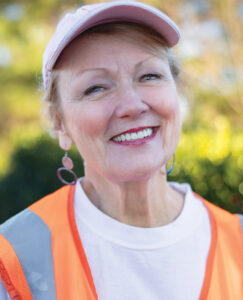
Deborah Harrell Meehan photograph by Charles Harris
You can also learn a lot about your neighbors by the people who clean up the litter. What compels people to don a reflective vest and pick up a grabber and trash bag for an afternoon of roadside cleaning with Adopt-A-Highway? Cleaning up trash may not be glamorous, but volunteers say it brings a sense of community, fun, and — not least of all — an Adopt-A-Highway sign bearing their name.
Case in point: those Wild, Wacky, Wonderful Women of the World. The Triangle-based group, which has more than 900 members worldwide, set out to do good works and to have a good time doing them. When you talk to the Cary members about their Adopt-A-Highway work, they describe a quarterly social outing. Meehan brings a cooler full of drinks and snacks in case anyone forgot to eat that morning (“I’m a mom, OK?”), and the women chat as they clean, catching up with each other. About 10 women volunteer each time, representing a wide range of ages. “Our group’s membership rule is ages 21 to 101,” says Meehan, 75. “But at this rate, I may live right on.”
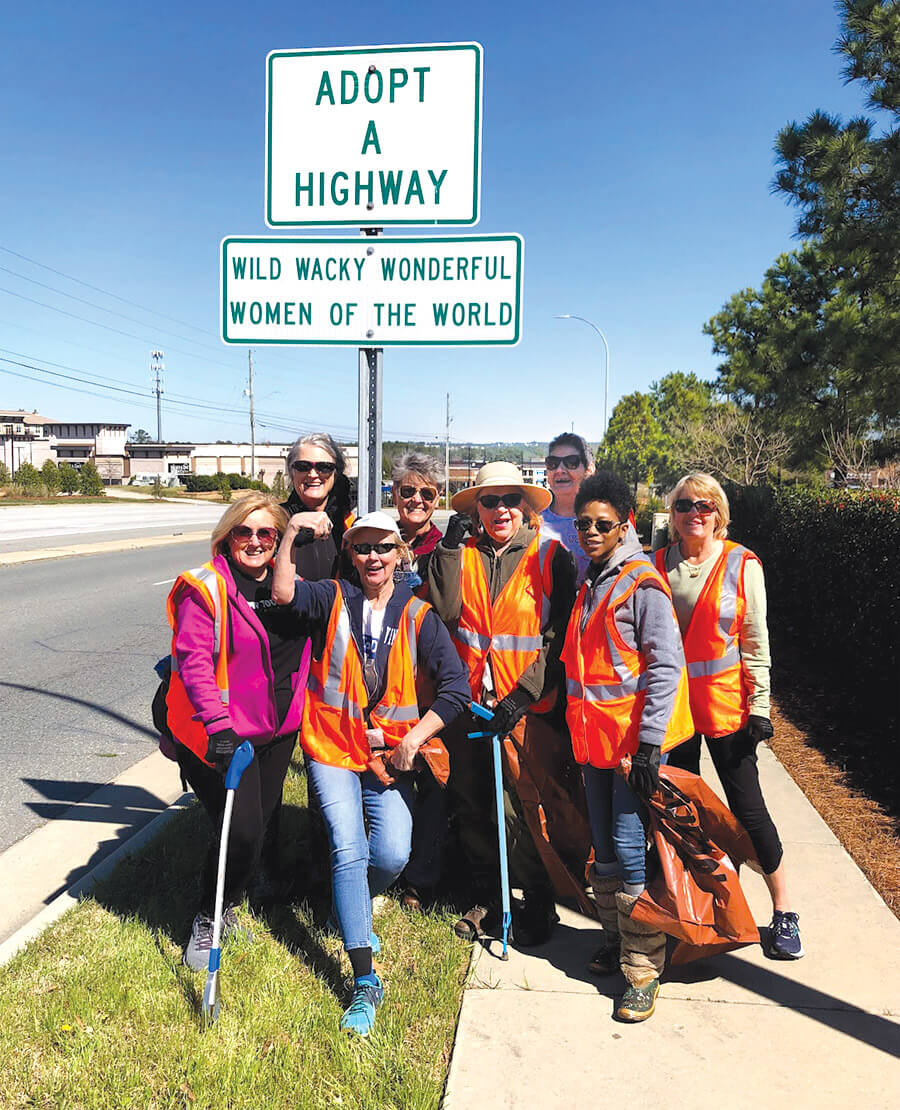
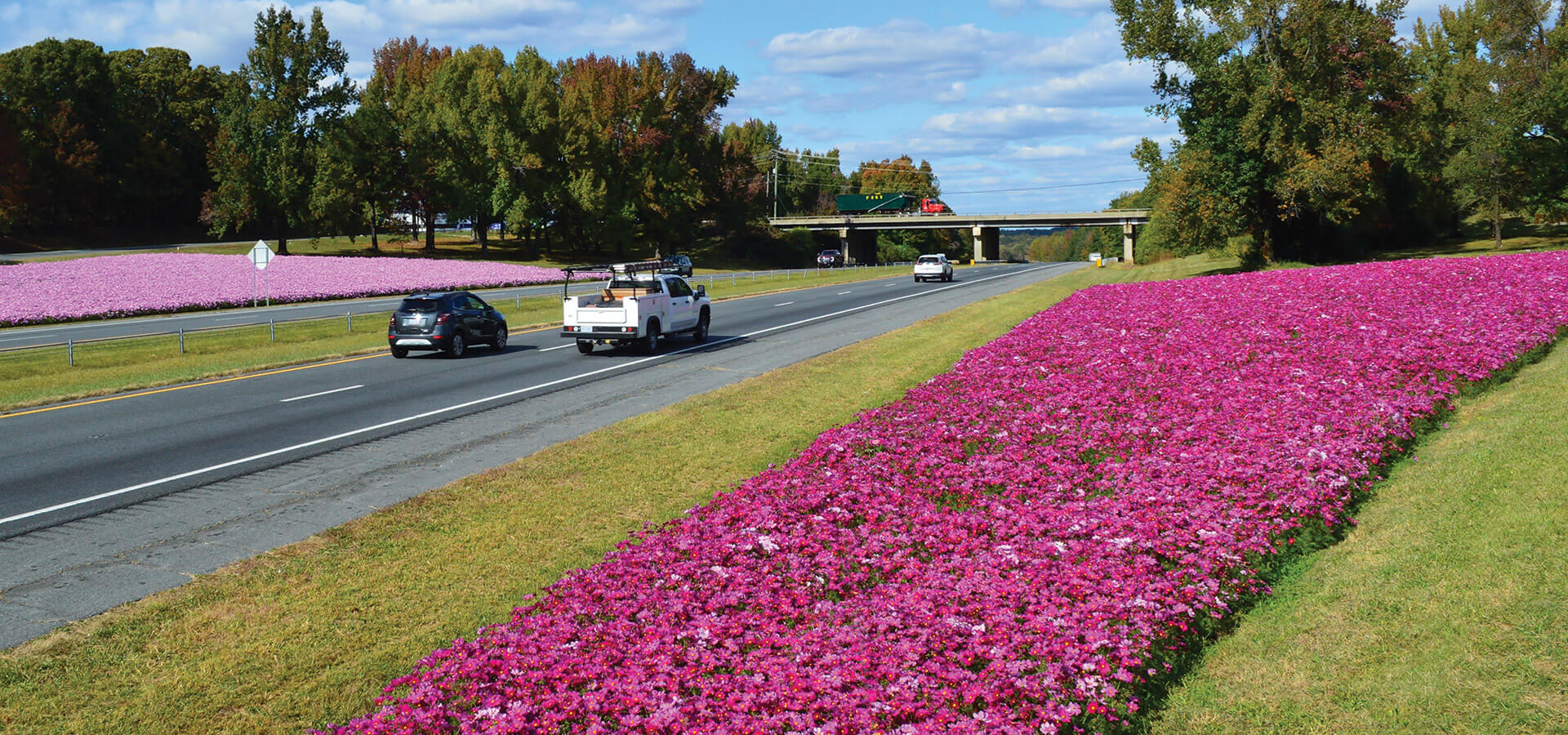
Thanks to volunteers like the Wild, Wacky, Wonderful Women of the World in Cary, the state’s Adopt-A-Highway program keeps our roads — like this stretch in Reidsville — looking their best. Photography courtesy of Wild, Wacky, Wonderful Women of the World
The unusual items they discover become props for funny photo ops: A member speeding down the sidewalk on a discarded scooter or Meehan grinning with a $100 bill that she discovered in a shrub. Then, the women pose by their Adopt-A-Highway sign, pause to admire a job well done, and go to lunch together. (That $100 bill funded one of those lunches.)
“I set the stage to make it a joyful event,” says Meehan. “When we do it together, the joy is multiplied. It’s one thing to go out and do it by yourself, but when you’re talking and getting to know people, it’s different. It’s an opportunity to know your neighbor. It’s not about trash, but about camaraderie, a connection of people.”
• • •
The Wild, Wacky, Wonderful Women of the World are part of a long tradition of volunteers who keep North Carolina’s highways clean. The roots of our state’s Adopt-A-Highway program go back to 1967. Jeanelle Coulter Moore, wife of Gov. Dan K. Moore, was inspired by the work of her friend Lady Bird Johnson, who had campaigned for the Highway Beautification Act of 1965. The Moores chartered Keep North Carolina Beautiful, which rolled out programs like litter cleanups to preserve the state’s physical beauty and encourage environmental stewardship.
In 1988, the North Carolina Department of Transportation began their Adopt-A-Highway program. Today, it complements a broad range of initiatives from various organizations and localities dedicated to keeping the state clean and attractive, such as Adopt-A-Stream, Adopt-A-Beach, the Wildflower Program, and the Annual Azalea Celebration.
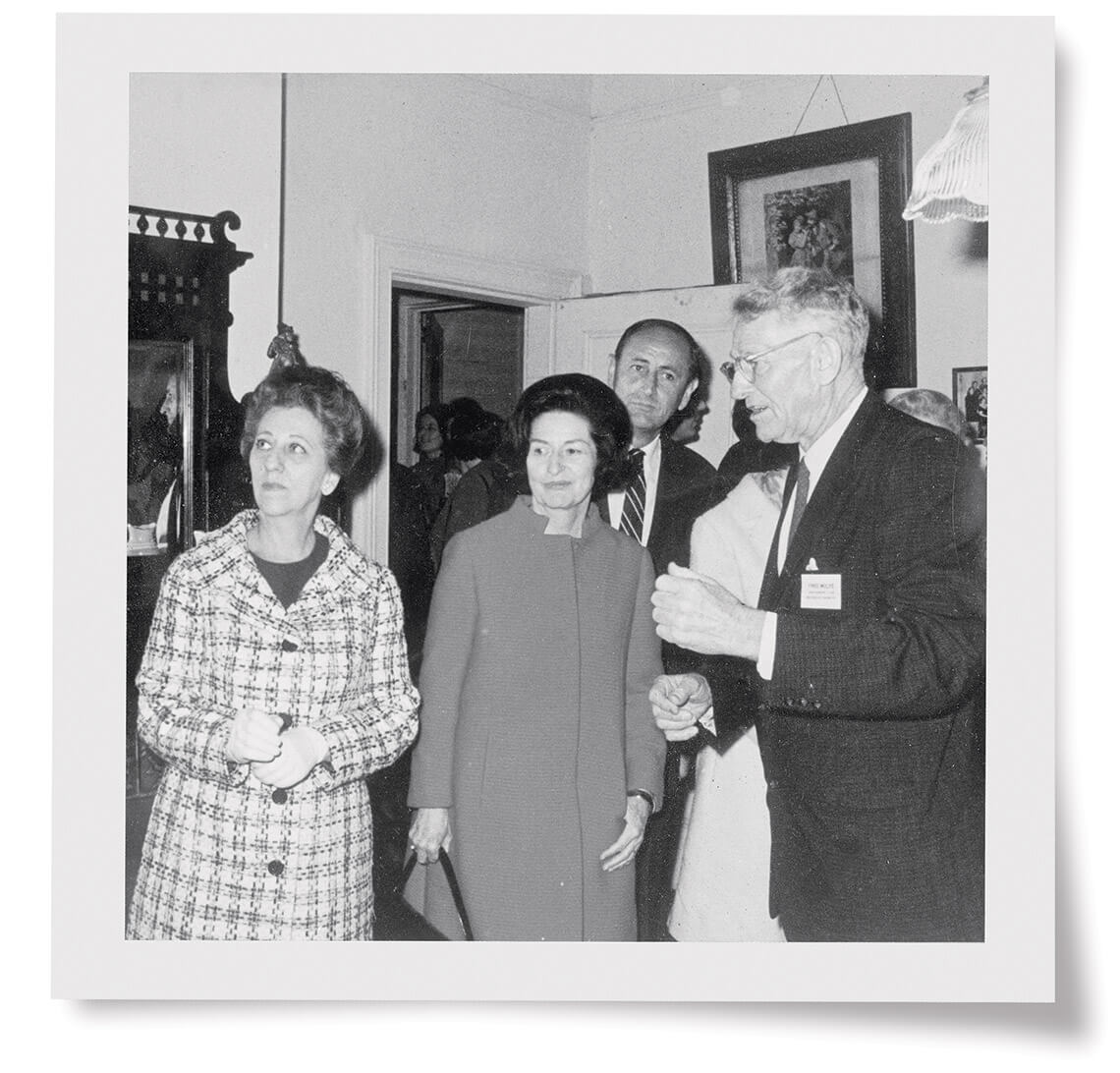
Inspired by her friend Lady Bird Johnson (center), North Carolina First Lady Jeanelle Coulter Moore (left) planted the seeds in 1967 for what would become our state’s Adopt-A-Highway program. Photography courtesy of State Archives of North Carolina
Now, about 120,000 North Carolinians keep nearly 10,000 miles of roadways tidy via Adopt-A-Highway. Volunteers pledge to clean two miles of a state-maintained highway four times a year for at least four years; in exchange, their name goes on a sign along that road. Some register with an organization, such as a church, nonprofit, or fraternity. Some work alongside family or friends, coming together to do a little good. Others do the work as a tribute to a loved one they’ve lost.
Adopt-A-Highway is among the longest-running and most successful volunteer programs with NCDOT, and it saves the state millions of dollars. These kind souls not only beautify roads, but they also free up taxpayer dollars that the state can use to fund other projects.
“From the mountains to the coast, we have groups who have been part of this program since the beginning,” says Bridgette Barthe, a spokesperson with NCDOT. “It’s just truly amazing to me, because this isn’t easy volunteer work, but it’s meaningful volunteer work. And it keeps our communities looking great.”
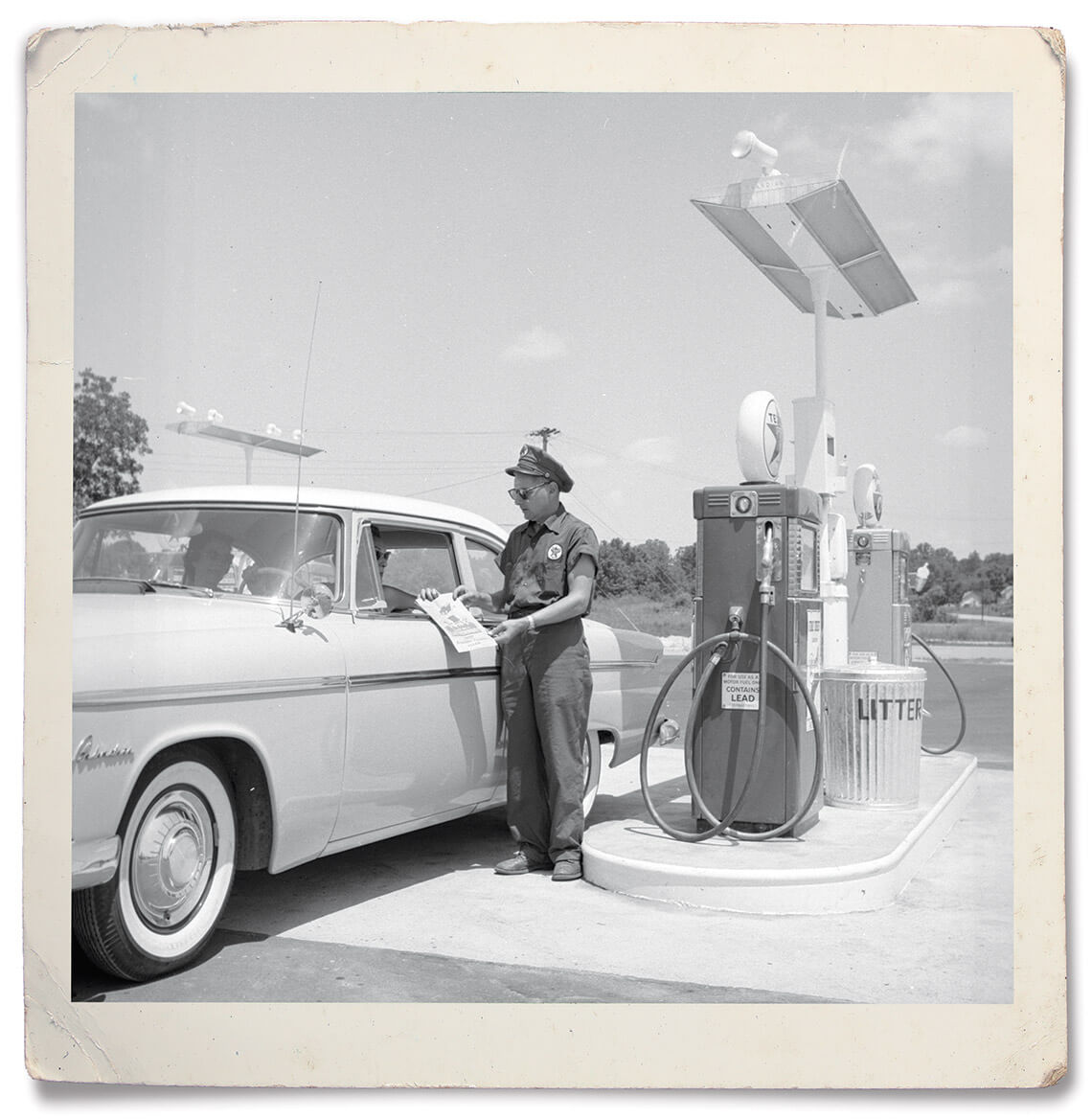
Attendant Vernon Barnhill hands out trash bags to motorists in 1950s Louisburg as part of a 90-day anti-litter campaign in North Carolina. Photography courtesy of State Archives of North Carolina
The state also offers a Sponsor-A-Highway program that allows companies to pay contractors for debris pickup in exchange for roadside signs. Chances are, you’ve passed a sign for Raleigh-headquartered Johnson Automotive Group, which sponsored 1,165 of the program’s 1,361 miles in 2025. With Adopt-A-Highway, however, the people whose names are on the signs are the ones with the trash bags. Both programs offer a valuable service, but there’s something extra special about the volunteers who come out each quarter to do the work together — what they put into it, but also what they get out of it.
Through the work of Adopt-A-Highway, the state gets to roll out the green carpet to visitors. When people drive into North Carolina, its volunteers want them to see a state that takes pride in its beauty. There’s an economic aspect as well; when corporations scout locations for future offices, it helps to present them with a state well cared for.
• • •
This work accomplishes more than keeping our state pretty, however. A positive environmental impact may be the most important legacy of the Adopt-A-Highway program. Even the smallest pieces of trash can pose significant threats. Cigarette butts — the most common form of litter — don’t degrade. Instead, they slowly release toxic chemicals into the soil and waterways. Chewed-up gum — another common form of litter — can leak microplastics into the soil, in addition to potentially posing a hazard to wild animals and pets that mistake the gum for food.
When roads are clear of garbage — and the pollution and eyesores that go with it — the entire community benefits. Dominique Bostic-Arrington signed up with Adopt-A-Highway shortly after she moved to West Charlotte three years ago. Her company, AAA Therapeutic Farm, adopted a stretch of Little Rock Road near Charlotte Douglas International Airport. For most people, this is an area to pass through on their way to somewhere else — and the tossed trash is testament to their lack of investment. But Bostic-Arrington believes that those who live in West Charlotte deserve to have clean roads that are a source of community pride.
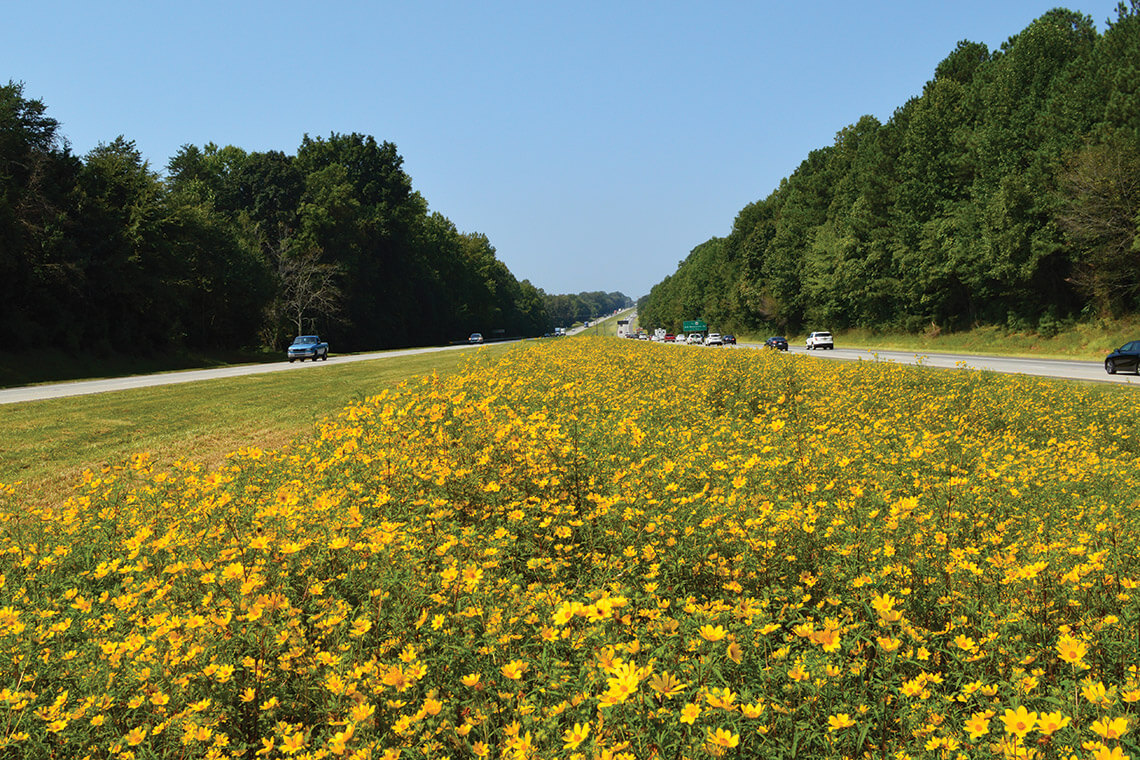
Thanks to the work of Adopt-A-Highway volunteers, natural wildlife can flourish along North Carolina’s motorways. Photography courtesy of NCDOT
“I’m surprised by the amount of trash that people throw out of their window that they think will just disappear,” Bostic-Arrington says. “I mean, why is there a whole bag of Arby’s food out here? Who does this?”
On their quarterly pickups, Bostic-Arrington and her team or family dispose of everything from food wrappers to car parts left behind after crashes. At the end of the day, they look back at the clean road and feel like part of the solution, part of the community.
“That little bit of time makes a big impact,” she says. “The main reason we adopted it is to make people on this side of the city feel prideful.”
About 25 miles north, the men of F3 Davidson — an outdoor fitness-and-fellowship group — also take pride in their community. As most people are just waking up, they’re already on the roads at 5:30 a.m., running past woods and horse pastures. It’s a beautiful place to exercise, but it’s sometimes dotted with litter. F3 Davidson members don’t just run past the trash; the point of this group is community, so they adopted a stretch of the roads they usually run.
“Because we’re a group that meets outside 365 days a year, taking care of the environment around us is important. It’s where we spend a lot of our time collectively,” says member Marc Roper. “Keeping it clean for the betterment of our town is super important.”
“You can’t do everything, but you can take little steps like this. Believe it or not, people will witness you out there doing it, and it makes a difference.”
As serious as the problem of litter is, the F3 Davidson men also take the same enjoyable approach to cleanup as the Wild, Wacky, Wonderful Women of the World do: If they’re going to be out there together, they might as well have fun. So as they pick up trash, they also talk and catch up. On their Adopt-A-Highway sign is part of a proverb, “Iron sharpens iron,” which guides their belief that when people come together, they make each other stronger. As they gather to clean these roads, they make their town stronger, too.
The community notices. Meehan, Bostic-Arrington, and Roper all share how much their groups enjoy appreciative honks from people driving by. Sometimes people yell, “Thank you!” from car windows or pull over to offer a grateful handshake.
“Sometimes you feel like the whole world is out of your hands and out of control,” Meehan says. “You can’t do everything, but you can take little steps like this. Believe it or not, people will witness you out there doing it, and it makes a difference.”