Charlie Sutherland Jr.’s family produced an oil that worked well for its intended purpose in knitting machines. It was slippery and prevented yarn breakage.
Only one problem, though.
“It absolutely would not come off the yarn,” says Charlie’s son Taylor Sutherland. “No industrial-strength cleaner could touch this oil.”
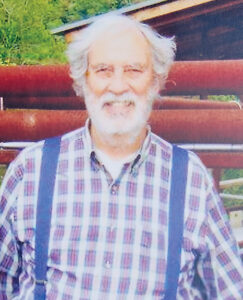
Charlie Sutherland Jr. Photography courtesy of Charlie’s Soap
So Charlie reverse engineered the oil and developed a soap to clean it off. It worked just as it was supposed to without damaging the yarn or machinery or the people using it. But then he ran into another snag.
“A tanker would come in, but …” Taylor makes a motion with his arm like he’s slipping something behind his back. “Perhaps a milk jug would go into a closet. And then, pretty soon, two jugs would go missing.”
Textile workers were taking the soap home because they found that it worked quite well for cleaning their house — and their own clothes. Charlie called his concoction “SB-2069” because he felt it showed he knew what he was doing. He didn’t. The textile workers soon gave it an easier name to remember to honor Charlie’s dad, Charlie Sr. They called it “Charlie’s Soap.”
Soon, its popularity spread and developed what Taylor describes as a “very rabid fan base” in Rockingham County. That surprising response prompted Charlie to think far beyond producing soap to clean just knitting machines.
Could it find a place on store shelves?
Maybe, Charlie thought.
• • •
The Charlie’s Soap plant sits near the banks of the Mayo River, just off a residential neighborhood in Mayodan.
From the street, the cinder-block building doesn’t look much bigger than the houses sitting nearby. But upon closer inspection, you can see catwalks, holding tanks, and an extension jutting out the back and down a hill. It’s where the company got its start, and where today it produces almost a million pounds of cleaning products annually.
Charlie had a background in chemistry, and was, Taylor says, “a brilliant man who could not take a test to save his life.”
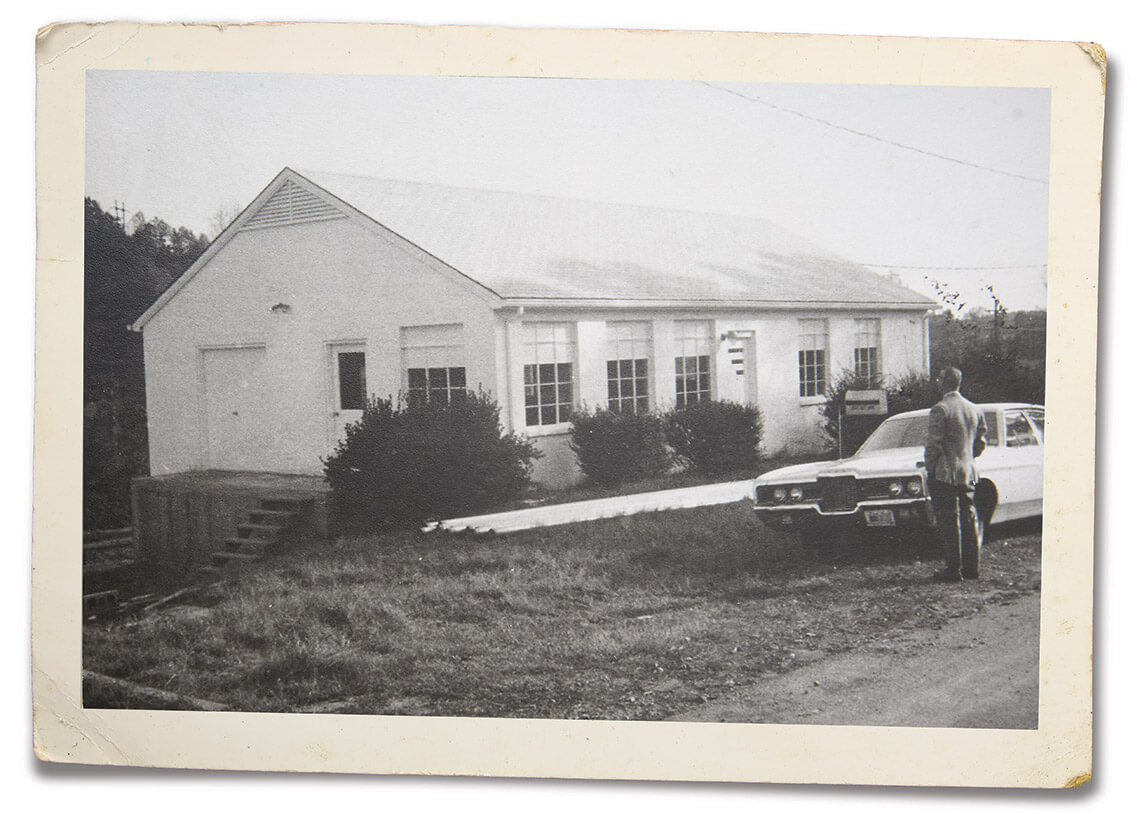
The original Charlie’s Soap plant building, pictured in 1976. Photography courtesy of Charlie’s Soap
“Everybody loved him, but he was an unhirable cuss,” Taylor says. “He had the brains, though, for making formulations for oils and things of that nature.”
Charlie’s father, Charlie Sr., co-owned textile mills. In 1976, he tasked his son with creating a substance that could break down the oil without harming “the little old ladies whose job it was to clean [the machines],” as Charlie Jr. later recalled in a letter.
What Charlie created worked well — and then some.
“My dad started hearing, ‘Charlie, you’ve got to start selling [in stores] because people can’t just steal from us, and this is getting ridiculous,’” Taylor says.
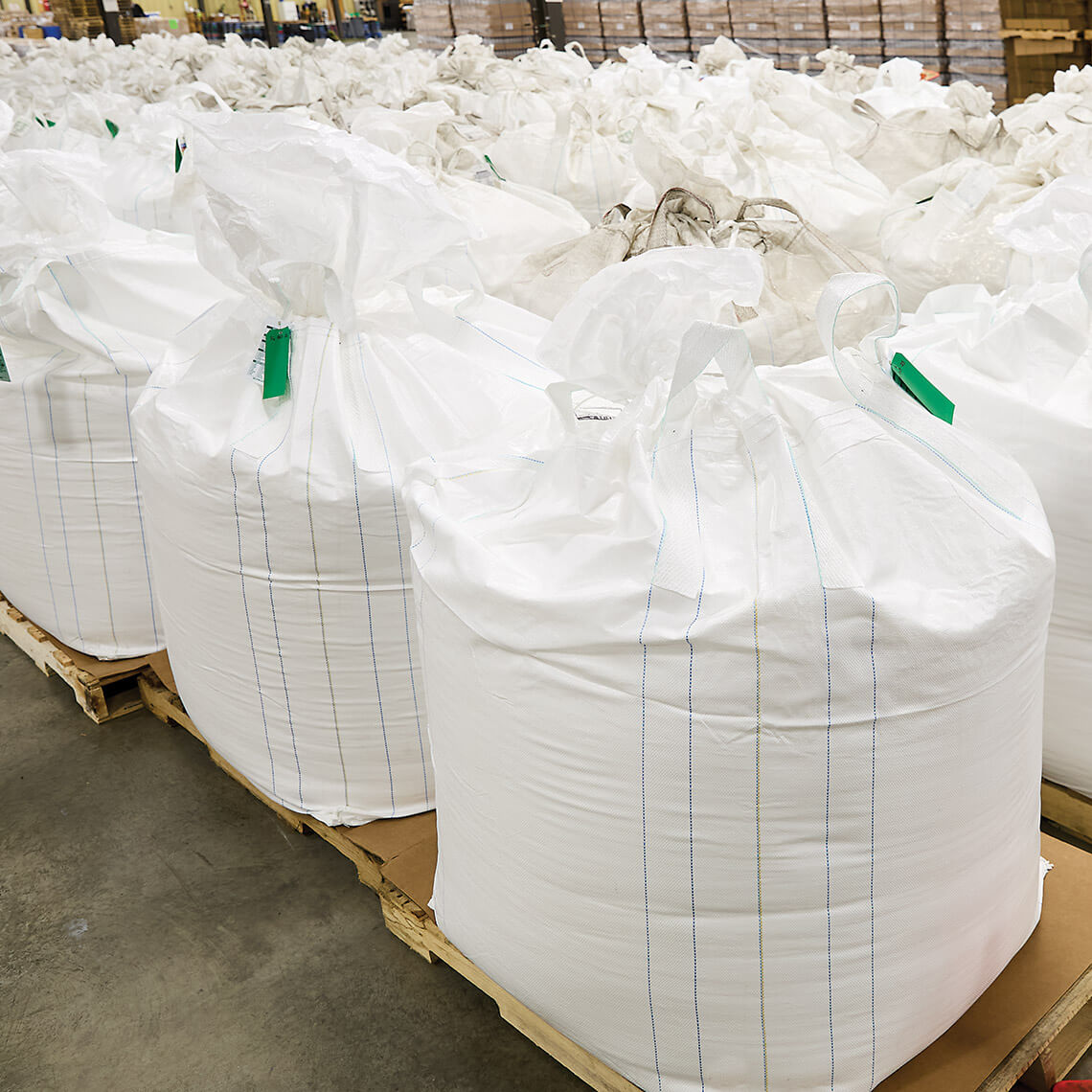
Charlie’s Soap produces almost a million pounds of product — like laundry powder. photograph by Stacey Van Berkel
Charlie Jr. approached a Winn-Dixie grocery in Madison about carrying the soap. The store owner declined at first, but then his wife spoke up.
“The wife was a hardcore Charlie’s Soap user by that time, because she’d gotten it from a friend who’d gotten it from a friend who’d gotten it from a friend,” Taylor says.
The store’s management agreed to let Charlie place a pallet of soap on the floor once a week.
It quickly sold out every time.
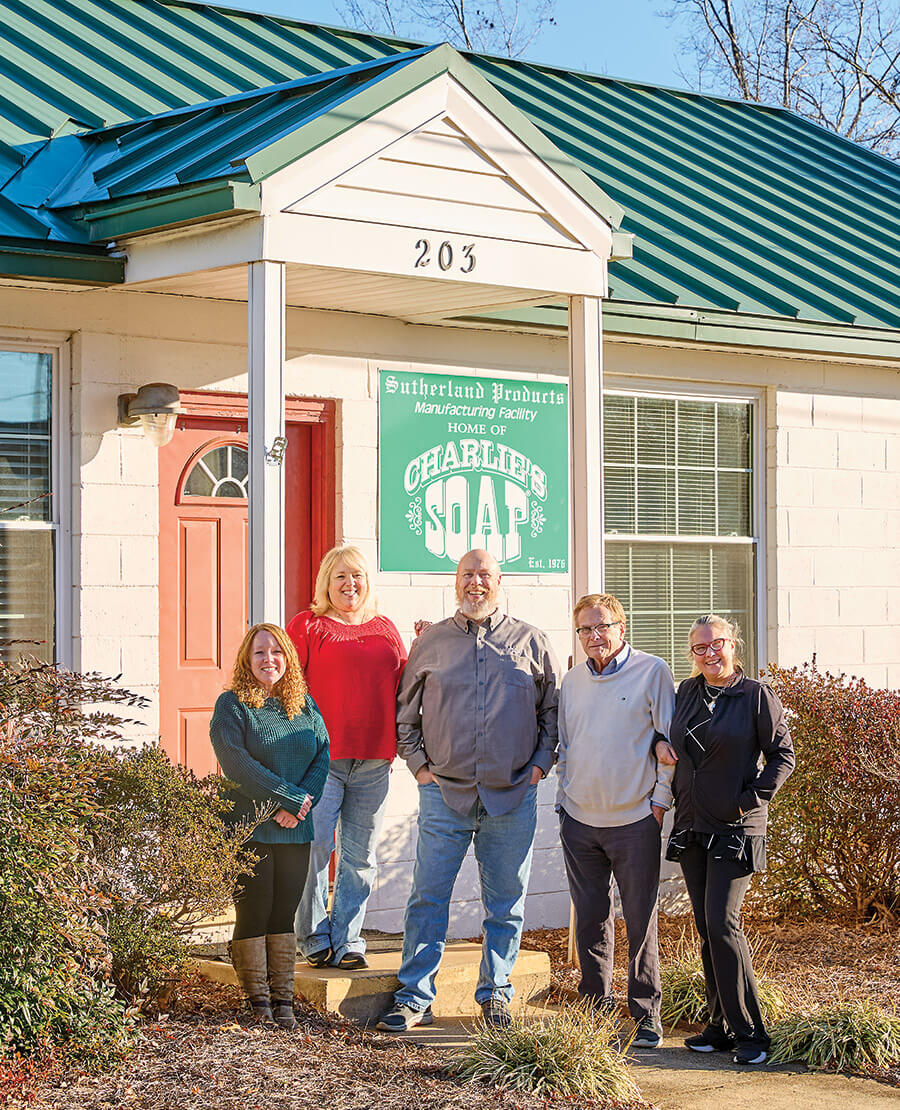
Taylor Sutherland (center) and his colleagues have helped expand Charlie’s Soap far beyond the tiny building where the business began in 1976. photograph by Stacey Van Berkel
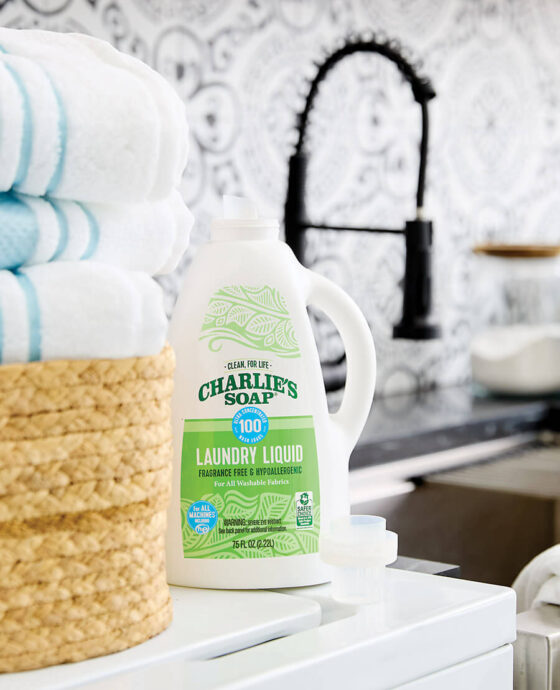
This year, Charlie’s Soap celebrates its 50th anniversary at a time when it’s sold nationwide and online in the form of eco-friendly, fragrance-free laundry powder, liquid detergent, surface cleaner, and degreaser. Hypoallergenic and biodegradable, the soap is especially popular among those with sensitive skin.
Charlie died in 2021, but Taylor, along with his three siblings, James, Jane Whitehurst, and Morgan, continue running the company.
“We started off as this little, itty-bitty local brand, and my dad had no aspirations of doing anything other than selling to local people,” Taylor says. “We’re still wondering how this family business that was run out of a garage burst forth. We’ve now sidled into the hearts and minds of people who say they’ve stopped itching for the first time in their lives or they’ve discovered what clean really means.”
• • •
Taylor — whose full name is Charles Taylor Sutherland III — rode his bicycle around the plant while growing up. Following a stint as a science teacher, he began working for the company about 25 years ago.
“Starting out, I did a little bit of everything,” he says. “I did payroll. I did inventory control. I did purchasing, website, and accounts receivable. I was Atlas, at least in my own mind.”
Today, his official title is president, but he describes himself as the “visionary.”
“I’m the guy with all the crazy ideas,” he says.
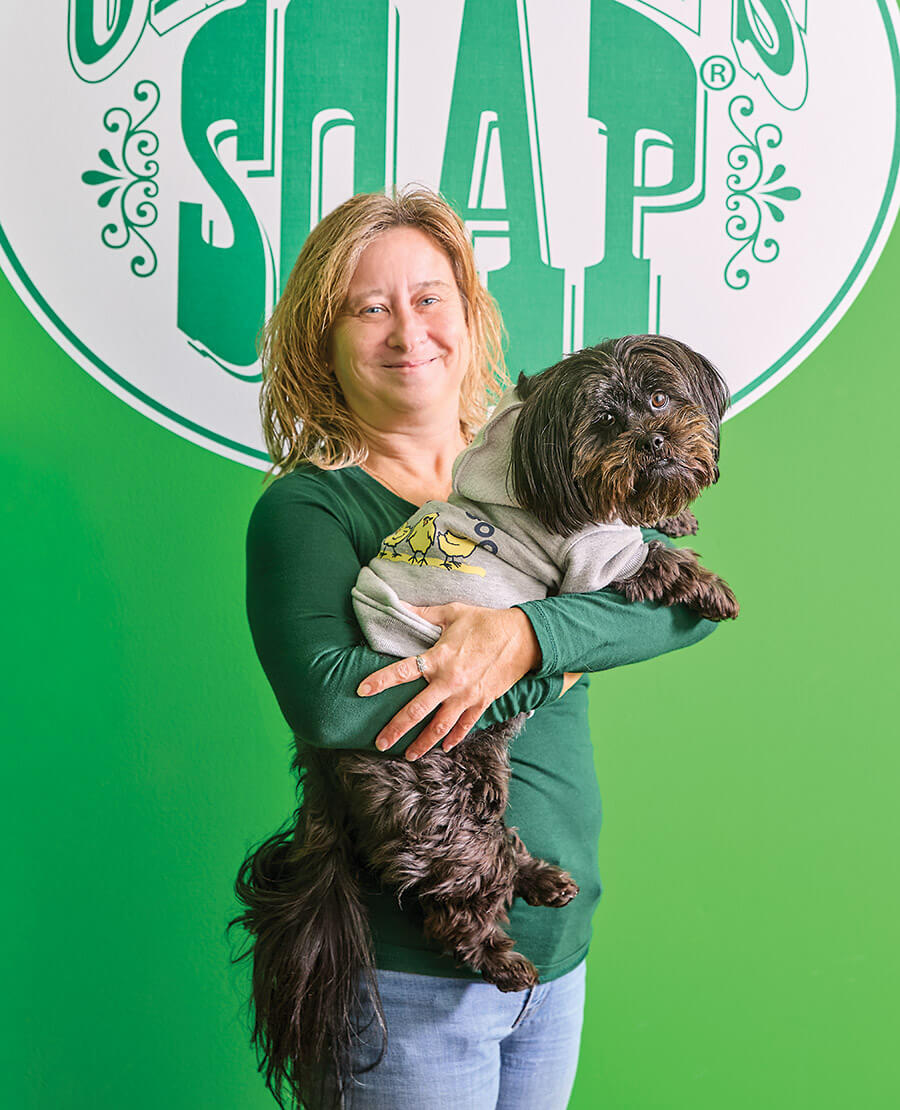
Tabitha Perdue owns Neenee (pictured) and works as the office manager at Charlie’s Soap. photograph by Stacey Van Berkel
It’s quite the family affair. Jane is in charge of implementing some of those ideas; James oversees operations and makes sure all the equipment runs properly; and Morgan handles IT and deals with any administrative issues.
Beyond the family, Charlie’s Soap has a dozen full-time employees, along with Neenee, a shih tzu, and a cat named Clarabelle, that roam the company’s warehouse headquarters in Stoneville.
In its 125,000-square-foot building sit giant sacks, each filled with a ton of laundry powder, and 50-gallon drums filled with liquid detergent. In the packaging facility, adjacent to the warehouse, the powder is poured into a hopper, which fills the two-and-a-half-pound bags sold in stores. The liquid detergent is distributed through a bottling line. In the back of the warehouse, packages are assembled for shipping.
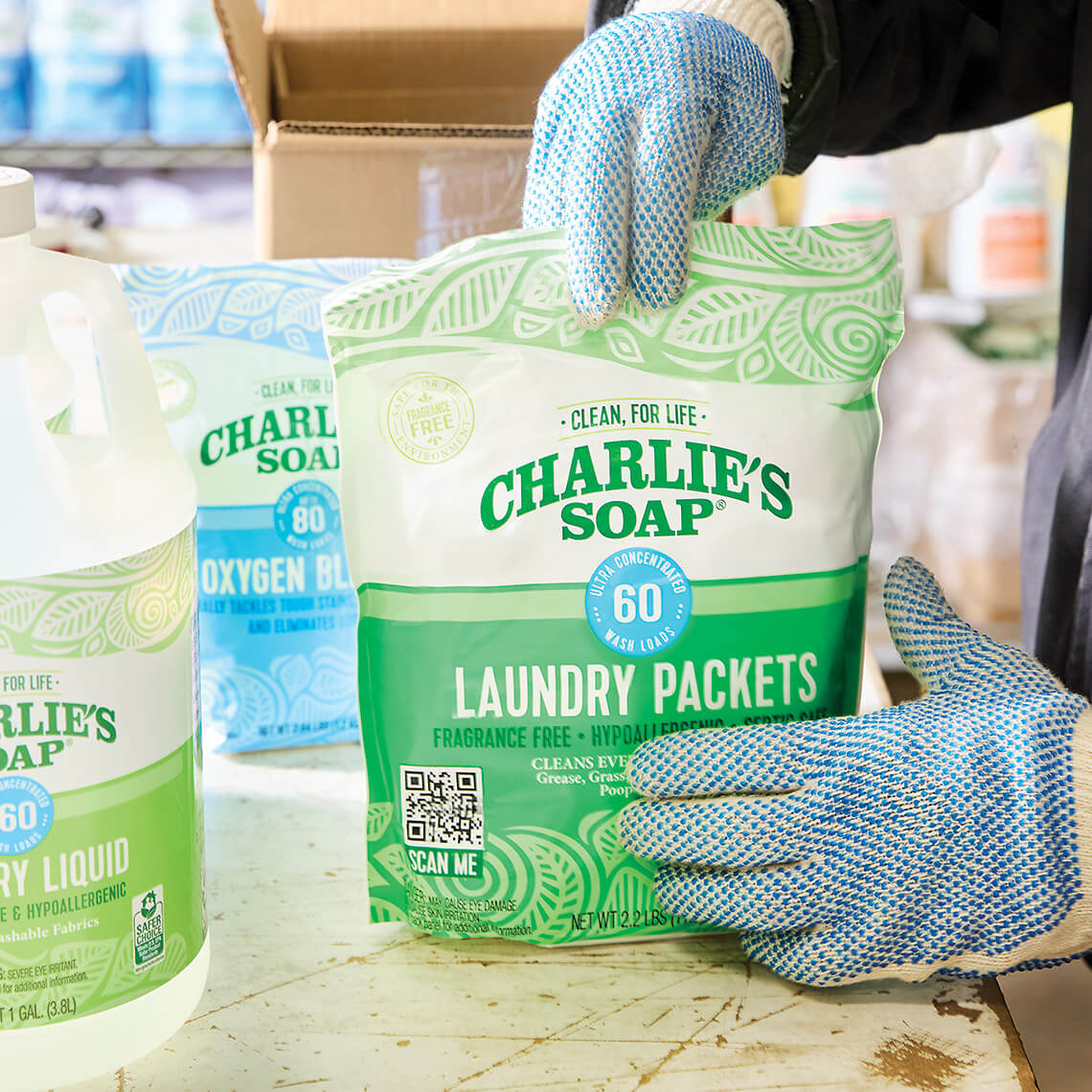
Today, Charlies’s Soap’s line has expanded to include powder packets, stain solution, and more. photograph by Stacey Van Berkel
Over the years, Taylor has heard of people using the soap as a woodworking lubricant, a rust inhibitor, and a soot remover for chimneys. It’s even been used to wash out sewer pipes.
Taylor is always tickled when he encounters fans, including one he had while driving his father’s van through Greensboro.
“It had a Charlie’s Soap bumper sticker,” he says. “I was stopped at a red light, a guy jumps out of his car behind me, and he starts banging on my window to get my attention. I thought, Well, if he was carjacking me, he probably would have just broken my window, so I rolled it down. And this guy, in the middle of traffic, said, ‘I just wanted to tell you I love Charlie’s Soap and buy it all the time.’ Then he got back in his car and kept going.”
print it