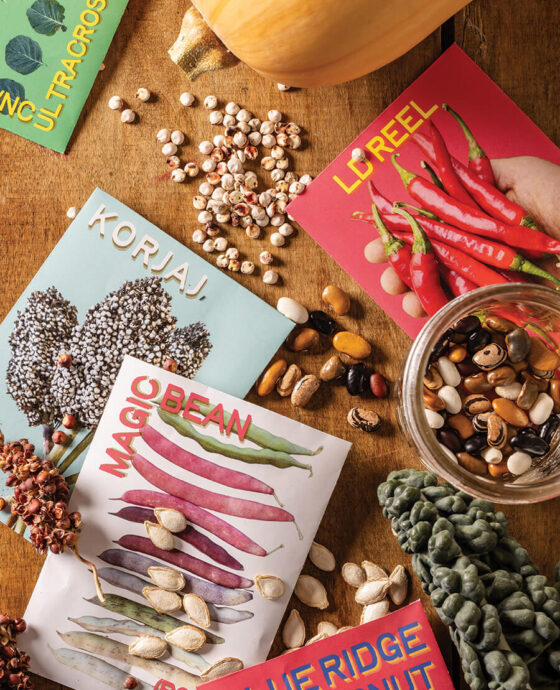
Spring is Matt Wallace’s time to dream. At Rabbit Den Farm in Madison County, he sows midsummer hope into every seed.
By early August, his dreams of an agricultural treasure hunt come true. Bright red tomatoes gleam among dark green foliage like polished rubies. Creamy white okra flowers glint like fine china plates. And scattered over the soil, beneath a layer of vining leaves, are hefty bars of gold.
At least, that’s what the Blue Ridge Butternut squash must look like to Wallace. Chopping one of the smooth, hefty fruits in half reveals the orange-yellow flesh inside. When cooked, its natural sugars concentrate into a rich, celebratory sweetness.
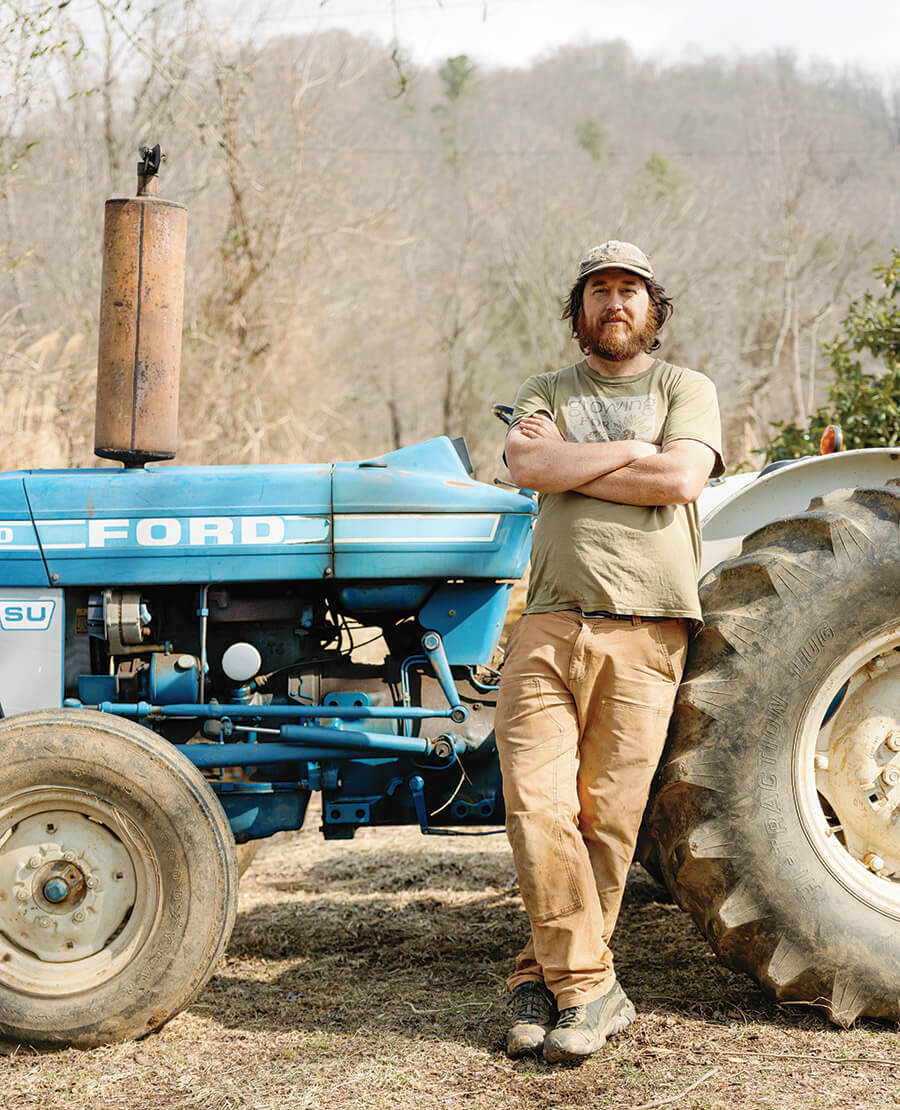
Matt Wallace photograph by Tim Robison
“A lot of people will put some brown sugar on their winter squash, and I don’t really find that necessary,” Wallace says as he leans back against his trusty blue Ford tractor. “I’ll stick a little dollop of butter on there and call it good.”
Blue Ridge Butternut didn’t exist when Wallace first started farming. He has been refining this squash variety over the past 15 years, organically cultivating it, season after season, from a fortuitous yet accidental cross-pollination between Waltham Butternut squash and Seminole pumpkin.
By letting the offspring continue to cross and saving seeds from the best plants each year, Wallace coaxed the squash to thrive under his organic, low-till growing practices. Blue Ridge Butternut combines the size, shape, and flavor of the original Waltham, which was first developed in Massachusetts, with the robust resistance to heat, humidity, and insects and pests boasted by the Florida-born Seminole. It’s a perfect match for his corner of western North Carolina, especially compared to the varieties he’d been growing.
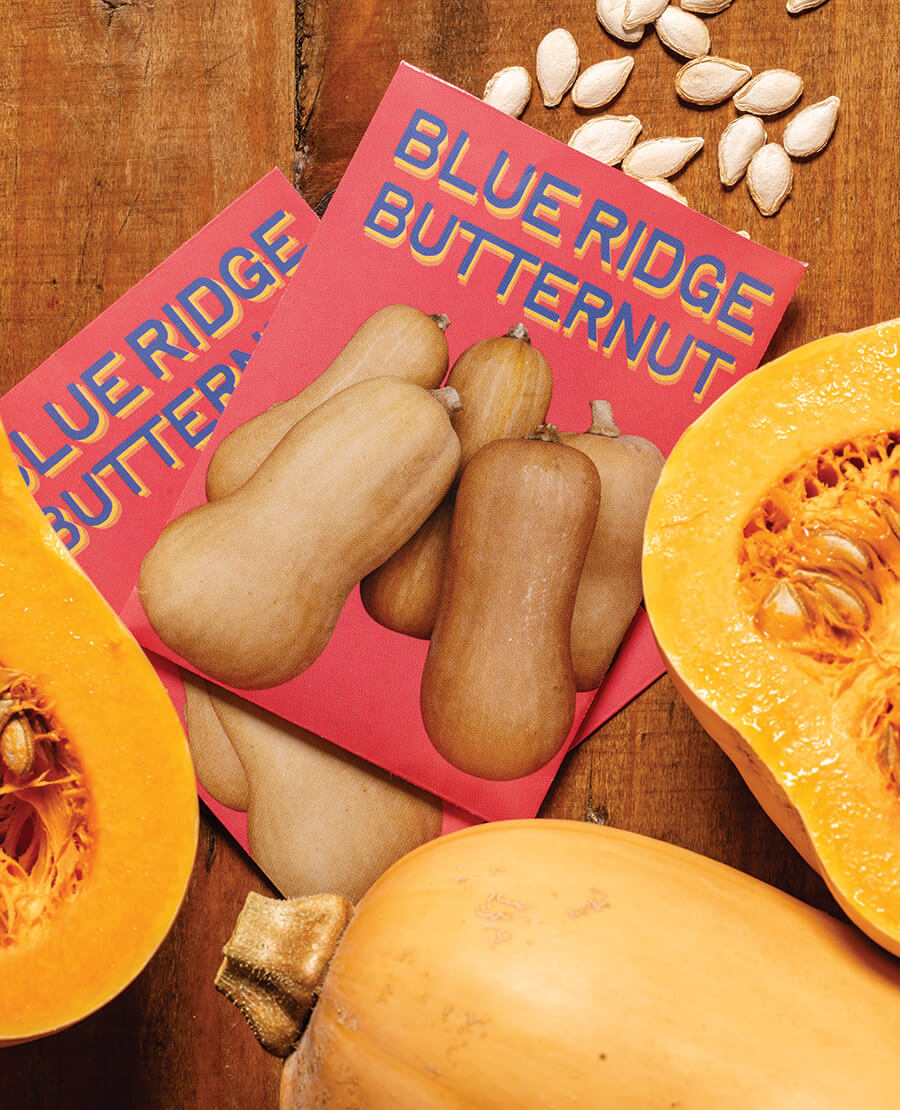
Appalachian Seed Growers Collective member Matt Wallace cultivated a squash called the Blue Ridge Butternut at his Madison County farm. photograph by Tim Robison
“Most seed crops are grown in California, the Northwest, or the Northeast, and very few are grown for the Southeast,” Wallace says. “The seeds that you oftentimes buy in catalogs just aren’t really adapted for this region from the start.”
Now, Wallace is part of a group working to solve that challenge for other farmers and gardeners. He offers the Blue Ridge Butternut seed through the Appalachian Seed Growers Collective, a grassroots effort to grow, adapt, and share crops that are better suited for the fields of North Carolina and surrounding states. Their mission: Develop “seeds that know the South.”
• • •
The collective emerged out of the Utopian Seed Project, an Asheville nonprofit devoted to building a diverse, resilient local food system. Its founder and executive director, Chris Smith, is himself a transplant — he moved to southern Appalachia from his native England in 2012 and began gardening here, aiming to supply his family with healthy, homegrown produce. Smith became obsessed with finding and breeding seeds that work well in the region. Since 2016, he’s experimented with okra varieties from around the world, explored tropical root vegetables like yacón and taro in anticipation of a changing climate, and crossed 21 types of collards together in search of new genetic combinations.
“Local seeds equal local food,” Smith says. “And that’s really what the collective is all about.”
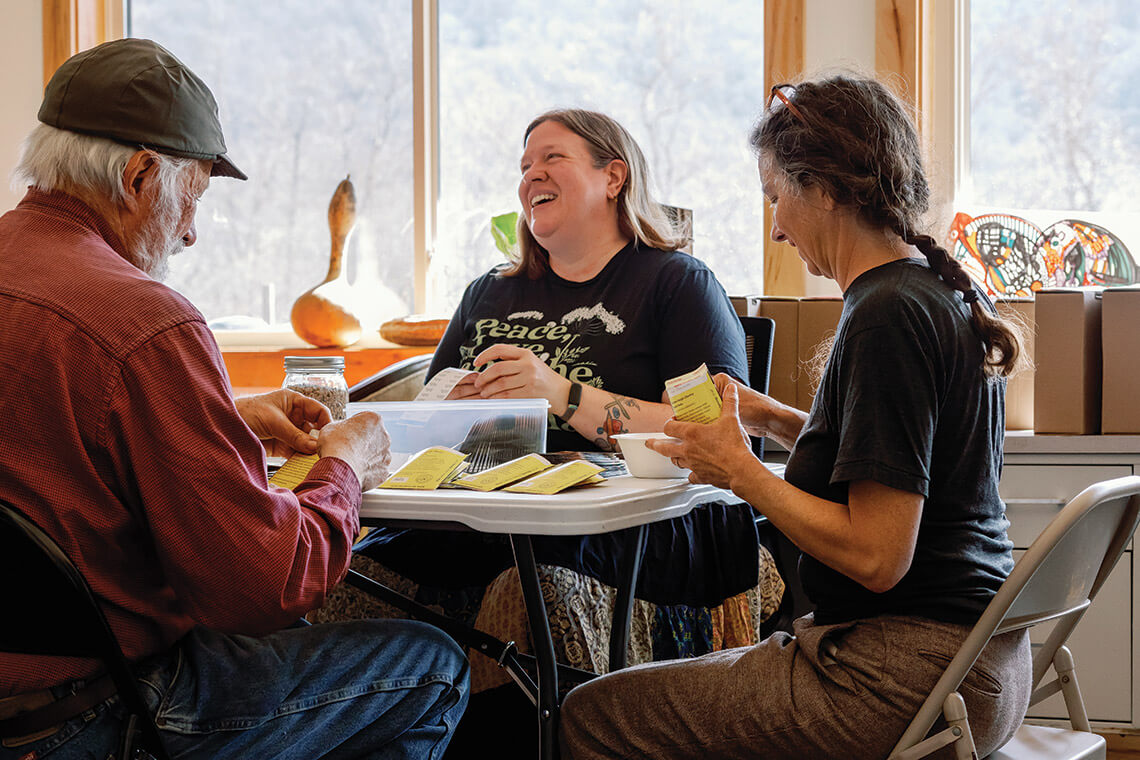
At farms like this one in Leicester, collective members gather each winter to package the seeds they’ve spent years refining for this region. photograph by Tim Robison
Smith and the dozen or so farmers he works with in and around Asheville have made great progress in finding or presenting varieties to accommodate the South’s diverse terrain and climate. Beyond Wallace’s Blue Ridge Butternut, the group’s offerings include the cold-hardy Living Web Ventura celery from Living Web Farms in Mills River, the beetle-tolerant Magic Bean pole bean with roots in Cherokee agriculture, and the quick-maturing, drought-tolerant Italia sweet pepper, originally from Italy but selected for Southern conditions.
Getting these seeds into more Southern fields and gardens has proven difficult. Most United States seed sellers source their products from growers outside the South or even overseas. Their business models rely on economies of scale and volumes that small farmers in western North Carolina can’t match.
In 2022, four years after they founded the Utopian Seed Project, Smith and his collaborators decided to start a seed business that did things differently. They chose to organize as a collective to let local growers cultivate what they know best, share equipment costs, and benefit from one another’s expertise.
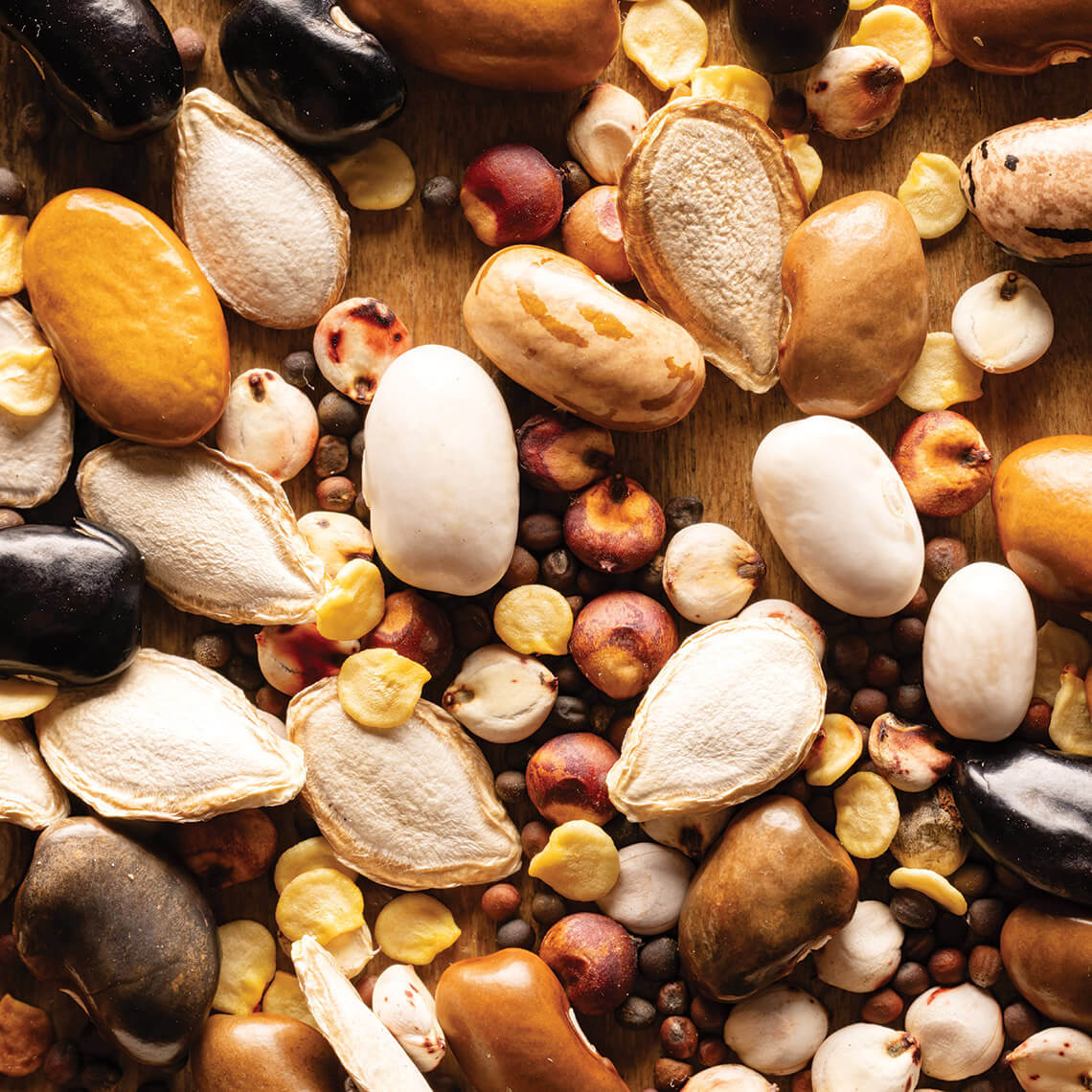
The Appalachian Seed Growers Collective experiments with developing seeds for beans, peppers, squash, collards, and more. photograph by Tim Robison
Perhaps most important, Smith says, is that the Utopian Seed Project handles the bulk of administrative tasks. It secures grant funding for new tools and does the bookkeeping, while the collective partners with vendors like Asheville’s Sow True Seed and Maryland-based Ujamaa Seeds to expand their reach.
“If it was just a group of farmers, I don’t think it would have gotten off the ground the way it has, because people are busy,” Smith says. “The Utopian Seed Project can hold that space, while farmers can grow the seeds but still be part of the decision-making process.” The collective allows growers to focus more on what they love: being in the field, hands in the Southern soil.
• • •
Clad in a camouflage trucker hat and overalls, Leeza Chen flips the switch on a vacuum cleaner. Chen, the Utopian Seed Project’s farm and seed manager, stands on a blue plastic tarp in the middle of a white-walled gymnasium in Asheville, demonstrating one of the tools that collective members use to clean and sift through seeds. A gaggle of curious onlookers emerges from the hundred or so who have come to the fall seed swap where Chen represents the collective.
A hose sticks into a thin frame where jagged planks peek through a plexiglass pane. As Chen pours a bucket of crushed radish pods into a bright orange funnel atop the contraption, the vacuum whisks away dirt, twigs, and husks through the boards while the seeds fall down a chute and out the bottom.
The crowd here is mostly composed of home gardeners, but Chen has run similar demonstrations for the farmers she works with. Although skilled at growing produce for market, many hadn’t grown plants for seed on a large scale before. It’s a different type of farming, she emphasizes: Seed farmers must harvest at just the right time, clean their seeds carefully, and ensure their product meets strict standards for germination.
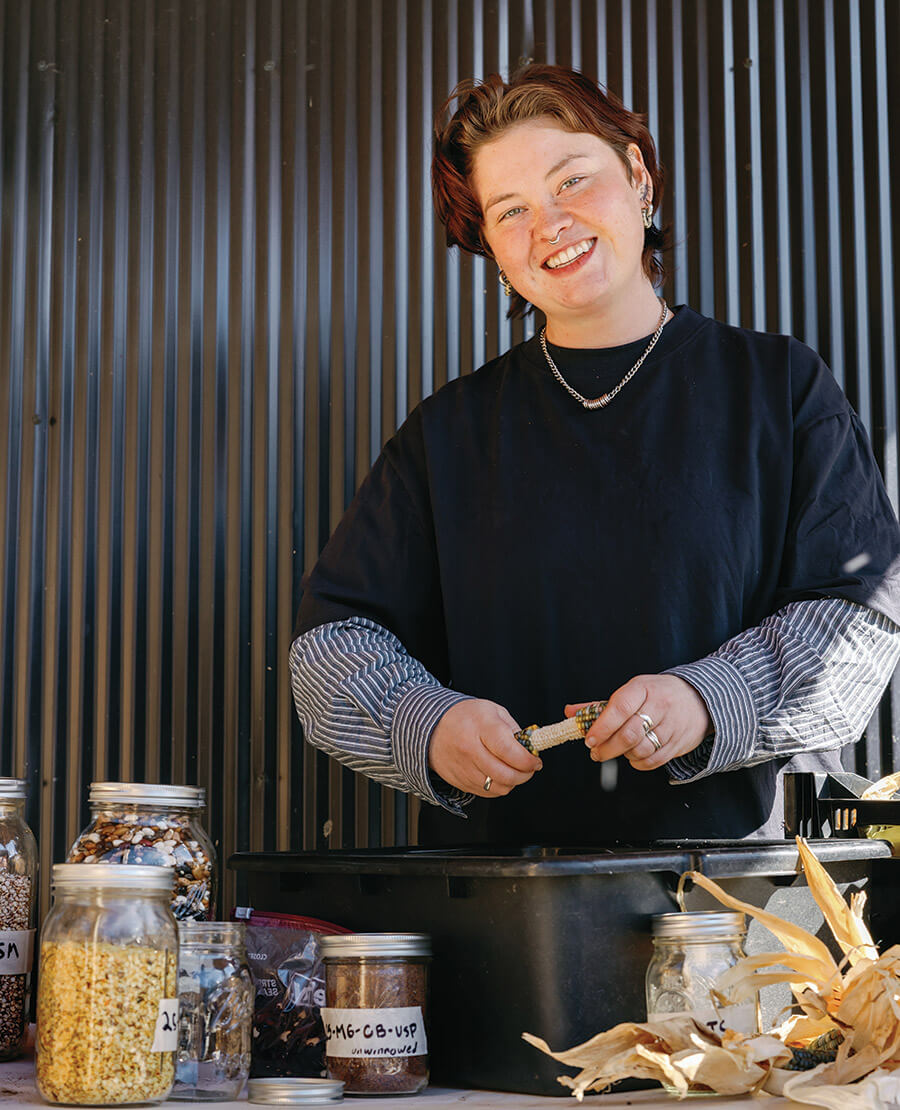
As Utopian Seed Project farm and seed manager, Leeza Chen demonstrates tasks like collecting seeds from heirloom corn at local events. photograph by Tim Robison
“A huge reason why we wanted to start the collective in the first place is making people feel like it’s OK not to know things; it’s OK to make mistakes,” Chen says. “Having a lot of grace built into our business model has been really important.”
These educational efforts have also helped customers better understand the work required to take seeds from plant to packet. And when people understand what’s involved in producing local seed, Chen says, they’re more likely to support it with their wallets. These seeds may cost a little more, but they give growers the resources they need to scale up, ultimately supplying more local farmers — and more local food.
Once the seeds are cleaned, they must be packed, often by the same hands that planted them in the spring. As part of their membership, farmers volunteer their time toward the common good, from seed packing to public demonstrations and online marketing.
Next year’s crop beckons, along with the potential to find an even better version of a beloved variety.
The collective’s farmers also set aside a good number of seeds for their own use. Next year’s crop beckons, along with the potential to find an even better version of a beloved variety. The endless dance of pollination — the plants, bees, and wind swaying over generations — twirls on.
Back at Rabbit Den Farm, Matt Wallace examines a few of the golden squashes lying at his feet. He sees a touch more damage from cucumber beetles than he’d like, and some of the squash necks are thinner than he’d prefer. He makes a mental note and looks for the plants with the healthiest foliage and the fruits with the most pleasing shapes.
At the end of the season, those are the seeds Wallace will store away. He’ll be dreaming of spring, and the chance to help the Blue Ridge Butternut know the South just a little bit better.
For more information, visit utopianseed.org/appalachian-seed-growers.
print it