We were enjoying a walk in the woods on a soft summer day, following no trail, the Cape Fear River lazing to our left as a stream-cut ravine deepened to the right. I had quickly become best buddies with Scott McCoy, the facilities supervisor who arranged my visit to this Fayetteville Public Works Commission land that’s off-limits to the public. We sought a historical artifact but found only a rare view of the river where Rockfish Creek feeds in. Retracing our steps, we swung around a hairpin curve of the creek to the area where a colonial road would have crossed it in February 1776.
Two hundred and fifty years ago, some 1,600 Loyalists, or “Tories” — supporters of King George III — followed that colonial road from Cross Creek (now Fayetteville) toward Wilmington. They were answering a call from Royal Gov. Josiah Martin to help a British army retake control of North Carolina. Martin had come down the same road the previous June, when rebels we call Patriots, or “Whigs,” had scared him into fleeing New Bern for Fort Johnston at today’s Southport.
A month later, as Martin watched from a British gunboat, 500 Patriots burned the fort in the first military action of the American Revolution in North Carolina — the only colonial or British fort destroyed by rebels anywhere during the war.
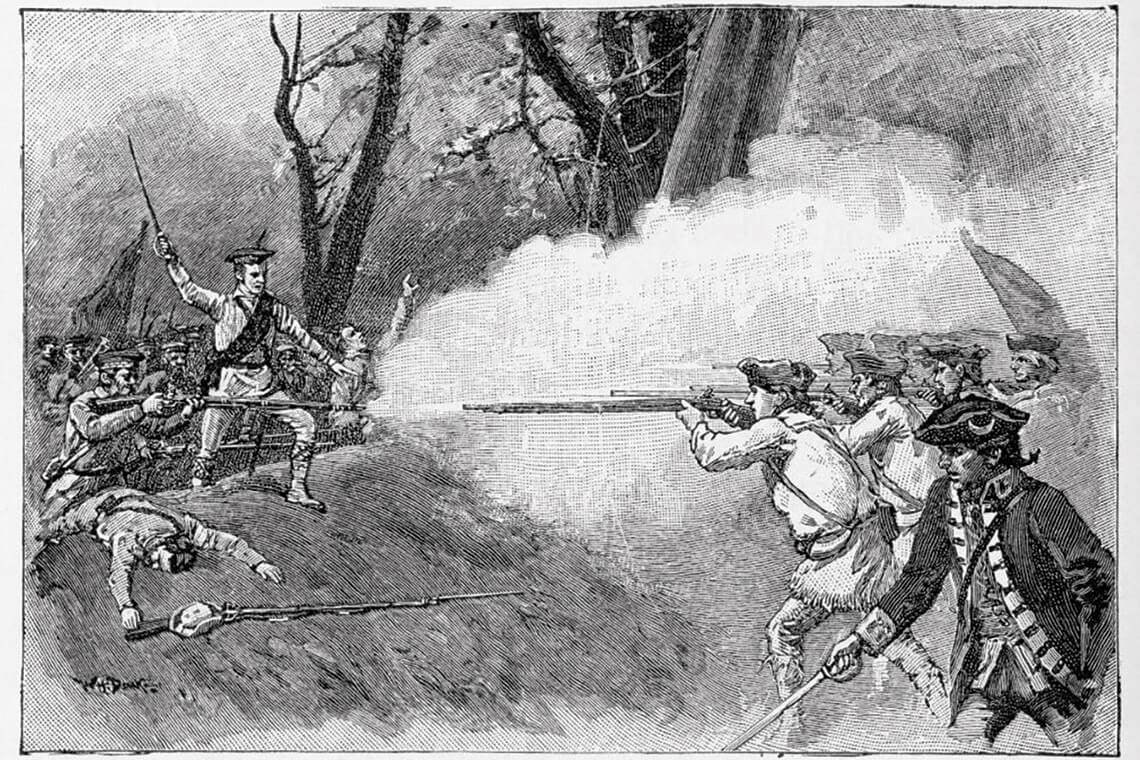
In Pender County, Moores Creek National Battlefield tells the story of the Patriot victory that took place there in February 1776. illustration by Interim Archives/Getty Images
To block the Tories, Col. James Moore and 1,000 soldiers had camped where Scott and I were standing and built a breastwork. A 1904 book said it still existed. We headed west. Pushing through underbrush and stepping over logs, I was getting more sweat and scratches than satisfaction. Finally, I announced, “We’re just going to head straight back this way to the truck, and if we don’t find it, so be it.”
Two minutes later, I practically tripped over a low, linear mound about five feet wide at the base, the best-preserved Revolutionary-era earthwork I’ve seen in the state.
I can say that because what started as a hobby five years ago turned into an obsession when I realized there was no detailed guide to Revolutionary War sites in North Carolina. As a lifelong history buff raised here, with a master’s degree in journalism, I decided to fix that. The resulting book-length website, AmRevNC.com, tells the stories of more than 100 locations, like the site of this breastwork.
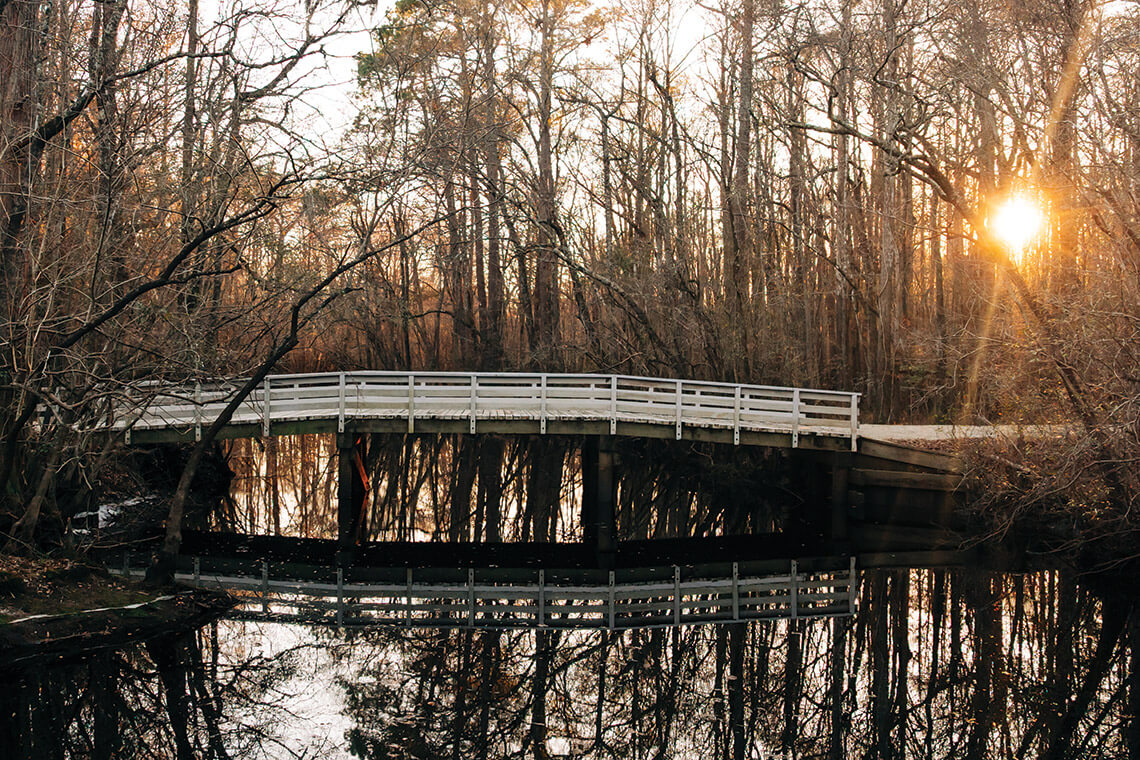
When British soldiers forged across Moore’s Creek Bridge in February 1776, they were ambushed by Revolutionary soldiers. photograph by Matt Ray Photography
It did its job, forcing back the Loyalists. But they crossed the river and eventually made their way to a huge defeat at the Battle of Moore’s Creek Bridge. In time, this forced some 3,000 British soldiers floating on the Cape Fear to go elsewhere, after an ineffective raid on the old colonial capital by a man destined to gain infamy in the new state: Lt. Gen. Lord Charles Cornwallis.
The bared foundations of that capital, Brunswick Town, illustrate how much history is barely seen in North Carolina, perhaps because so much research is required. One year, I drove 8,000 miles around the state to libraries, archives, historic sites, hills, woods, homes, graves, streams, and towns. The evidence I uncovered led me down (and up) astonishing paths.
• • •
A month after the adoption of the Halifax Resolves, more blows were struck for freedom, this time from the perspective of the Cherokee. Tired of colonist violations of their treaty border with Britain, a faction raided settlements on the frontier, killing around 40 people. In response, Brig. Gen. Griffith Rutherford led about 2,400 militia as far west as modern Murphy, destroying 11 farming towns and their crops with winter approaching. Three of my ancestors were in that army. Picnicking near purple butterflies on one of those flattened farms, near ancient Cowee Mound, created a mixed emotion I can’t label.
Headed that way on U.S. Route 23/441 over Cowee/Watauga Gap, a left leads to a dead end on the former highway, which follows the colonial path. Stand where the kudzu has taken over the road and look west: That’s what Private Billy Alexander saw minutes before 20 warriors rose at the gap, fired a volley, and gave him a limp for life.
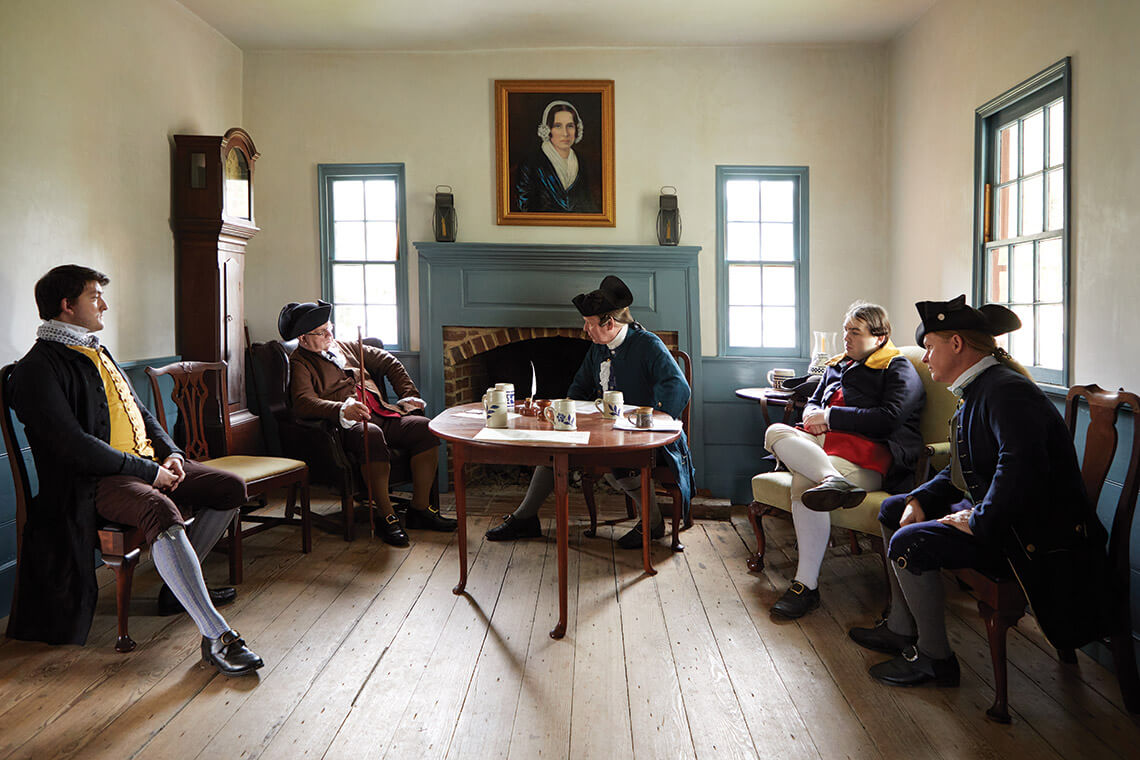
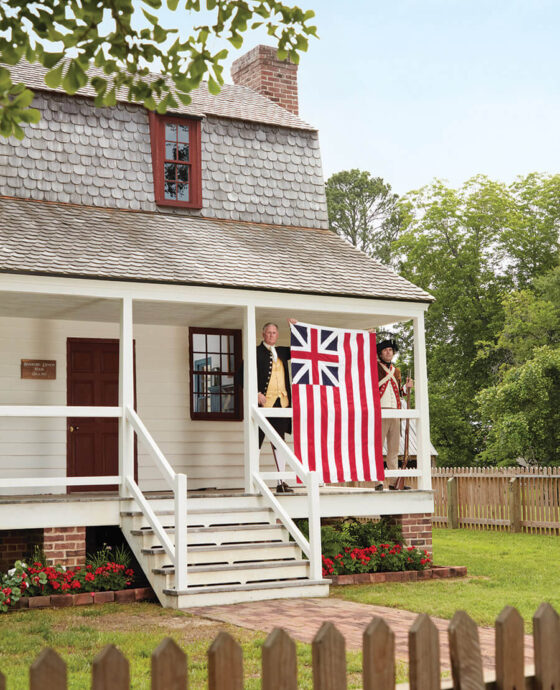
During Halifax Resolves Days in April, the Bradford-Denton House hosts hearth cooking, blacksmithing, and other living-history demonstrations. photograph by Chris Rogers
Over the next few years, North Carolina men mostly went to war elsewhere in the “United Colonies,” including 400 people of color, who brought along some of their families. Women who were left behind took over family farms and businesses, dealing with shortages of everything and sometimes standing up to armed bullies. Paper promises printed by the state as money for lack of metal coins rapidly became worthless. Salt riots broke out. The state created a tiny navy to keep some goods flowing through a British blockade, though legal pirates called privateers were more effective.
Loyalist families were hit hardest, as the state passed laws to take their lands. World-famous Flora Macdonald was constantly harassed by Patriots at her plantation in the Uwharries south of Troy. Her husband had been captured at Moore’s Creek, and Tory neighbors blamed her for their suffering because he had recruited their sons and husbands.
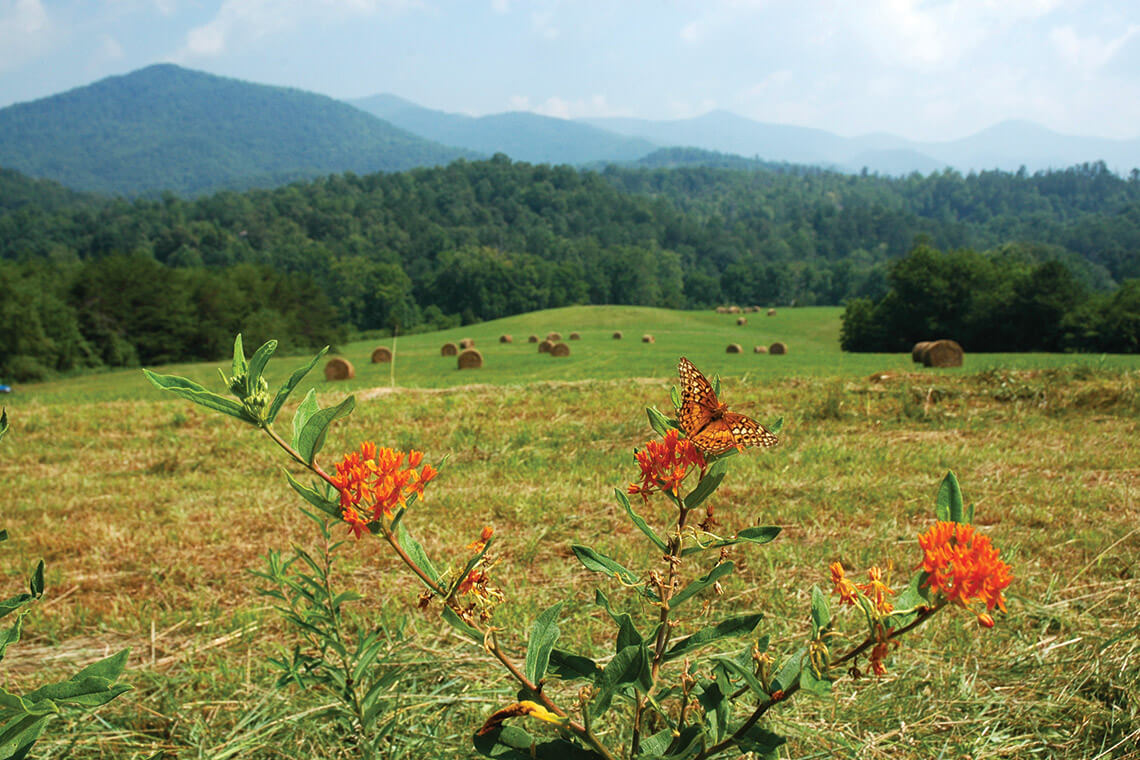
In November 1776, colonial militia attacked Cowee Mound, a hub for the British-allied Cherokee in what is now Macon County. photograph by Ralph Preston, Courtesy of Mainspring Conservation Trust
On our third try to find the Macdonald homesite, AmRevNC Site Investigator Martin Brown and I drove down a road that turned to gravel and parked by Cheek’s Creek. We walked a thin trail across open woods and then plunged through grabby bushes to the water. After searching in both directions, we found ourselves standing on a half-buried timber that we believed to be part of the Macdonalds’ mill building.
Loyalists seeking freedom from the state government in the region east of Tarboro used symbolic sticks and secret words in their plot to kidnap the governor. The Gourd Patch Plot fell apart through an attack of conscience.
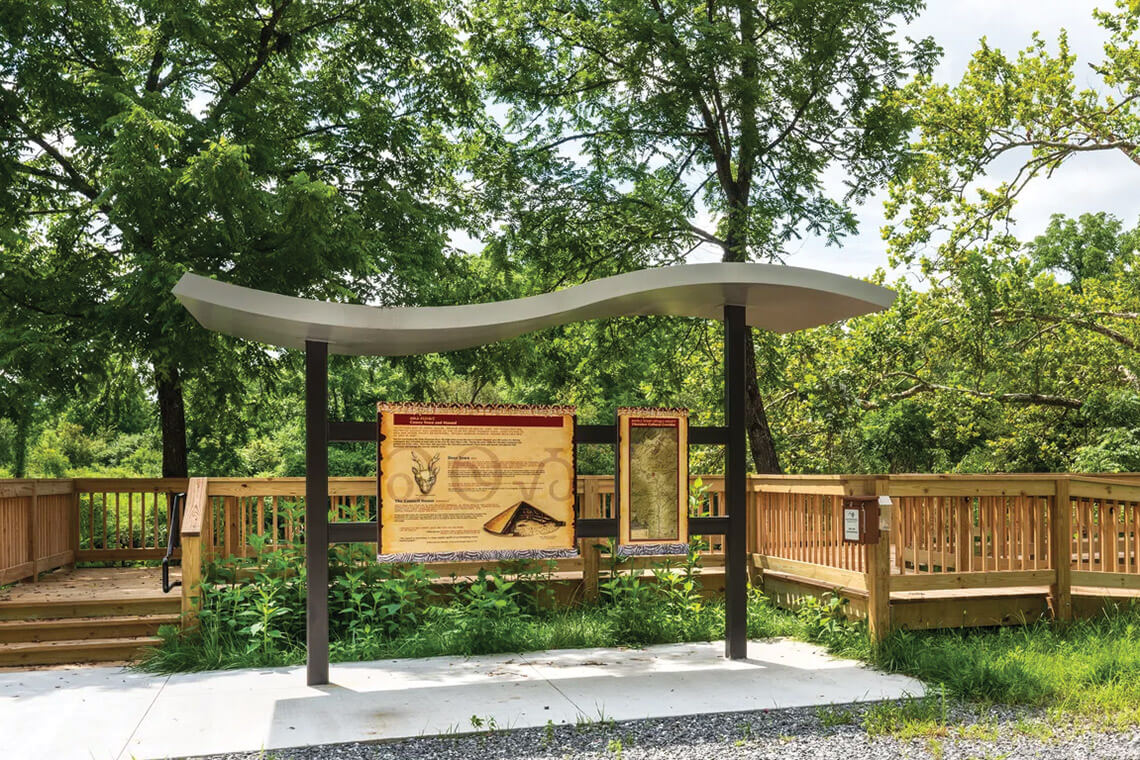
The Cowee Mound site is not accessible, but an interpretive marker provides a view of it across the Little Tennessee River. photograph by Quintin Ellison Photography
Many people just wanted the freedom to avoid the war. Religious groups that opposed conflict, like the Moravians, were harassed by both sides, including many incidents in today’s Old Salem. These groups ended up paying three times the taxes of everyone else to avoid military service.
Some evidence suggests that frontiersman Daniel Boone may have been neutral about the Revolutionary War, yet he joined the militia in 1775. I fulfilled a 50-year dream on my second run to a rural road southwest of Wilkesboro, armed with an archaeology report provided by one of our state’s invaluable county history librarians. I looked through an arch of greenery into a farm field speckled with flowers at the only Boone homesite in North Carolina visible to the public. In my head appeared the cover of a book I’d read at 11, showing a young Daniel Boone rafting the Yadkin. One of my life’s circles closed.
• • •
When Charleston fell to the British in May 1780, North Carolina’s regular Continental Army troops and many militia disappeared into prison camps, where some 800 died. Brig. Gen. James Hogun was one of them, choosing to stay with his men and paying with his life. Staring at the site of the home he hoped to return to outside Hobgood, now a tobacco field in Halifax County, I contemplated his example of true leadership.
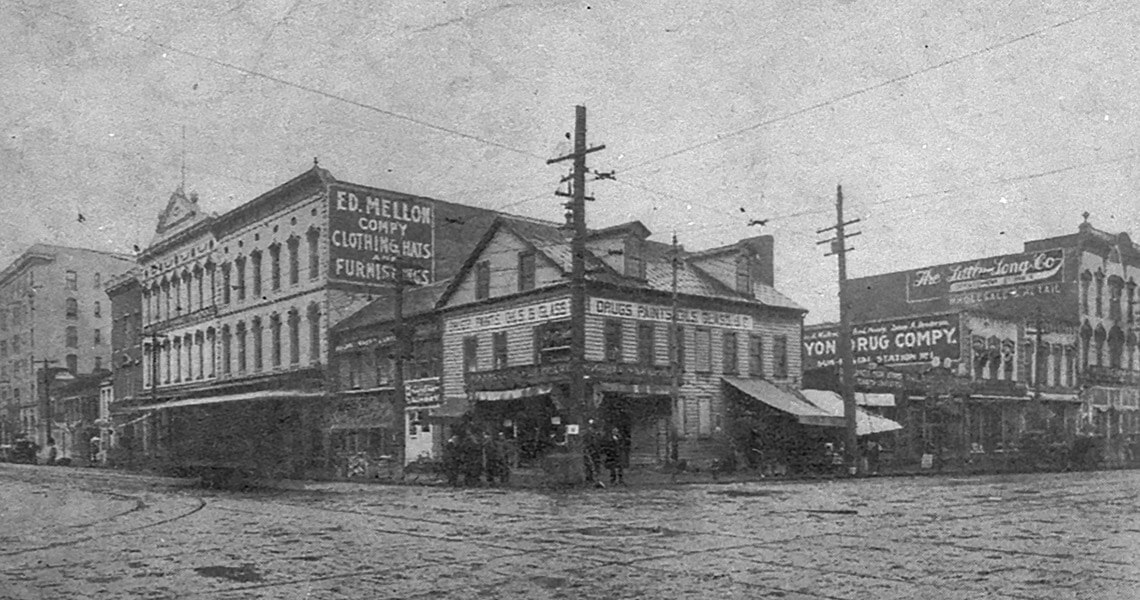
Old Osborne Corner once stood at the intersection of Trade and Tryon street Photography courtesy of Mecklenburg Image Collection, Courtesy of the Robinson-Spangler Carolina Room, Charlotte Mecklenburg Library
More troops were lost when Maj. Gen. Horatio Gates unwisely marched into South Carolina and blundered into an army led by Cornwallis. Gates rode a 180-mile arc through North Carolina in three days to escape, forgetting to bring his army and earning a snarky comment from Alexander Hamilton.
Cornwallis invaded North Carolina that fall. One afternoon, the skyscrapers of Uptown Charlotte disappeared in my mind’s eye as I saw, from afar, a green dot appear down Tryon Street. As I watched, that dot soon expanded into the green-coated cavalry of the “British Legion,” minus its ill and infamous commander, Lt. Col. Banastre Tarleton. The dragoons charged past me toward the wooden courthouse in the middle of the intersection with Trade Street. They were thrice turned back by volleys from under and around it as 200 Patriots faced down Cornwallis’s men. The redcoat infantry drove them off, but they had bought time for other militia to escape.
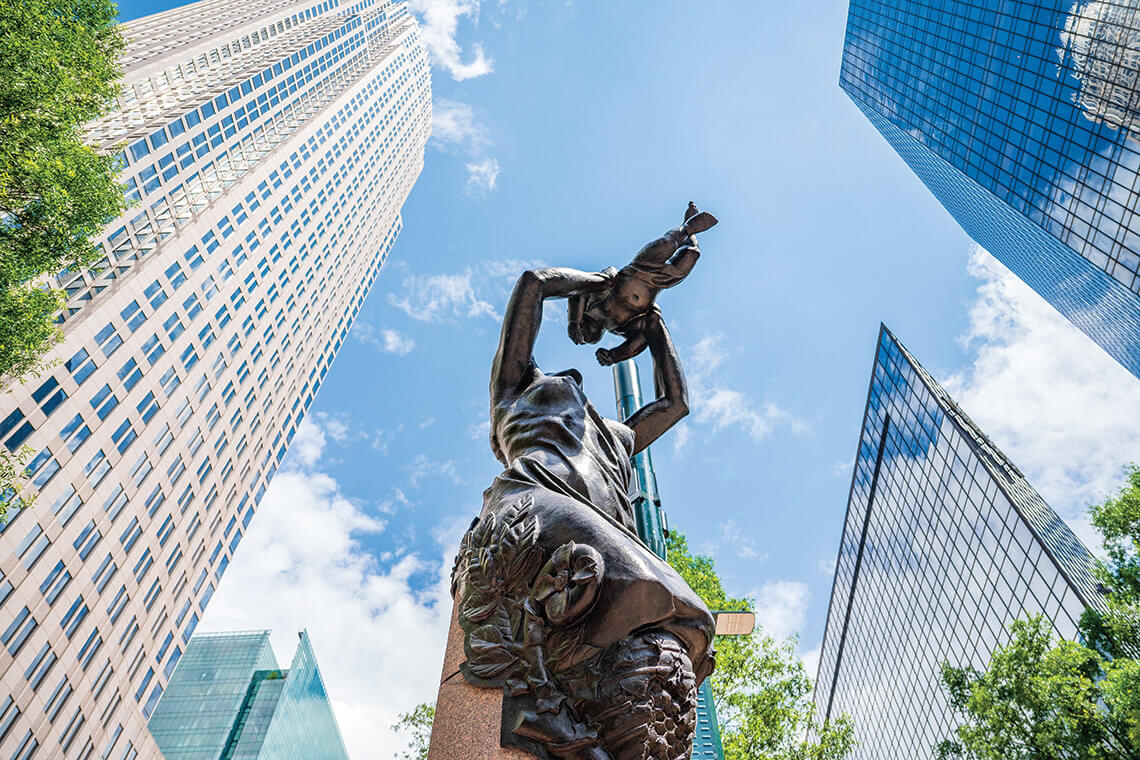
Look beyond its shiny skyscrapers, and you’ll find plenty of history in Charlotte, too. Where Old Osborne Corner once stood at the intersection of Trade and Tryon streets, four statues now symbolize the Queen City’s past, present, and future. photograph by Cody Hughes, Courtesy of Charlotte Regional Visitors Authority
Cornwallis occupied the town and sent a force west to suppress the Patriots. Its commander, Maj. Patrick Ferguson, camped outside Rutherfordton, made the mistake of threatening to cross the Appalachians into modern Tennessee to “lay waste … with fire and sword.” The “Overmountain Men” and other militia came after him, catching up at Kings Mountain. They killed or captured most of Ferguson’s men and two of his mistresses, leaving him in the rock-covered grave where he still lies. Cornwallis withdrew south.
• • •
For six months in late 1780 and early 1781, North Carolina was the center of the Revolutionary War. When another chunk of his army was captured and hauled this way, Cornwallis gave chase, pushing across the Catawba where the Lake Norman dam is now. Prescient planning by Continental Maj. Gen. Nathanael Greene got his men across the Yadkin at the Trading Ford near Spencer and blocked the British. He received a warm meal and much-needed cash for the army from tavern owner Elizabeth Steel in Salisbury, and left his mark on a portrait of King George III, still visible at Thyatira Presbyterian Church.
Greene’s army finally slipped across the Dan River in Virginia minutes ahead of the British, winning the “Race to the Dan.” This strategic withdrawal through the state is still taught in military schools. After gathering troops and supplies, Greene returned to force a battle.
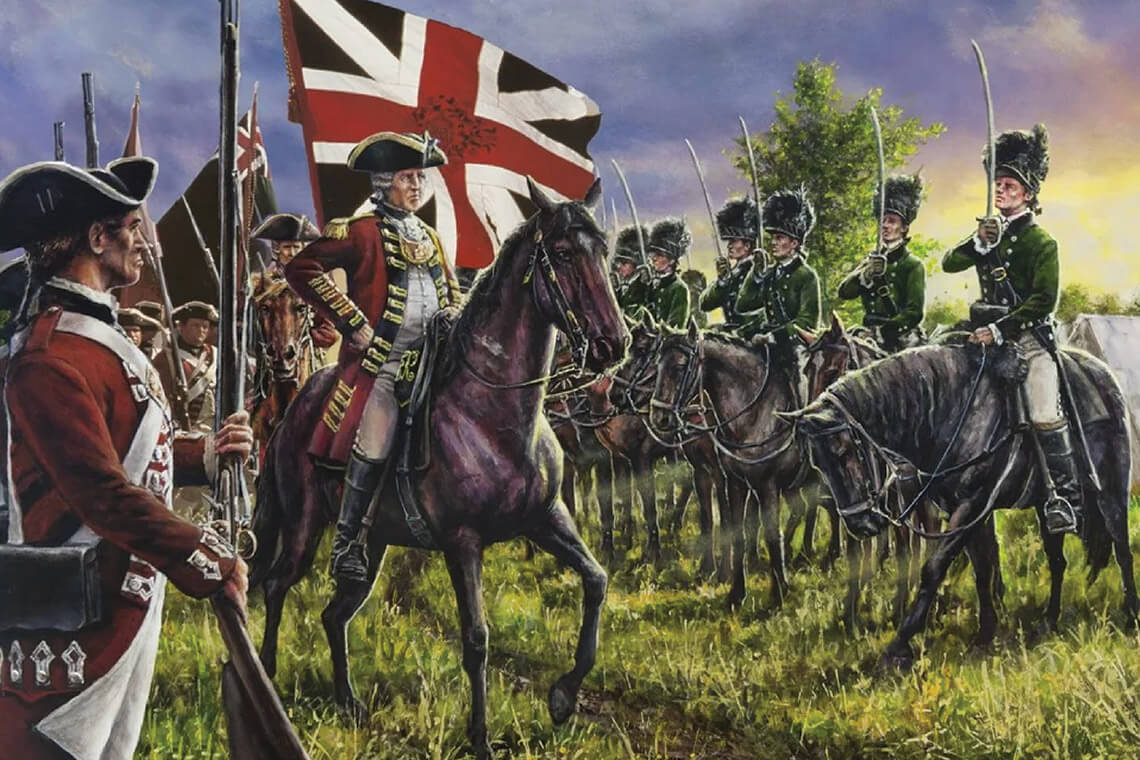
A painting by North Carolina artist Dan Nance depicts a scene from the Battle of Charlotte in September 1780: Lt. Gen. Lord Charles Cornwallis ordering his troops to advance on the Americans once again. painting by Dan Nance
Meanwhile, Cornwallis took over Hillsborough and called for Loyalists to join him. In Burlington, a residential street peters out partway into a yard. I asked an older gentleman, “Do you know you are mowing a battlefield?” He didn’t. Tories under Col. John Pyle heeding Cornwallis’s call stepped aside to let green-coated cavalry ride by, discovering far too late that these were the men of Continental Lt. Col. Henry Lee. A quarter were killed in Pyle’s Defeat (or Massacre). I told the mower that bodies once lay at our feet.
After more maneuvering and several minor battles, the armies met on Greene’s chosen ground at Guilford Courthouse in modern Greensboro. The British held the field at the end of the day but lost a fourth of their troops. Cornwallis’s forces retreated downstate and never recovered. Their next major battle, at Yorktown, was their last.
On the way, they paused in Wilmington, occupied by a British corps for most of 1781. Today, you can walk the likely campsite just south of downtown. Maj. James Craig raided as far north as New Bern, where I stood by a marina and “watched” as a Tory officer shot a Patriot escaping by rowboat, the victim’s wife standing by me. A former grief support volunteer, I thought of the complications raised when you had no control over the fate of your spouse.
• • •
Not surprisingly, the British ranks were swelled by more people seeking their own definition of freedom. Suffering some of the worst slavery conditions in the “civilized” world, hundreds of African Americans escaped their Patriot enslavers, despite militia orders saying they could be killed merely for “carrying provisions of any kind.”
Even after the British left, the civil war between Whigs and Tories in North Carolina was the bloodiest of any state’s. Among other exploits, Loyalist Col. David Fanning, based near Ramseur, captured Gov. Thomas Burke and much of the government in Hillsborough. On a treeless hill near what is now the Asheboro airport, Fanning shot a Patriot officer in the man’s home in front of his 10-year-old daughter. Standing at the homesite brought me chills on a warm day. But Whigs were quick with the extralegal rope, hanging many Loyalists without trial from the Tory Oak in what is now Wilkesboro.
Eventually, the Tories were defeated in eastern North Carolina. At Elizabethtown, a female spy helped some 70 Patriots send 300 down the “Tory Hole,” and a surprise charge into Little Raft Swamp near Red Springs drove Loyalists off their “Scotch ponies” for good. A supply raid on Beaufort the next year featured the last engagement with redcoats in North Carolina. The British commander in chief said their fall in America was the result of a “chain of evils” starting with Kings Mountain — most of whose links lay in North Carolina.
This anniversary year, you can explore the entire state by walking in the footsteps of different kinds of freedom-seekers. Not soldiers fighting distant battles in faraway lands, but the everyday people — perhaps our own ancestors — whose tears and blood soaked into our state’s soil, whose stories we can discover in our own backyard.
print it