Put ramekins on a baking sheet. Bake for 25-35 minutes, until puffed and golden. Remove from oven, and let stand for 5 minutes. With a flexible spatula, remove strata to
Listen as the pages of the magazine come to life in the Storytellers podcast showcasing the voices of Our State writers. Each podcast episode features a writer reading their column
Listen as the pages of the magazine come to life in the Storytellers podcast showcasing the voices of Our State writers. Each podcast episode features a writer reading their column
Listen as the pages of the magazine come to life in the Storytellers podcast showcasing the voices of Our State writers. Each podcast episode features a writer reading their column aloud, allowing each distinct voice to shine. Click below to listen to Eleanor read her column aloud.
Nature is a scramble, some say. A dog-eat-dog world. A competition. Survival of the fittest.
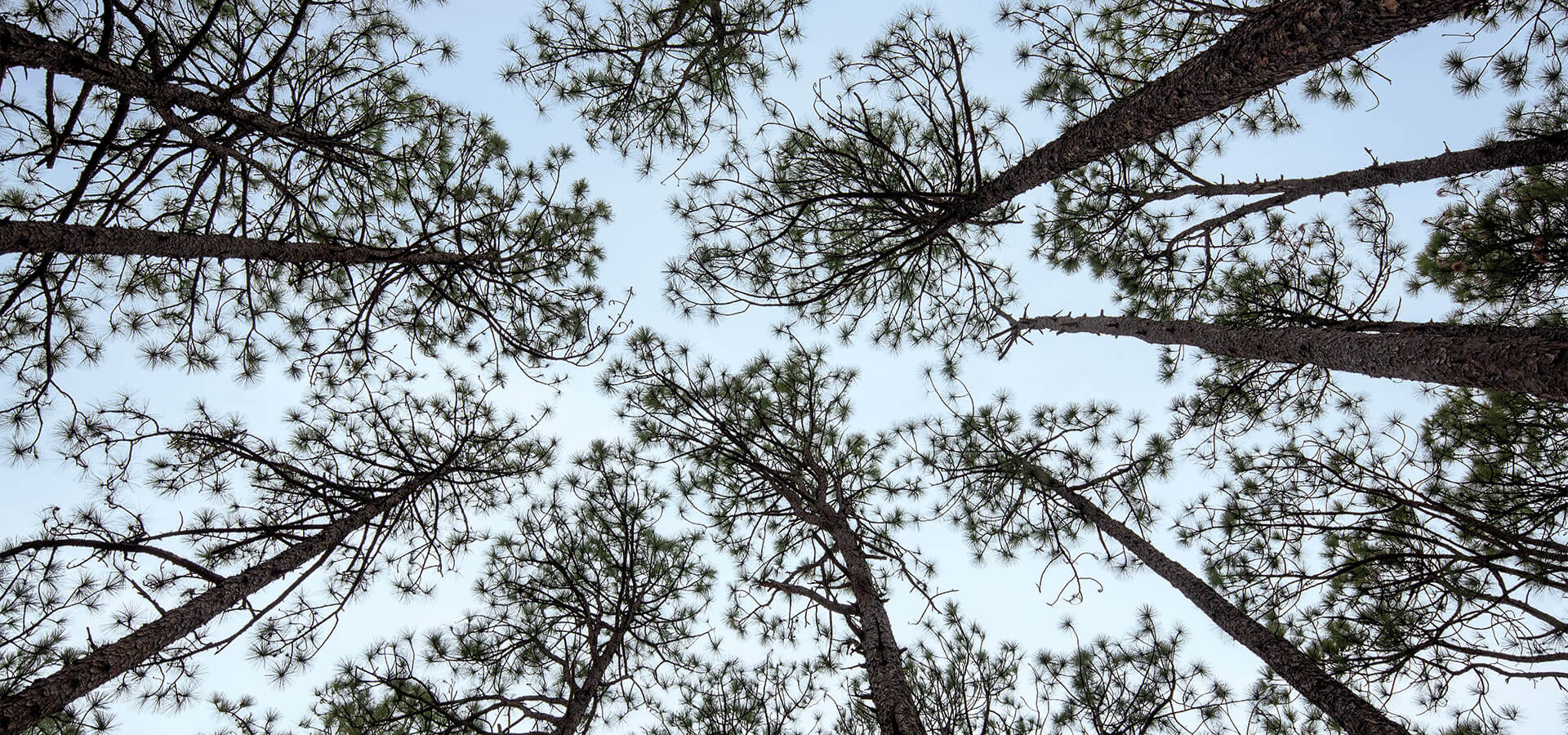
The truth is, sometimes nature comes in tender forms. It comes politely. Sometimes, for example, trees say, “pardon me” to each other. They give one another a little space. A phenomenon called crown shyness, we find it by standing among our oaks and maples, or beneath our pines, and looking up. There, we see the treetops, their crowns. If they’re practicing crown shyness, their upper branches won’t touch. Instead, rivers of sky wind through the canopy, great meandering snakes filled with sunlight and stars.
Not every place has such polite trees, and not every tree grows politely. We aren’t sure why trees in some forests behave cordially while others act like children scrabbling to the top of a hill, tumbling and reaching, pinching and twining limbs. When trees give each other room at the top, the rest of the forest has room to breathe. Sunlight pours through the gaps to the floor, nourishing plants and animals below. Rain trickles through. Leaf-chomping insects have a harder time leaping from tree to tree. Wind passes through safely as branches don’t bump and twist and break in the jostle.
• • •
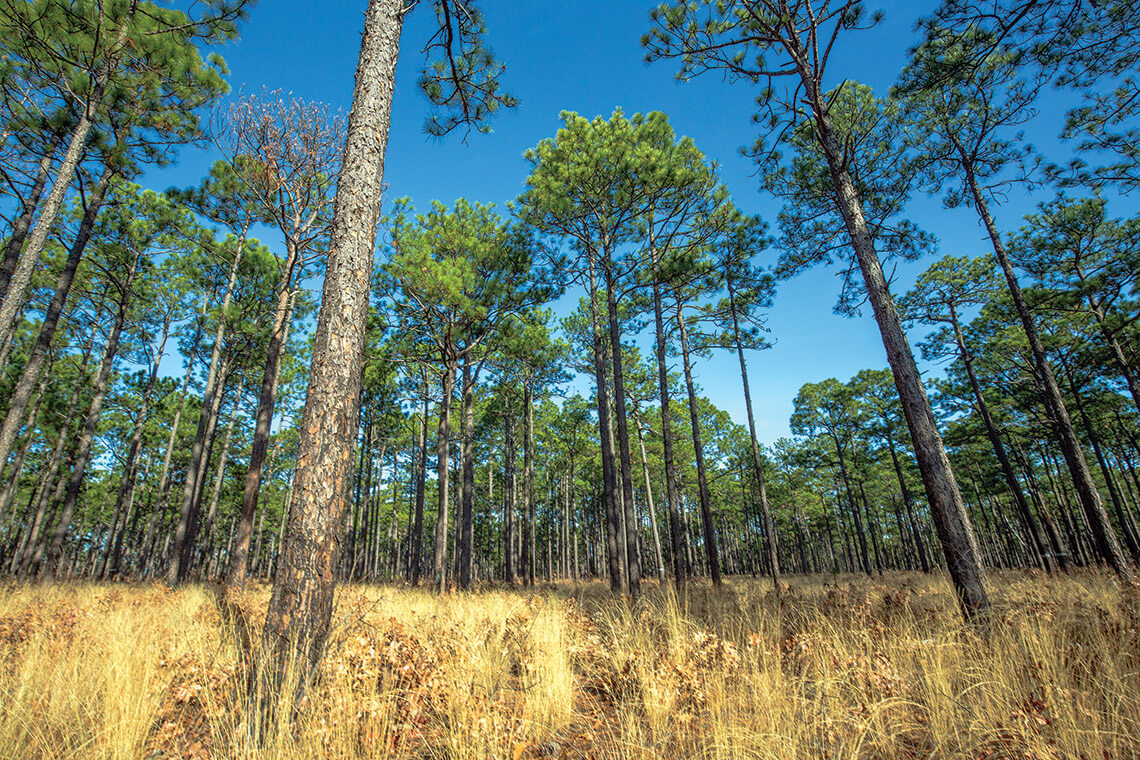
In North Carolina, forests filled with the sky-worn streams of crown shyness grow across the state. At Weymouth Woods in Southern Pines, a sliver of our state’s once-mighty pine savannas, the trees grow tall and give each other room. There, light can fall to the soft, sandy soil and needles below, where wire grass grows strong. Turkey and blackjack oaks return favors with longleaf pines, bowing but not kissing when the wind blows.
At Weymouth, everyone has clearance to breathe, space to see, the capacity to feel the world without also feeling the jumble of a crammed room. In young forests, crowns still push and shove, so trees can trip over each other, block out the sky. Some older forests can tangle elbows and shoulders, too. If you want to find crown shyness, keep looking up when you’re among trees in your yard and parks. You’ll see it eventually — the map of sky shimmering between the outlines of treetops.
At Weymouth Woods, breathing room keeps the savanna bright. Longleaf pines stand tall and widely spaced, allowing light to reach the sandy soil where wire grass grows. photograph by Todd Pusser
It turns out that, as with people, it takes the same amount of effort, maybe even less, to be polite as it does to slight and claw. It takes the same knowledge, too. For trees, mutual kindness depends on the temperament of the trees around them. Polite trees are more likely to grow in polite forests. It also depends on the temperament of their own species. For example, longleaf pines are more likely to grow politely than many oak species. Still, in places where crown shyness establishes, like among the pines of Weymouth Woods, other trees — even impolite oaks — will often get in line.
For trees, and for people, politeness fosters harmony. Giving space, to listen or watch or let the wind blow, to let someone come through the door first or to share gratitude, makes life easier for everyone when storms come. In a sputtering, grasping world, it can seem difficult to find space to give. There’s plenty of sky to go around.
Get our most popular weekly newsletter: This is NC


 Listen as the pages of the magazine come to life in the