I find Ammie McRae Jenkins underneath an open-air, tin-roofed shed near tables full of food. She’s sitting, her cane within reach. She knows she’ll need it when she gets up to fill her plate with what she calls “good ol’ soul food”: fried fish, cabbage, collard greens, and cornbread. But right now, she can’t. She’s got too many people walking up introducing themselves, reminding her of when and where they saw her last.
“Hello there,” says a man, leaning down to meet Ammie eye to eye. “You remember me?”
“I remember a little boy,” says Ammie, smiling. “I don’t remember a grown man.”
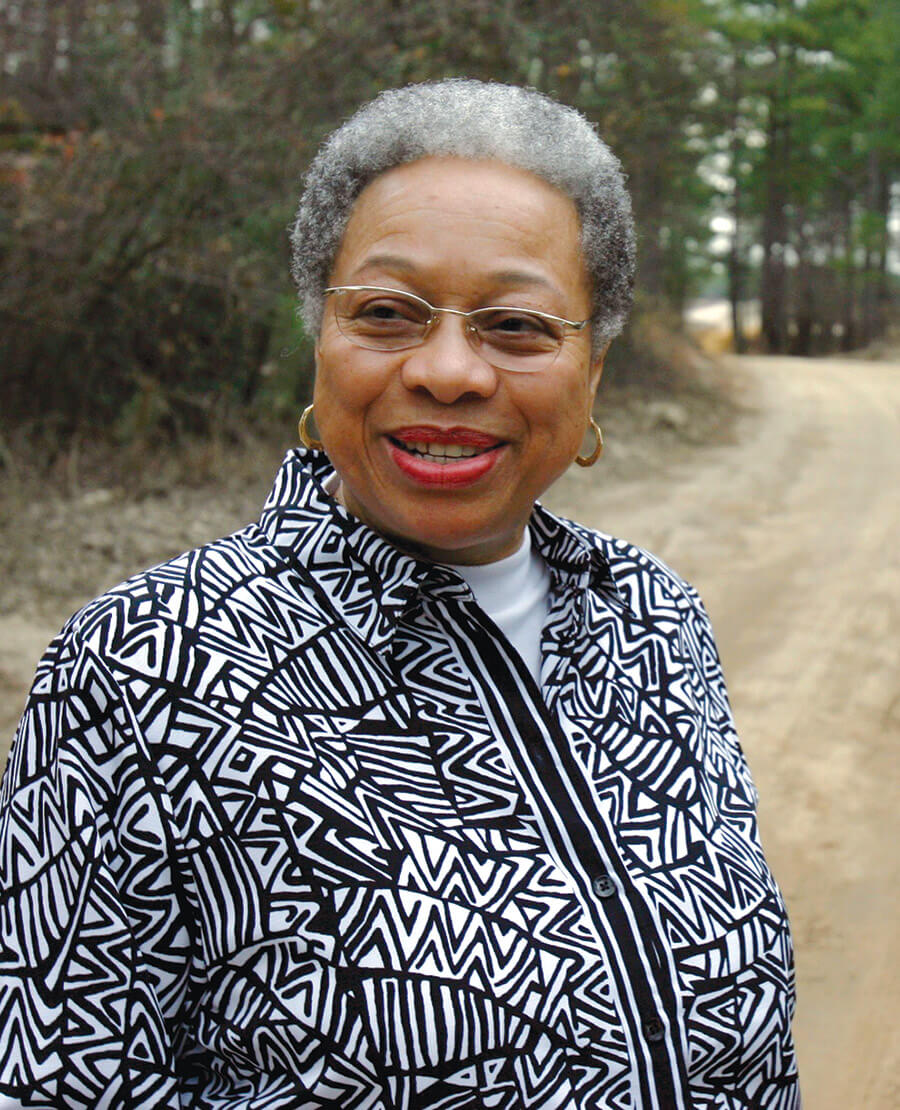
Ammie McRae Jenkins photograph by Chris Seward/The News & Observer
At 84, Ammie remembers all who come. And on the last Saturday in September, they come to a gathering off Chapel Hill Road in Spring Lake because of her. Virginia. Ohio. Alabama. Michigan. And various pockets in North Carolina. They come from near and far for the annual celebration of the Sandhills Family Heritage Association, a nonprofit Ammie started here a quarter century ago to empower those who have long felt powerless and know their history matters.
Ammie needed help to make that happen. Everyone she approached said yes.
They now run a farmers market, hold cooking demonstrations, and promote healthy living through diet and exercise. They offer custom historical tours of Cumberland and Harnett counties and hold church services in a replica of a brush arbor to show how the enslaved worshipped away from the suspicious eyes of white people. They schedule workshops on such topics as writing wills and researching genealogy, and distribute food to needy families and older, homebound residents.
They’ve cleared out underbrush from a patch of woods behind a parking lot and have begun sprucing up an old cemetery, the final resting place for dozens of enslaved and formerly enslaved people of color buried there more than 100 years ago.
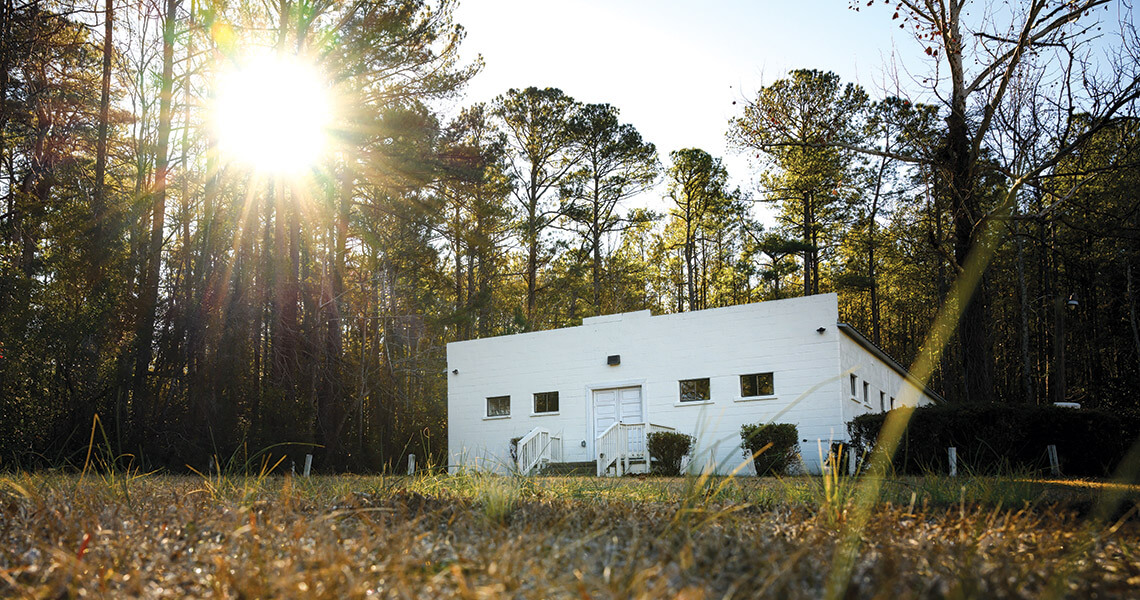
Now, to the one-story cement-block structure, painted white, about two dozen steps from where Ammie sits. In 2001, due to changes in building codes and needed repairs, the structure known as the Spring Lake Civic Center closed and was being considered for demolition. With the help of nearly $500,000 in grants, Ammie’s nonprofit saved it. They need another $140,000 to finish the outside excavation work and reopen a renovated community center, a safe space for Black people during an unsafe time decades ago.
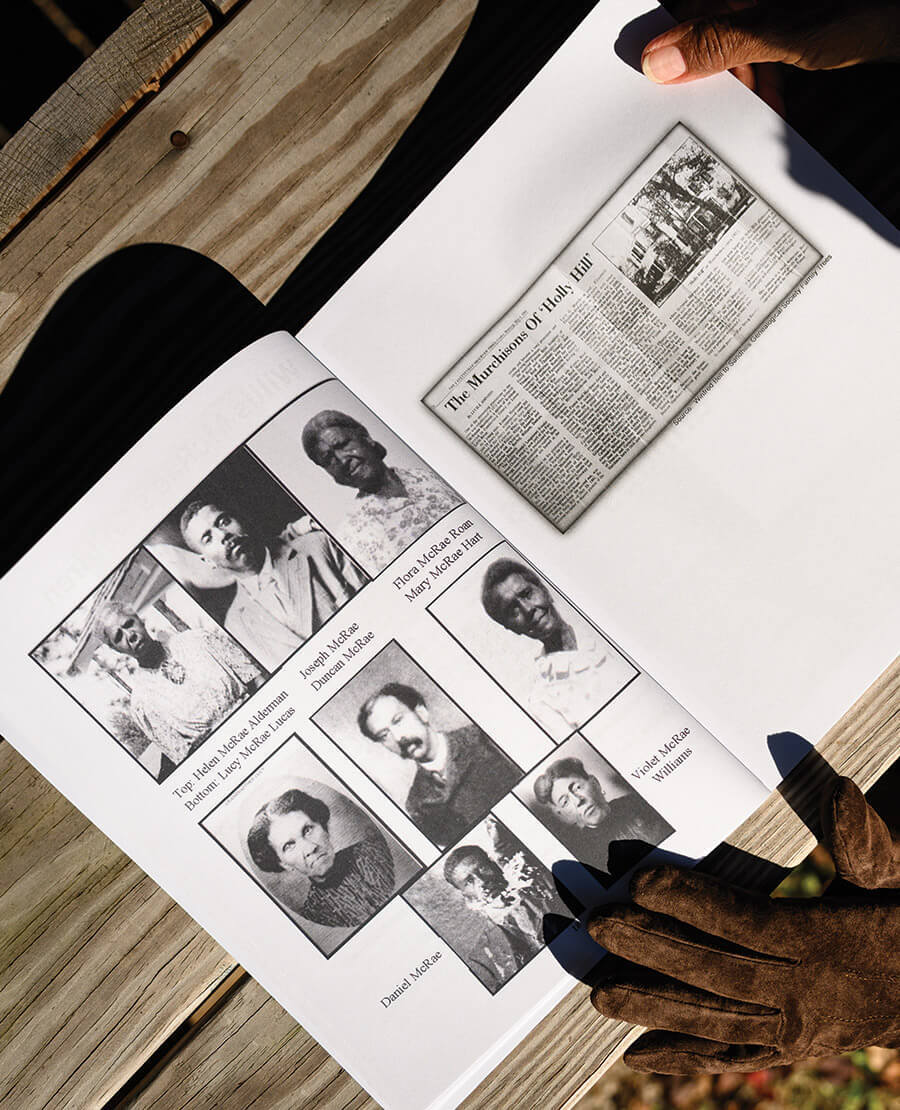
The Sandhills Family Heritage Association has put together a book detailing the histories of local Black families with the help of members. photograph by Andrew Craft
“All our civil rights meetings happened right there,” Ammie tells me, pointing at the building with her cane. “It was the hub of everything. We had a place to come.”
All morning, I hear Ammie’s hiccup of a laugh as she tells stories and encourages any young person she doesn’t know to join the group.
“This is not an old folks’ thing,” she tells them, emphasizing every word. “This is a young people thing, too. We are interested in your future.”
When I get ready to leave, Ammie tells me she’ll see me in a few weeks. She wants me to meet a few board members and hear more about the consequential rebirth of the land they own.
That all happens. But not with Ammie.
• • •
Larry Dobbins was a high school freshman when he first walked into the community center for a sock hop. He couldn’t dance. But it didn’t matter. He was surrounded by his peers in a big room with many windows and a concrete floor, a potbellied stove in the corner, and wood paneling in the back near the kitchen and bathrooms. The best thing? Loads of folks from surrounding communities came together.
Larry’s second cousin, a bricklayer, helped build it in 1945. He was one of seven tradesmen who volunteered their talents to build a 2,600-square-foot communal hub from cinder blocks and donated materials. It became a home for everything from cotillions and reunions to voter registration drives. Those activities transformed the Spring Lake Civic Center into a symbol of strength and perseverance on less than two acres of land once owned by a turpentine plantation. The land was later bought and gifted to Ammie’s organization in 2005 by descendants of enslaved people who had worked on the plantation.
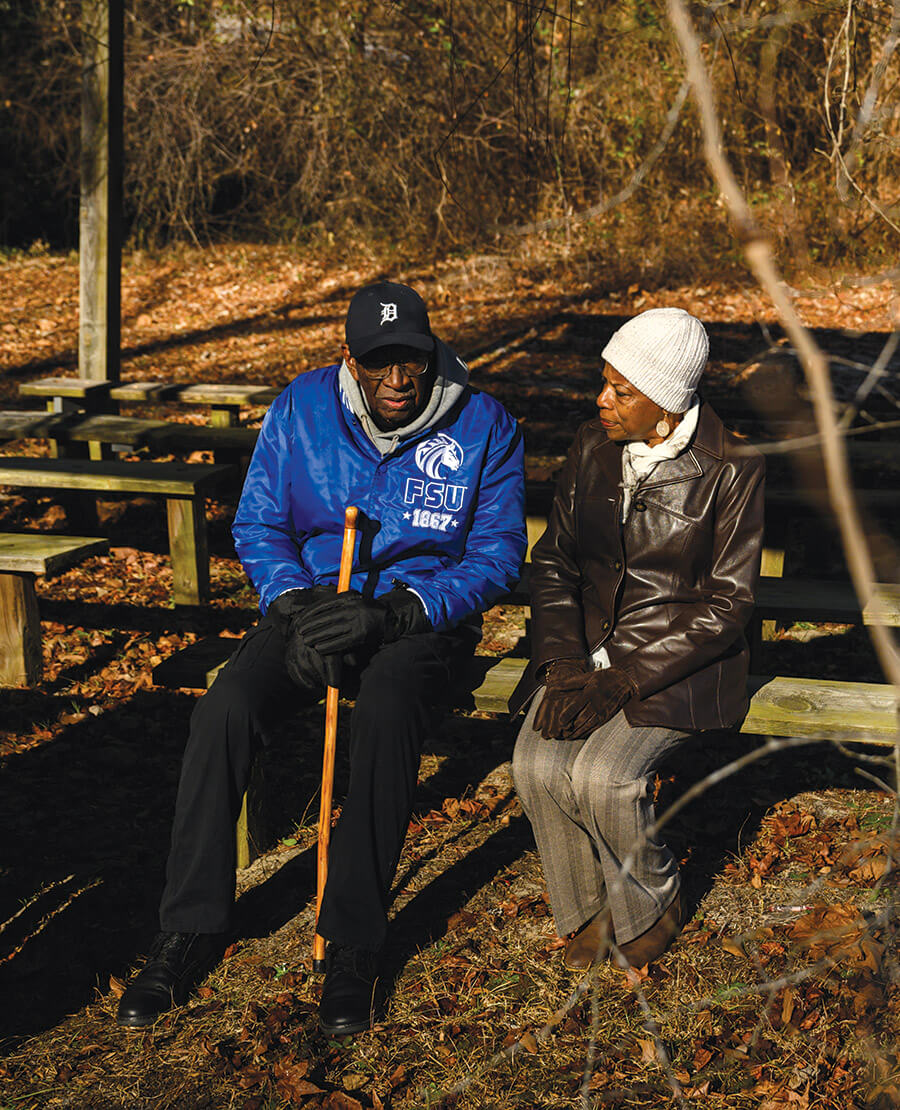
Larry Dobbins and Janet Brower photograph by Andrew Craft
From what Larry remembers, there were no admission fees for any events, and the hot dogs and hamburgers were free.
“That was where we discovered the need and the power to vote,” recalls Larry, 79, a former mayor of Spring Lake who spent 40 years as an educator. “We heard about the social issues of life in a caring place. It was a safe place for me.”
• • •
I follow Myron Jones and Janet Brower through a parking lot toward a 230-foot length of yellow chain. Janet is Sandhills’ board chair; Myron is the board member who headed up the cemetery cleanup. The first thing we see are the tombstones. When we walk into the woods, Myron points out what’s nearly invisible — small flags, faded pink, stuck under and around bushes that mark where someone was laid to rest long ago.
“Some of these folks still have family members here, and they need a great place to rest,” says Myron, a U.S. Air Force veteran and retired sales director for the Fayetteville Area Convention and Visitors Bureau. “We expect that for ourselves, right?”
Myron recruited Eddie Nichols Jr. for the cemetery project. They’re longtime friends and relatives, known to each other by their nicknames: Eddie Nick wanted to help Cutzie. He also wanted to honor his ancestors. A few are buried in what’s known today as Deerfield Cemetery.
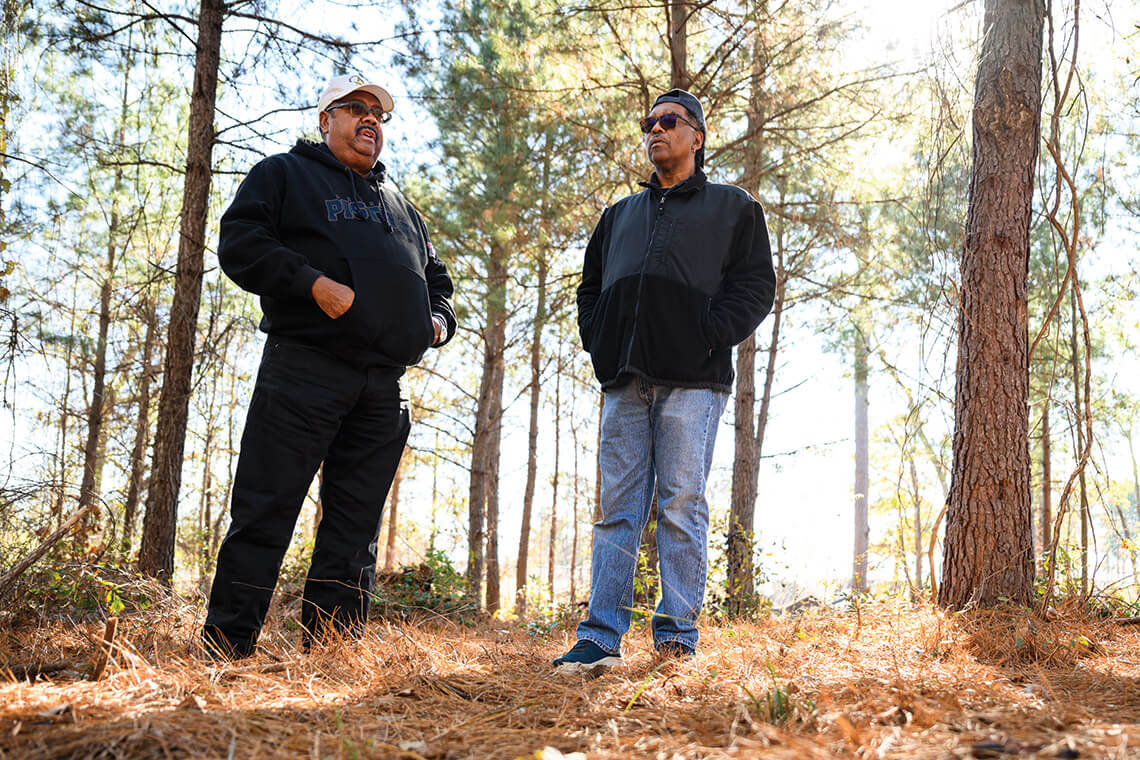
Volunteers like Myron Jones (left) and his friend Eddie Nichols Jr. work on sprucing up Deerfield Cemetery. photograph by Andrew Craft
“I want everyone to know these nameless people,” says Eddie, a U.S. Air Force veteran and a retired supervisor for the U.S. Department of Veteran Affairs. “Their presence, their life of pain and heartache and doing without, helped everyone living now have a better life.”
As I walk with Janet and Myron on a carpet of pine straw, I realize their work will continue for years, judging from the constellation of faded pink flags. They’ll have to cut down trees, raise more money, do more research, and employ technology to identify what could be as many as 300 graves.
“We need to do everything we can to make this a sacred resting place,” says Janet, a retired educator who taught for 42 years.
Ammie was the first black student to attend High Point College. She later moved to Durham and became a businesswoman, a computer programmer, and a community college instructor. In the late 1970s, her ailing mom asked her to go back to where they once lived and bring back anything she could find.
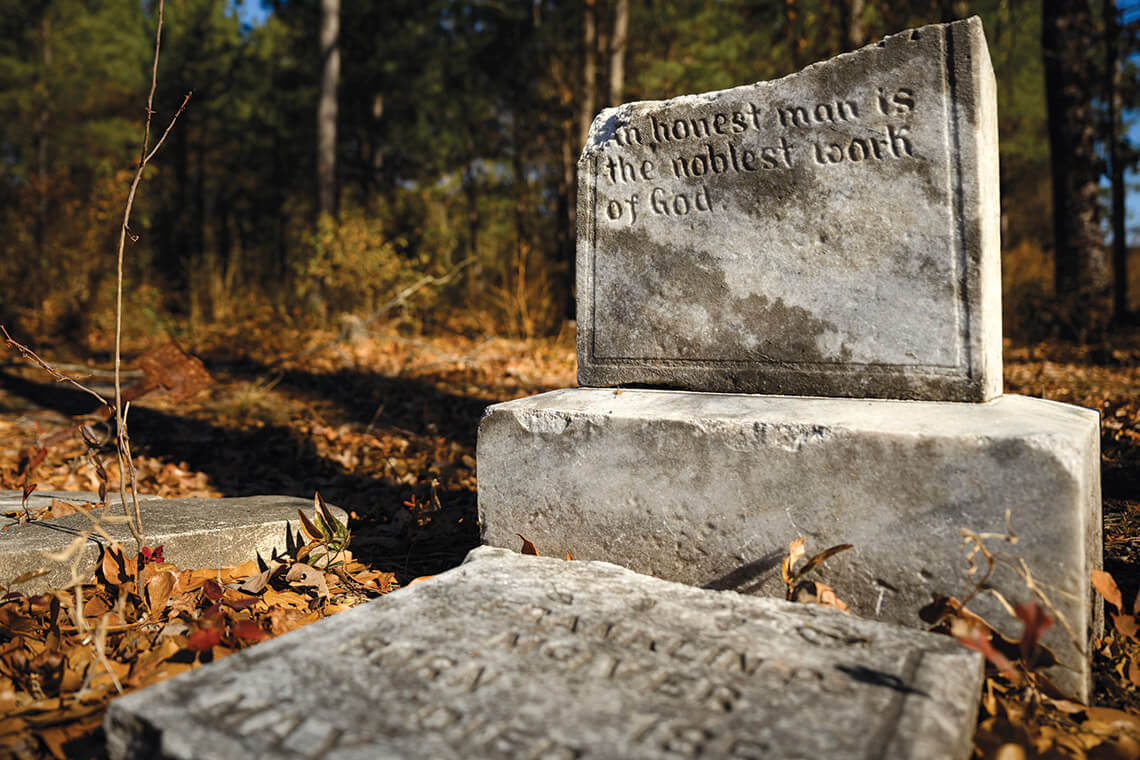
the Sandhills Family Heritage Association works to restore broken tombstones. photograph by Andrew Craft
On her family’s property, now owned by Fort Bragg, Ammie discovered a chimney of stacked stone, a crosshatch of rotted lumber, and a Mason jar, which she brought back to her mom. She also remembered her pain: her dad dying of lupus; racist hate groups threatening her mom and burning crosses on their land; her mom fearing for her family and piling them all into a neighbor’s pickup truck to escape.
They moved 10 miles away to Spring Lake. They were safe, but they lost the land that Ammie’s great-grandfather, Willis McRae Sr., a freedman, bought right after the Civil War. That all happened when Ammie, the oldest of seven, was just 13.
From that pain came what Ammie later called a “miracle.” She recalled the joy of playing with her siblings, living on a farm, and following the cycle of the seasons on property that felt like family. That memory about connection and kin convinced Ammie to leave Durham and move back to Spring Lake right after her visit. At 60, she started the Sandhills Family Heritage Association. She wanted to empower others — and help herself heal.
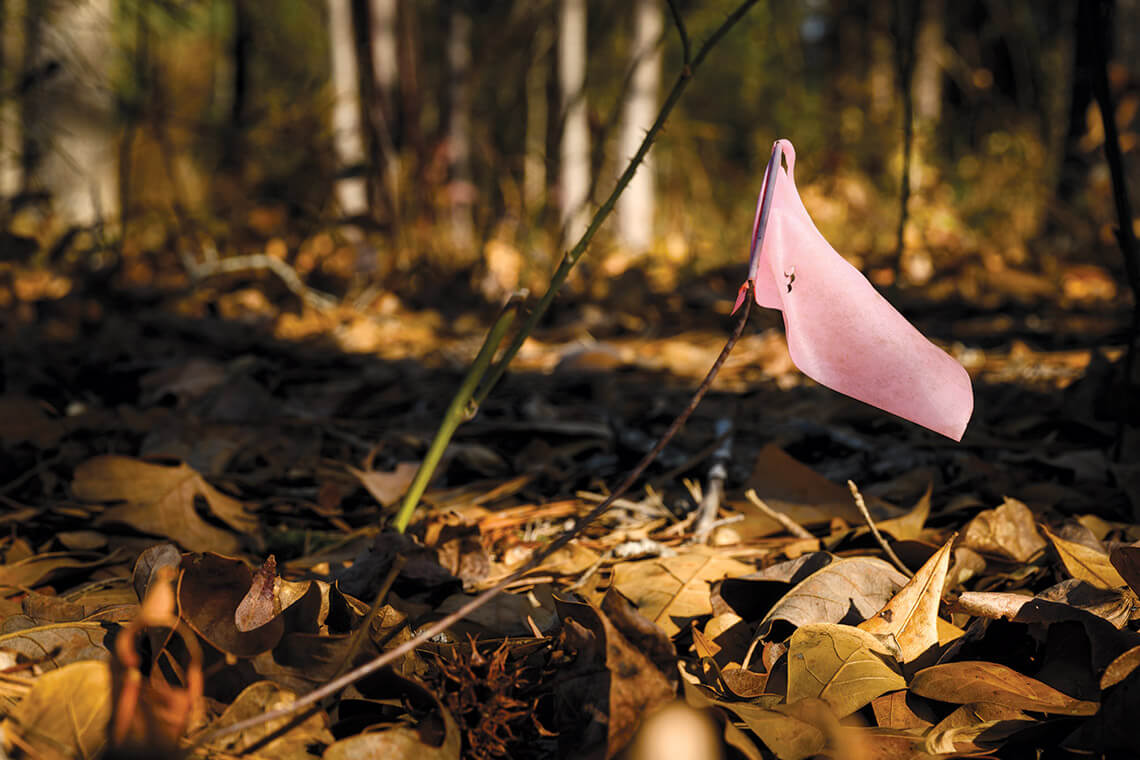
Around Deerfield Cemetery, faded pink flags designate unmarked gravesites. photograph by Andrew Craft
On a Friday last fall, six days before I plan to see her again, Ammie goes to the hospital because her legs are hurting so bad she can barely walk. We all think Ammie will bounce back. She doesn’t; she never leaves the hospital. Two weeks later, she dies with her daughter, Cassandra Bush, and her grandson, Brylan, beside her.
On the first Sunday in November, I gather with many inside Bethel AME Zion Church, Ammie’s spiritual home in Spring Lake, to remember the grandmother blessed with a hiccup of a laugh. I hear written tributes from Gov. Josh Stein and local officials, and heartfelt testimonials from more than a dozen people. Upfront near the pulpit, I see her white casket framed by a rainbow of flowers and a scattering of cards. One reads: “To a real soldier in the struggle.”
As Ammie’s homegoing celebration winds down, a soprano in a white choir robe sits at an upright piano and begins to sing:
When I’m resting in my grave,
There’s nothing more to be said;
May the work I’ve done
Let it speak for me.
For Ammie, it will. Forever.
FOR APRIL: The director at Winston-Salem’s Reynolda Gardens found that the beauty around him could be healing in unexpected ways.