Put ramekins on a baking sheet. Bake for 25-35 minutes, until puffed and golden. Remove from oven, and let stand for 5 minutes. With a flexible spatula, remove strata to
Listen as the pages of the magazine come to life in the Storytellers podcast showcasing the voices of Our State writers. Each podcast episode features a writer reading their column
Listen as the pages of the magazine come to life in the Storytellers podcast showcasing the voices of Our State writers. Each podcast episode features a writer reading their column
In Candor, the Aberdeen Carolina & Western Railway is reawakening an appreciation for railroads and “slow travel” with a glittering fleet of restored train cars.
Listen as the pages of the magazine come to life in the Storytellers podcast showcasing the voices of Our State writers. Each podcast episode features a writer reading their column aloud, allowing each distinct voice to shine. Click below to listen to Brad read his column aloud.
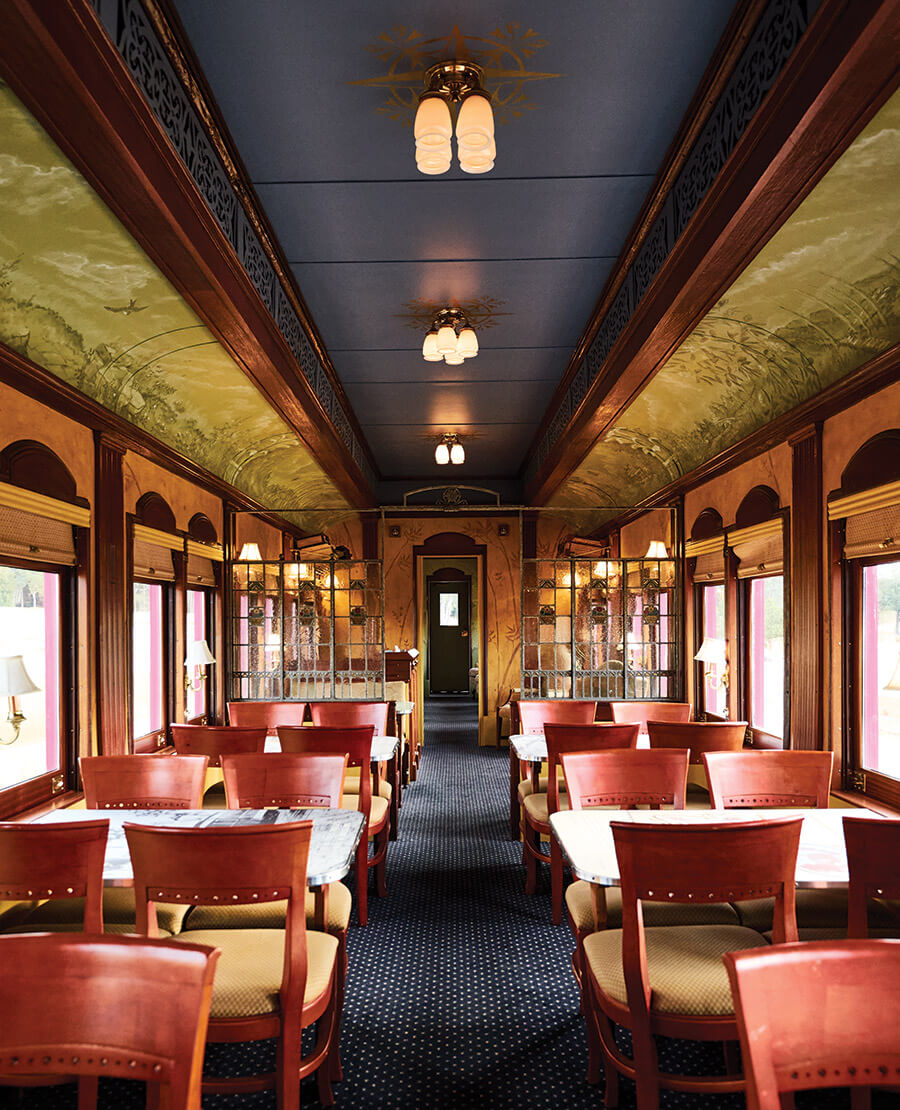
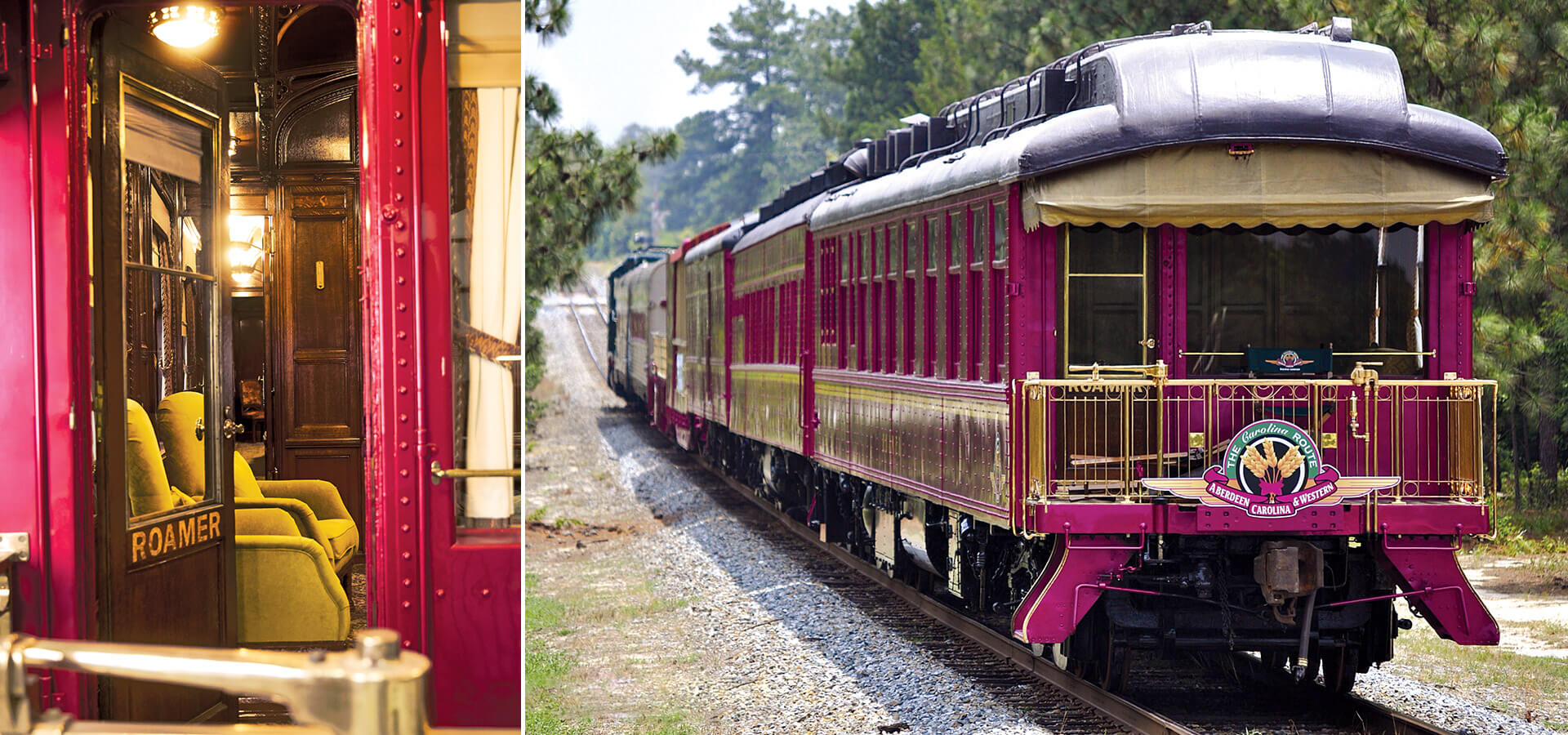
As you settle into a sumptuously upholstered chair in the parlor of Roamer, a private railcar built in 1918, you might wish to ponder the journey into the past on which you’re about to embark. This was a time when business titans like the Rockefellers and the Astors drove the American economy, often aboard their own roving palaces.
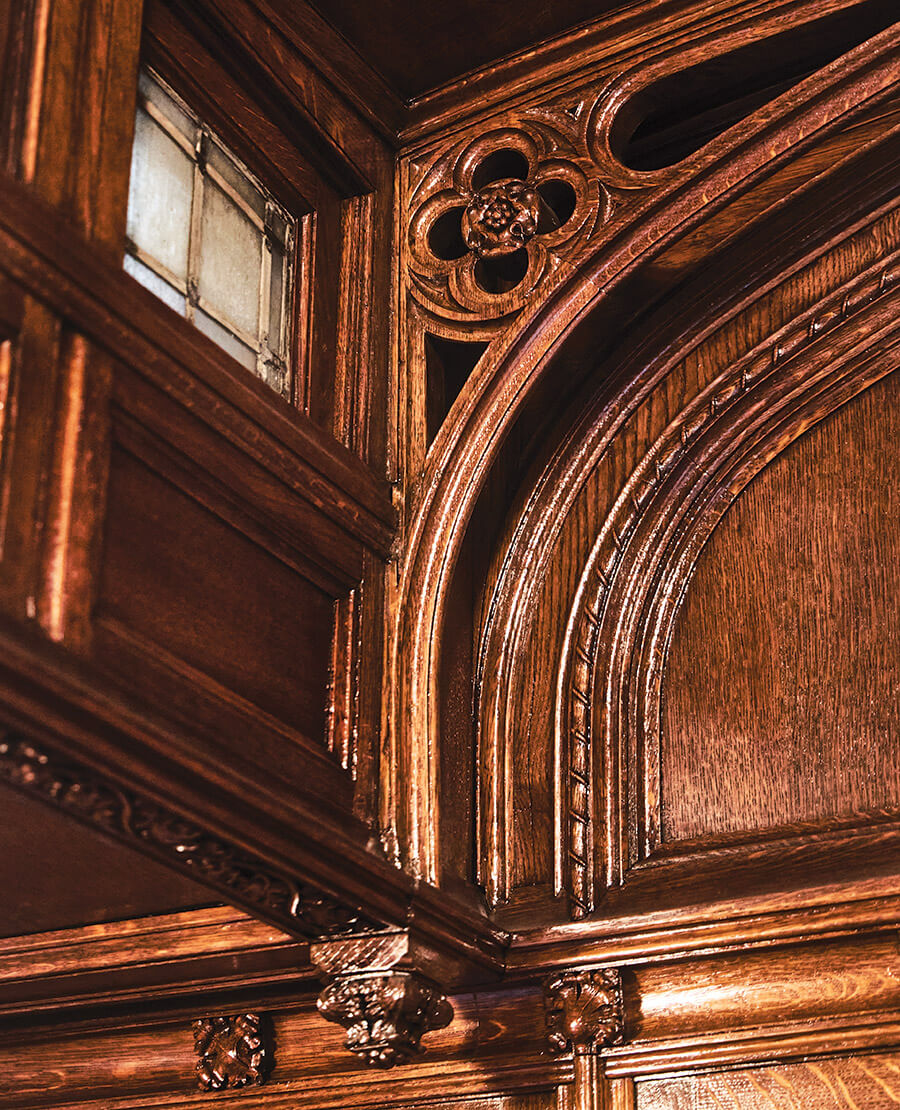
Roamer, tipping the scales at 100 tons, is like a miniature Biltmore on wheels: vast expanses of hand-carved quartersawn oak, luxurious cherrywood-lined bedrooms with brocade curtains and bedspreads, lavish fixtures, glittering chandeliers, and bathrooms clad in Italian marble. “Even the hinges are ornate,” marvels Robert Menzies, owner of the Aberdeen Carolina & Western Railway (ACWR), a “short-line,” or regional, railroad headquartered in Candor. “It’s one of the most expensive cars of its time I’ve ever seen.”
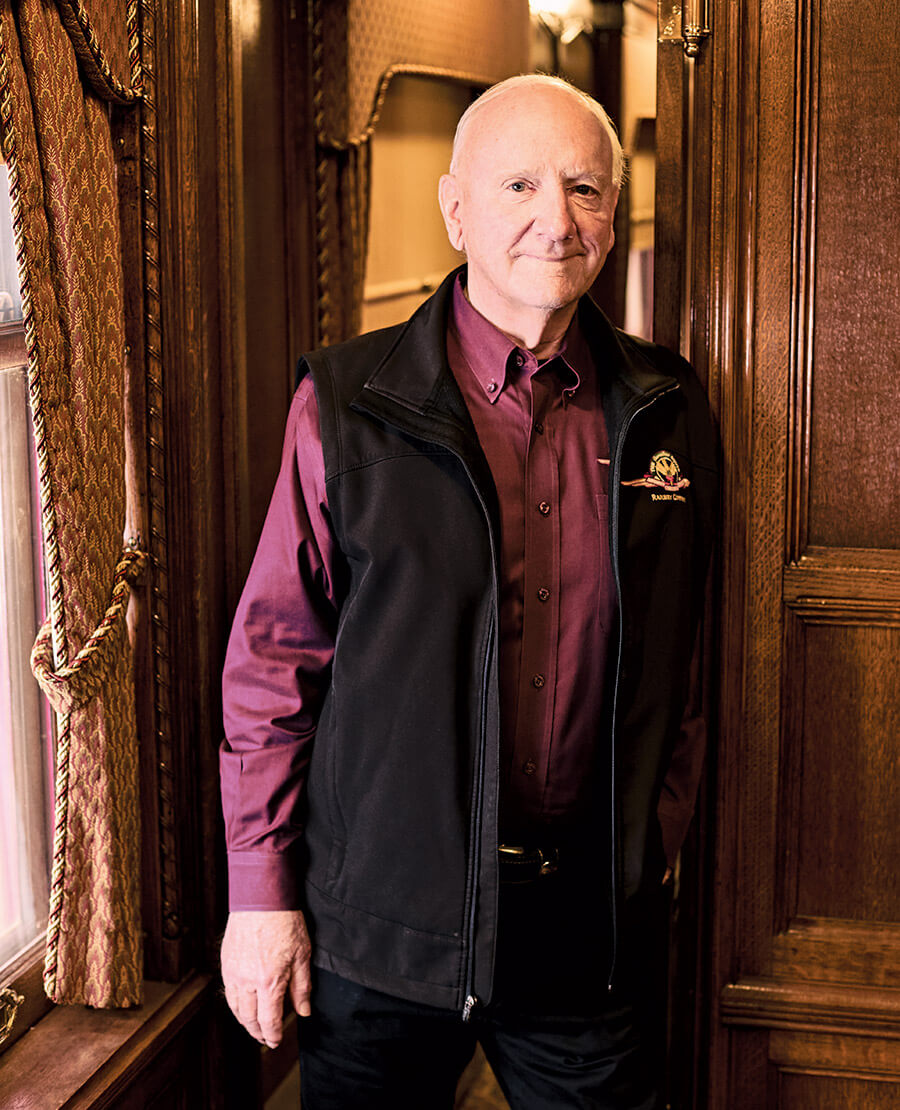
Robert Menzies pours his passion for transportation into his collection of vintage railcars. photograph by Peter Colin Murray
Over the past several years, Menzies and a team of craftspeople have restored about a dozen classic railway cars to their former glory. Some are sleeper cars, but there are also parlor cars, dome cars, baggage cars, and diner cars in the mix. Roamer, though, stands out.
Built by American Car and Foundry Company in St. Louis, it was commissioned by oil tycoon Joshua Cosden, who was said to have owned the largest private refinery in the world. He died in 1940, but Roamer rolled on for several more years before coming to what seemed to be its final resting place in Illinois. There it sat for more than four decades before Menzies purchased it and gave it a second life, employing 42 workers over six months to restore the car.
“The money you’ll spend to fix these … the money you’ll spend to upkeep them … it’s a labor of love,” Menzies says, trying to explain his obsession. “And being a little crazy. It always helps to be crazy.”
• • •
Menzies’s love of trains runs deep. By his estimation, he racked up 17,000 miles hopping freight trains in his younger days, including a spring break trip in the ’60s from Michigan to California with college buddies. His sales pitch to them? “All it costs is a loaf of bread and some sardines.”
That same passion led to degrees in transportation and logistics, followed by teaching stints at two universities. “I’ve always loved anything that moves,” he says. “I was born to travel.” But by the mid-1980s, he was following in his dad’s footsteps as a businessman and entrepreneur in Michigan and California. Then he saw a classified ad for a tiny railroad in North Carolina. It had one locomotive and 34 miles of rapidly deteriorating track between Aberdeen and Star.
Menzies’ team’s restoration of Roamer was so meticulous that there’s not a single nail anywhere in the walls. photograph by Peter Colin Murray
The line had begun as a logging operation in the 1880s and, in 1889, was organized as Aberdeen & West End Railroad. After changing hands — and names — multiple times over the next century, it was known as Aberdeen and Briar Patch Railroad and operating as a short line, providing first mile/last mile service to shippers or receivers by linking up with regional and national carriers.
Menzies had exactly zero experience running a railroad, but his lifetime of enthusiasm for transportation made the opportunity irresistible. He purchased the short line, and in March 1987, Aberdeen Carolina & Western Railway was incorporated. On one occasion in those early days, Menzies was running the locomotive, taking the first set of seven cars to the new Perdue feed mill nearby. Rehabilitation of the tracks hadn’t yet been completed, and five cars derailed on a curve. Three flipped.
“A rational person would have said, ‘This isn’t going to work.’ His Scottish perseverance got him through it,” says his son Anthony, ACWR’s CEO.
“It took us 16 years to break even and 20 years to make enough profit that we knew we were going to make it,” Menzies says. Today, ACWR is the largest privately owned short-line railway in North Carolina. Around the time it began to show a consistent profit, Menzies turned his attention to vintage railcars.
• • •
Along a peaceful stretch of NC Highway 211, the scene inside ACWR’s massive workshop is anything but. Four parallel sets of railroad tracks cradle a dozen vintage train cars and locomotives. Some are stripped bare as skeletons, others are fully restored, and those remaining exist in various stages of reincarnation. In this cavernous space, amid the smell of wood glue and grease and a cacophony of table saws, drills, and sanders, Menzies and his team lovingly coax more than 130 years of railroad history back to life.
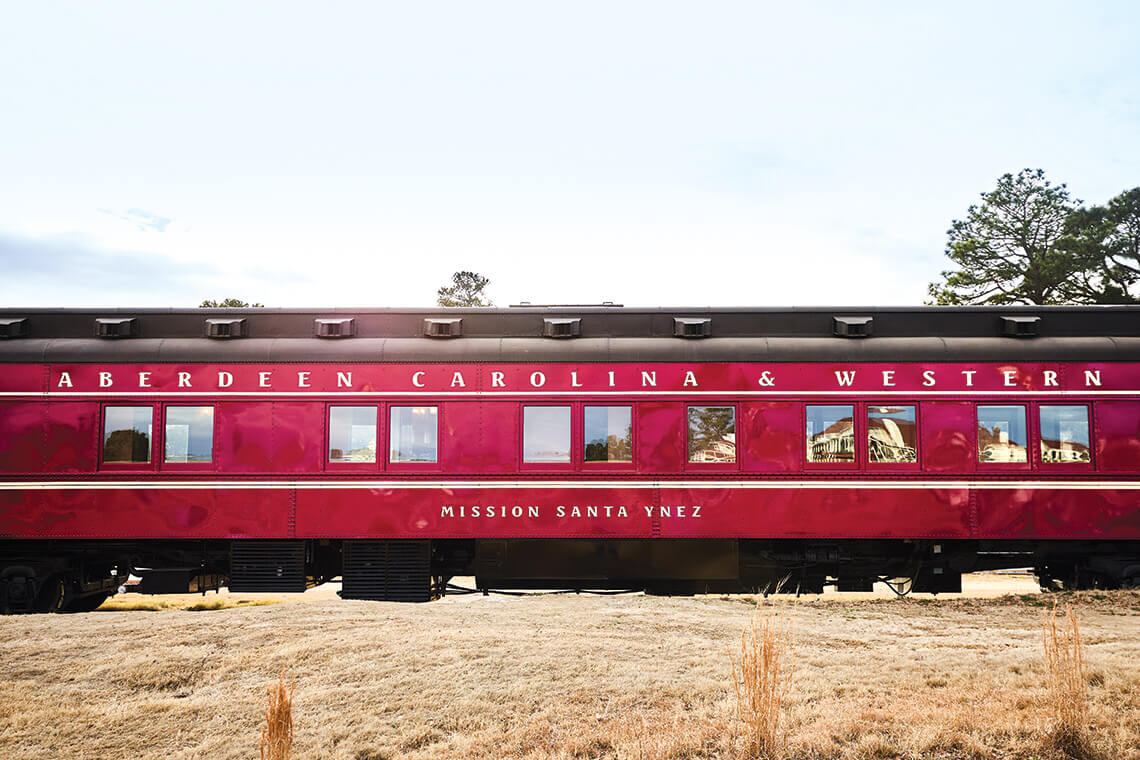
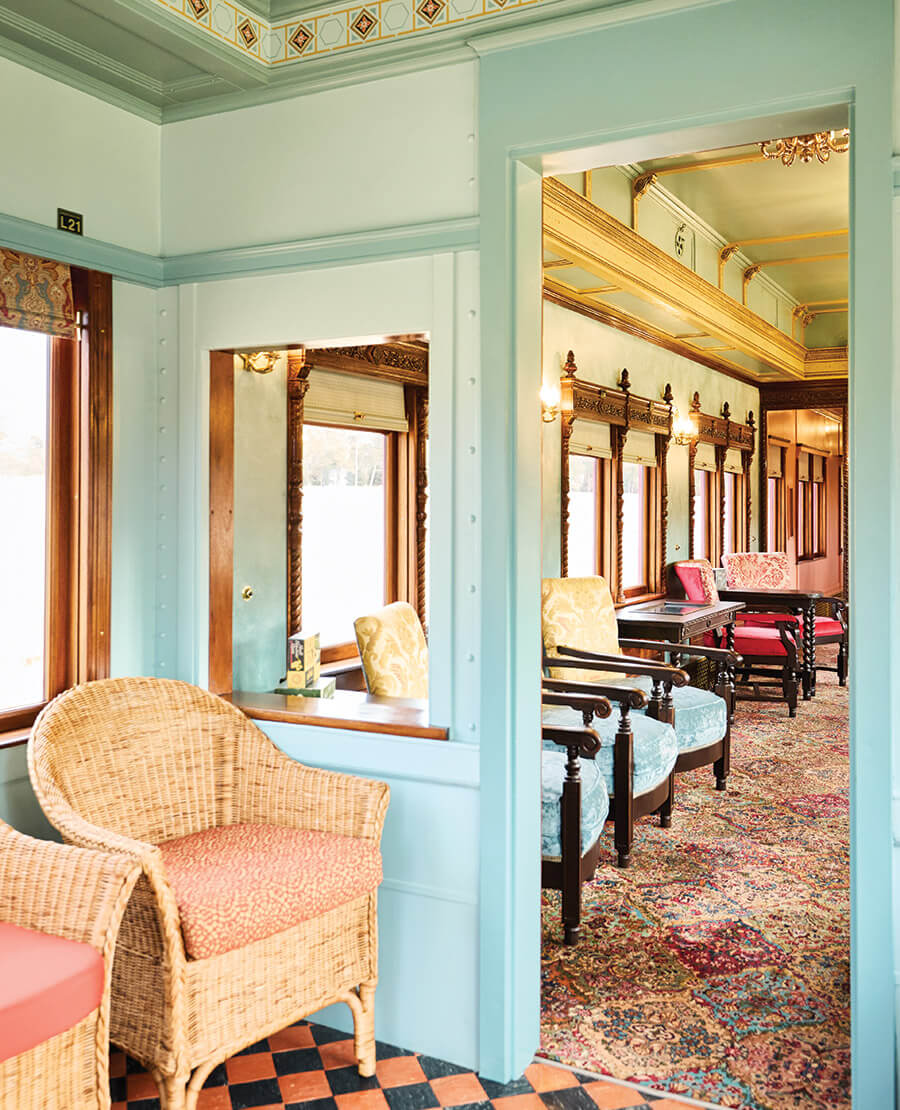
In addition to private cars like Roamer, they’ve restored several cars that once served everyday travelers. “When you look at cars the public could ride in, the Mission Santa Ynez might be the most important,” says Pullman scholar David Duncan of this ladies’ lounge and sleeper car built by the Pullman Company in Chicago in 1926. “No one has gone to that much effort to restore a car.”
The Mission Santa Ynez began life in the Midwest in 1926 and later offered overnight service between Los Angeles and San Francisco. photograph by Peter Colin Murray
The ACWR team also spent an extraordinary amount of time and effort on The Pinehurst, originally known as The Defender — a Pullman car from 1912 that required the removal of 32 coats of paint to reveal the exquisite mahogany of its interior — and the San Marino, the private railcar of railroad magnate and philanthropist Henry Edwards Huntington.
“To actually step up onto one of those cars and get the feel of the space and atmosphere and what it would have been like to watch the country unfold behind you, it’s just an incredible experience,” Duncan says.
For sheer stick-to-itiveness, The Menzies Vista, a stunning mid-1950s American Car and Foundry dome car, might take the cake. “That dome car was actually 10 years of our life,” says Dale Parks, ACWR’s vice president of mechanical. “Raccoons were living in it.” It took more than two years to get the car in shape just to move it from its location in Wisconsin to ACWR’s 90,000-square-foot workshop.
Today, ACWR uses The Mission Santa Ynez to travel to events around the country. photograph by Peter Colin Murray
With no historic or archival information to go on, the car presented a blank slate. Menzies tapped into his creative side to transform it into a modern Art Deco masterpiece.
The wide variety of projects represent not only the breadth of Menzies’s interest in railroads but also his belief in the importance of saving as many kinds of iconic cars and preserving as much railroad history as he can. “Most people wouldn’t do this,” Parks says. “If Rob didn’t have the heart and the passion for railroad transportation, this stuff would go to the scrapyard.”
• • •
Far from being static museum pieces, ACWR’s restored cars are both beautiful and functional. Despite their age, three of the cars are certified to run on Amtrak rails and can be joined to a regularly scheduled train. ACWR also deploys several cars, pulled by their own locomotives, for seasonal themed excursions.
In 2024, ACWR partnered with the Rail Division of the North Carolina Department of Transportation to bring patrons from Raleigh to the U.S. Open in Pinehurst. The golf lovers traveled on passenger cars from the North Carolina railcar fleet with The Summit View dome car — another ACWR restoration — hitched to the end. They disembarked in front of the country club where the Pinehurst railroad station once stood, arriving like golf legends Bobby Jones, Gene Sarazen, and Glenna Collett Vare might have back in the day. The service was a hit, selling out trains in each direction all four days and handling more than 2,500 passengers.
Although the Pullman Company was best known for sleeper cars, its 1912 Defender offered first-class daytime travel. ACWR acquired the car in 2000 and renamed it The Pinehurst. photograph by Peter Colin Murray
Some of ACWR’s restored cars are on display right next to Pinehurst Resort, including Engine Room 87, a beer bar fashioned from a retired locomotive. The other cars, including Roamer, are kept in ACWR’s Candor shop, where monthly public tours of these marvels are led by volunteers who are as passionate about rail history as Menzies: “I just love seeing people be able to enjoy the beauty of what used to be,” he says.
And may yet be again. Menzies’s hope is that by reintroducing people to a more relaxed and thoughtful way of getting from Point A to Point B, they’ll begin to appreciate what he calls “slow travel” — a reminder that, as Menzies himself knows well, the journey can be as gratifying as the destination.
How far has Robert Menzies’s Aberdeen Carolina & Western Railway come? “When he bought that railroad in 1987, it was about to be abandoned,” says transportation consultant Dan Gurley. “He did 800 carloads that first year. They’re at about 16,000 this year.”
The success of ACWR mirrors the comeback of a 200-year-old mode of transportation that was once left for dead after several high-profile bankruptcies in the ’70s. “Steel-on-steel is the most efficient form of surface transportation,” Gurley says. But it’s not just an advantage for customers. According to Gurley, it benefits every citizen in North Carolina. “On average, a single railcar takes four semitrucks off the highway.” By that calculus, ACWR alone takes some 64,000 semitrucks off North Carolina roads annually, dramatically reducing the toll on our road infrastructure.
Today, ACWR and North Carolina’s other short-line railroads work closely with the NC Department of Transportation on grants that help them upgrade their infrastructure. “The rail division [of NCDOT] is regularly held up as the best rail division of any DOT in America,” Gurley says.
“We wouldn’t be half of what we are without NCDOT program support infrastructure,” says Anthony Menzies. That partnership has made ACWR a powerful economic development engine in the six counties it serves: Moore, Montgomery, Mecklenburg, Chatham, Cabarrus, and Stanly.
“Those are the kinds of investments that allow a railroad to grow and capture new business,” says Jason Orthner, rail division director of NCDOT, who’s worked with ACWR for years. “They have leaned heavily into these opportunities.”
Today, ACWR is purchasing real estate adjacent to its tracks and developing industrial sites that will draw new businesses for which rail is vital. In short, the railway is helping create its own customers — and bringing new jobs to rural areas.
“They are people who appreciate where the railroad industry has come from,” Orthner says, “and where it’s going.”
Get our most popular weekly newsletter: This is NC
In art class, we learn to notice texture, form, color, and light. On the plate, those same techniques guide chefs, bakers, and makers across North Carolina, turning ingredients into compositions meant to be admired before they’re savored.



 Listen as the pages of the magazine come to life in the