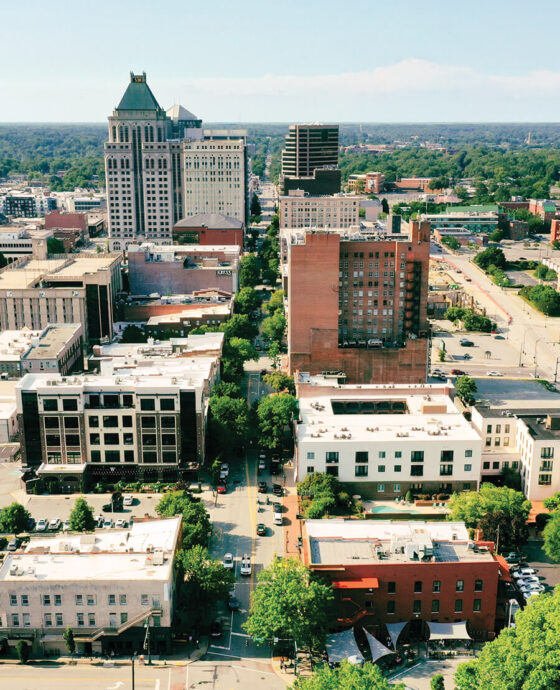
Glenn Perkins and Rob Overman walk south down Elm Street from Center City Park, chatting about the street that sprang up in 1808 with the founding of Greensboro. Of course, no discussion of the rich history of Elm or the city would be complete without a mention of denim. The Blue Bell Overall Company, eventual owner of the Wrangler brand, first manufactured work clothes on South Elm in 1904. And today, Wrangler’s parent company, Kontoor Brands, is still headquartered a few blocks north.
At the mention of Kontoor, a passerby’s ears perk up, and he stops to chat. Turns out he’s Scott Baxter, the CEO of the company. “That’s Greensboro for you,” Perkins says of the chance encounter. “Stuff like that does happen.”
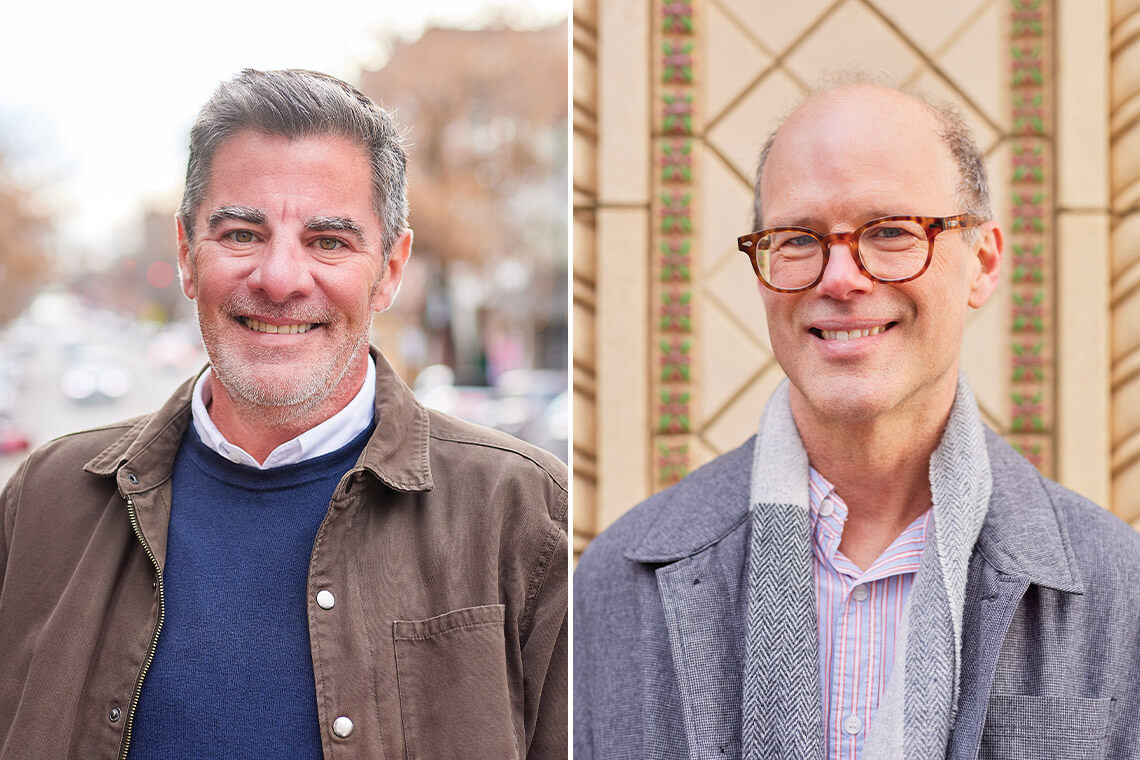
Rob Overman and Glenn Perkins photograph by Joey Seawell
Perkins is the curator of community history at the Greensboro History Museum, and Overman is the vice president of Downtown Greensboro Inc. What the two have in common is a shared affection for this area. “There is so much history that’s paved into the street — history that’s important to the city of Greensboro but also important to the country,” Perkins says.
“I love how creative [downtown] is,” Overman says. “You really see that shine on Elm Street.”
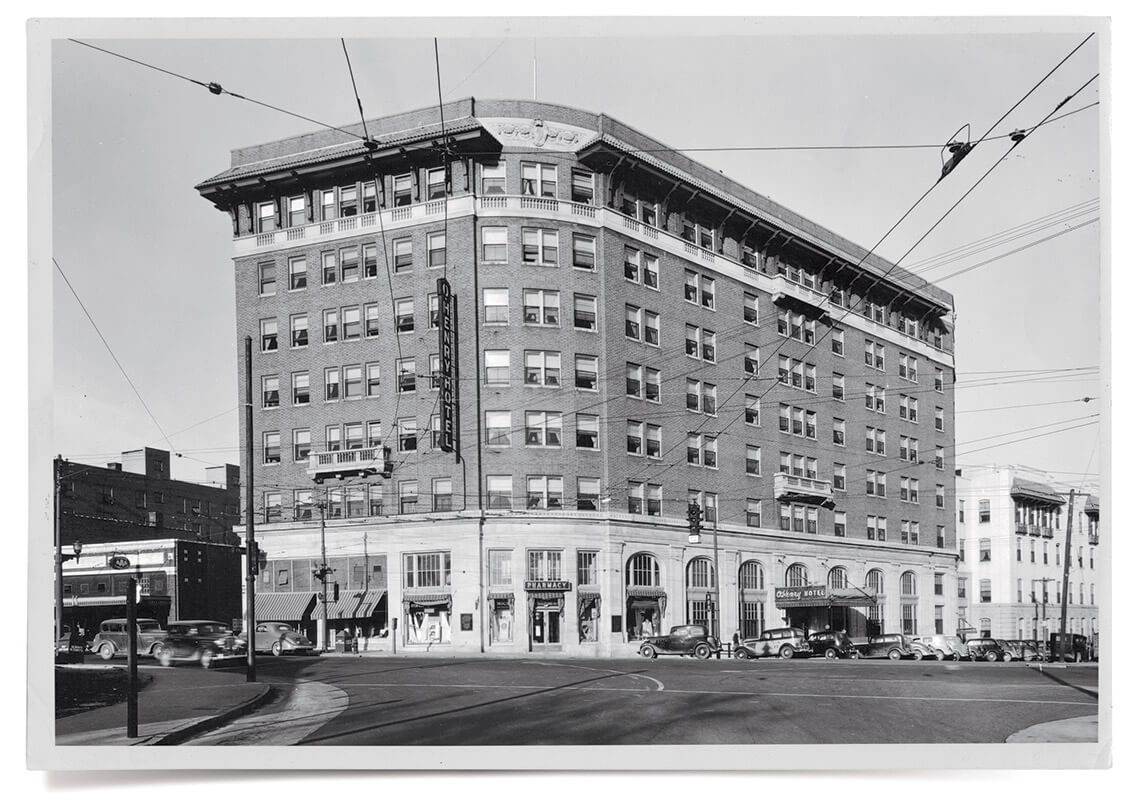
The original O. Henry Hotel, at the intersection of North Elm and Bellemeade streets, was one of the state’s grandest hotels. photograph by Greensboro History Museum
Just past the park, Perkins turns and points north to the site of the original O. Henry Hotel. The hotel’s namesake, the famed writer, once worked on Elm Street in the Porter & Tate drugstore. Later, the pharmacy became the Richardson & Farris drugstore, where Lunsford Richardson first developed Vick’s Salve (later VapoRub) in 1894.
Farther down the street, Perkins and Overman stop outside the International Civil Rights Center & Museum. It was here, in the former F.W. Woolworth Co. building, that four students from NC A&T — Ezell Blair Jr., David Richmond, Franklin McCain, and Joseph McNeil — peacefully sat at a segregated lunch counter in 1960. Their action fueled the sit-in movement across the South. The building is now a National Historic Landmark.
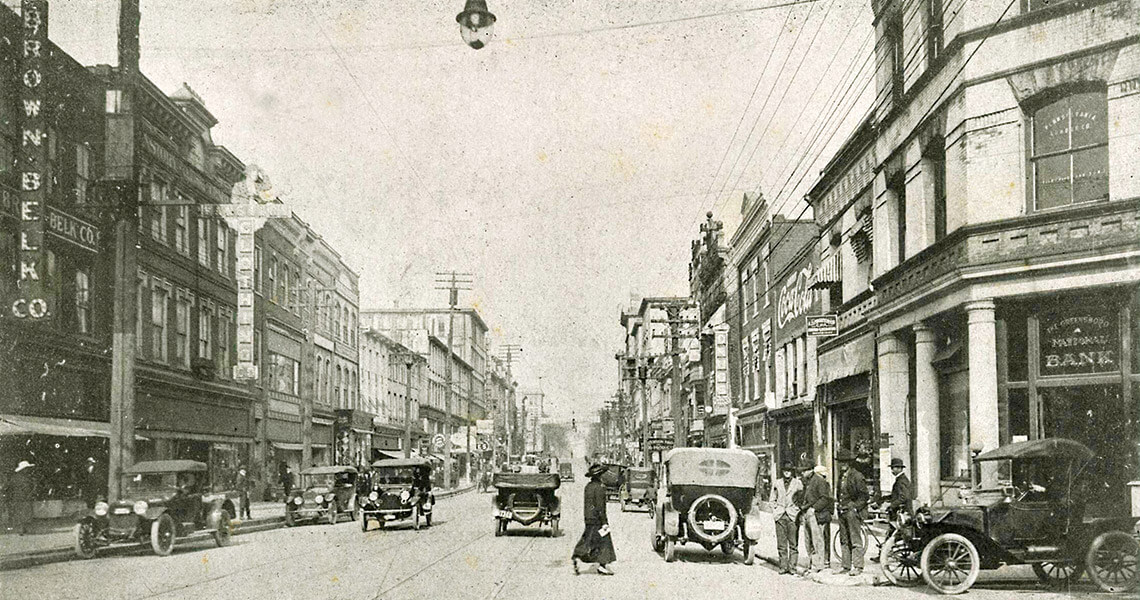
Though the businesses lining South Elm Street have changed since Model Ts cruised along the thoroughfare in 1917, it’s still the heart of downtown Greensboro. photograph by Greensboro History Museum
A couple blocks south of the museum, the pair walk through what was once known as Hamburger Square — a collection of seedy hamburger joints where, until the 1980s, upstanding citizens dared not go. Still, they’re a colorful part of the city’s past. Today, more reputable establishments — Natty Greene’s brewpub and Little Brother Brewing — serve up burgers and suds here on the corner of McGee Street.
One block farther, two sets of railroad tracks, laid in the mid-1800s, cross the street. The nickname “Gate City” was coined because the town was a railway hub, a portal to places beyond. At the railway’s peak, some 60 trains came through every day. Nearly a century later, dozens still cross Elm Street daily. “You can always tell people who are from Greensboro versus those who aren’t,” Overman says. “The train goes by, and we just patiently get quiet and wait for it to leave. People who aren’t used to it will try and talk over it.”
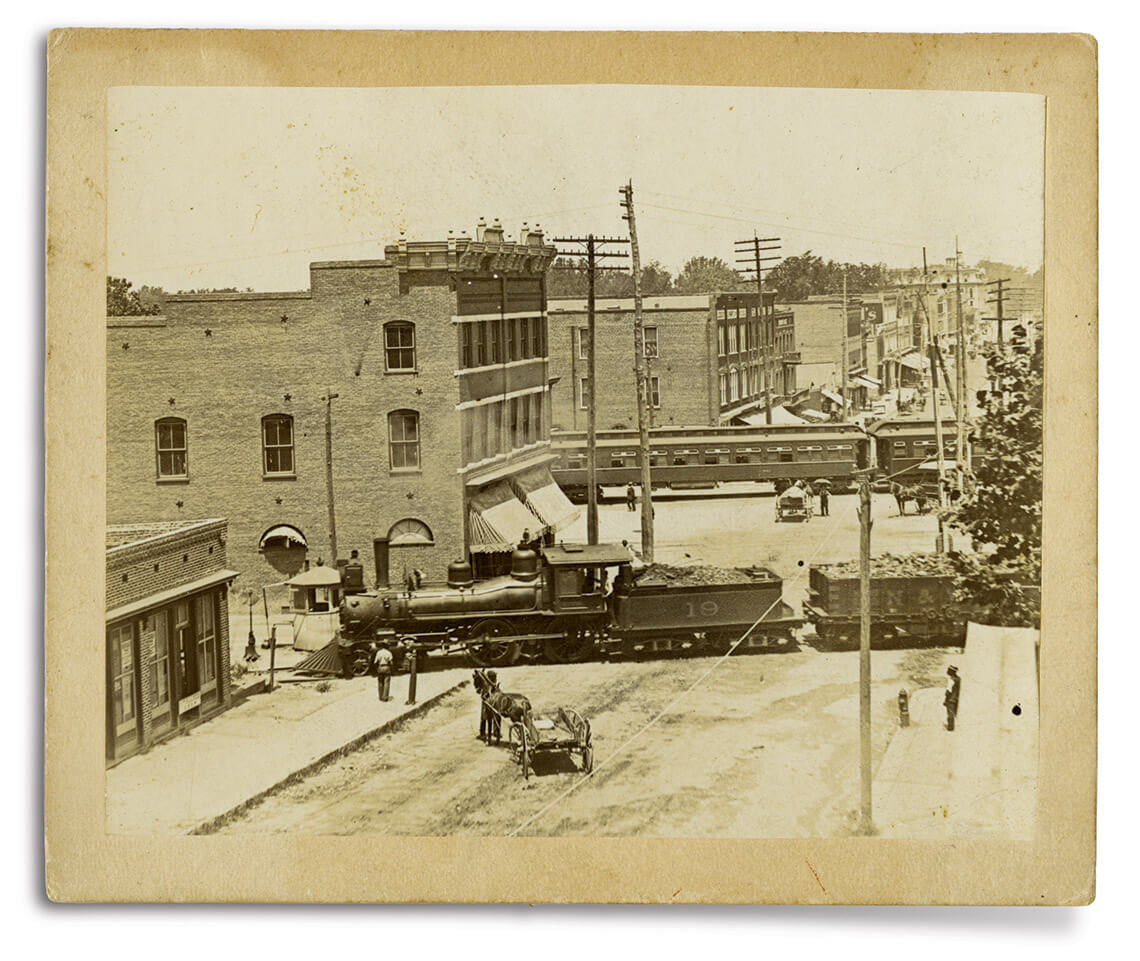
Circa 1900, horse-drawn carriages waited for trains to cross over South Elm Street. photograph by Greensboro History Museum
South of the tracks, creatives converge. This part of Elm gets particularly lively on weekends, with buskers and jugglers entertaining crowds. Several years ago, Elsewhere, a quirky art museum, shut down this portion to accommodate a Ferris wheel. Local businesses get creative with ways to draw folks in, and Downtown Greensboro is always on board. “We’ll shut down Elm Street for just about anything,” Overman says.
“Your cat’s birthday?” Perkins suggests with a laugh.
“Yeah, we’ll shut it down,” Overman jokes.
Based on local interest, Downtown Greensboro is even considering making a portion of Elm pedestrian-only every weekend. This street that has seen more than two centuries of history is — still — so vibrant.
Related: Click here to find out what to see and do on Elm Street in Greensboro.
print it