We’d lived in our house near downtown Cary for three years when my husband climbed up to the attic and disappeared. We were only the second family to reside in the 1966 home following the death of the original owner — a handy fellow named Gene Mallar who’d kept a binder full of records of his home improvements. It was in his spirit that Alex had ventured into the rafters armed with a flashlight and some electrical tape to fix a wiring issue.
Our ranch-style house has a small attic with folding wooden steps that drop into the hallway and a single pull-string bulb. In the limited space at the top, we’d stacked Christmas garlands and baby clothes, an infant car seat and Easter baskets.
It wasn’t until I’d put our toddler to bed that night that I realized how quiet the house had become. I couldn’t have missed Alex creaking back down those old stairs. I cocked my head, listening for thumps above. “Alex?” I called up. “Alex!” Nothing. I checked my watch, my thoughts spiraling. Had he fallen through the ceiling? Had he had a heart attack? My heart began to race.
I climbed the steps, but the attic was still and silent. Feeling scared and a little foolish, I remembered my phone and called him. On the fourth ring, he answered.
“Did you get raptured?”
“You aren’t going to believe this,” Alex said, his voice muffled and far away. “I found a new, secret part of our attic. I’m in a room filled with … pottery.”
“Wait, what?”
“Hundreds of pieces of pottery,” he said. “Come to the studio and look up.”
• • •
In the studio — a kind of workroom with a long counter that had been added to the far side of the house in the ’80s — I was astonished to see a rectangular opening in the ceiling where a light was glowing. Alex’s dirt-smudged face appeared, and in his hand he held a perfect, miniature clay pot.
“Come up and see,” he said.
Easier said than done: Alex was 15 feet in the air with no way down.
While searching for his elusive wire, his flashlight had caught the shadow of a small opening behind the framing in our attic. He’d squeezed himself into the hidden room but wasn’t convinced he could squeeze back out. After some exploring — wire forgotten — he’d discovered a cache of pottery and, eventually, a means of escape: This trapdoor in the studio ceiling.
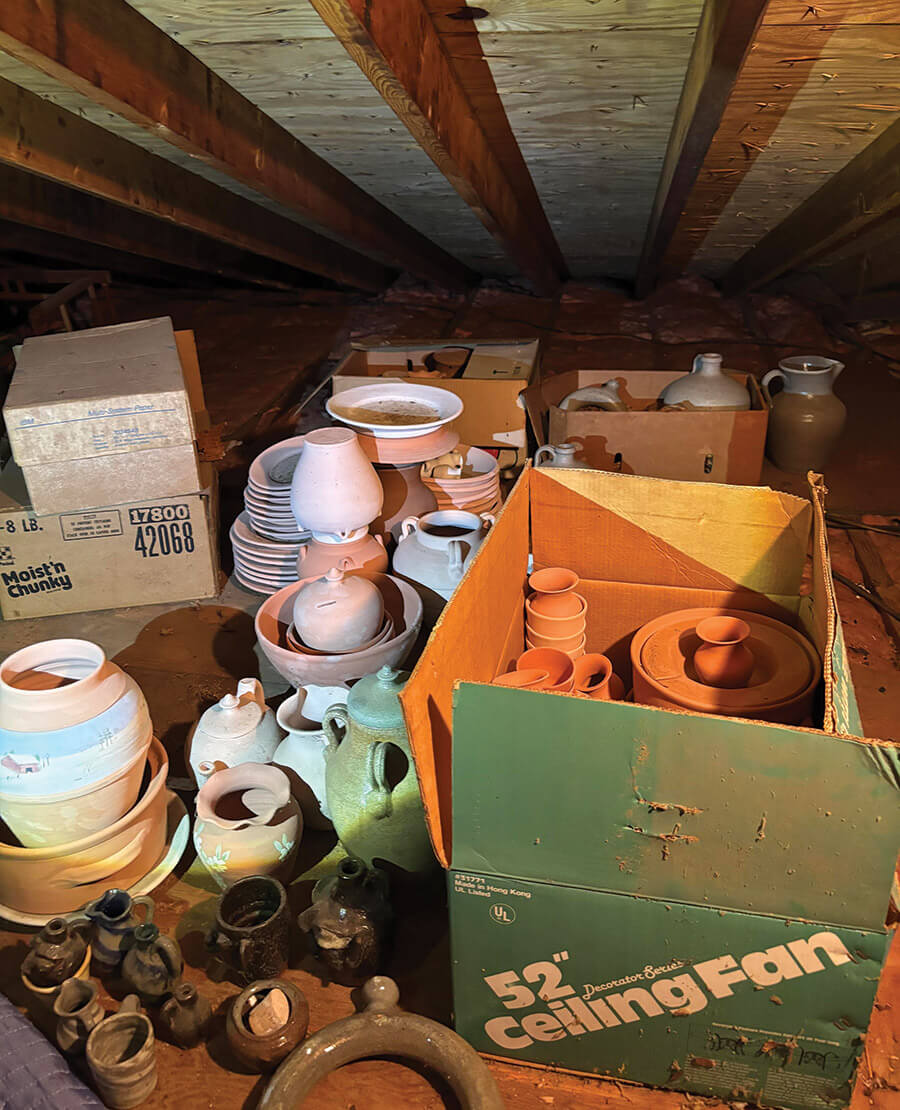
Much of the pottery that the writer discovered was turned by the renowned Charlie Craven, who grew up throwing pots in Moore County. photograph by Katie Schanze
With a little help from our extendable painting ladder, I soon joined him and was face-to-face with a trove: dozens of cardboard boxes so old and brittle they’d rip at the slightest tug. They were too fragile to carry down but too tempting to leave alone, so we sat cross-legged in the dust and gently pulled them open right there, a small bulb casting a circle of light around us.
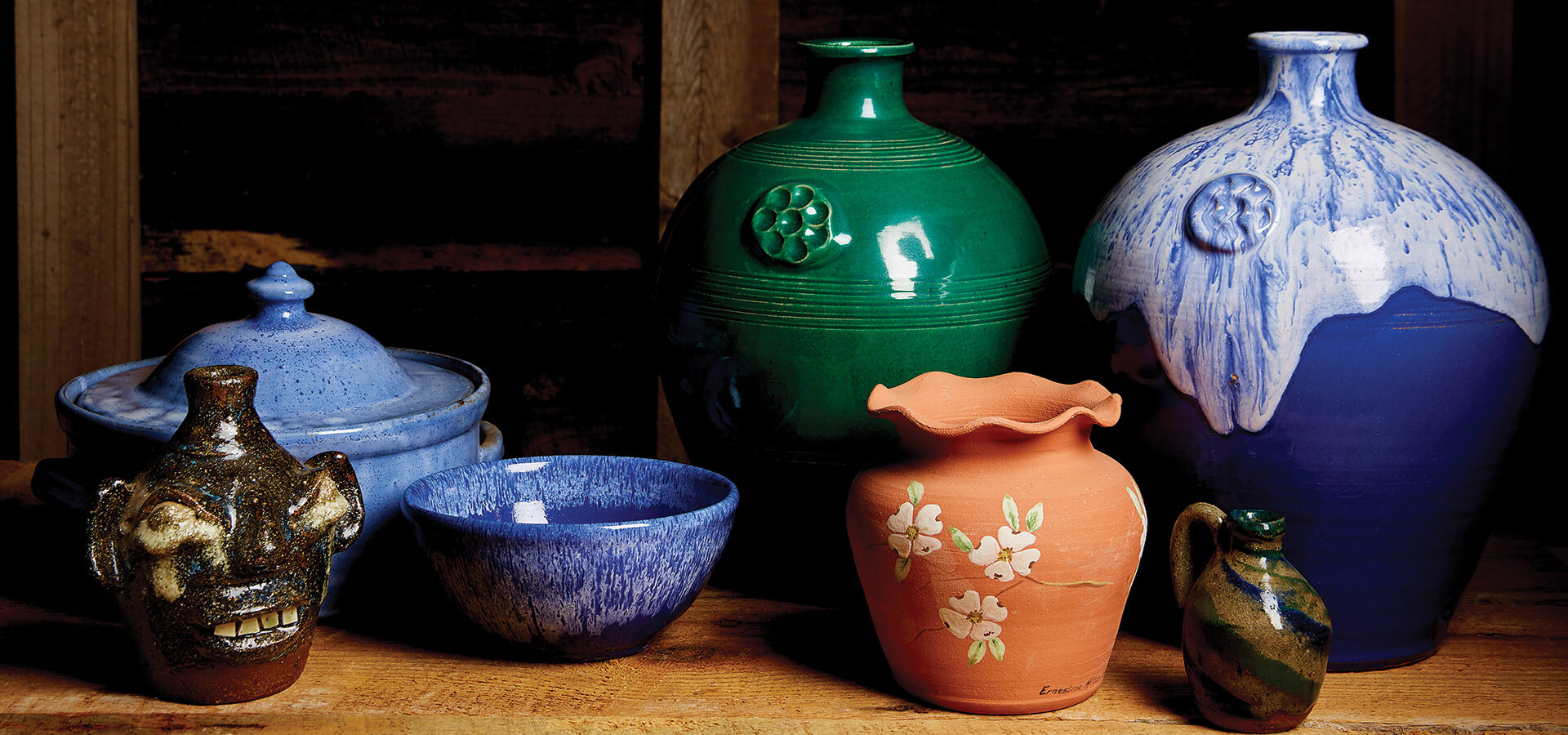
Inside were cream and sugar containers, salt and pepper shakers, coffee cups and pitchers, candlesticks and old-fashioned piggy banks, bowls and flower pots. Almost all of them were a soft-orange bisqueware — fired but unglazed — though a few boxes held shining jewels wrapped in decades-old newspaper: large, glossy vases, one glazed in emerald green and one in cornflower blue. We didn’t know how long they’d been up there, but they looked as perfect as the day they’d been tucked away.
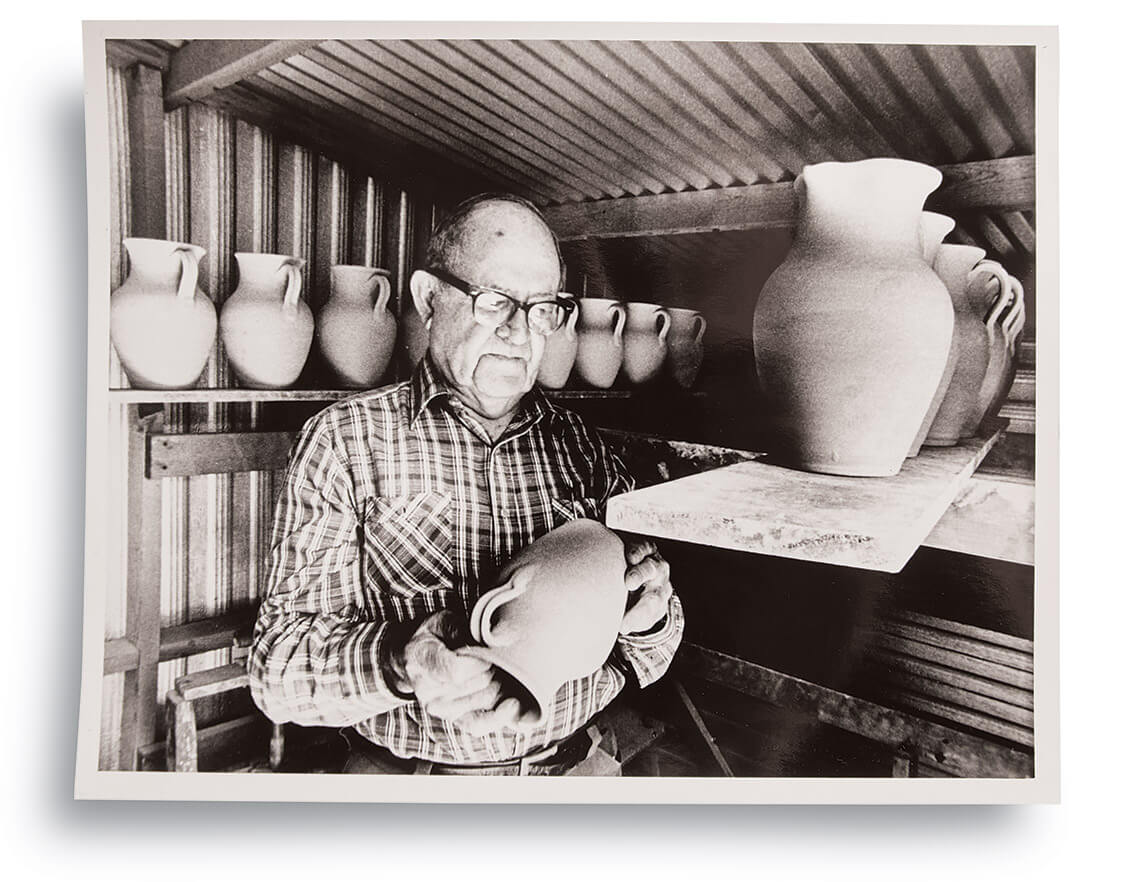
C.B “Charlie” Craven Photography courtesy of Leon Danielson
To take in the full scope of our treasure, we shuffled carefully across the attic floor, which had become a minefield of fragile works of art layered in dust and cobwebs. There were piles of bisque plates and clusters of salt-glazed jugs, pitchers, and ring flasks. Vases painted with delicate dogwood blossoms and snowy countryside scenes. A crying face jug peered out at me, a silent witness to our discovery.
Slowly, gingerly, we brought down as much of the pottery as we dared. Soon, the studio counter disappeared beneath a layer of pots. In better light, we inspected them more closely. Most of the pieces were stamped on the bottom with C.B. CRAVEN and TOBACCO ROAD. A collection of paint-swirled pots and speckled face jugs bore the mark B.B. CRAIG, and a few were stamped JUGTOWN WARE. The painted pots were signed by Ernestine Hilton Sigmon.
Even as pottery novices, we knew this was no ordinary collection. Still, we had many questions: What connection did the former owner of our house have to these pieces? Why had they been forgotten? And how long had they been hidden overhead?
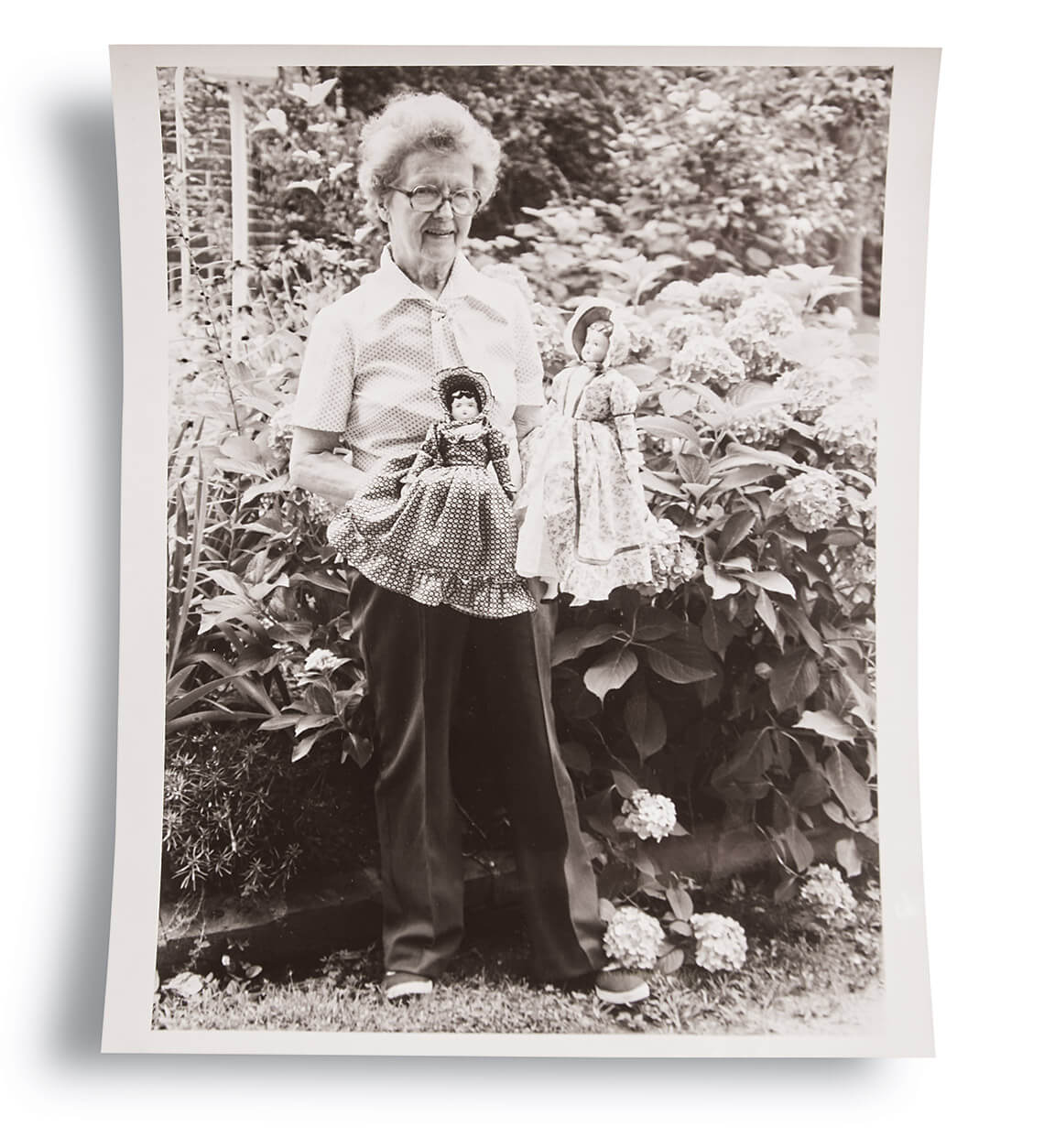
Artist Ernestine Hilton Sigmon painted pottery for Charlie Craven. photograph by Daisy Bridges, courtesy of Leon Danielson
Late-night Googling provided some answers. B.B. “Burlon” Craig had helped revive the Catawba Valley folk pottery tradition. Ernestine Hilton Sigmon was part of a long line of Catawba potters dating back to the Civil War. And C.B. “Charlie” Craven was the last potter in a string of Cravens stretching to the mid-1700s near Seagrove. But information on Tobacco Road Pottery, or Charlie’s connection to it, was scarce.
Then, buried in the description of a decade-old museum exhibit, I saw a name that stopped me in my tracks: Gene Mallar.
• • •
I first shared our tale with the North Carolina Pottery Center in Seagrove, which connected us with Steve Compton, a collector, former Pottery Center board member, and the author of many books on North Carolina pottery.
“What a surprise!” Steve told me. “I’ve been in that attic.”
Yes, he confirmed, Tobacco Road Pottery had been founded by the late Gene Mallar and Leon Danielson. And, he added, “Leon lives in Raleigh, not far from your home.”
That weekend, Alex and I were out front doing yard work when our next-door neighbor, Doris, who’d lived beside the Mallars for 50 years, walked by. When we told her about our discovery, she barely blinked. “I remember Gene was into pottery,” she said. “And I remember Leon being over here a lot. The Danielsons live just around the corner.”
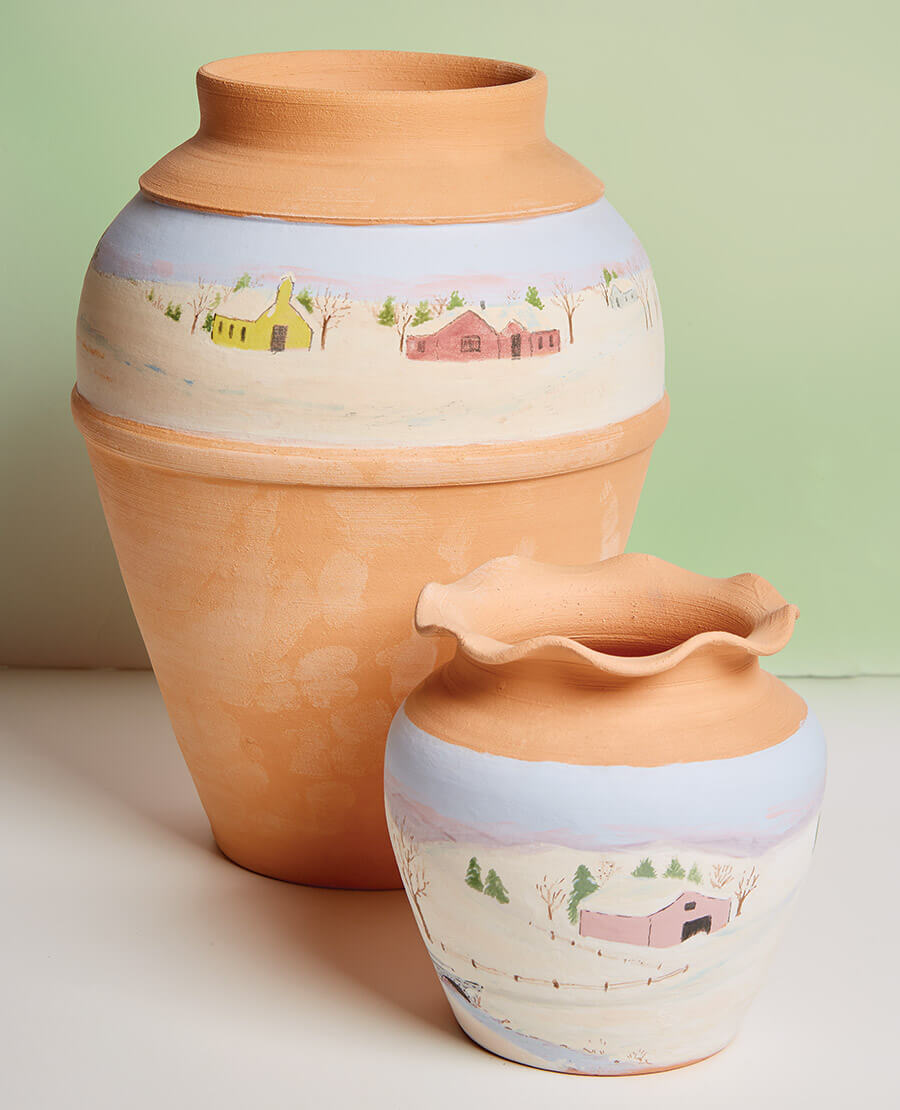
Though Sigmon painted a variety of forms turned by Craven for Tobacco Road Pottery — she particularly favored snow scenes — the pair never met. photograph by Matt Hulsman
Five minutes away. A house we’d passed countless times. Like the pottery itself, hidden over our heads for three years, the answers were suddenly falling right into our laps.
Soon, Alex and I found ourselves sitting at our kitchen table on a sunny afternoon with Leon and his wife, Sue, surrounded by pots that Leon had helped bring into existence.
In the 1970s, the Danielsons and Gene had become interested in collecting North Carolina antiques and pottery. Many weekends were spent roaming the flea market at the NC State Fair.
“Our daughter Renee spent many mornings in my backpack as we prowled the fairgrounds,” Leon recalled.
Eventually, frustrated by the rising cost and scarcity of vintage pottery, the neighbors — along with fellow collector Sid Baynes — approached Charlie Craven to ask if he’d be willing to turn pottery for them. He was. Tobacco Road Pottery was officially established in 1979.
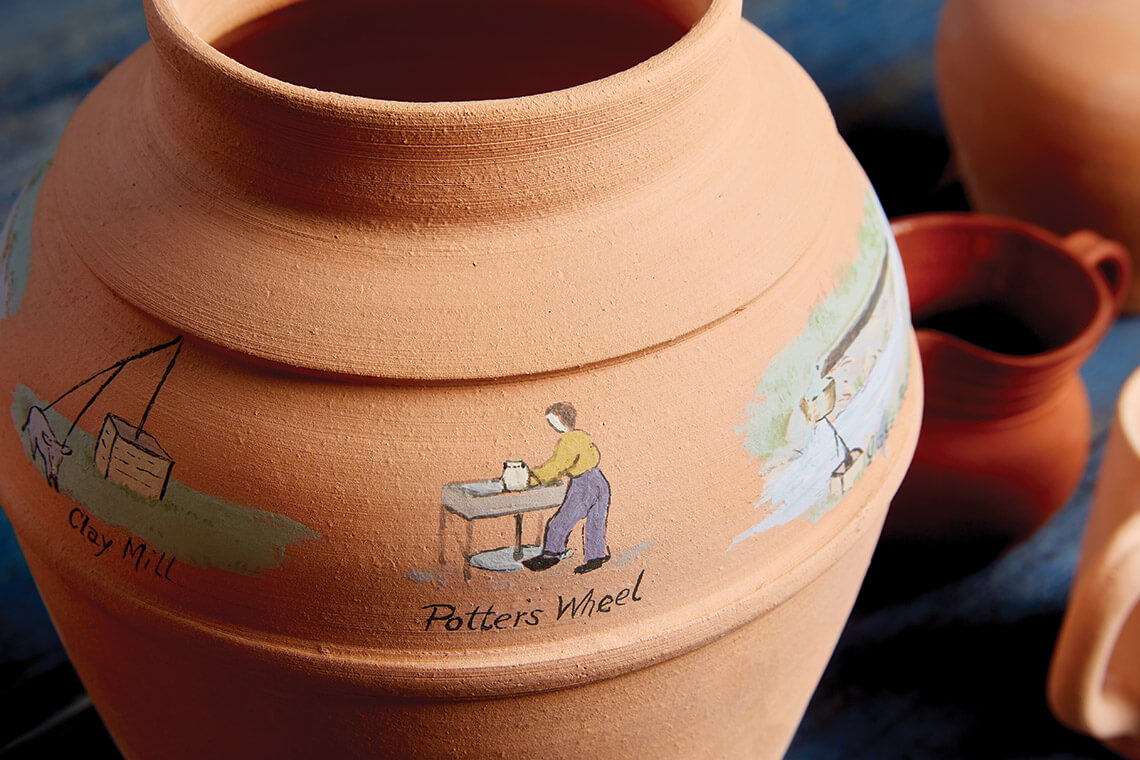
Ernestine’s underglaze painting for Tobacco Road is reminiscent of the “fancyware” made by her parents at Hilton Pottery in the 1920s and ’30s. photograph by Matt Hulsman
Charlie had grown up working in his father’s pottery in Moore County but had spent decades away from the wheel. Recently retired, he began turning again — this time in a shed behind his Raleigh home.
“He had a wheel, but no kiln,” Leon said. “We provided the clay and ideas, but Charlie was given latitude to turn what he remembered making in the early days.”
Through the early ’80s, Gene and Leon paid Charlie per piece, picked up the greenware, then dried it further and sanded it. Leon drove some of the bisqueware up to Catawba County, where Ernestine applied underglaze paintings. Snowy scenes and dogwood blossoms were her specialty, though few were made because of the time involved.
Back in the Triangle, Gene and Leon developed their own glazes — clear, brown, blue, white, and green — often experimenting in the early days, like with the double-dipped “drip” effect that made it look like white glaze was dripping down the pot. The pottery was fired in a kiln behind Gene’s house, in what is now our backyard. Our studio addition, it turned out, had been a pottery workroom.
Tobacco Road Pottery lasted just a few years. While some pieces were sold, Leon says, the project was mostly a shared passion between neighbors and friends — turner and painter, collector and experimenter. Together, they drew from two great North Carolina pottery traditions: the Cravens of the eastern Piedmont and the Hiltons from the Catawba Valley.
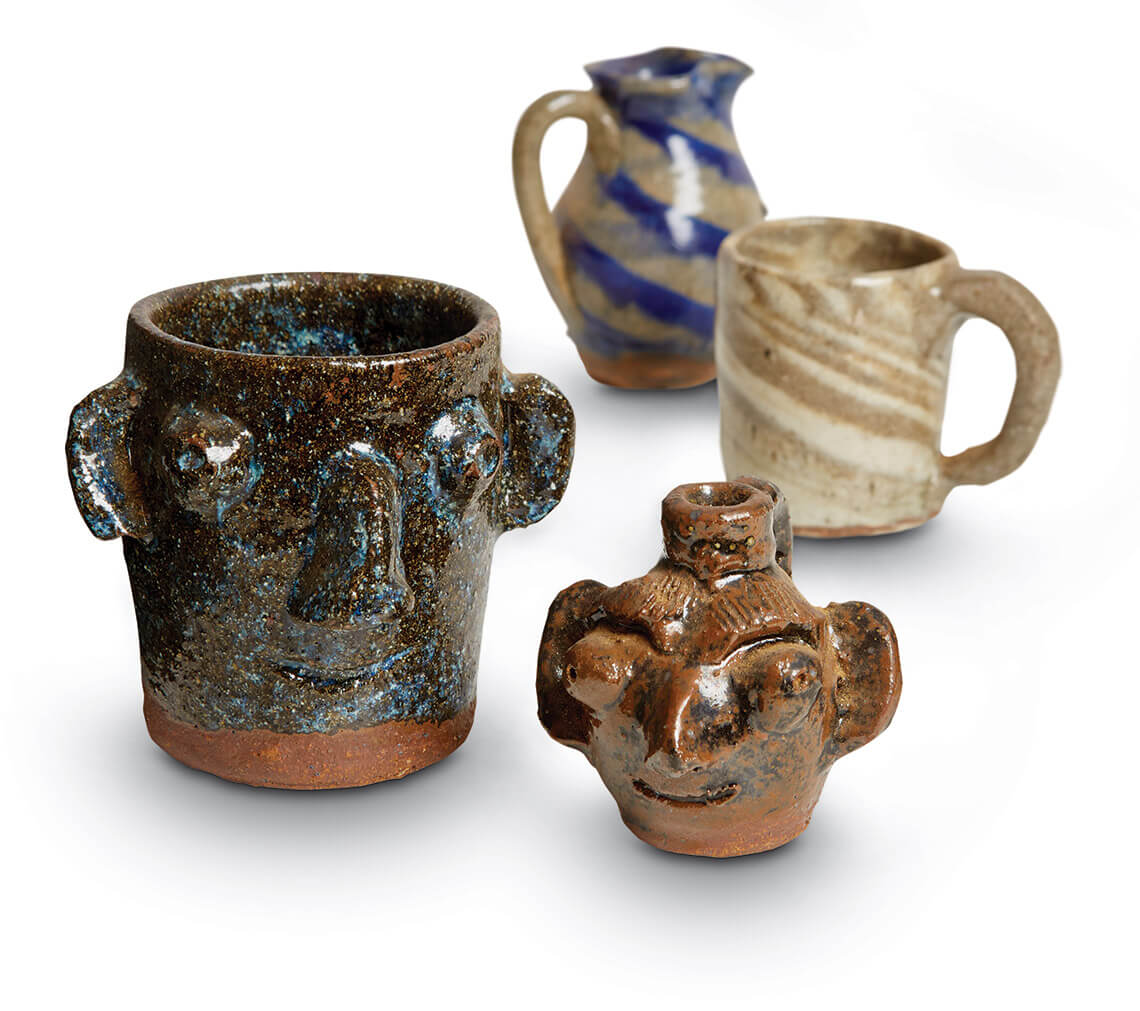
Burlon Craig made pots in the Catawba Valley pottery tradition, which relied on wood-fired and alkaline glazes made from local materials. Some of his pieces are on display at the Smithsonian American Art Museum. photograph by Matt Hulsman
That’s what makes this collection — now our collection — so meaningful. Not just the forms or the glazes or the delicate paintings, but also the way each piece came together, the history of each element. The sum of its parts.
These days, Leon occasionally fires up the old Tobacco Road kiln, now in his garage, to glaze some of the old bisqueware. He and Sue are still avid collectors. When Gene died, they bought his remaining pottery collection from his daughter, though Leon always wondered if more had been hidden away somewhere.
Alex and I still don’t know why Gene stored these particular pieces away from the rest. I like to imagine they were simply too special to part with — treasures collected and created and hidden in time.
We also aren’t sure yet what we’ll keep and what we’ll pass along. Like Gene, perhaps, I can’t imagine letting go of the emerald-green vase, or picture Ernestine’s dogwood blossoms anywhere but on our kitchen table. For now, it feels miraculous just to hold on to tradition.