Lifting one front leg and holding it in place while raising the opposite back leg, C’sar nimbly glides into balancing table pose — well, as nimbly as you would expect a 12,000-pound elephant to glide. Keepers use a target pole to show him where to lift his feet and motivate him with snacks of carrots and sweet potatoes between yoga poses.
C’sar began his yoga regimen in 2019 to address muscle loss that left him unable to rise from the ground. At first, the keepers at the North Carolina Zoo in Asheboro called in a crane to lift the aging pachyderm, but after five years of regular yoga, C’sar, the oldest African elephant in North America, has regained strength and increased his range of motion.
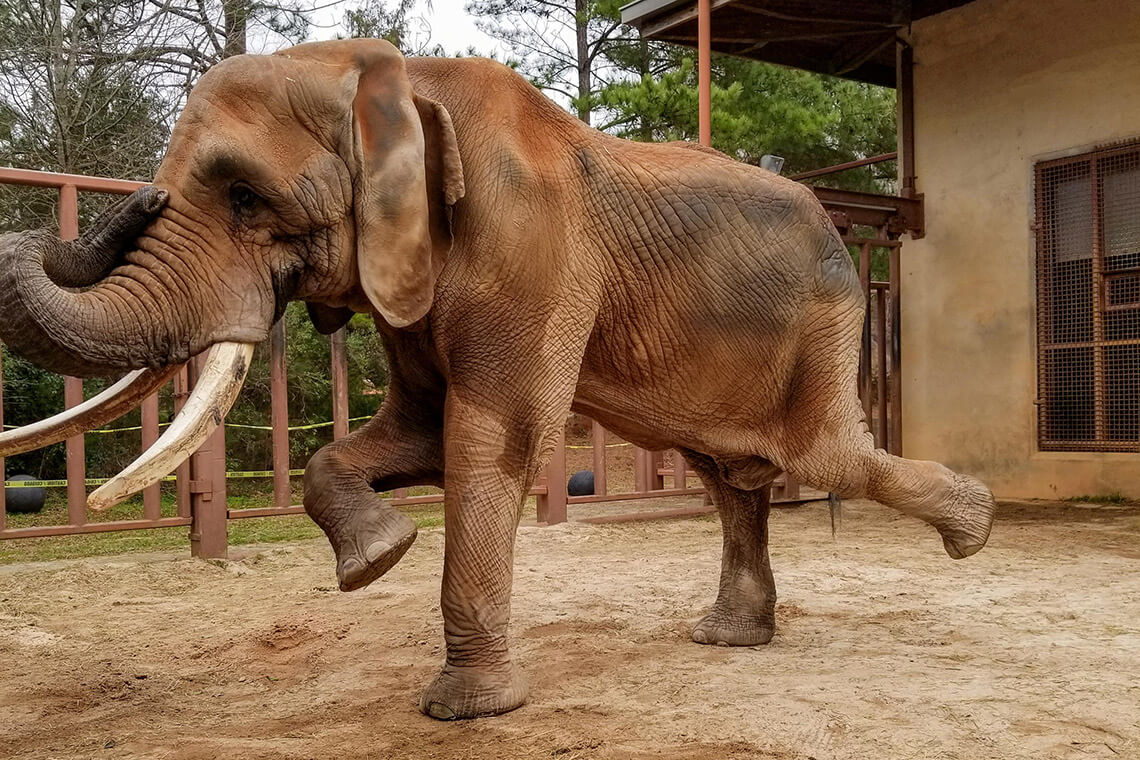
C’sar holds his yoga position to maintain muscle strength. Photography courtesy of North Carolina Zoo
“Many zoos have been getting out of elephants because they’re city zoos, and they just don’t have the space,” explains Diane Villa, acting deputy director and chief communications officer for the zoo. As the world’s largest natural habitat zoo, there’s plenty of room in the North Carolina Zoo’s 40-acre Watani Grasslands for the herd of six elephants, including two males and four females. The elephants can even take a dip in two large pools or relax in their state-of-the-art barn.
Both C’sar and the North Carolina Zoo celebrated their 50th birthdays in 2024. Like the popular elephant, the zoo is full of surprises from the more than 1,700 animals and 52,000 plants that thrive within its boundaries. Read on for our roundup of unexpected tidbits about North Carolina’s zoological treasure — and let them inspire your next visit.
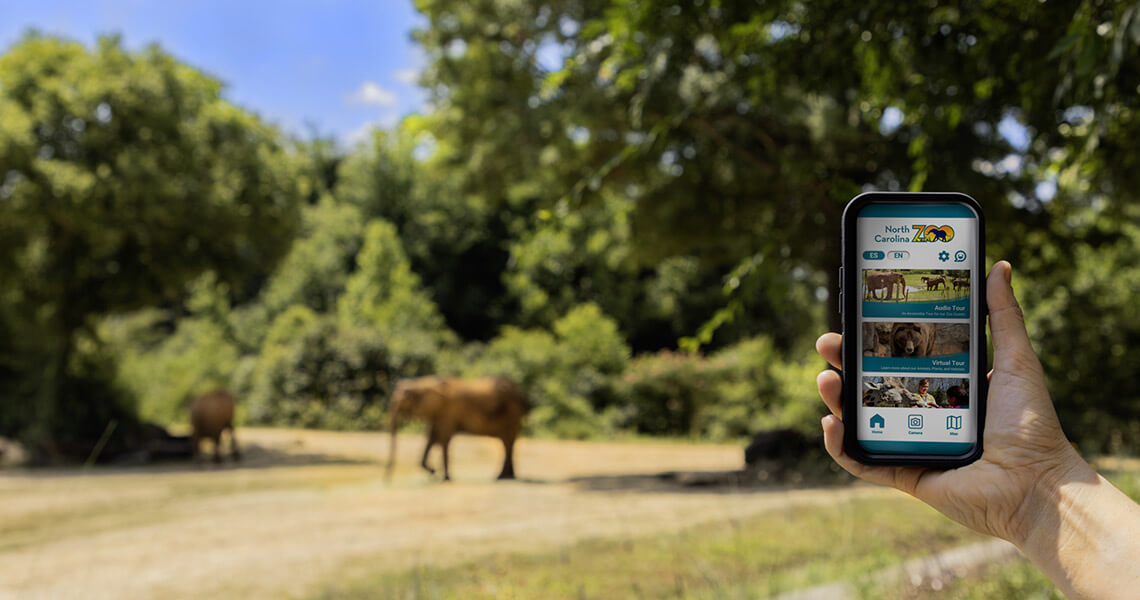
Enhance your zoo visit with the North Carolina Zoo App. Photography courtesy of North Carolina Zoo
1. An app provides visitors with a new experience at the North Carolina Zoo.
Experience the North Carolina Zoo like never before! The zoo’s free app comes with a bundle of activities, from an interactive map to virtual tours, and offers learning resources for teachers and homeschoolers. Interactive activities let guests experience five STEM-centered zoo careers (zookeeper, veterinarian, conservation biologist, and more).
Additionally, audio-description tours, available in English and Spanish, enhance the overall experience of the zoo for individuals who are blind or have low vision. Although the activities are designed to enrich your zoo visit, the virtual and audio tours can also help you plan your next visit. Download the app (Apple and Android stores) before you go and begin your adventure right away.
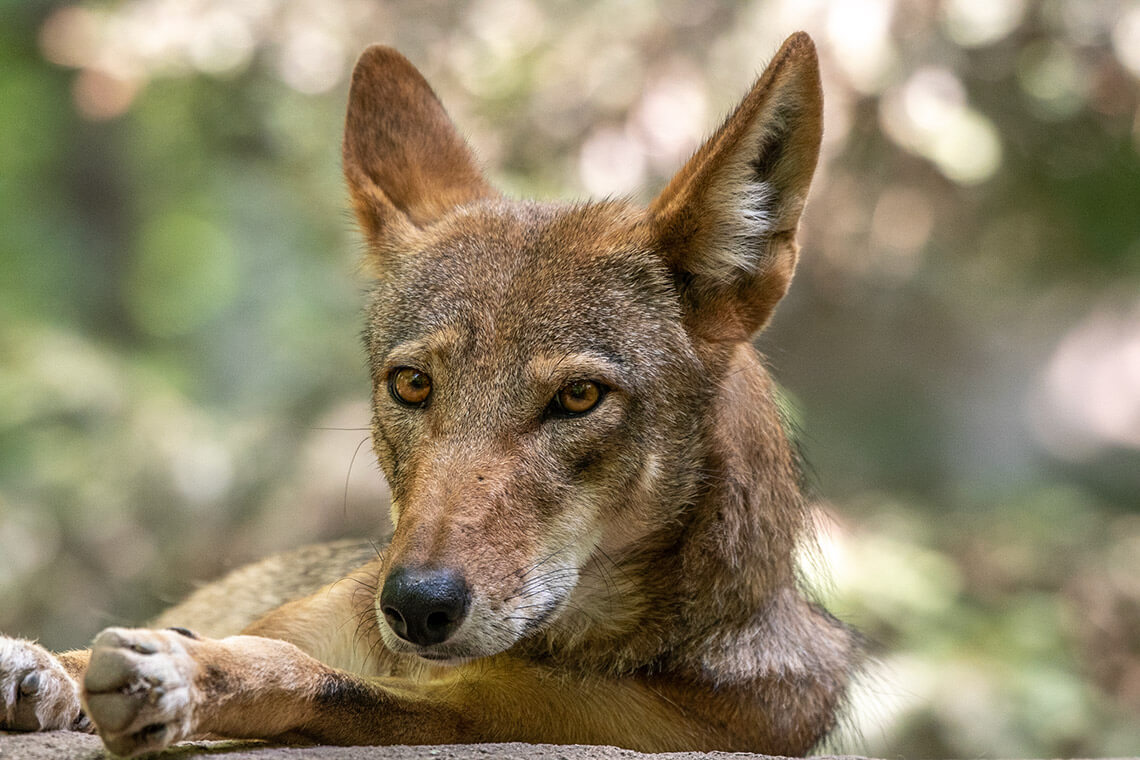
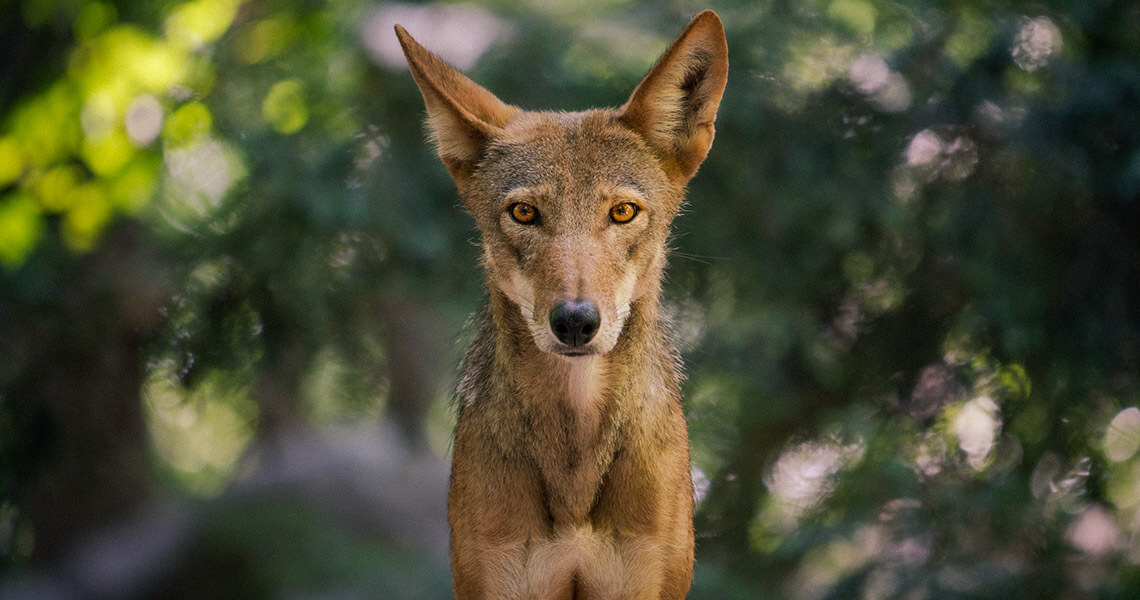
See endangered red wolves up close at the North Carolina Zoo. Photography courtesy of North Carolina Zoo
2. Zoo researchers help save endangered species.
One of the zoo’s missions is to help save wild species and the places where they live, both regionally and internationally. NC Zoo researchers and scientists work around the state and the world to protect threatened animals like American red wolves and Nigeria’s Cross River gorillas. Although they were declared extinct in the wild in 1980, today approximately 20 red wolves live in eastern North Carolina — the only ones living in the wild in the world — thanks to a collaboration of more than 40 organizations, including the NC Zoo. The zoo’s pack of breeding red wolves, the second largest in the country, also contributes to American red wolf survival. Multiple red wolves born at the zoo have been introduced into the wild, helping to expand the genetic diversity of the wild population.
The zoo also helped develop SMART (Spatial Monitoring and Reporting Tool), the leading software used at over 1,500 protected areas in more than 100 countries that collect data to combat poaching and other threats to species. In Nigeria, the zoo’s scientists helped train rangers to use this technology. Using it has improved monitoring of the Cross River gorilla — the most endangered ape in Africa — making rangers’ efforts to protect them more effective. Since rangers began using SMART, the system has documented a greater than 70-percent decrease in hunting, demonstrating better protection of the gorillas, of which roughly 300 remain.
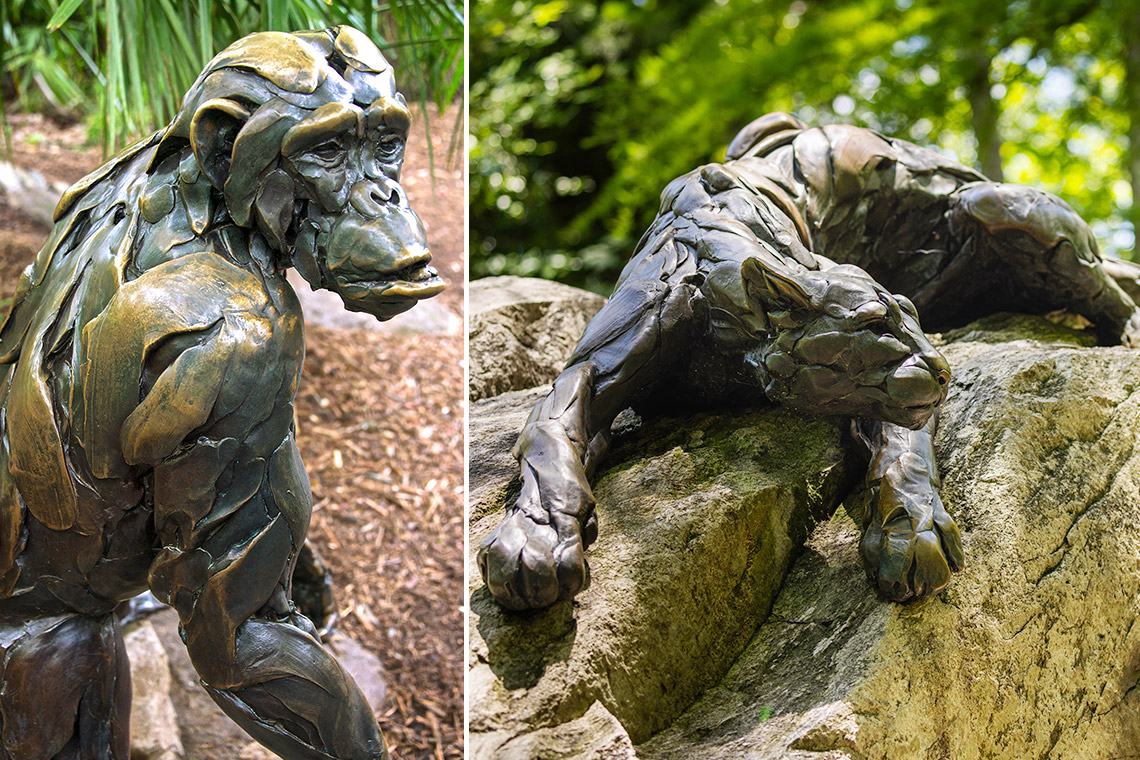
In addition to the zoo’s animals, the interactive art pieces and exhibits captivate visitors’ interest. Photography courtesy of North Carolina Zoo
3. The zoo has its own art gallery.
With more than 150 works, the 2.5-million-dollar public art collection includes realistic animal sculptures, whimsical kinetic towers, colorful tile murals, and intricate abstract paintings. “It’s another way to connect our guests to nature,” Villa explains. “In many ways, art is a universal language.”
As you move from one outdoor exhibit to the next, notice the wide range of engaged spectators — children drape their bodies across a life-size white rhino, cast in bronze; visitors watch silver starlings spin in the wind atop the Murmuration sculpture; families climb the steps within Uwharrhie Vision, an earthen mound with views of weathered mountains from its peak.
Additionally, the collection can also act as a sensory bridge. “For example, someone with low vision can feel the shape of the sculptures and know what an animal looks like,” Villa says.
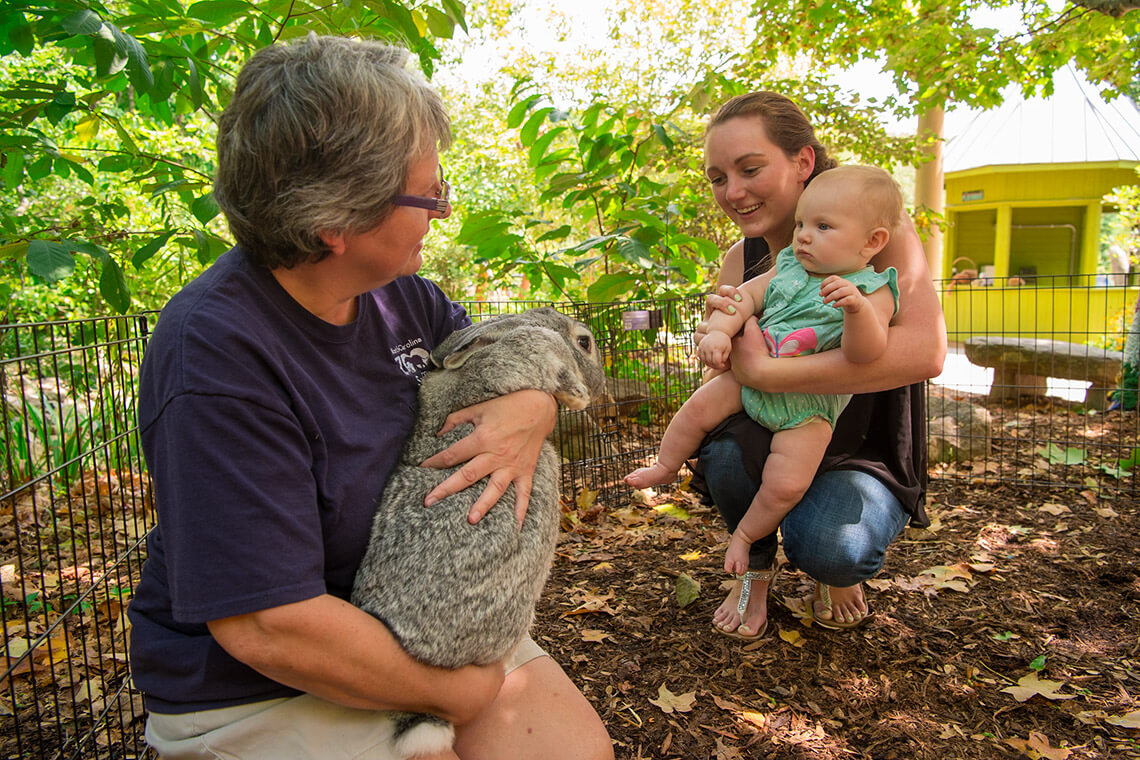
KidZone Photography courtesy of North Carolina Zoo
4. Fun and games for kids.
Right through the gate, the surroundings in the expansive 2.5-acre KidZone grab children’s attention. There’s a shady stream where they can wade through the cool water and a fort building to climb around among the trees.
A trail beyond the entrance connects KidZone’s features: pollinator garden, sensory walk, a dig pit, chalk wall, and wildlife pond. Veer off the path to the Treetop Walkway and travel bridges that pass through the leafy canopy, then stop at the Mud Café, where children can “cook” to their hearts’ content.
When a smiling educator asks, “Do you want to meet our tortoises?” children nod and venture over to the wagon she’s standing beside.
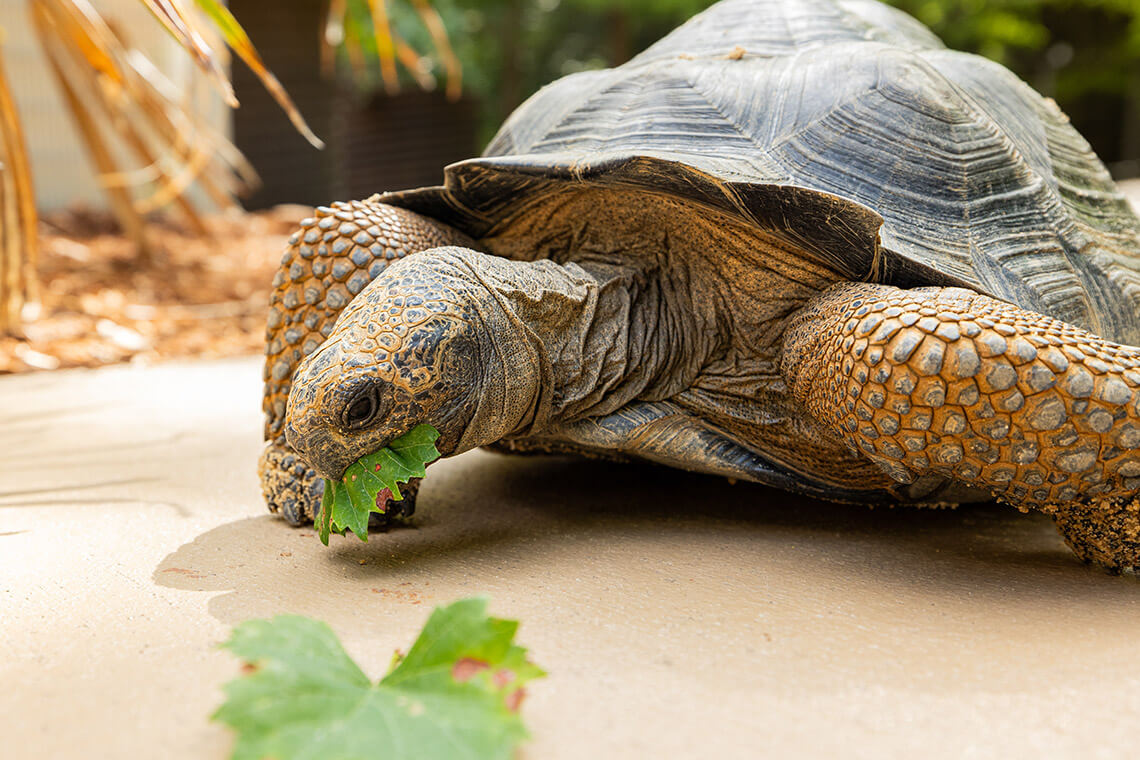
Zoo educators invite children to get a close-up look at various animal residents during the scheduled Animal Encounters. Photography courtesy of North Carolina Zoo
A four-year-old with pigtails peers over the wagon’s plexiglass side. “That one’s looking at me!” she exclaims when Darwin, a juvenile Santa Cruz giant Galapagos tortoise, stretches his neck, reaching up toward her with his scaly head. This is one of the KidZone’s scheduled Animal Encounters, an educational program that gives young visitors a close-up interaction with different species.
“He probably thinks your red shirt is something tasty to eat,” says the educator, who goes on to explain that now, at 15 pounds apiece, the tortoises fit in the wagon together, but when they’re full grown and weigh 100 to 400 pounds, a single one of them will be too large to take a ride in the rolling habitat.
Throughout the KidZone’s open spaces, children are welcome to run and play tag, hide and seek in the standing stone labyrinth, or draw villages on wide chalkboard walls.
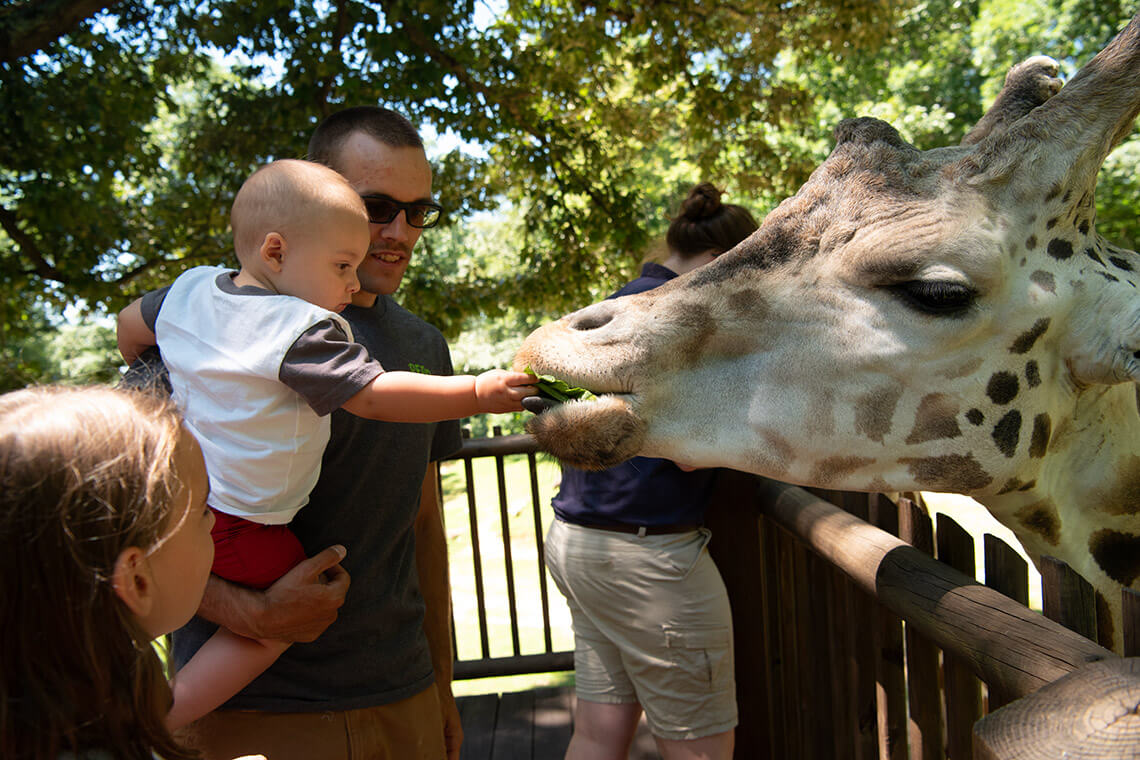
With a little planning ahead, you can feed giraffes during your visit to the zoo. Photography courtesy of North Carolina Zoo
5. You can feed the giraffes.
The wooded 16-foot-tall Acacia Station Giraffe Deck stands at the perfect height for visitors to come face-to-face with giraffes. The deck overlooks a 3.5-acre habitat — created to look like the savannas of Kenya — where the giraffes roam with zebras and ostriches.
For a small fee, you can feed lettuce, a favorite treat, to resident giraffes Amelia, Turbo, and Jack. When they see the crunchy green leaves in guests’ hands, they stretch out their long black tongues and guide the lettuce into their mouths, to visitors’ delight.
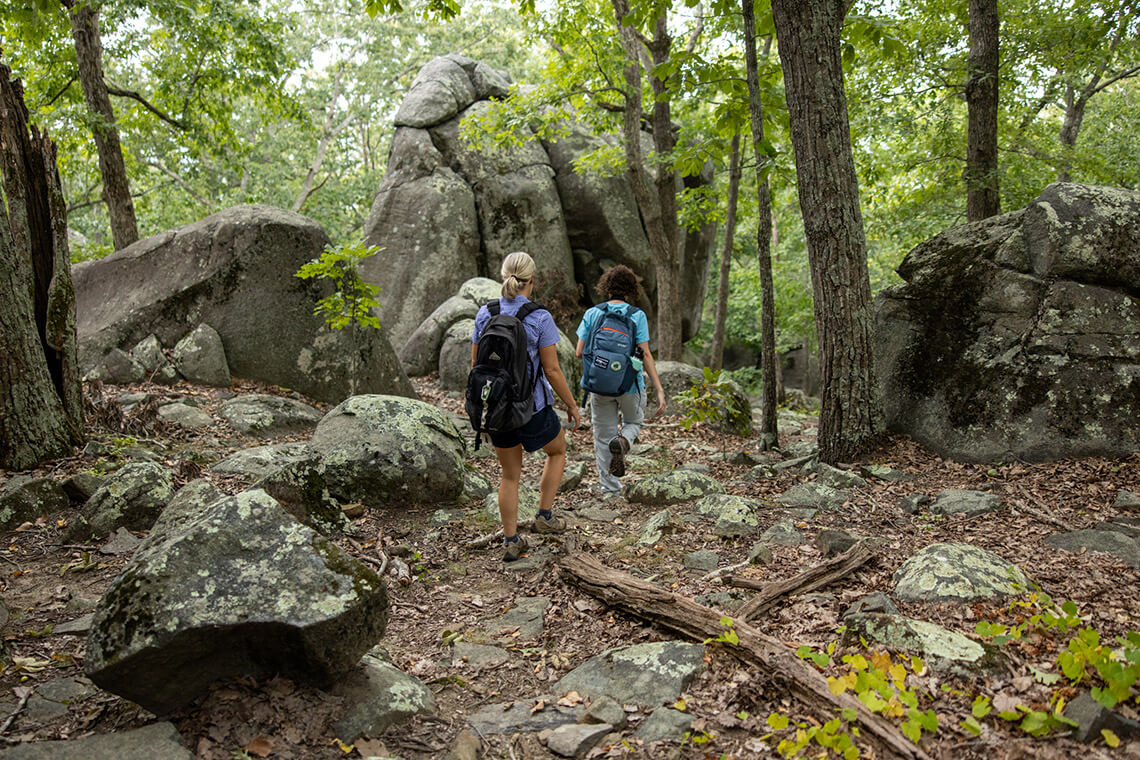
Lace up your shoes and explore the network of hiking trails surrounding the zoo. Photography courtesy of North Carolina Zoo
6. You can turn a zoo trip into a hiking trip.
Keep your eyes peeled for salamanders at Ridge’s Mountain Nature Preserve. Photography courtesy of North Carolina Zoo
Starting at the North America parking lot, the zoo opens to five miles of trails that visitors can trek during opening hours. These trails, a part of North Carolina’s historical Moonshine and Motorsports Trail, lead to Purgatory Mountain, a place that bootleggers once used as a hideout.
A hiking path at Ridge’s Mountain Nature Preserve passes ephemeral ponds used as breeding grounds for salamanders before reaching summit, where enormous boulders littler the landscape.
Ready to see it all for yourself? Click here to start planning your visit to the North Carolina Zoo and see the animals, their habitats, and the on-going advancements shaping this 50-year-old Asheboro destination.