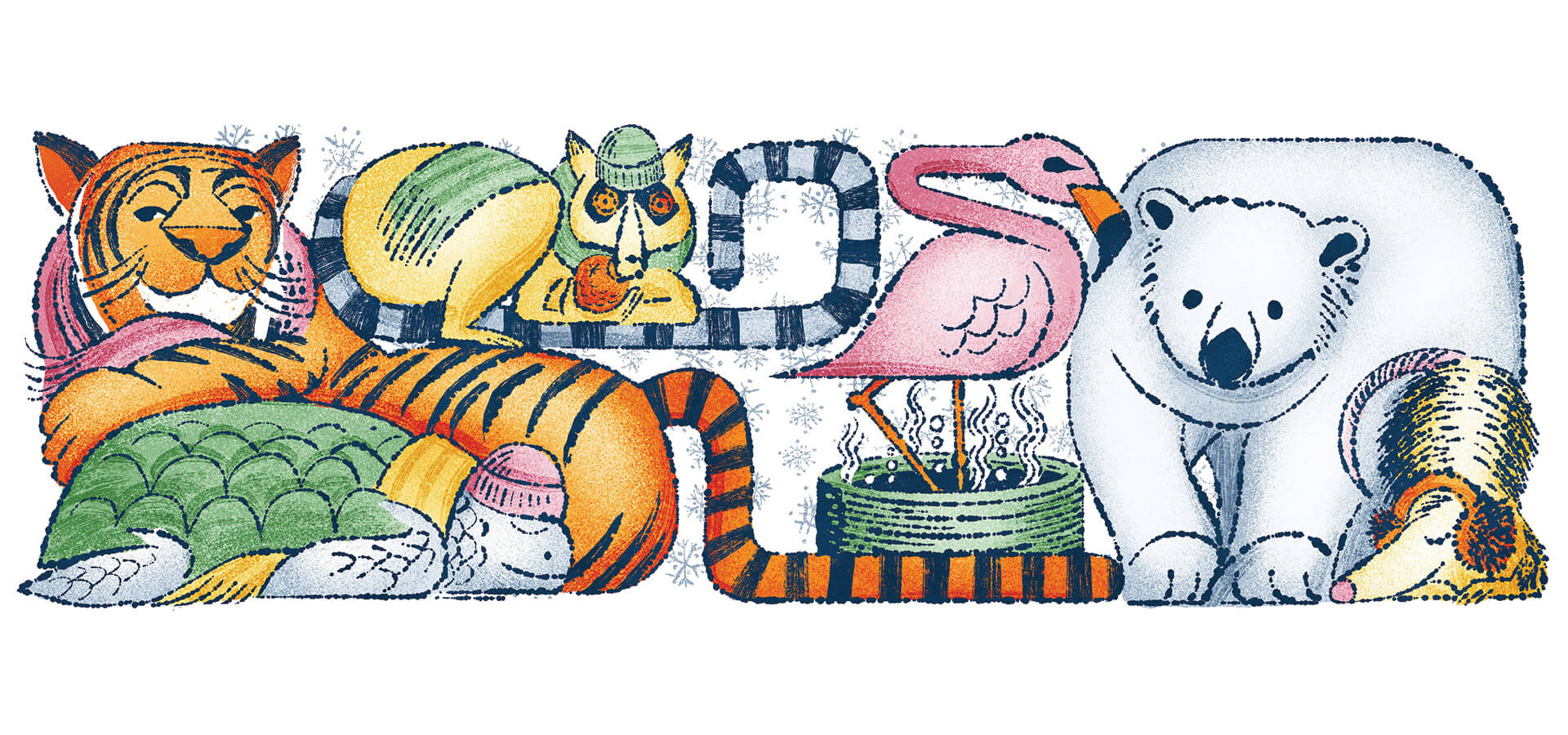
In cold weather, residents both big and small typically hole up in their homemade den boxes — insulated structures made of wood. “It’s basically like a little house,” says Assistant Senior Animal Keeper Cara Vitale. “But it gives them shelter; it gives them heat.” While bigger cats — like Nova the cougar, Naveen the tiger, and Roman the lion — have thick coats to keep them warm, smaller residents get a little help staying toasty: Red foxes and small cats get heating pads applied to their dens’ walls, and Asian leopard cats and kinkajous are brought indoors to heated winter houses.
In our coast’s shallow sounds and estuaries, our native sea turtles can become “cold-stunned,” leaving them unable to swim. When they wash up on shore, the Network for Endangered Sea Turtles brings them to the aquarium’s Sea Turtle Assistance and Rehabilitation Center to warm them back up. “We want to do slow rewarming and supportive care,” says Associate Director Christian Legner. The turtles get their vitals checked before hanging out in pools that slowly raise their body temperature. After they’re cleared by veterinarians, they’re released into the warmer waters of the Gulf Stream.
This center houses 12 species — but not all of them spend winter the same way. For fat-tailed dwarf lemurs, winter in Madagascar is a time to gorge on fruits and then hibernate for several months. Here, they don’t experience food scarcity, but they’re still encouraged to fall into a natural cycle. “The hibernacula that we use allow us to perfectly replicate the environmental factors that they would experience in Madagascar,” says Director of Communications Sara Sorraia. Other species are brought indoors, where they get extra enrichment, even playing with snowballs when the weather allows.
A bird’s natural shape has a lot of impact on how it stays warm. Compact species like snow geese maintain their internal temperatures more easily than those with longer extremities. In the wild, these snowbirds travel south, with some spending their winters in eastern North Carolina. At this 38-acre sanctuary, they simply get a bump in water temperature, which they move into during cold weather. “They’re just smart about how they stay warm,” says Director of Aviculture Dr. Dustin Foote. And those long-legged birds that can’t intuitively keep warm, like lesser flamingos? They get the spa experience in indoor spaces.
Just like how humans don layers of fleece jackets and raincoats in the cold and wet winters, raptors in North Carolina — like owls and hawks — have multiple layers and types of feathers to insulate their bodies and keep them dry in extreme weather. They also have muscular control over these feathers, allowing them to catch and trap air underneath, which they then warm with their body heat. “That’s why you’ll see a lot of poofier-looking birds when it’s cooler out, who [still] look nice and cozy,” says Colleen Hartman, the director of ambassador programs and education at this rehabilitation and education center.
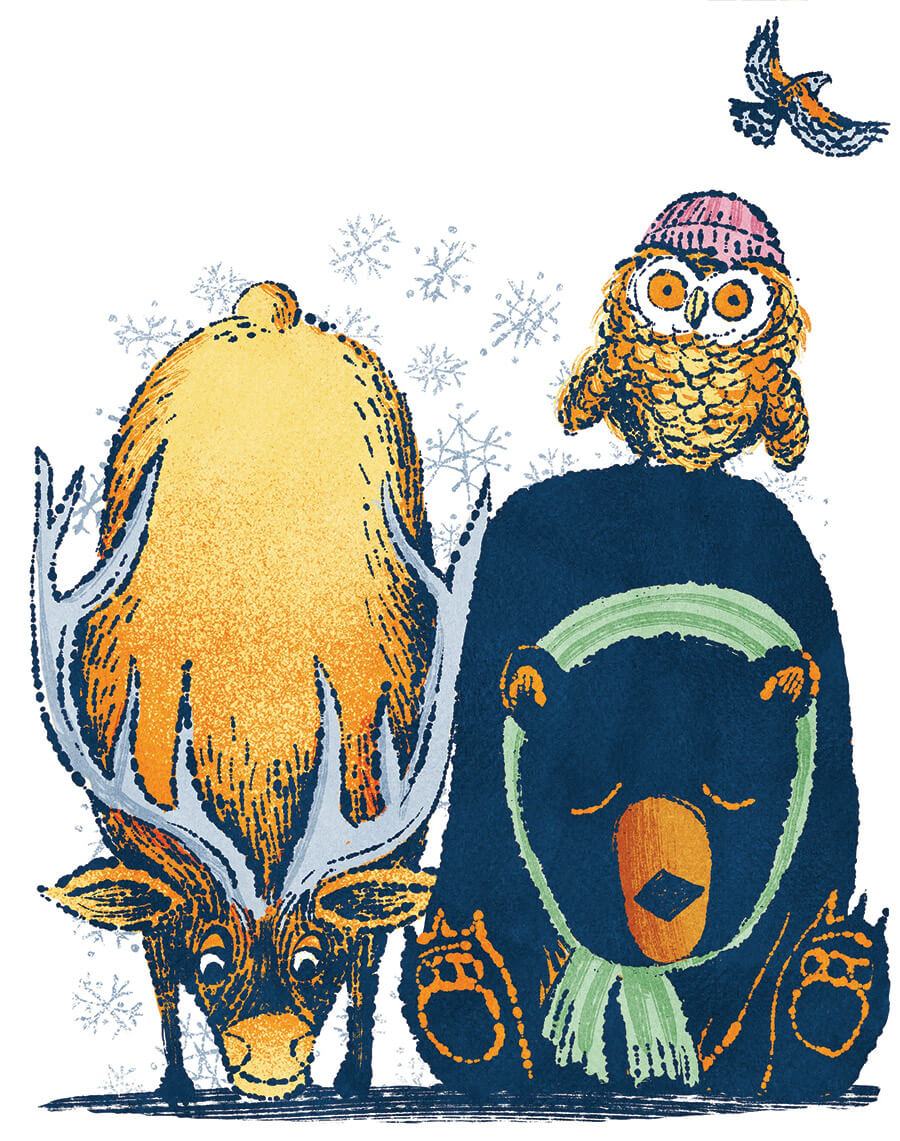
illustration by Ed Fotheringham
North Carolina mountain natives are plenty accustomed to the colder months. Majestic elk swap their summer sweaters for thick winter coats, so the brisk air has minimal effect on their activity levels, while black bears put on a few extra pounds to maintain more warmth. Though our bears do enter what’s called “torpor,” a state of energy conservation, they have more active periods in the winter than their Northern relatives. “We emulate the wild as much as possible with them, so they’ll still slow down and get sleepy in the winter,” says Assistant Curator Deborah Anderson. “But since they’re captive bears, if they get up and ask us for food, we’ll still feed them” — thus providing a little more luxury than their wild counterparts.
Though North Carolina might not reach the same low temperatures as their native lands, residents of the zoo’s Rocky Coast habitat — like the polar bears and Arctic foxes — are acclimated to the cold. “They’re not having the limitations that wild animals have — they get fed every day,” says Curator of Mammals Jennifer Ireland. “So they don’t go through the same level of physiological changes that wild animals go through.” Still, winter is prime time to view Arctic foxes Rizzo and Kenickie, who grow out their signature white coats, and polar bear Anana, who is typically more active in chilly weather.
While some of our native species spend the winter snoozing, others, like the Virginia opossum, take a different approach. “They’re nomadic,” says Center Director Nina Fischesser. “They’re omnivore opportunists, so they’ll find food in just about anything. They rarely spend two nights in the same den, but they’re pretty good at surviving — as long as they don’t get harassed by a predator or a car.” And while their paper-thin ears are susceptible to frostbite during extreme cold, these scrappy marsupials know when to cuddle up in a shelter — and when to search for a snack.