Put ramekins on a baking sheet. Bake for 25-35 minutes, until puffed and golden. Remove from oven, and let stand for 5 minutes. With a flexible spatula, remove strata to
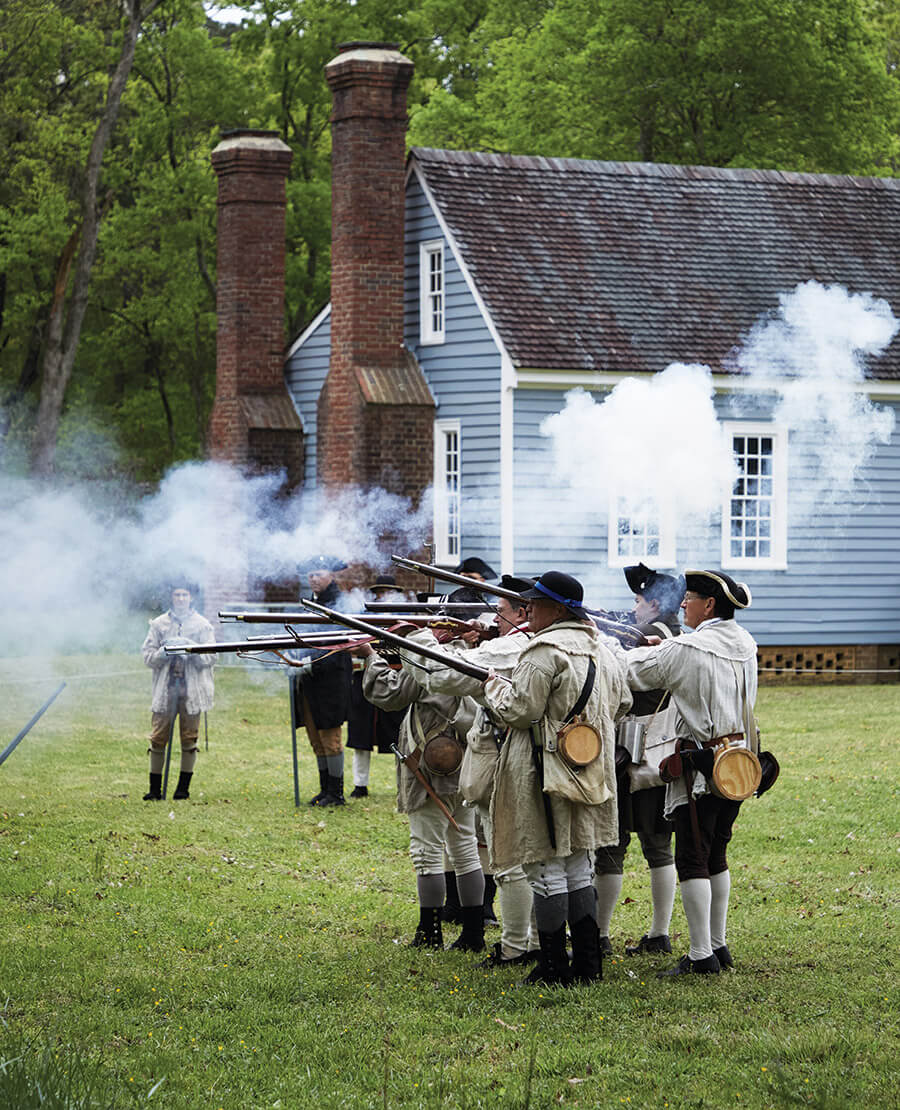
[caption id="attachment_208853" align="aligncenter" width="900"] Reenactors bring the past to life with demonstrations at the Historic Halifax State Historic Site.[/caption] Halifax The rebel Provincial Congress meeting at Halifax in April 1776
[caption id="attachment_208853" align="aligncenter" width="900"] Reenactors bring the past to life with demonstrations at the Historic Halifax State Historic Site.[/caption] Halifax The rebel Provincial Congress meeting at Halifax in April 1776
Reenactors bring the past to life with demonstrations at the Historic Halifax State Historic Site. photograph by Chris Rogers
Halifax
The rebel Provincial Congress meeting at Halifax in April 1776 told its delegates to the Continental Congress that they could vote for independence — the first explicit statement of support for revolution by any colonial legislature. Halifax was a hub for men and military supplies throughout the war, and the British Army occupied the town for 10 days on its way out of the state in 1781. Years later, both George Washington and the Marquis de Lafayette passed through. At Historic Halifax, you can tour the sites where the Congress met and where the British crossed the Roanoke River heading for Virginia. — J.M.
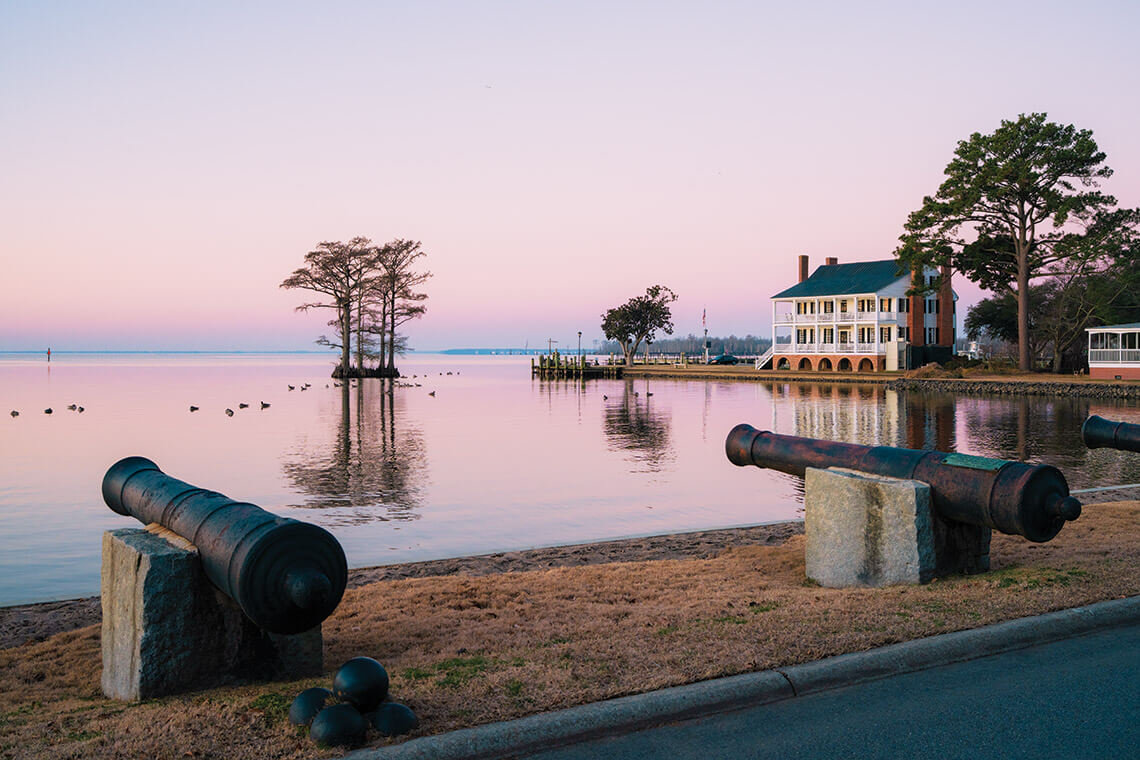
Overlooking Edenton Bay are three cannons brought by a Swiss captain who dodged British ships to deliver them in 1778. In the distance stands the Penelope Barker House, built in 1782, which now serves as a welcome center and museum focusing on the Edenton Tea Party. photograph by Chris Hannant
Edenton
By the dawn’s early light, revolution stirred: In 1774, North Carolina’s first colonial capital became the site of the first women’s political protest in America. Penelope Barker and 50 others signed a resolution to boycott British goods in defiance of Parliament and King George III’s taxes. — K.S.
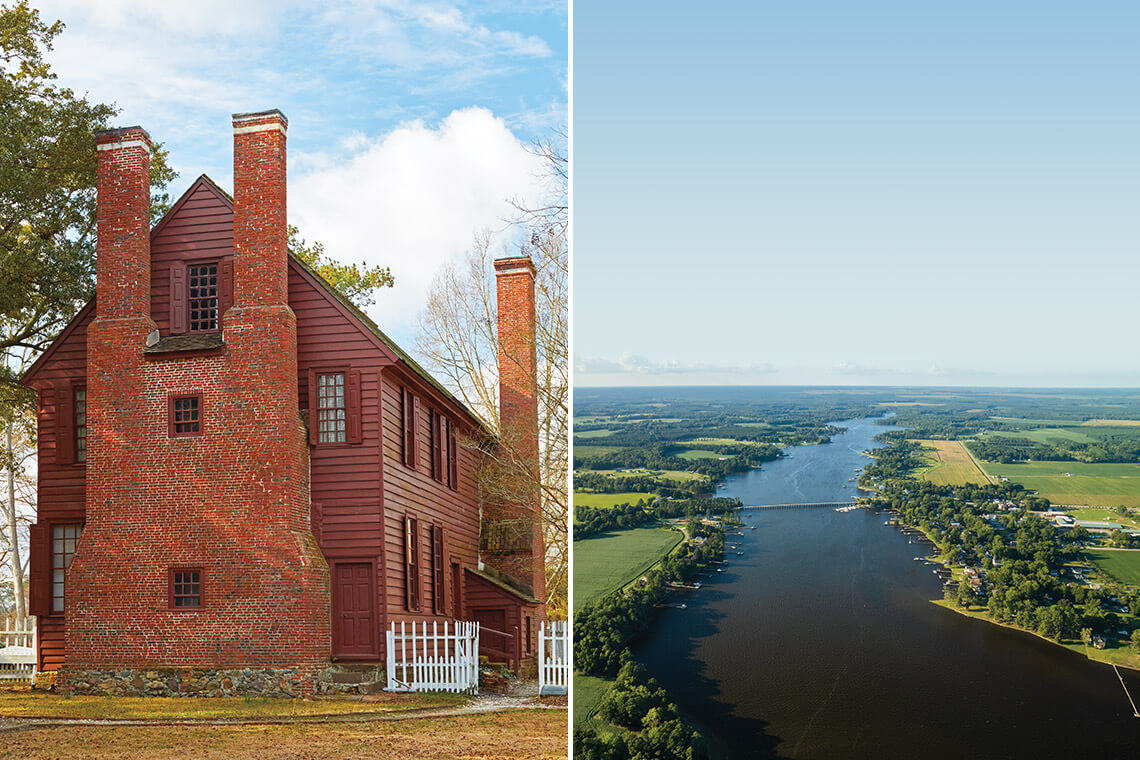
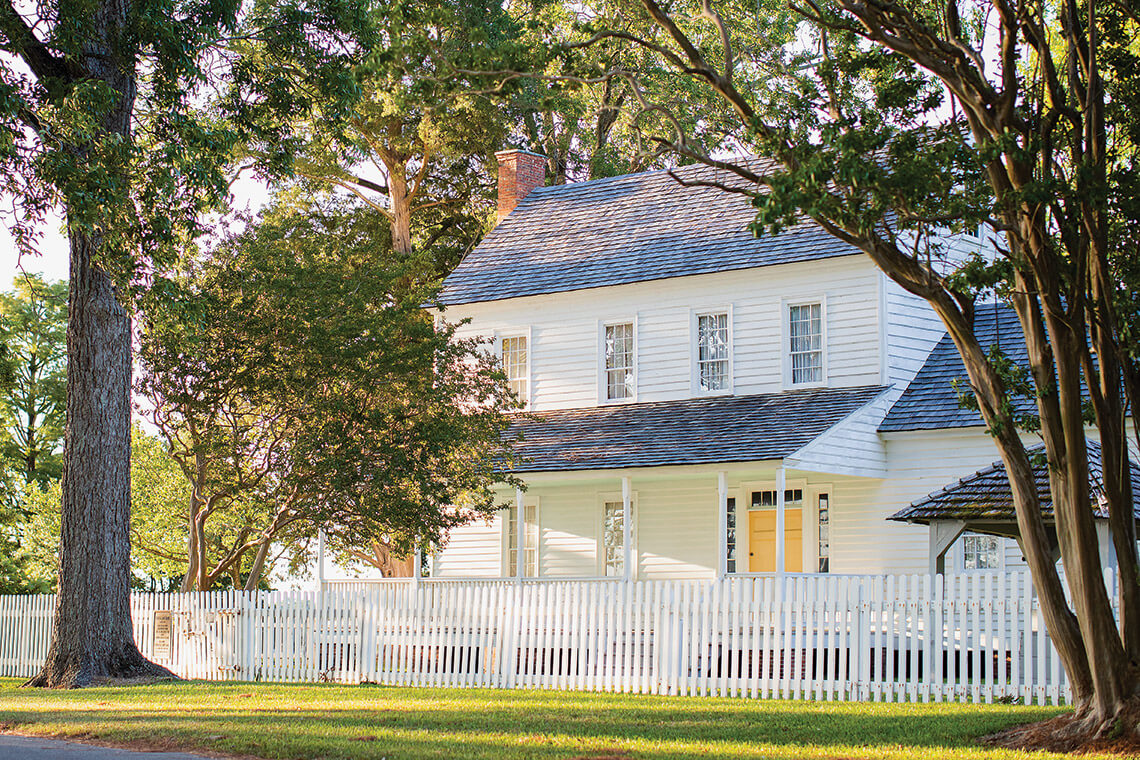
Just north of the Pamlico River on Bath Creek lies North Carolina’s earliest town, founded in 1705. One of the state’s oldest standing homes, the Palmer-Marsh House, was built circa 1751, …<br><span class="photographer">photograph by Chris Hannant, Chris Rogers</span>
… while the Bonner House sits on land once owned by Bath cofounder John Lawson.<br><span class="photographer">photograph by Chris Hannant</span>
Bath
On May 6, 1775, a rider from Edenton galloped into the port town of Bath with a dispatch: British redcoats had attacked Massachusetts minutemen at Concord’s Old North Bridge and on Lexington Green. The war had begun. Many local men joined the Continental line or enlisted in the militia, while seafarers helped bring in supplies and ammunition. — K.S.
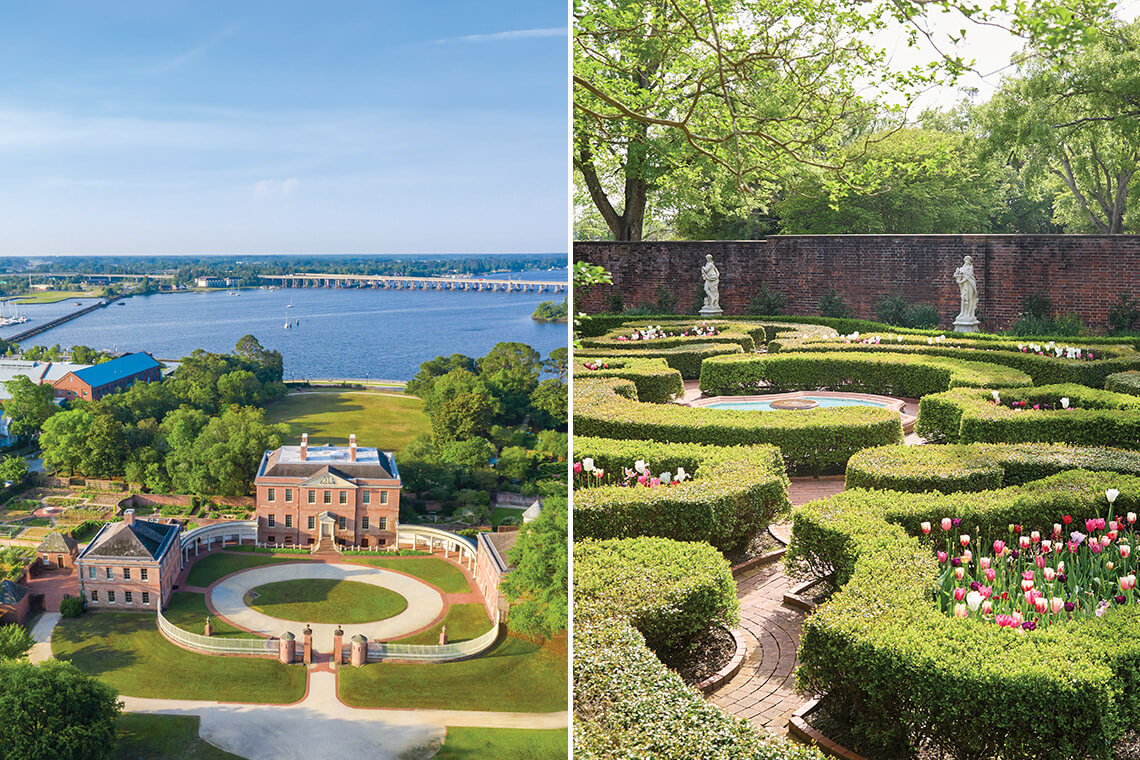
In 1798, a few years after the capital moved to Raleigh, the Georgian-style palace burned to the ground. In 1959, after the historic buildings and formal gardens were faithfully re-created, it opened to the public. photograph by chris council, stacey van berkel
Tryon Palace New Bern
Built in 1770 for Royal Gov. William Tryon, our first permanent State Capitol was considered one of the finest buildings in the American colonies. It served as the official residence of British governors in North Carolina until 1775, when Gov. Josiah Martin fled the palace and rebels seized it for their headquarters. — K.S.
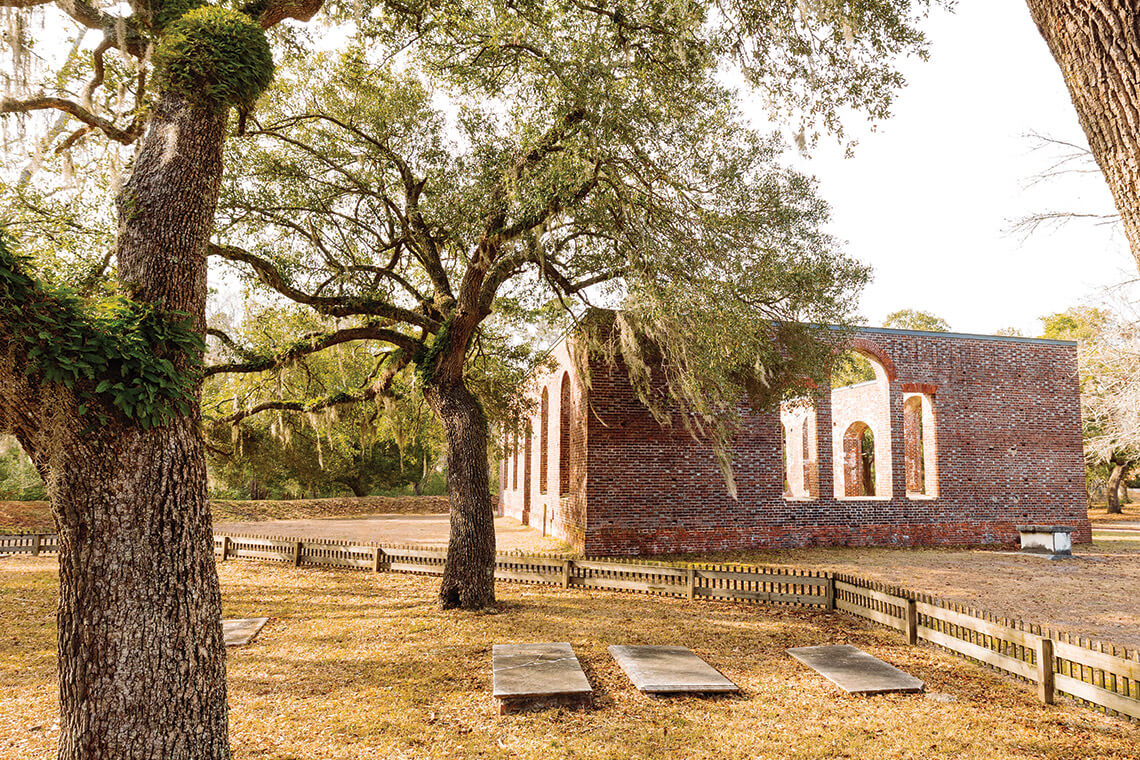
photograph by Matt Ray Photography
Brunswick Town Winnabow
One of the first acts of rebellion by an armed force in the colonies took place in Brunswick Town on the Cape Fear River. As part of the Stamp Act struggle over a tax on documents and printed materials, hundreds of people confronted Governor Tryon at his home here in 1766 — seven years before the Boston Tea Party. Customs officers were compelled to agree not to enforce the tax. Brunswick Town State Historic Site features the exposed foundations of buildings that saw raids by Spanish privateers in 1748 and Lt. Gen. Lord Charles Cornwallis in 1776. He is not guilty of burning the town, as once believed. — J.M.
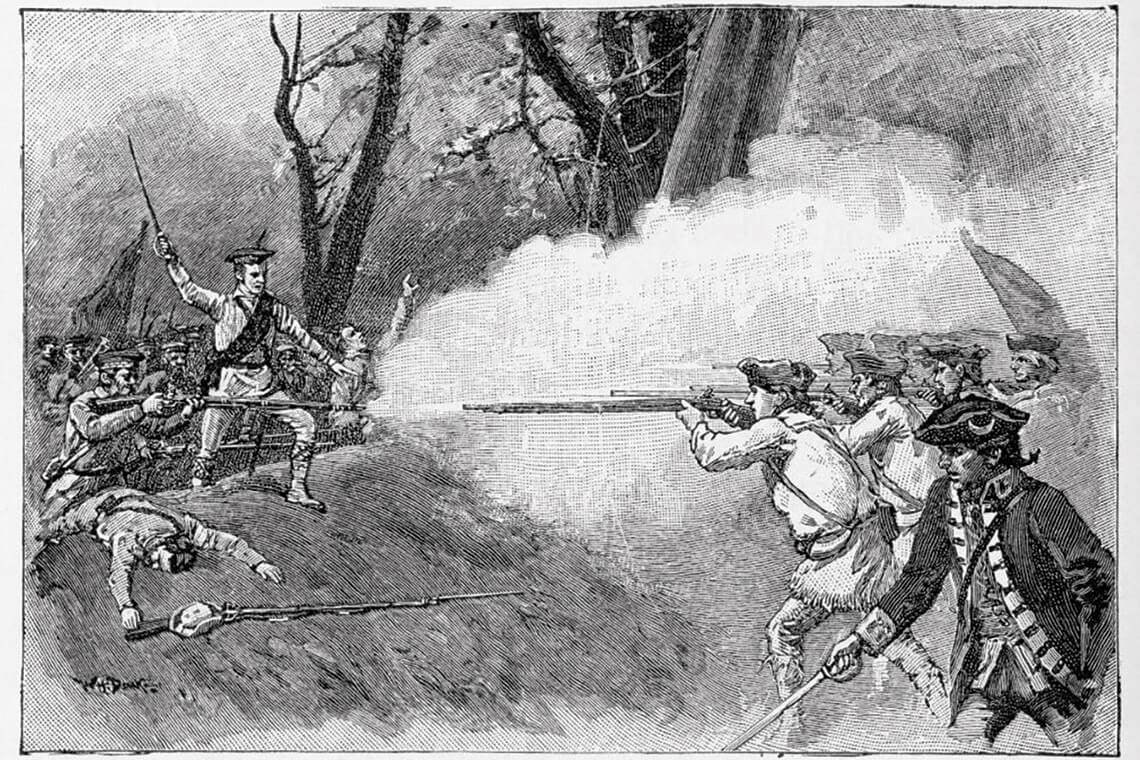
In Pender County, Moores Creek National Battlefield tells the story of the Patriot victory that took place there in February 1776. illustration by Interim Archives/Getty Images
Moores Creek Currie
Tryon’s successor, Royal Gov. Josiah Martin, coordinated with Lord Germain, King George III’s secretary of state, to send an army to retake North Carolina first among the colonies, in part by claiming that thousands of Loyalists would join them. Only about 1,500 showed up in February 1776. At Widow Moore’s Creek, they found the bridge de-planked and greased, but Scottish Highlanders drew their broadswords. They charged around a curve into surprise artillery and musket fire from some 950 militia. Almost all of the Loyalists were killed or captured, blocking the British invasion. Moores Creek National Battlefield has remnants of the original route followed by the Loyalists and Patriots, plus a reconstructed bridge and earthworks. — J.M.
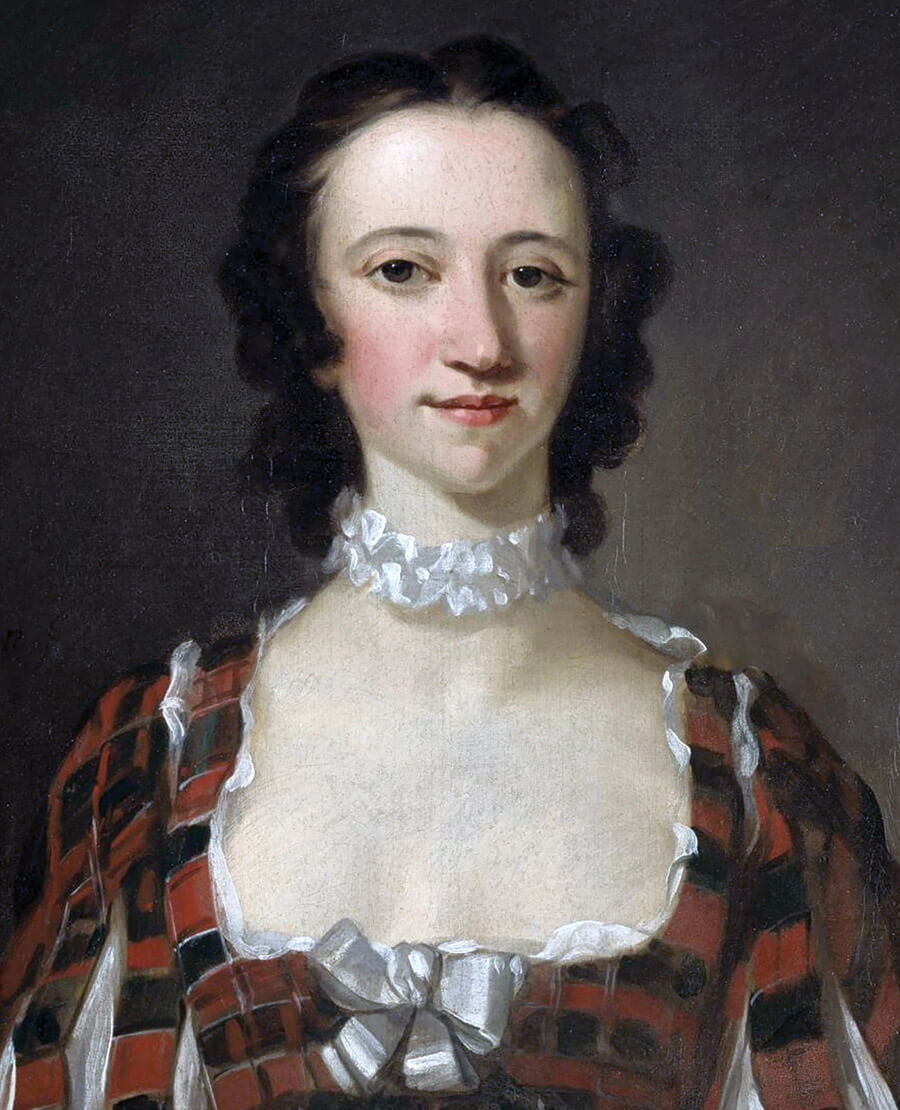
photograph by Pictorial Press LTD/Alamy
Flora Macdonald Homesite Montgomery County
Flora Macdonald became the most globally famous person in North Carolina when she and her husband arrived from Scotland in 1774. As Outlander fans know, following the 1746 Battle of Culloden, she helped a Scottish prince escape the British by dressing him as her yarn-spinner. After her Loyalist husband’s capture at Moore’s Creek, she ran the plantation here for two years. Their exact homesite is unknown, and historians have disproved the myth that she left behind two dead children. Park by Cheek’s Creek, however, and a narrow, wooded trail leads you north on public land that was once their plantation. — J.M.
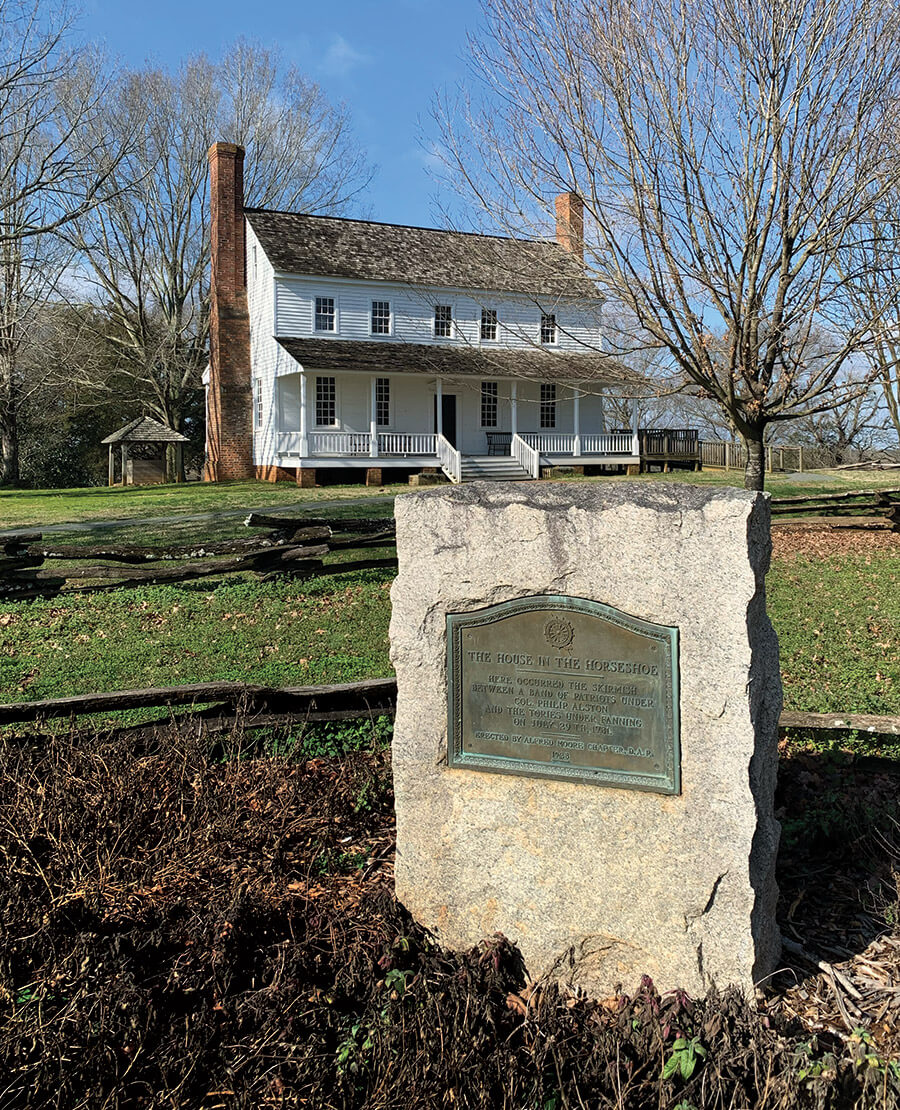
Though the site is temporarily closed, you can still view the house from outside the gate. photograph by Erin LaBree
House in the Horseshoe Sanford
Named for the horseshoe bend on the Deep River where it was built circa 1772, this residence — also known as the Alston House — was owned by Col. Philip Alston, whose band of militia was attacked and captured by Loyalists here in 1781. Later, four-term Gov. Benjamin Williams lived here and turned the estate into a cotton plantation. Today, the state historic site features colonial and Revolutionary-era antiques. — K.S.
photograph by Matt Ray Photography
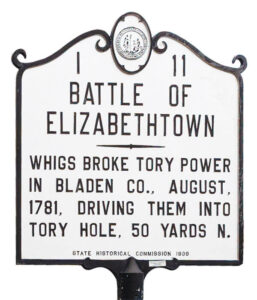
Elizabethtown
Just off Broad Street, spot “Tory Hole” — the slope where many retreating Loyalists launched themselves into a deep ravine near the Cape Fear River during a surprise attack by Patriots on August 27, 1781. — K.S.
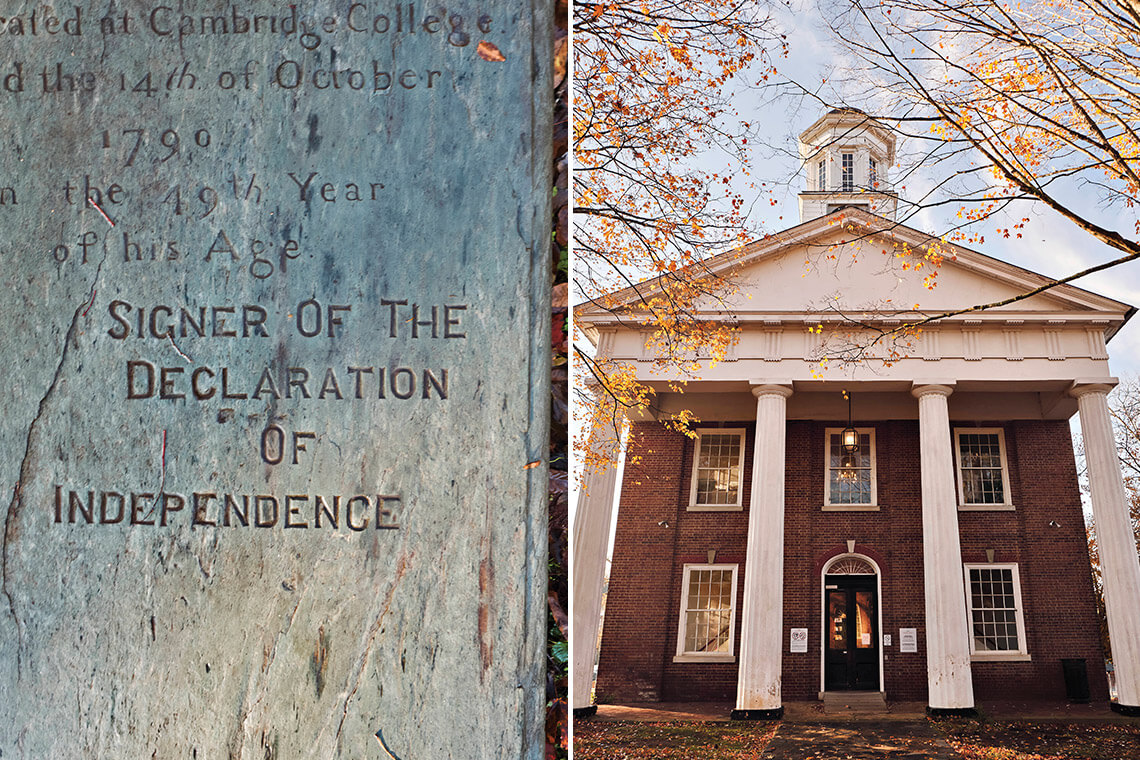
A historic clock on top of the Old Orange County Courthouse (right) dates to the 1760s. In Old Town Cemetery, find the grave of William Hooper (left). photograph by Alex Boerner
Hillsborough
Hillsborough was the scene of dramatic events related to the Regulators — pre-Revolutionary protesters against Provincial government corruption and excessive taxes — including the spot where six were hanged. During the Revolution, it was a camp for both the British and Continental armies. A Loyalist raid captured the North Carolina governor from Hillsborough in 1781. Among the many period homes in town is that of William Hooper, the state’s only remaining residence of a Declaration of Independence signer. — J.M.
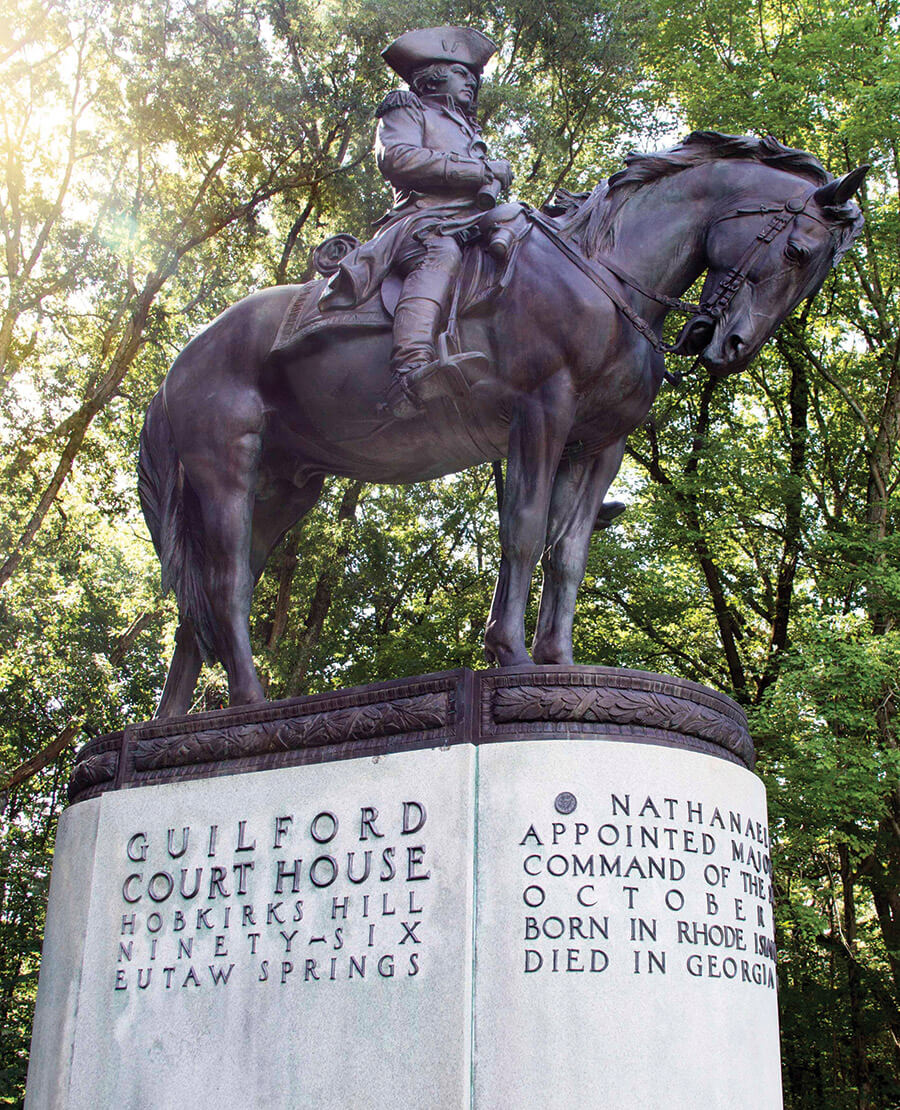
photograph by Riokausa, Wikimedia Commons, Creative Commons Attribution-Share Alike 4.0 International license
Guilford Courthouse Greensboro
Guilford Courthouse National Military Park protects about a third of the site where the British won the largest Revolutionary battle in the state but lost many men, contributing to the loss of the Southern Campaign. Start at Hoskins Farm to follow in the footsteps of the British as they scared off the first line of militia. Northeast, the second line of militia proved sturdier. When the Continental regulars of the third line pushed back, a vicious melee ensued, though Cornwallis did not intentionally fire on his own men to stop it, as legend holds. — J.M.
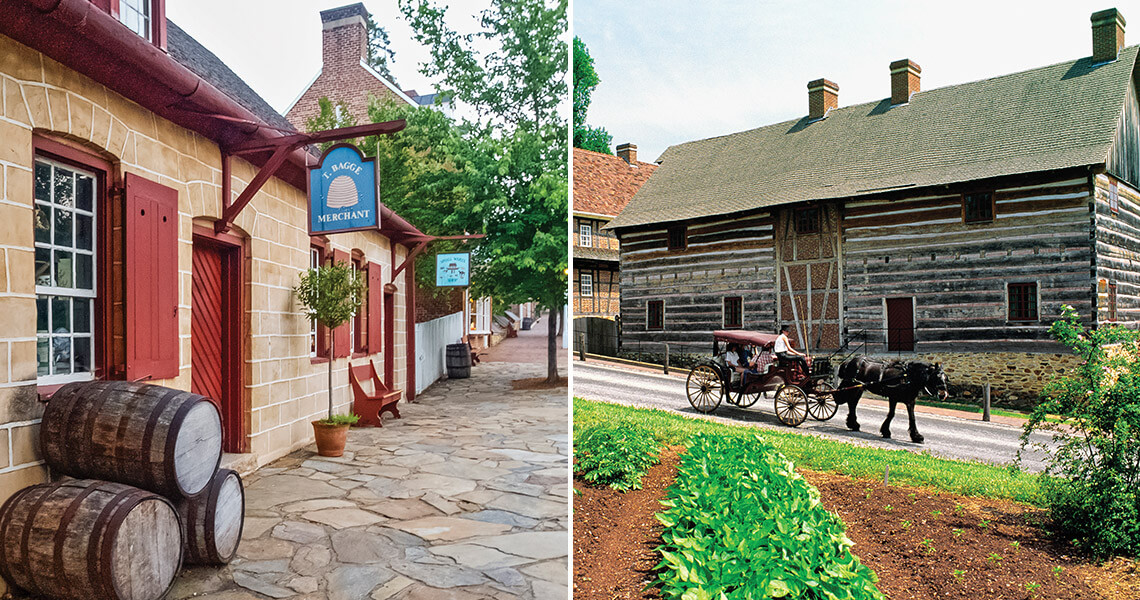
A horse-drawn carriage ride through Old Salem Museums & Gardens passes structures like the Single Brothers’ House (right: far left), built as lodging for unmarried men. photograph by Jay Sinclair; David Matthew Lyons/Adobe.Stock
Salem Winston-Salem
No site in the state brings you closer to the feeling of life during the Revolution than today’s Old Salem. The Moravians objected to war on religious grounds. Built as the commercial center of their 98,000-acre Wachovia tract, Salem hosted and supplied both sides, earning abuse from both. In 1781, the British Army marched down Main Street, where Cornwallis stopped to visit with Traugott Bagge at his store — still open today. — J.M.
Ramsour’s Mill Lincolnton
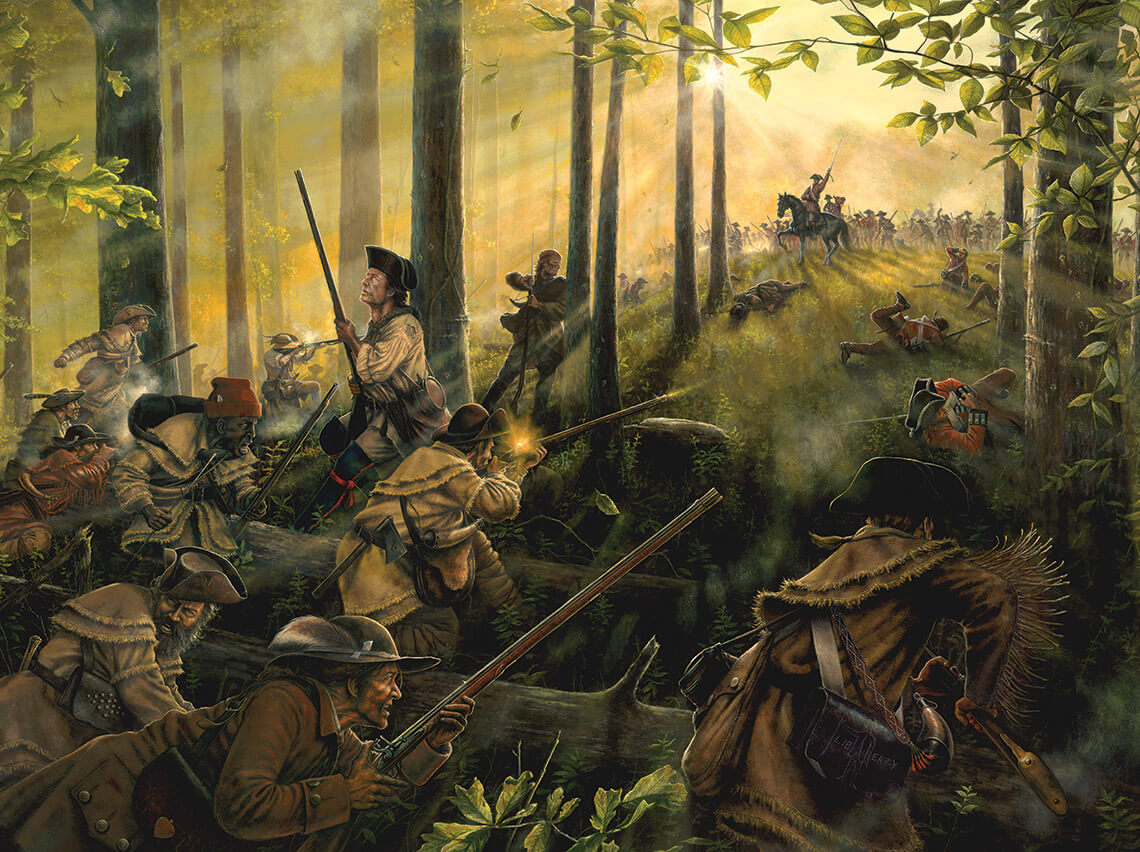
In June 1780, as Cornwallis was planning to invade North Carolina, 1,300 Loyalists gathered on a small hill in modern Lincolnton and readied to join his forces. With a Patriot militia army moving in, a closer unit of 400 decided not to wait. The battle devolved into friends and family members fighting hand-to-hand before the Tories were driven into a panicked retreat when a marksman killed a captain. The hillside was littered with bodies. Now it’s the site of three school buildings, but landmarks of the battle remain, including a mass grave. — J.M.
painting by Dan Nance
Overmountain Victory National Historic Trail
The 330-mile trail stretches over four states — North Carolina, South Carolina, Tennessee, and Virginia — and retraces the Patriots’ journey to the pivotal Battle of King’s Mountain in South Carolina. — K.S.
Quaker Meadows Morganton
Cornwallis invaded Charlotte in September 1780, sending Maj. Patrick Ferguson and some 1,100 men west to rally Loyalists and protect Cornwallis’s left flank. In response to Ferguson’s threats to cross the mountains and attack Patriot homes, around 1,200 men assembled at Charles McDowell’s home in Quaker Meadows—including those now called the Overmountain Men. See the site of the Council Oak where the colonels decided next steps and part of the homesite. — J.M.
Green River Rutherfordton
After learning that the Overmountain Men were coming for him, Ferguson began a slow retreat. Misled into thinking he was aiming for South Carolina, the Patriots headed that way and camped by the Green River. A South Carolina colonel splashed across and corrected them. The leaders sent their fastest men ahead, and they trapped Ferguson on King’s Mountain after a 40-hour pursuit. Bradley Nature Preserve contains a stretch of the original trail, the campsite, and an enslaved persons’ cemetery. — J.M.
In November 1776, colonial militia attacked Cowee Mound, a hub for the British-allied Cherokee in what is now Macon County. photograph by Ralph Preston, Courtesy of Mainspring Conservation Trust
Cowee Mound Franklin
Kawiyi or “Deer Town” was one of the first Cherokee towns on the Little Tennessee River, a trade and diplomacy center with 100 log homes, farm fields, and orchards. It centered on a ceremonial mound built around 600 C.E., topped by a round council house. When North Carolina militia responded to Cherokee raids with a campaign of destruction in September 1776, they burned the evacuated town, trampled the crops, and stole or destroyed the food stores and livestock. A riverside observation deck offers a view of the water and mound, and more of the town’s story. — J.M.
Get our most popular weekly newsletter: This is NC