As Shane Mason steps through the grand, wrought-iron gates into the courtyard of Tryon Palace, he sets the scene for his tour group. It’s the 1760s, and Royal Governor William Tryon selects New Bern to build the colony’s first permanent governor’s mansion.
“Tryon chose New Bern because we were the largest town in North Carolina — a whopping 500 people,” Mason says. Construction began for Tryon Palace, and the governor and his family moved in three years later in 1770. Once fully complete in 1771, “It was not only one of the grandest buildings in North Carolina, but it was one of the grandest buildings in all of North America,” Mason says.
In the tumultuous years that followed, Tryon Palace and New Bern served as a backdrop for growing Revolutionary sentiments in the South and actions that contributed to the colonies’ independence from the Crown. Tryon left his post to become Governor of New York in 1771 and was succeeded by British Governor Josiah Martin. When Martin found himself at odds with the growing sentiment of independence, he left town under the cover of night. Waiting in the wings was Richard Caswell, a war hero who was elected the first state governor of North Carolina in 1776.
He was an officer in the Southern theatre during the American Revolution but had previously served in the Assembly with three royal governors, including Tryon and Martin. At the start of the war, he was one of the many revolutionaries in New Bern who had experience working in the Colonial government. “Caswell fought at the Battle of Alamance, not on the rebels’ side, but on the British side,” says Mason. “It’s not clear when his sentiments changed, but Governor Martin wrote that Caswell was ‘the most active tool of sedition in North Carolina.’”
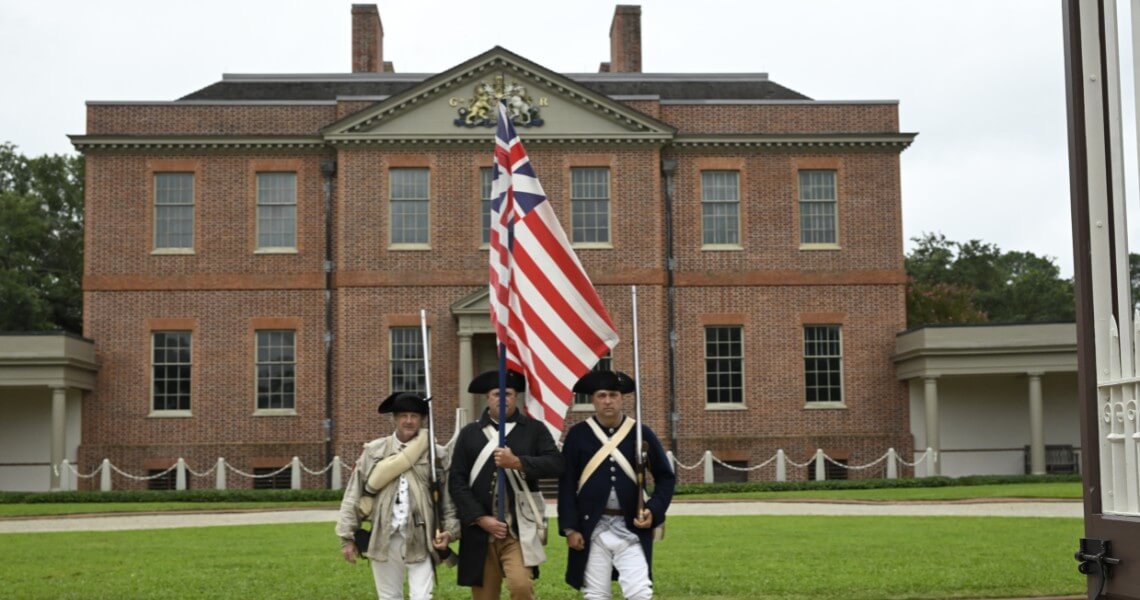
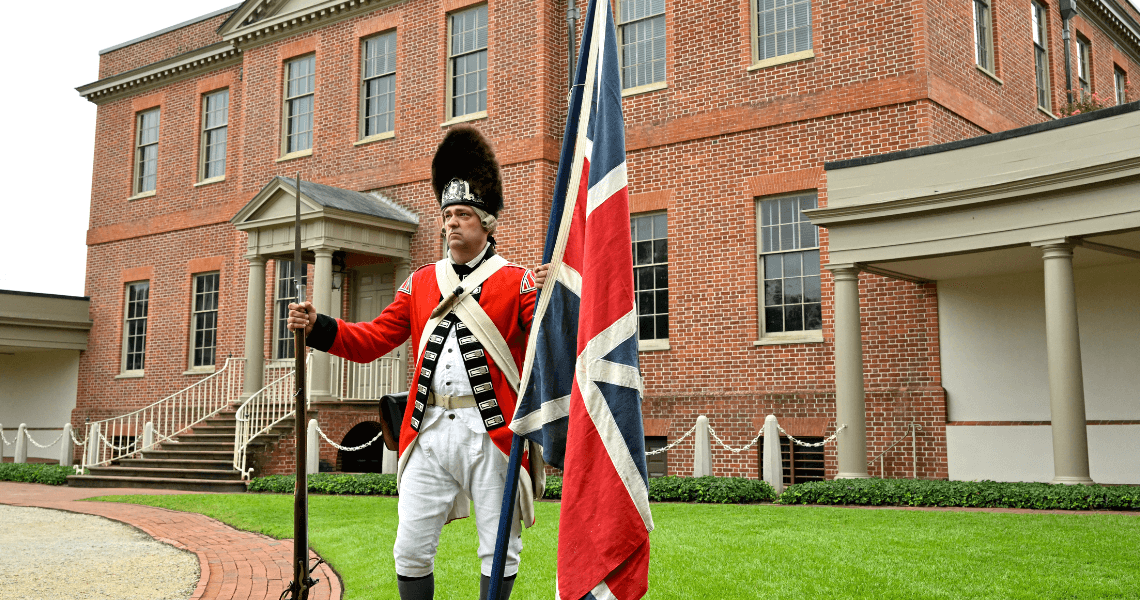
Costumed re-enactors march toward independence in New Bern. Photography courtesy of Tryon Palace
He led patriot forces to victory in the Battle of Moores Creek, deterring Martin’s attempt to retake North Carolina after fleeing, and it was during Caswell’s government when the Continental Soldiers of North Carolina were sent north to join Washington in 1777. Under General Washington, they would fight in the Battle of Brandywine and Monmouth Courthouse, as well as encamp at Valley Forge. All the while, Caswell served North Carolina as a general, state treasurer, and recurring member of all five provincial congresses. Additionally, he served as governor both during and after the Revolution.
Caswell’s contributions and the time around the American Revolution lay the groundwork for Tryon Palace’s newest tour, Caswell’s Capitol Tour, starting in February 2026. It reflects Caswell’s career and time in office and coincides with the country’s 250th anniversary. Additionally, it walks visitors through North Carolina’s year without a governor, and into the next stage of our country’s history after the Constitution was ratified.
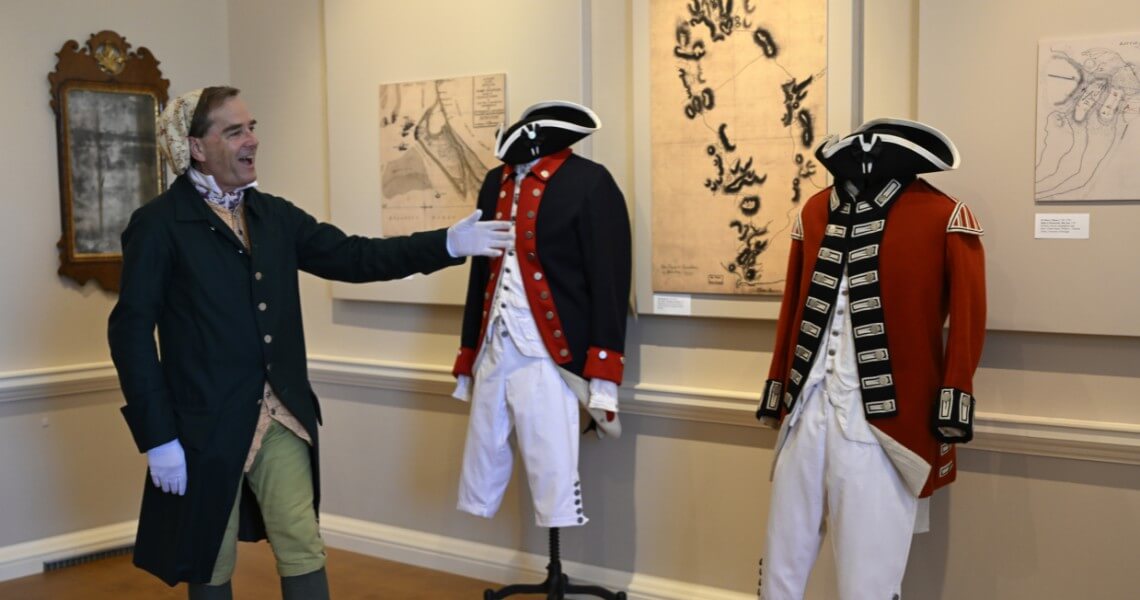
Docents dive deep into the Palace’s storied history during guided tours. Photography courtesy of Tryon Palace
“To me, as a docent of seven years, it is incredibly satisfying to tell the next step in the story. We’ve been telling Governor Tryon’s story for 70 years, but he’s just a part of the full history,” Mason says. He’ll lead tour groups through the Library, Council Chamber, Governor’s Bedchamber, and the Cellar, offering an insider’s take on a critical period of state and national history.
Even after 250 years, Tryon Palace’s walls have secrets to share. During the Caswell’s Capitol Tour, Mason guides us through can’t-miss details that bring this history to life.
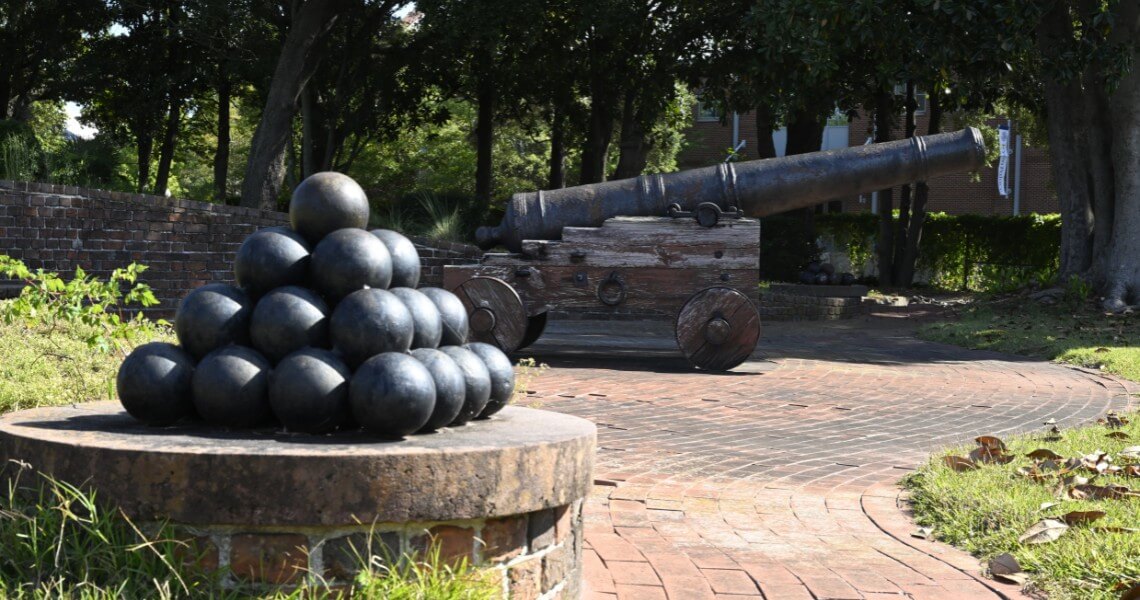
Look for one of the original remaining cannons in the Palace gardens. Photography courtesy of Tryon Palace
1. Find the Cannon
After Royal Governor Tryon took a post in New York during the American Revolution in 1771, Martin assumed Tryon’s job. His time as governor was characterized by the many New Bernians ready to be free of British control.
Fearing revolutionaries would seize the Palace’s cannons and use them against him, Martin had the cannons removed, only to find what he described as “a motley mob” of locals waiting for him in front of the Palace, looking for the cannons. Martin let them in the ground floor and gave them the white lie that the cannons were being repaired. He sent them home and, seeing that America was rapidly changing, fled town in 1775 for the security of a British naval Sloop-of-War near Wilmington. He attempted to return to his post as governor and retake North Carolina, only to be foiled by Caswell and James Moore at the Battle of Moores Creek.
With Martin no longer in position, New Bern became the Revolutionary capital of North Carolina.
Today, you can wander through six acres of Morley Jeffers Williams-designed colonial-revival gardens. When you reach the views of the Trent River, you can spot a lone cannon keeping watch, reminding us of that dramatic experience for Josiah Martin.
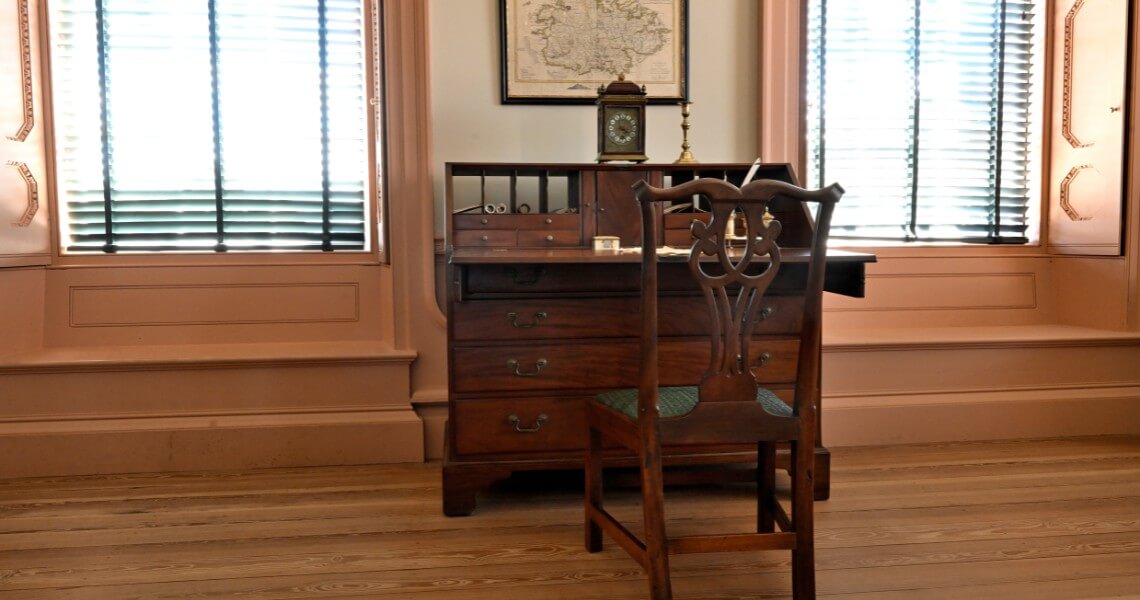
Original and replicated furnishings from the 18th century, like this antique writing desk, fill the Palace’s rooms. Photography courtesy of Tryon Palace
2. Look for Caswell’s Table
When Martin left Tryon Palace in a hurry, he couldn’t take all of his possessions with him. “When the revolutionaries moved in and found that Governor Martin had left most of his fine furniture, they held a big auction and used that money to pay for the war,” Mason says.
Because much of his furniture landed in the hands of local buyers, a few original pieces, along with ones from Caswell, have been restored to their original place. Today’s visitors to Tryon Palace can spot them during a tour, if they know where to look.
Keep your eyes open for Caswell’s original, gate-leg table in the Council Chamber among the Palace furnishings, and imagine the many lives across the history of this nation that table has witnessed. In the upstairs bedroom, you’ll also find Martin’s desk.
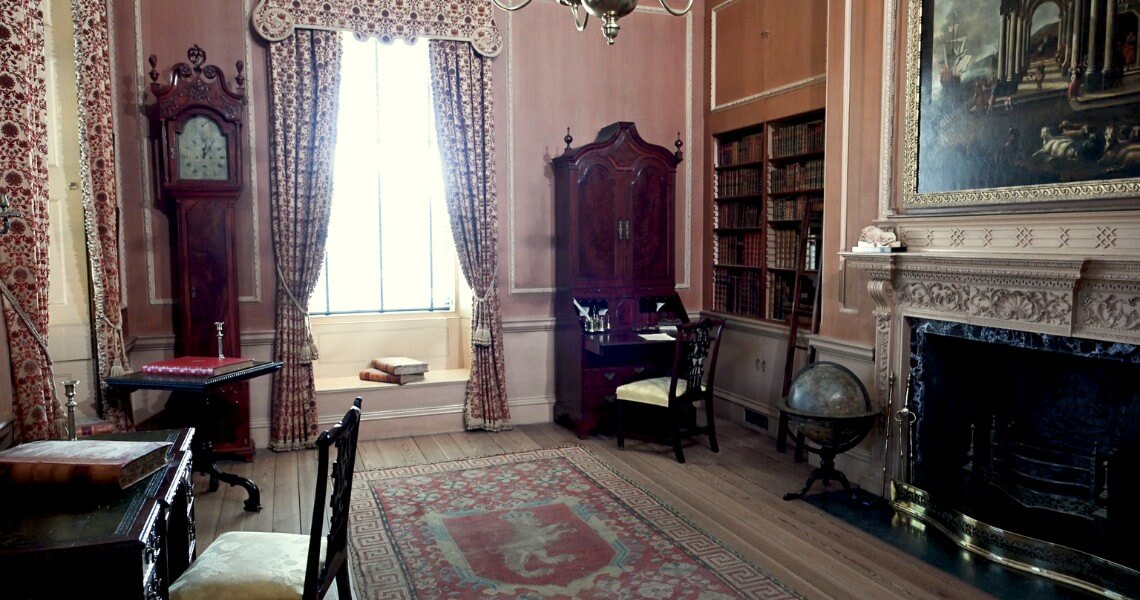
Records Governor Tryon made of his New York home helped guide the design and furnishing of Tryon Palace when it was rebuilt. Photography courtesy of Tryon Palace
3. Discover Original Designs
In 1798, fewer than 30 years after Tryon Palace was built, a fire began in the cellar and burned the main building and all its contents to the ground.
Tryon had kept detailed records of his home in Fort George, New York, which was also destroyed in a fire in 1773. These records — which included the home’s entire inventory, down to the number of napkins, the patterns of eight tea sets, and more than 400 volumes in the Palace library — served as a guide for when Tryon Palace was rebuilt in 1959. “It’s an extensive reproduction of what it might have looked like when Governor Tryon was here,” Mason says.
He adds that Tryon Palace was one of the first buildings in the state constructed from brick. “There was not much of a brick-making industry in New Bern — or even North Carolina — at the time, so the British architect John Hawkes went down the river to find clay deposits, set up kilns, and trained people to make bricks.”
Only the stable office, the Palace wing on the right, is original. “I love letting kids touch the brick on those walls,” Mason says. “If you think about it, some of the bricks are from 1767 — older than the country by almost a decade.”
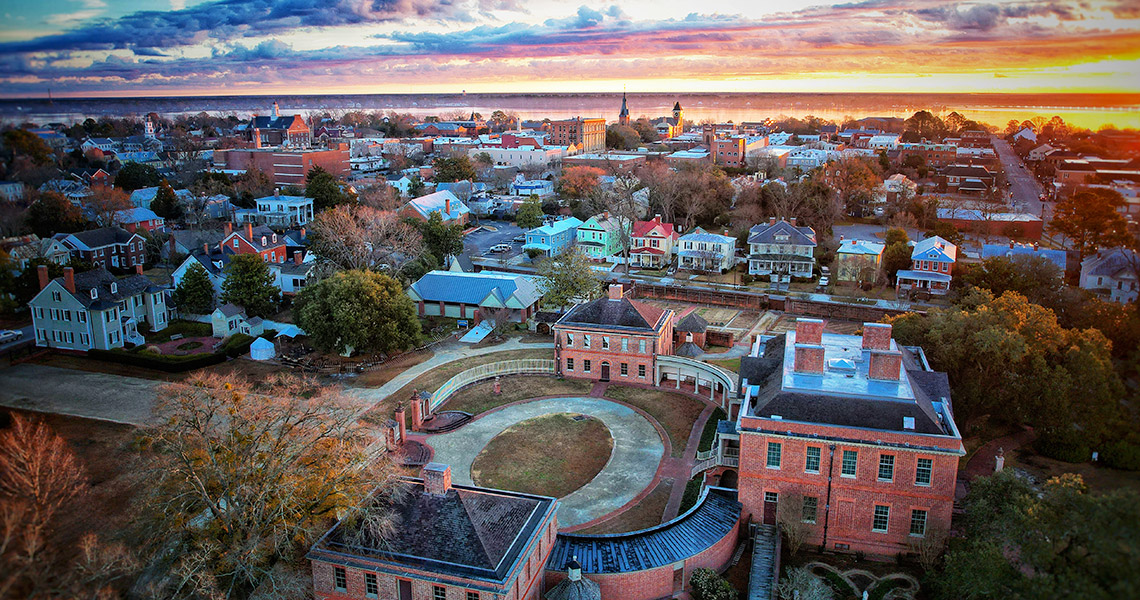
In the heart of downtown New Bern, Tryon Palace is a quick walk from the North Carolina History Center, local businesses, and the waterfront. photograph by Ben Lindemann
4. Walk From Yesterday to Today
Right around the corner from Tryon Palace, the North Carolina History Center showcases exhibits offering a deeper dive into the Palace. You’ll spot King George III’s royal coat of arms, carved in England to put on the Palace when it was reconstructed. “It’s usually the first thing kids notice when they come into Mattocks Hall. We explain it’s a symbol of the king. The lion represents England and the unicorn represents Scotland, the two main countries that made up the United Kingdom,” Mason says.
Have your family’s photo taken in period clothing, pick up a local souvenir at the gift shop (we are partial to the honey display), and grab lunch overlooking the Trent at Lawson’s on the Creek.
Ready to see the history for yourself? Click here to start planning your visit to Tryon Palace, and if you’re looking for more to explore in downtown New Bern, check out our guide.