If you grew up a little wild and a little rural, you may have learned the magic of a loose fence post early on. A post with some give meant that you could slip from one world into another with relative ease. All it took was a lowered shoulder to nudge the shaky post a little to the side so that the horizontal rail slid from its place, then a swift Jenga maneuver, and the resulting opening would be big enough for a small, mildly wild, and rural child to crawl through. On the other side, you’d slot the rail, right the post, and carry on your way, no one the wiser.
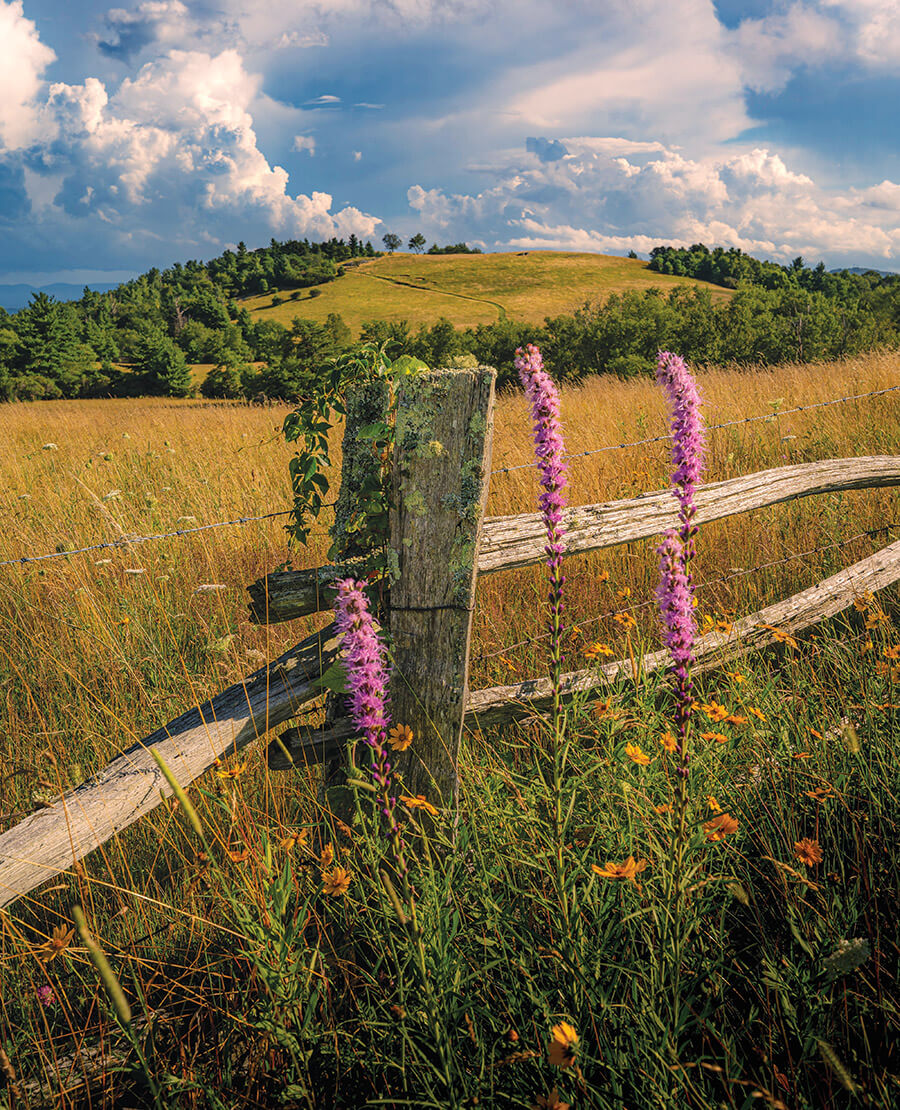
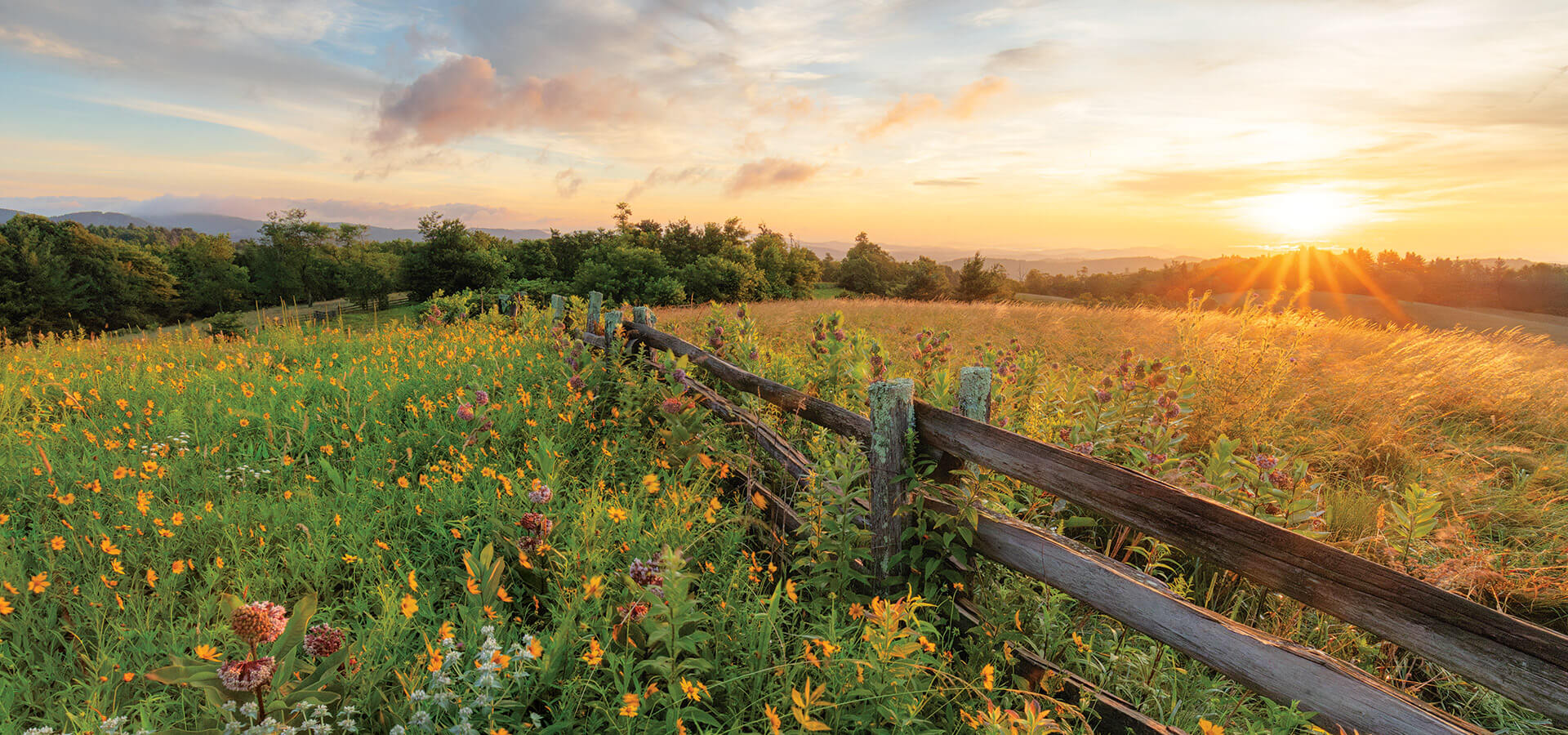
A split-rail fence frames Bluff Mountain in Doughton Park, where rails like these — once cut by hand from mountain timber — helped earn one young frontiersman the nickname “The Railsplitter.” photograph by David McKenzie
Of course, there were other types of barriers to a young rambler’s life: wire, picket, chain-link, and the dreaded electric. Each fence required a new kind of elusiveness, and those newer models became more prominent year by year as old fences were replaced by more obstructive methods. But I loved the split-rail fence the most. And not only for its laxity. I respected the cleanness of the pyramidal rails sliding into (and out of) their respective places. No nails or screws or wires required. Everything had been arranged just so — and just so was enough to keep cows in their places, even if I’d found some loopholes.
No matter the advances in boundary-keeping, split-rail fences still take up a lot of real estate in western North Carolina. They run along the Blue Ridge Parkway and through state and national forests. They hold their ground on time-capsuled farms in places like Cataloochee and Cherokee and Burnsville. But it’s not only in these preserved, protected spaces: Old-fashioned fences work to hold livestock and divide plots on any number of properties across the mountains today — leaning a little, maybe, but doing the job nonetheless.
• • •
If you listen, a split-rail fence can tell stories about the people and places we come from. Early European settlers preferred chestnut for their fences because it split cleanly and resisted rot. It’s been more than a century since the blight arrived to kill off all the American chestnuts, but some of the rails split from those disappeared trees still line pastures and fields, reminding us of a landscape now forever gone.
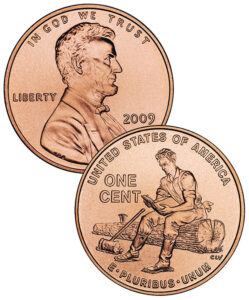
Photography courtesy of United States Mint Images. Used With Permission.
Supporters of Abraham Lincoln often showed up to campaign events carrying rails he was said to have split. Back then, he was called “The Railsplitter,” and some pennies today depict Lincoln sitting on a log, the tools of the trade at this side: a maul and wedges.
“TC and I laid fence worm,” my great-great-great-great-grandfather wrote in his diaries in May of 1812. After a little head-scratching, I realized “fence worm” referred to the zigzag style built in the first days of America. This fence, sometimes called a worm or snake, is all rail. No posts, no digging. The split rails are laid in an overlapping pattern, meeting at corners before zagging in another direction, using only gravity and balance to keep out or hold in.
The worm fence and its cousin, the buck fence — picture haystack desserts: rails leaning and tangled into a series of Xs — were semi-transient. Anybody could pick up the timber and relocate a fence when needed; nothing was affixed or buried or permanent. During the Civil War, many soldiers did just that, repurposing worm fences to use as cover — or build fires.
• • •
I know some people will say the split-rail fence is a quaint thing of the past, a relic of a bygone era. Sure, newer fences may be sturdier and more restrictive, but what’s a fence for, exactly? Does it aim to forever separate one place from another, laying claim to land as if we have that kind of power? Or is it something more temporary, more of a suggestion than a command? “I’d ask to know / What I was walling in or walling out,” the speaker of Robert Frost’s famous poem “Mending Wall” wonders, and it’s a good question.
Before the passing of various fence laws in the 19th century, many mountain people relied on open grazing. As the story goes, the notorious Hatfield-McCoy feud was started, in part, because of a dispute over a stray hog. (Maybe a good fence would’ve made better neighbors there.) And before European settlers started splitting and stacking rails, most Indigenous groups farmed without fences and shared hunting grounds. Fences brought some sharp, dangerous divisions.
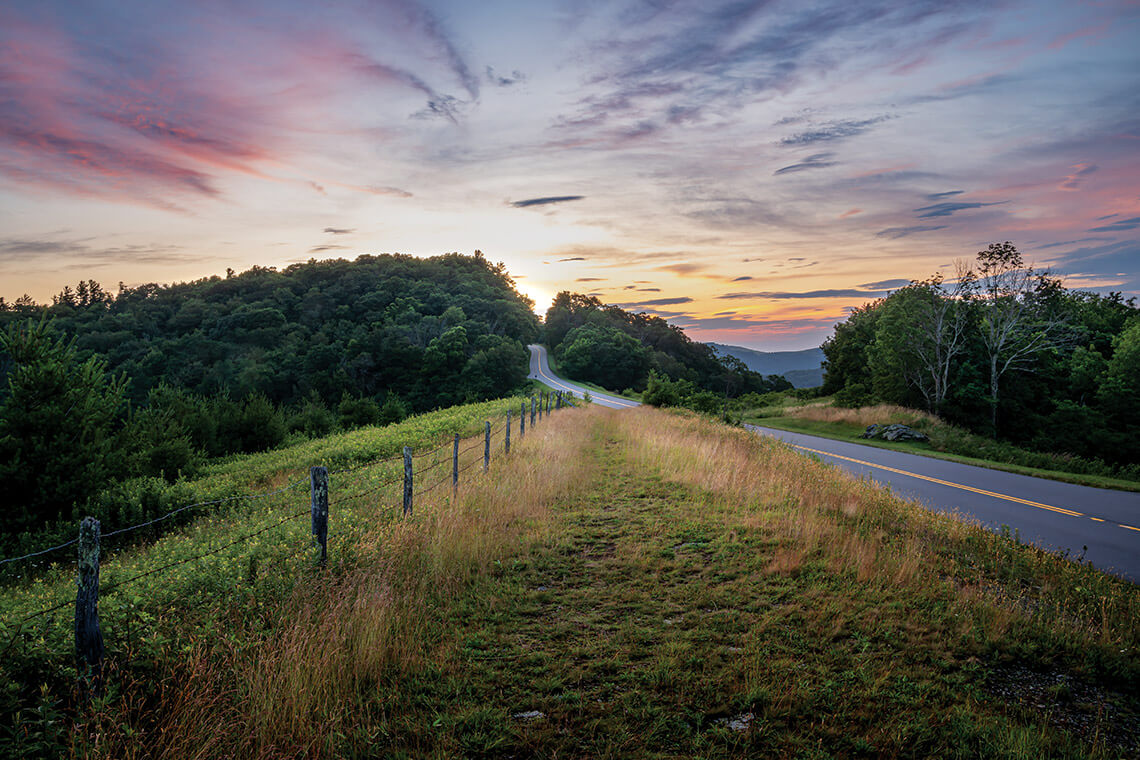
Thunder Hill Overlook along the Blue Ridge Parkway boasts a simple fence running the ridge, a reminder that some borders guide more than they divide. photograph by David McKenzie
I’m not saying I’m anti-fence. My neighbor’s calves recently pushed through the wood fence to bounce around my yard and entertain my dogs, so I do appreciate the need for some separation. But I prefer the impermanence and permeability of a split-rail fence to other options.
A split-rail fence says slow down, not go away. It doesn’t claim to be a forever border, only something that had once been a tree and is now reshaped to do another job. Its rails boast their imperfections, eschewing uniformity, and its arrangement exposes its vulnerabilities. It could be dismantled or moved on a whim. It could be nudged and briefly undone for a young boy to pass through. It’s solid but provisional — here for now but maybe gone tomorrow — and that’s a lesson for all of us to keep learning.