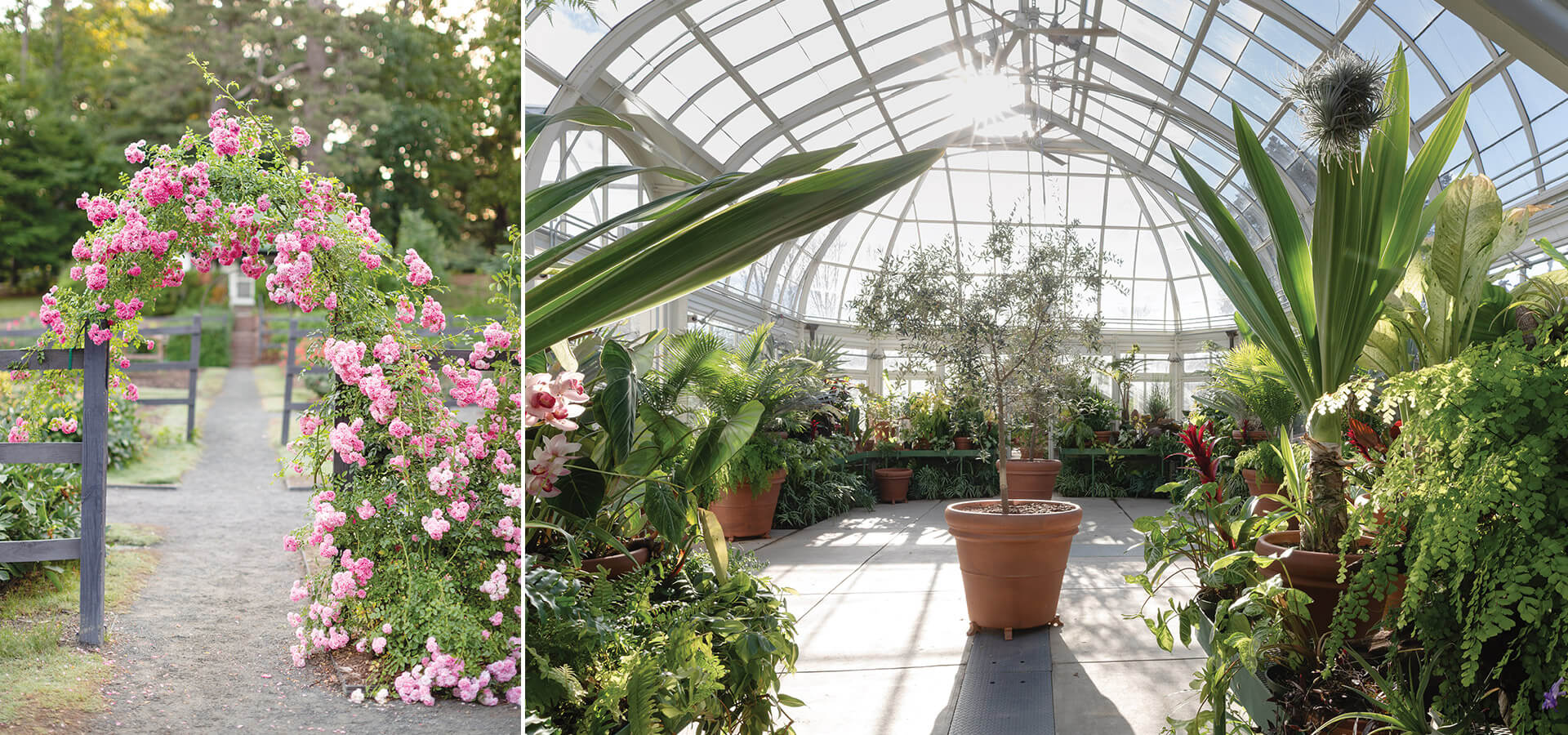
Jon Roethling calls himself a “plant geek.” Me? I’m nowhere close. As we walk underneath the curved glass of the Brown Family Conservatory at Reynolda Gardens in Winston-Salem, Jon rattles off names of plants I’ve never even heard of before — let alone know how to spell. He explains. He even gives me the Latin names. I’m just wide-eyed and clueless. Then, I spot a bunch of begonias. I know begonias. I even sing about begonias. When I tell Jon as much, he gives me a knowing look like some teacher quizzing her class. “Let me take your idea of begonias and destroy it.”
He shows me flowers that look nothing like begonias. But they’re begonias. Really? Yes, Jon responds, really.
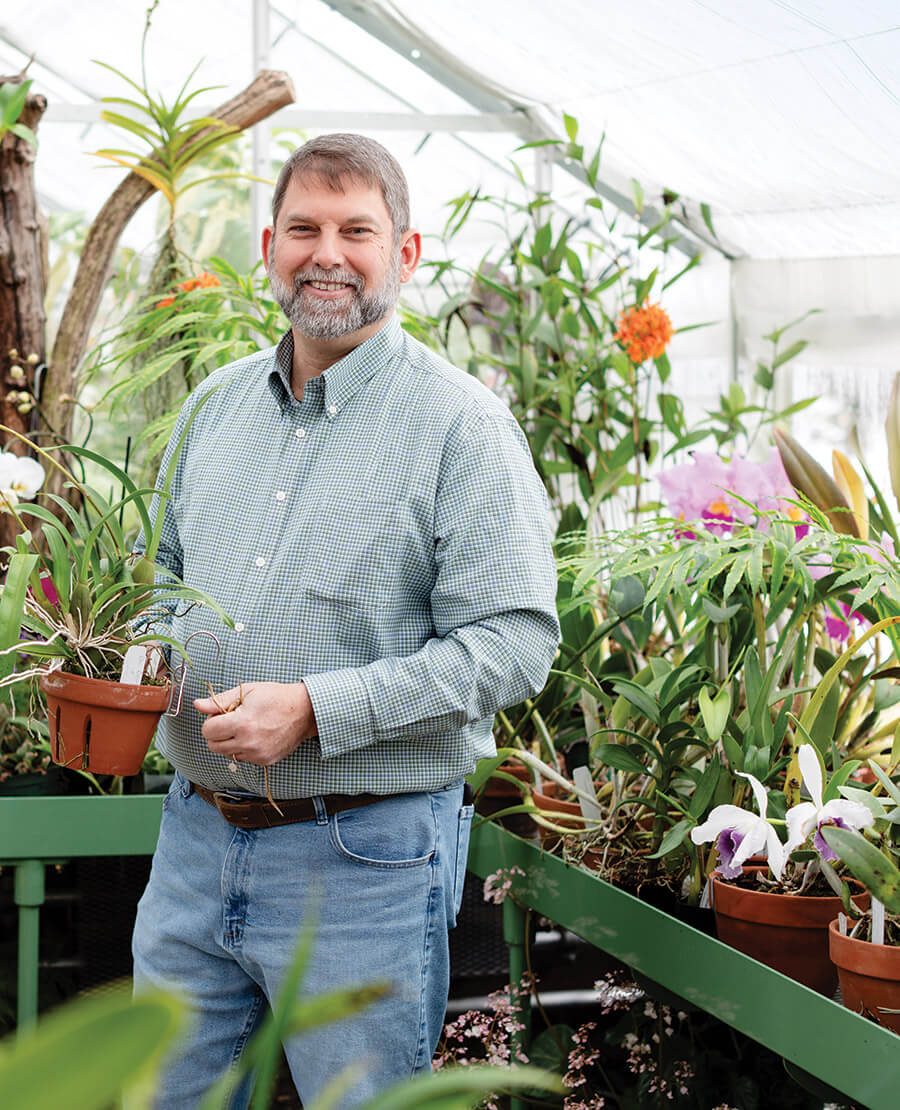
Reynolda Gardens’ “plant geek” in his element: Jon Roethling amid the light and leaf of the Brown Family Conservatory. photograph by Lauren Martinez Olinger
“I love it when people say, ‘Oh, I know what that is,’ and I always like to respond, ‘Do you?’ ” Jon says. “It’s that whole thing of we don’t know what we don’t know. I am a plant geek, but I’m always learning, and that keeps me engaged. I always tell people not one single person knows everything about plants. Your 80-year-old grandma can teach you something.”
So can Reynolda Gardens. Jon can attest to that — in more ways than one.
• • •
On a Sunday afternoon years ago, Jon walked into the gardens’ aging greenhouse and around the grounds for the first time and began considering the director’s job. He saw beauty; he also felt something ephemeral, a feeling that has drawn people to the gardens for generations. Here, they’ve walked, jogged, sat, and reflected. They celebrate engagements, marriages, new babies, and old friends. They celebrate life.
There is a soul to this place, he told himself. I want this.
At the time, Jon was working as the grounds curator at the Mariana H. Qubein Arboretum & Botanical Gardens at High Point University when he was approached about leading Reynolda Gardens after its former director retired. In 2018, after seven years at HPU and more than two decades in public horticulture, Jon became the new director of Reynolda Gardens.
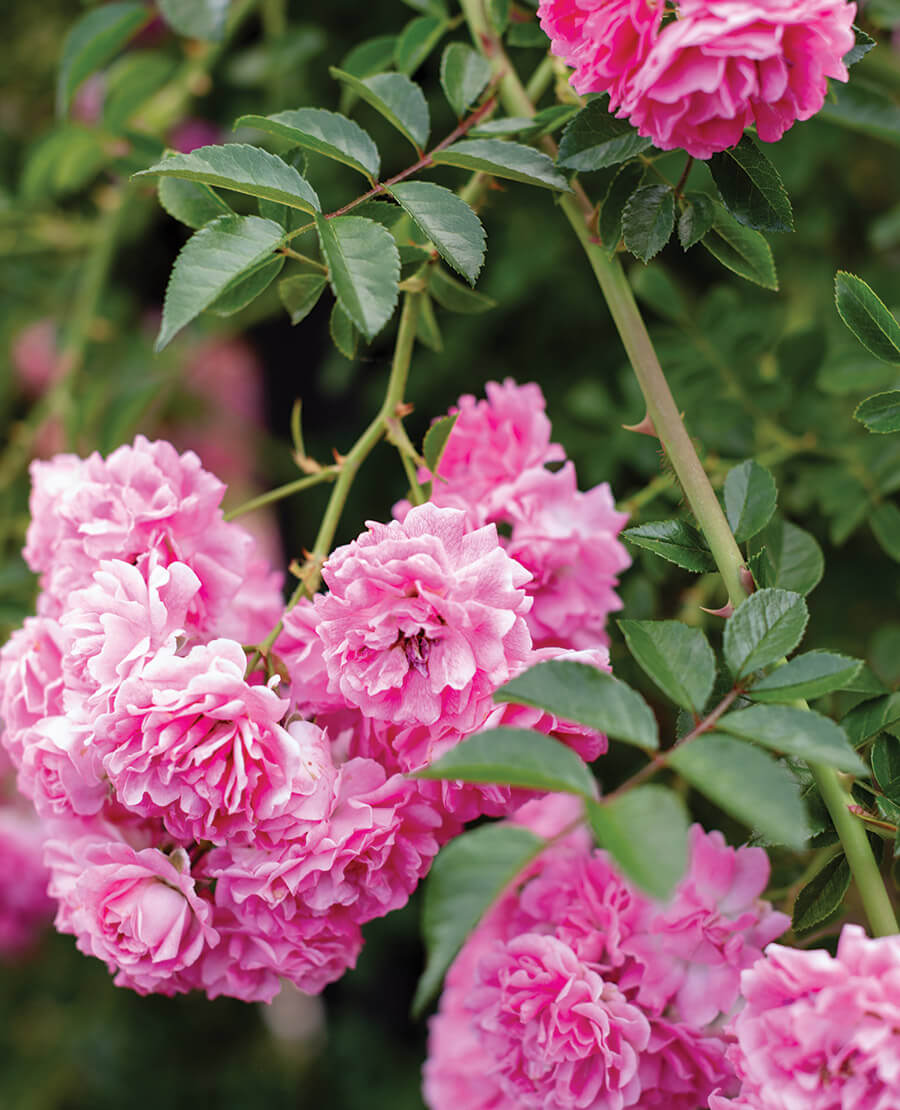
Through Roethling’s stewardship, beauty is coaxed from the earth. photograph by Lauren Martinez Olinger
Two months into his job, he got a call that he had a visitor. He walked out and met a longtime member of the Twin City Garden Club, an organization founded in 1925. She had, as Jon remembers, “a twinkle in her eye.” She told Jon emphatically, “You’ve got to get the roses better!”
Her response voiced what he felt during that Sunday afternoon years ago. It revealed in an instant the emotional — almost spiritual — connection that Winston-Salem has with the gardens.
Since that chance encounter with the garden club member, he and his five-person staff have tackled countless projects and transformed 134 acres into an ever-changing canvas of beauty. They have improved its accessibility and educational offerings while welcoming its more than 140,000 annual visitors to look closer and exclaim, “What is that?”
Jon hears that response often inside the newly renovated greenhouse-turned-conservatory. He sees the astonishment in their faces, their eyes, their body language. He sees it in me. It’s this sensory rush from walking into a glass castle full of color and fragrance and seeing a controlled jungle bathed in natural light.
When we walk through the four acres of formal gardens, past the rows of historic roses, I catch the scent of something that reminds me of the intensity of an orange grove in bloom. I stop; my head swivels. What is that? A Party Princess tea olive plant, Jon says. He smirks; I laugh. Party Princess. Nice. At least Jon doesn’t give me its name in Latin.
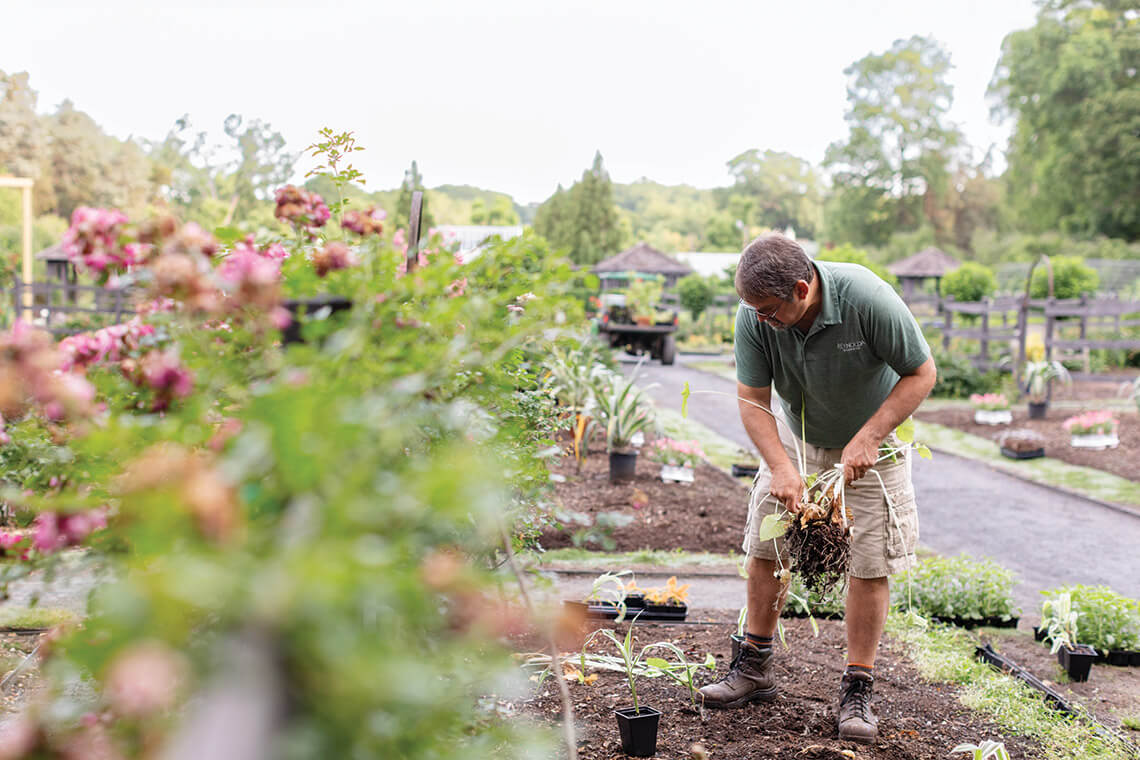
In the formal gardens, maintenance is constant: pulling, planting, resetting so that visitors see the beds at their best. photograph by Lauren Martinez Olinger
Soon, we’re off in a golf cart. We trundle down paths groomed by a landscape architect and onto boardwalks built by the Wake Forest construction team. We pass dog walkers, day hikers, couples holding hands. At a tunnel of bald cypress, Jon stops and gives another lesson. Not about beauty — but possibilities.
“We have this wonderful opportunity to create these spaces that can wake people up,” Jon says. “It’s like when you go up to the Blue Ridge, and you come around a bend and the fall colors are there, it’s like ‘Aah!’ Or, if you’re a geek like me and my wife, Adrienne, we come around a bend, see it coated with orchids, and we’re like, ‘Oh my God!’ We all need that, those moments of unexpected joy.”
Back on the golf cart we go. That’s when I hear about his inspiration, someone Jon has never met.
• • •
Katharine Smith Reynolds, the wife of tobacco magnate R.J. Reynolds, grew up in a business-minded family in Mount Airy, the oldest daughter who was unafraid to take charge in a world where women usually didn’t. She believed a garden could break down barriers, create community, bring people closer to God, and create a more compassionate, humane world. More than a century ago, on the west end of the Reynolds’ 1,000-acre estate, she made that happen. She oversaw every detail, especially the construction of her greenhouse in 1913, which was completed the same year the towns of Winston and Salem merged to become North Carolina’s newest city.
She worked with Lord & Burnham, the world’s premier greenhouse manufacturers. The company had built similar structures in San Francisco, New York City, and Pittsburgh. A a year before World War I began, the company came to the new city of Winston-Salem to make Katharine’s vision real.
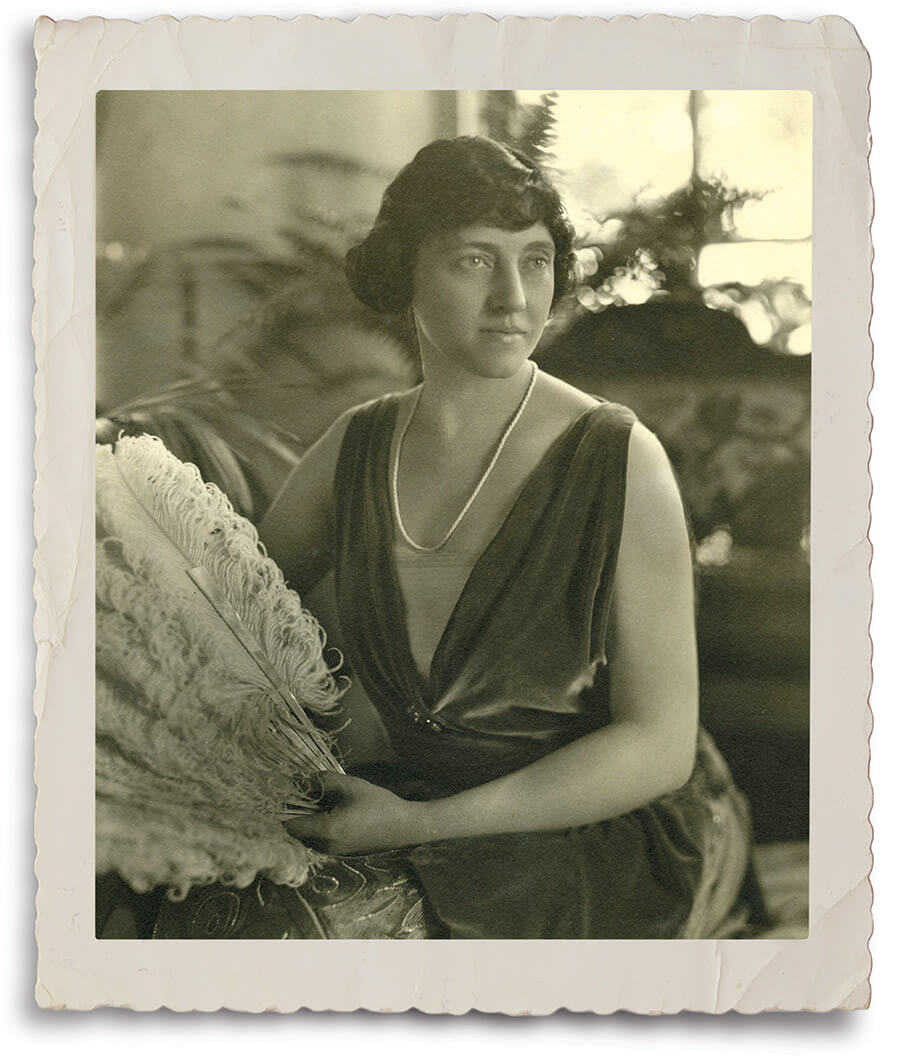
Katharine Smith Reynolds shaped Reynolda’s landscape with a belief that beauty could foster community. Photography courtesy of Reynolda House Museum of American Art Archives
“The formal gardens mirrored Katharine’s sense of herself and how she wished to live in the world — surrounded by beauty, sweet order, and the delights of nature and of human fellowship,” writes Catherine Howett in her 2007 book, A World of Her Own Making: Katharine Smith Reynolds and the Landscape of Reynolda.
Jon gets that sense of Katharine firsthand as he works and wanders through the gardens with 18 keys hooked to his belt loop. It’s not just about pretty flowers. It’s about the chance to create a sense of place, a sense of connection, a sense of wonder that helps people from all walks of life find joy in what blooms from the earth.
That was Katharine’s vision, and Jon is managing the intent of her vision. In doing so, Jon has learned his own valuable lesson. It’s not about plants. It’s about him.
• • •
On a Tuesday morning in October 2024, standing on a top step facing the formal gardens, Jon saw a crowd gathering in front of him. They’d come to celebrate the grand opening of the reimagined Reynolda Welcome Center and its new star — a revamped structure of steel and glass made possible by a generous donation from the family of Dr. Malcolm Brown and his wife, Patricia, longtime supporters of Reynolda Gardens. As Jon got ready to speak, he felt a catch in his throat. Bittersweet memories came in a rush. He remembered:
His withdrawal from UNC Chapel Hill.
He realized being a doctor wasn’t what he wanted to be as his grades plummeted. He told his parents, “You all paid for Carolina. This next one is on me. I want to hold myself accountable.” But the next … what? He thought about what always made him happy — working beside his dad in their garden at their home in Greensboro and watching the elephant ears he planted grow tall. He pivoted and looked for ways to turn that happiness into a career. After graduating from NC State and working in Raleigh’s JC Raulston Arboretum, he found what he was looking for: public horticulture.
His grim news from a doctor in December 2008.
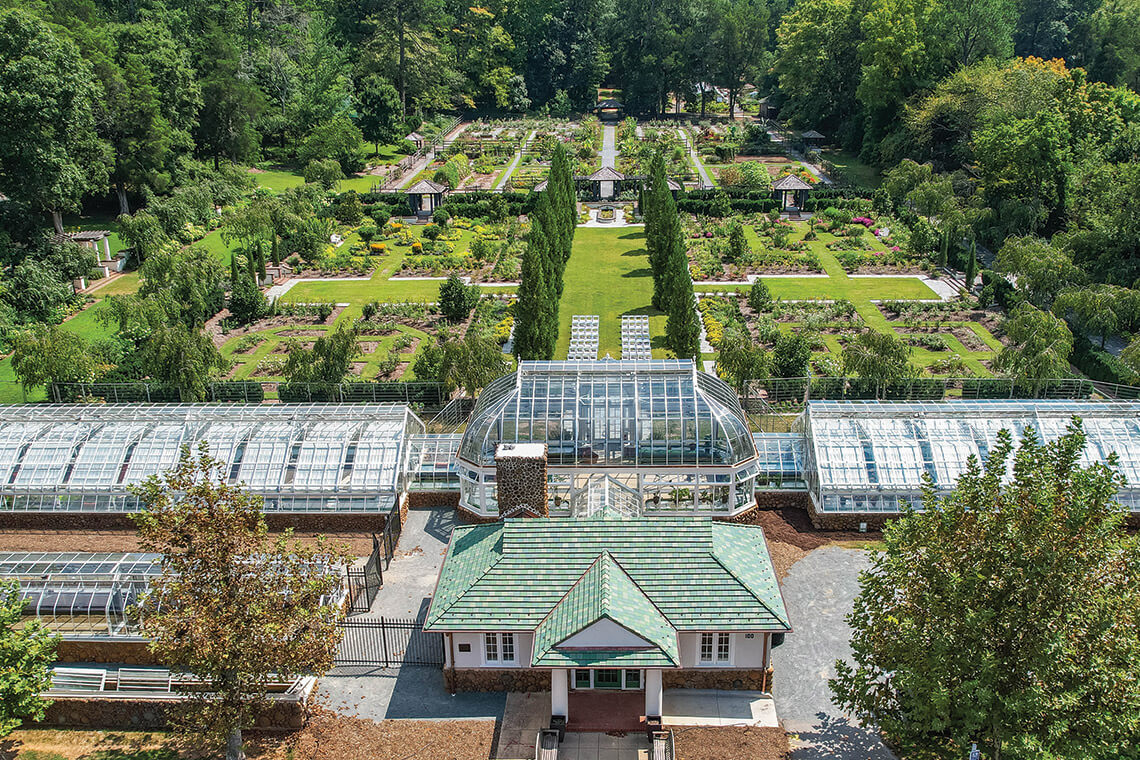
The Reynolda Welcome Center anchors the grounds, with the restored Brown Family Conservatory opening onto the formal gardens beyond. photograph by Jeff Carpenter Studios for Prospiant, Inc.
He heard that blood work from a routine physical showed he had a potentially life-threatening liver infection known as hepatitis C. He’d contracted it following a spate of blood transfusions when he was a newborn. Jon began working hard to stay alive, driving from his home in Wallburg for tests and doctor visits at UNC Hospitals. In the summer of 2015, doctors told him to take a daily pill to see if it could kill the virus. Three months later, he heard the two words he longed to hear: “You’re healed.” Later that day, driving back from lunch, Jon cried.
Tough moments. But from those moments bloomed opportunities that made Jon feel whole.
He married a woman who shares his passion for plants. He found a job at Wake Forest University that tapped into his passion and teamed him up with a talented staff. He shed his yearslong struggle with self-doubt and implemented, with his team, the botanical blueprint from a woman who longed to make Winston-Salem life-affirming and beautiful.
At the grand opening, Jon thanked his parents, his wife, and his staff and kept brief his comments about the gardens’ biggest improvement in decades: the complete restoration of the Brown Family Conservatory. When I ask Jon about that day, he shares with me he’s also grateful about something else: “How lucky I am to be in a place like this. There is salvation in the soil.”
Reynolda Gardens
100 Reynolda Village
Winston-Salem, NC 27106
(336) 758-5593
reynolda.org/gardens
FOR MAY: Lockmaster Tammy Barnes keeps the Dismal Swamp Canal moving — raising bridges, opening locks, and greeting passing boaters like family on North Carolina’s oldest waterway.