Put ramekins on a baking sheet. Bake for 25-35 minutes, until puffed and golden. Remove from oven, and let stand for 5 minutes. With a flexible spatula, remove strata to
Listen as the pages of the magazine come to life in the Storytellers podcast showcasing the voices of Our State writers. Each podcast episode features a writer reading their column
Listen as the pages of the magazine come to life in the Storytellers podcast showcasing the voices of Our State writers. Each podcast episode features a writer reading their column
In 1895, a Presbyterian minister arrived in the High Country. A bold and visionary leader, he brought churches, schools, a hospital, a children’s home, and even electricity to Banner Elk.
Listen as the pages of the magazine come to life in the Storytellers podcast showcasing the voices of Our State writers. Each podcast episode features a writer reading their column aloud, allowing each distinct voice to shine. Click below to listen to Brad read his column aloud.
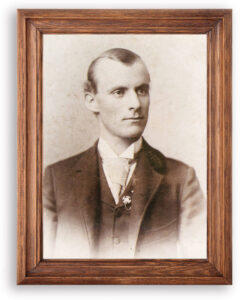
The college president with the strong handshake and the commanding presence strides along the streamside in hip waders, planting cuttings along the bank. The stream restoration work is one of several projects being undertaken on Lees-McRae College’s annual “Mountain Day of Service” by some 600 faculty, students, alumni, and community members, all inspired by the school’s founder, the Rev. Edgar Tufts. But when someone asks about Tufts, who died in 1923, the president’s voice catches. His eyes mist. “I’m sorry,” he says.
Rev. Edgar Tufts Photography courtesy of The Tufts Family
Moments of vulnerability aren’t what you expect to see from a college president — especially about a man he never met, who died more than a century ago. Yet the moment crystalizes the profound impact Tufts had, and still has, on Lees-McRae and the community of Banner Elk.
After taking a beat, Dr. Lee King shares his thoughts about the man who founded the school he now leads: “He was called here to be a missionary and plant the church, and it has survived 130 years. Just by that measure alone, he was incredibly successful. But he saw the need to go deeper, to bring health care, to expand educational opportunities, to take care of children that were in need of a loving home and family. I feel that same very deep sense of calling.”
Janet Barton Speer, the former chair of the performing arts department at Lees-McRae, cowrote a musical, From the Mountaintop: The Edgar Tufts Story. She understands how difficult it can be to talk about the extraordinary minister. “The reason we all stumble is that there are no words,” she says. “He just defies description. The emotion comes from trying to express what it feels like to pour yourself into helping others, and that’s not easy to describe.”
• • •
Tufts was born in Georgia and educated at Washington and Lee University before entering the seminary in Virginia. The summer after his first year, he visited the North Carolina mountains on a mission trip to expand the Presbyterian ministry. Back in Virginia, he was admonished for arriving late for the fall semester — but the young student explained he’d felt obligated to ensure the roof had been completed on a new church in Banner Elk. He hadn’t just spread the gospel; he’d won over the community, secured property, raised money, and supervised the construction of the area’s first Presbyterian church.
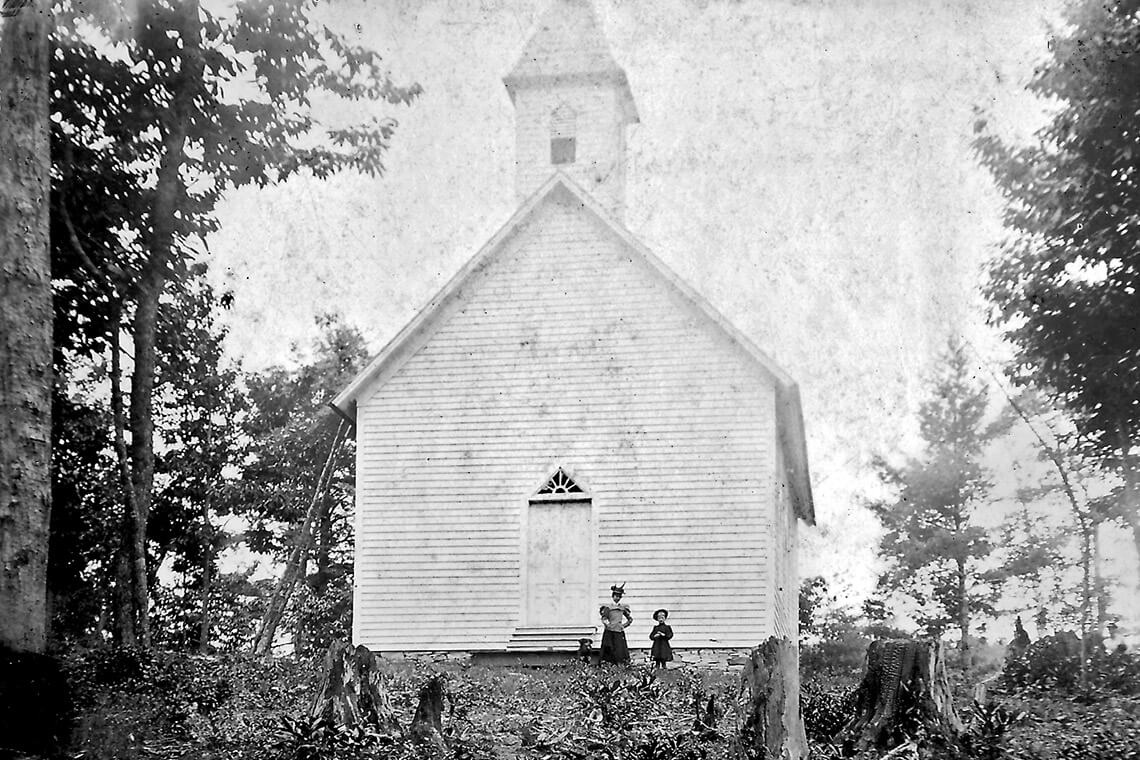
Tufts’s “prettiest little church of its kind I ever saw” was dedicated in 1896, after he returned to Banner Elk. It also became the model for every project he tackled after he became an ordained minister the following year: He identified a need. Put together a plan. And went to work.
Tufts supervised the construction of the original Banner Elk Presbyterian Church in 1896, …<br><span class="photographer">Photography courtesy of The Tufts Family</span>
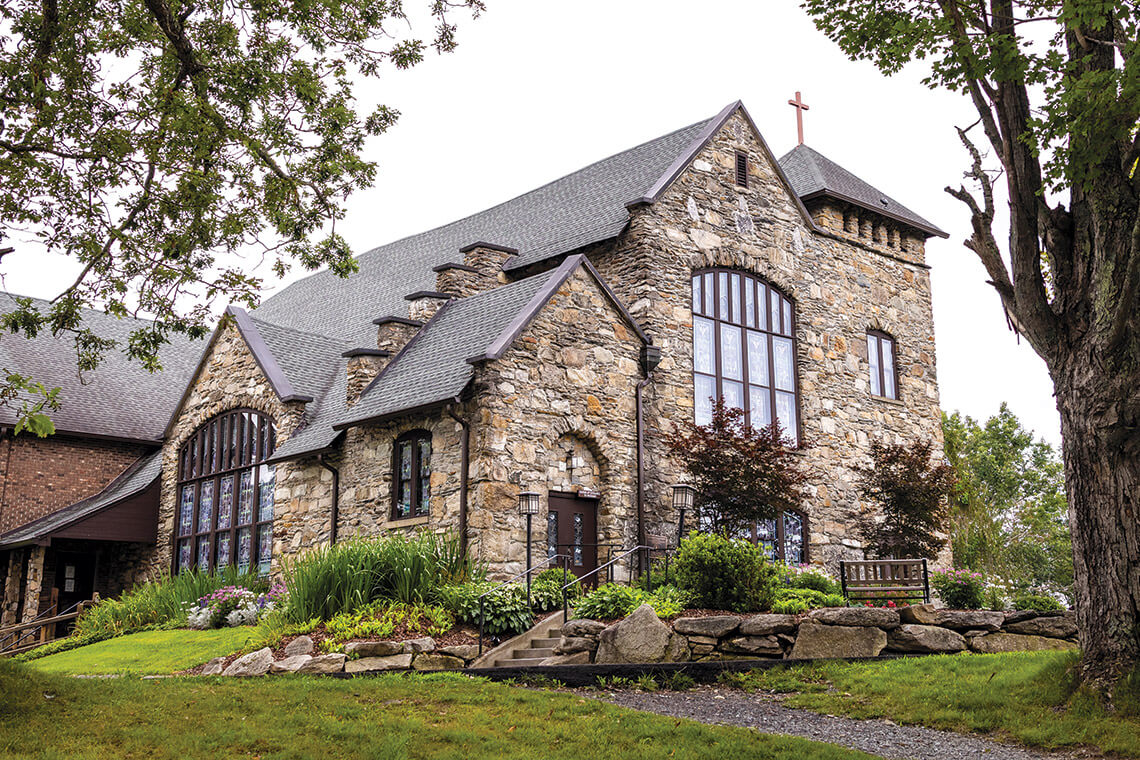
… as well as a newer building of native stone, completed in 1915. <br><span class="photographer">photograph by David Uttley</span>
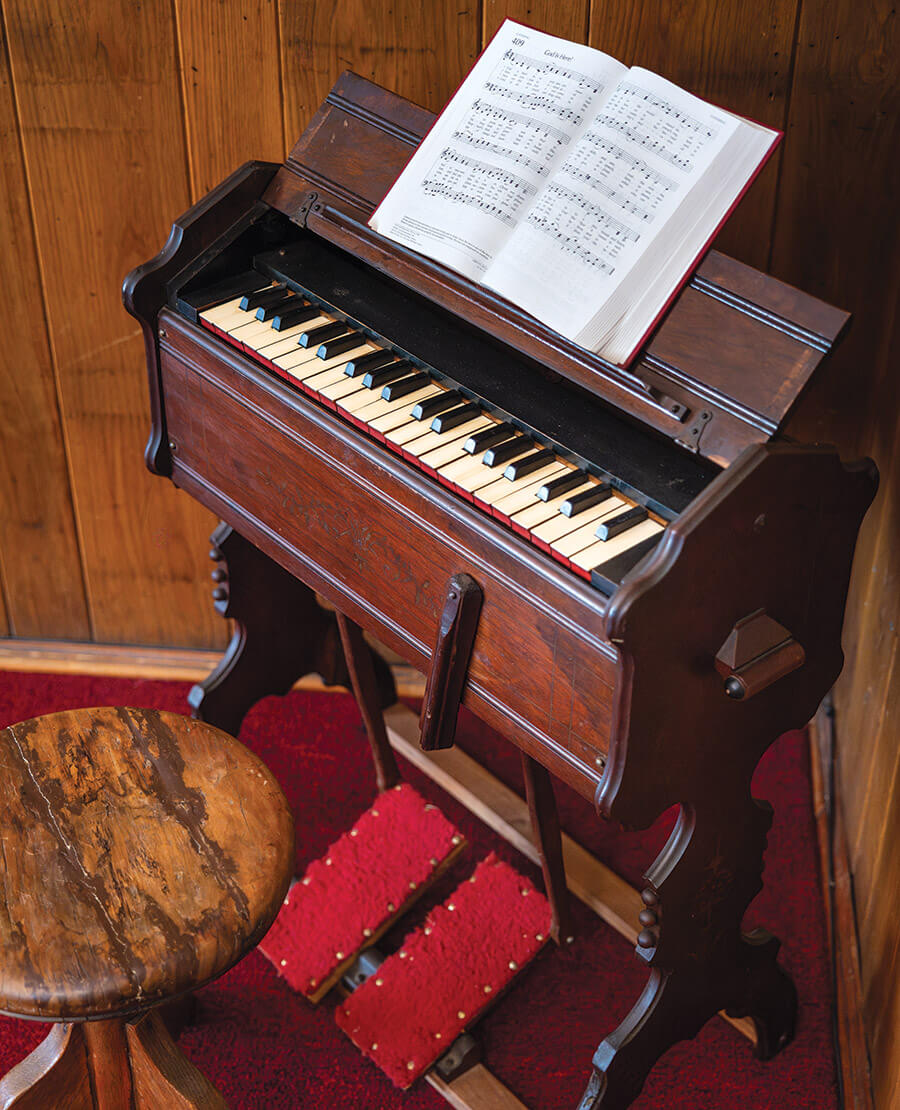
In 1898, Tufts married Mary Elizabeth “Miss Bessie” Hall, who turned their Banner Elk home into an extension of her husband’s ministry, welcoming all with food, fellowship, and music. The “little preacher,” as Tufts affectionately became known, would visit surrounding communities on horseback with a Bible in his saddlebag and a portable organ strapped to his mount.
He preached in far-flung mountain communities — Blowing Rock, Cove Creek, Elk Park, Pineola, Arbor Dale, Hanging Rock, and Blevins Creek — while ministering to the poor, the infirm, and the elderly along the way. Over the next three decades, Tufts became a modern-day Apostle Paul, establishing more than 30 mountain churches.
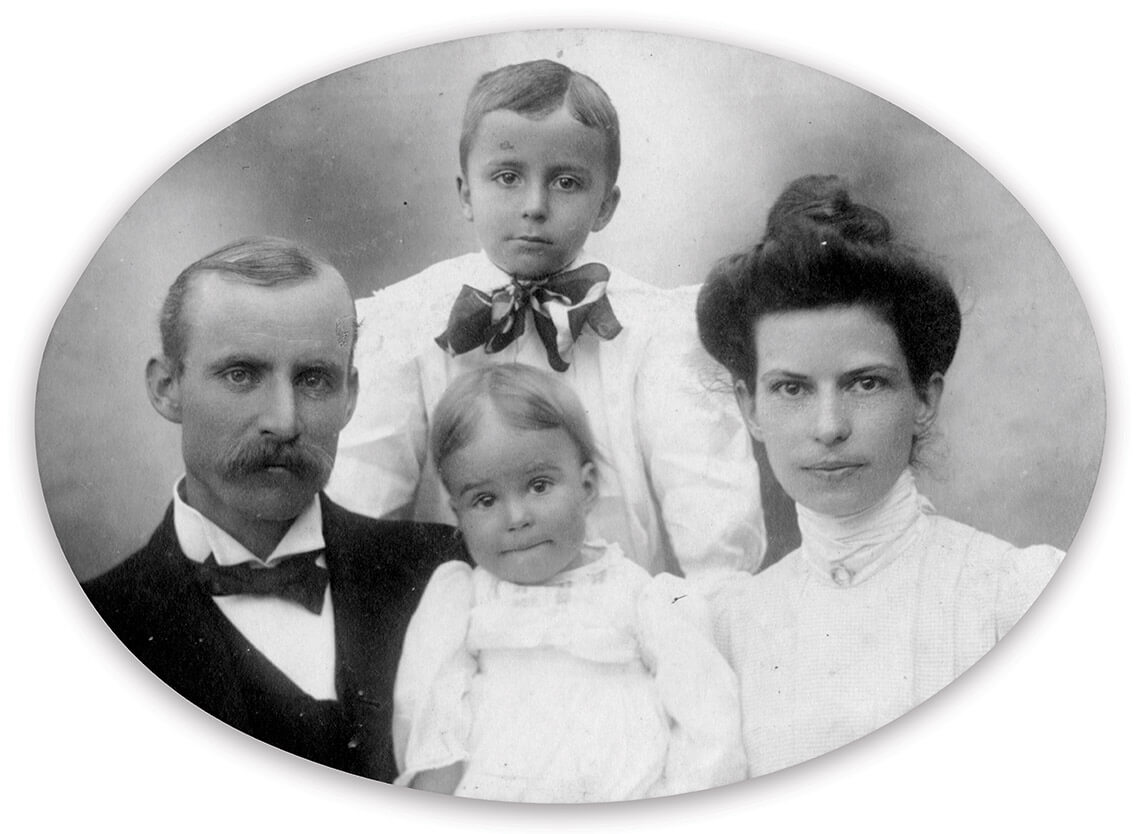
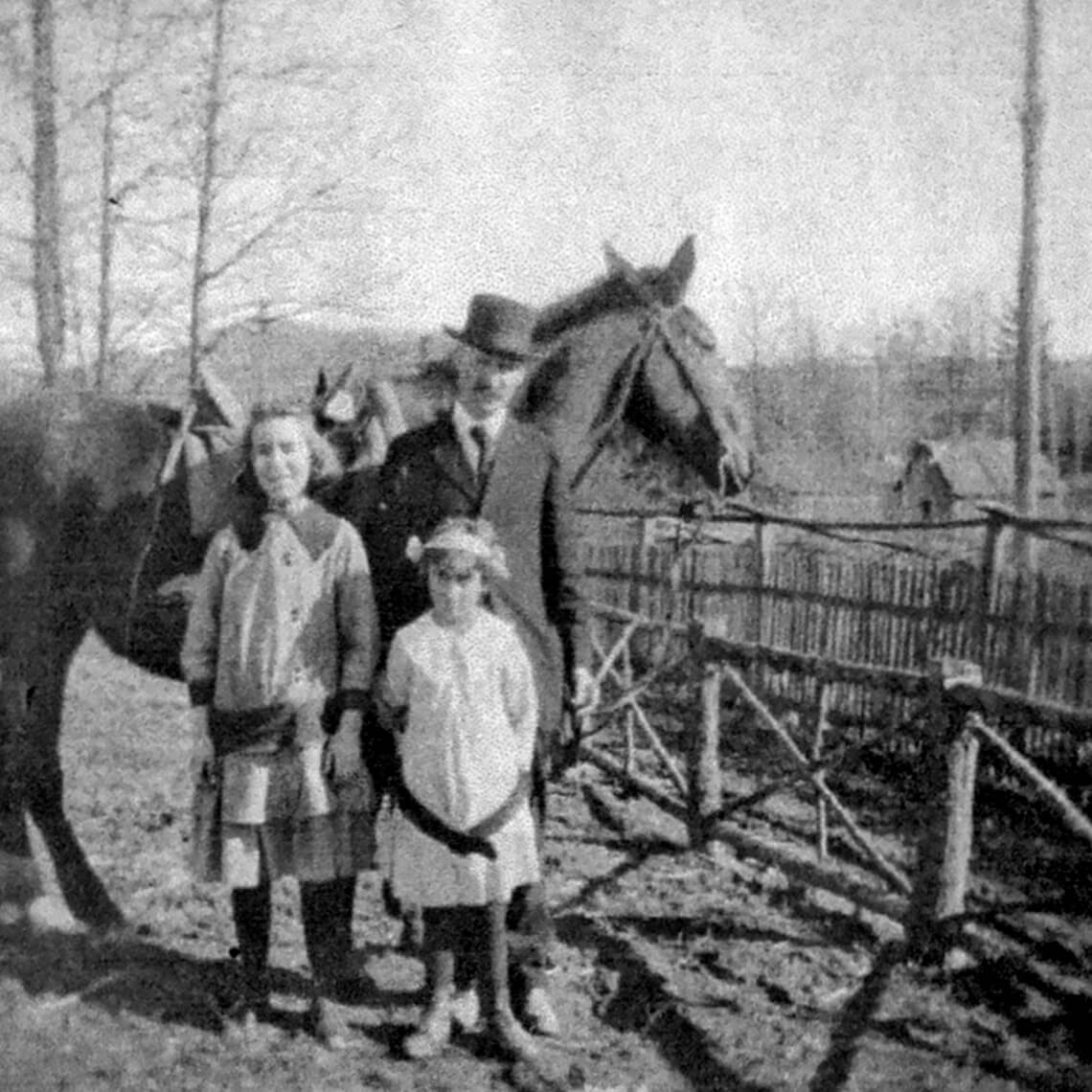
He and his wife, Bessie, settled in Banner Elk and had three children, including Edgar Hall and Margaret. Photography courtesy of The Tufts Family
Rough roads and inclement weather presented challenges, but Tufts remained undaunted — even during winter storms, when those he visited would have to pour warm water over his boots to free him from his frozen stirrups. Tufts was said to weigh little more than a hundred pounds, but his capacity for hard work was extraordinary. “He was never a well man,” Speer says, “but he had an enormous reserve of energy.”
Staying with local families during his sojourns, Tufts was struck by the intelligence of the young girls he met and the difficult lives they led. “He and his wife started fireside chats in their home, where they could teach girls,” says Blaine Hansen, executive vice president and chief operating officer at the college. “That eventually grew into a boarding school for girls, then a boarding school for boys. Ultimately, it became Lees-McRae Institute and what we now know as Lees-McRae College.”
• • •
Boarding schools aren’t conjured out of thin air. They require classrooms, dorms, teachers, books, supplies, food. Tufts raised money through his congregations, through connections he made with well-to-do vacationers in Blowing Rock and prominent Presbyterian churches in North Carolina and surrounding states. His congregation in Banner Elk was particularly active and supportive of his initiatives.
“He can only be described as the ultimate persuader,” Hansen says. “He had to convince naysayers. He had to overcome being the outsider. But he had a way of moving mountains.”
Tufts’s portable organ sparked a friendship with a young doctor named William Cummings Tate, who helped found the hospital in Banner Elk. photograph by David Uttley
The organ Tufts carried on his ministry circuit helped him forge a relationship that would benefit thousands of lives. At a lumber camp near Pineola, one of the young men whom Tufts had invited to attend church services offered to fill in when the regular organist was absent. His name was William Cummings Tate. Tufts convinced Tate, fresh from medical school, to come to Banner Elk and run the small hospital he’d established.
Forgoing an opportunity to practice in Philadelphia, Tate became another Banner Elk institution. In 1919 alone, he admitted 1,256 patients, treated 10,000 outpatients, and performed 125 major surgeries and 101 minor ones while traveling 1,500 miles making house calls. The Banner Elk hospital — essentially a two-story house where Tate and his wife lived — welcomed all at a time when segregation was the norm.
For large projects, Tufts leaned on the relationships he nurtured with engineers, builders, and local mountaineers. In this way, he was able to dream big, creating a water system for the school and hospital that was soon expanded to the community, and damming the Elk River to bring electricity to Banner Elk for the first time in 1912.
Although he was often in poor health, Tufts (pictured with his daughters, Margaret and Mary) was tireless as an itinerant preacher, traveling by horseback to minister to residents of remote mountain communities. Photography courtesy of The Tufts Family
Tufts’s ministry trips throughout the mountains revealed another urgent need: the care of children without parents or a suitable guardian. Soon, he was making appeals to create the Grandfather Home for Children.
The unrelenting pace took its toll. In 1913, Tufts was admitted to Cragmont Sanitorium in Black Mountain for three months to treat his tuberculosis. He scarcely slowed down, penning more than 400 letters to patrons, benefactors, and friends to support his ministry’s initiatives — not to mention organizing prayer meetings for the patients and a Sunday school for children.
“He was always keeping an eye out for the needs of the people,” Speer says. “And then he would do impossible things to make it happen.”
• • •
When Tufts arrived in Banner Elk as a seminary student in 1895, the surrounding mountains cast a permanent spell on him. Despite his many obligations, he found time to hike and fish for trout on nearby streams. He began an annual tradition of hiking to the summit of Beech Mountain with his students for a picnic on what came to be known as “Mountain Day” — which later became the school’s day of service.
To Tufts, the rugged granite peaks represented a permanence and timelessness that he aspired to bring to his congregation’s many initiatives. “The original buildings of the church and school were wood-frame structures that were either lost to fire or quickly outgrown,” Hansen says. “Tufts had the foresight to say, ‘We’re surrounded by all these stones that have stood the test of time. We should construct buildings that do the same thing.’”
Years earlier, Tufts had coined a motto for Lees-McRae: “In the mountains, of the mountains, for the mountains.” It remains the institution’s guiding vision. In 1912, Tufts sought to physically manifest that motto by embarking on a Rocks-By-The-Ton fundraising campaign (a $4 contribution could buy a ton of rock) for three new buildings made from native stone.
In the buildings, Tufts sought to showcase the talents of mountain craftsmen — stonemasons, carpenters, and ironworkers — like Daniel Boone VI, whose wrought iron work can still be found throughout campus.
Tragically, Tufts would not live to see all his buildings completed. He died at the age of 53 in January 1923, having fallen ill after an arduous ministry trip on horseback in the middle of winter. It was left to his son, Edgar Hall Tufts, to complete his work.
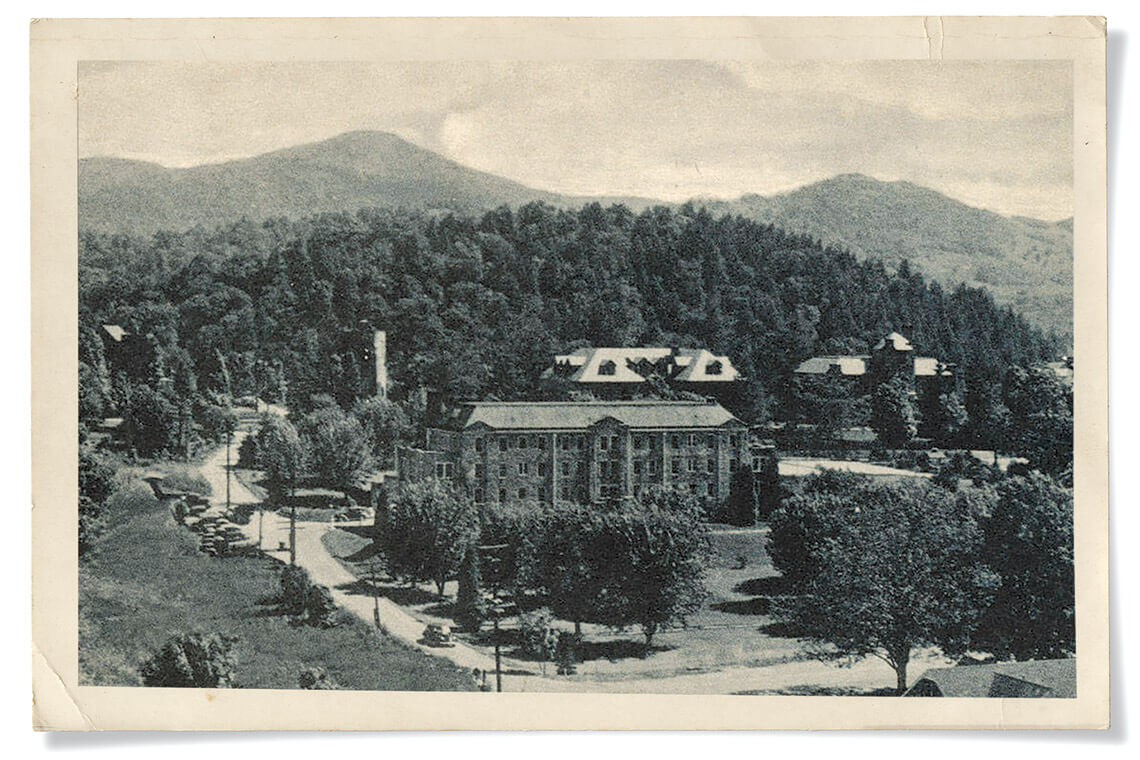
Grace Hospital was eventually converted into a Lees-McRae dorm called Tate Hall. Photography courtesy of “Grace Hospital, Banner Elk, North Carolina” in Durwood Barbour Collection of North Carolina Postcards (P077), North Carolina Collection, Wilson Library, UNC Chapel Hill
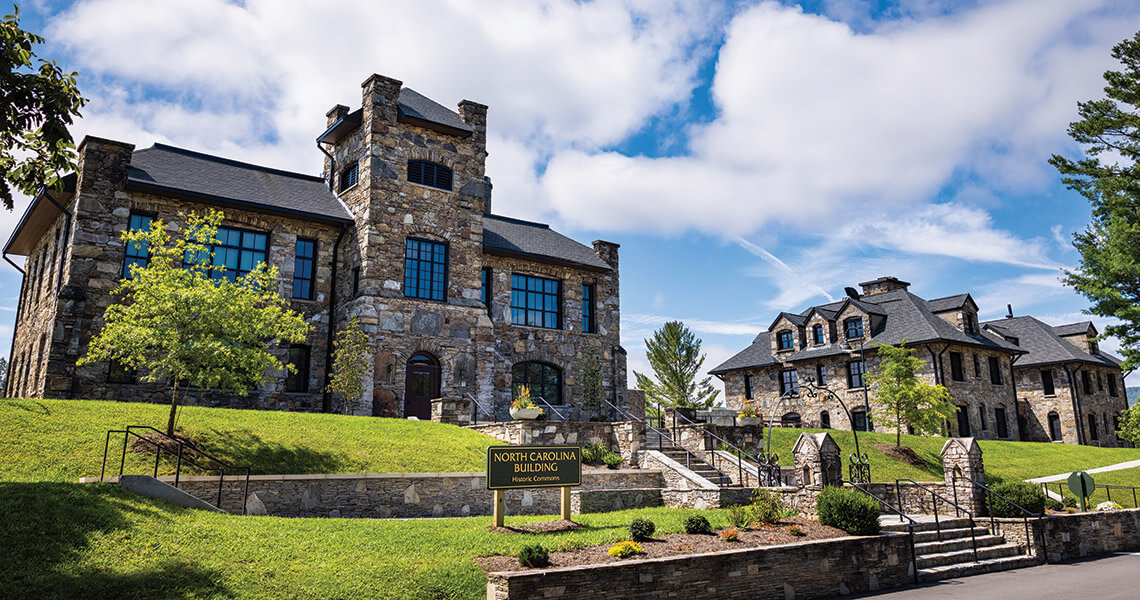
“The institutions Edgar founded are still here,” Hansen says. He’s standing in front of the three most prominent stone buildings on campus, named North Carolina, Virginia, and Tennessee for the Appalachian churches in the states that underwrote their construction. They’re beautiful — and as timeless as Tufts hoped they’d be. “The church. The college. The hospital. All remain today because of his legacy. They will carry on and probably outlast us all. Especially these stone buildings.”
If Reverend Tufts were to somehow return to Lees-McRae, he’d be proud that these buildings and institutions have stood the test of time. But what would truly gladden his heart is the sight of hundreds of volunteers streaming back onto campus after completing their community projects on the “Mountain Day of Service,” and gathering on Tate Lawn to share food and fellowship. One hundred and twenty-five years after it was founded, Lees-McRae still symbolizes the giving spirit of a man who humbly poured himself into helping others. His friend, the Rev. James Vance, said it best: “He was the biggest little man it has ever been my privilege to know.”
photograph by Lees-McRae College
A Higher Calling
At more than 3,700 feet above sea level, Lees-McRae is the highest-elevation college east of the Mississippi River. Yet what truly sets the school apart is its embrace of the ideals put forth by Tufts 125 years ago: respect for the environment, homegrown job creation, and service to others.
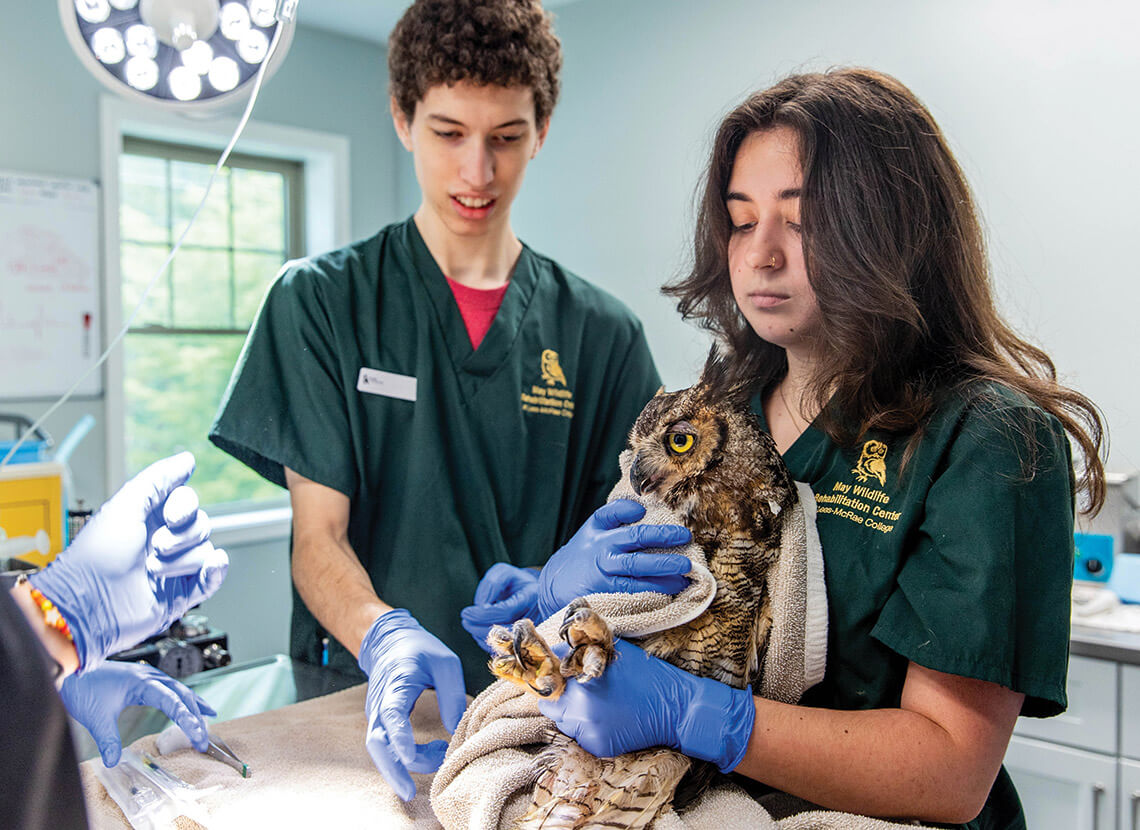
“Everything we are doing today is serving that mountain community,” says Dr. King, who points to the school’s emphasis on experiential learning, especially in the fields of sustainability, outdoor recreation, hospitality, and wildlife biology. The school’s May Wildlife Rehabilitation Center cares for more than 1,500 injured or orphaned animals a year, giving students hands-on learning opportunities (pictured above).
Talia Freeman had already committed to another school when she visited Lees-McRae. “I was standing over by the bell tower, and the sun was shining, and it was one of those perfect Lees-McRae spring days,” Freeman says of her change of heart, which she calls “the best decision I’ve ever made in my life.”
As a former president of the school’s alumni association, she knows the story of the school’s founder well: “I think the legacy of Tufts is still alive. Our students want to give back to the community. They are compassionate. They care.”
So what will the next 125 years bring? For King, the answer is easy. “We’re going to continue living out Edgar Tufts’s mission and ambition.”
Get our most popular weekly newsletter: This is NC


 Listen as the pages of the magazine come to life in the