Put ramekins on a baking sheet. Bake for 25-35 minutes, until puffed and golden. Remove from oven, and let stand for 5 minutes. With a flexible spatula, remove strata to
Long before steeples pierced the skyline of our state’s first town, this Anglican parish held a jewel prized across the Albemarle — a library of roughly 1,000 books and pamphlets,
Long before steeples pierced the skyline of our state’s first town, this Anglican parish held a jewel prized across the Albemarle — a library of roughly 1,000 books and pamphlets,
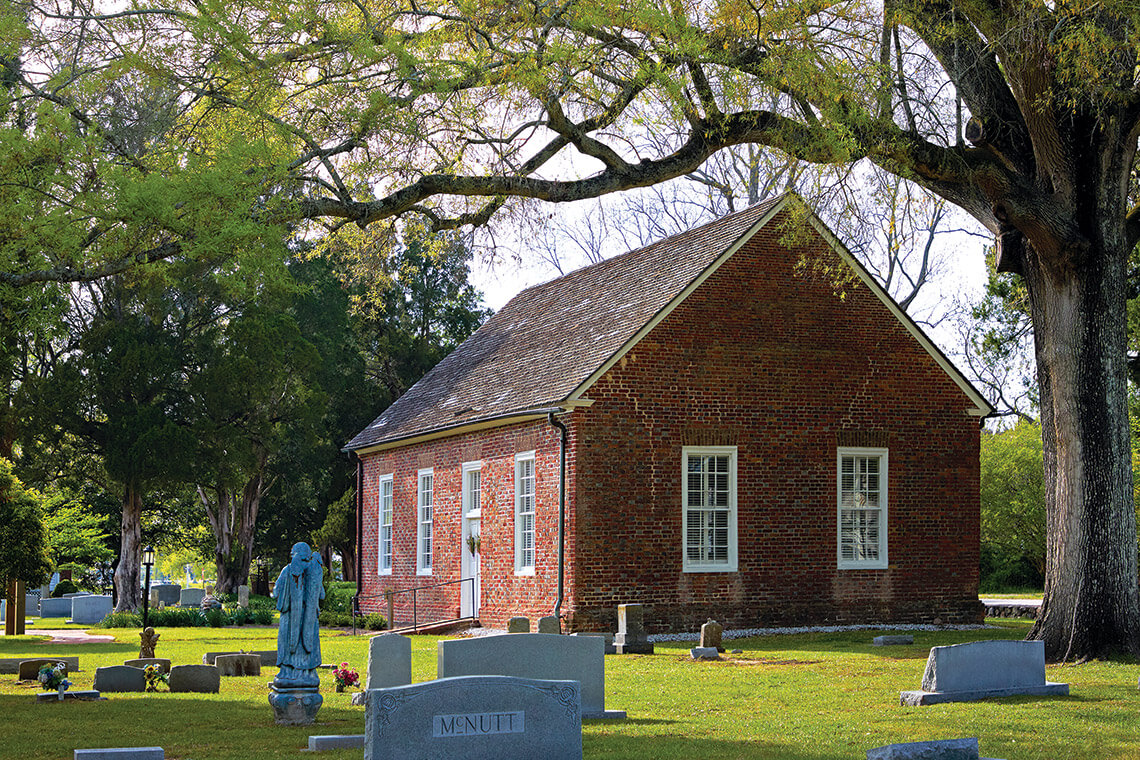
Long before steeples pierced the skyline of our state’s first town, this Anglican parish held a jewel prized across the Albemarle — a library of roughly 1,000 books and pamphlets, shipped from London to sustain faith and learning on the colonial frontier. Purchased by Dr. Thomas Bray, founder of the Society for the Propagation of the Gospel in Foreign Parts, the collection became the community’s earliest wellspring of worship and study. When at last, in 1734, a brick church began to rise along the eastern bank of Bath Creek, its two-foot-thick walls were built in Flemish bond to serve a congregation that would endure for generations. Still standing on Craven Street, St. Thomas Episcopal Church remains the oldest church building in North Carolina, where the prayers of almost three centuries continue to rise above the waters of the Pamlico.
“Just walk around and you can feel the history,” says Louise Parker, parishioner at St. Thomas Episcopal Church. “And being on the water, near where Bath Creek and Back Creek split — it’s beautiful.”
St. Thomas Episcopal Church is just one stop where history comes alive, but this town’s colonial homes, historic streets, and waterfront views offer layers of stories waiting to be discovered. Read on for a closer look at key sites.
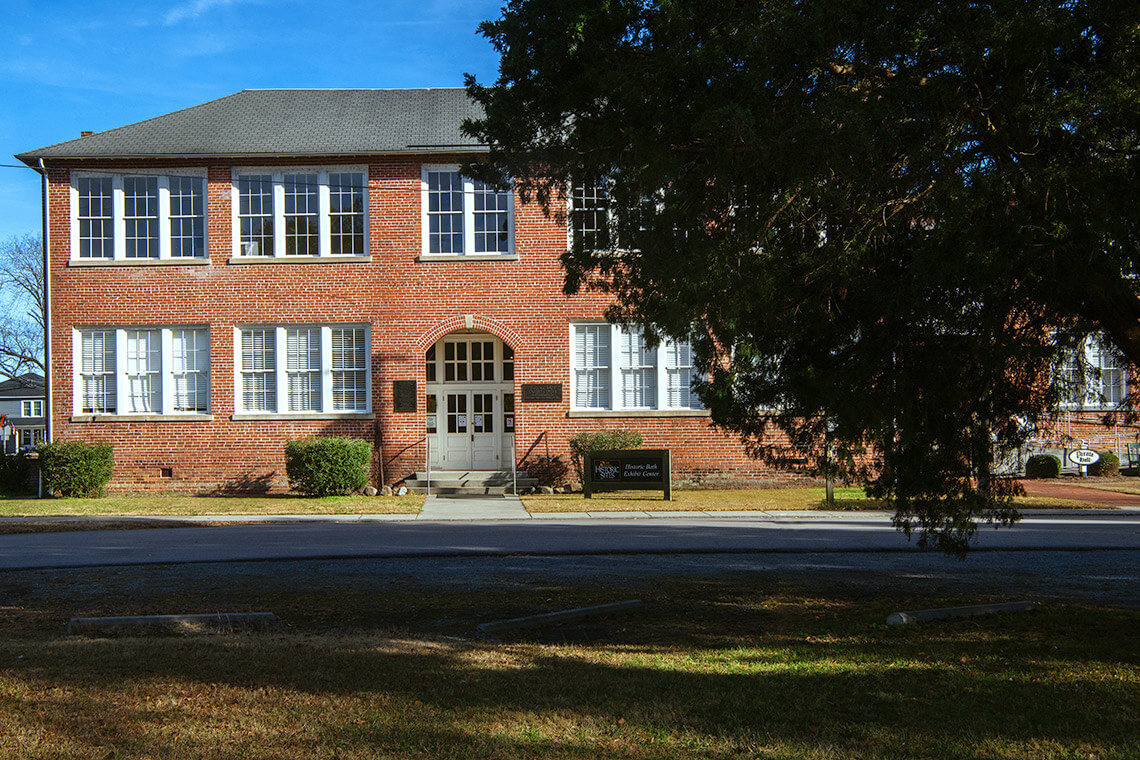
Start your visit at the Historic Bath Exhibit Center, where you can watch an orientation film or meet up with guided tour groups. Photography courtesy of THE NORTH CAROLINA DEPARTMENT OF NATURAL AND CULTURAL RESOURCES
Find Your Footing
Before North Carolina’s rivers were dotted with ports — before it had even settled on a permanent capital — Bath worked as a busy seaport along the Pamlico River. To understand how this riverside settlement became the state’s first incorporated town, begin your visit at the Historic Bath Exhibit Center, where guided tours originate. Housed in the old Bath High School at Carteret and Harding streets, the center features a free permanent exhibit that traces Bath’s story from Native American settlement to colonial port.
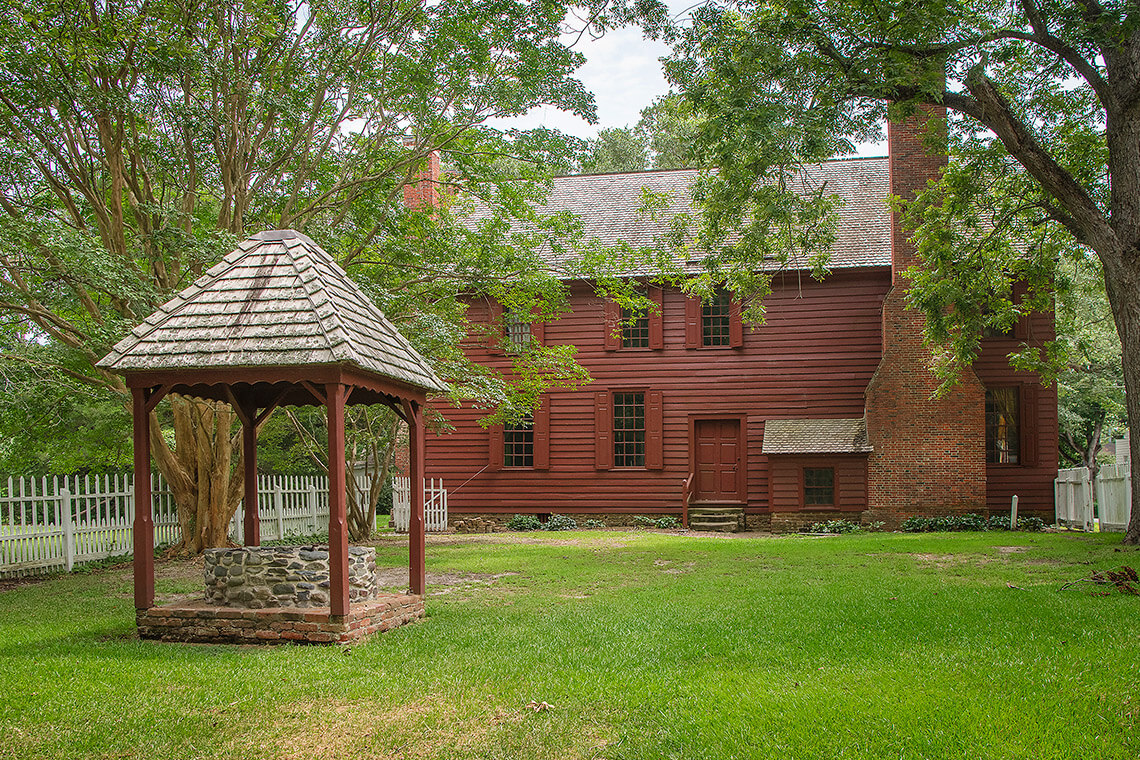
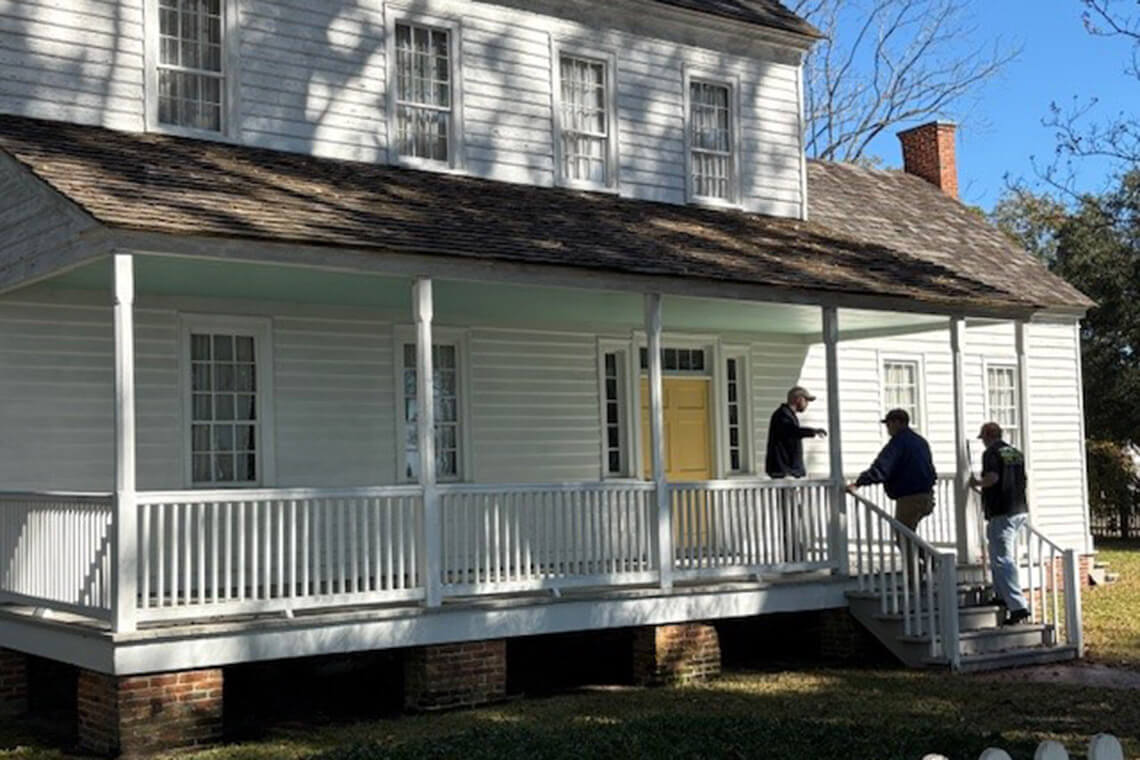
The restored circa-1751 Palmer-Marsh House once belonged to one of the highest paid English officials in North Carolina. Photography courtesy of THE NORTH CAROLINA DEPARTMENT OF NATURAL AND CULTURAL RESOURCES
With curiosity as your compass, step outside with a guide and move from block to block, where 18th- and 19th-century homes and mercantile buildings stand as markers of Bath’s colonial past. The walk leads to the Palmer-Marsh House, built around 1751 by Captain Michael Coutanche. The sturdy two-story structure functioned as both home and mercantile. Just beyond the house, the pecan-shaded yard holds the Marsh family graves — a reminder that the people who fostered Bath never strayed far from it.
Built in 1830, the Bonner House still boasts many of its original features, including blown-glass window panes, hand-carved mantels, and wide-board pine floors. Photography courtesy of THE NORTH CAROLINA DEPARTMENT OF NATURAL AND CULTURAL RESOURCES
A short distance away stands the Bonner House, where the elegance of mid-19th-century architecture meets the practical needs of a riverfront household. From the parlor to the dining room, period furnishings show how families lived, worked, and entertained. To the west, the view to Bonner’s Point makes it easy to picture Bath’s waterfront as it once was: where white and enslaved mariners labored, ropes were coiled, sails hoisted, and merchants hustled to the docks.
To see that maritime world re-created, plan a visit for “Patriots at Sea: An American Seaport Prepares for War” on July 25 from 10 a.m. to 4 p.m. The event will transform Bath into a Revolutionary-era harbor. An encampment and living history demonstrations will rise at Bonner’s Point as Leviathan Nautical Living History and the crew of The Revenge demonstrate sailmaking, navigation, sailor’s life, and naval defense. Watch ropemaking and signal flags in action, observe spinning and weaving, learn about a ship’s surgeon and his apothecary items, and see a ship’s hull caulked with hot tar. Munitions demonstrations fire at 11 a.m., 1 p.m., and 3 p.m., recalling a time when the colonies fielded only 27 official warships but relied on more than 1,600 privateers to challenge British power.
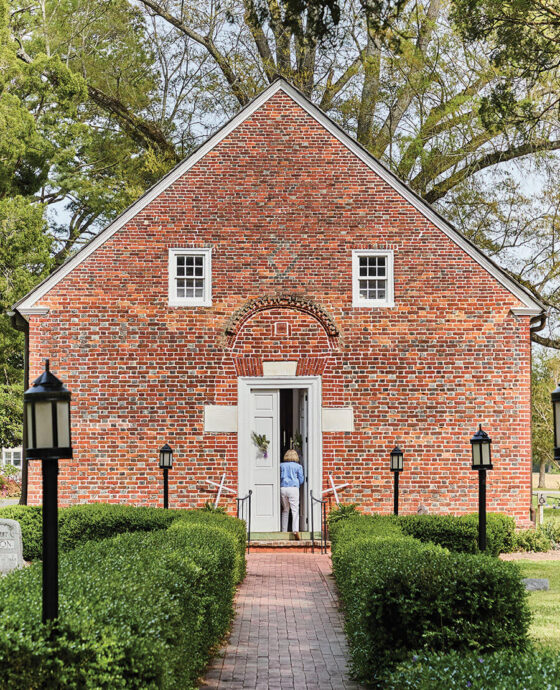
Mere yards from the water, St. Thomas Episcopal Church has been worshipped in and maintained by devoted congregants for nearly 300 years. photograph by Chris Rogers
Visit a Colonial Landmark
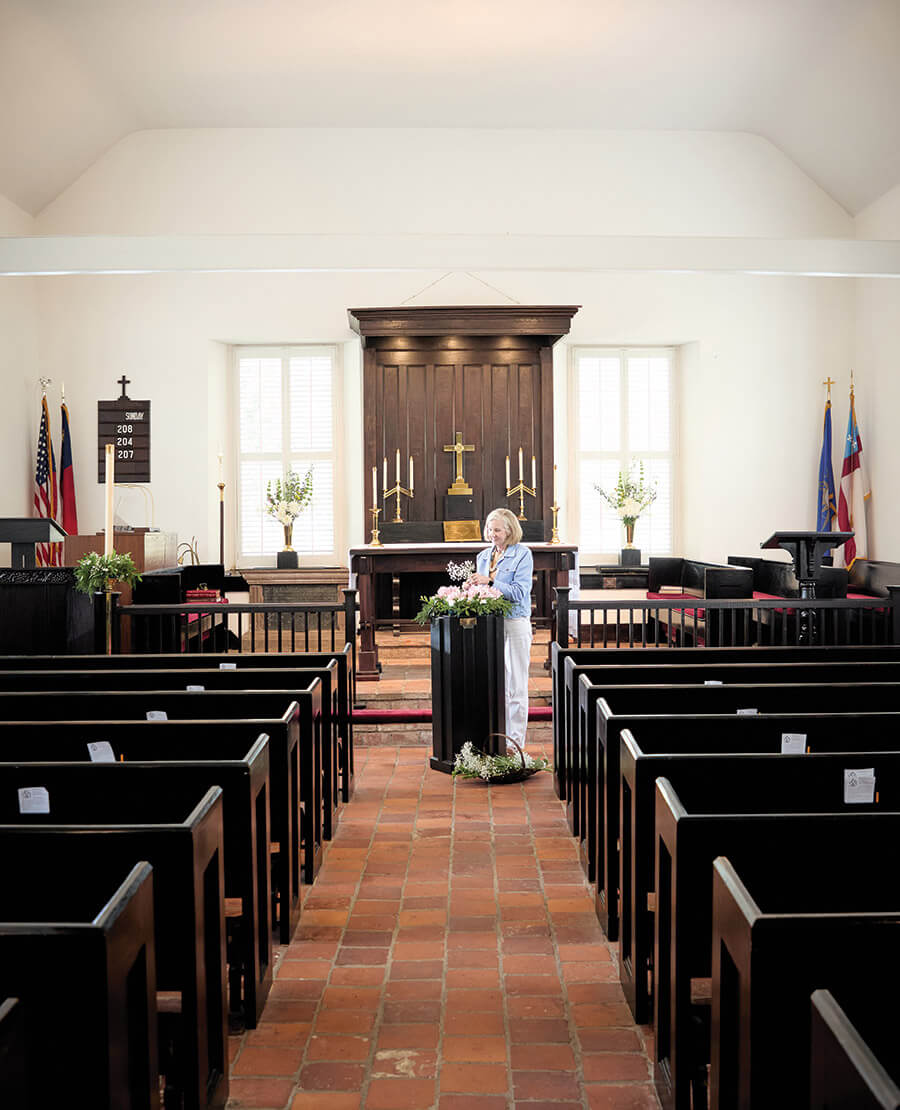
For a closer look at Bath’s colonial roots, step a block inland to St. Thomas Episcopal Church. Grab a pamphlet to learn about the church’s 1734 construction, the clergy who shaped its parish, and the centuries of worship and community life that unfolded here. Near the altar, a plaque honors Margaret Palmer, who was laid to rest in 1765. Look up to the Queen Anne bell, cast in 1732 and recast in 1872, which has called parishioners to service for nearly 300 years.
Outside, the grounds continue the story. From the front steps, you can see the Williams “Glebe” House opposite the church steps and the Garzia Building immediately to the left, while the A.C.D Noe Building and columbarium sit quietly to the left between the Williams “Glebe” House and the church. Along the northern edge of the property, a ballast stone wall made from rocks offloaded from colonial ships edges the churchyard, a tangible reminder of Bath’s busy riverfront life.
Mere yards from the water, St. Thomas Episcopal Church has been worshipped in and maintained by devoted congregants like Susan Tankard for nearly 300 years. photograph by Chris Rogers
Before you leave, don’t forget to sign the guest book: “It’s just amazing how many people come in any given week — people from everywhere,” says parishioner Kay Leager.
The church will also play a role during “Patriots at Sea: An American Seaport Prepares for War.” During the event, the church will be open and guides will be ready to share its history with visitors, offering a chance to explore both the interior and the grounds while connecting with Bath’s colonial heyday.
Wake to the Water
Named for the creek it overlooks, the Inn on Bath Creek celebrates Bath’s coastal colonial heritage with thoughtful design and comfortable rooms. Wind down in the Chesapeake Room, where rich mahogany fixtures are complemented by natural light flooding through Georgian windows. Or opt for the Pamlico Room, a bright, airy space that invites long afternoons in a wicker chair while gazing over Bath Harbor and the Marina. If privacy and romance are what you seek, the Calabash Room has you covered, with coastal-toned walls, deep wooden armchairs, and a tucked-away, serene atmosphere ideal for couples. Guests wake to a freshly prepared breakfast each morning, with offerings that might include eggs, frittatas, pastries, waffles, fruit, or pancakes.
Be on the lookout: Come July, the bed and breakfast will be decked out for America’s 250th, with festive decorations, a neighborhood cookout on the lawn, and a chance to enjoy the community spirit right on the waterfront.
Summer Sips & Bites
There’s a reason friends and travelers make their way to Main Street each morning: The Thirsty Mermaid serves more than coffee — it serves connection. Owner Tamara Matthews spent more than two decades dreaming of a space where people could gather, relax, and find a little joy, and when the historic brick storefront became available, she knew it was the perfect place to make her vision a reality. So meaningful was that idea of joy, “it’s what we ended up naming our espresso machine,” Matthews says.
Cool off with The Salty Mermaid, a sea salt caramel toffee mocha, or treat yourself to a caramel coffee frappe. Non-coffee fans can enjoy smoothies, milkshakes, or teas, and every drink pairs perfectly with a pastry thanks to the shop’s partnership with Val’s Gourmet Baked Goods in nearby Washington. The spot also recently got its permit for adult beverage sales, so visitors can also enjoy wine by the glass or bottle and a selection of beers. Drinks are just the start. Keep your eyes open for kids’ art classes led by the shop’s barista, live music from a mandolin player, and other community gatherings throughout the month.
Looking for a meal? If you’ve ever taken a seat at Old Town Country Kitchen (known to locals as “The Grill”) right when the doors open at 7 a.m., you know the rhythm of the place: Coffee poured hot and steady. The low hum of regulars catching up. The scent of biscuits rising in the kitchen. The original red booths — still there — holding decades of conversations.
The building was built in the 1970s as an auto repair shop, and in 1991, the Godleys, a local farming family, saw that Bath needed a place to eat and turned it into a grill. The restaurant’s current co-owner, Robin Boyd, first worked here as a college student. Her mother-in-law had worked at the restaurant in its earlier days, too, and her in-laws eventually bought the business. Robin and her husband, Dal, eventually took over in 2001. “It started as a simple grill,” Robin says. “Over time, we’ve expanded the menu.”
Still, it hasn’t strayed far from its roots. Breakfast means one- or two-egg plates, omelets, pancakes, biscuits, and sandwiches hot off the flat-top. By lunch, it’s daily lunch specials, burgers, steaks, and seafood — the sort of down-home, good country cooking that doesn’t need explaining. In a small town like Bath, places like this anchor mornings.
Paddlers visiting Bath can continue their adventures at Goose Creek State Park. Photography courtesy of Visit Washington
Head to the Harbor
Fueled up? Time to head for the water. Bath’s story is steeped in maritime legend — even Blackbeard once prowled these waters during his daring exploits. Today, visitors can experience the same quiet beauty of Bath Creek and the nearby Pamlico River, where calm, protected waters make for easy-to-enjoy water activities like boating and kayaking. Rent a boat from Bath Harbor Marina, tie up at the Bath State Dock, or stroll out to Bonner’s Point, where benches offer front-row views of boats drifting by and taking in the sunset.
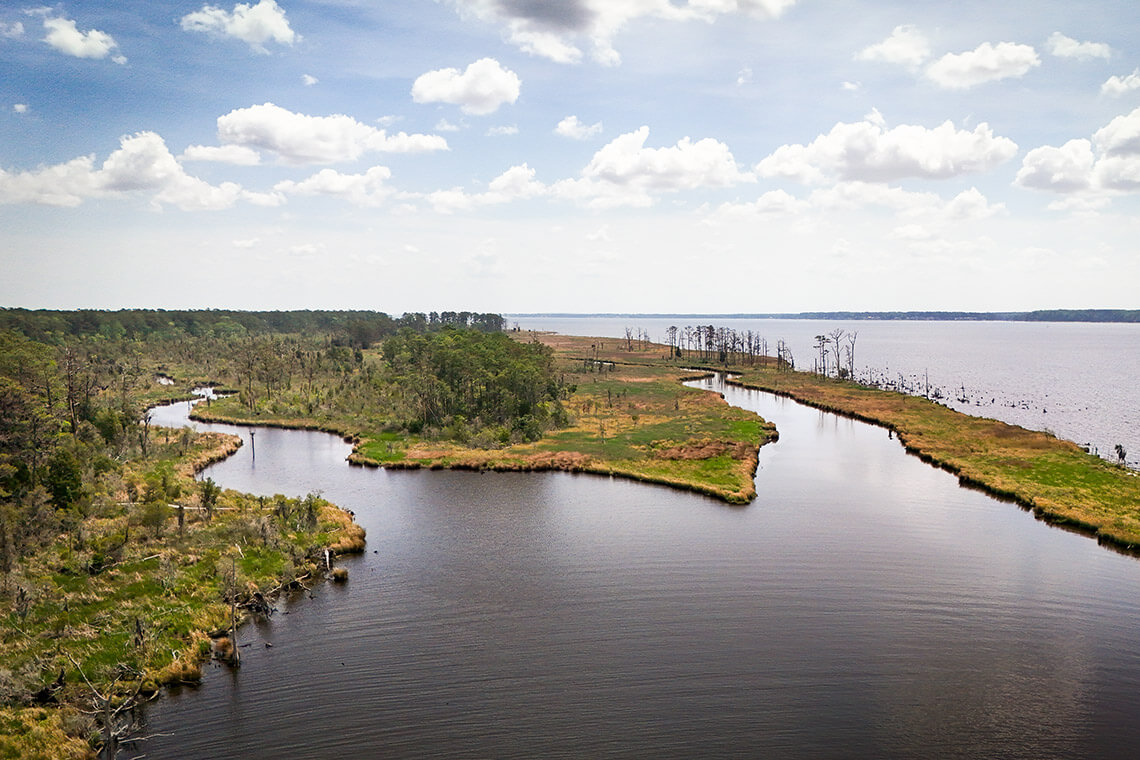
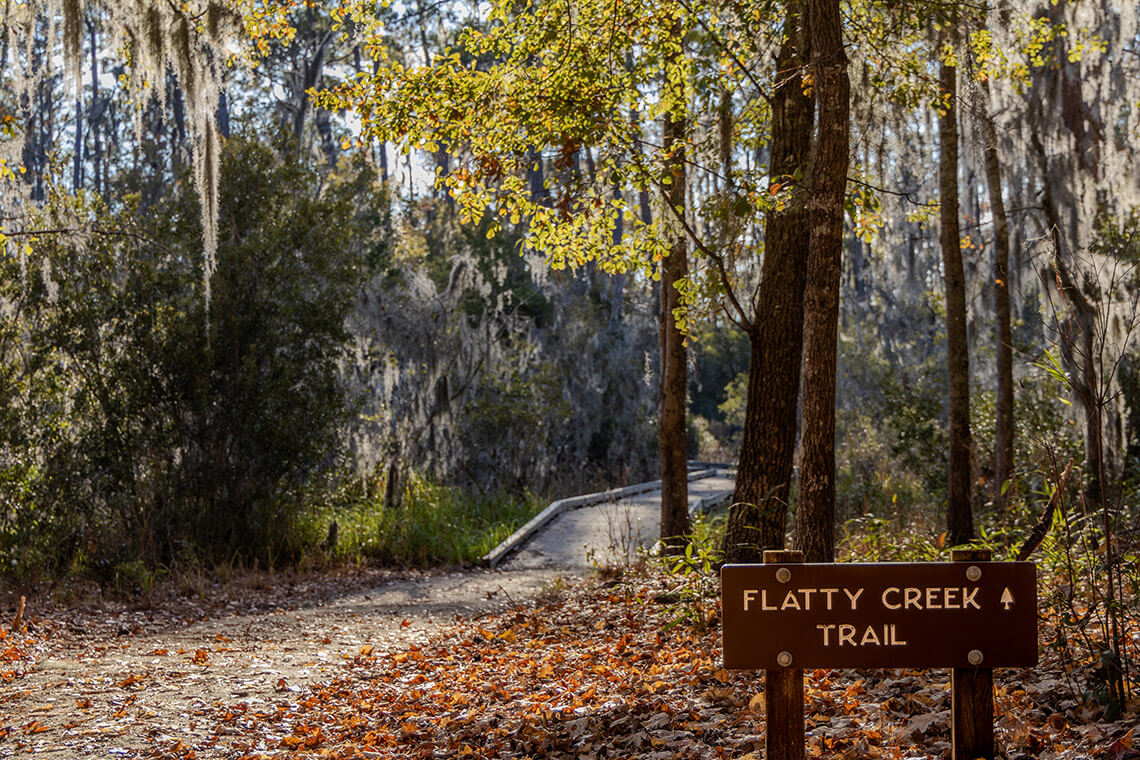
Or take a quick 13-minute drive over to Goose Creek State Park. Yes, it’s technically located in Washington, but when you’re paddling its quiet inlets or wandering beneath cypress trees, it feels like a natural extension of Bath’s waterfront. Here, the Pamlico River stretches into broad coastal wetlands and quiet estuarine habitats where paddlers can trace the shoreline at their own pace. Glide through calm inlets by kayak, cast a line from the water’s edge, or explore 9.5 miles of hiking trails that wind through pine forests and along shaded marsh.
Follow Flatty Creek Trail’s easy 0.3-mile loop in Goose Creek State Park.<br><span class="photographer">Photography courtesy of Visit Washington</span>
Keep your eyes peeled for the park’s animal residents, like osprey …<br><span class="photographer">Photography courtesy of Visit Washington</span>
… and deer.<br><span class="photographer">Photography courtesy of Visit Washington</span>
One of the park’s highlights is the long boardwalk that carries visitors deep into a cypress swamp, where sunlight sparkles on dark waters and Spanish moss-draped branches sway overhead. Along the way, remnants of old boat piers, a trackless railroad bed, and the charred remains of tar kilns offer subtle reminders of the lumber industry that once fueled life in this region. Whether explored on foot or by paddle, the landscape feels wild yet welcoming — an extension of the same river that has shaped Bath for centuries.
Every corner of Bath tells a story you won’t forget. So, which adventure will you dive into first?
At both the turn of the century and today, Beaufort’s waterfront has attracted a hum of commerce and community. At its heart, a historic avenue tells that history, from the stately double-porched homes to the sound of ships announcing their arrival at port.