Put ramekins on a baking sheet. Bake for 25-35 minutes, until puffed and golden. Remove from oven, and let stand for 5 minutes. With a flexible spatula, remove strata to
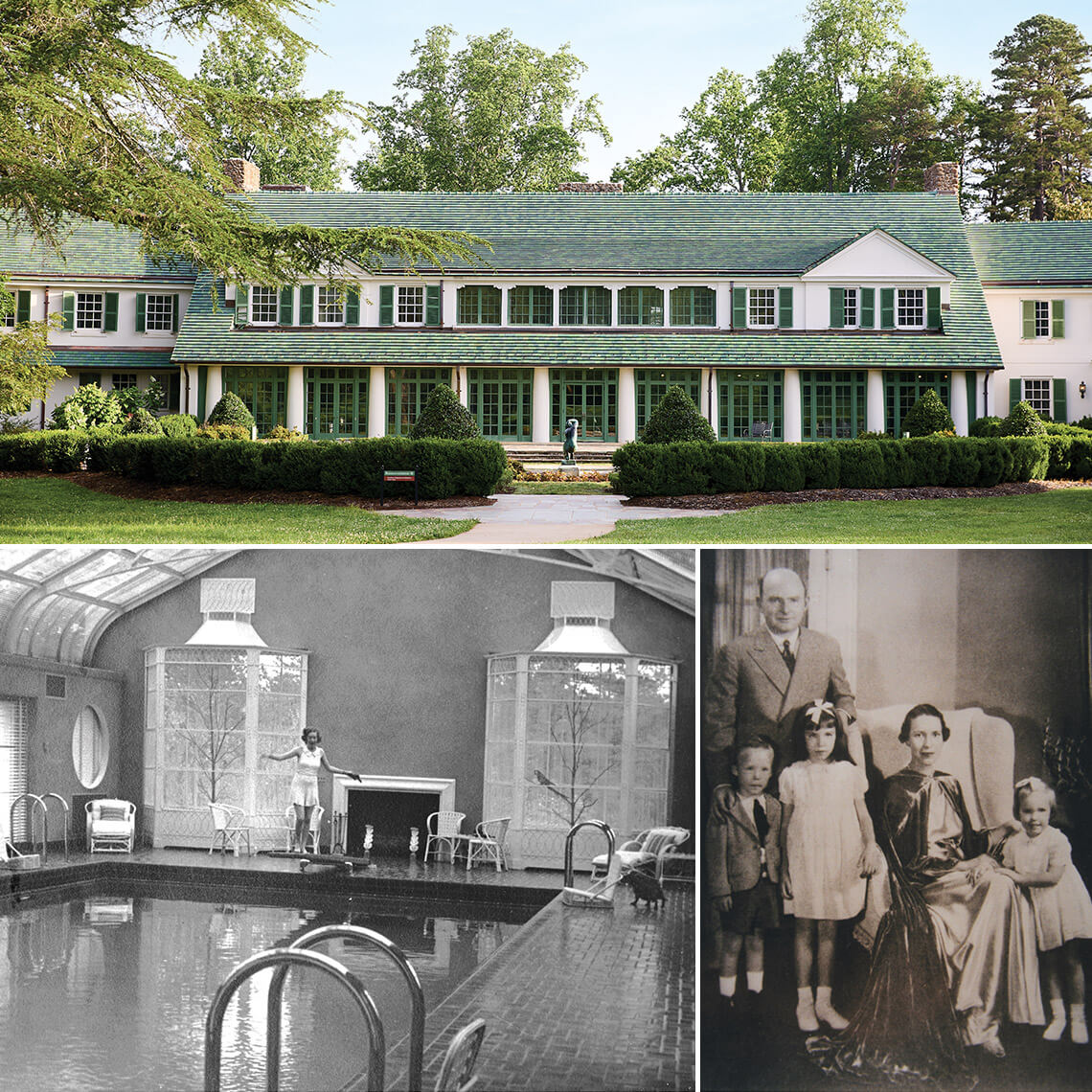
[caption id="attachment_212639" align="aligncenter" width="1140"] Guests from the 1940s (bottom left) used the diving board under the watchful eye of one of the the Babcock family’s pet macaws.[/caption] Indoor Oasis Reynolda
[caption id="attachment_212639" align="aligncenter" width="1140"] Guests from the 1940s (bottom left) used the diving board under the watchful eye of one of the the Babcock family’s pet macaws.[/caption] Indoor Oasis Reynolda
Guests from the 1940s (bottom left) used the diving board under the watchful eye of one of the the Babcock family’s pet macaws. photograph by Stacey Van Berkel; Historical Photo Courtesy of Reynolda House Museum of American Art Estate Archives; Forsyth County Public Library Photograph Collection, Winston-Salem, N.C.
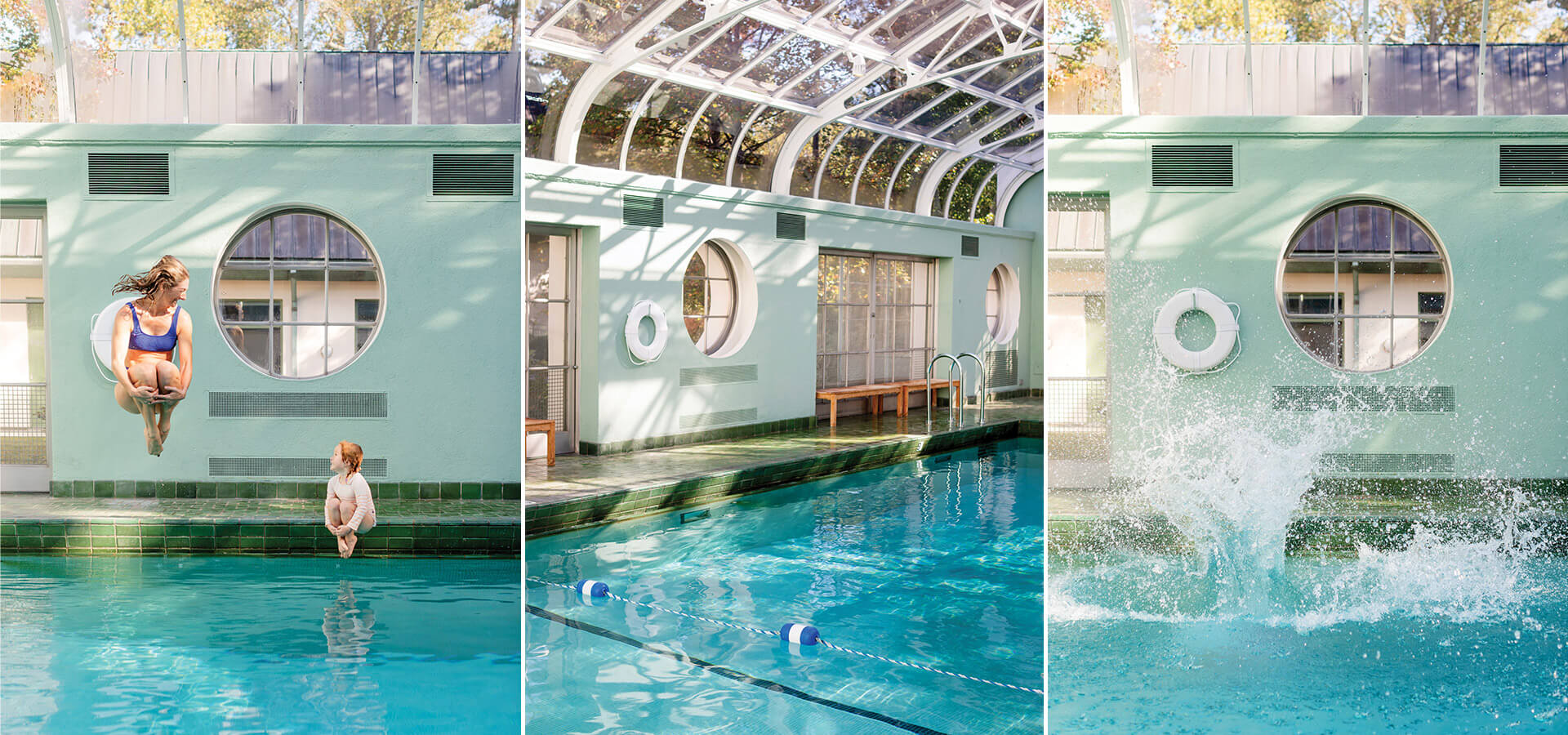
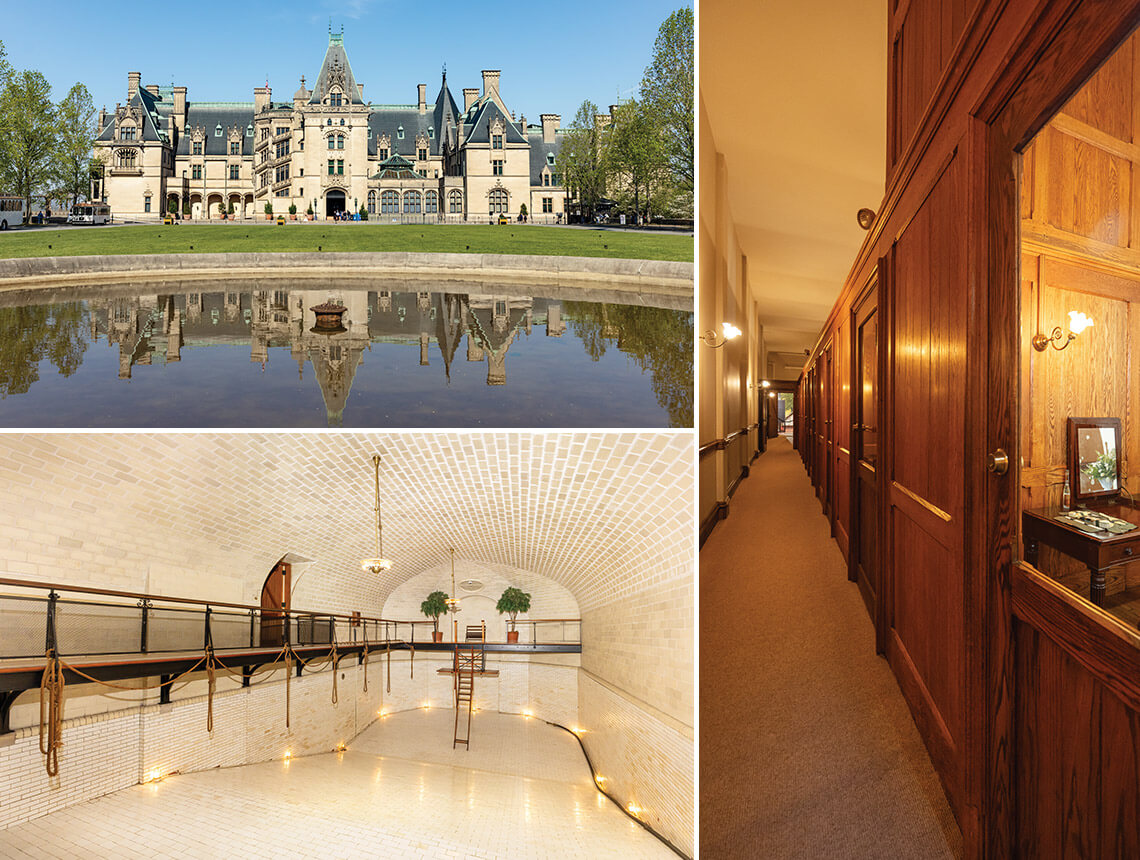
Indoor Oasis Reynolda House • Winston-Salem
Mary Reynolds Babcock, daughter of R.J. and Katharine Smith Reynolds, designed the expansion of their mansion to include a recreational space for her family. The conservatory-style pool is occasionally filled for museum members to enjoy. — L.G.
photograph by Stacey Van Berkel
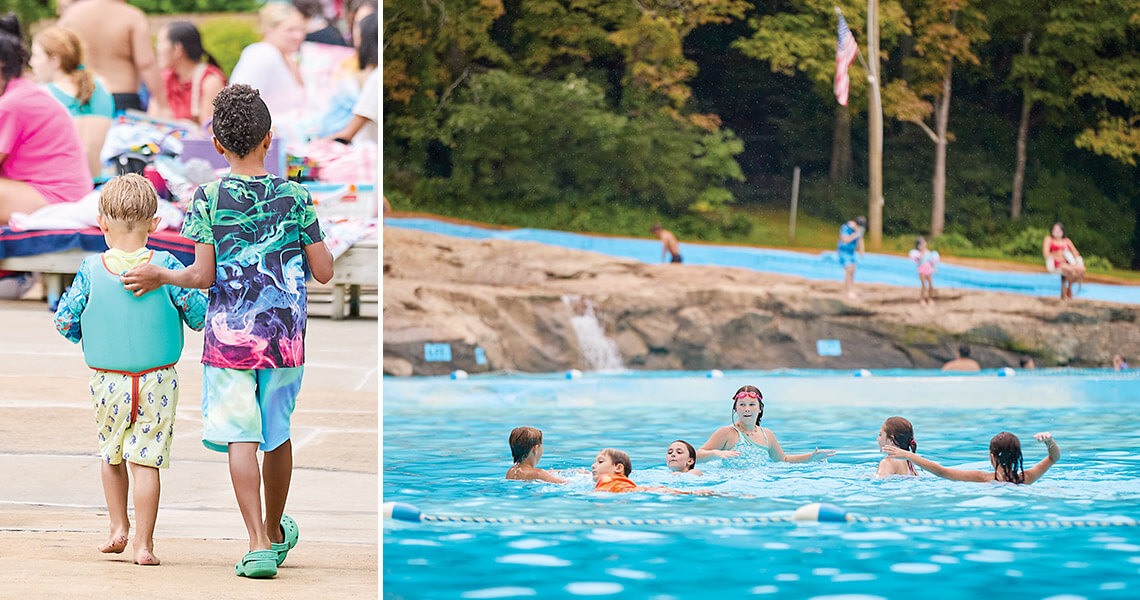
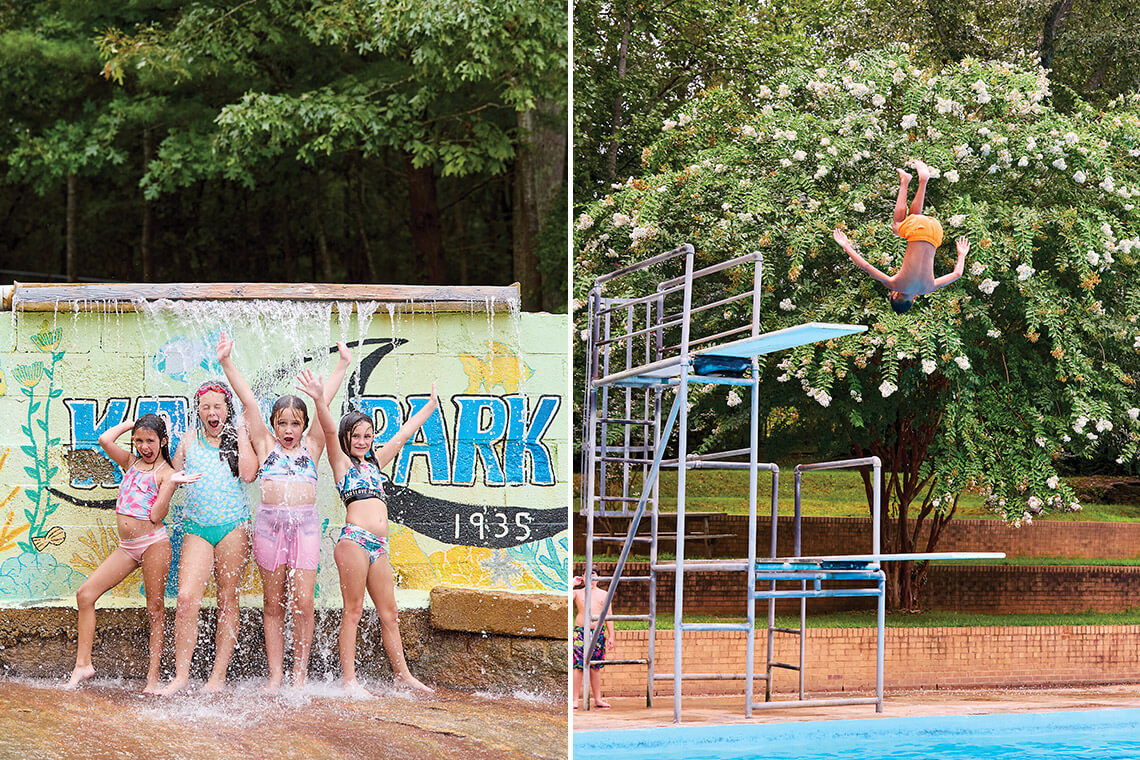
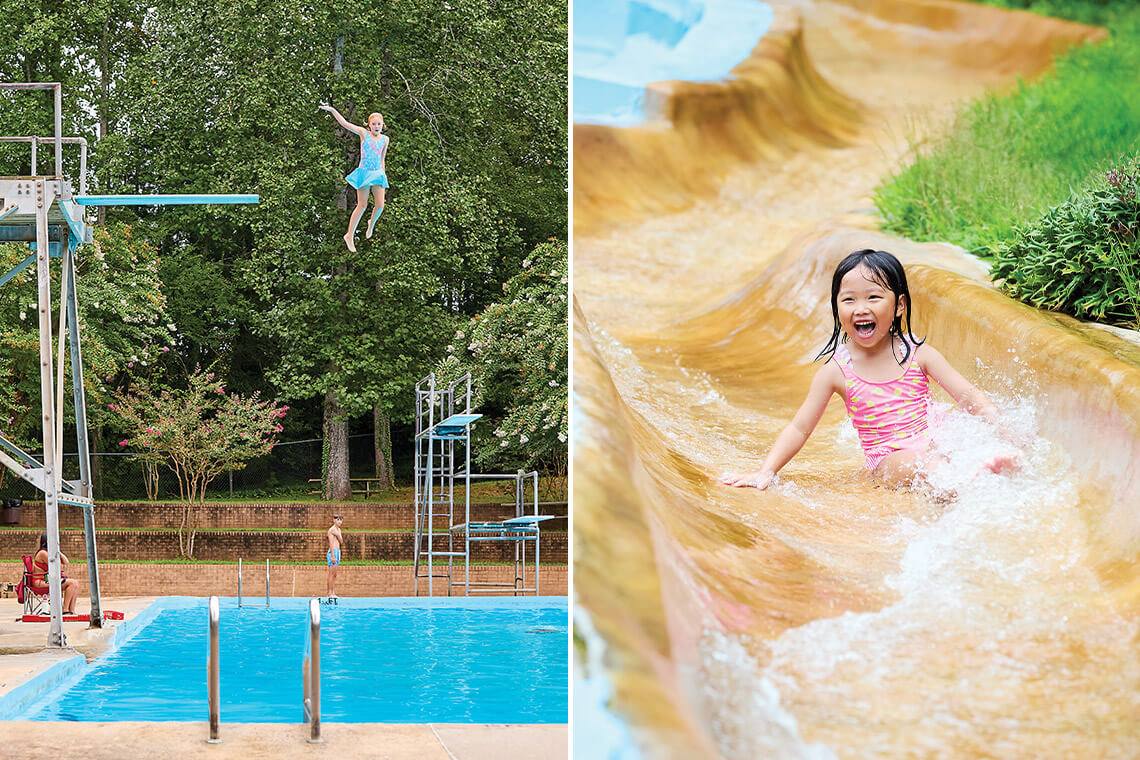
Local Hangout Kool Park Pool • Hickory
It all started with North Carolina’s need to pave a road. Businessman C.A.C. Carpenter allowed the state to excavate gravel from his land, and the digging eventually carved out space for Carpenter’s dream: a community pool. For 90 years now, Hickory families have come here to make memories as they swim, slide, and dive.
Kool Park Pool<br><span class="photographer">photograph by Stacey Van Berkel</span>
Across from the diving tower is a 90-foot waterslide that emerges from a faux rocky beach and winds down the exterior of the pool.<br><span class="photographer">photograph by Stacey Van Berkel</span>
The 15-foot diving tower, once used for viewing rocket launches, was an unexpected acquisition when Carpenter bid on “metal items” from Cape Canaveral in the early 1960s. Its height required the deep end to expand to 15 feet. — L.G.
In the basement of Biltmore, a corridor of oak-paneled dressing rooms provided private places to don bathing costumes. photograph by Tim Robison
Manor Amenities Biltmore • Asheville
Residents and guests at the Vanderbilt home could enjoy a dip in the 70,000-gallon pool, featuring heat and underwater lights, considered revolutionary for the time. While the water is drained today, the sounds of past pool days are rumored to still echo through the halls. — L.G.
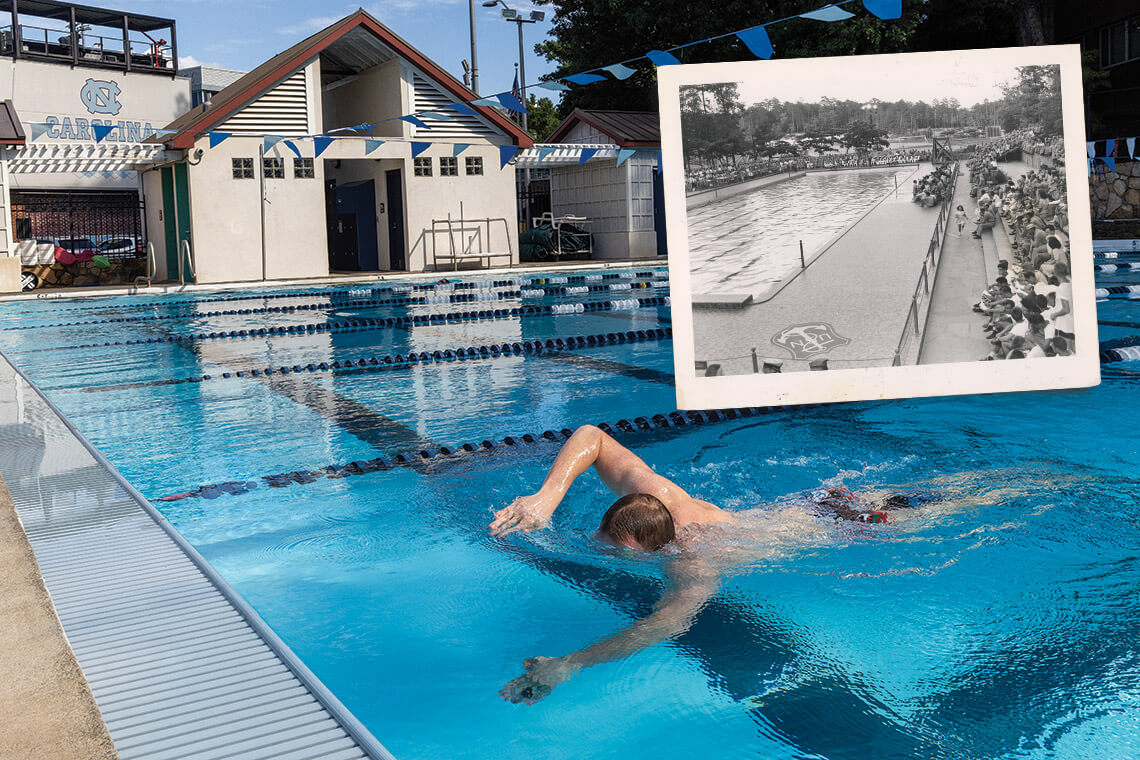
As one of five U.S. Navy Pre-Flight Schools in the country at the time, UNC saw more than 20,000 cadets from 1942 to 1945, including future President George H.W. Bush. Today, students and full-time employees can swim here. photograph by Todd Pusser; Historical Photo from The Chapel Hill Image Collection, Louis Round Wilson Special Collections Library, UNC-Chapel Hill
Training Pool Kessing Pool • UNC Chapel Hill
Thousands of cadets at UNC’s U.S. Navy Pre-Flight School honed their skills here during World War II. Named for the program’s first commanding officer, Oliver Owen Kessing, the pool opened in 1943 and still carries forward that legacy. — L.G
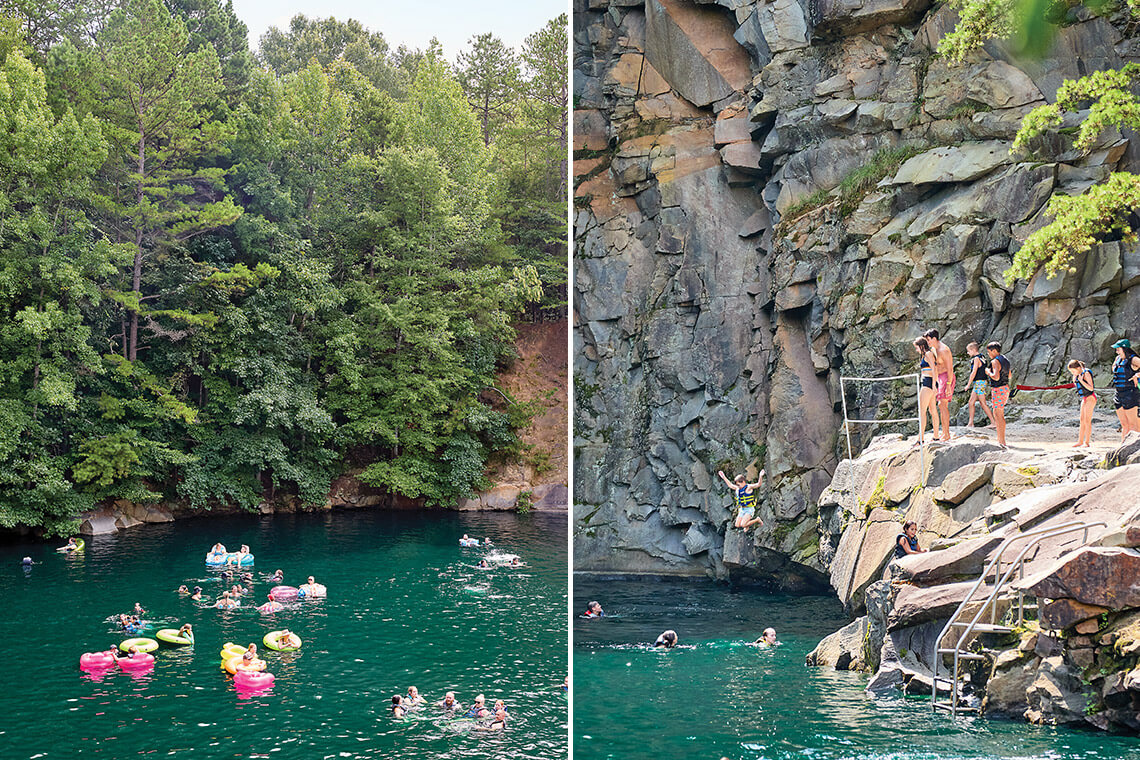
The Carrigan family settled in the Mooresville area in the 1700s, where they focused mainly on farming. Their quarry — once mined for granite — is now such a popular warm-weather site that reservations are highly recommended. photograph by Stacey Van Berkel
Deep Dives The Quarry at Carrigan Farms • Mooresville
Laughter echoes off towering granite walls at a 25-foot-deep quarry in Iredell County. Fed by a natural underground spring, the swimming hole shimmers emerald green as folks leap from cliffs and jump off a rope swing, with lifeguards keeping watch. — H.P.
photograph by Tim Robison
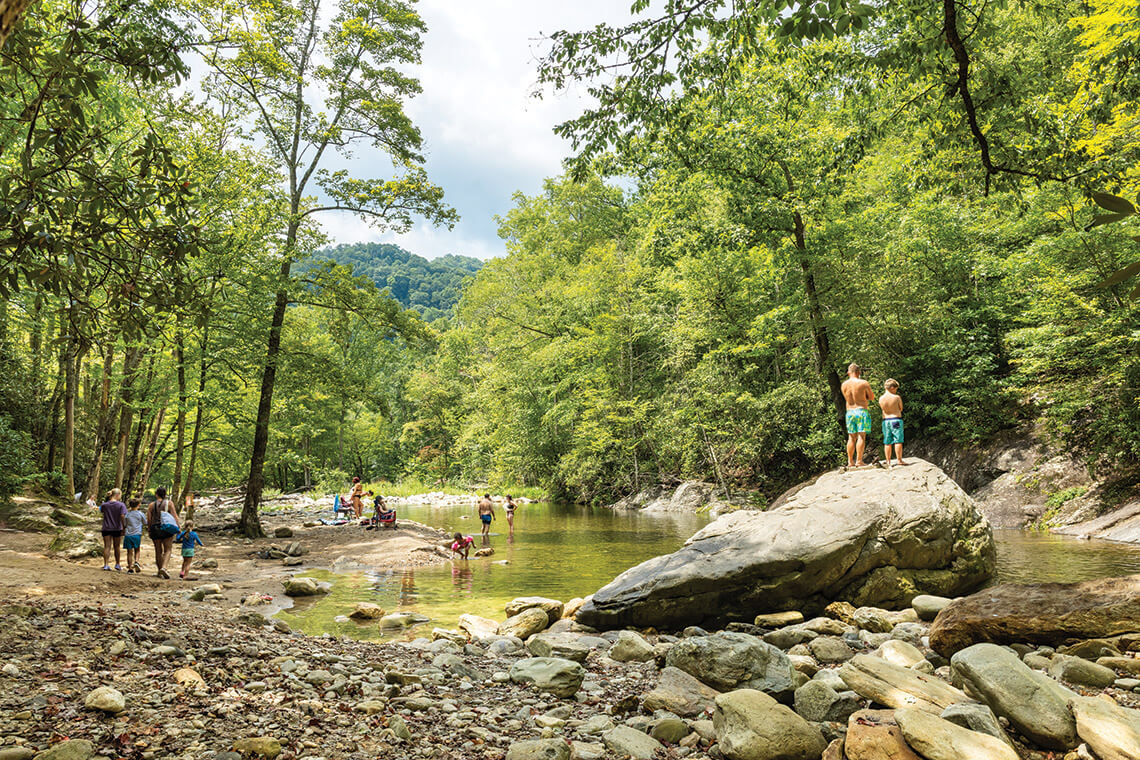
Cold Plunge Sunburst Swimming Hole • Canton
Fed by the clear headwaters that have long defined Haywood County’s streams, the creek at Sunburst Swimming Hole looks amber in the afternoon light as it meanders over stone. Beneath those rocks, salamanders — part of the fauna of Pisgah National Forest — keep to the cool shadows, while the water runs fresh and bracing all around. — H.P.
photograph by Derek Diluzio
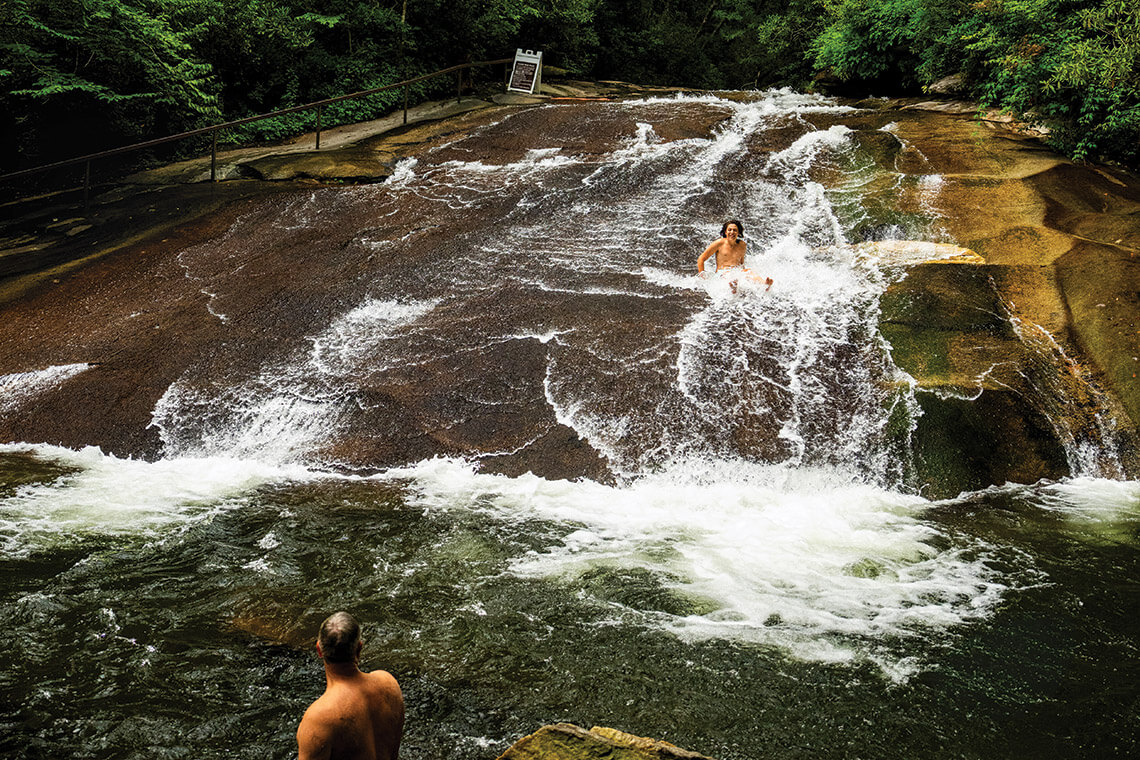
Slip ’n’ Slide Sliding Rock • Brevard
Sliding Rock is Pisgah National Forest’s natural waterslide. This smooth 60-foot granite ramp was carved by rushing water and sculpted by centuries of erosion. Cheer from the sidelines or take a turn rocketing from the top of the slope into the chilly 8-foot-deep pool at its base. — H.P.
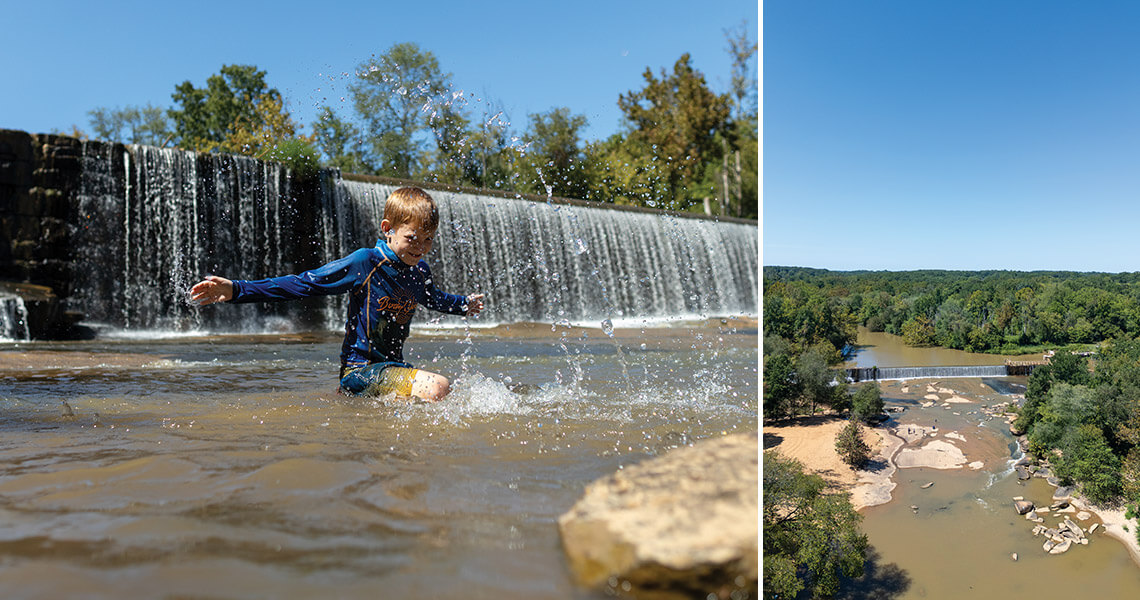
Children splash in the water, dancing with the rushing falls to a rhythm only they can hear. photograph by Revival Creatives
Sandy Refuge RiverPark at Cooleemee Falls, “The Bullhole” • Woodlea
Along the South Yadkin River where generations of mill families once gathered is a quiet respite at the base of a stone dam. Here, the afternoon sun peeks through the trees at swimmers resting on the sandy beach near the falls. — H.P.
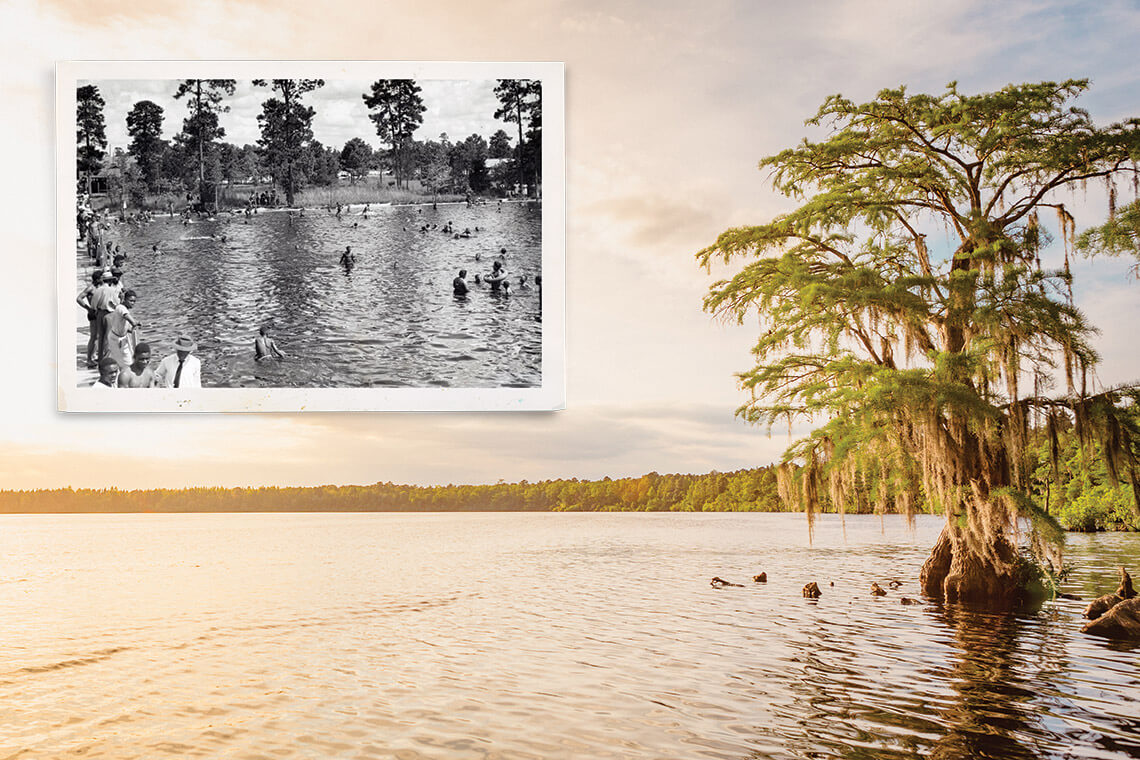
Jones Lake State Park was built by Civilian Conservation Corps laborers and local residents during the Great Depression. Over the years, it became a vibrant gathering spot for the Black community, hosting family reunions, baptisms, and other summer celebrations. photograph by Baxter Miller & Ryan Stancil; Historical photo Courtesy of NC State Parks, a division of the NC Department of Natural and Cultural Resources
Safe Shores Jones Lake • Elizabethtown
Ripples cross the tea-colored water, breaking the still surface of Jones Lake, a shallow, oval basin shaped by time and the elements. This Carolina Bay lake holds more than natural wonder: It marked a turning point when, in 1939, the state park opened to Black Americans, the first in the state to do so, ensuring the beauty of these shores would be available to all. — H.P.
This story was published on Jun 26, 2026
Get our most popular weekly newsletter: This is NC
From the expanses of needlerush at Cedar Island to the lush spartina feathering the shores of Bodie and Roanoke islands, our salt marshes are the threshold to a watery world — the heartbeat of our coastal ecosystem.