Put ramekins on a baking sheet. Bake for 25-35 minutes, until puffed and golden. Remove from oven, and let stand for 5 minutes. With a flexible spatula, remove strata to
Listen as the pages of the magazine come to life in the Storytellers podcast showcasing the voices of Our State writers. Each podcast episode features a writer reading their column
Listen as the pages of the magazine come to life in the Storytellers podcast showcasing the voices of Our State writers. Each podcast episode features a writer reading their column
Listen as the pages of the magazine come to life in the Storytellers podcast showcasing the voices of Our State writers. Each podcast episode features a writer reading their column aloud, allowing each distinct voice to shine. Click below to listen to Brad read his column aloud.
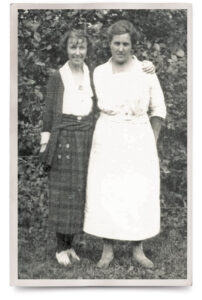
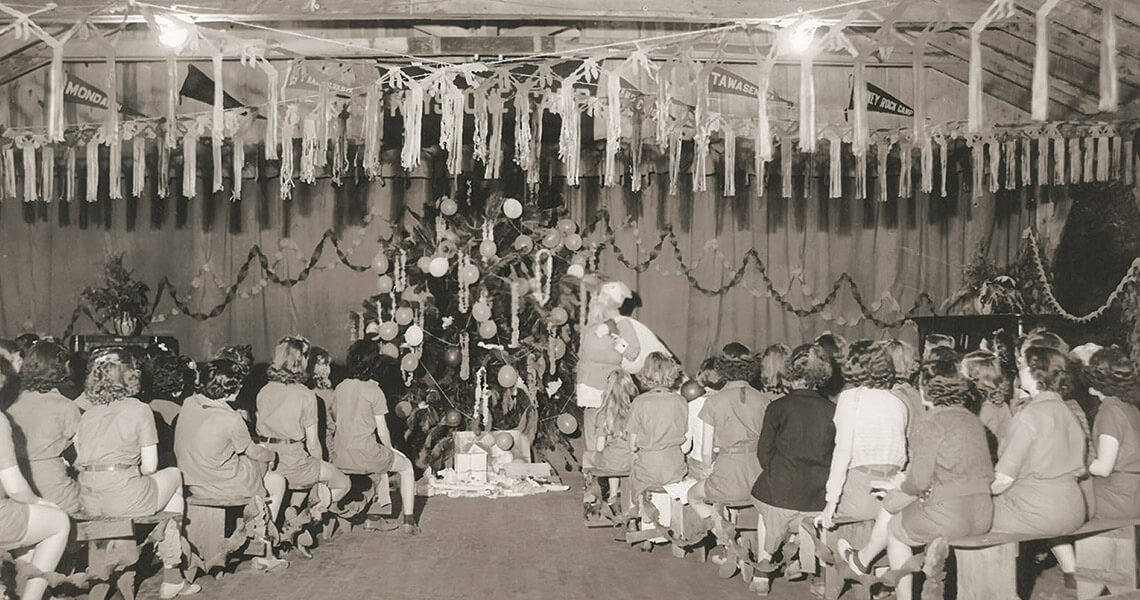
Fannie Holt & Florence Ellis Photography courtesy of Keystone Camp
A leafy green canopy blooms overhead. Butterflies flicker among the wildflowers. Kids frolic in T-shirts, shorts, and sandals. Yes, it’s beginning to look a lot like Christmas — Christmas in July, that is.
You might be familiar with the concept: take a holiday associated with snow, sleigh rides, and Yuletide carols being sung by a fire and plop it down in the season of summer vacations, barbecues, and fireworks.
It all began with a woman named Fannie Holt. In 1916, she and Florence Ellis founded Keystone Camp, a summer camp for girls. Their camp was a vagabond for its first few years — they tried out three different mountain locations — before finding a permanent home in Brevard in 1920. As is true in many partnerships, Miss Fannie and Miss Florence were opposites. Known as “Big F,” Florence was practical, down-to-earth, and serious-minded; Fannie — or “Little F” — was a free spirit, a dreamer, and a poet. Her sense of whimsy and fun is reflected in the naming of Keystone’s three age groups: Elves, Pixies, and Dryads. Fannie also liked to dream up new ways to entertain her campers, and during the summer of 1933, she hit on a doozy: Why not have a Christmas celebration for her campers in July? A tree was erected. Fake snow was procured. Gifts were made and distributed. And faster than you can say Kris Kringle, a tradition was born.
Almost a century later, Christmas in July is celebrated in both hemispheres. But how did an all-girls camp deep in the mountains of North Carolina help turn an impromptu summer celebration into a global phenomenon?
Hints can be found in the archives of several newspapers more than 500 miles from Brevard. On November 13, 1933 — the autumn after the first Christmas in July celebration at Keystone — The Washington Post ran a short story in the society section headlined: “Summer Santa Fun, Says Camp Head; She Coaxed the Old Fellow Out Last July.” In the second paragraph, the article included this observation: “Miss Fannie Holt, the only one who ever coaxed Santa away from the Pole in the summertime, is in this city to … stock up on ideas for her summer camp in the mountains of North Carolina.”
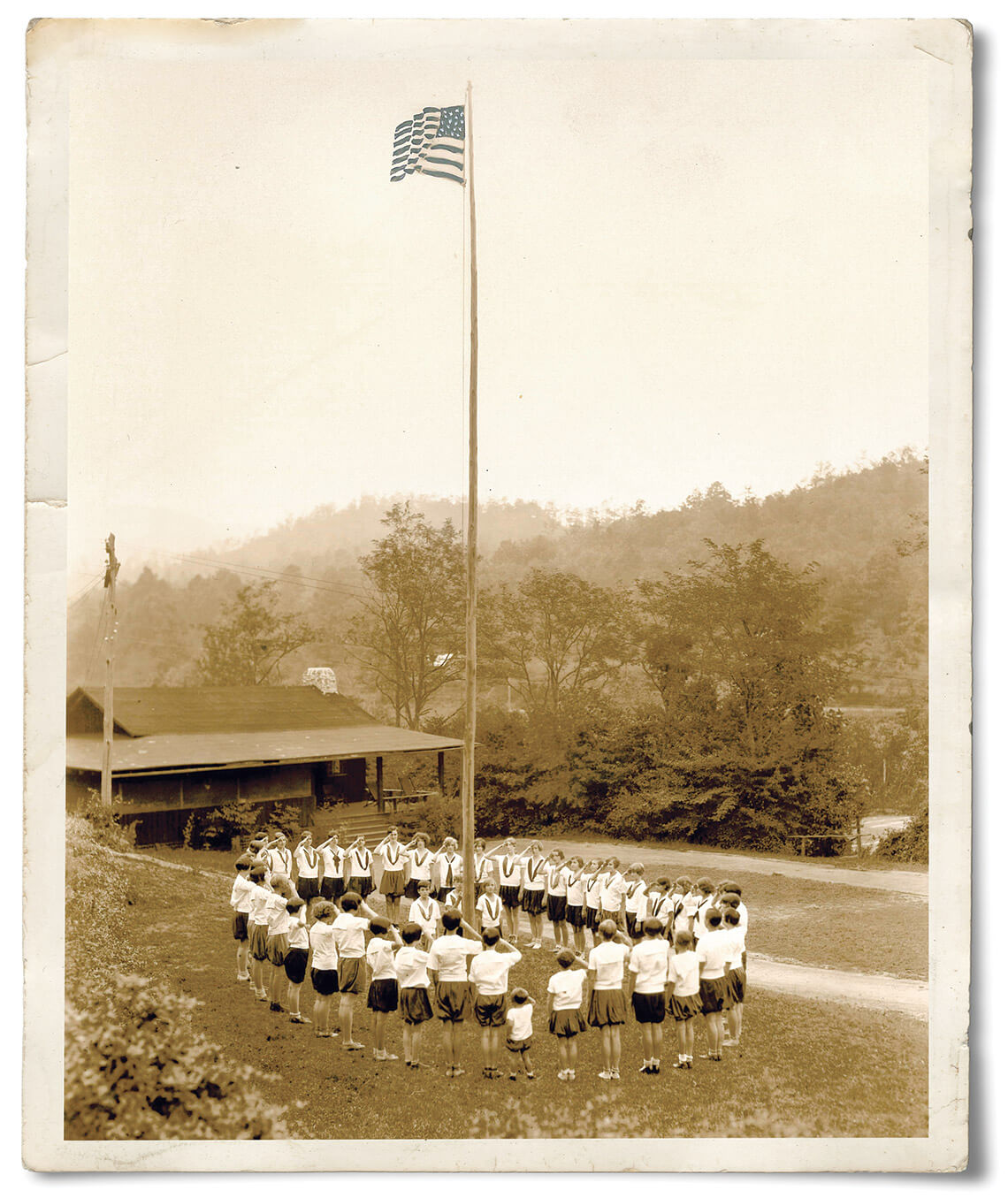
Campers greet the day with a flag-raising ceremony. Photography courtesy of Keystone Camp
Page Lemel, the fourth-generation owner of Keystone Camp (her great-great-aunt was Miss Florence), believes that story got the ball rolling. But why would The Post write about a camp director in an obscure part of North Carolina?
New research into newspaper archives reveals the story wasn’t the result of a chance encounter with a reporter. As it turns out, there were several short items in the society sections of The Post, The Washington Herald, and the Evening Star in Washington, D.C. that referenced Fannie’s visit with her cousins, Mr. and Mrs. H. R. Harper. The Harpers were no strangers to the society section of the local papers (the 1920s’ and ’30s’ version of social media). Houston R. Harper was a well-known hotelier in D.C. — who also happened to be a former newspaperman. While it’s doubtful Fannie was trying to create a global sensation, it’s much more likely she was just trying to drum up business for her camp during the depths of the Great Depression, and the Harpers were happy to use their newspaper connections to help out.
From that original story in The Post, you could say the Christmas in July phenomenon, well, snowballed. Once given a little promotional air, the whole thing blew up like those inflatable Christmas figures that start popping up in front yards around the holidays. A 1940 movie, Christmas in July, cemented the nascent holiday in people’s consciousness and on their calendars.
These days, you can jingle all the way at a Christmas in July 5K run in Fresno, California; “ooh” and “ahh” over the spectacle of Winter Wonderlights in Sovereign Hill, Australia; or go hog wild at the annual Hogsback Christmas in July festival in South Africa. But perhaps the biggest Christmas in July celebration happens just a three-hour sleigh ride from Keystone to West Jefferson.
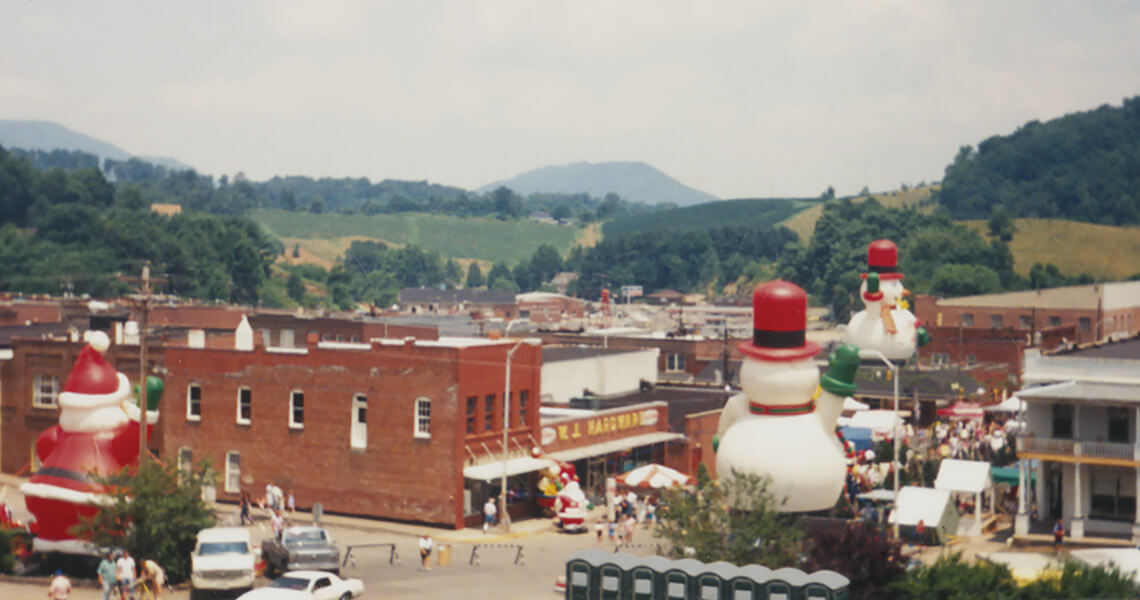
Christmas in July, as seen in this 1991 photo, draws thousands to downtown West Jefferson for a two-day celebration that has become Ashe County’s longest running festival. Photography courtesy of Ashe County Public Library via DigitalNC.org
“The Ashe County Christmas Tree Association was brainstorming about how to pull in more buyers,” says Ellen Church, whose husband, Cline, belonged to the association back in 1987. By holding the event in July, the association thought wholesale buyers could bring their families. So entertainment was booked, craft and food vendors were rounded up, and the people came — in droves.
Of the inaugural event in 1987, Church says with a laugh: “It absolutely turned into something we were not prepared for. They estimated we had 75,000 people that very first year. It was just phenomenal.”
The event even included a funeral for those “fake” trees that were all the rage. “We had a procession with mourners,” says Church. “It was quite a spectacle.” West Jefferson’s Christmas in July Festival turned out to be the gift that keeps on giving. The festival helped put Ashe County’s Christmas tree industry on the map, and over the past four decades, the county has become one of the largest suppliers of Christmas trees in the nation.
Today, Cline Church Nursery sells between 65,000 and 70,000 trees annually, and in 2023, the family-run business in Fleetwood was selected to provide the White House Christmas tree. The festival continues to fa-la-la along year after year. And while it’s a tradition heading into its fourth decade, it can’t quite match the longevity of the oldest all-girls private summer camp in the Southeast.
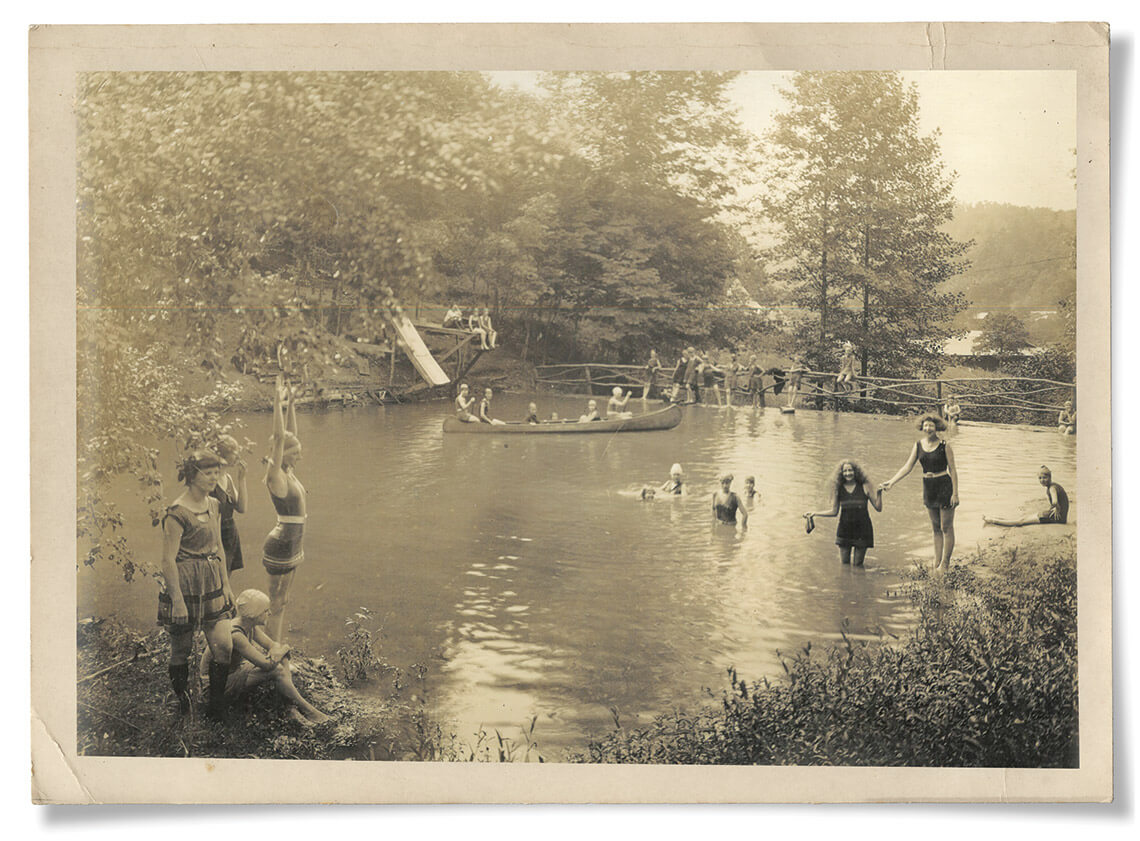
Campers swim in the same lake that was first enjoyed in 1919. Photography courtesy of Keystone Camp
“We have some campers here who are fifth-generation Keystone campers, so they’ve been coming to camp as long as my family has been directing camp, which is insane,” says Catherine Lemel, who recently took over as director from her mom, Page. “It’s amazing. It blows my mind every single time I think about it. We just have an inherent appreciation of tradition.”
Just ask Brooke Sumerford. She attended Keystone for 11 years as a camper, starting in the ’50s. Her daughter attended in the ’80s. Her granddaughter in the 2010s. And for good measure, Brooke ran the camp store for 35 years.
“I remember loving everything about Keystone,” Sumerford says. “It was all so magical.”
Over the years, Christmas in July has evolved at Keystone. In the ’70s, Santa arrived in the bed of a sleigh-red truck. These days, Saint Nick ho-ho-hos down a waterslide in a kayak. After splashing down in the lake, he’s surrounded by swimming reindeer who tow him to the girls.
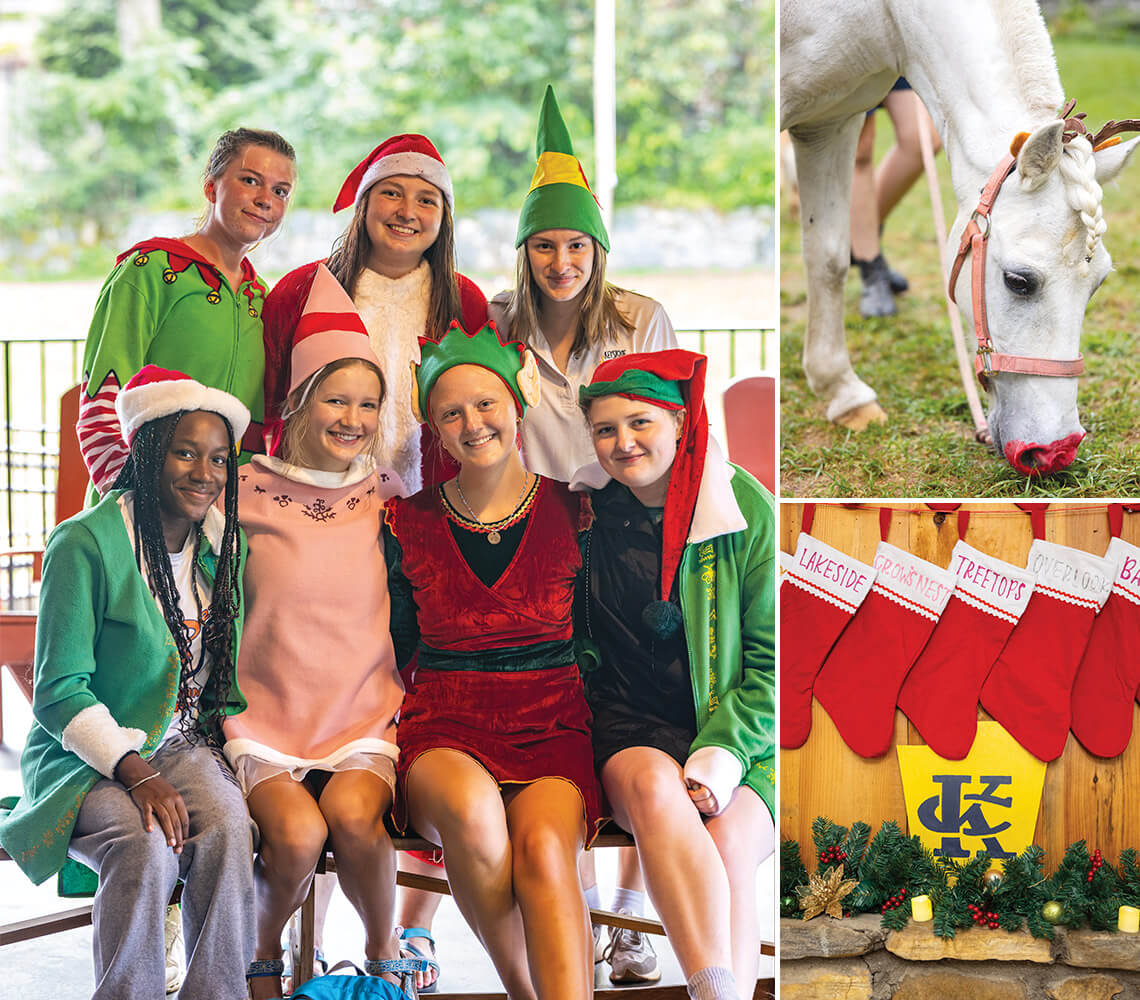
In fact, all the usual holiday heavy lifting is done by the counselors — err, elves. They deck the dining hall with a 15-foot tree, paint faces, weave tinsel into campers’ hair, staff the iced cocoa bar, and parade a trio of Rudolphs, or red-nosed horses, around the assembly grounds.
Kris Kringle’s main gig is to pose for photos with the campers and absorb the decidedly chill vibe you can only get while vacationing at a summer camp in the mountains. That’s not Jack Frost nipping at Santa’s nose: It’s the sunburn he got from soaking up the rays on the lake.
At Keystone Camp, counselors dress up as Santa and her elves, horses like Merry Legs wear the red nose of Rudolph, and stockings bearing the names of cabins hang above the original fireplace in the dining hall. photograph by Tim Robison
In recent years, the camp has added elements of Hanukkah to the Christmas in July celebration.
“We keep adding onto [Christmas in July] because it is such an important part of our history,” says Catherine, who represents the fifth generation of her family to steward the camp. “I think kids really love this because it connects them to those generations before them. Their mothers have celebrated Christmas in July. Their grandmothers before that.”
The burden of being responsible for hundreds of kids seems to rest lightly on Catherine’s shoulders. Shortly after she was named director, she was heading out the door to greet a visiting family when Page overheard her exclaim, “This is going to be so much fun.” Page had to laugh. “In 42 years, I never started my day thinking, This was going to be fun,” she says. “Don’t get me wrong. I loved it. I took my job very seriously. It was my passion.”
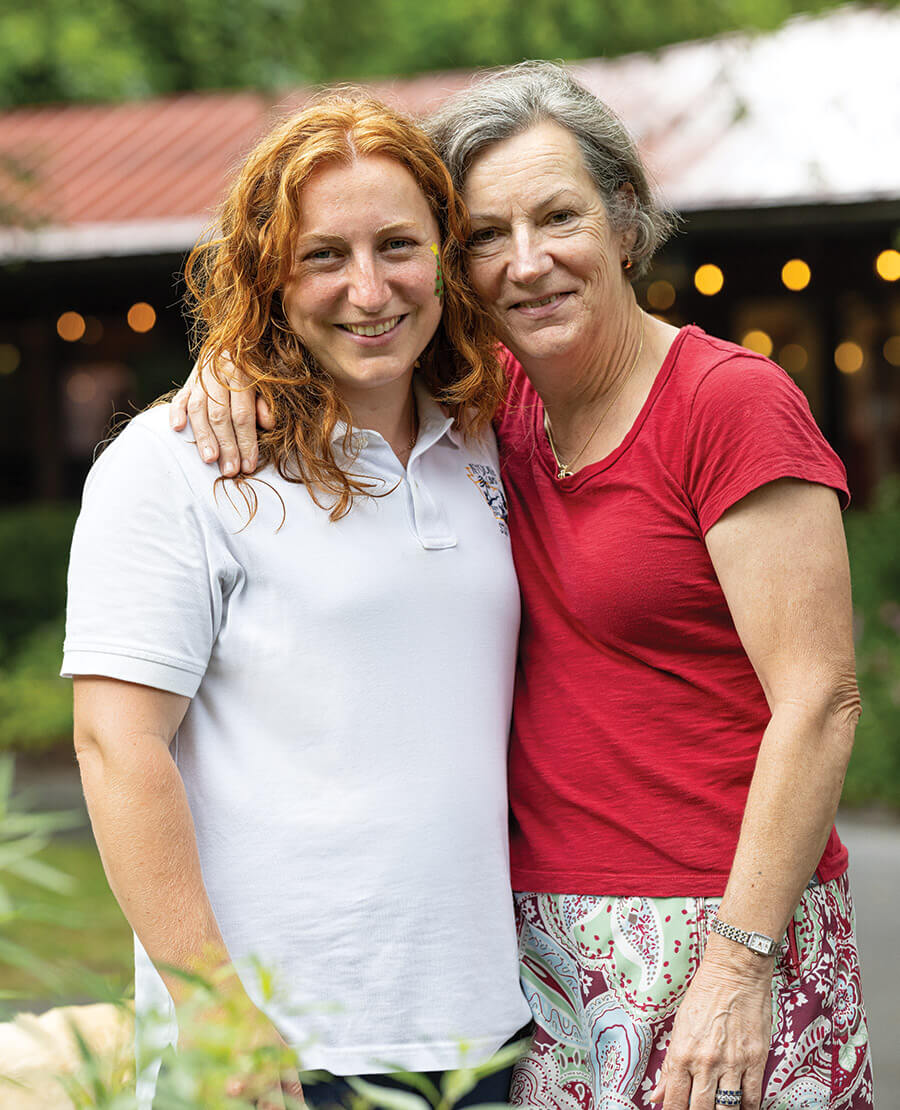
Catherine & Page Lemel photograph by Tim Robison
The fact is, Page shares more in common with Keystone’s other cofounder, Miss Florence: grounded, practical, detail-oriented. And it’s not far-fetched to think that the sprightly Catherine, with her red hair and boundless enthusiasm, is more like Miss Fannie. That is certainly cause for celebration.
After being conjured up almost 100 years ago, the spirit of Christmas in July is still very much alive in Keystone. And fittingly, so is the spirit of Miss Fannie.
Get our most popular weekly newsletter: This is NC
At both the turn of the century and today, Beaufort’s waterfront has attracted a hum of commerce and community. At its heart, a historic avenue tells that history, from the stately double-porched homes to the sound of ships announcing their arrival at port.



 Listen as the pages of the magazine come to life in the