Put ramekins on a baking sheet. Bake for 25-35 minutes, until puffed and golden. Remove from oven, and let stand for 5 minutes. With a flexible spatula, remove strata to
Join The New York Times best-selling author and North Carolina native Wiley Cash as he highlights great writers across the state and their work each month. Listen in on conversations
Join The New York Times best-selling author and North Carolina native Wiley Cash as he highlights great writers across the state and their work each month. Listen in on conversations
SPONSORED BY Deerfield Episcopal Retirement Community in Asheville
Join The New York Times best-selling author and North Carolina native Wiley Cash as he highlights great writers across the state and their work each month. Listen in on conversations between Cash and his author friends as they discuss how North Carolina inspires them on the Our State Book Club podcast.
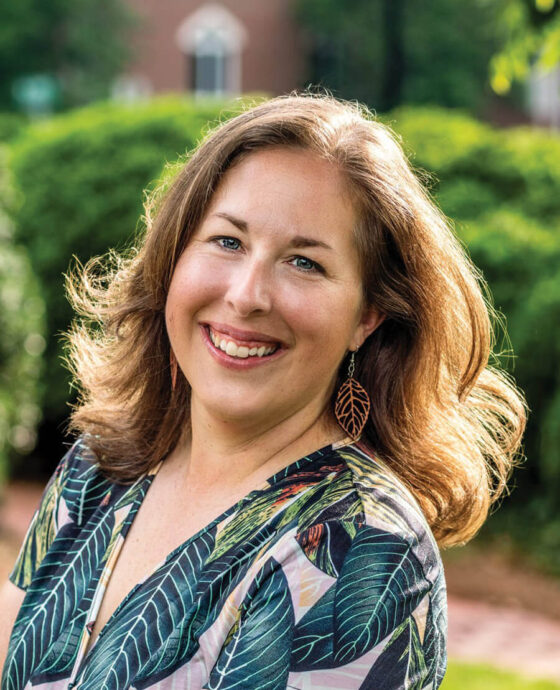
Author Meagan Church often uses the German word sehnsucht to describe her childhood on her family’s farm, hundreds of miles away from the Southern home she’d later discover.
“For me, sehnsucht is an inconsolable longing, often for something that has never actually existed,” she says. “People who experience sehnsucht are often homesick for a home they’ve never had.”
Church and her parents lived on her grandparents’ 100 acres in rural Indiana filled with fields of corn and soybeans. It never felt quite like home to her, though, and she longed for a place of her own.
This restless longing eventually found its way into Church’s novels. Her 2023 debut, The Last Carolina Girl, is set in 1930s North Carolina and tells the story of a young woman named Leah Payne who’s ripped away from the rural life she shares with her beloved father. Leah is forced to work in a home in Matthews where generational secrets fester under a state-sanctioned eugenics program.
In Church’s 2024 follow-up novel, The Girls We Sent Away, protagonist Lorraine Delford longs to explore outer space against the backdrop of the 1960s race to the moon. When she becomes pregnant, her parents send her away to a home for unwed mothers, where the moon and stars seem further away than ever.
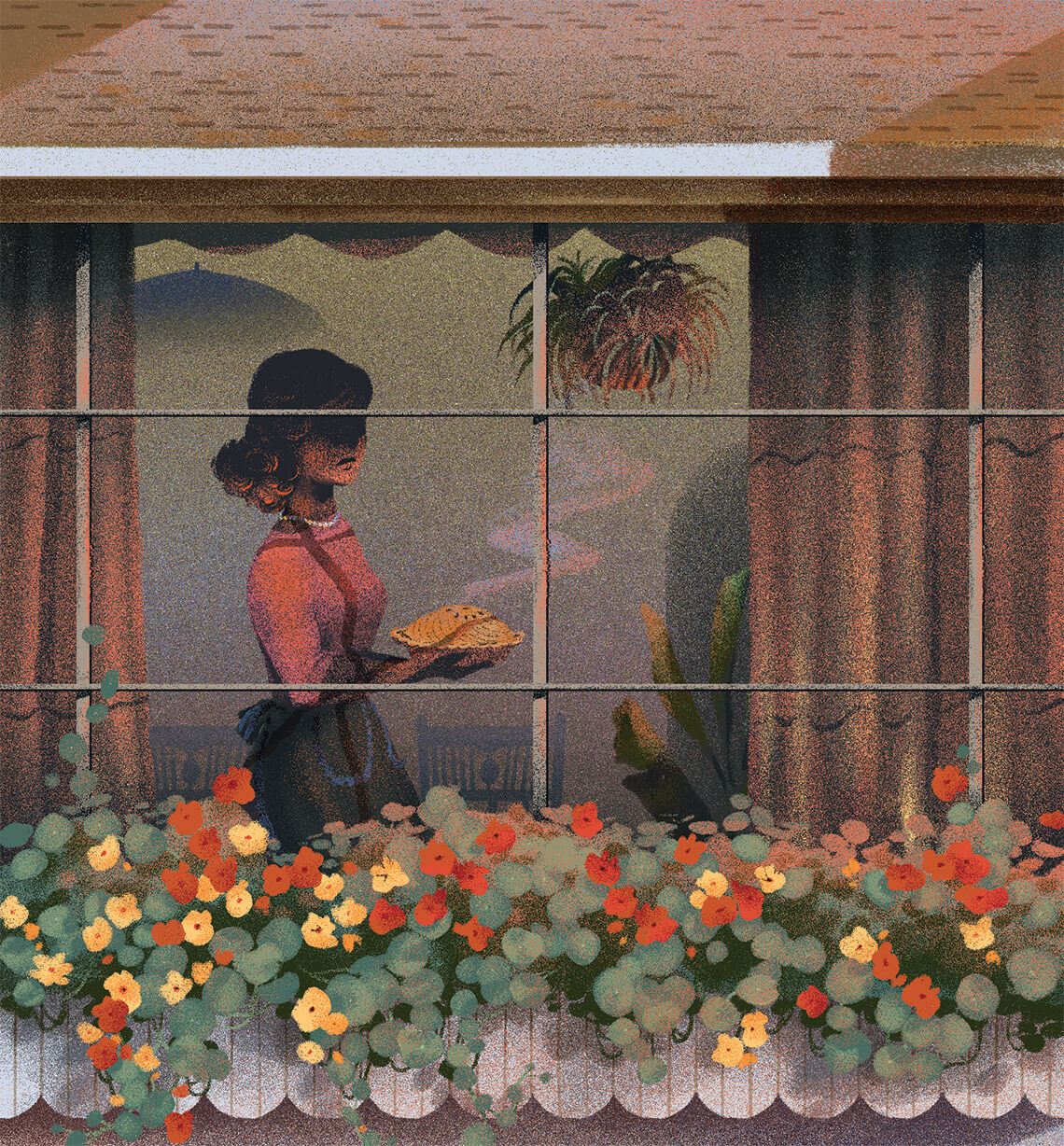
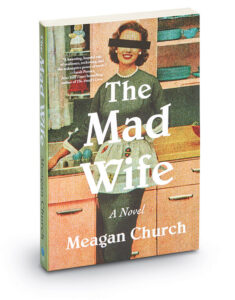
Church released The Mad Wife in 2025, which is her most potent portrait of longing yet. The novel, set in 1950s suburbia, is narrated by Lulu Mayfield, a dutiful housewife and homemaker who senses something is amiss in her life. The novel feels like a descendant of Sylvia Plath’s The Bell Jar, Virginia Woolf’s Mrs. Dalloway, and other classic tales of women experiencing madness. Many readers have praised how Church braids elements of horror and suspense into the novel. She acknowledges that dipping into these more contemporary genres helped to carry what is, in effect, a chronicle of a woman’s psychology as her life unravels.
“We’re writing for modern readers who are distracted by devices and pings and notifications, and we have to hold their attention in a different way than an author in the ’50s and ’60s had to,” she says. “So how can I take those themes of isolation and identity and weave them into a modern-day narrative that’s going to keep the attention of readers?”
The novel was an instant New York Times bestseller upon its release, which might give the impression that Church is an overnight success.
illustration by Andrea Cheung
“I’ve been writing fiction for more than 20 years,” she says when discussing the feat of publishing three novels in three years. “I’d been working on my first two published novels for years, and I had two more before that that I never published. What seems like an ‘overnight success’ from the outside doesn’t feel that way when you’re in the midst of it.”
It’s not lost on Church that her literary success followed her family’s move to Matthews in 2015. The relocation offered her an inspired setting considering her first two novels take place in the Old North State.
“It’s silly,” she says, “but we chose Matthews because it’s my husband’s name, and the location was great.”
Not long after her family’s move, Church made friends with other writers, and she was soon aware of the state’s rich literary history and its incredible network of independent bookstores. She no longer feels that longing for a home she’s never had.
“I’ve found it,” she said. “It’s here in North Carolina. It seems illogical, but it’s true. I’m home.”
A message from our sponsor:
Your Next Chapter Beings Here
Whether you prefer to spend your days in a kayak, on a mountaintop or simply enjoying the view, Asheville is the place of dream retirements. Your exciting new adventure is calling — and the answer is here at Deerfield.
The Mad Wife opens like a film, capturing a wide shot of Greenwood Estates, an idyllic 1950s neighborhood where perfectly kept houses are surrounded by manicured lawns. Here, well-coiffed housewives carry casseroles to one another’s houses while their children play and their husbands knock back stiff drinks after long days at the office.
But when the focus shifts to the narrator, Lulu Mayfield, Greenwood Estates is slowly revealed for what it is: a prison where women are shackled by expectations of perfection and where they are never given permission to grieve, feel pain, or fall short of societal expectations.
When a mysterious family moves into the home across the street — a home that seems to prefer being empty to being inhabited — Lulu slowly begins to question her own reality.
The Mad Wife is a beautifully written story of madness disguised as a slow-burning page-turner.
In art class, we learn to notice texture, form, color, and light. On the plate, those same techniques guide chefs, bakers, and makers across North Carolina, turning ingredients into compositions meant to be admired before they’re savored.




 Join The New York Times best-selling author and North Carolina native Wiley Cash as he highlights great writers across the state and their work each month. Listen in on conversations between Cash and his author friends as they discuss how North Carolina inspires them on the