Put ramekins on a baking sheet. Bake for 25-35 minutes, until puffed and golden. Remove from oven, and let stand for 5 minutes. With a flexible spatula, remove strata to
Join The New York Times best-selling author and North Carolina native Wiley Cash as he highlights great writers across the state and their work each month. Listen in on conversations
Join The New York Times best-selling author and North Carolina native Wiley Cash as he highlights great writers across the state and their work each month. Listen in on conversations
SPONSORED BY Deerfield Episcopal Retirement Community in Asheville
Join The New York Times best-selling author and North Carolina native Wiley Cash as he highlights great writers across the state and their work each month. Listen in on conversations between Cash and his author friends as they discuss how North Carolina inspires them on the Our State Book Club podcast.
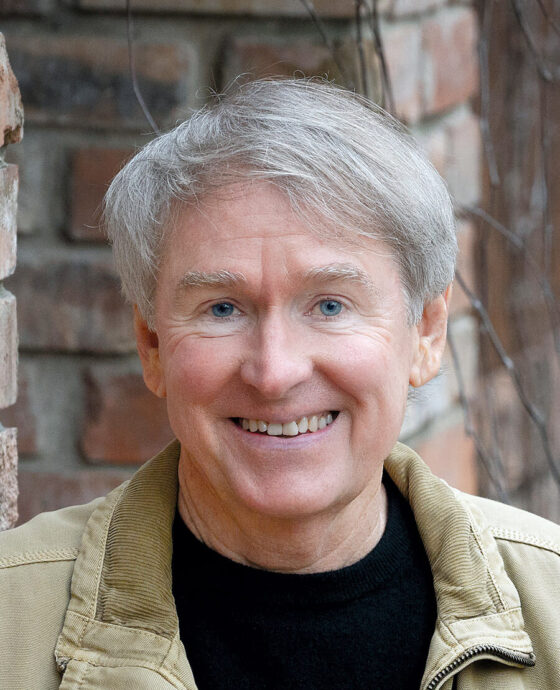
Author Ben Fountain often walks to the end of his street, where the Neuse River snakes a path around his historic neighborhood near downtown New Bern. Sometimes he finds himself looking out over the water and thinking, I don’t have to leave. Fountain and his wife, Sharie, have only lived here for about a year, but he feels at home in this coastal city. He’d been dreaming of returning to eastern North Carolina for decades.
After finishing law school at Duke University in 1983, Fountain moved to Dallas, Texas, where he always hoped to return home. He spent his early childhood in Elizabeth City and Kinston, and his family’s roots run deep across the region: His mother’s side of the family is from Martin County, and his father hails from Rocky Mount.
“Eastern North Carolina is the place that formed me,” Fountain says. “It’s where I feel the best, the most comfortable, the most natural.”
The Fountain family has played an outsized role in the state’s history. Fountain’s grandfather was a member of the state legislature and chairman of the committee that hired Bill Friday to lead the UNC system in the 1950s.
Fountain’s father served as president of the state’s community college system. Before he became an award-winning author, Fountain watched his father support North Carolina literary talent through an artists in residency program he created. This provided opportunities for up-and-coming creatives like author Michael Parker.
Fountain had long been drawn to writing, but his work as an attorney kept his artistic impulses at bay. In the late 1980s, he decided to leave his legal career behind and dedicate himself to writing and caring for his two young children while Sharie pursued her own legal career.
illustration by Andrea Cheung
Fountain found himself fascinated with Haiti, especially after the fall of the Duvalier regime in 1986. His grandfather and father confronted challenges in North Carolina not unlike those he observed in Haiti at the time. Both men advocated for the poor and working class in the long shadows of the Great Depression and the Civil Rights movement.
“I saw Haiti as the paradigm of what’s happened globally in terms of commerce and power and race and the rise of capitalism in the last 500 years,” he says.
Fountain made his first trip to Haiti in 1991. He went back twice a year for the next 25 years, learning all he could.
In 2006, he published the short story collection Brief Encounters withChe Guevara. The book was a literary smash, winning the PEN/Hemingway Award and a Barnes & Noble Discover Award. Fountain’s 2012 debut novel, Billy Lynn’s Long Halftime Walk, won the National Book Critics Circle Award and was a finalist for the National Book Award, and in 2016, it was adapted into a film directed by Ang Lee. In 2018, Fountain turned to nonfiction and published Beautiful Country Burn Again: Democracy, Rebellion, and Revolution about the 2016 presidential election.
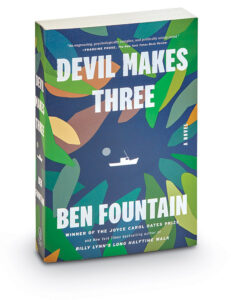
Amid his literary success, Fountain couldn’t get Haiti out of his mind while North Carolina kept pulling his heart toward the East Coast. In 2023, he published Devil Makes Three, a political thriller set in Haiti during the coup in 1991. A year later, Fountain and Sharie left Dallas for good and settled in New Bern.
“Whenever it was time to head back to Texas after a visit to North Carolina, my heart would break a little bit,” Fountain says. “I would say to myself, ‘One day, I’m coming back, and I’m not leaving.’”
A message from our sponsor:
Your Next Chapter Beings Here
Whether you prefer to spend your days in a kayak, on a mountaintop or simply enjoying the view, Asheville is the place of dream retirements. Your exciting new adventure is calling — and the answer is here at Deerfield.
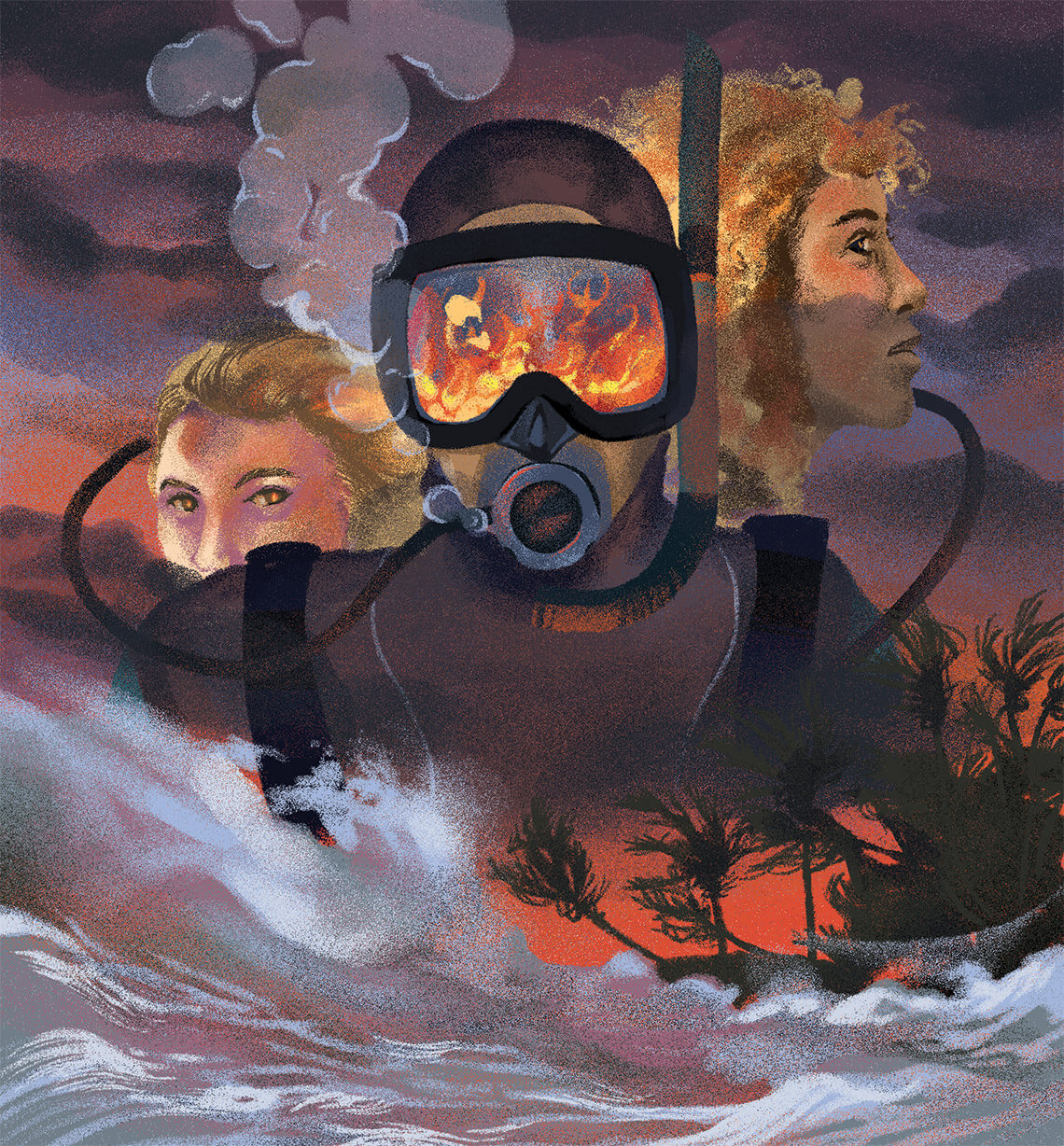
Ben Fountain’s second novel, Devil Makes Three, is set in Haiti in 1991 in the wake of the military coup that ousted President Jean-Bertrand Aristide. The novel follows three main characters: an ex-pat American who runs a scuba diving venture and finds himself swept into political violence; a female CIA agent who procures informants in her drive to open Haiti to the global economy; and a native woman from a politically entrenched family who turns to humanitarian work as her country burns around her. While Fountain’s fast-paced novel explores issues of empire, capitalism, and desire, he never loses sight of the intensity and clarity of his characters’ complicated and often duplicitous relationships. Fountain is a celebrated writer whose career has shown an ability to successfully explore everything from short stories set in the global South to literary meditations on PTSD and Gonzo-style political reporting. With Devil Makes Three, Fountain takes a crack at the political thriller, and he proves that he can excel at this form, too.
From the expanses of needlerush at Cedar Island to the lush spartina feathering the shores of Bodie and Roanoke islands, our salt marshes are the threshold to a watery world — the heartbeat of our coastal ecosystem.



 Join The New York Times best-selling author and North Carolina native Wiley Cash as he highlights great writers across the state and their work each month. Listen in on conversations between Cash and his author friends as they discuss how North Carolina inspires them on the