Put ramekins on a baking sheet. Bake for 25-35 minutes, until puffed and golden. Remove from oven, and let stand for 5 minutes. With a flexible spatula, remove strata to
Join The New York Times best-selling author and North Carolina native Wiley Cash as he highlights great writers across the state and their work each month. Listen in on conversations
Join The New York Times best-selling author and North Carolina native Wiley Cash as he highlights great writers across the state and their work each month. Listen in on conversations
SPONSORED BY Deerfield Episcopal Retirement Community in Asheville
Join The New York Times best-selling author and North Carolina native Wiley Cash as he highlights great writers across the state and their work each month. Listen in on conversations between Cash and his author friends as they discuss how North Carolina inspires them on the Our State Book Club podcast.
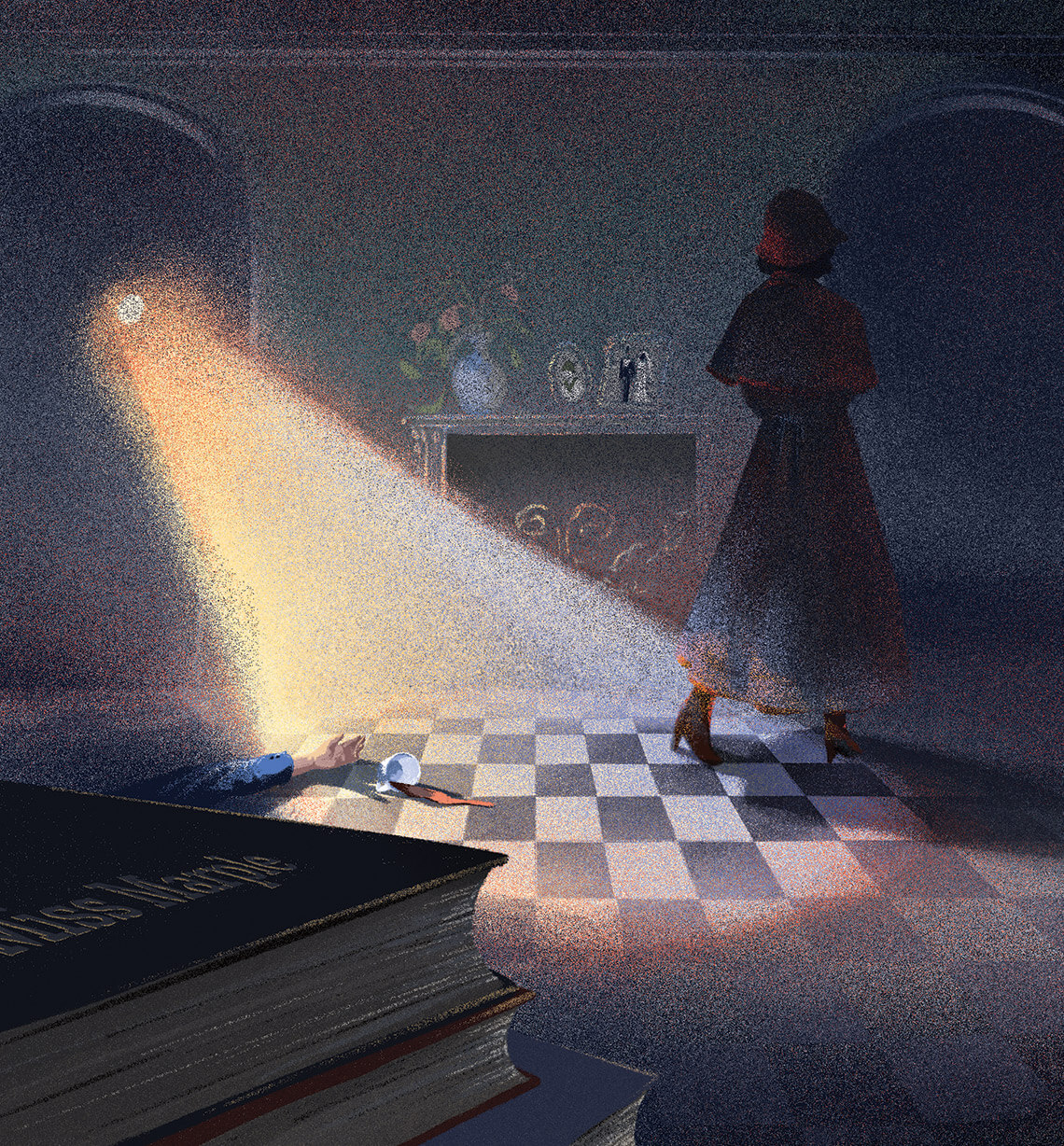
In 2015, Wilmington-based author Nina de Gramont received an email from her literary agent sharing the disappearance of novelist Agatha Christie in 1926. After leaving letters explaining that she needed to get away, Christie’s car was found near the edge of a quarry, the headlights still burning, her fur coat and other belongings inside. More than 1,000 officers and 15,000 volunteers began looking for her. Planes searched overhead. Ponds and pools were dragged. Christie’s fellow mystery writers put their crime-solving skills to work. Sir Arthur Conan Doyle even hired a psychic.
Eleven days later, Christie was discovered at a hotel in Harrogate, where she’d checked in under the last name of her husband’s mistress. Although she’d go on to become one of the most celebrated mystery writers of all time, Christie never offered a clear explanation of the mystery behind her own disappearance, something that fascinated de Gramont, fueling a story that began to take shape in her mind.
“I wanted to explore disappearance as a theme,” de Gramont says. “Women disappear for various reasons, but they usually don’t return to experience the kind of success that Agatha Christie would go on to have.”
De Gramont was no stranger to historic disappearances. She grew up in New Jersey and attended a school founded by Elisabeth Morrow in 1930 on the estate where Morrow’s daughter, Anne, and son-in-law, Charles, would seek privacy after the kidnapping of their young son.
“The house my school was in wasn’t the site of the kidnapping, but it was very central to its aftermath,” de Gramont says, “and in my kid brain, the house loomed large.”
Coincidentally, the Lindbergh kidnapping also loomed large for Christie. She would use it as inspiration for one of her most famous novels, Murder on the Orient Express. Watching a movie adaptation of the classic, a young de Gramont couldn’t have imagined the influence Christie would later have on her career.
illustration by Andrea Cheung
By the time de Gramont began working on The Christie Affair in 2015, she and her husband, fellow author David Gessner, and their daughter had been living in Wilmington for 12 years. They moved from Massachusetts, where de Gramont published her debut, the story collection Of Cats and Men. Gessner accepted a position at UNC Wilmington, and the family settled in a house on Hewletts Creek. As soon as they arrived, de Gramont enrolled in the MFA program at UNCW. She spent three years struggling to write without disappearing into the grind of schoolwork, teaching, and motherhood. Wilmington’s welcoming literary community kept her focused.
“It seemed like all of our friends were writers,” she says. “There’s a lot of room to have meaningful conversations about your work in relationships like that. We’re able to live and breathe writing, professionally and socially.”
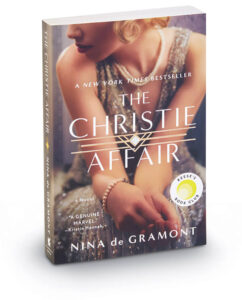
De Gramont’s connection to the local writing community deepened when she joined UNCW as a creative writing faculty member in 2013. Her career flourished as she published seven novels before The Christie Affair was released to rave reviews in 2022. It was an immediate New York Times best-seller, a Reese’s Book Club selection, and recognized among the year’s best mystery novels by both The Washington Post and The Wall Street Journal.
The novel seemed to bring de Gramont’s life full circle. The girl who’d grown up fascinated by disappearance gave new life to Christie’s mystery — the disappearance of one of her own.
A message from our sponsor:
Your Next Chapter Beings Here
Whether you prefer to spend your days in a kayak, on a mountaintop or simply enjoying the view, Asheville is the place of dream retirements. Your exciting new adventure is calling — and the answer is here at Deerfield.
The Christie Affair is a meticulously researched and beautifully reimagined story based on the real-life saga of Agatha Christie’s 11-day disappearance in 1926 following the loss of her mother and marriage. The novel is narrated by Christie’s husband’s mistress, who turns up in the same town where Christie attempts to hide from public scrutiny. But mystery follows both women after two guests are discovered dead. This suspenseful novel is propelled by deeply felt and fully realized characters. It investigates the very nature of storytelling and uncovers the lengths to which women will go to disappear — and to perhaps have others disappear along with them.
At both the turn of the century and today, Beaufort’s waterfront has attracted a hum of commerce and community. At its heart, a historic avenue tells that history, from the stately double-porched homes to the sound of ships announcing their arrival at port.





 Join The New York Times best-selling author and North Carolina native Wiley Cash as he highlights great writers across the state and their work each month. Listen in on conversations between Cash and his author friends as they discuss how North Carolina inspires them on the