Tami Kress followed Bryan Wilson through the wooded world of Snow Camp Outdoor Theatre in southern Alamance County as he explained how his dad, James, had helped create its signature drama, The Sword of Peace, about the local Quakers’ response to the American Revolution. Kress, the executive director for Burlington’s Studio 1 community theater, saw potential. Yet the more she listened, the more one question kept popping up in her mind: Can this place ever be saved?
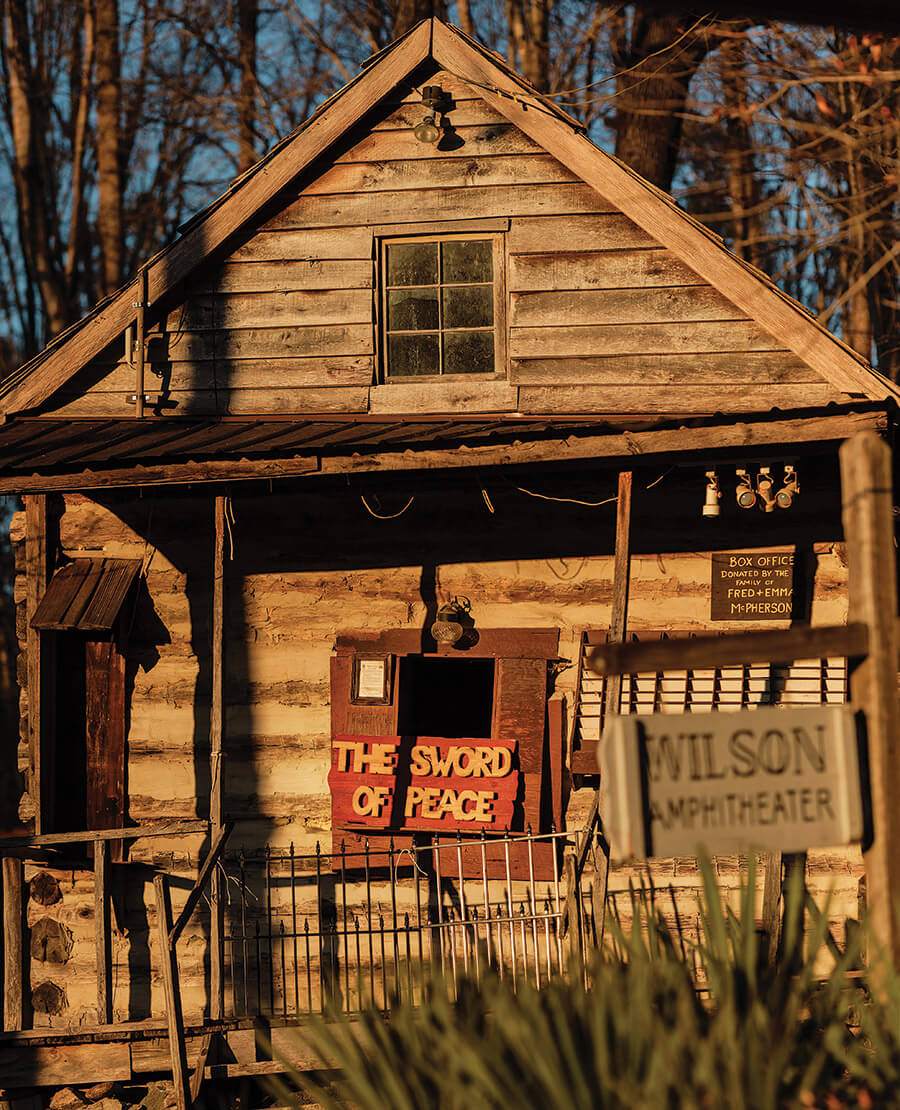
She saw around her a wall of invasive bamboo 30 feet high, and spotted the rusted cover of a collapsed sewage tank before reaching the hand-lettered plywood sign: Wilson Amphitheater.
Beyond it were plastic seats for 400 cascading down to a stage with a backdrop of towering pines and hardwoods.
The Sword of Peace closed its final season in 2017. Four years later, as she walked with Bryan Wilson on dirt paths bordered by railroad ties, Kress wondered whether Studio 1 could round up the financial and community support they needed to resurrect the amphitheater — and the play — that meant so much to so many people.
“It was so sad and so beautiful at the same time,” Kress remembers. “In southern Alamance County, here were 13 acres dedicated to telling local stories and the history from our area. There are a handful of those, maybe, in the world.”
• • •
James Wilson knew there was a story to tell. He had married into the Quaker faith and moved to Snow Camp in 1965. His wife, Louise, was a descendant of Simon Dixon, the Quaker who led Pennsylvanians to North Carolina. In Snow Camp, they found cheaper land and rolling hills reminiscent of their homeland. They built log cabins and later the Cane Creek Meeting House. James was enthralled with the Quakers’ moral dilemma between following their religion’s edict of peace or taking up arms and joining their neighbors to defend their new nation following the Battle of Guilford Courthouse in March 1781. Days later, the British commandeered Dixon’s home and turned it into their headquarters.
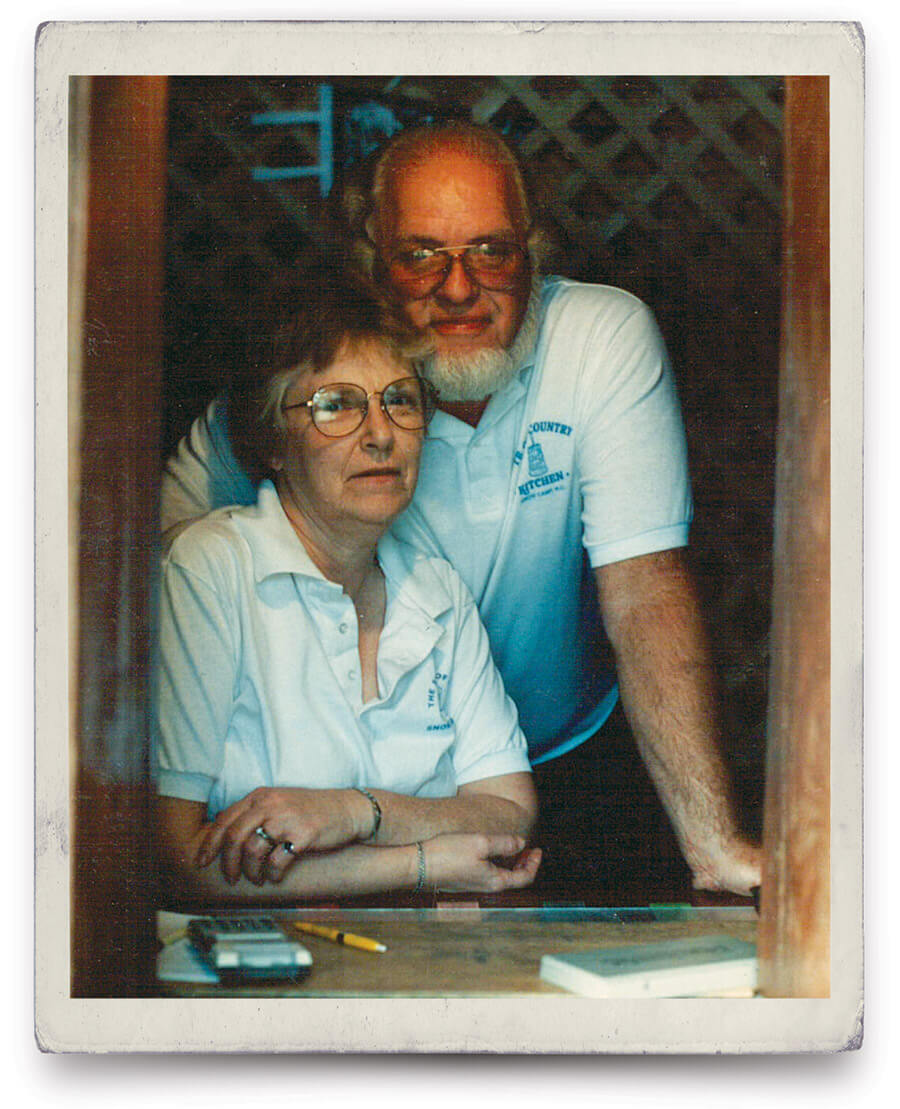
James and Louise Wilson Photography courtesy of Snow Camp Outdoor Theatre
Along with dairy farming, James owned Ye Old Country Kitchen. Over a cup of coffee at the restaurant, he pitched an idea to his brother Bobby: If they created a play about Dixon and the Quakers’ moral dilemma, it could be performed on the land believed to be once owned by Dixon. James’s idea caught fire. In the summer of 1969, more than 50 interested residents gathered at Ye Olde Country Kitchen to discuss the possibility of creating an outdoor theater in Snow Camp. Mark Sumner, a professor at UNC Chapel Hill who directed the Institute of Outdoor Drama at the time, supported the idea and conducted a feasibility study. A year later, following handshakes between the brothers and two farmers who now owned Dixon’s land, James and Bobby got the rights to 13 acres for $1 a year.
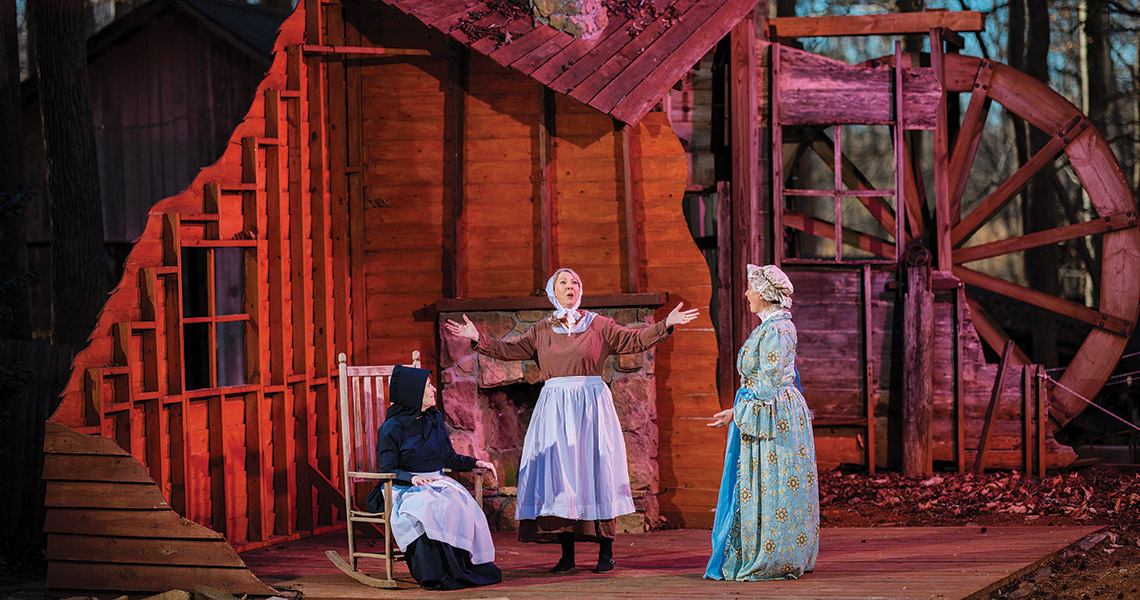
The Wilsons secured the U.S. Army Corps of Engineers to clear a swath of the land and convinced Gov. Bob Scott to green-light road construction that would link theatergoers to their hillside amphitheater. William Hardy, Sumner’s academic colleague at UNC, then was commissioned to write the two-act play, and the Snow Camp Historical Drama Society became real. On July 4, 1974, actors performed The Sword of Peace for the first time.
James searched everywhere locally for old, abandoned buildings that he could move to Snow Camp and create a historic Quaker village. photograph by Jerry Wolford & Scott Muthersbaugh
As the theater’s executive director, James did everything. He cleaned toilets, cleared paths, sold tickets alongside volunteers, and built a historic village around the amphitheater. He recruited college students to participate and expanded the venue’s offerings. He added a children’s show and Pathway to Freedom, a historical drama written by Sumner about the Quakers and other abolitionists operating sections of the Underground Railroad that ran through Alamance and surrounding counties.
“In its heyday, it was full Thursday through Saturday nights in the summer,” says Tim Allen, who knew James for 20 years. “You’d see buses come in with church groups from all over.”
In 2013, James died at age 70 in a tractor accident. During his memorial service at Wilson Amphitheater, generations of actors, patrons, and volunteers arrived wearing what James handed out for decades on the first day of rehearsals: cast T-shirts for that summer season. Afterward, donors helped pay off the theater’s debts. They wanted to continue James’s dream.
• • •
During its heyday, almost every resident of Snow Camp was a part of The Sword of Peace in one way or another. When somebody in Alamance County said, “The Drama,” everyone knew what they meant.
“The Sword of Peace was Snow Camp,” Maggie Moore says. “Snow Camp was The Sword of Peace.”
In 1979, when she was 17, Moore auditioned for a role in the production. She didn’t have a car, so she asked her mother to give her a ride to the tryouts. When they arrived at the amphitheater, James asked Moore’s mother if she wanted a role, too. She told James she was just the driver.
“Well, if you’re going to be here for every practice,” James said, “why in the world wouldn’t you be in the show, too?”
When somebody in Alamance County said, “The Drama,” everyone knew what they meant.
They were both cast as unnamed Quakers, a mother and daughter milling through the town in several scenes.
“We dressed in brown or gray, and the townies wore colorful dresses and little mobcaps,” Moore says. “Several of those girls were dancing in a circle, so I went over and grabbed their hands.”
Her mother, though, didn’t follow the script’s directions and stand idly by. She pulled Moore away from the circle because of what she knew: Quaker girls aren’t allowed to dance.
“The director, bless her heart, she loved it,” Moore says. “The Quaker child being pulled out of the dancing was written into the script.”
About eight years later, Moore was married and tried out for “The Drama” once again. This time, she auditioned with her stepdaughter, Misty. She still remembers what the director told them.
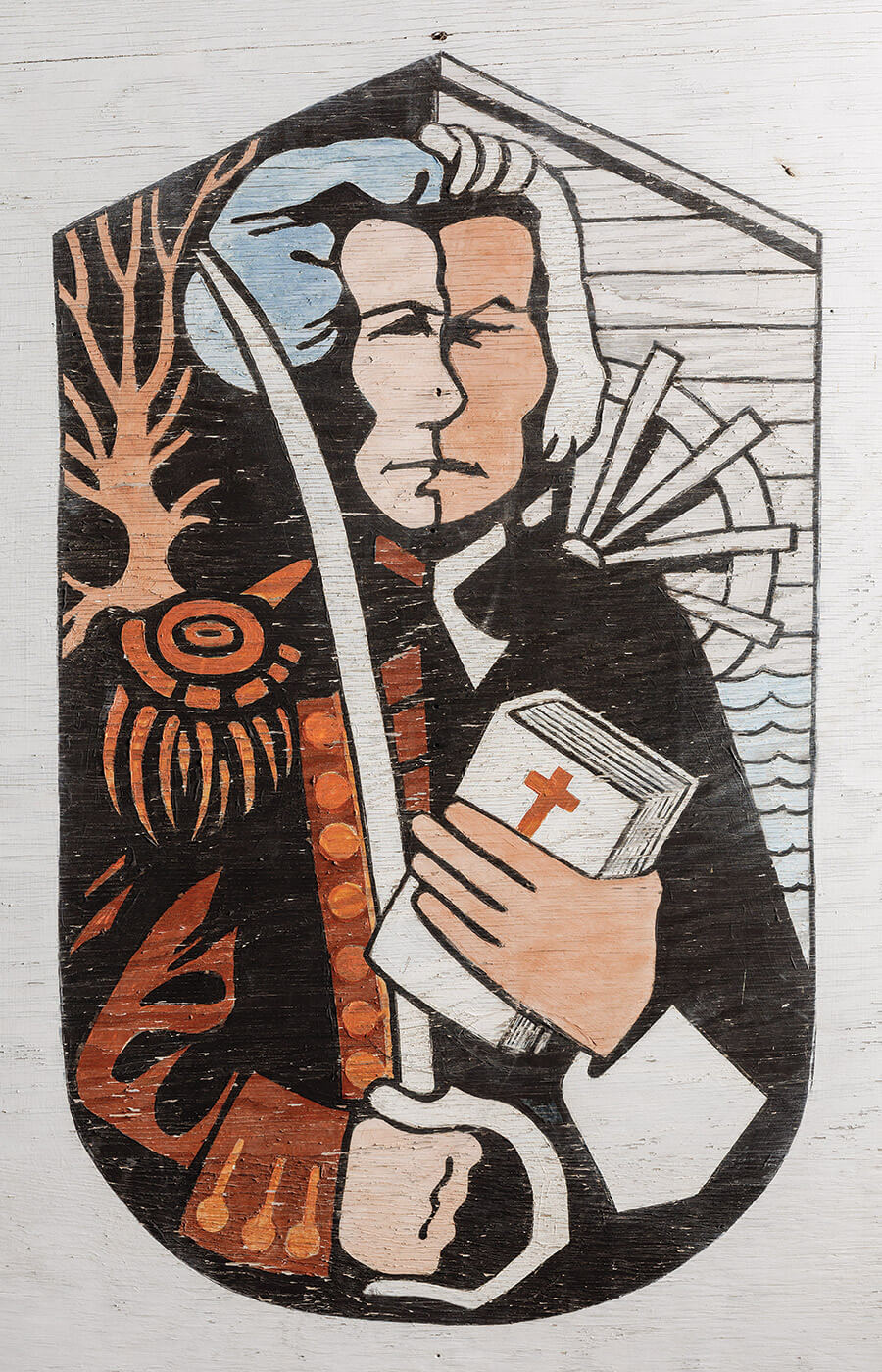
A stark design promoted The Sword of Peace for years, and it can still be found at the Snow Camp Outdoor Theatre, painted on plywood. “As long as I have breath in me,” James once said, “we’ll be out here.” photograph by Jerry Wolford & Scott Muthersbaugh
“I want you to be this little Quaker girl and go over there and start dancing with these little town girls,” he said to Misty before turning to Moore. “And then I want you to be her mother and go over and fuss at her.”
Moore realized her role in the play had come full circle: “There I was, playing the role my mother played with me.”
One season, Moore remembers a sickness ran through the cast. Within days, most of the male actors were out of commission. The director had to rework the script and gave the women most of the lines. But he still needed more men to play Quaker husbands.
“Go home and ask your husbands to come and just be onstage in costume,” he said to Moore’s mom and the other women shouldering the performance. Moore’s mom did. Her dad got a part.
“My mother came home, and she didn’t ask him,” Moore says, laughing. “She told him.”
• • •
In 2021, When Bryan Wilson showed her around the property, Kress could tell how proud and protective he was of his father’s legacy, and she knew it wasn’t going to be easy for him to hand over the keys after decades of love and hard work. But Kress wasn’t sure she wanted them. A seasoned performer and acting teacher, she knew how to run a black box theater in downtown Burlington. But a historical drama in the woods with an amphitheater, a box office, a historic schoolhouse, and an 800-gallon water tower, all in need of serious refurbishing? Did she really want to take that on?
Studio 1’s board contemplated the money and time required to resurrect Snow Camp Outdoor Theatre, and Kress’s husband, Lance, helped her weigh the pros and cons.
Finally, Kress and her board, as well as Bryan, were all in. Studio 1 got county funding, grants, sponsors, and donations from the community. Volunteers came on their own, and Scout troops, along with church and school groups, whacked the bamboo, cleared the paths, and shored up some of the old buildings in the historic village.
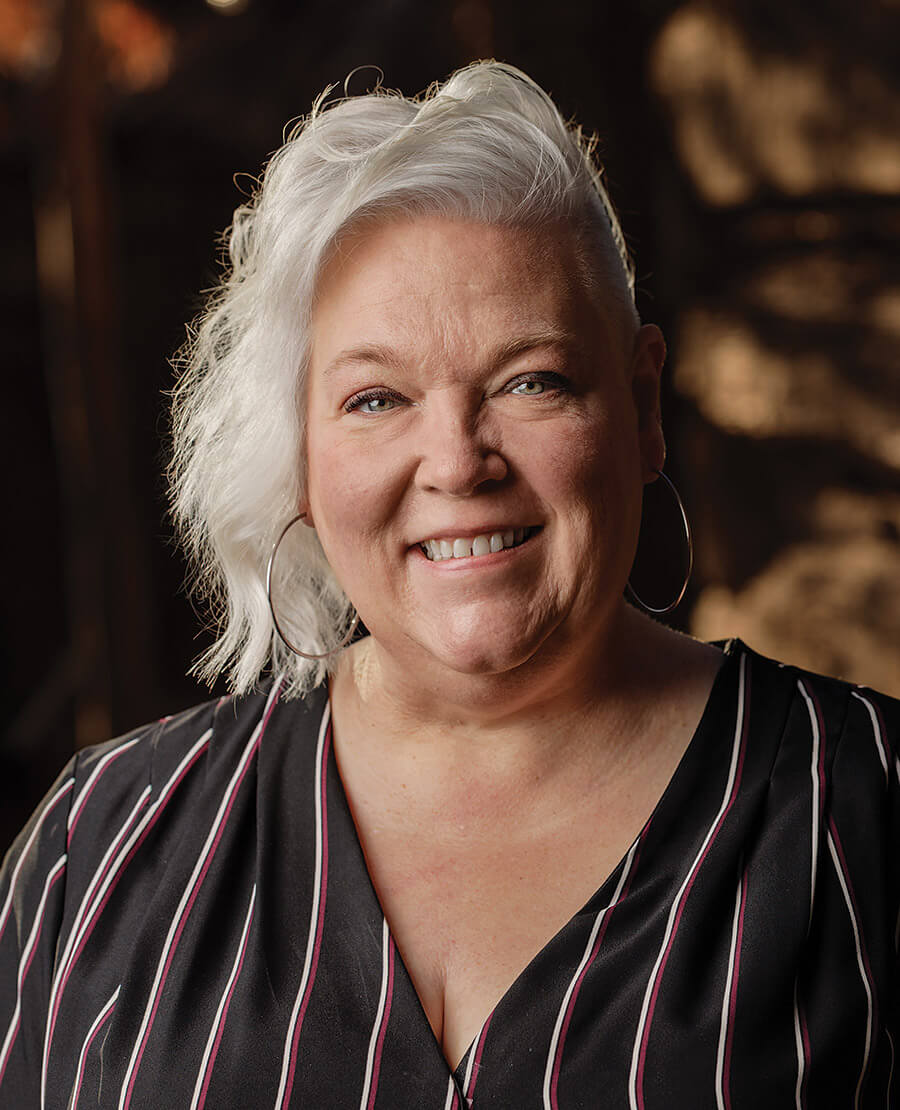
Tami Kress photograph by Jerry Wolford & Scott Muthersbaugh
Everybody came together to save the theater — and the play. In 2024, The Sword of Peace was performed once again. But its rebirth wasn’t without heartache. In January 2022, Lance Kress died in a car accident. Seven months later, Bryan Wilson died the same way.
“If they hadn’t been alive to work this out,” Tami Kress says, “it might not have happened.”
Thanks to the hard work of hundreds of volunteers, the dream of James Wilson and the stewardship of his son is far from forgotten. This summer, The Sword of Peace will be performed during the 250th anniversary of what made America America: the signing of the Declaration of Independence.
“This story is part of all our histories, not just the Quaker history,” Kress says. “It’s part of the making of America.”