 In the wake of Hurricane Helene, people across the mountains did what they could: planting, building, repairing, creating. These are stories not of grand gestures but of small acts that became the scaffolding of recovery. Read about those who came together to support each other.
Whenever someone brings up Hurricane Helene, Heather Maloy winces at the memories: Buildings gone. Downed trees everywhere. The French Broad River turning into a sea that engulfed everything she recognized.
I can’t stay here, she told herself.
But what could she do? She couldn’t clear brush or move dirt or repair damaged houses. When she came back to Asheville, she found her answer: She could turn post-Helene mess into metaphor.
As the founder and artistic director of Asheville’s Terpsicorps Theatre of Dance, she created Appalachian Phoenix, a performance that evokes the trauma and emotion inflicted by the storm, showing audiences how movement and music can deliver a message of hope and healing.

Heather Maloy is the founder of Terpsicorps Theatre of Dance. “For me,” she says, “Appalachian Phoenix gets to the root of who we can be as human beings.” photograph by Jerry Wolford & Scott Muthersbaugh
Yet Maloy still struggles with her life following Helene. She left; others, like her husband, stayed. She felt she didn’t do enough; others did. She wanted to help more, be more. But she felt so … helpless. On a summer night in Asheville, moments after Terpsicorps dancers previewed excerpts of the show for the Helene volunteers whom Maloy calls heroes, she found herself in conversation with one of those heroes, Lark Frazier. Maloy mentioned her post-Helene angst.
“Gosh, I felt so bad,” she told Frazier. “I couldn’t do anything.”
“But, Heather, you’re the storyteller,” Frazier said. “Your time is now. Those who were comfortable jumping on the front lines did so. Our time is over. Now, it’s time for the next wave of people to carry the story forward.”
• • •
When Helene barreled into Asheville last fall, Maloy took her 12-year-old son, Zane, to stay with a friend in Charleston, South Carolina. After two weeks, they came back and began volunteering at a distribution site in a parking lot in Swannanoa. She sifted through mounds of clothes and called various nonprofits to find a home for what she saw. She figured the organizations needed clothing. They didn’t. They already had too much.
After more than a dozen calls, Maloy began to brainstorm. She didn’t want the clothes dumped in a landfill, and she began thinking of what to do. Then, it hit her.
She saw so many clothes. So many blue clothes.
Blue. Water. Rivers. Rising.

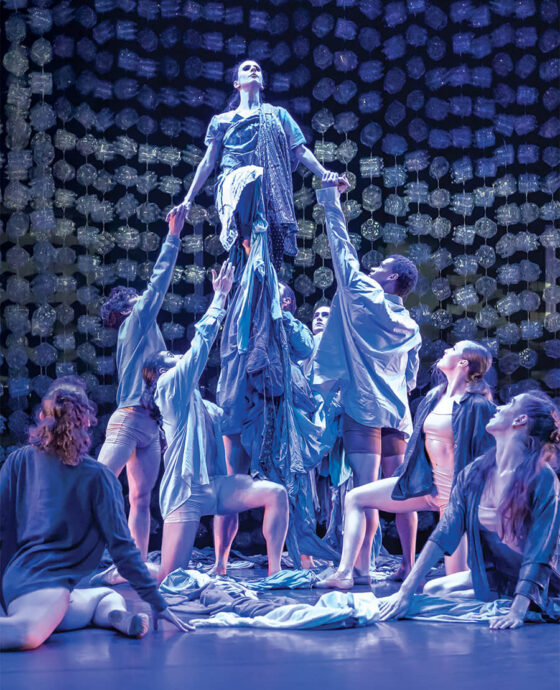
Volunteers helped Maloy bundle 13,000 empty plastic water bottles — sourced from the community — into hexagonal shapes to create a glistening backdrop. photograph by Jerry Wolford & Scott Muthersbaugh
And what about those half-liter water bottles? The bottoms of the bottles looked like flowers to her. If she could get enough, she thought, she could make a big translucent backdrop.
Maloy recruited Zane and his friends to collect all the blue clothes they could find. She asked the community to drop off empty water bottles on her porch. She even put out a press release. Those half-liter bottles had become the post-Helene symbol of when western North Carolina spent months without potable water. They also became a symbol of the waste left behind after the storm.
She wondered if she’d get enough. She ended up with 15,000 bottles, enough to fill 300 trash bags. This, she told herself, may work.
• • •
Back in June 2003, during the first Terpsicorps performance, Maloy walked onstage at Asheville’s Diana Wortham Theatre and addressed the 250 or so people in the auditorium.
“Are you loving what you’re seeing?” she asked. “Well, I don’t have any money to pay these dancers. But Asheville deserves to have something like this. So I need your help.”
She got it. Maloy raised enough money to pay for that show and the next one later that summer. Over the next 22 years, she created a successful program that has drawn a devoted audience and attracted talented dancers from near and far.
When many dance companies close for the summer, dancers seek out Terpsicorps because it’s a paid gig that keeps them in shape, hones their techniques, and immerses them in Maloy’s style of storytelling. She doesn’t create pretty shows. She digs into dark storylines and tackles tough issues. Her programs may not always have a literal narrative, but most have a lot of humor. Her dancers love that.
She doesn’t create pretty shows. She digs into dark storylines and tackles tough issues.
In the creative, trusting atmosphere she and her rehearsal director, Christopher Bandy, have built, she perseveres. Always has.
Growing up in a farmhouse in Pinnacle, she would pull dress-up clothes from her closet, dance in her gold lamé go-go boots, and let her imagination fly. When her parents divorced and her mom later moved them to Winston-Salem, she began setting goals that seemed unattainable, even to her mom. But she always reached them.
She got into the University of North Carolina School of the Arts and danced as Clara and the Sugar Plum Fairy in The Nutcracker. After graduation, she joined the NC Dance Theatre (now Charlotte Ballet) and moved to Charlotte. A year later, she choreographed her first piece. She scored more work as a choreographer, and in 2003, she moved to Asheville.
“I remember when she called and said, ‘OK, I’m going to open a dance company in Asheville,’ and part of me wanted to say, ‘That is the most ridiculous statement anyone has ever made!’” her mom, Judi, says today. “But I’ve told her since the time she could breathe that she could do anything, and I’ve always been behind her with whatever she did.”
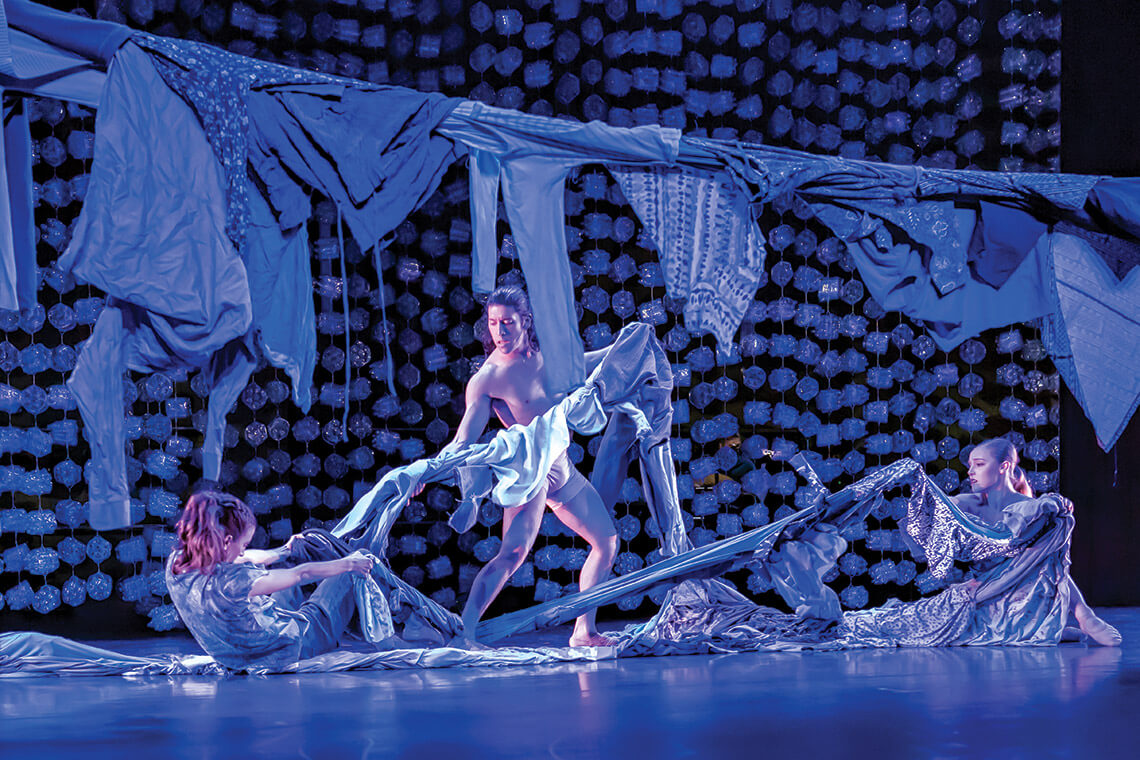
In the dancers’ hands, 30-foot ropes of blue clothing — donations that went unused after Helene — became the rivers that flooded and, later, a symbol of comfort and healing. photograph by Irwin Fayne, courtesy of Terpsicorps Theatre of Dance
Like turning blue clothes into 30-foot ropes that represent rivers and resilience. Or using 13,000 water bottles to create a backdrop that glistens in a waterfall of white light. Or envisioning how trash can become the bedrock of a 25-minute, seven-movement performance that premiered in July in Asheville and Winston-Salem.
“It’s this visualization thing she has, and it’s a strange thing to watch,” Judi says. “She’ll look at everything, decide what she wants to do, and just does it.”
One night last spring, sitting at her dining room table, Maloy opened her laptop, and the structure and flow of the story came in a rush. As she wrote, she cried. All those tough Helene memories came crashing back. She once again wanted to do what seemed impossible: Have Appalachian Phoenix say so much without saying a word.
• • •
“Hi, I’m Heather. Thanks for coming.” Maloy circles the room, meeting the volunteers who’ve gone above and beyond since Helene. She’s woven their stories into Appalachian Phoenix, and on this night in July, in the last hour of a six-hour rehearsal in downtown Asheville, more than a dozen volunteers have arrived for a preview. Maloy asks them to tell their stories.
The dancers sit close by. She’s told them stories about Helene, and they’ve done their own research, but what they hear has them transfixed. On the eve of their first public performance after three weeks of rehearsal, the dancers listen to harrowing details about Helene and realize their enormous responsibility: Their performance has to ring true.
“Each movement represents a lot of different heroes,” Maloy tells the volunteers after their storytelling session. “And I hope you see a little bit of what you did and what you felt in each one.”
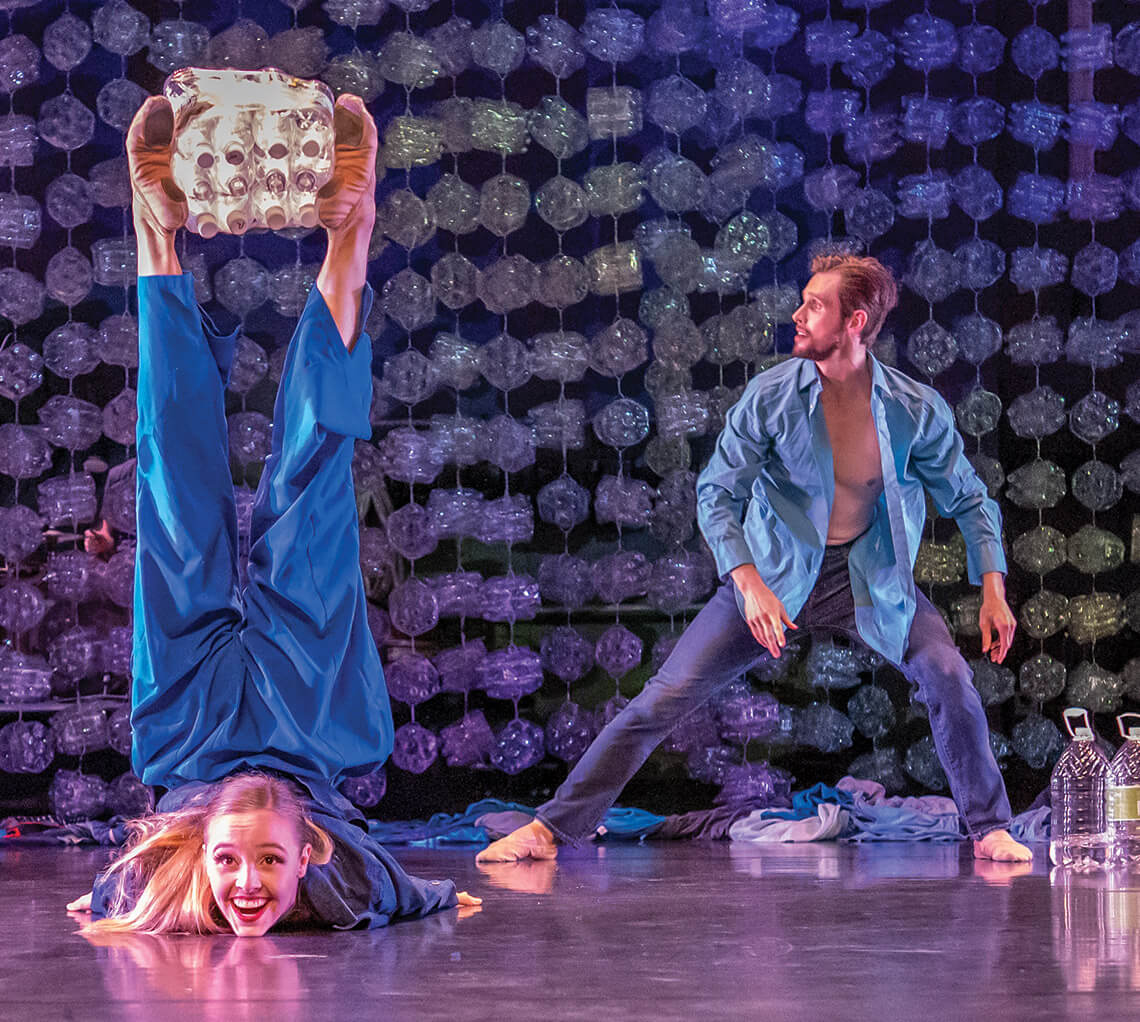
The rest of the cast is composed of professional dancers from around the country, like Alexandra Zakharchenko of Alabama Ballet and Morgan Stillman of Ballet Austin in Texas. photograph by Irwin Fayne, courtesy of Terpsicorps Theatre of Dance
The dancers take their places. In the second segment, anchored by “A Thousand Hands,” written and sung by local musician Chris Rosser, they stretch four ropes of clothing across the studio. They wrap themselves in the fabric, which represents the rivers that became oceans during Helene.
As “A Thousand Hands” moves from one minute to two, the dancers pull shirts from the “rivers” and help dress one another in slow motion, illustrating what Maloy saw and felt after Helene. At a time when death and despair felt like ever-present companions, neighbors and strangers comforted and helped one another.
A thousand hands, a thousand hands
Stretch across a fallen land
When fortune turns the ground to sand
Love demands a thousand hands
As the volunteers watch, some sit ramrod straight and wear the weary look seen often in war veterans. Others sit stoop-shouldered, looking at their hands in their laps. Memories are still fresh.
During the next excerpt, “Restoring Hope,” dancers become circus performers. They juggle water bottles, twirl like tops holding water jugs, balance water jugs on their heads, and toss water bottles like baseballs to one another. One dancer crab-walks across the floor with a shrink-wrapped bundle of water bottles under her arm and another between her knees.
One little boy watches. And he just laughs.
• • •
Mikey is 4. He’s one of Maloy’s heroes. Before the preview, she asks him what he did after Helene. He doesn’t say a word. Maloy fills in the blanks, asking if what she heard was true: that he grabbed a shovel, put on his Batman gloves, joined adults in his Asheville neighborhood, and helped a family dig through a mudslide blocking their driveway. He nods.
Maloy tells Mikey that a dancer from Philadelphia plays him in the show, and that same dancer is about to perform in “Restoring Hope.” Mikey perks up and allows his mom to move him up front, feet from the dancers. He leans hard into his mom’s side and waits for the dancers to begin.
So remember her name, not for riches or fame,
But for giving back joy
in a world soaked in rain.
From the heart of the wreckage
to the soul of a child,
She left hope behind where the storm
once smiled.
Now I feel safe …
Throughout the two-minute segment, fueled by a hip-hop beat and a seesawing violin in a song by local vocalist Datrian Johnson, the audience laughs. Mikey laughs so hard he doubles over, squeezing his eyes shut, rocking back and forth. The laughter cuts the tension, and when “Restoring Hope” ends, the volunteers — Maloy’s heroes — stand up looking more relaxed.
Maloy looks more relaxed, too.
• • •
Another of Maloy’s heroes, Lark Frazier, organized what she called the “Poop Crew.” She and 30 others spent nearly two weeks raising money and gathering supplies to teach those without running water how to make a dry toilet out of a five-gallon bucket, a trash bag, and a handful of sawdust. She and her crew handed out about 1,000 makeshift toilets and several hundred partial supplies.
At the preview, Frazier can’t get over what she saw. “The thing that stood out the most was ‘A Thousand Hands,’” she says. “When I saw everyone onstage dressing each other, I started crying. I kept thinking, ‘Oh my God, that is exactly how it felt in the aftermath of the storm!’ Everywhere you looked, you saw people helping people.”
Frazier sits up front. Christy Thrift and her husband, Scott, sit in the back row. Christy stands up during the preview, filming excerpts on her iPhone and wiping tears from her eyes.
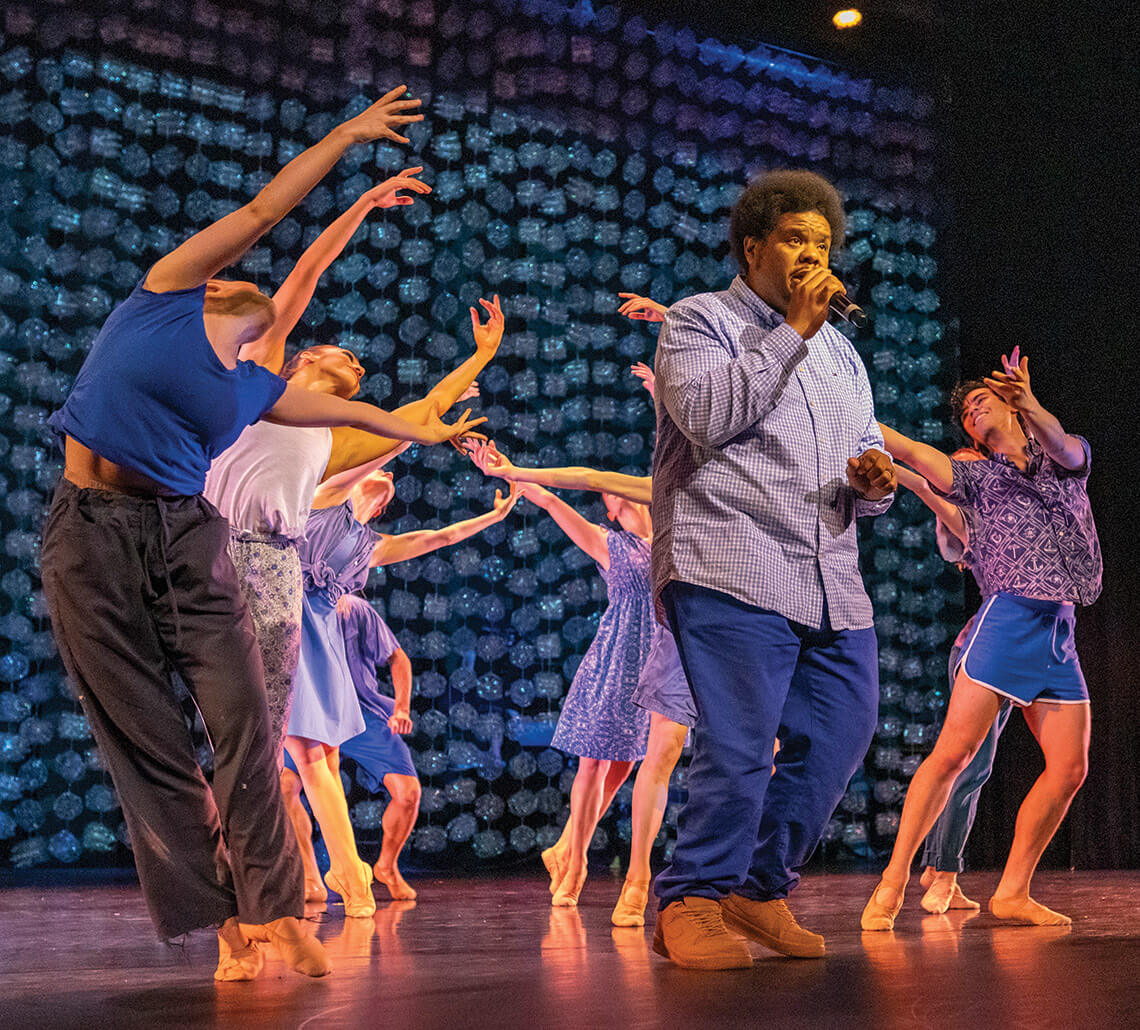
Among the western North Carolina musicians with whom Maloy collaborated was Asheville vocalist Datrian Johnson (left), who performed in Appalachian Phoenix. photograph by Irwin Fayne, courtesy of Terpsicorps Theatre of Dance
The Thrifts run NC Outdoor Adventures in Bakersville. After Helene, they helped evacuate their neighbors, delivered food and medicine to people who needed it, and created a GoFundMe page to help struggling families in western Mitchell County. The couple raised $272,000. Today, they’re continuing to clean up the North Toe River, and they set up a nonprofit called Resilient Appalachia Disaster Relief Fund — RAD Relief for short — to raise money for river and flood mitigation, streambank restoration, and a children’s emergency-preparedness program.
The dancers and Appalachian Phoenix, Christy says, are crucial armor. The dancers are educators of emotion. Hearing the volunteers’ stories has enriched their performances, delivering to western North Carolina a message it needs to hear.
“With dance, there are no words,” Christy says. “It lets your mind wander and puts it where it needs to be — healing.”
• • •
Jeff Ewing understands. He lives in Asheville, lived through Helene, and spent time delivering food and water to distribution sites for nearly a month after the storm. In his 11th season with Terpsicorps, Maloy picked him to play the show’s biggest role: the symbol of the suffering and resiliency in western North Carolina. Ewing is the phoenix of Appalachia.
Leading up to the final movement, Ewing reaches for help, his body limp, dancers encircling him like family. Johnson steps onstage and sings “I’ll Fly Away.” The music picks up, dancers fly around one another, and Ewing leaps and twirls before climbing up a staircase of dancers’ backs. He raises his arms like wings. And that’s where Appalachian Phoenix ends.
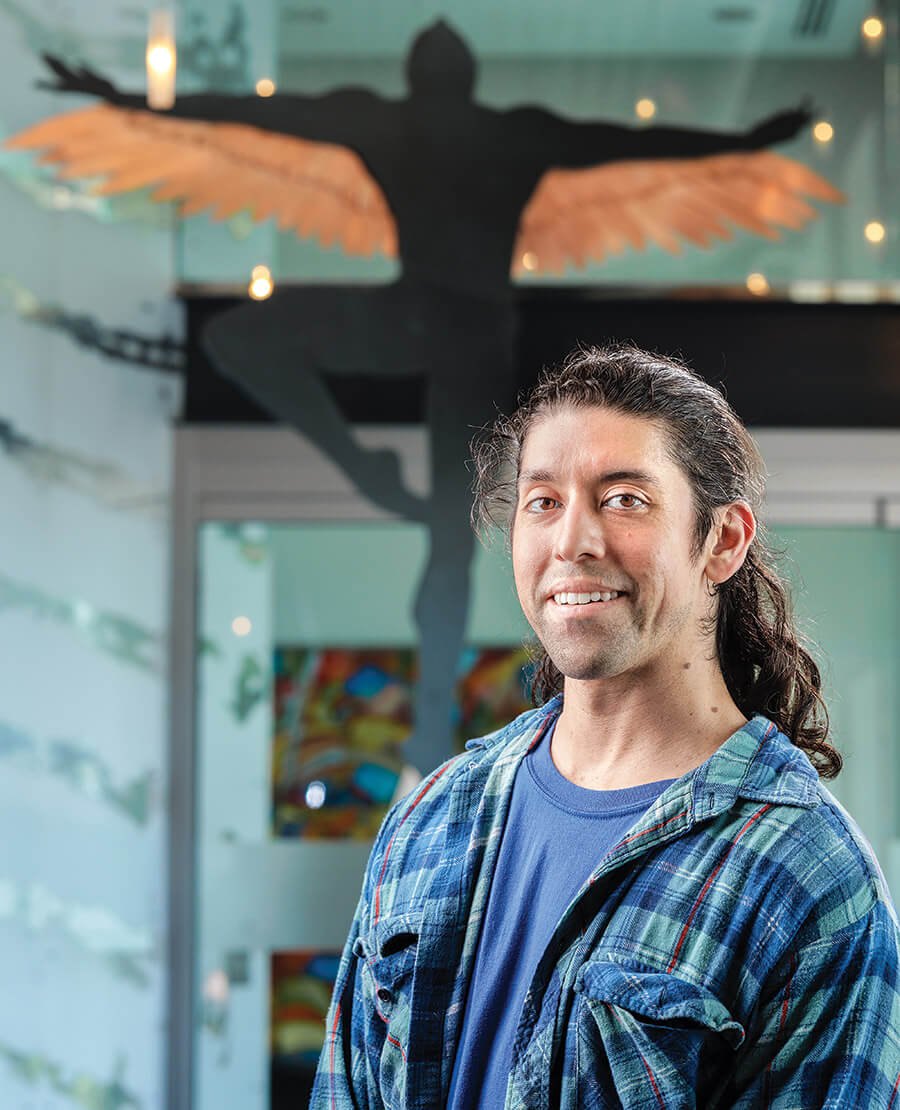
Jeff Ewing of Asheville has danced with Terpsicorps for more than 11 years. photograph by Jerry Wolford & Scott Muthersbaugh
After every season, Maloy asks herself: Why do I do this? This year, her answer is more poignant. Nearly 2,000 people came to see Appalachian Phoenix, and the eight performances accomplished what she had hoped: The community came together, reflected on what had happened, and thought about how they help others heal — and heal themselves.
Ask Maloy about Helene, and her reaction immediately after the storm still gnaws at her. But ask her about what’s next, and her voice brightens. She talks about the ropes of clothes, the backdrop of water bottles, and her idea of resurrecting Appalachian Phoenix to reach more people. She doesn’t know how yet. But she will find a way.
print it