Put ramekins on a baking sheet. Bake for 25-35 minutes, until puffed and golden. Remove from oven, and let stand for 5 minutes. With a flexible spatula, remove strata to
Across 42 acres of wooded and open land in Asheville, the Western North Carolina Nature Center serves as a living tribute to the Southern Appalachians. Opened in 1925 as a
Across 42 acres of wooded and open land in Asheville, the Western North Carolina Nature Center serves as a living tribute to the Southern Appalachians. Opened in 1925 as a
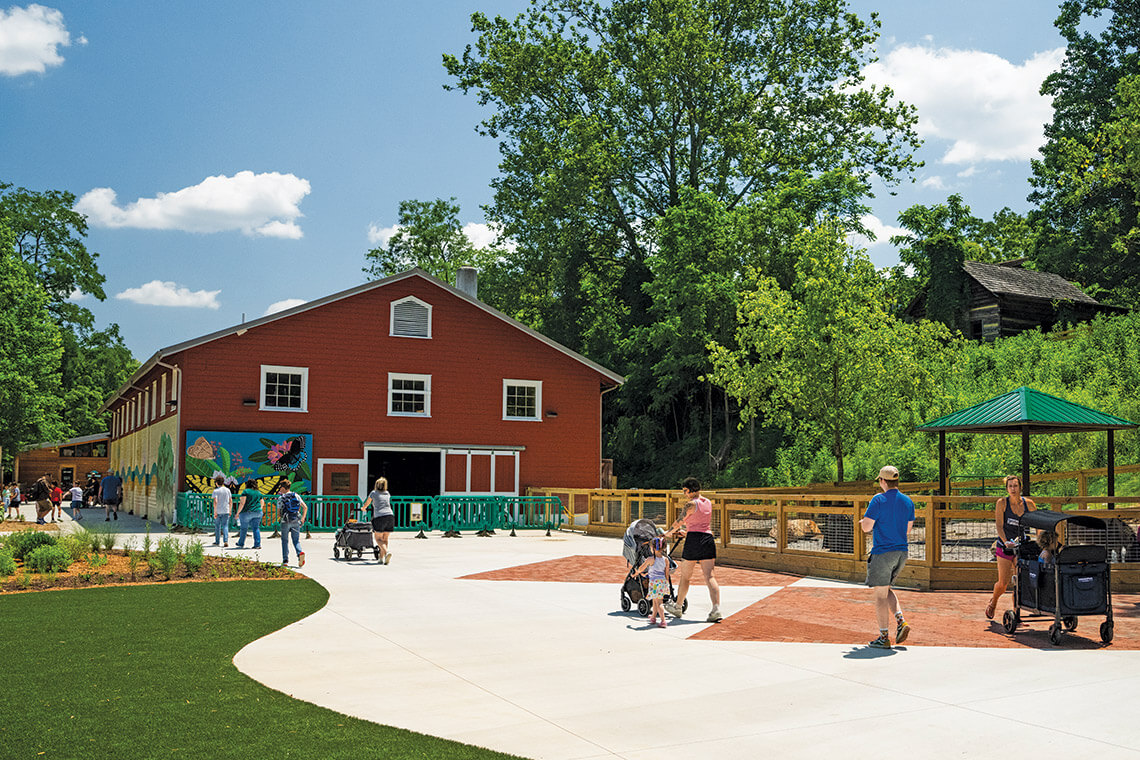
Across 42 acres of wooded and open land in Asheville, the Western North Carolina Nature Center serves as a living tribute to the Southern Appalachians. Opened in 1925 as a zoo housing exotic animals, the site’s mission shifted in the 1970s to focus on preserving the region’s native wildlife and educating the public. These days, the grounds host more than 60 native animals, from bobcats and black bears to endangered red wolves and playful river otters. With every step along its winding paths, the Nature Center sparks curiosity, celebrates the region’s rich biodiversity, and preserves the wildlife of the Southern Appalachians for future generations.
“We want to give people a sense of what the Southern Appalachians are home to, and the wonderful thing about May is that so much is in bloom,” says Director Chris Gentile. “Visitors who choose to explore more wild areas, like hiking or driving along the Blue Ridge Parkway, will at least have an introduction to some of the wildlife and scenery they might encounter.”
From scenic trails to creative arts and garden-fresh finds, a May weekend in Buncombe County offers just the right mix of adventure and discovery. Use our itinerary to get started.
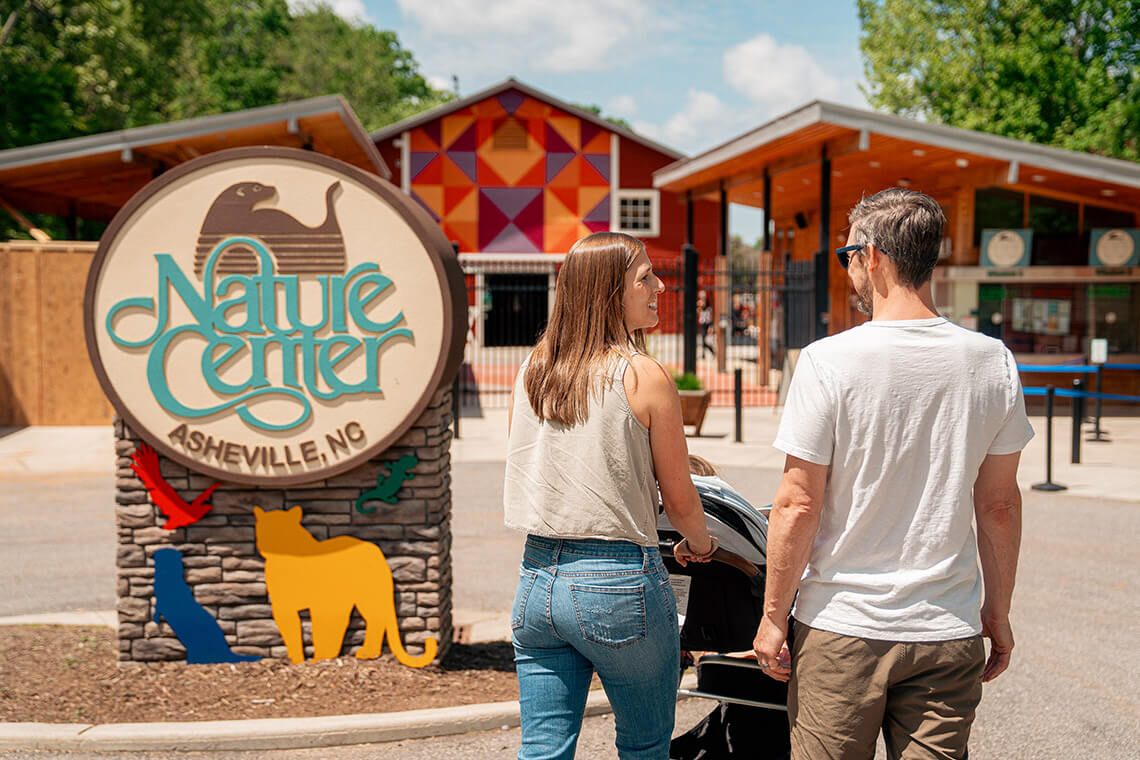
Beyond the Western North Carolina Nature Center’s vibrant barn quilt, more than 60 species of wild and domestic animals await visitors.<br><span class="photographer">Photography courtesy of Visit Asheville</span>
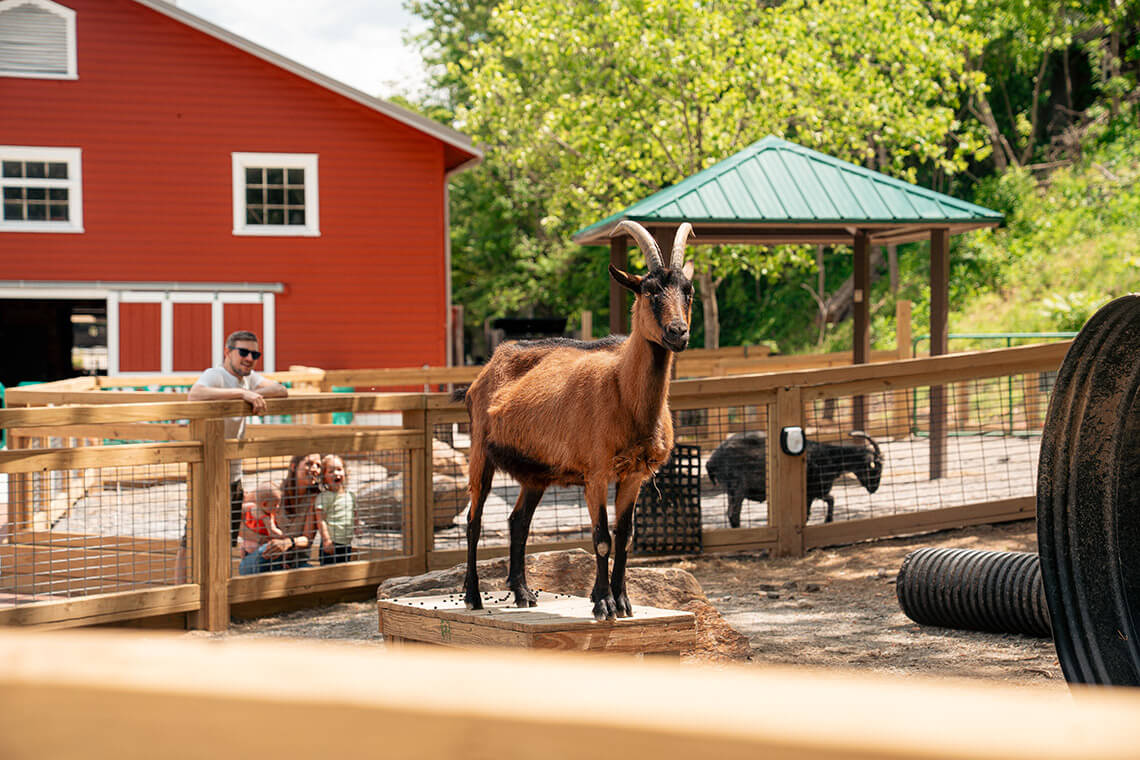
Meet Oberhasli goats … <br><span class="photographer">Photography courtesy of Visit Asheville</span>
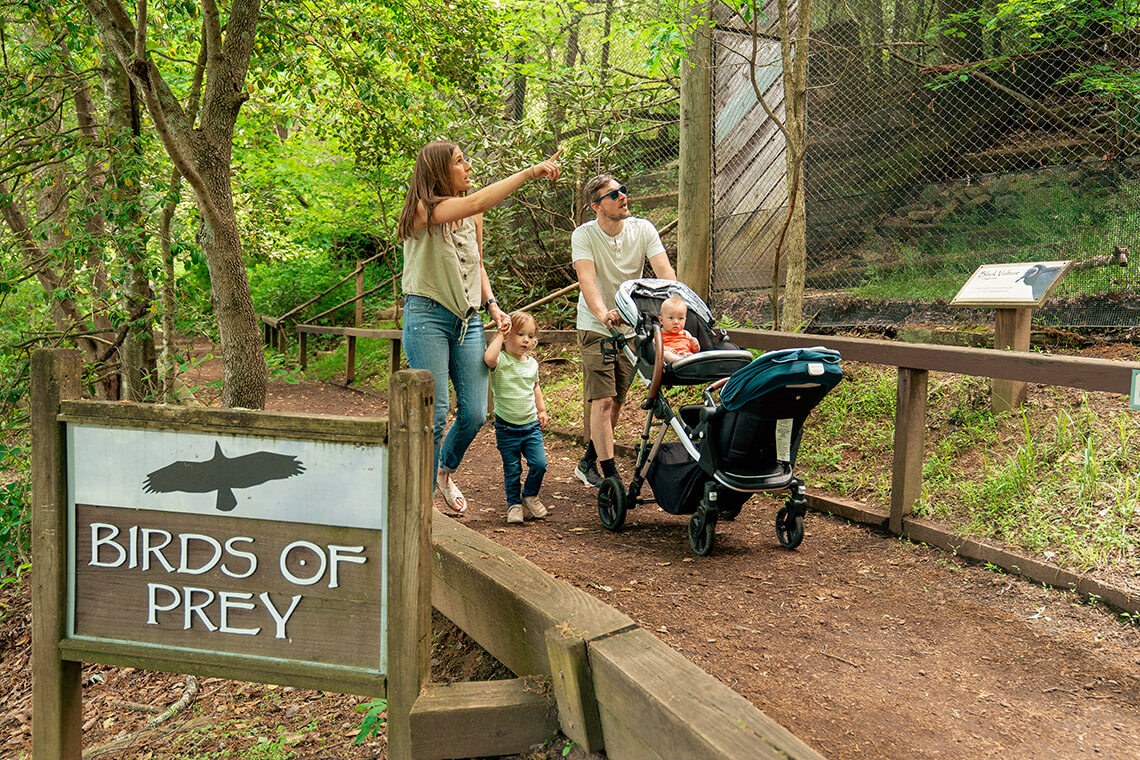
… and see raptors and other birds of prey at the nature center.<br><span class="photographer">Photography courtesy of Visit Asheville</span>
Saturday Morning
Explore Native Habitats
Before setting out, take a moment to plan your route at the Nature Center. Habitats are designed to mimic the natural spaces of the Southern Appalachians, with plenty of space for animals to wander, play, relax, and take shelter. Watch bobcats roam, cougars move gracefully across shaded paths, and red pandas scale their treetop perches.
“Come right when we open or stay later when the crowds thin out” Gentile says. “The animals are usually less active during the heat of the day, but you’ll typically see more movement when they first encounter people in the morning or near closing time when they’re being fed or moved to night quarters.”
Explore more than 42 acres of habitats at the Western North Carolina Nature Center. photograph by Derek Diluzio
More than a zoo, the site invites visitors to experience the region’s biodiversity and geology firsthand. After Hurricane Helene brought significant challenges, the Nature Center emerged with renewed determination — reopening and continuing to grow as a place for education and exploration. Recent updates from the Gateway to the Southern Appalachians project have enhanced the experience, with native pollinator gardens designed to support local pollinators like monarchs and swallowtails. “It’s a very interactive space, including nature play activities for kids and opportunities to see the different types of butterflies that we have in our area,” Gentile says.
Relax in Rustic Comfort
After a day of exploration, the smartest move is the easiest one: settle in. Situated two miles from the French Broad River and seven miles from downtown Asheville, Log Cabin Motor Court quietly beckons with 18 beautifully-aged historic cabins, some nearly a century old, as well as a historic farm house, and a modern log cabin. John and Maria Maltry have owned the property since 2002, preserving the rustic charm while adding Wi-Fi, and microwaves and refrigerators to the smaller cabins — conveniences that feel necessary only when you want them. Cabins vary in size and personality, some cozy for two, others perfect for families or groups, and furry companions are always welcome. Asheville, the Blue Ridge Parkway, and Biltmore are only minutes away, yet the real challenge is deciding when, or if, to leave.
Pump the brakes along the Blue Ridge Parkway as you near the Folk Art Center, home to the Southern Highland Craft Guild. Photography courtesy of Visit Asheville
Saturday Afternoon
Witness Appalachian Artistry Live
When Janet Wiseman first walked into Folk Art Center in the early ’90’s, she felt an immediate sense of belonging. “As soon as I walked in that building, it felt like home,” she says. “I saw handmade chairs and textiles that reminded me of what I’d seen growing up — the way they were made, the quality of the work, it was astounding.”
Admire handmade pieces and find a keepsake to take home at the Folk Art Center. Photography courtesy of Visit Asheville
Now, as education director, Wiseman sees that same magic through the eyes of visitors. Since opening in 1980, the Folk Art Center has championed the preservation of Appalachian craft heritage, serving as home to the Southern Highland Craft Guild and ensuring traditional trades like weaving, woodcarving, blacksmithing, and more continue to thrive.
Don’t miss the Pop-Up Mini Craft Fair on May 2, where members of the Southern Highland Craft Guild will showcase the expression of their talents in the lower-level parking lot. Or, on the following Saturday, celebrate Fiber Day on May 9, a beloved tradition for over 40 years that brings weaving, quilting, knitting, spinning, natural dyeing, marbling, and felting to life with live demonstrations and hands-on activities.
Bring a basket! The WNC Farmers Market brims with in-season produce, like young carrots, beets, and greens. photograph by LindasPhotography/iStock/Getty Images Plus
Sunday Morning
Feast on Farm-Fresh Goodness
Since opening in the 1970s, WNC Farmers Market has been a daily showcase of local harvest and craft: Vegetables kissed by the sun. Fruits at their peak. Farm-fresh eggs, cheeses, and meats. Handmade crafts. Just here for a few things? Yeah, sure. Trust us, your basket will fill faster than you anticipated.
“Come early,” says Katie Davis, marketing director. “Selection of fresh produce will always be best in the morning, especially if you’re coming for something like strawberries or ramps, which are big in May.”
Chat with the vendors, explore the booths, and see what the mountains brought this week. While you’re here, swing by the nursery area, where the Jesse Israel & Sons Nursery & Garden Center offers a wide selection of plants, birdbaths, garden tools and accessories year-round. Then, sit a spell in Moose Cafe and enjoy a meal featuring seasonal items from the market.
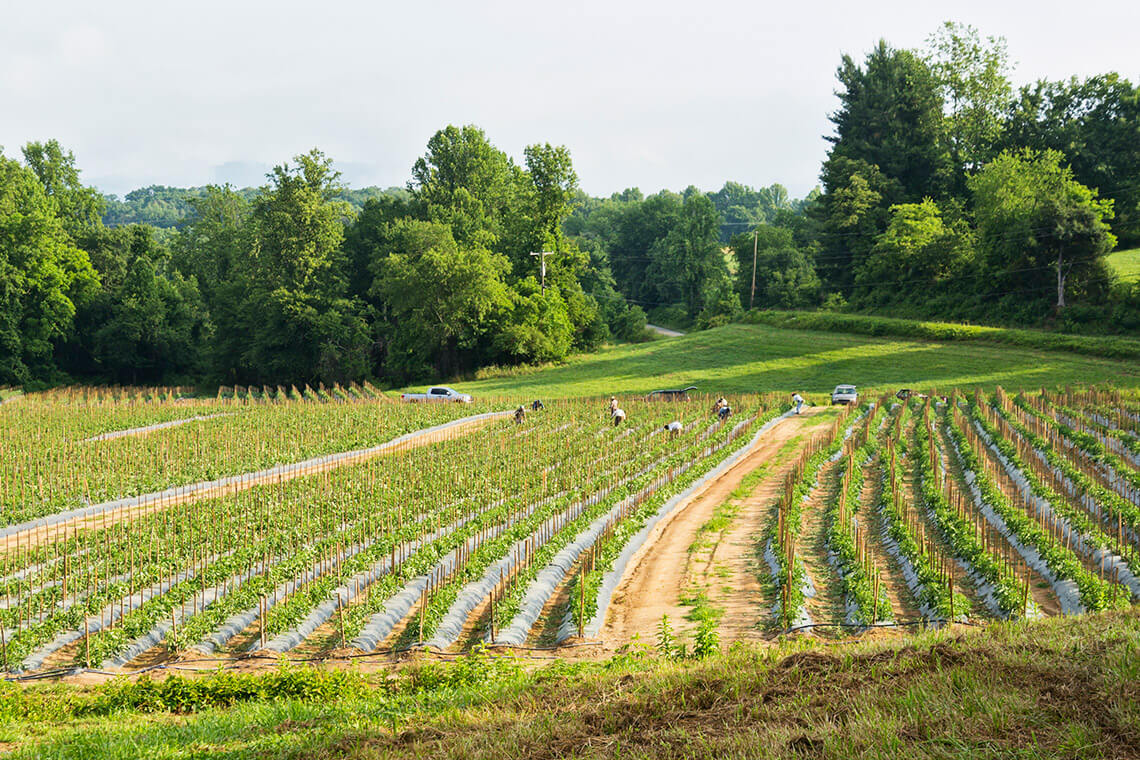
Travel along the Farm Heritage Trail to take in local fields and farmland throughout the county. photograph by wbritten/E+/Getty Images Plus
Trace the Roots of Local Agriculture
A beloved route through northwest Buncombe County, the Farm Heritage Trail guides visitors through the rural communities of Alexander, Leicester, Newfound, and Sandy Mush.
Choose to follow the full trail, a leisurely two- or three-hour drive through rolling countryside, or enter at any point and select the areas you want to explore. Stop at farms along the way to observe the land and how it is cared for, then continue along roads that curve through valleys and hills, taking in the scope of Buncombe County’s agricultural landscape. The trail is one of many agritourism experiences across the state, offering visitors a chance to connect with the state’s farmland, rural communities, and farming traditions.
Visiting in May? “Try to make it into Sandy Mush,” says Ariel Zijp, farmland preservation manager for the Buncombe County Soil and Water Conservation District. “It’s one of the most pristine places in the county and the least developed.”
Download a map: Most farms can be appreciated from the road, but the ones that invite visitors are designated for easy planning.
The mountains, rivers, and streets of Buncombe County invite curiosity. A weekend is just the beginning, but each moment invites you to linger a little longer. So, which adventure will call your name first?
Get our most popular weekly newsletter: This is NC
At both the turn of the century and today, Beaufort’s waterfront has attracted a hum of commerce and community. At its heart, a historic avenue tells that history, from the stately double-porched homes to the sound of ships announcing their arrival at port.