 Listen as the pages of the magazine come to life in the Storytellers podcast showcasing the voices of Our State writers. Each podcast episode features a writer reading their column aloud, allowing each distinct voice to shine. Click below to listen to Sheri read her column aloud.
At the risk of losing my street cred as a cook born and raised in North Carolina, I confess that I have never bought a hunk of fatback — at least not outright. This doesn’t mean I can’t talk a reasonable fatback game. I understand that it’s the firm, fatty layer from a pig’s back, prized in traditional Southern cooking. This type of pure, rich fat adds moisture and flavor to dishes and makes lean or meager meals more filling and satisfying. Fatback can be fried crisp for snacking and rendered to make lard. It’s a close cousin to side meat, salt pork, and streak o’lean, which I believe would be a perfect name for a quick, rangy hunting dog.
Fatback is the backbone of many homegrown Southern recipes, rooted in an elemental need for fat in cooking and seasoning. Though we claim fatback, every culture in the world cooks with the fat of their land: the type easiest to find, afford, and store. For generations, families who had no source of vegetable fat — or who had to produce everything they ate — turned to pigs. It was the logical choice: Much of a pig is edible, yielding cuts that keep well, making pork the optimal choice for smoking, salting, and curing. Long after pork fat was no longer the only choice, it remained a preferred one.
• • •
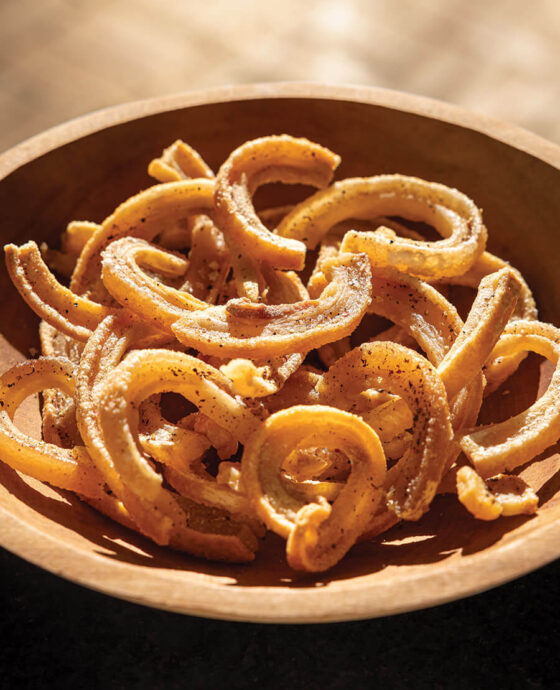
I’ve eaten fatback in ways both expected and not. Last year, I went to Robeson County to feast on Lumbee-style collard sandwiches. Nestled between the two cornbread fritters was a mound of tender collards, a spoonful of zippy chow chow, and two crisp, golden-brown crescents of fried fatback. The effect was not unlike tucking crunchy ’tater chips into a sandwich.
I’ve enjoyed vegetables simmered with fatback that added a shimmering gloss. The best baked beans I ever tasted relied on a hunk of salt pork in the bottom of a clay pot. Speaking of beans, I can neither overlook nor undersell the deliciousness of a can of pork and beans popped open on a fishing or camping trip. We can rest assured that requisite bits of pork fat will bob among our beans. Fatback also freckles many cured and fresh sausages, including the pepperoni on our pizzas. Funny how much fatback we enjoy, unaware.
My most curious encounter with fatback was rooted in the cuisine of Italy, a land of flowing olive oil, yet where many cooks embrace the flavor traditions of using pork fat in certain dishes, just like us Southerners. A charming, white-haired man named Armando, famous for curing his own meats, offered his guests a platter of perfect shrimp draped with gossamer strips of lardo, a type of fancy Italian fatback cured with herbs and spices. With a twinkle in his eye, he watched me take my first bite, waiting for me to fall in love — with lardo for sure, and possibly with him.
We can find fatback in most groceries, but my favorite places to look for seasoning meats is a good country store. For years, I drove my daughter deep into Chatham County to take weekly music lessons. We passed a cinderblock store that sported a hand-painted sign out front that proclaimed, “We sell everything from fatback to tofu.” I’m sorry I never bought any of their fatback, but to be fair, I never stopped for the tofu, either. I reckon the moral of this story is that for those of us who love delicious, home-cooked food graced with pork fat, yet haven’t picked up any at the store, it’s never too late to make a u-turn.
Fat Fact
There are a number of different types of seasoning meats that are labeled as “fatback.” Ideally, the one you find is fresh and either unsalted or lightly cured. If the fatback you’re using is coated in gritty salt, rinse it thoroughly under cool running water and blot it dry before cooking.
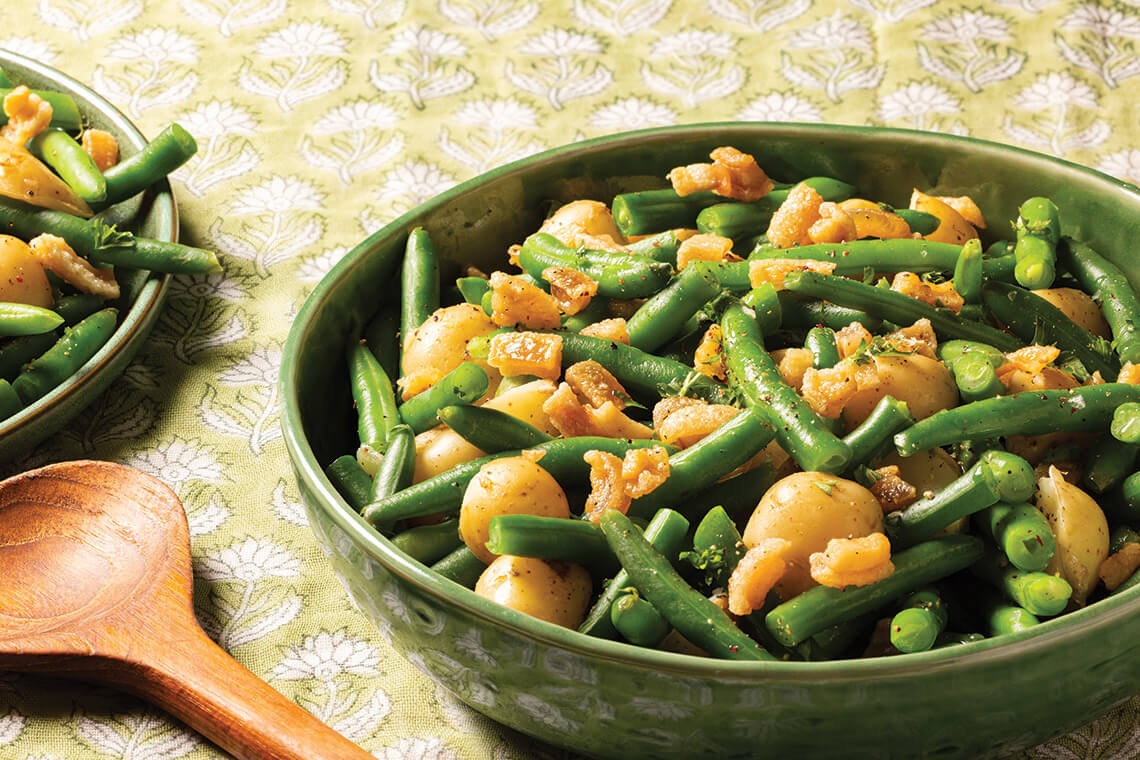
photograph by Tim Robison
Old-Fashioned Green Beans & Potatoes With Fatback
As is often true with recipes for simple, classic, homey dishes that many cooks make by heart, this one is more of an outline of things to consider than a precise formula. There are variables in both the fatback and the beans. Ideally, look for fresh fatback that’s lightly seasoned or not salted at all. I’ve added a step that turns the cubes of rendered fatback as crunchy as croutons, just right for scattering over the finished dish before serving.
When it comes to the beans, this recipe is best, or at least more traditional, when made with thick, sturdy, country-style pole beans that must be strung and broken. Although slender, stringless beans will do so long as you adjust the cooking time to ensure they don’t turn to mush.
Yield: 4 to 6 servings.
4 ounces fatback, cut into small cubes (see Fat Fact)
1 medium yellow onion, diced
2 cups water, plus more if needed
1 pound fresh green beans, preferably sturdy pole beans with strings removed, broken into bite-size lengths
12 ounces very small new potatoes (such as Red Bliss or Baby Dutch), scrubbed, unpeeled, and halved, if larger than a walnut
2 tablespoons apple cider vinegar
2 teaspoons sugar
½ teaspoon ground black pepper, or to taste
2 tablespoons finely chopped parsley
In a large saucepan over medium-high heat, cook fatback for 5 minutes or until it begins to render, stirring often. Reduce the heat to medium-low and continue cooking until fully rendered and golden brown, about 10 to 15 minutes more. Using a slotted spoon, transfer fatback to a bowl, leaving the grease in the pan.
Stir onion into the fat and cook until beginning to soften, about 3 minutes, stirring often. Add 2 cups water. Simmer pole beans until nearly tender, 20 to 30 minutes, before adding the potatoes. If using slender, stringless beans, add to water and proceed immediately to the next step.
Scatter potatoes over beans and push them down into the liquid with a spoon. If there is not enough liquid to submerge the potatoes, add water to cover.
Cover the pan and simmer until the potatoes are tender but not falling apart, 15 to 20 minutes.
Meanwhile, in a small, shallow pan, spread the cubes of cooked fatback in a single layer. Bake at 400° until deeply golden and crisp, about 10 minutes, stirring once midway. Let stand until ready to serve.
Remove the pan of vegetables from the heat. Stir in vinegar, sugar, and pepper. Check seasoning, although the rendered fatback should have provided enough salt. Cover and let stand (off heat) for 5 minutes. Sprinkle with parsley and the reserved fatback cubes. Serve warm.
print it