Put ramekins on a baking sheet. Bake for 25-35 minutes, until puffed and golden. Remove from oven, and let stand for 5 minutes. With a flexible spatula, remove strata to
The hottest days of summer meant meeting up at the U.S. Army Corps of Engineers dock on Front Street. In the mid 1960s, it was still a working waterfront, and
The hottest days of summer meant meeting up at the U.S. Army Corps of Engineers dock on Front Street. In the mid 1960s, it was still a working waterfront, and
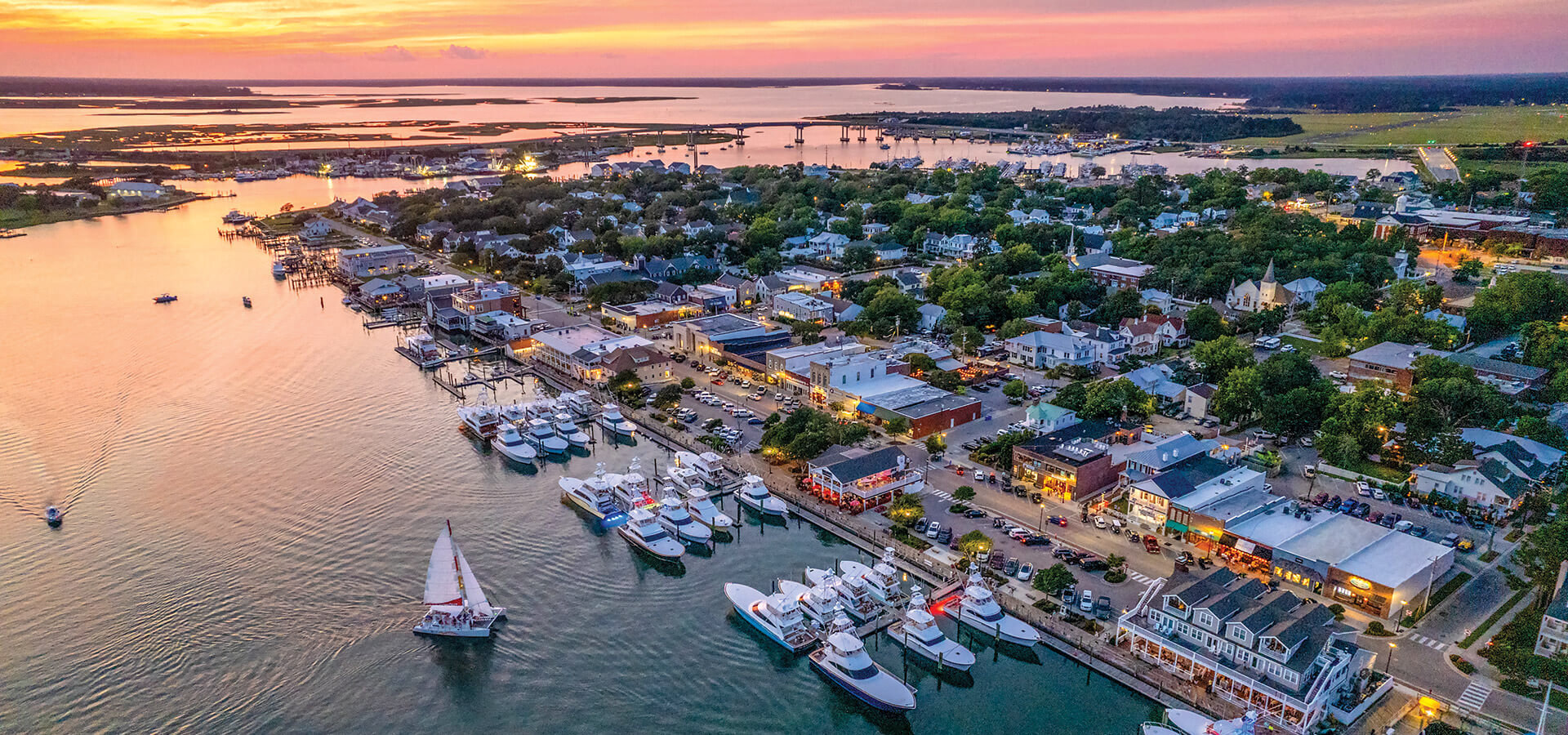
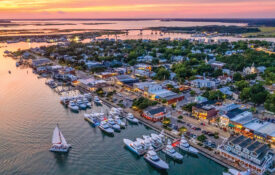
At both the turn of the century and today, Beaufort’s waterfront has attracted a hum of commerce and community. At its heart, a historic avenue tells that history, from the stately double-porched homes to the sound of ships announcing their arrival at port.
The hottest days of summer meant meeting up at the U.S. Army Corps of Engineers dock on Front Street.
In the mid 1960s, it was still a working waterfront, and no one minded Geoffrey Adair and his friends cooling off by the pier, letting the mooring line keep them afloat in “the Cut.” Horses commonly roamed Bird Shoal, the island across the way, and dolphins breached the surface nearby.
“I don’t remember anyone teaching me how to swim,” Adair says. “But we were just as comfortable treading in 20 feet of water as we were going down a sidewalk.”
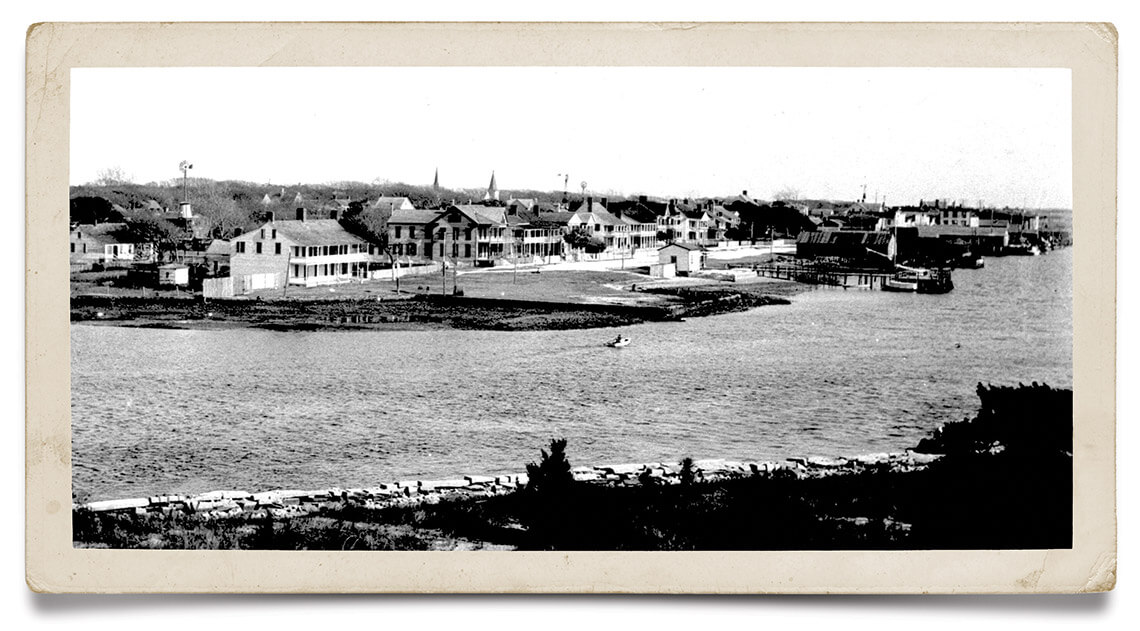
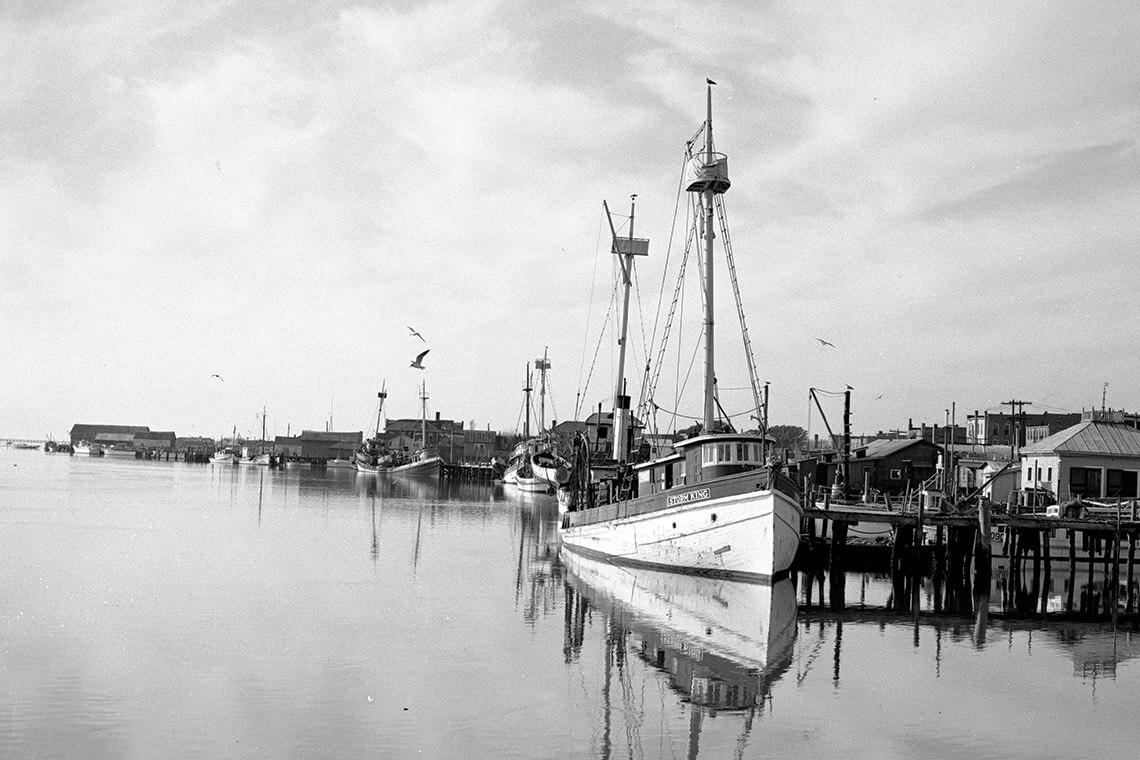
Both at the turn of the century and today, Beaufort’s waterfront attracts a hum of commerce and community. Photography courtesy of State Archives of North Carolina
On and off from his preteen years through his 20s, Adair — usually barefoot in cutoffs — walked through air thick enough to wear from his house on Orange Street to the boat landing, immersed in the hum he’s now coined “the ancient song of Beaufort.”
It sounded like royal terns and gulls overhead. The creak of rusty trawl winches. Voices projecting over boat motors, deckhands signaling from the fantail to the wheelhouse. And, on quiet nights or just before a storm, the swell of the surf breaking on the shoal.
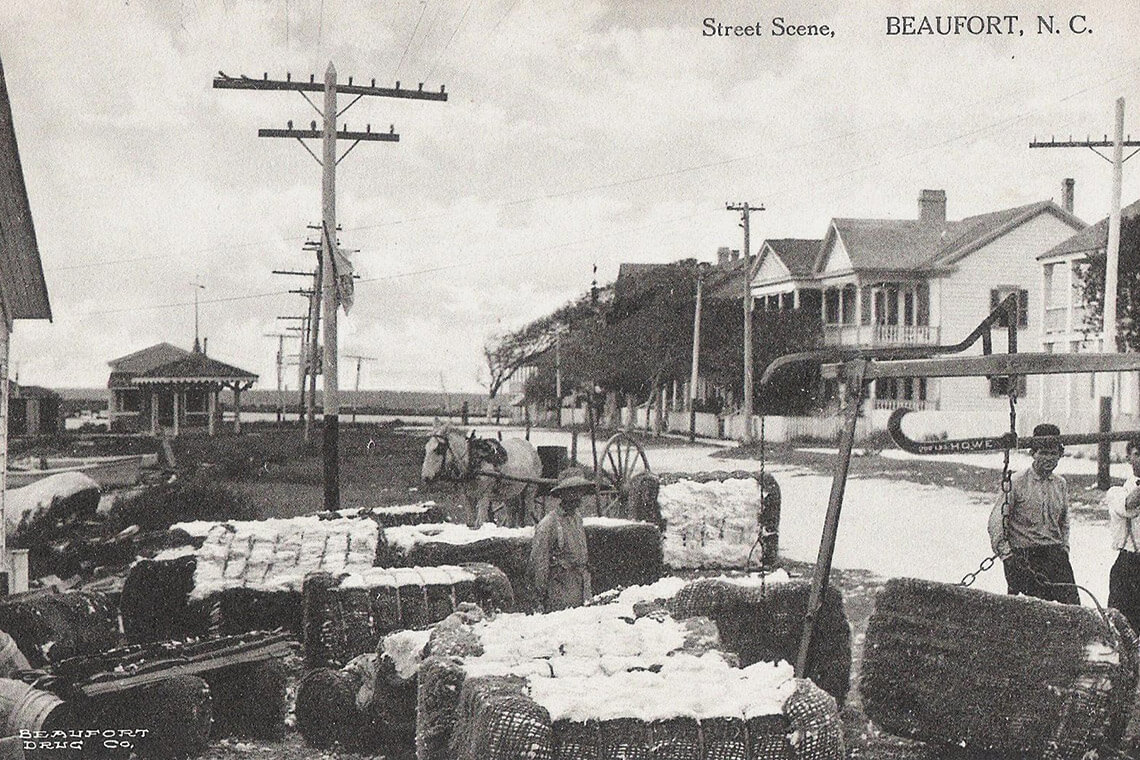
The stretch of Taylor’s Creek near the dock — more than a block from the turntable, or cul-de-sac to folks not from here — was home to D.W. Sanders Cotton Gin about four decades before Adair started swimming there. In fact, you can still see a concrete block about chin-high that he believes supported the cast-iron-and-steel press used to compact cotton bales.
In the late 19th and early 20th centuries, D.W. Sanders Cotton Gin baled and stacked cotton …<br><span class="photographer">Photography courtesy of State Archives of North Carolina</span>
… to be loaded onto boats along Beaufort’s waterfront.<br><span class="photographer">Photography courtesy of State Archives of North Carolina</span>
These days, he shares such stories during presentations, inviting others to pipe up with their own memories. He also maintains a Facebook group, “Preserving Beaufort NC History” — started by artist and historian Mary Warshaw — where he posts images and narratives, often including his own recollections.
“I’m not writing folklore, but I’m evoking memories,” Adair says. “That’s what I’m all about.”
As one of the state’s oldest towns, Beaufort has a 12-block historic district with more than 300 years of material.
Adair’s interest in photography led him to search for archival photos, and after retiring, he returned to Beaufort eight years ago to renovate the house he grew up in, splitting time between here and New Bern.
Geoffrey Adair photograph by Charles Harris
Waterfront houses wear their trademark double porches, once an indispensable way to catch onshore breezes before air conditioning. The floorboards, painted shades of gray or green, reflect the practicality of their original finishes that often made use of boat paint.
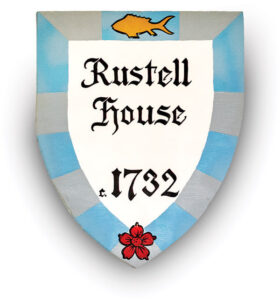
Homes more than a century old bear a plaque designed in 1960 by artist Elizabeth Merwin shortly after the Beaufort Historical Association formed. Each detail has meaning: a striped border from the Duke of Beaufort’s coat of arms, a gold menhaden honoring the town’s early “Fishtowne” moniker, and a Lancaster rose marking the Duke’s lineage.
photograph by Charles Harris
When Beaufort was laid out in the early 1700s, surveyors planned 100 acres, stopping where a monument now divides “Old Town” and “New Town” — the stretch that doubled the length eastward.
The past still lingers in spots without markers, but in subtler ways. Rooflines dip backward where detached kitchens once stood. Garages began as carriage houses. And where the boardwalk now draws tourists, Adair’s father once ran an Esso station.
Sometimes, Adair sits on the porch of his childhood home and can still hear notes of the ancient song. Ships announcing their arrival at port. The surf when the wind blows just right. Royal terns retracing the arc over his house, singing the familiar refrain that beckoned him home.
At both the turn of the century and today, Beaufort’s waterfront has attracted a hum of commerce and community. At its heart, a historic avenue tells that history, from the stately double-porched homes to the sound of ships announcing their arrival at port.