Along Colonial Williamsburg’s Duke of Gloucester Street, the rhythmic clap of iron horseshoes and the dull thud of wooden wagon wheels ring out. Historic interpreters clad in petticoats, frocks, and breeches welcome visitors through the doorways of historic workshops and shops. From the nearby Raleigh Tavern Bakery, the sweet scent of freshly baked gingercake wafts through the air. The cobblestone-lined thoroughfare covers a single mile but it carries more than 250 years of history beneath its path. Throughout Williamsburg and its neighboring towns of Jamestown and Yorktown, visitors retrace a path through time that celebrates the people, places, and values that sparked the nation’s movement for independence. Read on for where to see these stories come to life today:
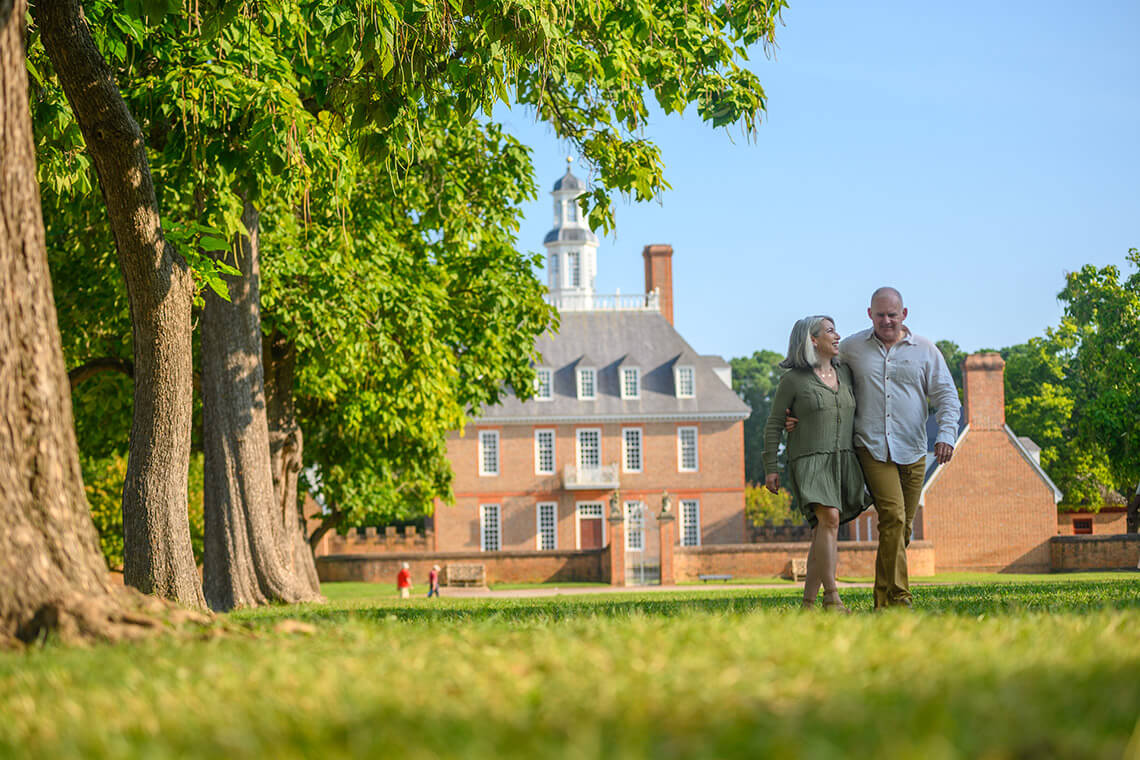
At the Governor’s Palace, explore the formal gardens, terraces, and evergreen maze. Photography courtesy of Visit Williamsburg
Shop and Dine Like a Patriot in Williamsburg
At its peak in the 18th century, Williamsburg flourished as Virginia’s colonial capital and a thriving marketplace for trade. On any given day along Duke of Gloucester Street, local farmers hauled wagons ladened with produce, silversmiths arranged freshly polished shoe buckles in shop windows, and merchants bartered over imported goods.
Today, visitors can step through the doorways of active trade shops and watch skilled artisans in colonial dress hammer molten iron, thread wooden looms, and carve cedar into barrels. It’s not just for show — many of these handcrafted pieces still sustain the historic district.
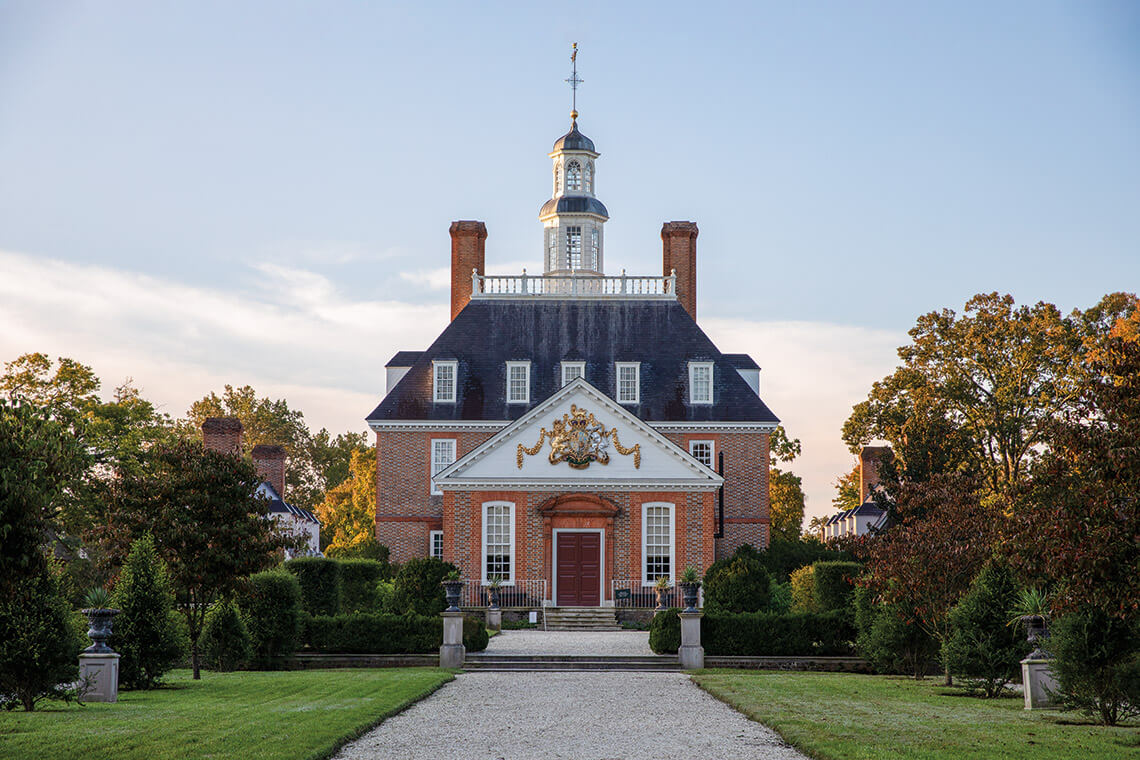
Once the home of royal officials, the carefully reconstructed Governor’s Palace now offers daily tours of its grand interior and sprawling grounds. Photography courtesy of Visit Williamsburg
“It’s not just that we are making reproductions. We’re making things that are actually in use,” Ramona Vogel says, Colonial Williamsburg’s associate vice president of historic area interpretation and operations. “Our joiners are currently making benches for the African Baptist Meeting House, and our carpenters helped relocate the Williamsburg Bray School.”
At the far end of Colonial Williamsburg’s main corridor, the Governor’s Palace once stood as a staunch reminder of royal authority for patriots who dared to question it. Today, you can step directly into the establishment’s entryway, meticulously lined with hundreds of 18th-century weapons — once a striking show of British military power. Tour the estate’s grand ballrooms before visiting the active kitchen, where interpreters demonstrate colonial-era food preparation over an open hearth. When the aroma of hickory-smoked ham sparks an appetite, it’s an easy stroll over to The Jewish Mother’s Deli. Pick up bagels, schmears, and classic deli sandwiches to enjoy as a picnic lunch back on the sprawling Palace Green.
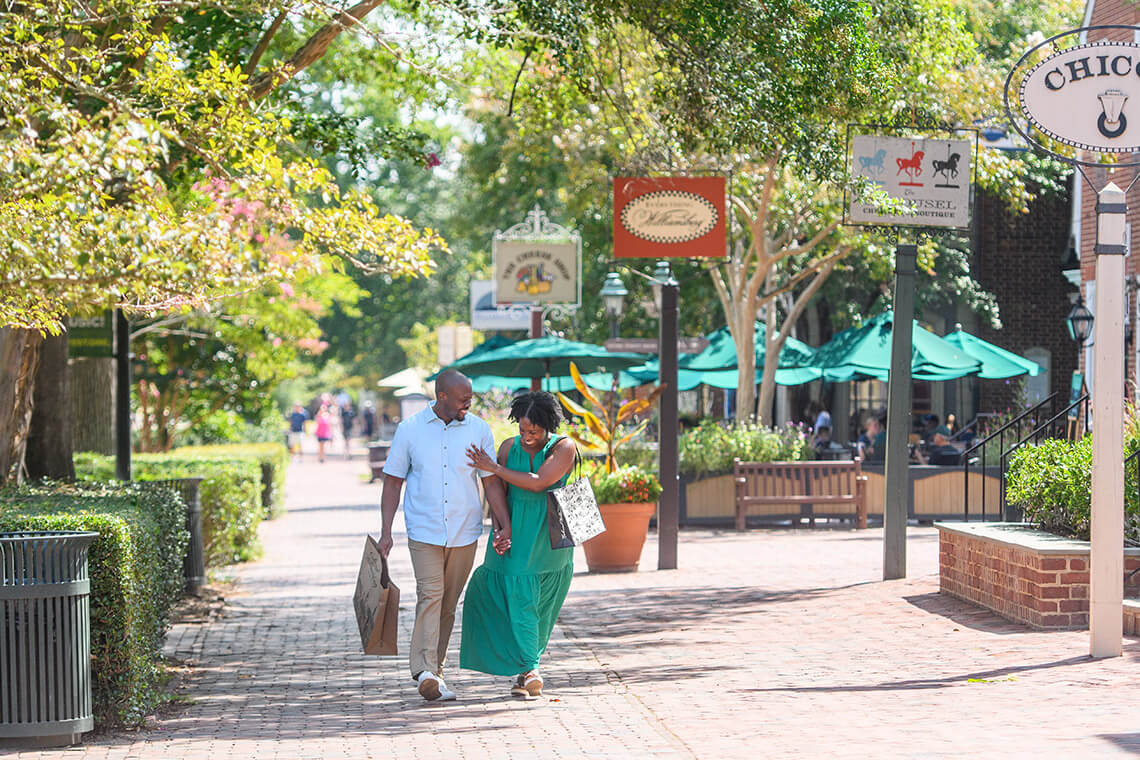
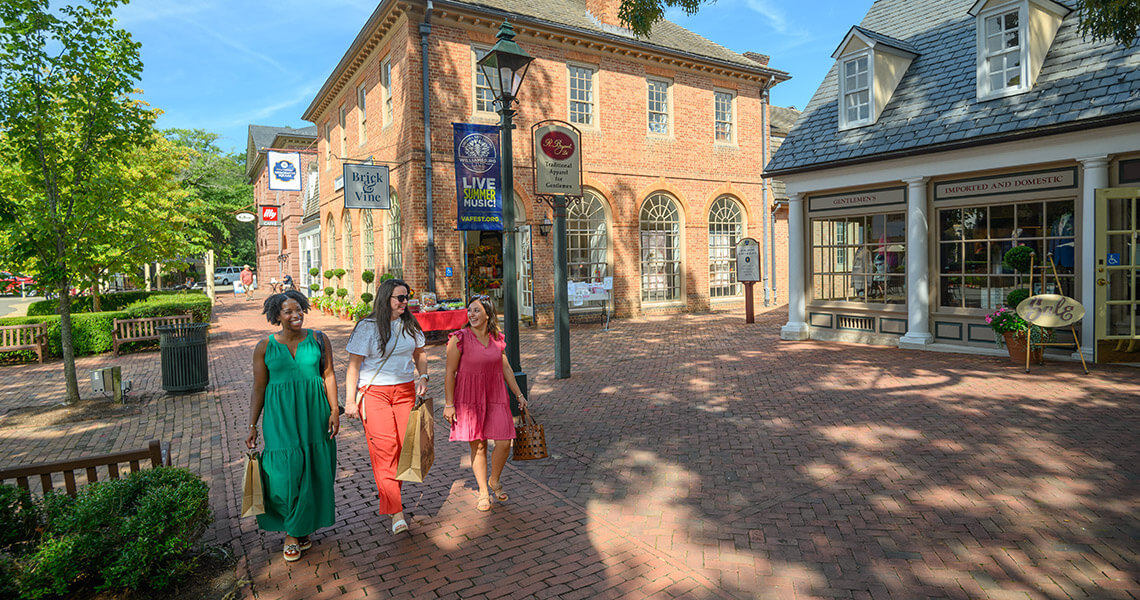
Discover Merchants Square’s colonial-era charm. Photography courtesy of Visit Williamsburg
Come nightfall, settle in for dinner at one of the historic taverns around Duke of Gloucester Street. 250 years ago, rebel patriots slipped into these watering holes and plotted against British rule by candlelight. Although Williamsburg’s taverns no longer serve as the unofficial meeting grounds for early revolutionaries, they offer an authentic taste of colonial flavors to today’s visitors.
“If you’re coming to Colonial Williamsburg, you really must eat in one of our taverns. Not only do you get the 18th-century ambience and this style of food of the period, but at different times, you’ll also have musicians in there who really bring that to life,” Vogel says. The King’s Arms Tavern, once a preferred haunt of George Washington, serves a period menu with offerings from chicken hash and stewed beef to the region’s famous peanut soup.
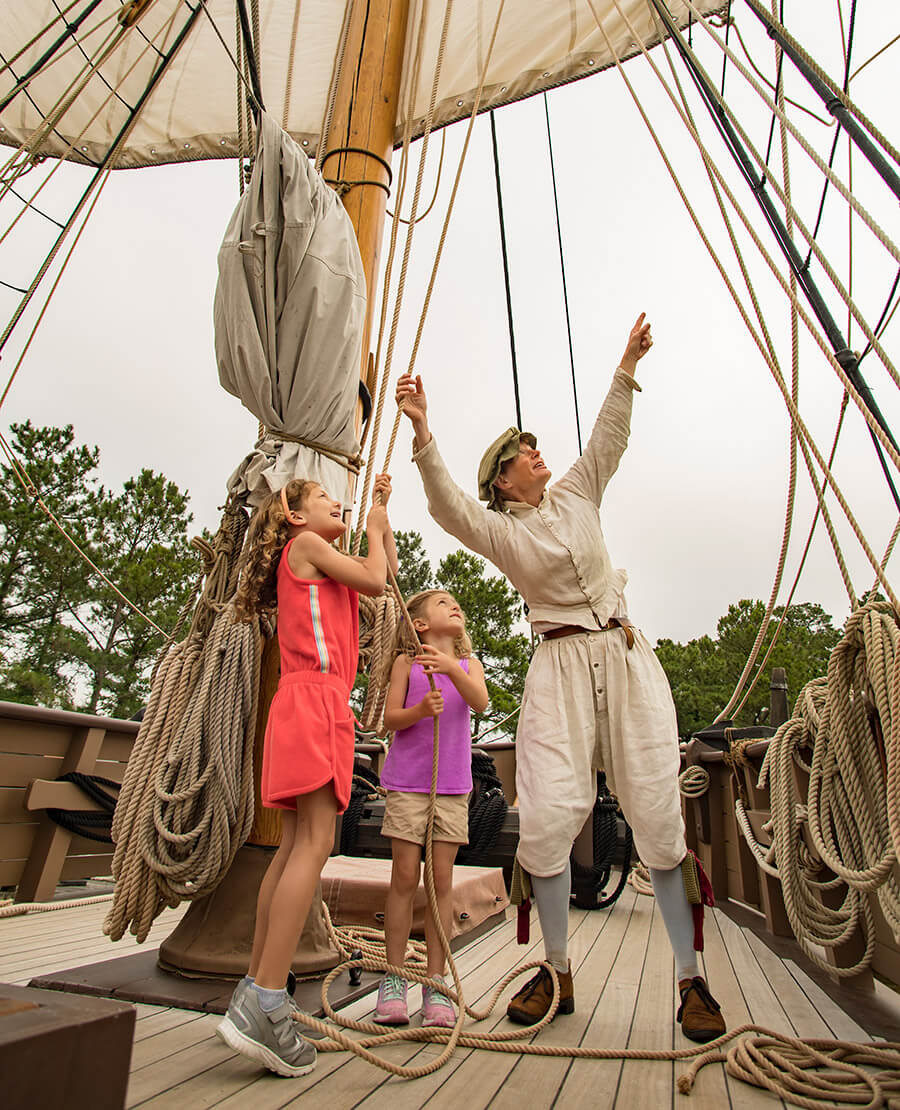
Aboard Discovery, raise the sails and peer out over the same waters that received colonists to these Virginian shores. Photography courtesy of Jamestown-Yorktown Foundation
Walk Through Early Settlements in Jamestown
Just a short drive from the colony’s capital, Jamestown awaits. Virginia’s first permanent settlement took root along the banks of the James River after three ships, the Susan Constant, Godspeed, and Discovery, dropped their anchors in 1607. Today, full-scale replicas of the vessels are docked at the Jamestown Settlement waterfront. Climb aboard and gaze up at the towering square-rigged masts or duck down into the ‘tween deck, cramped quarters where colonists spent four months during their trans-Atlantic crossing. The Susan Constant is currently undergoing restoration and is expected to reopen later this year.
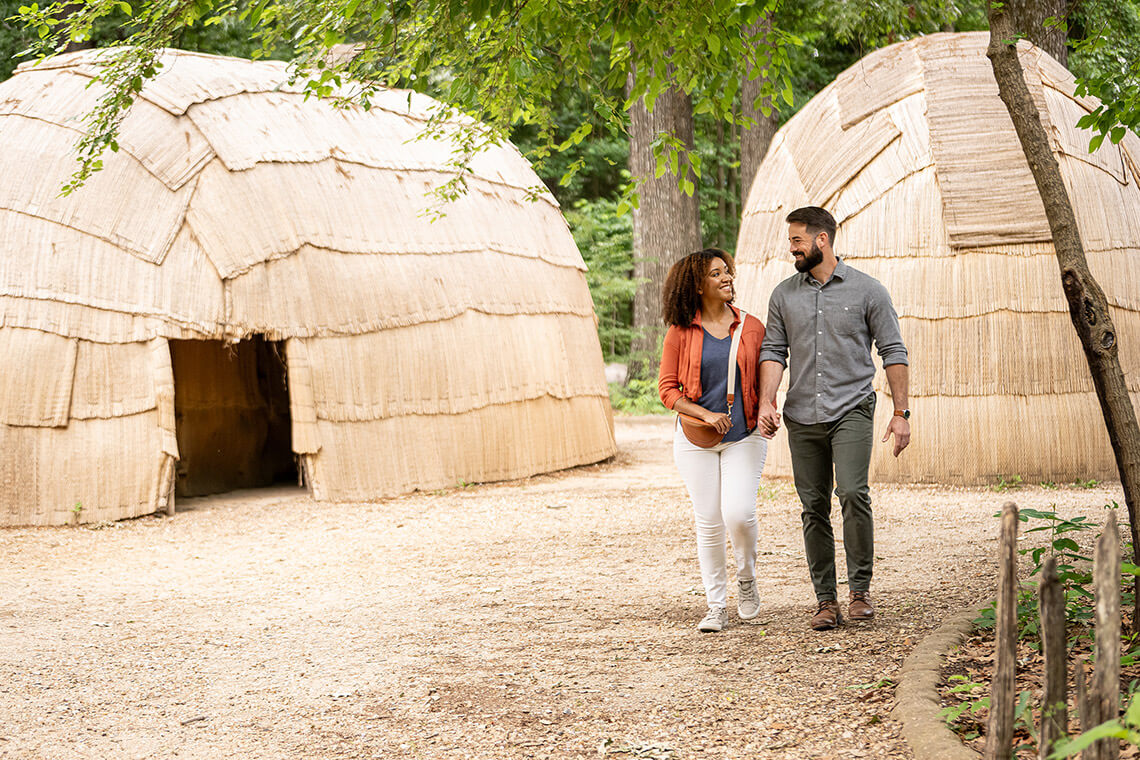
Inside Jamestown’s Paspahegh Town, learn from interpreters who demonstrate traditional Powhatan practices for gathering, cooking, and maintaining their homes. Photography courtesy of Jamestown-Yorktown Foundation
Steps from the water, the reconstructed Paspahegh Town highlights the advanced Powhatan Indigenous American culture that thrived in coastal Virginia. By practicing the intercropping of corn, beans, and squash, the Powhatan people created a self-sustaining system that yielded a bountiful harvest. Today, walk among these very native plants and step inside reed-covered Powhatan dwellings, crafted from bent saplings, woven mats, and bark. “We often see visitors come in and tangibly interact with the space. They want to feel the furs, bark, and texture of the weaving,” says Mariruth Leftwich, senior director of education and operations at the Jamestown-Yorktown Foundation. “It’s that sensory experience that people really connect with.”
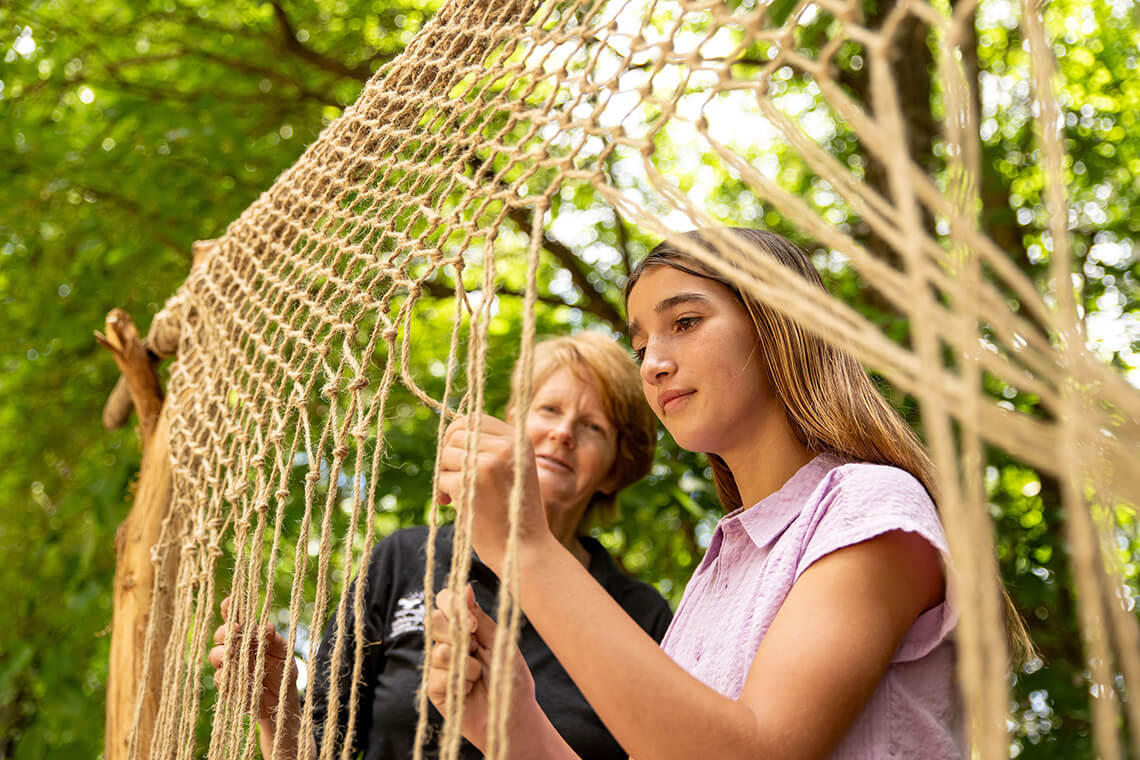
Try your hand weaving fishing nets. Photography courtesy of Jamestown-Yorktown Foundation
Steps away, Jamestown’s English Settlement recreates life inside the colony’s riverside fort. Pass through the tall wooden gates into an airy courtyard shaded by the sprawling canopies of willow oaks. Through open doorways of thatched, clay-streaked dwellings, watch as blacksmiths hover over glowing hearths, shaping iron into elaborate metalworks.
For those who wish to walk the original blueprint of James Fort, Historic Jamestowne sits a mile away, where an active archeological dig houses the ruins of the original colony. Check out the Archaearium museum, which houses more than 4,000 artifacts found at the site, from weapons and armor to coins and buckles. Outside, the Jamestown Rediscovery team works to surface the buried foundations of early row houses, cellars, and churches in a reminder of the history that continues to be uncovered today.
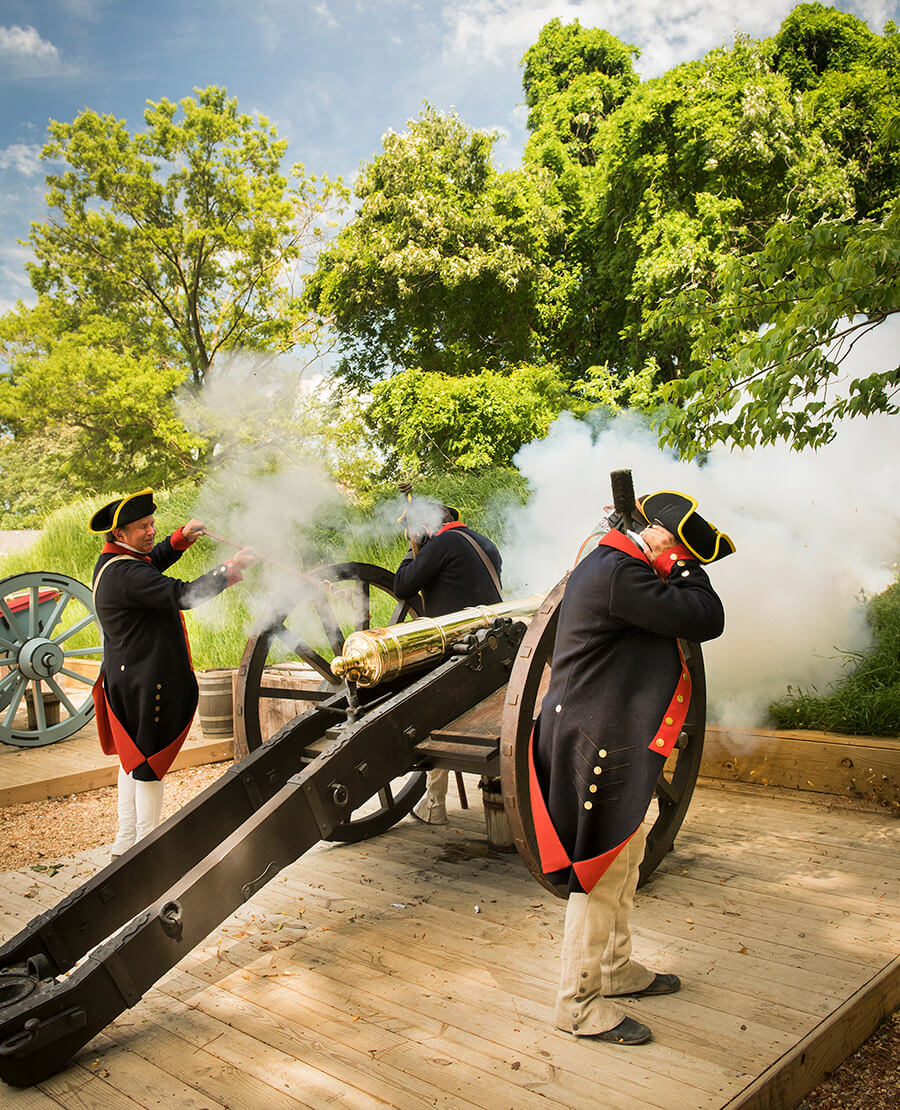
At the American Revolution Museum at Yorktown, living history interpreters perform military drills and showcase the everyday life of a soldier. Photography courtesy of Jamestown-Yorktown Foundation
Stroll and Sail Around Yorktown
Finally, a stop at Yorktown marks the third point of the Historic Triangle. At the site of General George Washington’s decisive victory over British forces, visitors can trace the steps of revolutionaries along the Yorktown Battlefield and observe original siege lines and historic iron cannons. Lining the field’s perimeter, an enclave of reconstructed canvas tents makes up the Continental Army Encampment. “It shows the different components of what life was like on the battlefield, from the kitchen to the surgeon’s tents. You can also see the role of women and children, so you get a sense of the full experience,” Leftwich says. During the summer months, stroll over to the Victory Monument and listen to the Fifes and Drums of Yorktown, a celebrated colonial ensemble, performing classic 18th century tunes dressed in authentic Continental Army regalia.
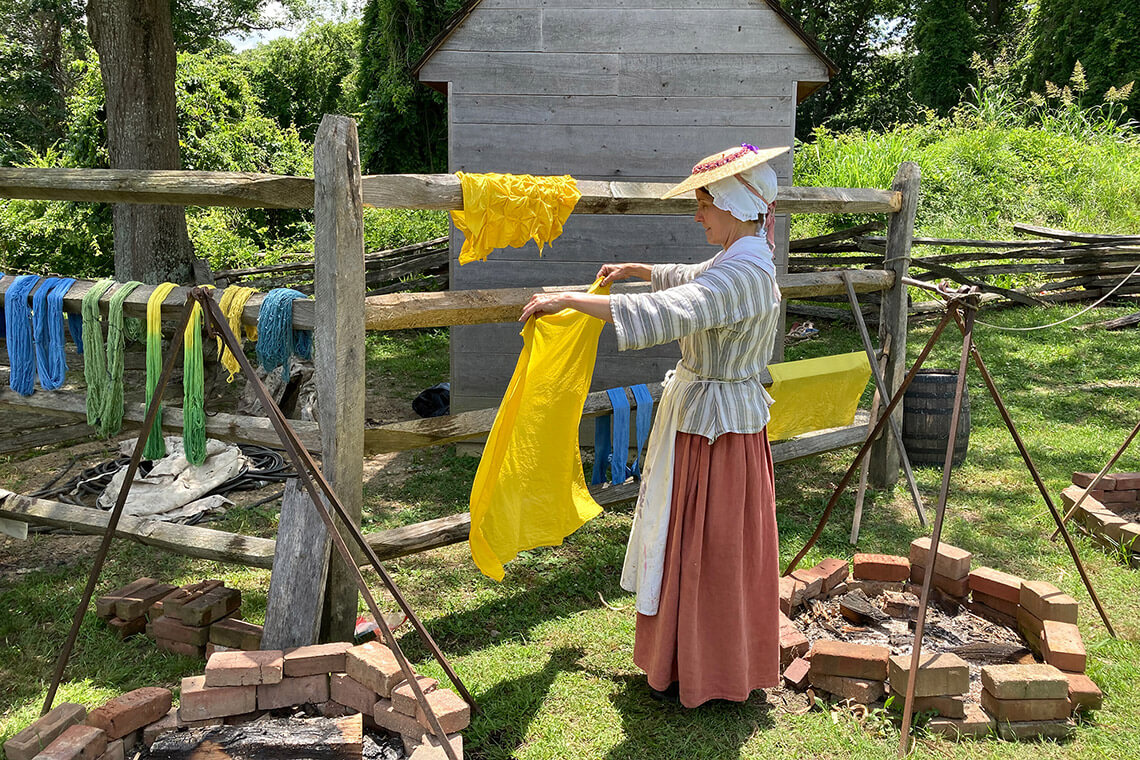
In Yorktown, historic interpreters demonstrate hand-dyeing fabric. Photography courtesy of Jamestown-Yorktown Foundation
Inside the American Revolution Museum at Yorktown, explore various artifacts and dioramas throughout the gallery exhibits. On July 1, the exhibition Give Me Liberty: Virginia at the Forming of a Nation will open and run through January 2027. “The exhibit will center on the Declaration of Independence, and in it, we make the very bold statement that without Virginia, there would have been no American Revolution,” Leftwich says.
From the museum, it’s a short ride on the free Yorktown Trolley to the historic downtown waterfront. From there, stroll down Main Street, stopping into the Yorktown Bookshop to peruse the shelves of secondhand reads and Mobjack Coffee Roasters for a caffeine pick-me-up (try the specialty blend commemorating America 250) and a sweet treat.
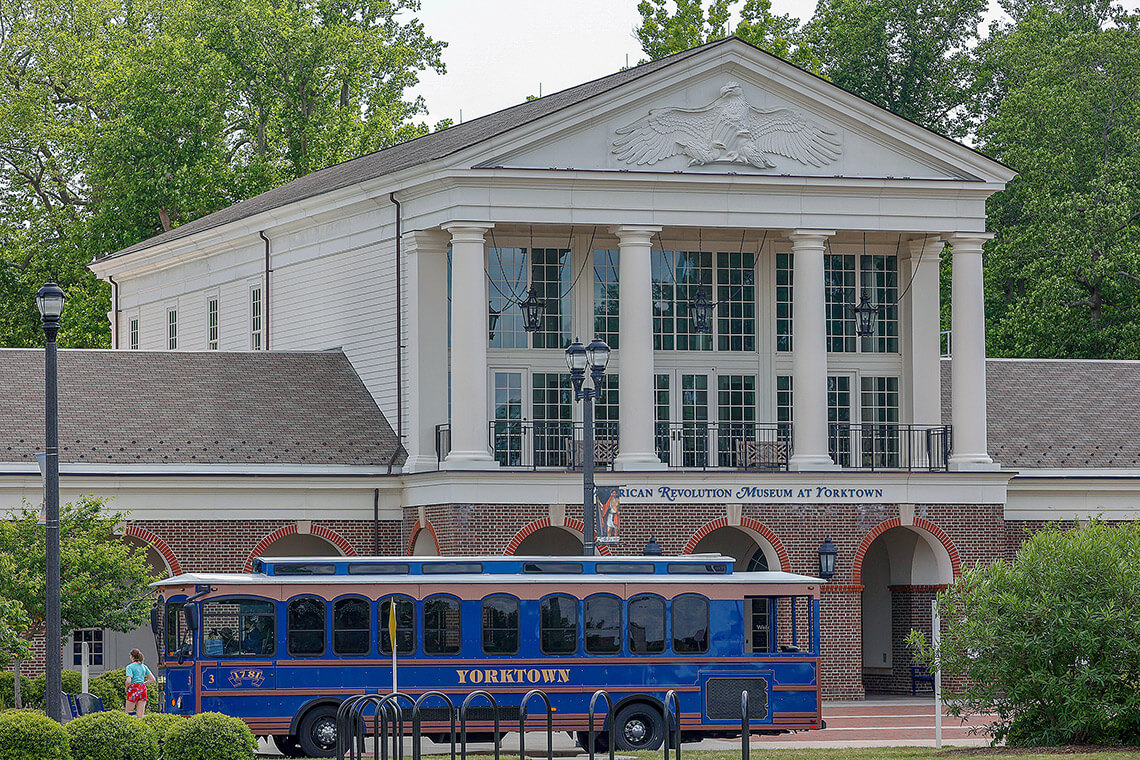
Hop aboard the Yorktown Trolley to enjoy an easy, half-hour scenic loop. Photography courtesy of Jamestown-Yorktown Foundation
To end the day, Yorktown Sailing Charters offers a tranquil sunset cruise along the York River, once the second busiest port in Virginia. “Yorktown has always thrived on its connection to water and being able to see that reinforces its power of place,” Leftwich says. Climb aboard the Serenity and take in panoramic views of Yorktown’s historic coastline as you cruise around the York River.
Whether it’s dining by lantern light in an 18th-century tavern or stepping into the open courtyard of a reconstructed English fort, commemorate the nation’s 250th anniversary with a trip to the Historic Triangle. Ready to see where it all began? Click here to plan your trip.