Old Salts: Whether native or transplant, these folks found their place and passions on North Carolina’s coast, becoming as integral to life here as the sand and sea. Read more about the folks that make the coast thrive.
Traffic trickles steadily off U.S. Highway 70, winding into the horseshoe driveway of Thomas and Monica Smith’s home. Each arrival is heralded by the sound of shifting gravel grinding against tire tread. A gleaming black Mercedes, by all appearances recently detailed and waxed, glides in, trailed by a rumbling, mud-splattered Ford F-250, towering on its lifted suspension.
Both driver doors swing open at once. Petite cheetah-print loafers, tassels bouncing, light upon the gravel from the Mercedes. A pair of scarred work boots drops from the running board of the F-250, landing with a thud to reveal a man as rugged as his ride. The two customers share a friendly wave before retrieving their respective coolers.
Miss Gina’s Fresh Shrimp, a pint-sized roadside stand squeezed between historic Beaufort and Down East’s North River Bridge, draws a kaleidoscope of clientele. Born out of necessity, this family-run shop is anchored in commercial fishing heritage and a fierce devotion to fresh, local shrimp.
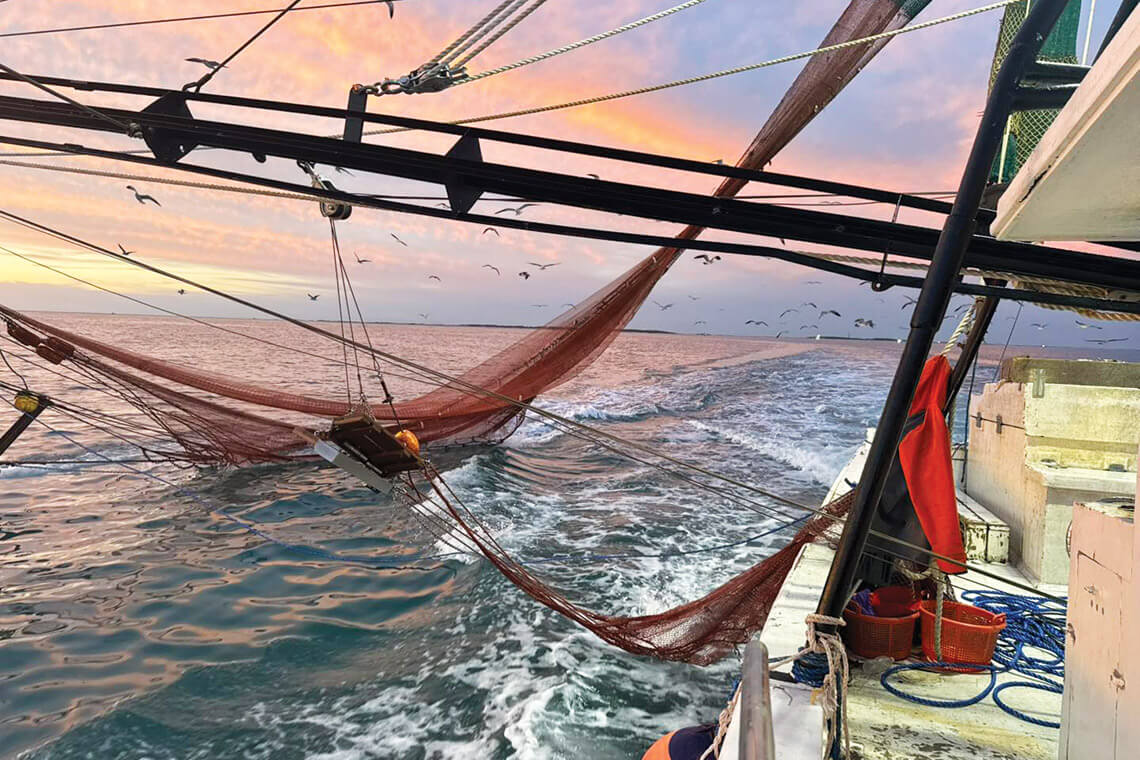
The rise of the farm-to-table movement put Miss Gina’s in the spotlight, as the journey from water to table was radically short and refreshingly direct. Photography courtesy of Miss Gina’s Fresh Shrimp
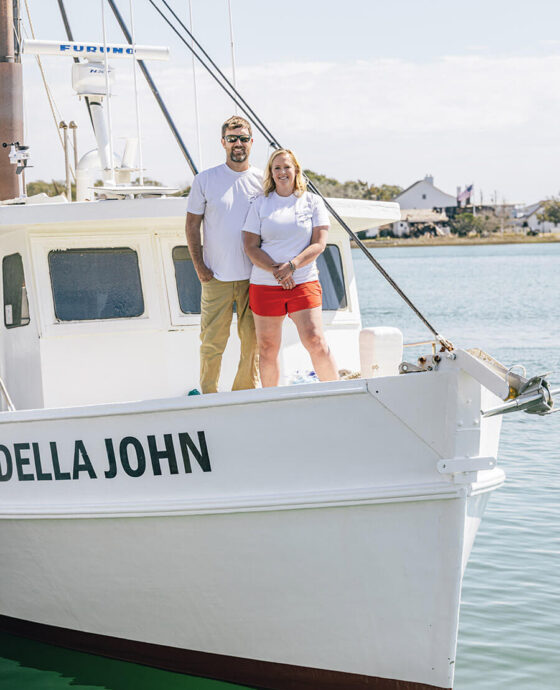
“I really started to shrimp when I was 12,” says Thomas, the son of a commercial fisherman. The water is — and always has been — part of the shrimp boat captain’s life. When he turned 15, his father gave him a choice: money for college or getting a workboat. The decision was written in his genes. Her name was the F/V Miss Gina II, named after his mother.
The vessel and choice to pursue his passion nearly became one he lived to regret. “In the mid-2000s, imported shrimp started really flooding the market, and the price of shrimp dropped,” says Monica, Thomas’s wife.
Faced with riding a wave of market volatility or keeping food on the table, many shrimpers sized up their David-Goliath odds and walked away. The Smiths, however, weren’t ready to accept that fate.
They reevaluated the standard model — commercial fishermen selling their product to fish houses who then process and distribute at a higher price — and wondered, What if instead they sold their shrimp directly to the consumer? With faith in their corner, a cooler of fresh shrimp became their sling against a foreign giant.
Thomas’s father, Allen, brought home 50 pounds of head-on shrimp. Thomas’s mother, Gina, armed with a cooler, folding chair, and a little sign, set up camp in the front yard. Allen took off to cut the grass. Not long after he left, lost in the roar of the mower, he looked up to see Gina walking across the yard, a satisfied smile across her face. In less time than it took to finish mowing, she had sold out.
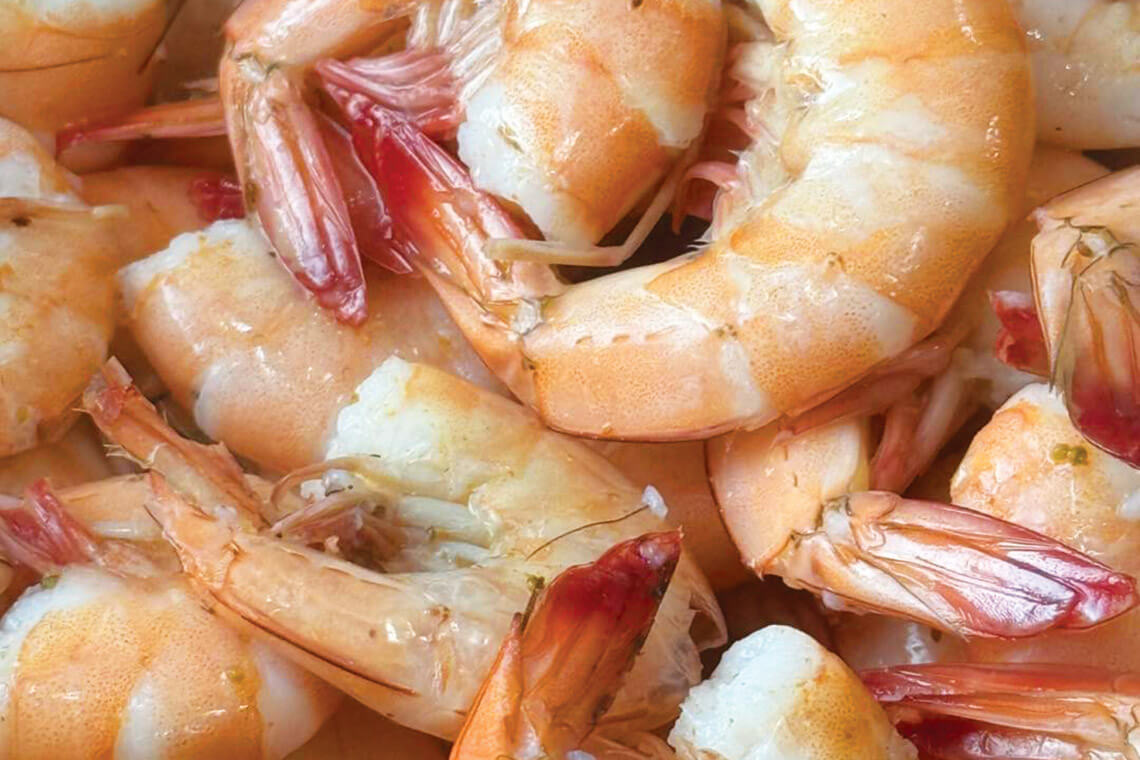
The Smiths’ fresh-off-the-boat shrimp drawers every kind of shopper to their roadside stand. Photography courtesy of Miss Gina’s Fresh Shrimp
“Initially, Allen would just bring home a few coolers, but soon it was the whole haul,” Monica recalls. In a matter of months, the stand had gone from an experiment to a full-fledged business. As the farm-to-table movement gained momentum, people craved food with a story and demanded fresh product straight from the source. They found that at Miss Gina’s.
Thomas and Monica married in 2009 and commenced juggling a whirlwind of responsibilities: Thomas worked a full-time job, Monica taught school, they built a house, and, of course, continued to shrimp. “You have to do what you have to do,” Thomas says. Their days blurred into nights spent shrimping past midnight, stealing a few hours of sleep before starting all over again — a relentlessly exhausting pattern that continued until they learned a baby was on the way.
Babies have a way of changing the script. Monica traded teaching for nursing school and, between classes, began staffing the stand while Thomas was on the water. “I was selling shrimp with a not-quite-newborn baby,” she says. Thomas outfitted a child’s playhouse with a Pack ’n Play, toys, and a swing on the front porch. “I raised our first boy out there, selling shrimp,” Monica says, nodding to where her mother-in-law once sat.
“We adapt, pray a little bit, talk about it, try to give it back, and then it blossoms some more.”
In 2020, after a decade of doing what they had to do to make ends meet, the pair settled into the pattern they had been working for. There were no other jobs. Thomas shrimped full time, and Monica ran the stand. “This is all I’ve ever wanted to do. I just didn’t think I could ever do it full-time,” Thomas says. “We adapt, pray a little bit, talk about it, try to give it back, and then it blossoms some more. And then you’re like, ‘Well, this is our calling, and now we’ve just got to ride the ship.’ ”
Today, Thomas and Monica have three boats and two sons. Just as in the beginning, there are two captains: Thomas and his father. Last year, they harvested and sold nearly a half-million pounds of shrimp, enough to fill nine or so school buses. They’ve added oysters to their roster, sourced from a local oyster farm. Monica’s mom, Sarah Lee Willis, a beloved local cook and baker, has joined the fold, selling her crab cakes and seafood dips, as well as pies and cakes.
“We work hard,” Thomas says. “You wish for all this stuff, and when it happens, you’ve got to keep making it happen because there are people depending on you for a quality product they trust.” The sound of crunching gravel catches their attention. A customer of 10 years has just arrived. It’s time to get back to work.
print it