 In the wake of Hurricane Helene, people across the mountains did what they could: planting, building, repairing, creating. These are stories not of grand gestures but of small acts that became the scaffolding of recovery. Read about those who came together to support each other.
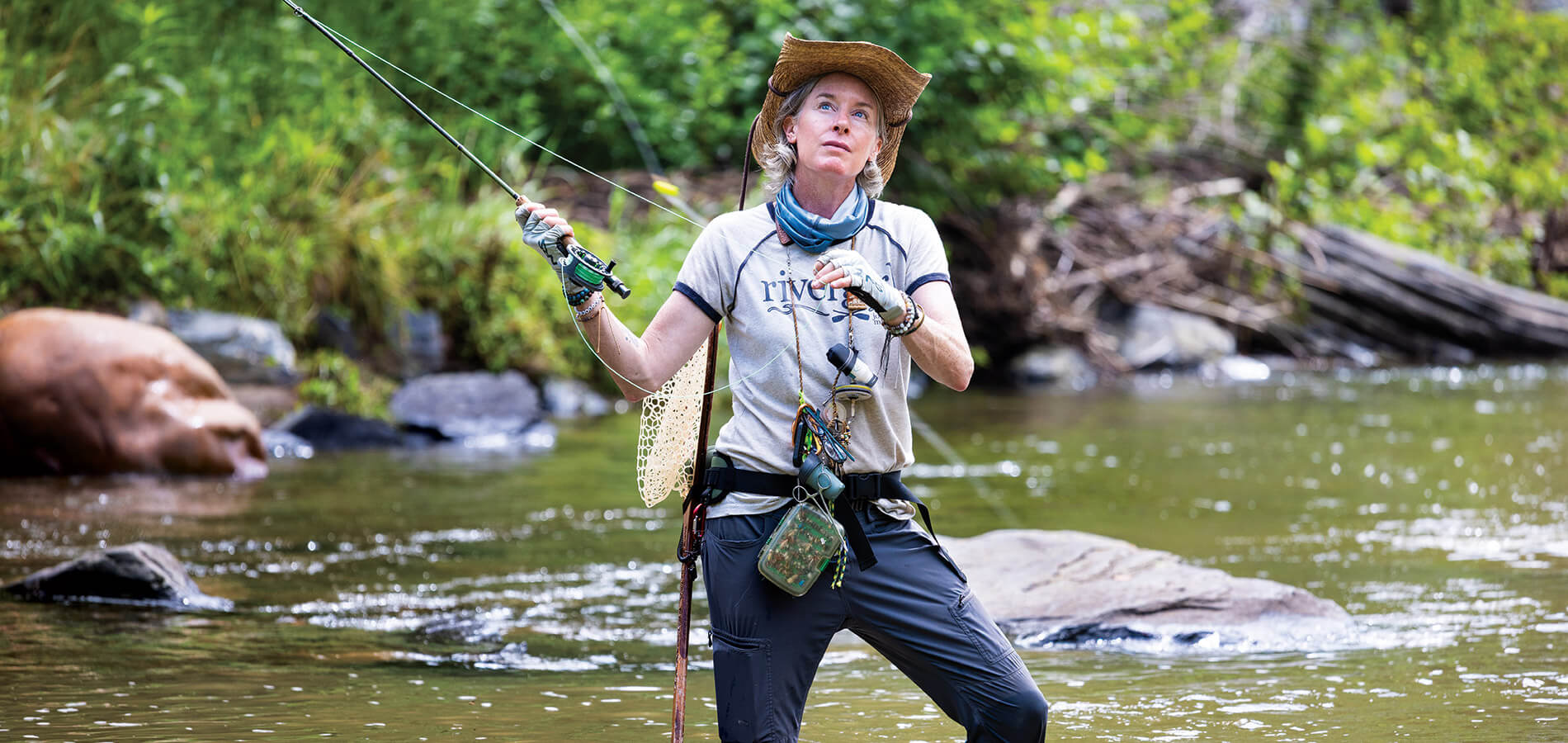
The water beneath Kelly McCoy’s canoe is moving fast. It carries her boat along the New River with ease, as if it weighs nothing at all. Spring showers doused Ashe and Watauga counties last night, leaving the water murky. As the owner of RiverGirl Fishing Company, an outfitter in Todd, McCoy has created her own river quality scale: gin-clear, sweet tea, Yoo-hoo, and Willy Wonka Chocolate Factory. Today’s a Yoo-hoo day, but seven months ago, Helene broke her scale. “The farmer up here lost 350 bales of hay,” McCoy says, gesturing to a cabin on the edge of a pasture. “They were floating down the river, looking like marshmallows in hot chocolate.”
This day in late May marks the start of RiverGirl’s first season after the devastating storm. There’s plenty to do, but the New holds McCoy’s undivided attention. “When I’m on this river, I don’t think of anything except what I’m going to see around the bend,” she says. “Out here, it’s just you and the moving water.”
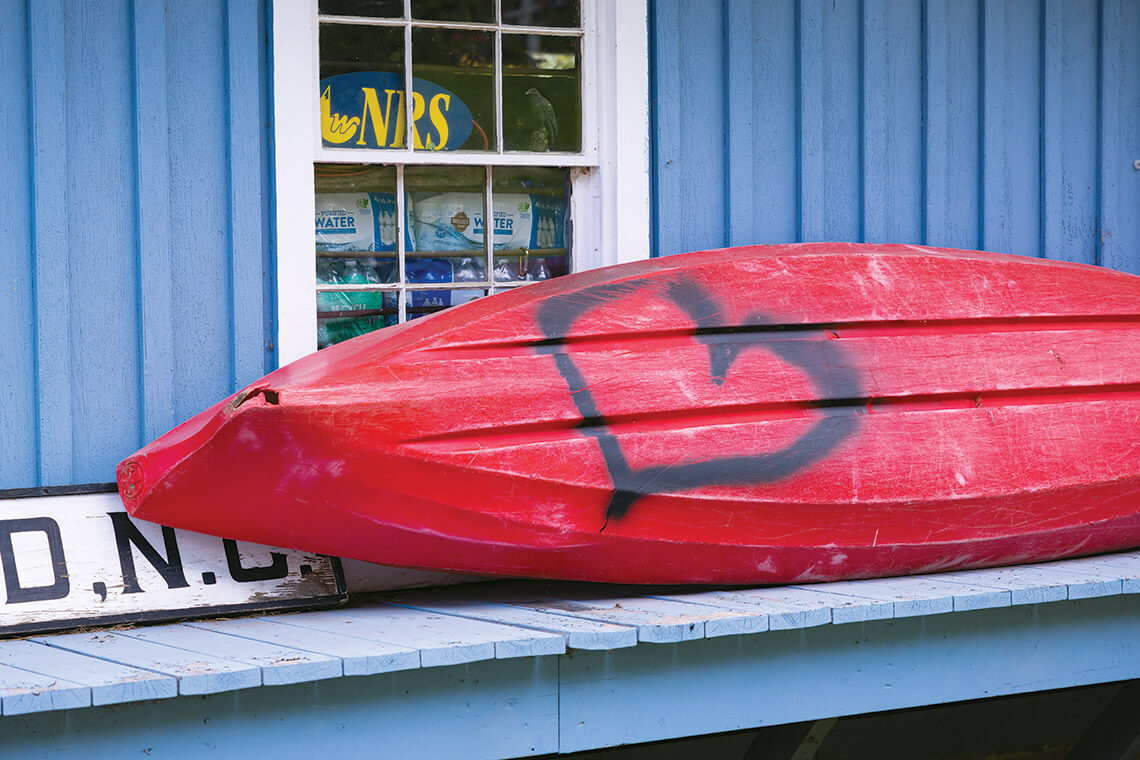
Her dog Chico joined her for every post-Helene cleanup trip, and it was on one of those trips that McCoy found the lost canoe that came to represent so much. photograph by David Uttley
McCoy floats past familiar High Country scenes: orderly rows of Fraser firs, cutouts of Bigfoot traipsing around lawns, eagles perched on branches. She passes new ones, too: a crumpled van, heavy machinery collecting fallen trees in the shallows, sandbars parting the stream where it was once unbroken.
McCoy points toward some sycamores along the riverbank. Last September, she paddled a fisherman down this stretch of the river in a 16-foot red canoe. One week later, the vessel was trapped in those trees’ branches 20 feet above the ground. McCoy discovered the lost canoe during one of the cleanup trips that she and her wife, RiverGirl co-owner Renata Dos Santos, organized. McCoy left it in the branches: a piece of her life and livelihood suspended in time, safe but still so far from stable ground.
She took a ladder and paint to the river between cleanups and drew a heart on the boat. Her neighbors didn’t have to see her handiwork to know that McCoy would always be there for them.
• • •
Two years after moving to Todd from Florida in 2005, McCoy saw smoke billowing from her neighbor’s property. She hurried over to see if she could help. The firefighters pointed beside the burning home to a donkey standing next to a propane tank in the fenced pasture. “I jumped across the fence, figured out how to get him out, and helped pull some hoses,” she says. “After it was all done, the chief asked me if I wanted to join the fire department.”
McCoy took to her new position like a trout to a mountain stream. “I’m a go-getter. I’m like a squirrel. In fact, my nickname in school was River Girl, or River Squirrel,” she says, describing a childhood spent fishing.
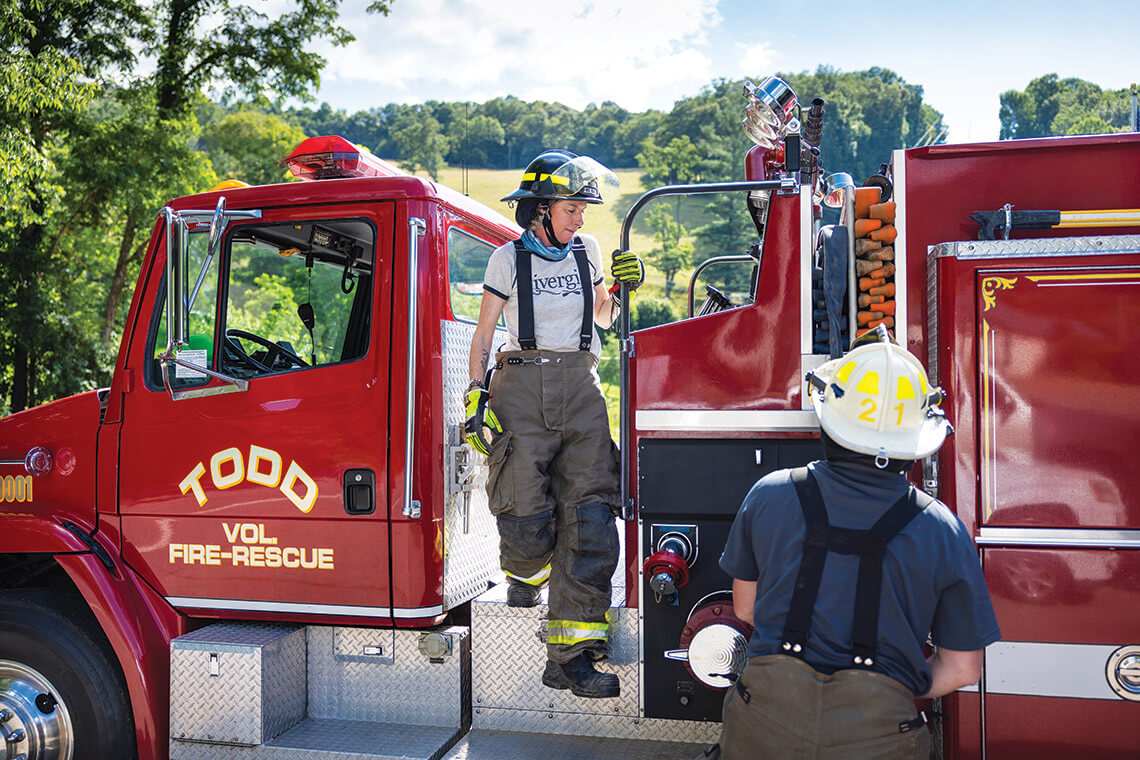
With the closest hospital about 14 miles away on winding mountain roads, Todd’s roughly 2,000 residents depend on the fire department. “People call if their cat’s in a tree. They call if their wife’s fallen,” McCoy says. “Sometimes, they just call because they don’t feel good.” photograph by David Uttley
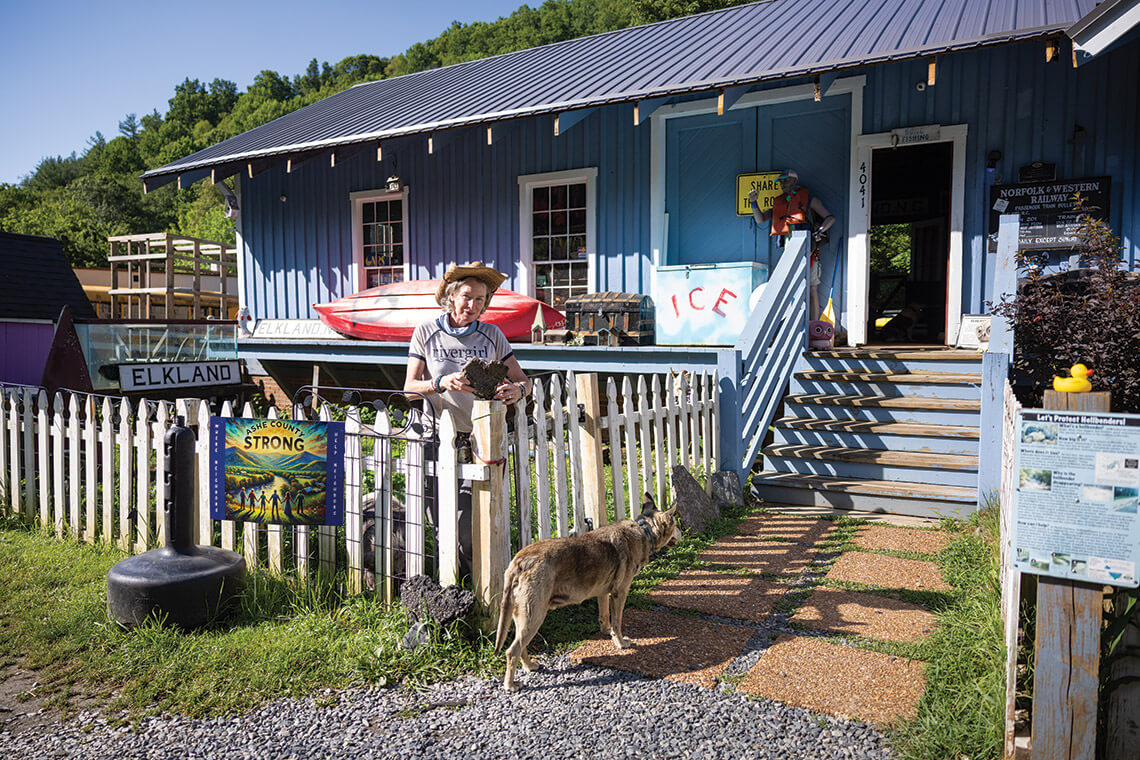
Shortly before McCoy joined the fire department, she opened RiverGirl Fishing Company in the old blue depot that once housed the final stop on the Virginia-Carolina Railroad. She attended first responder training between her angling trips.
When McCoy moved here, she never would’ve guessed she’d become a firefighter. She was a water girl, after all. Her father was a bass fisherman who imparted his passion onto his daughter. “By the time I was 14, I had 15 fish tanks in my bedroom with a water bed,” she says of her childhood in Alabama. “My father said that if I added another fish tank, I was going to fall into the basement.”
She completed the fisheries program at Mississippi State University and moved to Florida to work as a marine biologist, but it only took two vacations to the High Country to convince McCoy that Todd was where she belonged.
“We don’t have fire hydrants here. The water comes from that creek, that river.”
It lured her in the same way it called to Dos Santos, who was visiting around 2014 when the couple first met. “There’s something about [Todd], and nobody can quite put their finger on it,” says Dos Santos, who grew up surrounded by water in Trinidad and Tobago. “There’s a sense of peace, of belonging, of history, even though I haven’t grown up here. It just feels like home.”
Today, McCoy spends most of her time wading into the New with tourists who are trying their hand at fly-fishing, but when called to action, she wields hoses to put out fires with that same water. “We don’t have fire hydrants here,” McCoy says. “[The water] comes from that creek. It comes from that river.”
• • •
At the top of the steps at RiverGirl, Dos Santos looked out from under the frayed brim of her ballcap at the crowd of volunteers. It was the end of September, and usually, the group gathered in the parking lot would be strapped into life jackets, listening to a safety talk before floating through the fall foliage. But the folks there that day were neighbors, construction workers, firefighters, and veterans who answered RiverGirl’s call to action.
With McCoy standing by her side, Dos Santos thanked everyone for coming and held up a list with the names of people whose homes needed mucking, whose roads needed clearing, and who hadn’t received a care package yet.
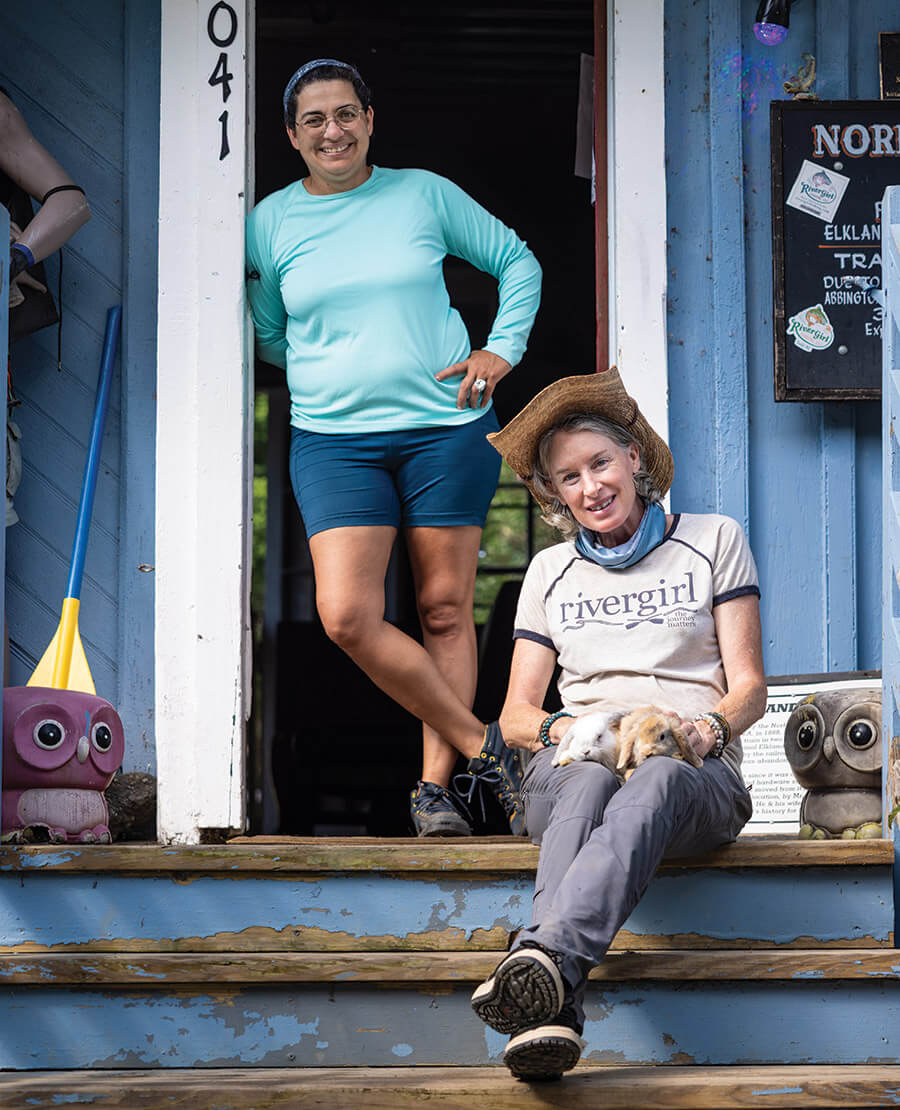
Dos Santos and McCoy are both animal lovers and enjoy introducing RiverGirl visitors to their many critters, including bunnies Marshmallow and Nutmeg. photograph by David Uttley
Hours before, Dos Santos, McCoy, and a few other women had gathered in the old depot, which had become “Command Central,” to organize the messages they received online, from locals in need and distant family members who couldn’t reach their relatives, into tasks they could delegate. Water, food, and other necessities covered the chestnut floors of the old freight room.
The 14 years McCoy has spent as a firefighter prepared her for this. “Being on the fire department has helped me look past the doom and gloom and look at what’s still there,” she says.
Command Central ran for three weeks until Ashe and Watauga counties got their power back. McCoy and Dos Santos dedicated countless hours to helping their chosen home, but ask them about this time, and they’ll tell you first about how the community showed up for them.
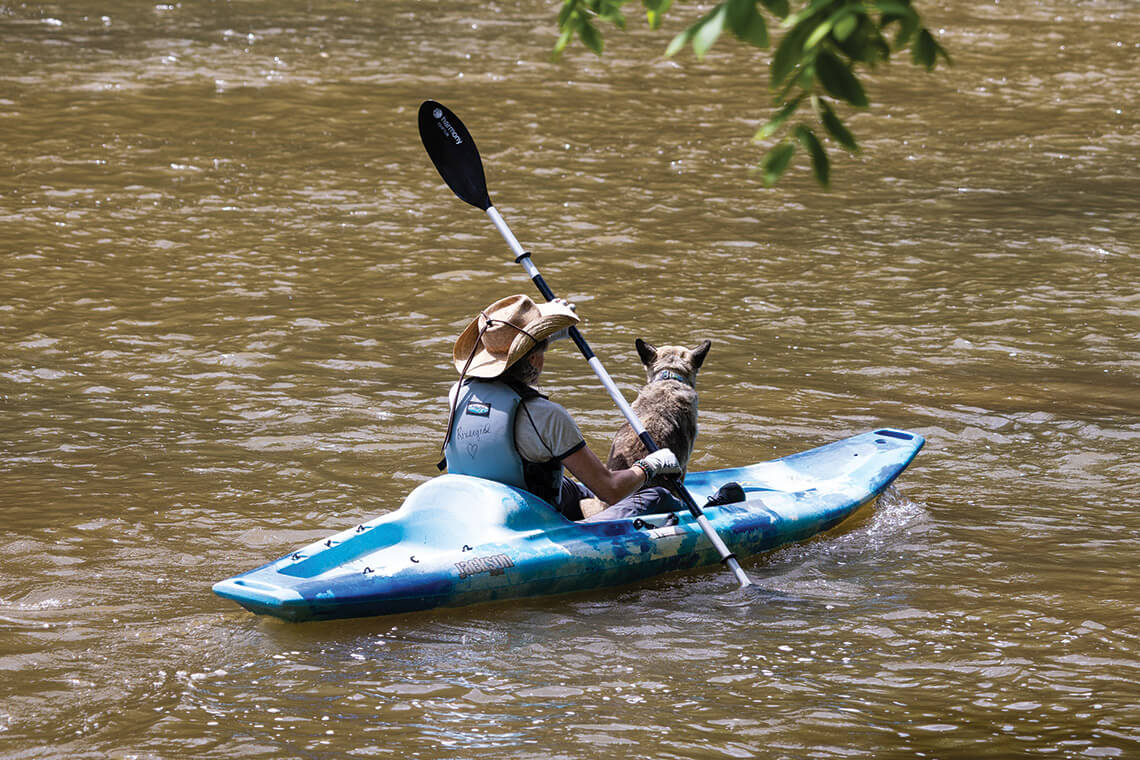
Where McCoy goes, her dog Chico follows. photograph by David Uttley
They’ll introduce you to the pastor at Blackburns’ Chapel, who rescued their goat and pig from the flooded pen in front of RiverGirl. They’ll take you to Todd’s Table, a small food pantry they opened a few weeks before Helene, where they’ll beam over the generosity of local farmers and neighbors. They’ll show you the inflatable tubes and boats that people donated after RiverGirl lost 300 tubes and a storage building full of equipment. They’ll tell you about the prayer Dos Santos said mere hours before a stranger messaged them, offering to pay the entire $17,000 garbage bill that they’d amassed from collecting the town’s 88,000 pounds of debris.
“I see and experience more examples of kindness, of people looking out for each other,” Dos Santos says. McCoy agrees: “What’s come out of this hurricane is that we’ve made friends for life.”
• • •
A sliver of orange plastic peeked out from a pile of garbage like a sunbeam shining between storm clouds. It was three weeks after Helene, and McCoy was sifting through trash left behind one of the old train cars at RiverGirl. She quickly revealed one of her original boats from 15 years ago. The kayak was in perfect condition. McCoy turned to her wife and said, “Put me in the water.”
Dos Santos drove her to the drop-in site. “I floated in that boat just for fun, just to reconnect,” McCoy says of her first trip down the New since Helene. “I wanted to see how the river fared.” After nearly a month of checking in with her community, McCoy needed to check in with the river.
She admits that the river has changed. But she also knows it’s recovering. “Mother Nature just rearranged the furniture a little bit,” she says.
McCoy’s a river-half-full kind of paddler. She knows that the damage to the New is temporary. “Nature is resilient,” she says. “It rebuilds itself way before we do.” photograph by David Uttley
As a firefighter, McCoy sees the New as a resource to protect her community. As an experienced paddler and fisherwoman, she understands that water is heavy, powerful, and uncontrollable. She’s reminded of that every morning when she walks up RiverGirl’s front steps and sees the canoe that the sycamore trees saved. It now lives on the shop’s front porch, the black heart she painted on its side a permanent symbol of perseverance.
“We might hit a rock and dump over. Who knows what could happen,” McCoy says. “We just flip the boat back over, get the water out of it, and get back with the flow.”
RiverGirl Fishing Co.
4041 Todd Railroad Grade Road
Todd, NC 28684
(336) 877-3099
rivergirlfishing.com