 In the wake of Hurricane Helene, people across the mountains did what they could: planting, building, repairing, creating. These are stories not of grand gestures but of small acts that became the scaffolding of recovery. Read about those who came together to support each other.
When the barn washed away, James Wilkes knew it was over for the bees. All that morning, Big Laurel Creek, which runs through Wilkes’s farm in Creston, had been rising. By 10 a.m., it had already seeped past the firepit, which until that day — the day Helene blew in — was the highest level the creek had ever been in at least 20 years. Wilkes watched the water pour into the garlic beds he had recently prepared for planting and carry away the soil. He watched it inch closer and closer to the underside of a small wooden bridge until at last the bridge broke free and sailed down what no longer could be described as a creek.
“I kept telling my kids, ‘Don’t worry. It won’t get any higher,’” Wilkes says. “But after I heard myself say it for the fifth or sixth time, I stopped saying it.”
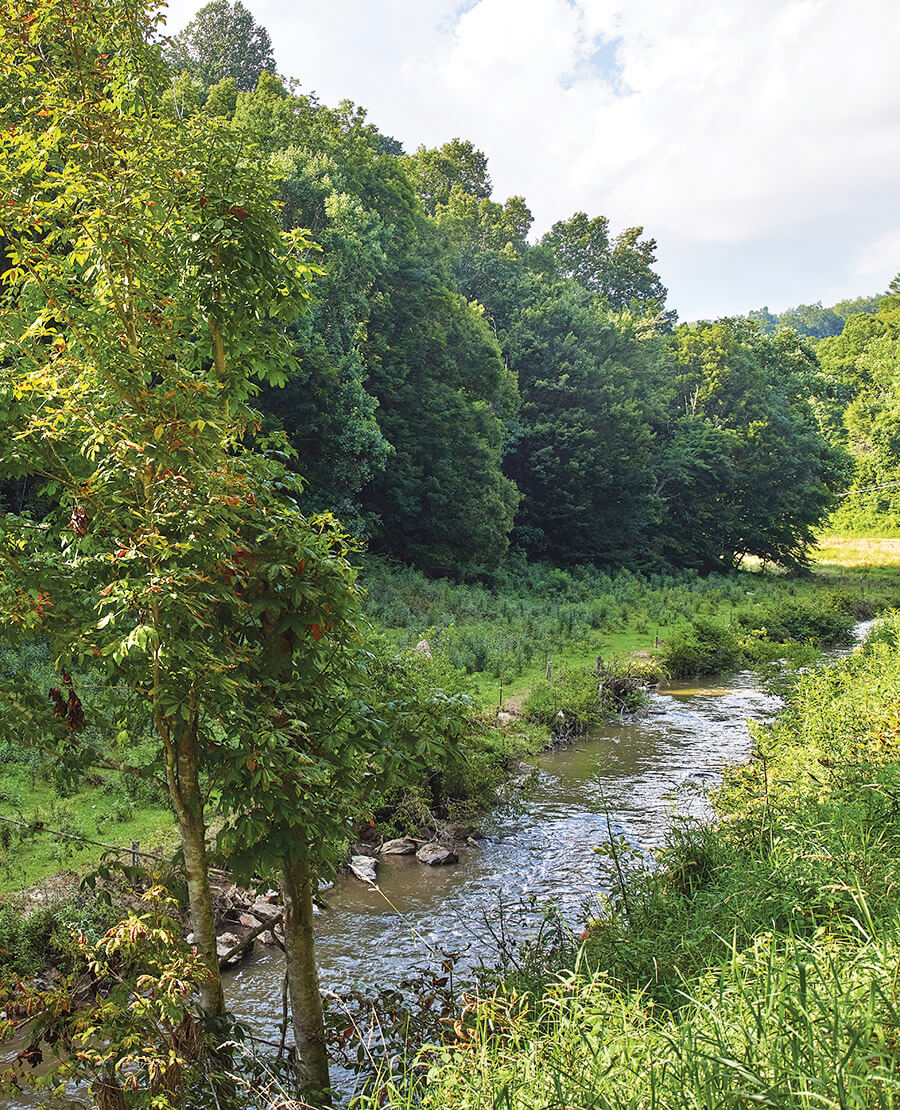
Big Laurel Creek photograph by Joey Seawell
Wilkes wondered, Could the creek actually reach the beehives? It seemed impossible. The bee boxes — housing 65 hives and well over a million honeybees — sat halfway up the hill from the creek to the house, at least eight to nine vertical feet above the normal creek level. It was inconceivable that the water could get that high.
Until it did.
“Between 10 a.m. and 1 p.m., the water rose fast — at least 10 vertical feet in those three hours,” Wilkes recalls. He scrambled to save what he could. Sloshing through mud and water up to his knees, he grabbed stuff and tossed it to higher ground. A lawn chair. A rake. A few bee boxes. But the wind and mud and sheeting rain made it hard to see or move efficiently, and the water just kept coming. Wilkes retreated to the farmhouse porch, where he and the kids watched the flood claim the beehives. The pickup truck. The barn.

Meanwhile, on the other side of Bluff Mountain in Fleetwood, Todd Swanson rummaged for candles and flashlights. He lost power for 12 days, but his house had no flooding or wind damage. When the storm calmed, Swanson and his wife talked about checking on people at lower elevations. But with roads washed out and bridges gone, it wasn’t so simple. So Swanson focused on one thing he could do.
“I’ve only lived here a few years, and most of the people I know are beekeepers — so those are the folks I thought of first,” says Swanson, who has been the president of the Ashe County Beekeepers Association for two years. The beekeeping club has about 50 members, and Swanson got to work trying to contact each of them to check in. Wilkes had been hit hardest. But everyone was alive and safe.
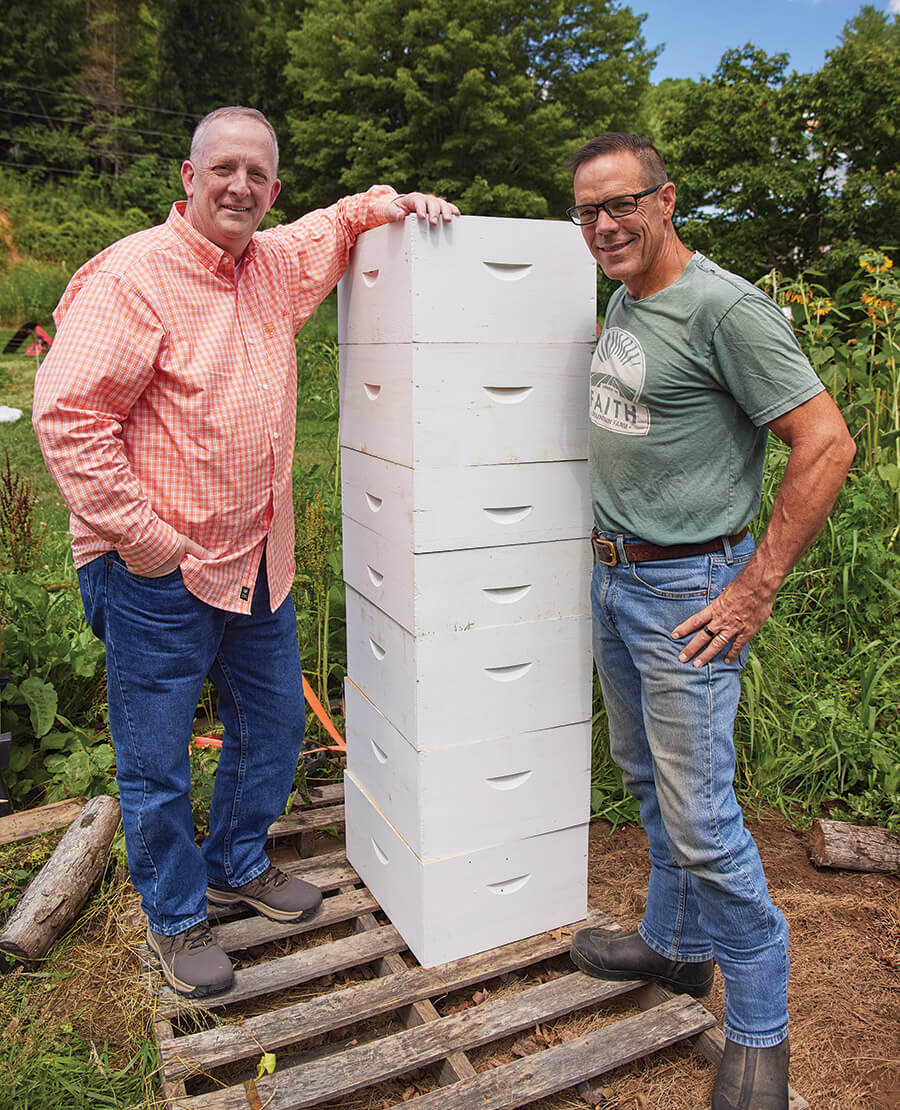
As president of the Ashe County Beekeepers Association, Swanson (left) helped organize a “Build a Box Day.” Fifty of those boxes went to Wilkes. photograph by Joey Seawell
Swanson estimates 80 to 90 percent of the beehives in Ashe County were destroyed by the storm and its aftermath. The surviving bees would need food immediately. “All summer, we beekeepers rob the honey from our hives,” he explains. “You try to leave enough to sustain the bees through the winter. But the hurricane wiped out the goldenrod, which is the last floral source of the year that gives our bees the best source for food. Without the goldenrod, the bees would have a hard time making it through the winter.”
Beekeepers sometimes feed their bees sugar water, which mimics nectar. “You need 10 to 20 pounds of sugar to feed a hive, and a lot of folks didn’t have extra money at that time,” Swanson says. “People love their bees. But they had bigger things to worry about.”
He began going to local stores and restaurants to ask for sugar donations. In total, he collected about 2,500 pounds. Then he got a call from a man who said, “I’ve got some sugar for you.” Up to that point, Swanson had been encouraged by how helpful and supportive everyone had been. But he never imagined this: “Some sugar” turned out to be a tractor-trailer load of 10,000 pounds from a business in South Carolina. Swanson set up shop at a farm, and every morning for a week, beekeepers from Ashe County and neighboring counties came to pick up sugar — as much as they needed.
Swanson thought he might recruit a friend or two and build 10 or 20 bee boxes to give to folks who’d lost their hives. “But then I saw what happened with the sugar, and I felt like the potential was there to do more,” he says. So he began planning “Build a Box Day,” with a goal of 400 boxes.
Ashe County Farm Bureau Insurance wrote a check for $7,000. Parker Tie Company hardware donated glue, paint, and nails. Other businesses contributed materials at cost. And on a sunny November day not long after Hurricane Helene, 75 people — mostly beekeepers, plus a handful of sympathetic woodworkers — gathered at Midway Baptist Church in West Jefferson. Hammers tapped, staple guns fired, and the smell of wood glue and paint floated in the air.
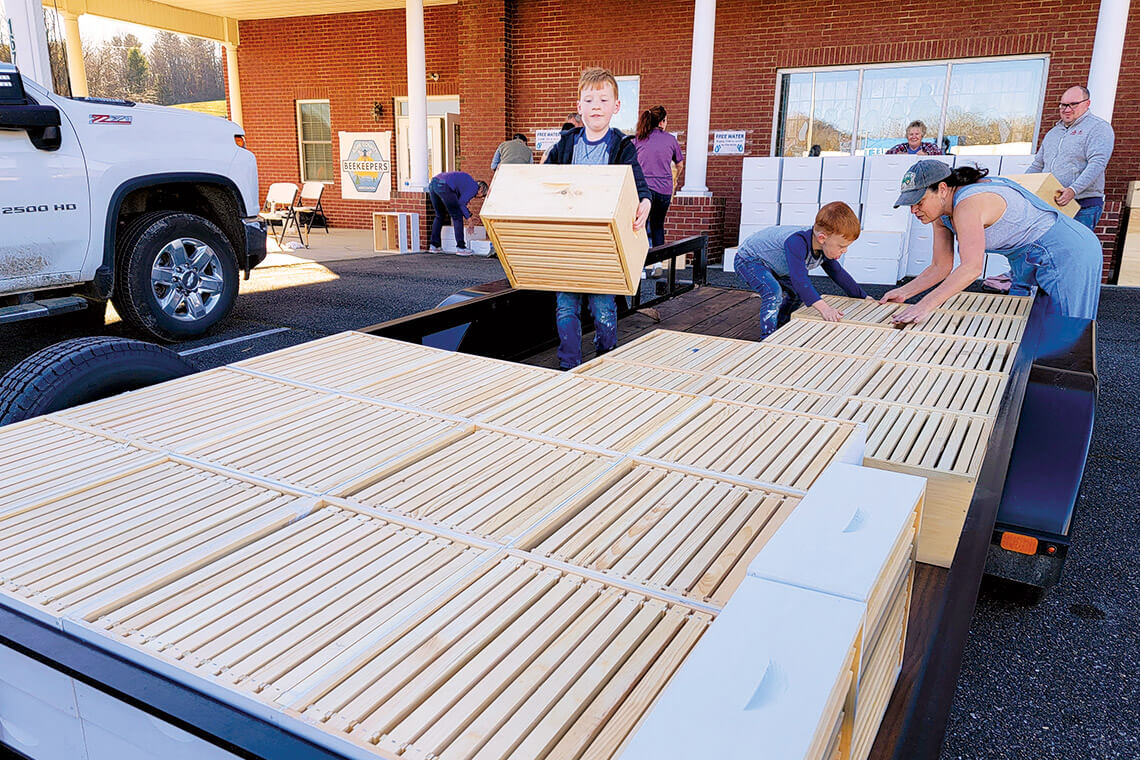
During Build a Box Day last November, volunteers from across North Carolina and Tennessee met in West Jefferson to help assemble about 400 bee boxes and 3,000 frames. photograph by Joey Seawell
“Bees are incredible creatures, the way they work together and get things done,” Swanson says. “That’s what we did on that day. Seventy-five people working together in agreement, getting it done. There was something for everyone to do. Even the kids painted the boxes. We churned out 400 boxes and 3,000 frames in one day.”
At times, he wondered if it was silly to be helping with bees while people lost homes and businesses. “But I’m a believer that you should use what you have and do what you can,” he says. “I’m not a carpenter or a contractor. My goal wasn’t to rebuild your house. But I do know about beekeeping.”
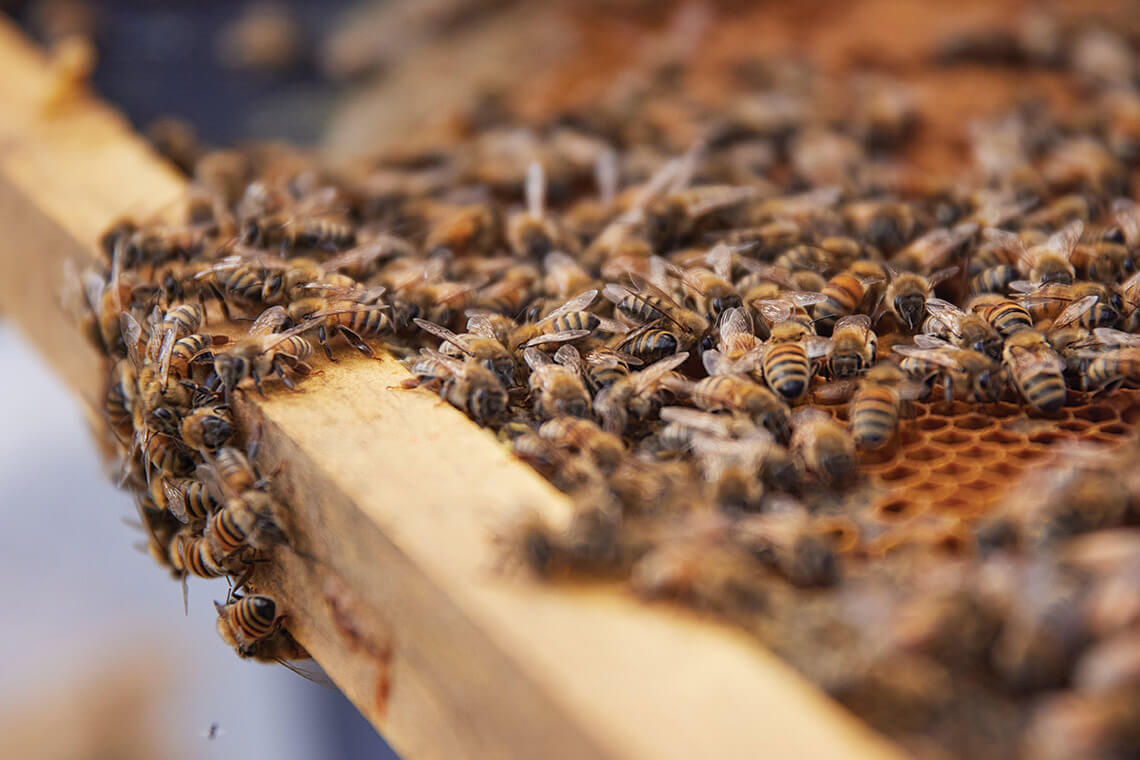
Groups across North Carolina donated bees and hives to help mountain beekeepers get back on track after Hurricane Helene. photograph by Joey Seawell
As Swanson promoted the beehive restoration effort through social media and among his connections around the state, it attracted more attention. He got donations and notes of encouragement from beekeepers across the country. The Wake County Beekeepers Association coordinated with other clubs in central North Carolina and donated 112 “nuc hives” — nucleus, or starter, colonies that include a queen and worker bees. “That’s over $20,000 worth of bees!” Swanson says. “It’s a great start to get people back into beekeeping who lost everything in the storm.”
Any lingering doubts about whether his efforts were worth it dissipated on the day Swanson got to distribute those nuc hives and saw how people reacted. “People lost a lot in the storm,” he says. “No one had money to spend on bees. But keeping bees was something they really loved. It’s been beautiful to see the hope and joy that has come to people because of all this. I’ve lived all over in my life, and I think North Carolina has some of the most giving people anywhere. They will always help each other out.”
In a patch of grass, a white wooden box gleams in the sunshine. It’s mid-March, and only a few signs remain of Helene’s unwelcome visit to Wilkes’s farm — the splintered leftovers of the bridge, a pile of branches awaiting bonfire night, a faint line of mud on the deck posts, marking the highest water level.
With help from friends and neighbors, Wilkes has been busy — picking up debris, cutting up fallen trees, replanting garlic, repairing equipment. Of the 65 beehives he had, only two remain. One, painted in bright colors, resides in a place of honor right outside the front door of the house, and it had been sheltered from the storm. That one belongs to Vivian, Wilkes’s 13-year-old daughter.
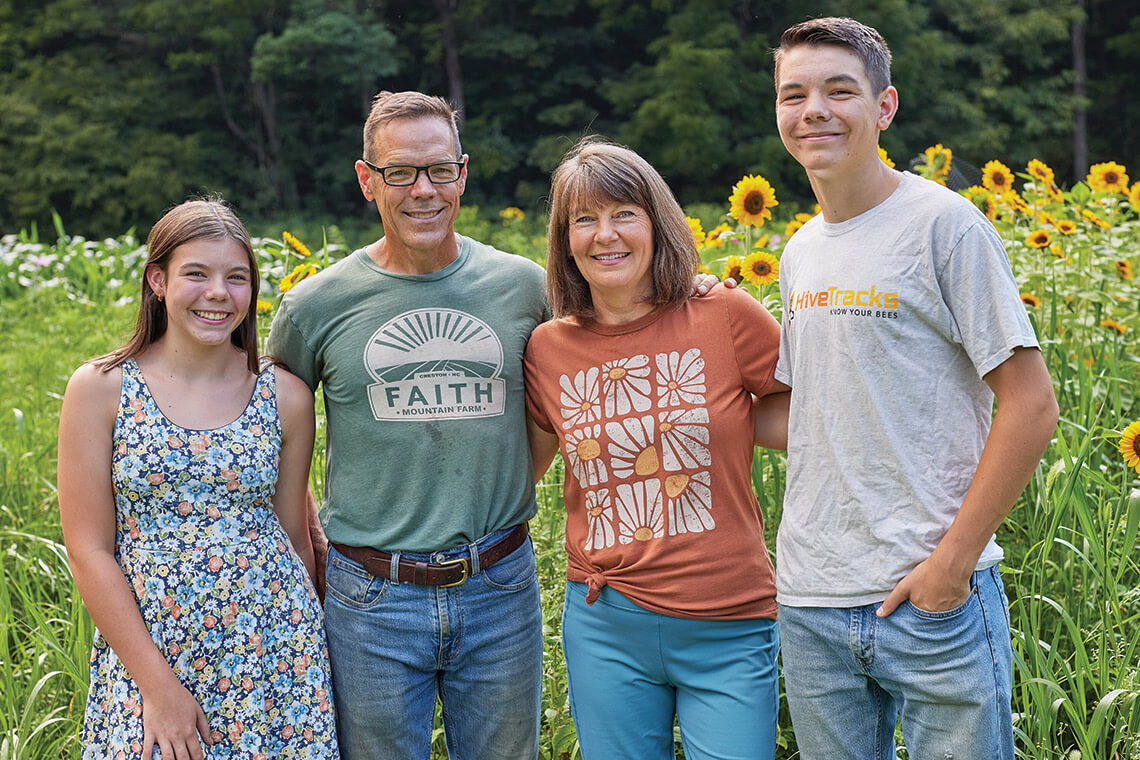
[From left] Vivian, James, Shannon, and Oliver Wilkes photograph by Joey Seawell
The other, a single white box smudged with mud, escaped the fate of the other 63 hives when Wilkes tossed it uphill in his frenzied rescue mission during the height of the storm. This is the first warm day since the previous fall, and the bees had to endure an unusually cold winter right on the heels of Helene. The box survived, but Wilkes isn’t sure yet if the hive will make it.
He jams on a white broad-brimmed hat with a screen that drapes over his head and face. He rarely bothers anymore with the full beekeeper getup — not even gloves. “The bees really don’t care about us,” he says. “If you move slow and don’t swat, you’ll be fine.”
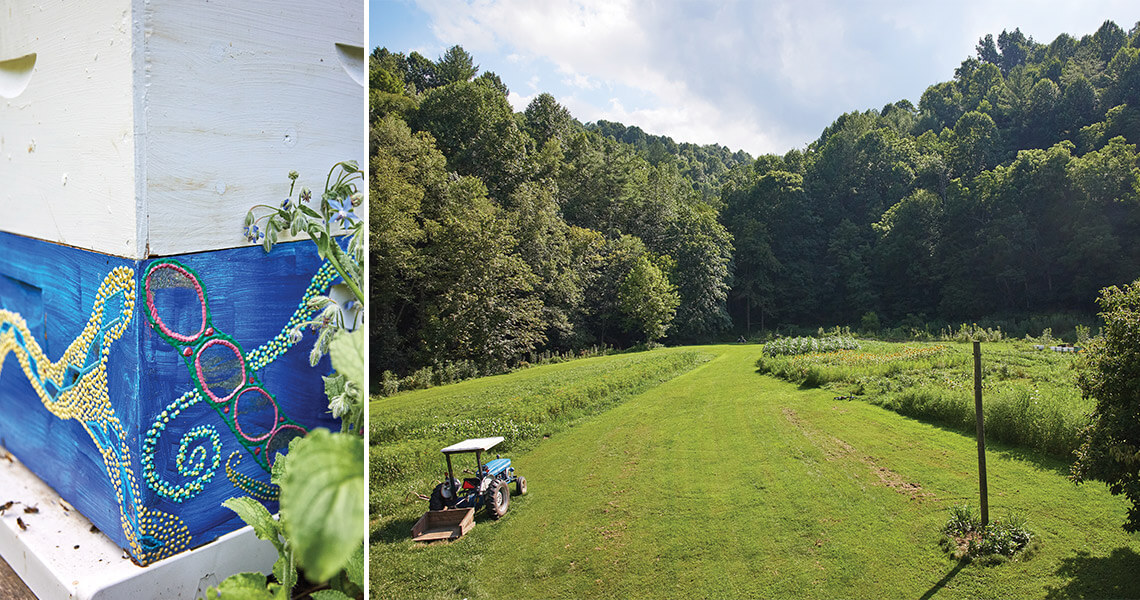
As the Wilkes family works to rebuild Faith Mountain Farm, Vivian’s bee box serves as a symbol of hope. photograph by Joey Seawell
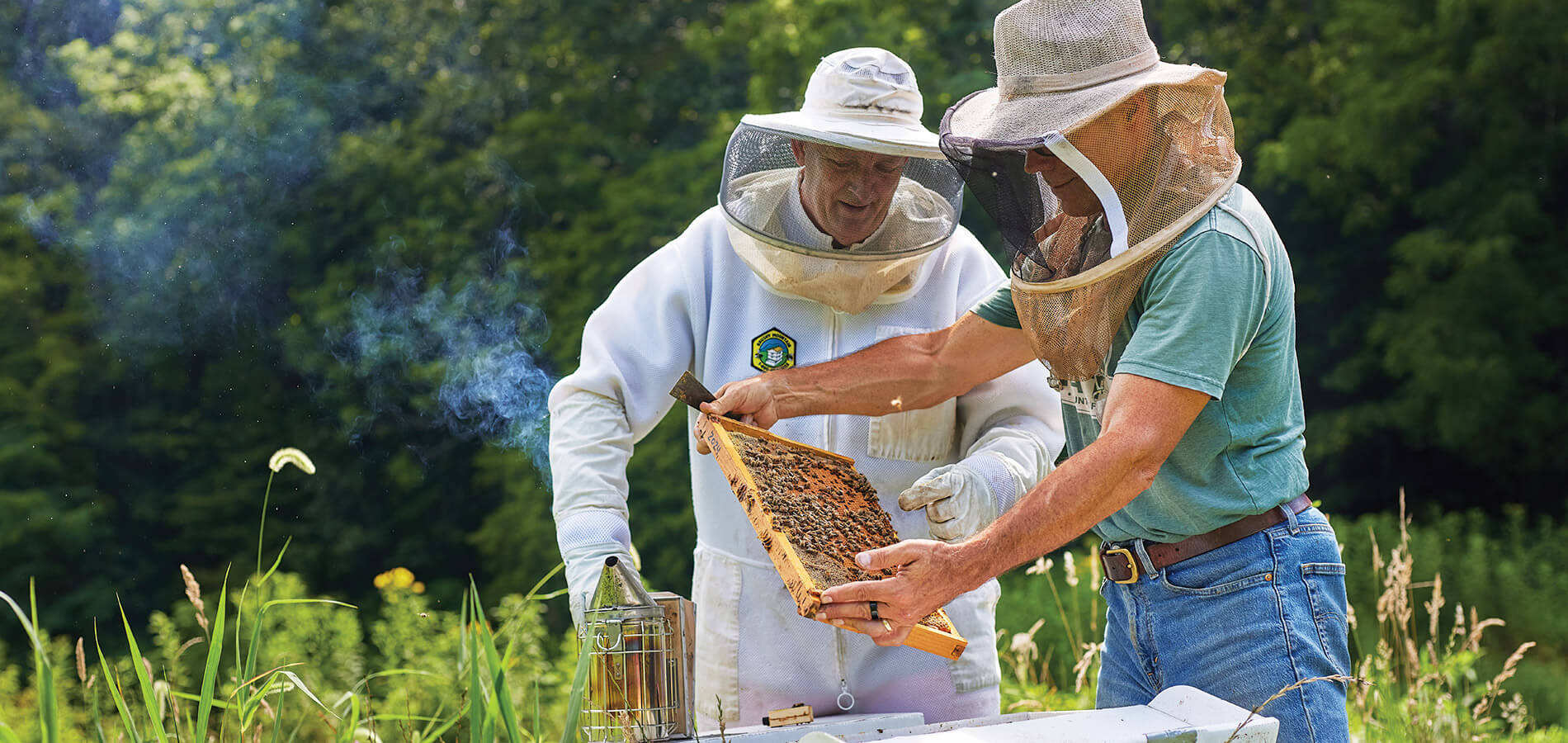
He opens the top of the box and slides out a pinewood frame. It displays an engineering, geometric, natural marvel: 2,000 wax hexagons, perfectly formed and aligned. A cluster of bees, maybe 100 or 150 of them, quiver along one edge, spilling in toward the center. Wilkes sees droplets of nectar glistening in the sunlight and larvae tucked in like tiny grains of white rice. It’s early in the season, but it appears to be a healthy hive.
He eases the frame into the box, closes the lid, and steps back, lifting his veil. A few moments later, a single forager bee crawls out of the hole near the top of the box. She hesitates for a millisecond, then flies off toward the trees on the other side of Big Laurel Creek in search of nectar.