Put ramekins on a baking sheet. Bake for 25-35 minutes, until puffed and golden. Remove from oven, and let stand for 5 minutes. With a flexible spatula, remove strata to
Listen as the pages of the magazine come to life in the Storytellers podcast showcasing the voices of Our State writers. Each podcast episode features a writer reading their column
Listen as the pages of the magazine come to life in the Storytellers podcast showcasing the voices of Our State writers. Each podcast episode features a writer reading their column
Listen as the pages of the magazine come to life in the Storytellers podcast showcasing the voices of Our State writers. Each podcast episode features a writer reading their column aloud, allowing each distinct voice to shine. Click below to listen to Eleanor read her column aloud.
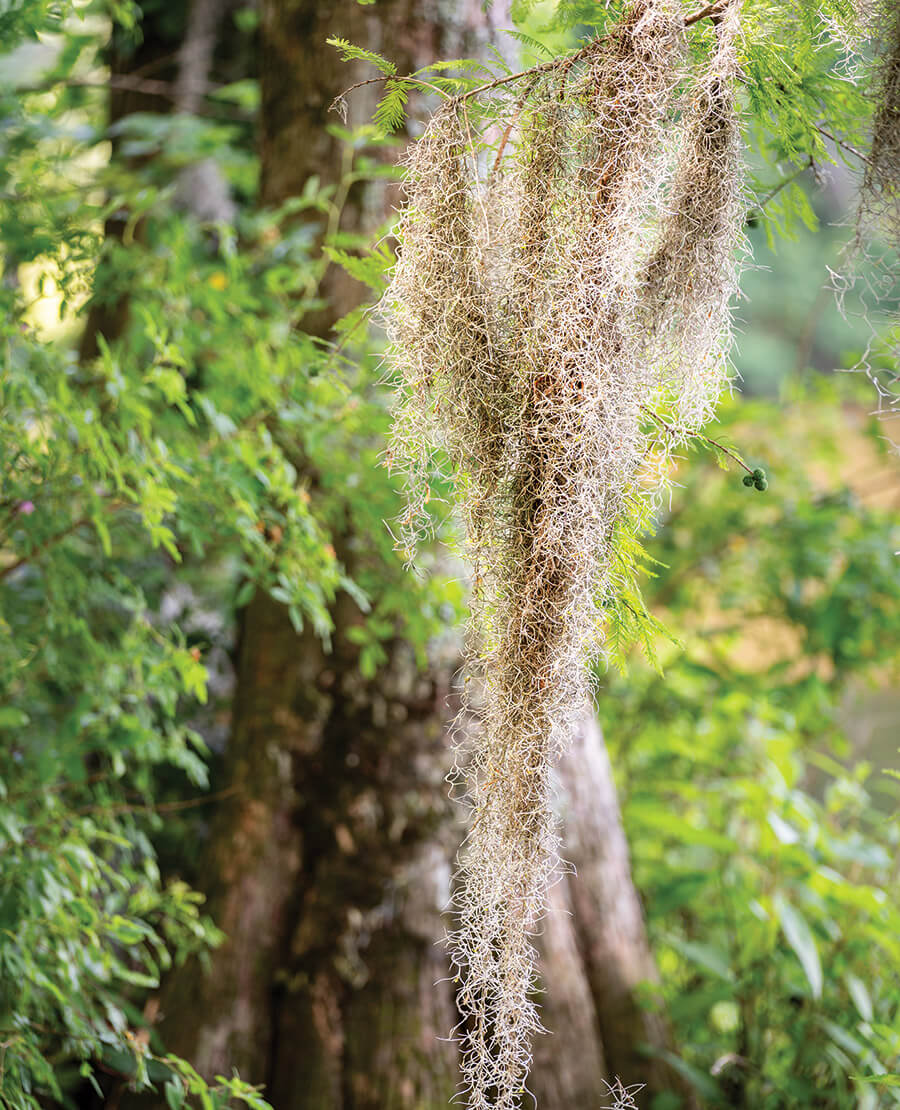
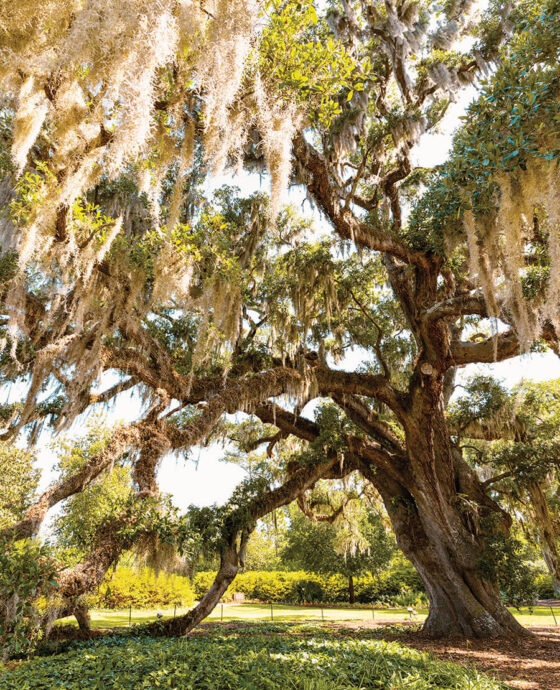
North Carolinians know we’re approaching the coast because the trees start growing beards. Unlike humans and billy goats, these beards don’t sprout from their hosts at all. These beards are Spanish moss, waterfalls of gray-green life spilling from twigs and branches; they make our world feel more mysterious, enchanted as if conjured by some mystical wizard.
“People look at Spanish moss growing out of trees and think it must be a parasite, but it’s not a parasite at all,” says North Carolina naturalist Bill Reynolds. “Spanish moss requires trees or man-made objects like trees for physical support. It needs trees because it has to grow upside down. It has to hang.”
In the stillness of Bennett’s Mill Pond in Chowan County, Spanish moss hangs like spun thread from the towering cypress. photograph by John Mauser
Hang like beards, like a woman’s hair, like tattered curtains in the windows of forgotten homes. Spanish moss needs the humid air to thrive. It extends a ghostly welcome to those not used to hearing how it hushes the wind moving through boughs. Spanish moss even extends a warm embrace of home to those more accustomed to those long, gray fingers.
“Spanish moss is one of North Carolina’s and the Southeast’s most misunderstood plants,” Reynolds says. “For one, it’s not a true moss. It’s a flowering plant closely related to pineapple.”
Unlike pineapple plants, which hold fast to the soil with roots, Spanish moss does not dig into trees at all. It takes nothing from the tree but the kindly elbow of a branch to make its home.
“It’s an epiphyte, an air plant, like many orchids,” Reynolds says. “It uptakes carbon dioxide, oxygen, and water from the air, and whenever it rains, it’ll gather nutrients from old leaves and other leftovers washed over it.”
• • •
In North Carolina, Spanish moss grabs a pine tree every now and then, but it is more often found on the spreading, textured branches of live oaks, water oaks, and cypresses that thrive in our most humid places. There, it blooms yellow and green — sometimes a little purple — throughout the summer, producing seeds scattered by the wind with hopes of landing on other trees.
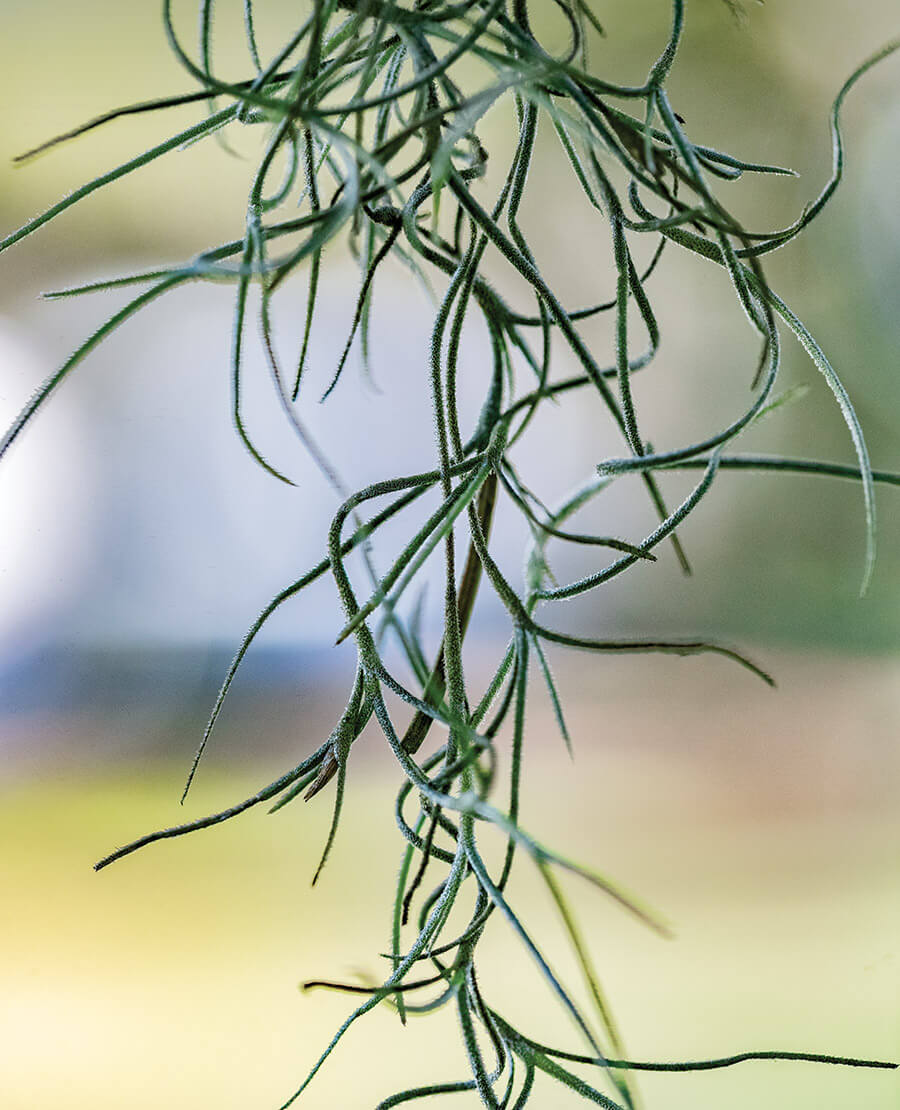
“Seedlings have soft little hooks that hold on to the tree surface,” Reynolds says. “Over time, the adult plant can completely detach from the tree because it gets woven through the branches like a spider web.”
Nature has grown used to Spanish moss, to the old lady tresses and old man beards.
Then, it becomes the Spanish moss we know and that the animals know, too. Spiders hide in humid tangles, and birds like Baltimore orioles weave pouch-like nests from it. Northern parulas, all grays and yellows, live right in the moss, hanging straight from the tree while Carolina wrens and tufted titmice line their nests with gray tendrils, down comforters for their babies.
Flying squirrels and eastern gray squirrels, too, sleep in the softness of the moss, and just as our tree frogs emerge from its mats and twines to sing to the stars, anoles creep inside to go to bed. Nature has grown used to Spanish moss in this way, to the old lady tresses and old man beards. We can even help it grow.
The hook-like tendrils in Spanish moss let seedlings grab to the surface of trees. photograph by Charles Harris
“Around here, Spanish moss does reproduce by flowers, but it thrives more by fragmentation than by seed,” Reynolds says. It grows, separates, and part of it blows to a new location, or is carried in toes or talons, or placed there by gentle hands.
“That’s why if you cut the trees down with Spanish moss growing in them, Spanish moss won’t come back,” he says. “It needs a source and a community of trees around so it can last.”
Spanish moss doesn’t grow as far west as it used to because the forests don’t grow as densely as they once grew. Also, the air it uptakes is not as pure as it used to be. We still have a home for it here, though, room for it to make mysteries and fairy tales, homes and hideaways, to wave us warm welcomes on our way back home.
In art class, we learn to notice texture, form, color, and light. On the plate, those same techniques guide chefs, bakers, and makers across North Carolina, turning ingredients into compositions meant to be admired before they’re savored.



 Listen as the pages of the magazine come to life in the