Put ramekins on a baking sheet. Bake for 25-35 minutes, until puffed and golden. Remove from oven, and let stand for 5 minutes. With a flexible spatula, remove strata to
Listen as the pages of the magazine come to life in the Storytellers podcast showcasing the voices of Our State writers. Each podcast episode features a writer reading their column
Listen as the pages of the magazine come to life in the Storytellers podcast showcasing the voices of Our State writers. Each podcast episode features a writer reading their column
Listen as the pages of the magazine come to life in the Storytellers podcast showcasing the voices of Our State writers. Each podcast episode features a writer reading their column aloud, allowing each distinct voice to shine. Click below to listen to Eleanor read her column aloud.
Christian Kammerer, research curator of paleontology at the North Carolina Museum of Natural Sciences, knows more about one version of our state’s natural world than almost anyone — a version from before the ocean touched our coast, before it was even part of North America. He lives here with us, but studies life that vanished millions of years before the first human ever looked to the heavens.
“As a paleontologist, I have to think in terms of deep time,” Kammerer says. “Not over the course of years or centuries, but over millions and millions of years.”
In the Late Triassic Period — more than 200 million years ago — North Carolina was just splitting from Africa and drifting across a newborn ocean. As it moved, our land swung north, the continents split and rejoined, shale islands fused to our edges. Along the way, fossils were deposited in sedimentary basins — fossils ancient even by deep-time standards.
“North Carolina has some of the oldest fossils ever found,” Kammerer says. “East of Charlotte, we found some that date back about 600 million years.”
The Late Triassic world Kammerer studies teemed with life. The Earth was hot and dry. Crocodile-like creatures, some up to 40 feet long, lumbered through conifers and ginkgos, licking their spiky chops. Their cousins — heavily armored reptiles sometimes nicknamed “armadillodiles” — nibbled the vegetation. Mammals began to walk the earth.
“The early protomammals I find are a combination of tiny, ratlike creatures and large, ox-size herbivores,” Kammerer says.
• • •
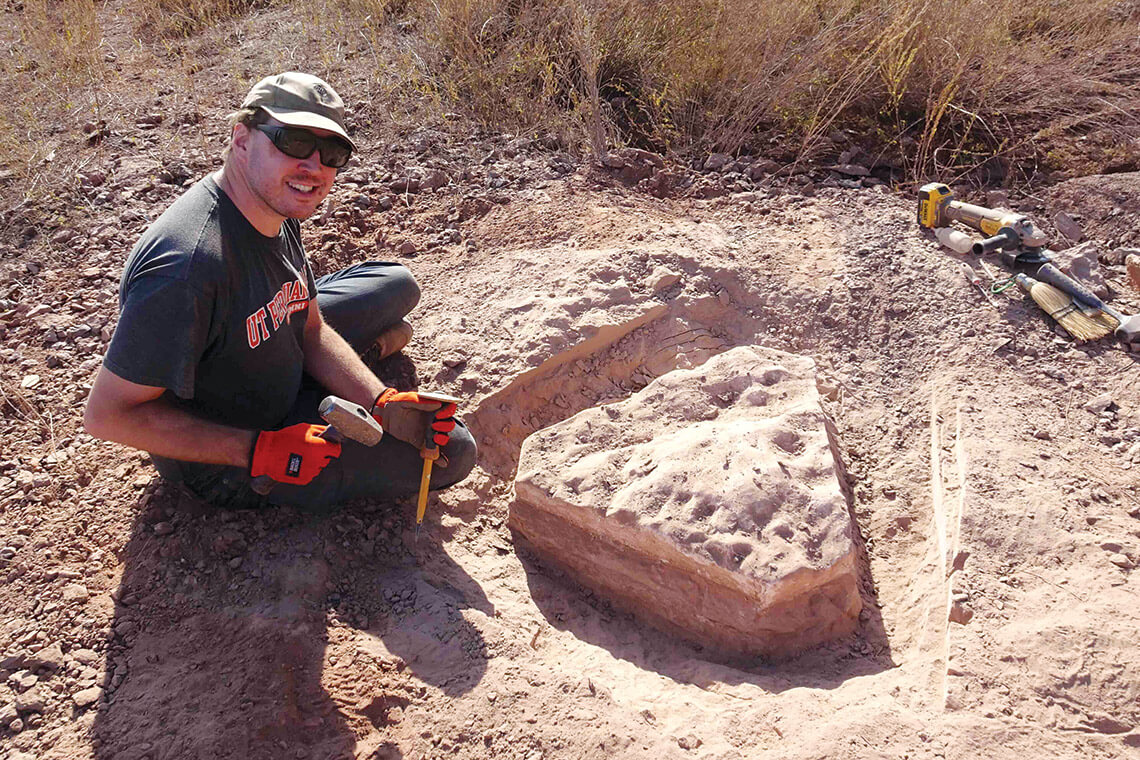
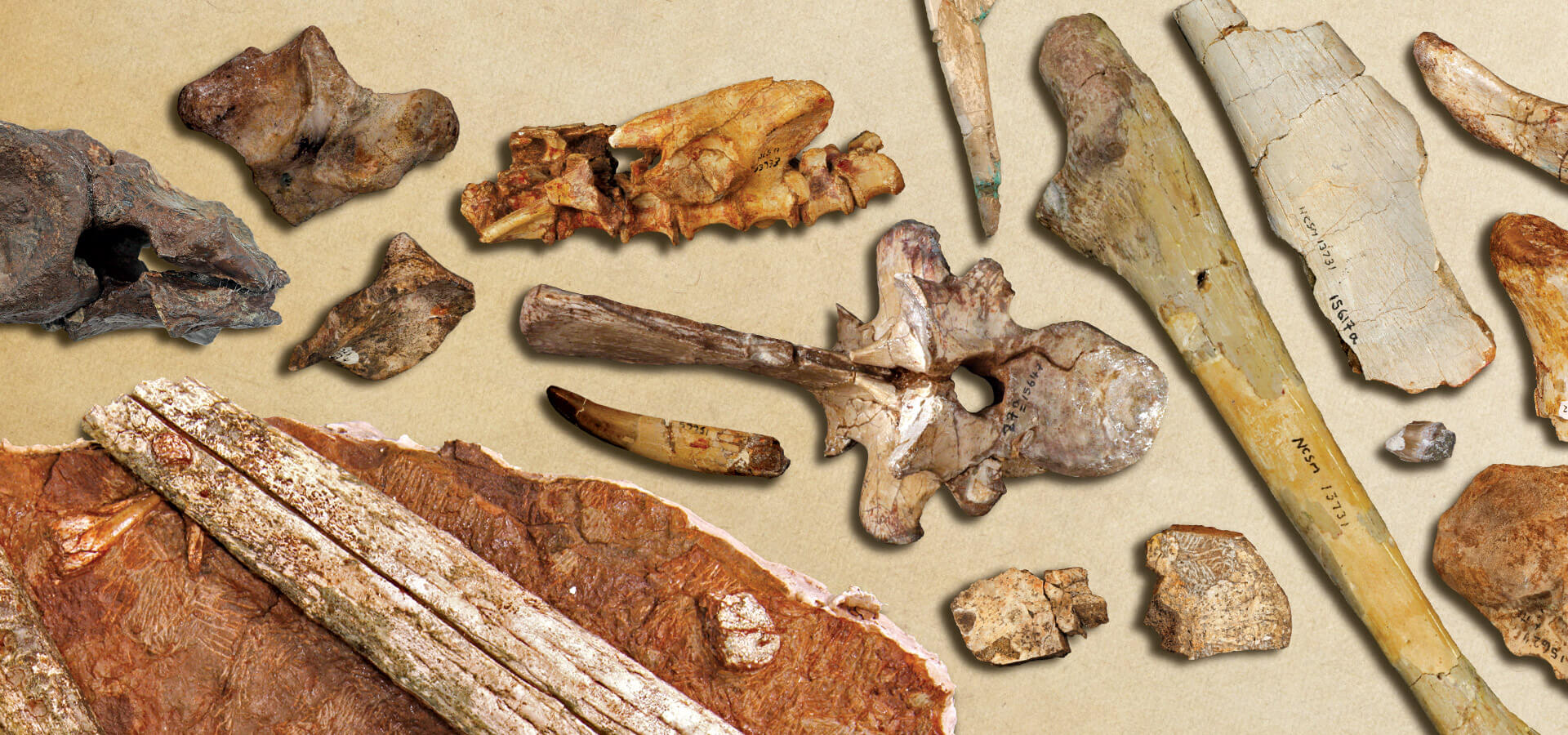
Kammerer searches for this long-ago life in the rocks beneath our feet. His first major North Carolina find was a large plant-eater. “Imagine something like a buffalo with no fur, a beak like a tortoise, and tusks like a walrus,” he says. He first noticed the dome of its skull protruding from a rock. Over the next six years, he slowly teased bone from stone to reveal the full skeleton.
Telling the difference between fossil and rock can be tricky. “You have to develop an eye for it,” Kammerer says. “Bone has a grain — a parallel fiber surface. If it’s a tooth, the enamel is usually still preserved. I’ve been out with collectors who can spot a tooth glinting in the sun from 60 paces.”
Paleontologists like Dr. Christian Kammerer search for even bigger finds from the Triassic Period. Photography courtesy of Dr. Christian Kammerer
“The state’s humid climate makes it hard to find some kinds of fossils,” Kammerer says. “Most of the rock containing North Carolina dinosaurs is buried under forests and swamps, and no dinosaur bones found in the state are complete enough to identify to species.”
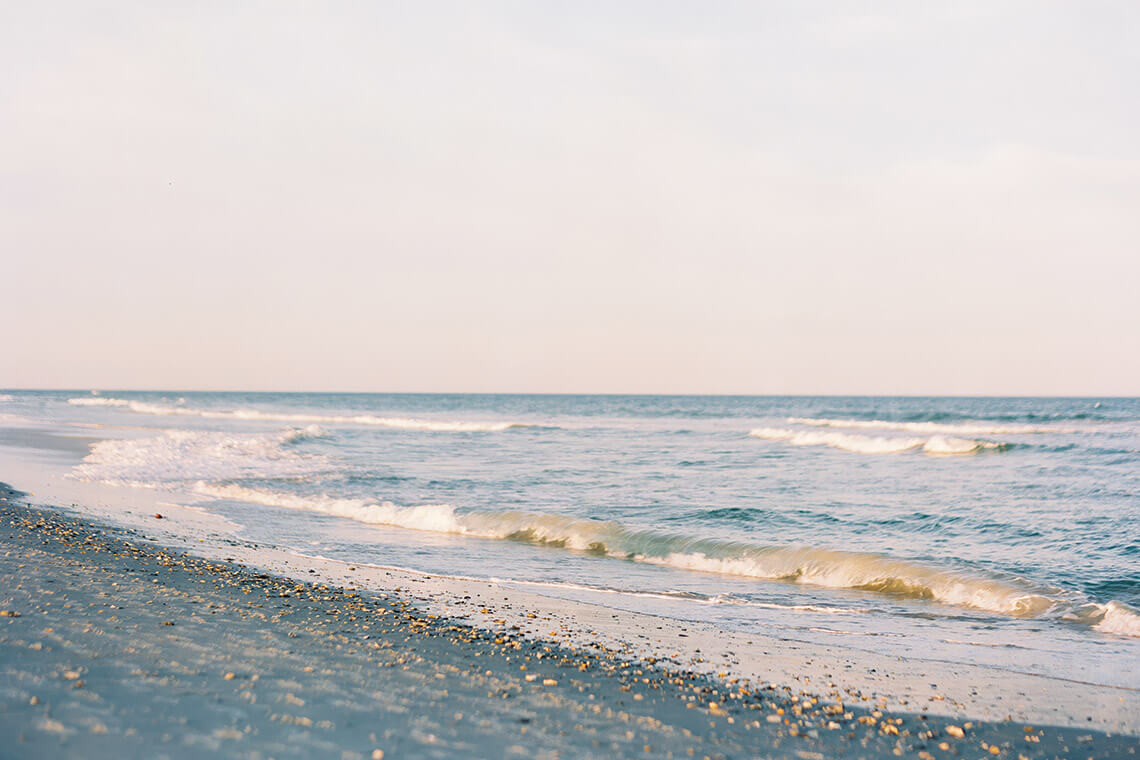
Still, Kammerer knows each of us can see deep time for ourselves. “You just have to look,” he says. “On beaches like Emerald Isle, Holden Beach, and Carolina Beach, fossils wash up all the time.”
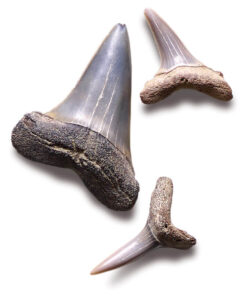
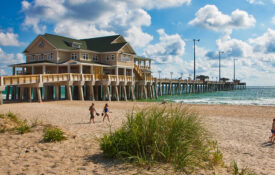
On Topsail Island, eagle-eyed beachcombers may find fossilized shark teeth. photograph by Faith Teasley
photograph by Dhanraj Emanuel
In these places, crocodile and shark teeth millions of years old tumble black in the surf. Inland, those same teeth absorbed minerals and eroded differently, and can appear white, red, or dark gray.
Fossilized shells — some nearly 10 inches across — and egg-shaped sea urchins, relics of species long gone, mingle in our sands today. Ice Age fossils still appear, too: mammoth and mastodon teeth, and bones from ancient manatees roll in our surf. Our land here persistently reveals secrets from deep time — fragments of life, portraits of how we were, and how we came to be.
While we walk through this bright, breathing world, we step over ages beneath us. We move above the ghost bones of long-gone creatures with beaks, horns, spines, tails, and teeth. We don’t feel so odd ourselves, maybe, in this agreement of the living, where we answer to others’ calls, beneath towering trees and buildings, warmed by the same sun, the same blue sky.
Get our most popular weekly newsletter: This is NC
From the expanses of needlerush at Cedar Island to the lush spartina feathering the shores of Bodie and Roanoke islands, our salt marshes are the threshold to a watery world — the heartbeat of our coastal ecosystem.



 Listen as the pages of the magazine come to life in the