 Listen as the pages of the magazine come to life in the Storytellers podcast featuring the voices of Our State writers. Each podcast episode features a writer reading their column aloud, allowing each distinct voice to shine. Click below to listen to Eddie read his column aloud.
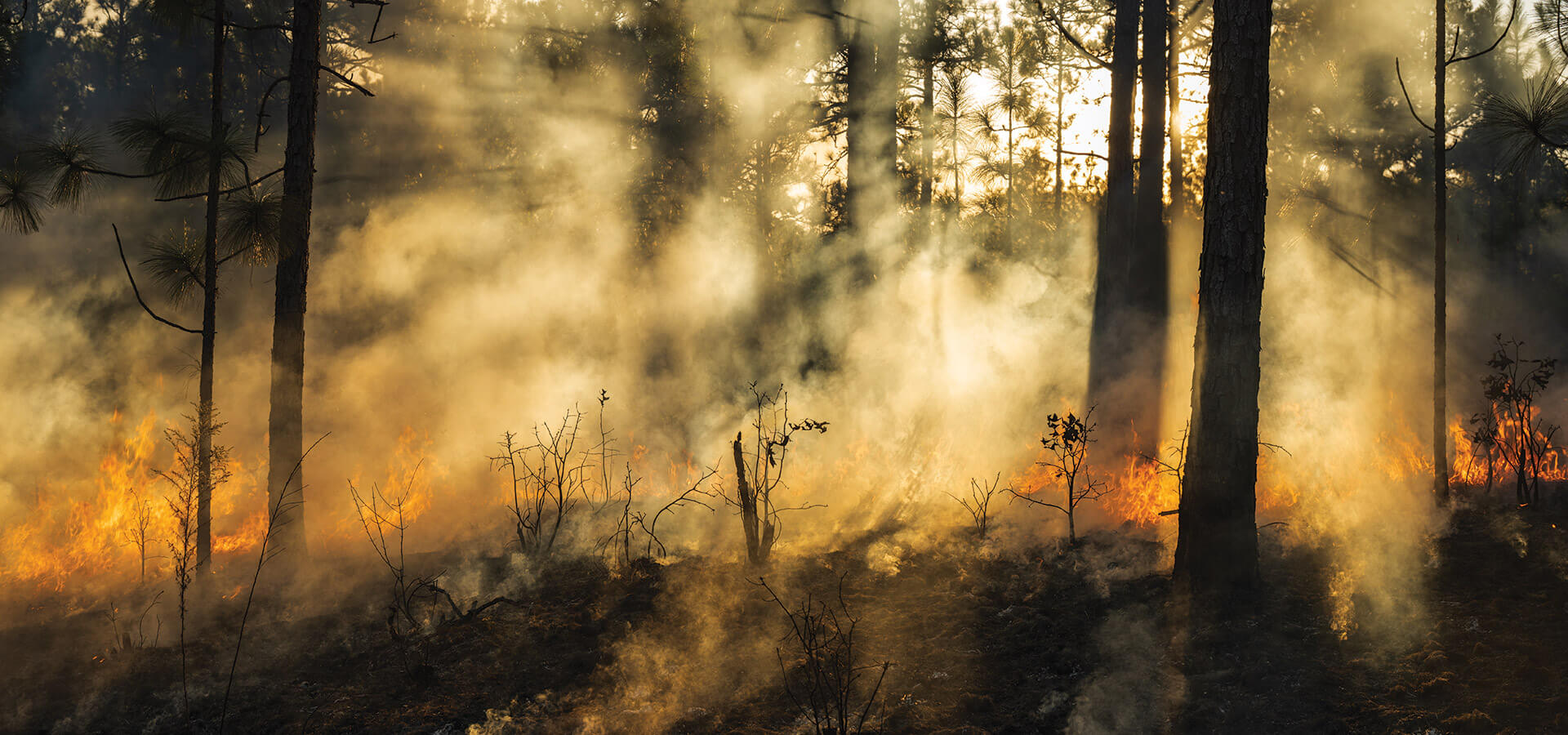
This fire is hungry. It needs fuel and oxygen, and it eats chaos — the broken twig and crushed pine needle, the winter-brown leaf, the dry grass stem. The blaze smacks its lips, cracking and popping and spitting embers, but it hugs the ground, never burning hot enough to ignite the woods overhead. Sweeping along the forest floor, the flames lick at the fissured trunks of longleaf pines, then move on through the woods like a slow-breaking wave. In their wake, they leave behind curling wisps of ash and coal.
I walk through the smoldering remains, stepping across blackened pine branches and an old turtle shell, tendrils of smoke rising at my feet like tiny corkscrews. With me is Charles DuBose Jr., whose family has stewarded more than 1,000 acres of family woodlands, managed as the George Hi Plantation south of Clinton. While DuBose’s efforts are directed toward rebuilding a wooded landscape where bobwhite quail can thrive, his years of dedicated, science-based burning have created a landscape that would look familiar to Native Americans of the 17th century or even the 18th-century explorer John Lawson.
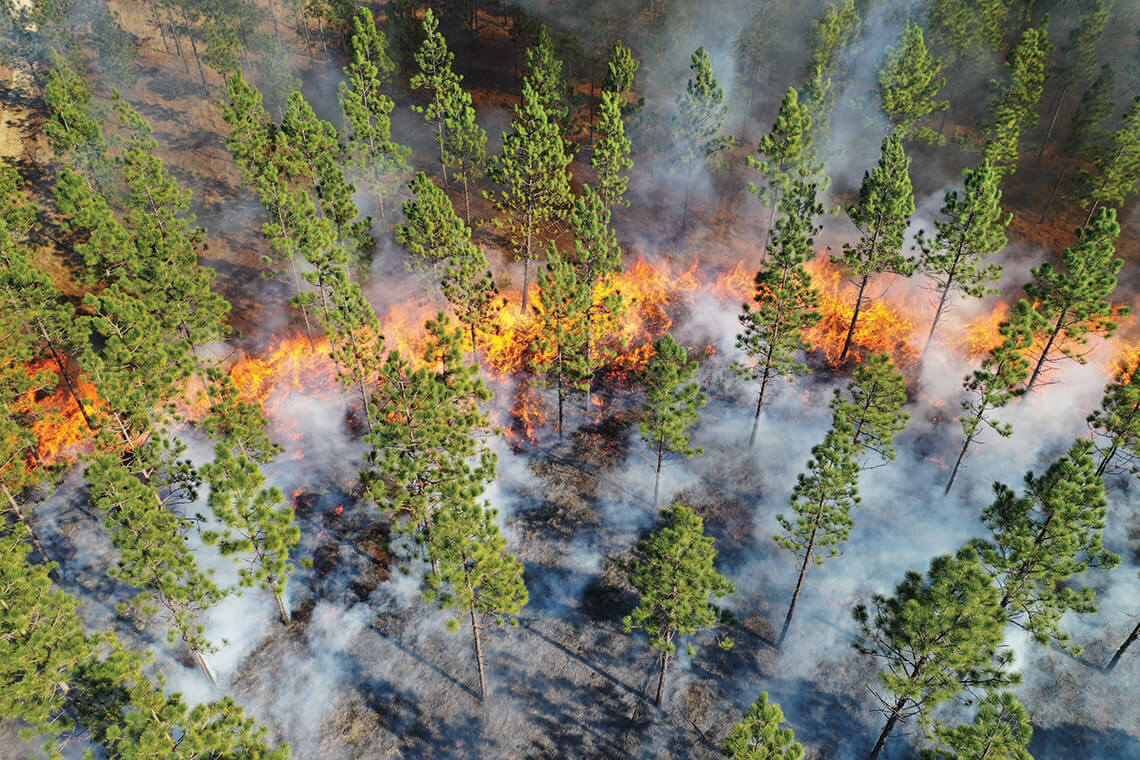
At The Nature Conservancy’s Calloway Forest Preserve in Hoke County, burn crews carefully monitor conditions and control the flames with designated firebreaks. photograph by Margaret Fields
“If you love pinewoods and quail and deer and songbirds, then you have to love fire,” DuBose says. “It’s amazing what a good fire will do for wildlife.”
And for a stretch of wild woods. Over the next few months, after the crackling, the light-leaping, the blush of heat and slow linger of flames flickering to smoke, the forest floor here in the pinelands of Sampson County will be bathed in sunlight and spring rains. And then new life will begin.
• • •
This is the season of fire and smoke in North Carolina — the good kind of fire. Just as Oz had its Wicked Witch of the West and its good witch Glinda, so it is with fire and the woods. There is bad fire and good fire. Destructive fire and the life-giving phenomenon called “prescribed fire.” Prescribed in that it is desired, carefully planned, purposefully set, and controlled with firebreaks and trained personnel on-site. And prescribed, also, in that these intentionally set fires can heal a landscape and support fresh growth.
And there is nothing quite as life-filled as a piece of North Carolina pinewoods that has been carefully burned, as much of our landscape evolved to prosper with slow-moving, ground-hugging, brush-clearing fires. In the vast longleaf pine forests that once blanketed the eastern part of the state, most woods burned every two or three years. So did many salt marshes.
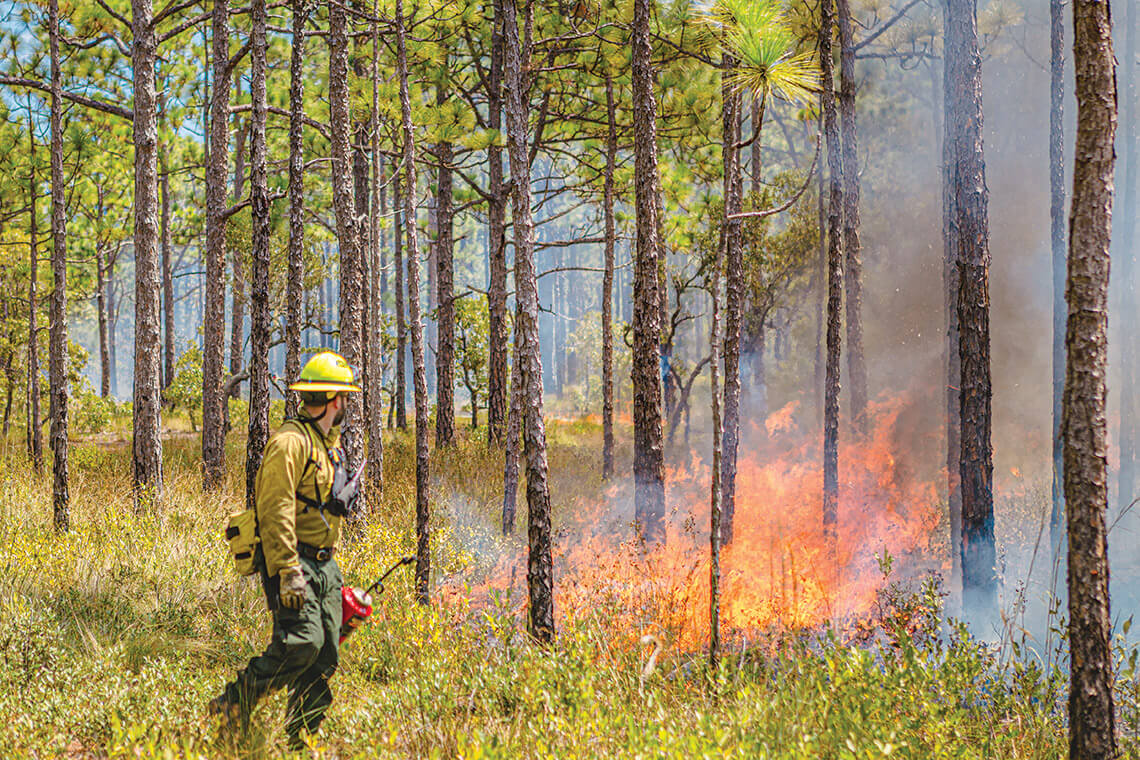
Firefighters monitor controlled burns at Carolina Beach State Park. photograph by Baxter Miller & Ryan Stancil
The woods in western North Carolina burned less frequently, but when lightning sparked a blaze, the resulting open prairie habitats supported large grazers like bison and elk. Native Americans set fires to improve grazing conditions for wildlife, drive game, and make it easier to hunt deer and turkey. Southerners in the late 1800s “fired the woods” to clear out undergrowth and boost fruit production on wild blackberry and blueberry plants.
Fire suppression began in the 1920s, and for generations, Smokey Bear and his message of preventing forest fires — all fires — gave a good, healthy ground blaze a bad reputation. But the tide has turned, and burning the woods is part of forest management in both public and private landscapes.
• • •
As the low, simmering edge of the fire moves into the woods, I walk through the smoking remains with DuBose. He points out the oak and maple saplings the fire consumed, the trees that block too much sunlight from reaching the forest floor. A pine cone lies half-charred but ready for the future: Pine cones have evolved to hold tightly to their seeds, and in some species, they only germinate after being burned.
In fact, what happens in the months after a winter prescribed burn is a marvel of nature. Without a tangle of shrub and scrub to blunt the sun, native plants like Michaux’s sumac and Schweinitz’s sunflower sprout anew. Plants like partridge pea germinate better after a burn, and their flowers will provide shelter and food for new generations of grasshopper sparrows. As fire clears the ground cover, rabbits, deer, and turkeys will move in to glean the exposed seeds.
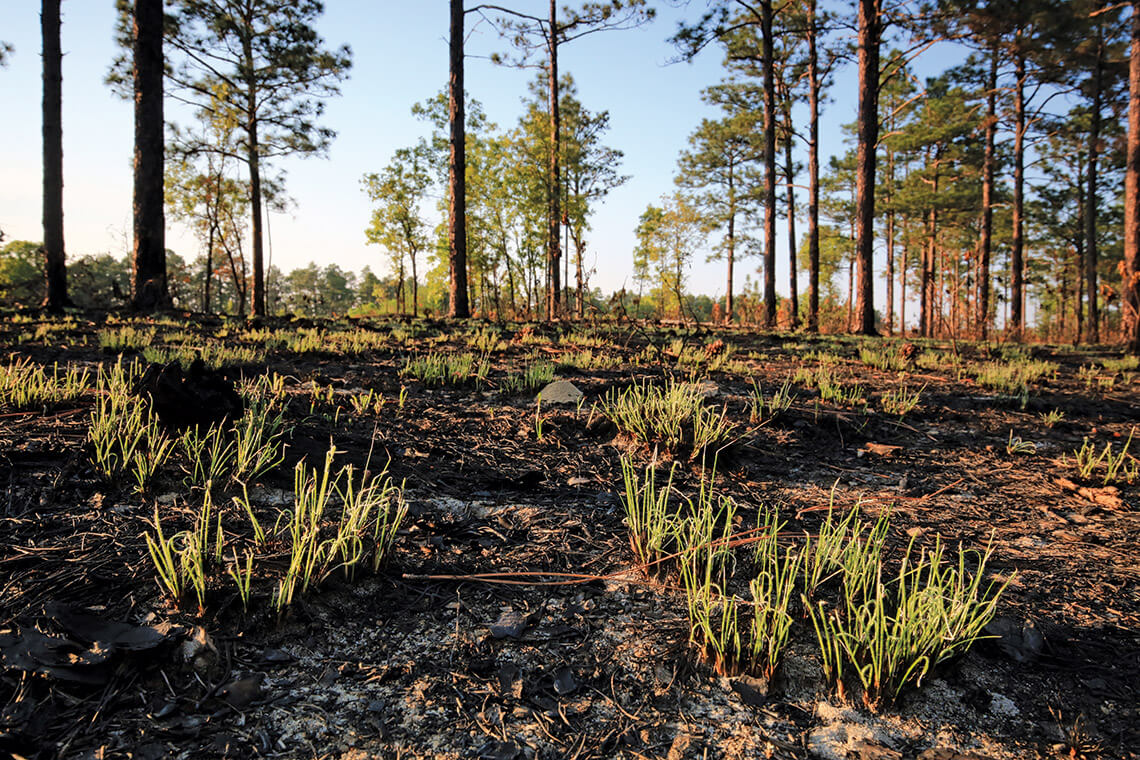
After a prescribed burn at Sandhills Game Land, new clumps of native wiregrass emerge. photograph by Todd Pusser
The benefits of prescribed burns are often hidden and little known. Among the most significant threats to the endangered red-cockaded woodpecker is the loss of habitat and the pines where the woodpeckers raise their young. When fire burns out the hardwood seedlings and shrubs, longleaf pines thrive.
And for humans, a piece of woods managed with fire can create a landscape of singular beauty. At George Hi Plantation, tall pines lord over stunning fields of little bluestem and switchgrass, burnished by the sun. Edged with tangled creeks and fields of millet, the view strikes a primal chord in us — it’s as if a small fragment of the Serengeti savanna were transported to eastern North Carolina.
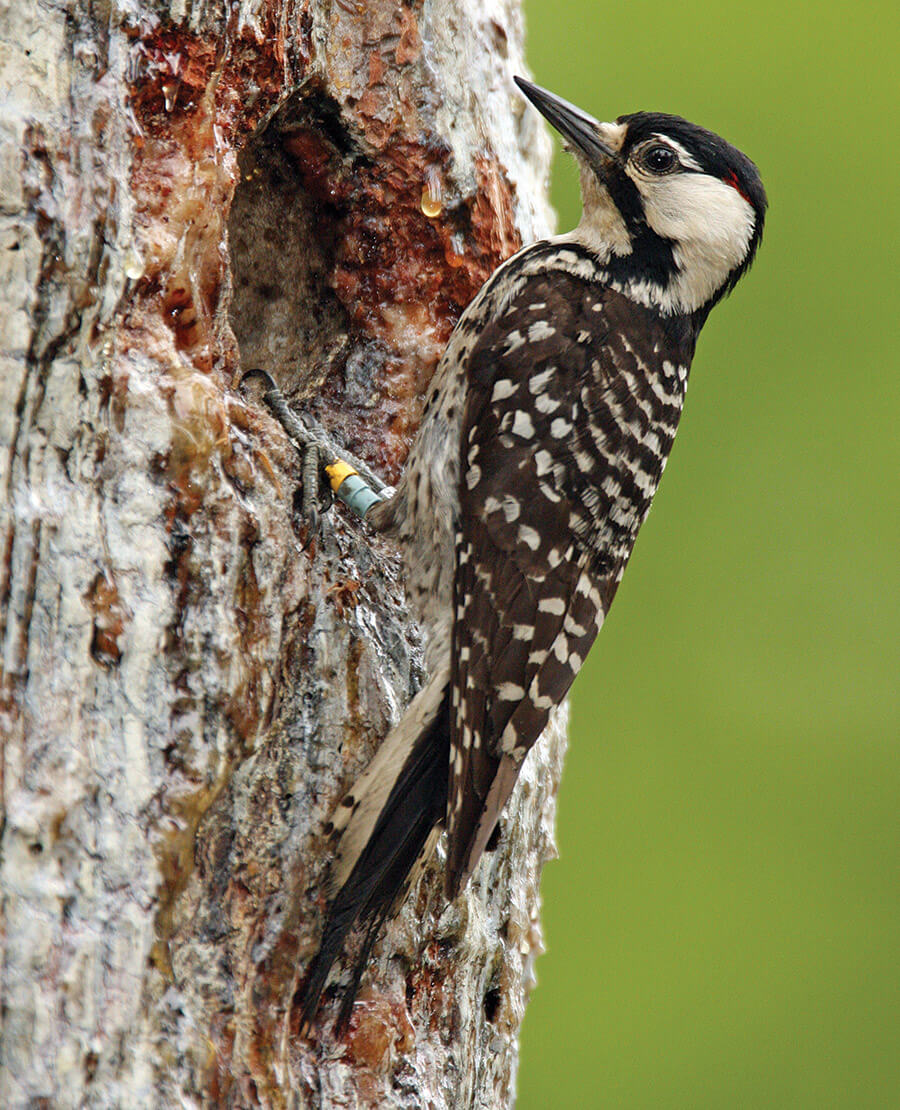
Red-cockaded woodpeckers thrive in pine trees that grow after controlled burns. photograph by Todd Pusser
In the 1930s, the U.S. Forest Service hired a psychologist to study local attitudes about “firing the woods” in the South. “Our pappies burned th’ woods an’ their pappies afore ’em,” one old Southerner piped up. Now, after decades during which fire was a dirty word, reigniting the flames to give Mother Nature a boost is back in fashion.
Drive a country road in the last weeks of winter, and you may see smoke drifting through the woods and low flames creeping downwind. More than likely, it’s nothing to worry about. More than likely, someone set the woods on fire. Stick around North Carolina long enough, and it’ll seem only natural.