Put ramekins on a baking sheet. Bake for 25-35 minutes, until puffed and golden. Remove from oven, and let stand for 5 minutes. With a flexible spatula, remove strata to
I awake in the small wooden bed my father built. The house is rattling; a pair of F-4 Phantoms as loud as thunderclaps are directly overhead. The sound is as
I awake in the small wooden bed my father built. The house is rattling; a pair of F-4 Phantoms as loud as thunderclaps are directly overhead. The sound is as
I awake in the small wooden bed my father built. The house is rattling; a pair of F-4 Phantoms as loud as thunderclaps are directly overhead. The sound is as familiar as the muted orange flowers on my wallpaper, and I can see them, in my mind’s eye, way up in the clouds — sleek, paper airplane-shaped silhouettes against the morning sky.
It’s the mid-1980s, the waning years of the Cold War, although at age 4, I know nothing of such things. What I do know is that our house lies directly in the flight path of Seymour Johnson Air Force Base, home to four F-4 squadrons and a KC-135 squadron.
The house stills. The roar ebbs to a growl.
I sigh happily. My world is exactly as it should be.
• • •
It’s my first day of school at Meadow Lane Elementary, a labyrinth of covered sidewalks and stark, low-slung buildings. In 1957, the year my mother was born, the federal government allotted funds to build this school next to the new base housing.
Miraculously, I find my way to Mrs. Tyndall’s class and take a seat amid a cluster of desks next to a girl named Holly Martin. She walks to school from the base, through a big gate that opens and closes each morning and afternoon.
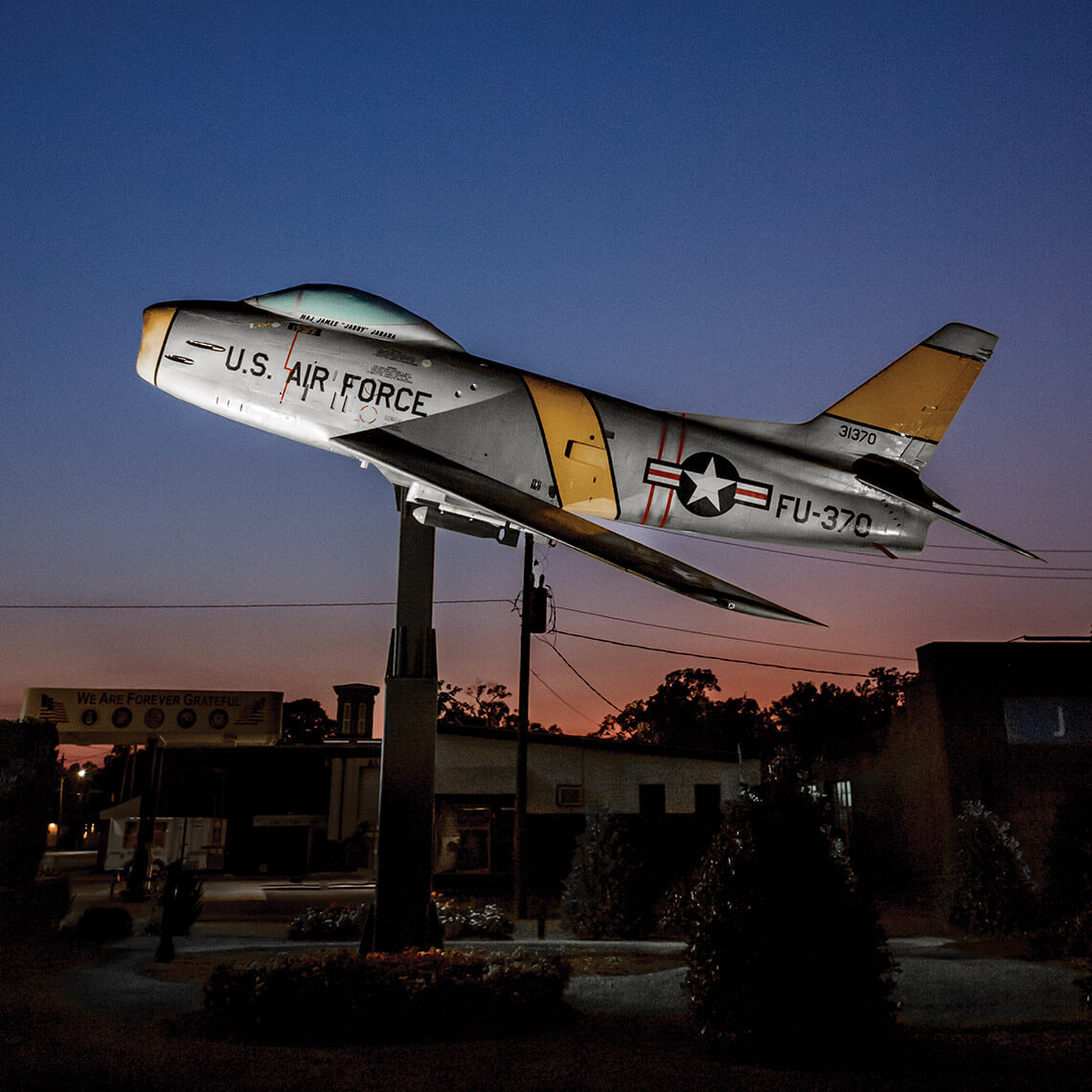
The F-86 Sabre watching over the traffic circle at Ash and Center streets is one of the examples of the strong connection between the city and the base. photograph by Charles Harris
Soon, I will claim Holly Martin as my first best friend. On the playground, we shout over the screams of jets. Inside, Mrs. Tyndall, like all the other teachers, pauses her lessons until the noise passes.
On the last day of school, Holly heads toward the gate, and I fall into a single-file line for the buses. I will never see her again. I am beginning to understand that a military base gives best friends, but it also takes them away.
• • •
Second grade is half over, but the girl with chin-length hair and thick bangs has an unscuffed bookbag filled with shiny new folders and crayons. The teacher introduces her to the class, seats her at the desk next to mine, and instructs me to look after her. Her name is Krista, and she has come from an Air Force base in West Germany, a place that seems to 7-year-old me as far away as the moon.
Soon, Krista and I are having sleepovers at each other’s houses. She admires our big backyard and how our home isn’t attached to anyone else’s. I envy her townhouse and second-floor bedroom. For the first time in nearly two years, I have a best friend.
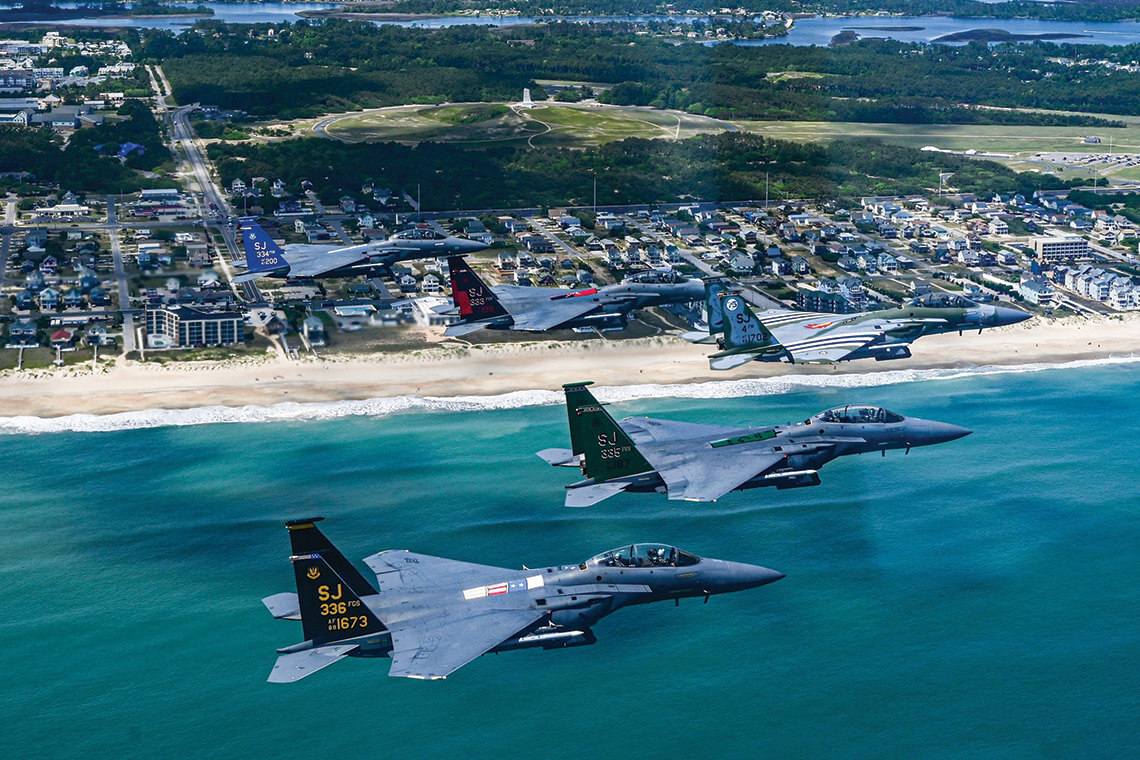
State-of-the-art F-15E Strike Eagles from Seymour Johnson fly past Kitty Hawk, where the Wright Brothers first flew. Photography courtesy of 1st Combat Camera Squadron based out of Joint Base Charleston, South Carolina, of Seymour JOhnson AFB, NC
But third grade brings more changes — my parents’ divorce; a new school, where my classmates are more likely to be the children of farmers than airmen; Krista and I lose touch. Later, when Iraq invades Kuwait just before the start of my fourth-grade year, the whole town holds its breath. Airmen of the 4th Tactical Fighter Wing are among the first units called to the Middle East. The base is transitioning from the F-4s of my early childhood to the F-15 Strike Eagles, and these will play a key role at the outset of the Gulf War.
When news of the first casualties from that 42-day conflict begins to roll in, I watch a boy a year older than me weep in the hallway. A teacher moves to comfort him.
• • •
In ninth grade, I’m sitting on the bleachers that overlook the football field and notice the sound of a voice I haven’t heard in seven years. It’s Krista, who, it turns out, never left Goldsboro.
We are teenagers filled with certainty about the future. Once a week, members of the Air Force Junior ROTC wear sharp blue uniforms and gather around the flagpole in front of our high school. My friend Sarah, the daughter of an Air Force officer, is one of them. On Friday nights, we kill time by driving on and off base so much that I’m afraid we’re arousing suspicion. The security officer just waves us through with a salute.
Eventually, we’ll graduate together, and a few years later, Krista’s active-duty father will walk her down the aisle, where she’ll marry an active-duty groom. I’ll be a bridesmaid in their wedding.
What locals call “the sound of freedom” is now a soundtrack so familiar that I sometimes forget to listen.
• • •
Peace is fragile, and it shatters on that clear September morning in 2001 when F-15s fly, glinting silver in a cornflower-blue sky. For a generation, this day will change what it feels like to hear the roar of a plane overhead. It will change this town. It will change this nation.
I’m on the other side of North Carolina, away at college, when the terror attacks of 9/11 unfold. But a high school friend who will later become my husband is headed to class at Wayne Community College, where airmen often study. A second plane has hit the World Trade Center when he arrives late to class; the South Tower has already fallen.
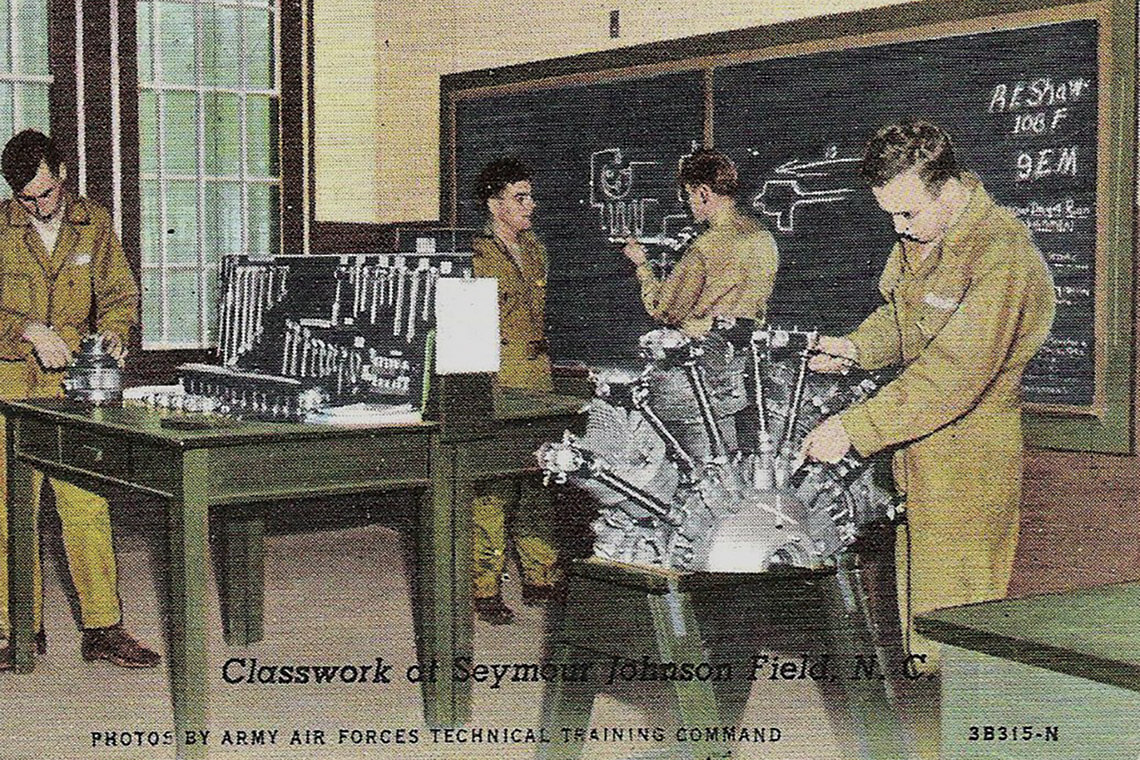
In the 1940s, Army Air Corpsmen practice their technical skills at Seymour Johnson Air Force Base. Photography courtesy of State Archives of North Carolina
One of his classmates wordlessly shoves his things into his backpack and shoots out the door.
He will not return.
From where I am, I can’t see them, but I know they are coming: two, possibly three, F-15s flying in formation.
• • •
Twenty years have passed since then, and that war is behind us. But peace, I know now, can vanish as quickly as the contrails that streak the sky over Goldsboro. Though I have not called this city home for more than two decades, my family is still here, their homes just a few miles from base.
The air vibrates and the din of jet engines fills my ears. The F-15s will appear any second, pointed noses emerging from the clouds like bullets.
I stand with my children, ages 7 and 8, in my grandfather’s yard. For the first time, I understand the uniqueness of growing up in a place where the sky is full of thunder, even on the clearest day.
The planes are directly overhead now, but I know they will be gone in an instant. “Look,” I say to my kids. “Look!”
My world is exactly as it should be.
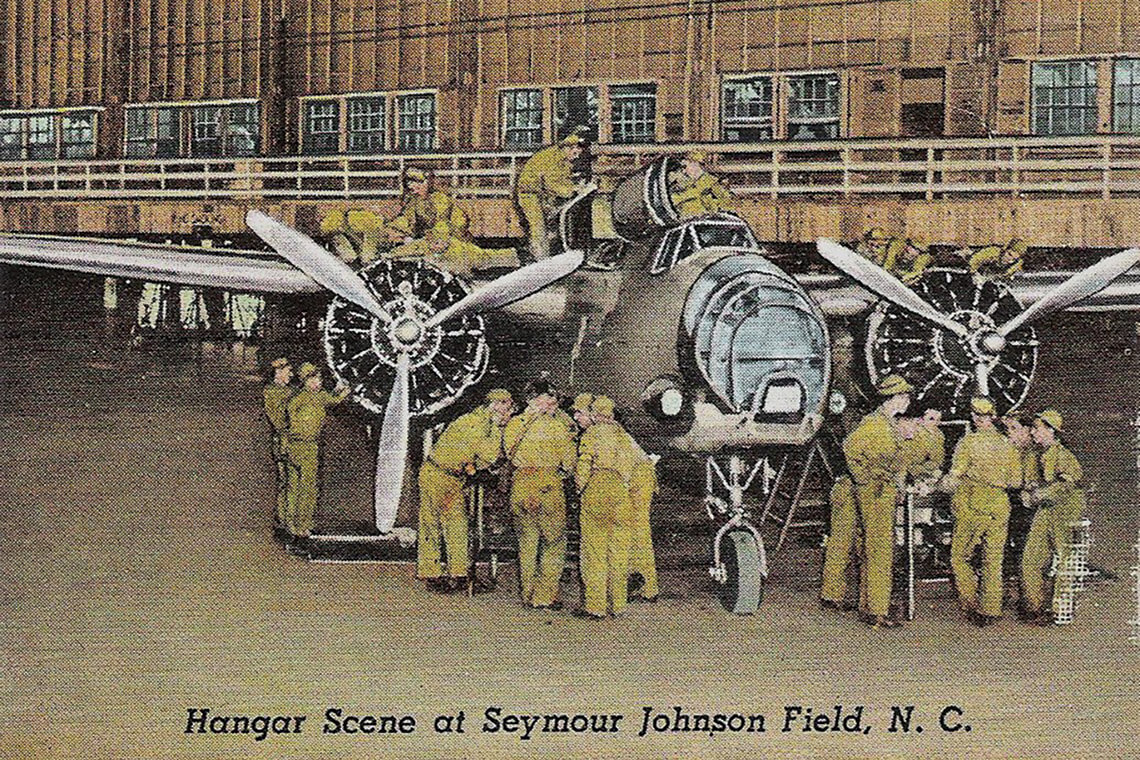
The base in Goldsboro began as a technical training school where Army Air Corpsmen learned, among other things, how to repair planes. Photography courtesy of State Archives of North Carolina
On Base
Click here to read more about the history of Seymour Johnson Air Force Base.
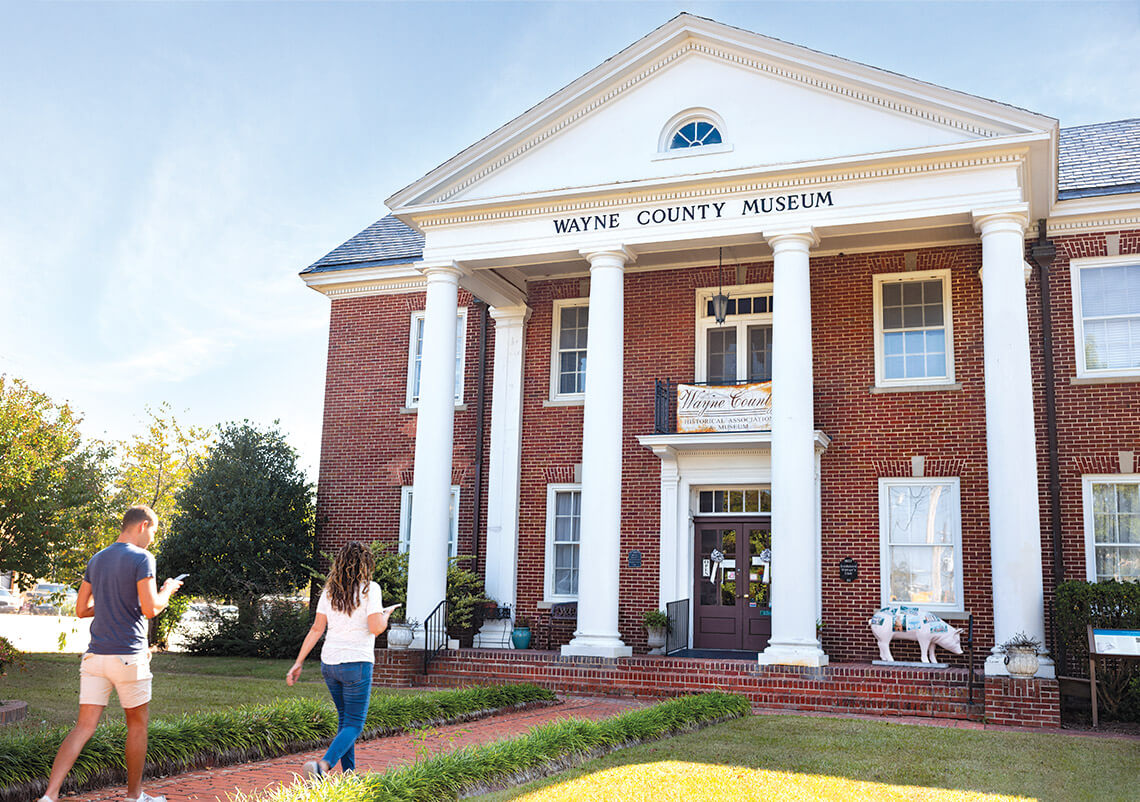
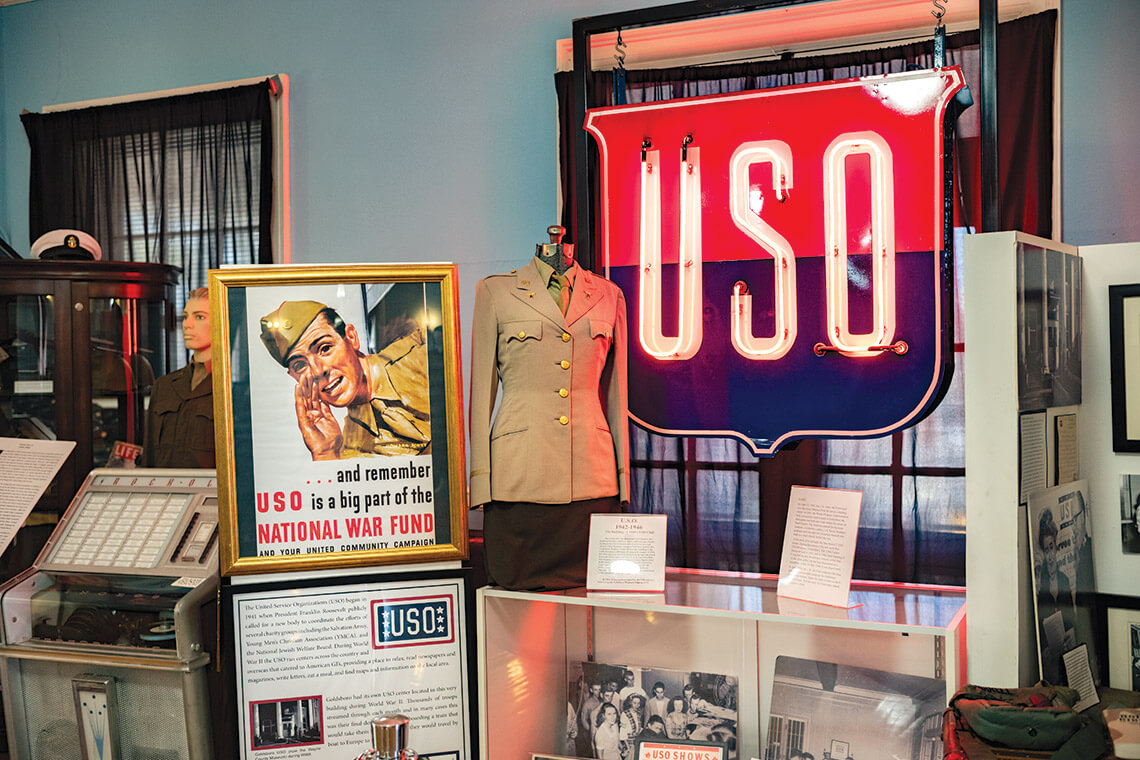
In Goldsboro, Air Force history …<br><span class="photographer">photograph by Charles Harris</span>
… is celebrated at the Wayne County Museum.<br><span class="photographer">photograph by Charles Harris</span>
In Action
Click here to read more about where to support and celebrate veterans in Goldsboro.
Get our most popular weekly newsletter: This is NC
At both the turn of the century and today, Beaufort’s waterfront has attracted a hum of commerce and community. At its heart, a historic avenue tells that history, from the stately double-porched homes to the sound of ships announcing their arrival at port.