illustration by Emily Wallace
Watermelon
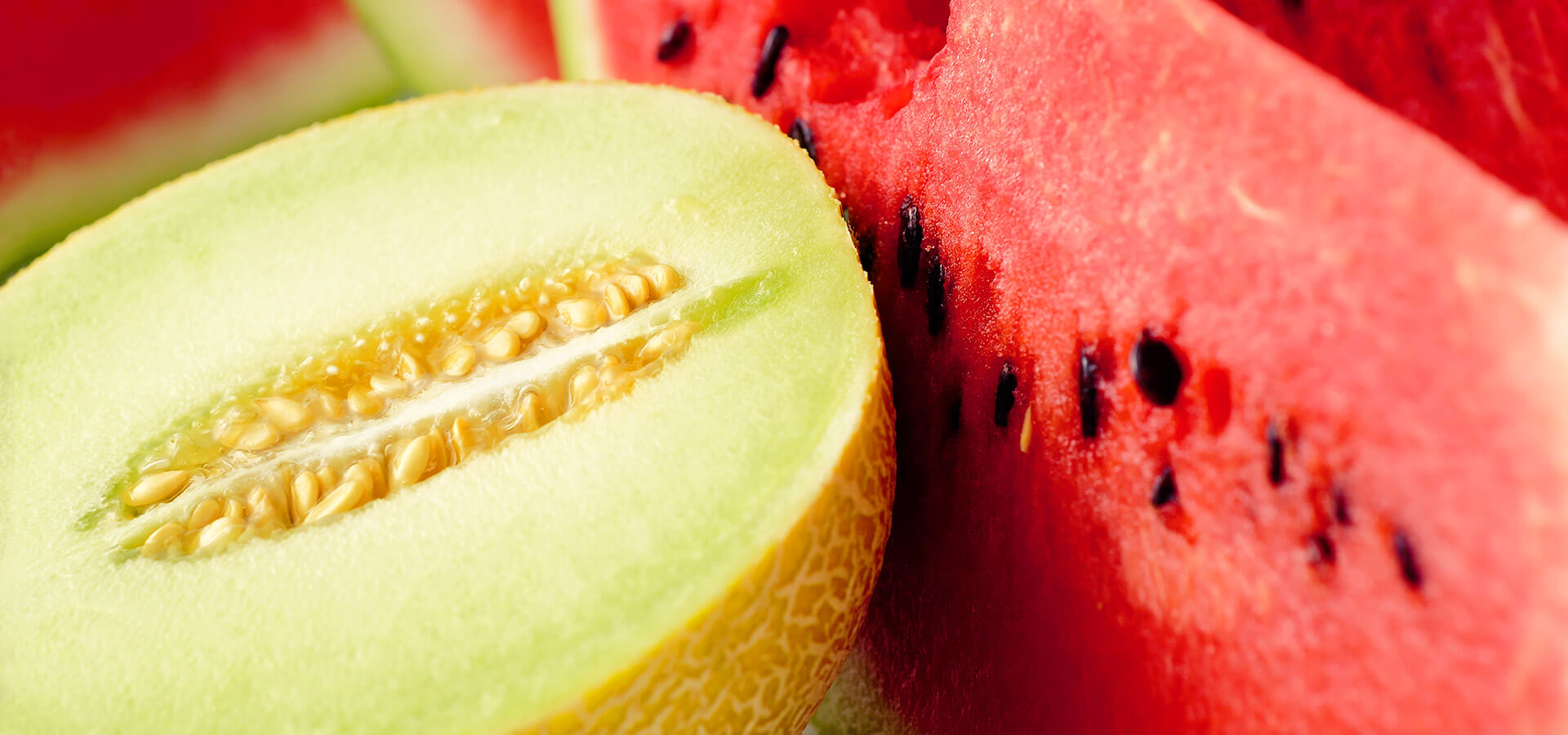
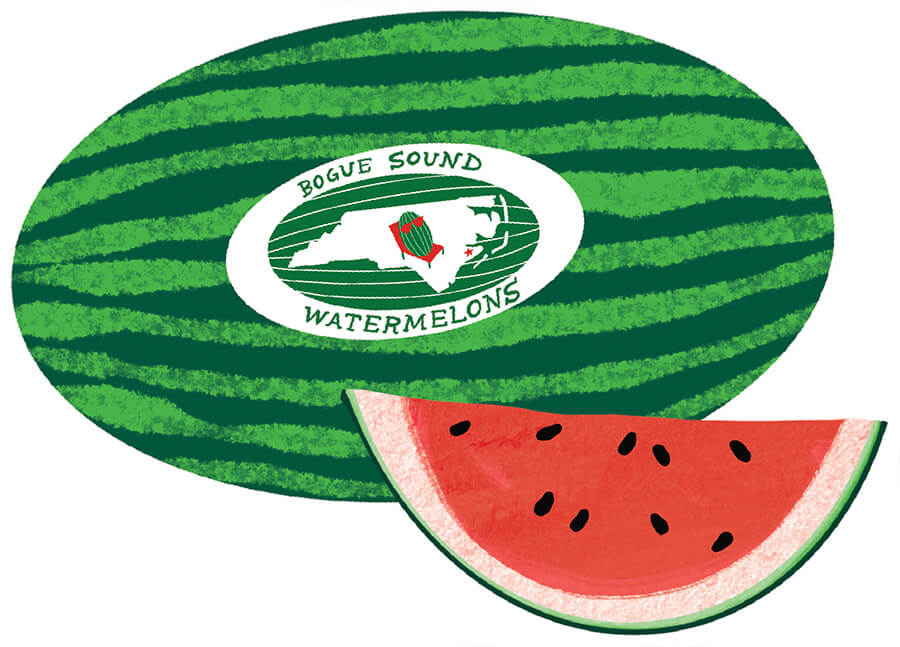
During summer, watermelon vines weave themselves from the mountains to the coast. There are the incredibly sugary Crimson Sweets, with their cartoon-like stripes, available at places like the Western North Carolina Farmers Market. The round heirloom Ledmons, first grown near Greensboro in the early 20th century by J.E. Lednum (whose name was misspelled in an agriculture brochure). Whopping Carolina Cross melons, coming in at more than 200 pounds each, harvested for the state fair. A medley advertised on yellow hand-painted signs along U.S. Highway 70 heading east. And, perhaps most famous, Bogue Sound watermelons at the Crystal Coast. The latter refers to any watermelon grown in the area’s sandy soil and humid, salt-filled air — conditions that produce an unforgettably sweet summer fruit that begs for a day at the beach.
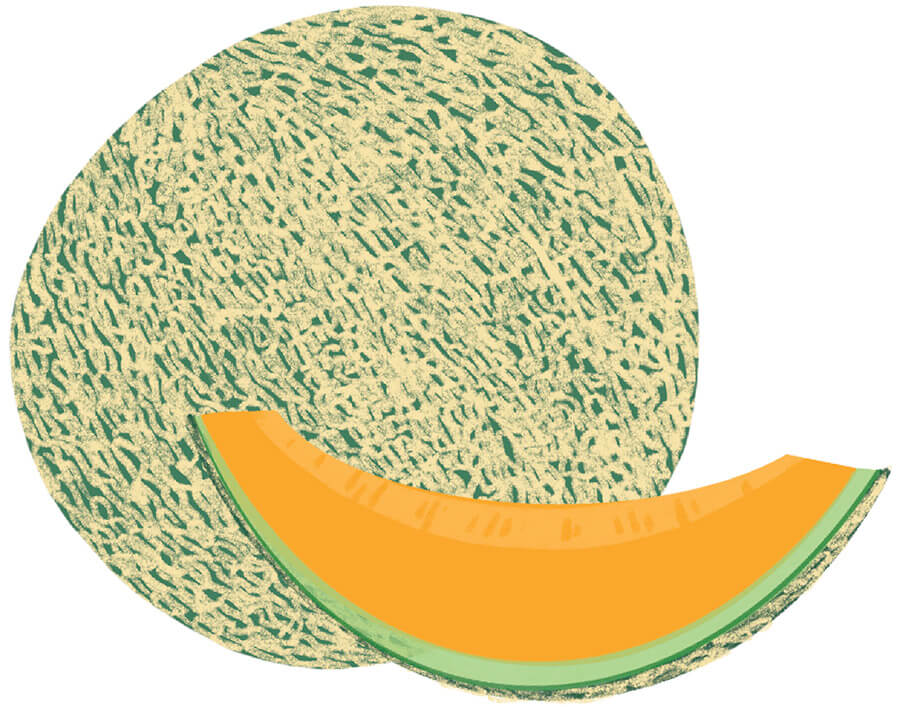
illustration by Emily Wallace
Cantaloupe
A cantaloupe can’t wait. When ripe, the fruit slides off its vine. It smells sweet and slightly musky, though spoils quickly, with a shelf life of about five to seven days. But within that window, it can’t be beat. In the early 20th century, the Ridgeway cantaloupe was deemed a first-class fruit. Sent by railcar, Ridgeway melons were served at New York’s Waldorf-Astoria and other fine dining establishments. These days, Richard Holtzmann Jr. is cantaloupe king of Warren County, where his family has grown melons for decades. Fans come from all over. And if Holtzmann’s out, they leave cash in an “honest box,” because when a cantaloupe is ripe and ready, why wait?
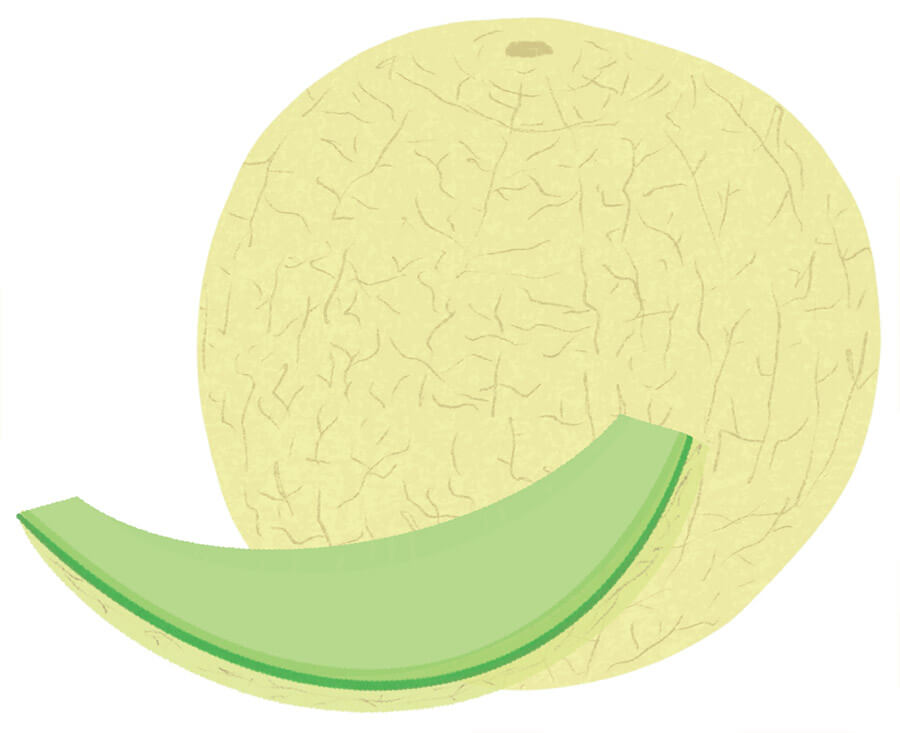
illustration by Emily Wallace
Honeydew
Don’t judge a honeydew by its covering. Eastern varieties are often veiled in rough “sugar netting.” If exposed to too much rain, they can bear a brown-ish ground spot. While these features may be unseemly to some, they indicate good fruit. The netting signals high sugar content, hinted at in honeydew’s sweet name. And ground spots don’t affect the flavor. In North Carolina, the July and August harvest is known for a waxy exterior that improves shelf life. It’s difficult to judge a ripe melon by sight, but it should feel full for its size (around 4 to 6 pounds). Then, says Matt Solana, vice president of operations for Jackson Farming Company in Autryville, they’re “like eating candy.”
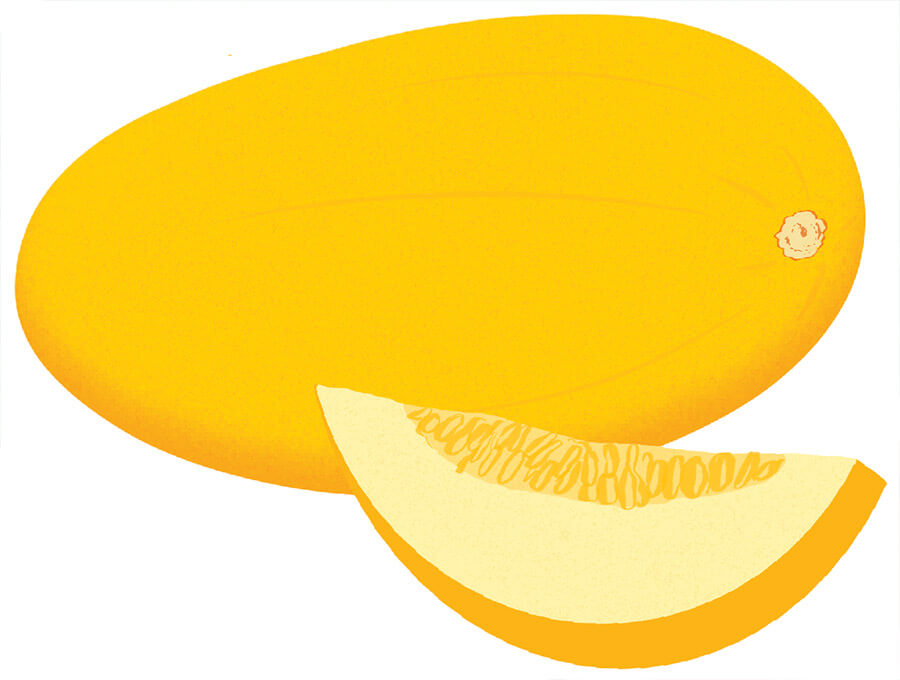
illustration by Emily Wallace
Canary
At NC State’s Central Crops Research Station in Clayton, summer fields produce bright yellow melons. According to Dr. Jonathan Schultheis, a professor of horticultural science, the canary “has real potential as a specialty melon” in North Carolina. Popular in Spain and Brazil, canaries grow well in warm climates and well-drained soil. Schultheis and his colleagues began growing about 20 varieties, whose interiors ranged from ivory to light green to orange. With the help of commercial growers, trained testing panelists, and blind taste tests at the likes of the State Farmers Market, they aim to winnow down to two that farmers want to grow and consumers want to eat. Then, they hope, patches beyond Clayton and their growing partners’ testing fields will burst with the sweet yellow canary to sing of summer’s grandeur.