Put ramekins on a baking sheet. Bake for 25-35 minutes, until puffed and golden. Remove from oven, and let stand for 5 minutes. With a flexible spatula, remove strata to
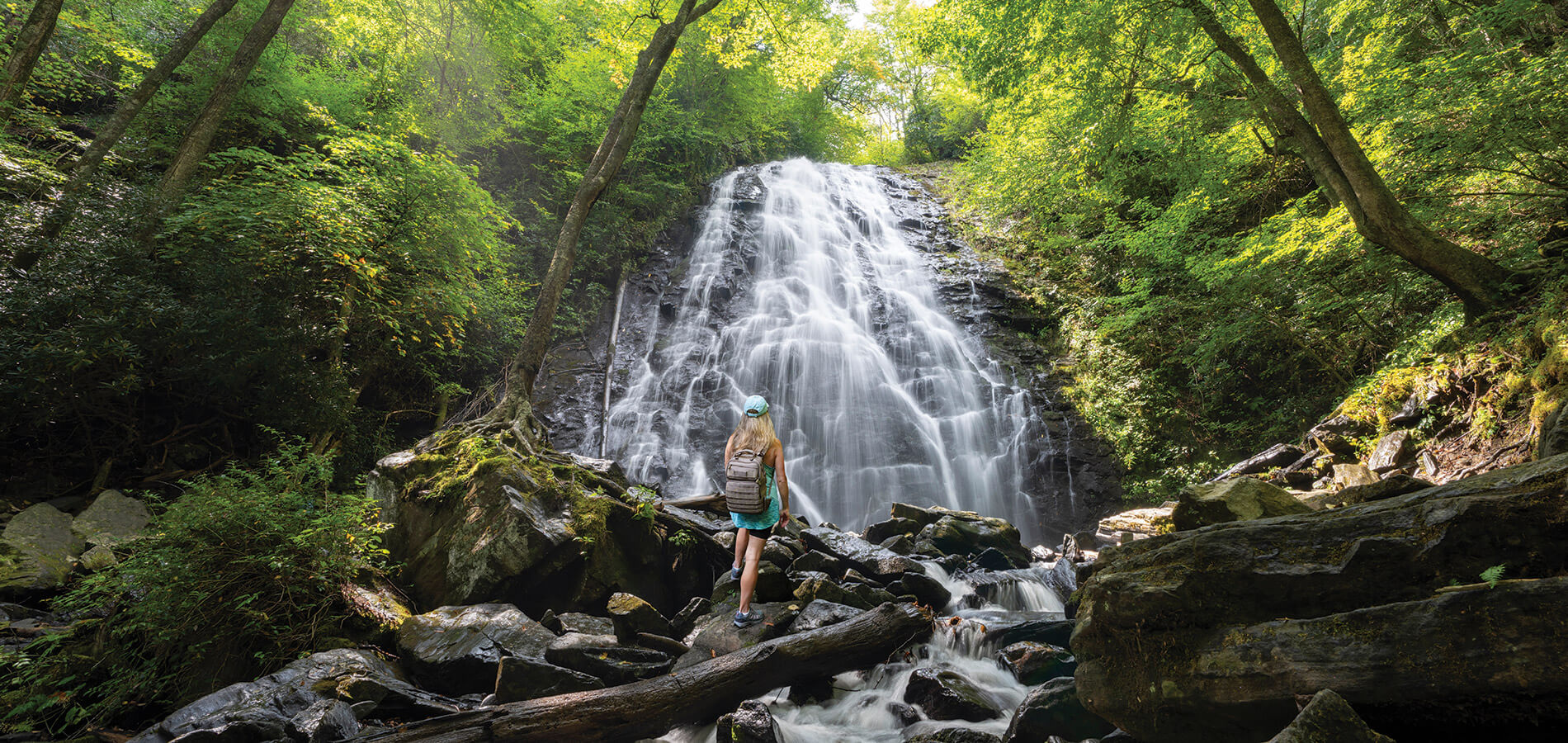
[caption id="attachment_201614" align="aligncenter" width="1140"] The spectacular three-tiered Linville Falls in Burke County is one of the most photographed waterfalls in the Blue Ridge Mountains.[/caption] Mountain Melody Where mountain winds leave
[caption id="attachment_201614" align="aligncenter" width="1140"] The spectacular three-tiered Linville Falls in Burke County is one of the most photographed waterfalls in the Blue Ridge Mountains.[/caption] Mountain Melody Where mountain winds leave
The song of our state has no final note. One writer knows that some of the sounds that make up its symphony live forever, belonging always and only to North Carolina.
The spectacular three-tiered Linville Falls in Burke County is one of the most photographed waterfalls in the Blue Ridge Mountains. photograph by J SMILANIC/DAWNFIRE PHOTOGRAPHY
Mountain Melody
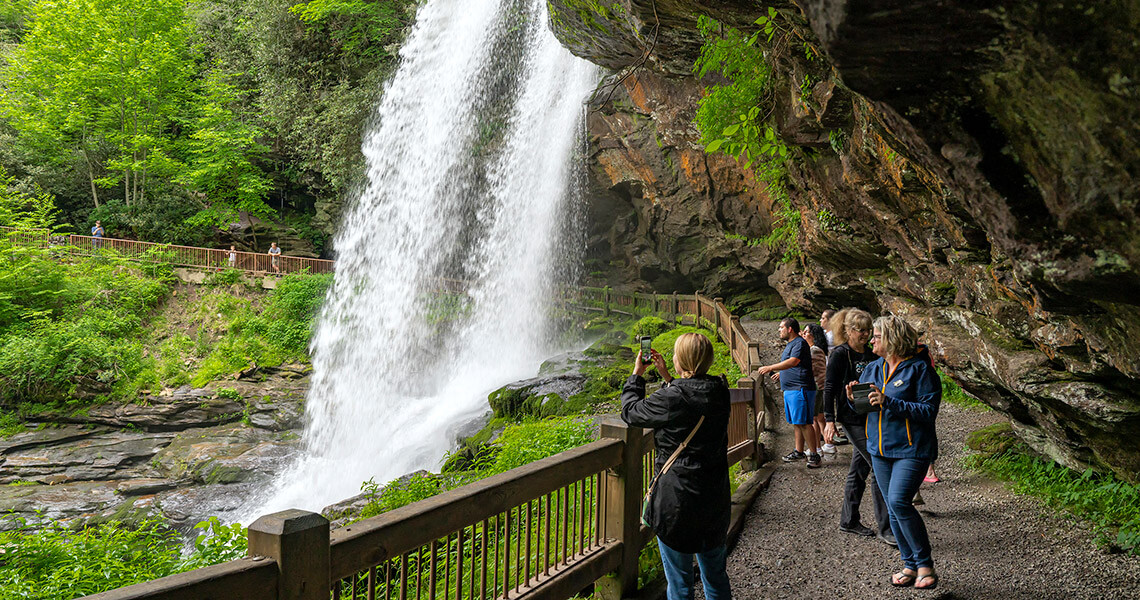
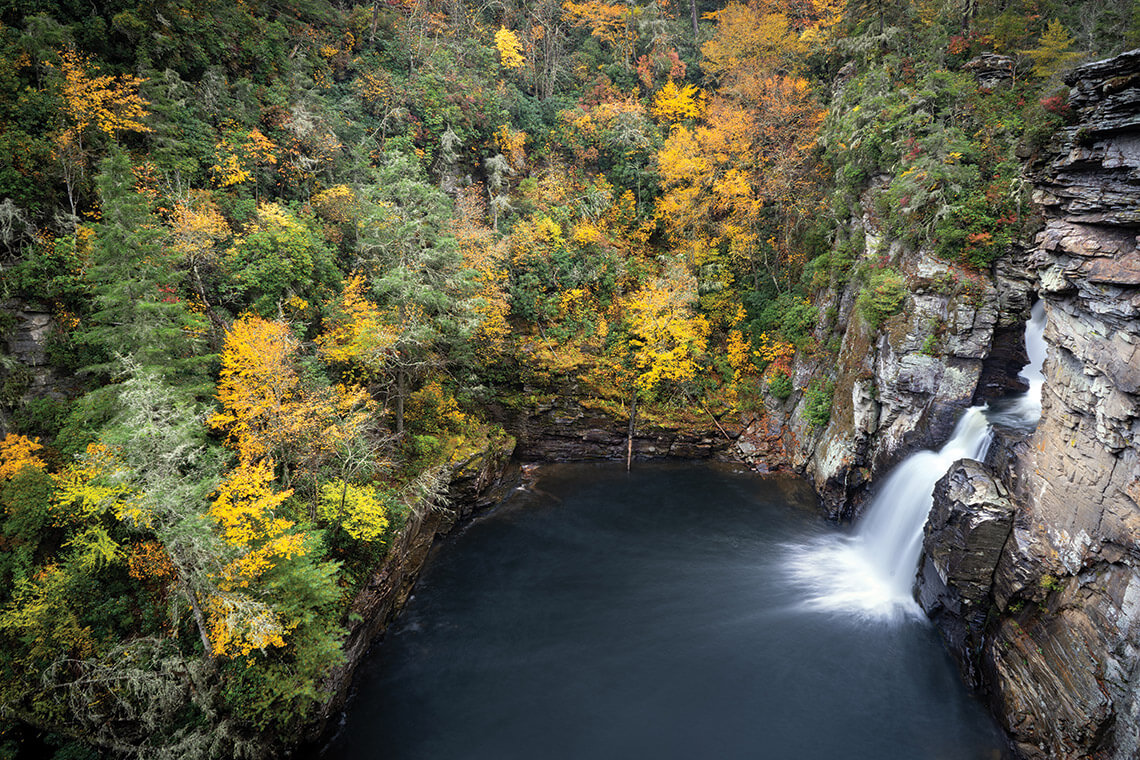
Where mountain winds leave off, highland waters may pick up with their own sounds and songs, unhurried burblings and tricklings: from a nearly noiseless creek in the woods that suddenly becomes the gushing, fast-sliding, showering stream of the 250-foot Cascades in Wilkes County to the huge, throaty resonance of big Linville Falls pouring thickly forth into its plunge pool 90 feet below, and well south to the hundreds of Transylvania County falls, each with granite-bowled pools of their own, and brisk endless plashings into them all. The river that runs through much of this county, the French Broad, was known as the “Long Man” to the Cherokee, who called all its tributaries his chattering children.
No one who ever gets near any of these everlasting, hardworking, high-country waters can fail to be charmed, even hypnotized, by our mountains’ abiding and far, far older-than-time watery sounds.
They live forever on the land. They live always in our hearts.
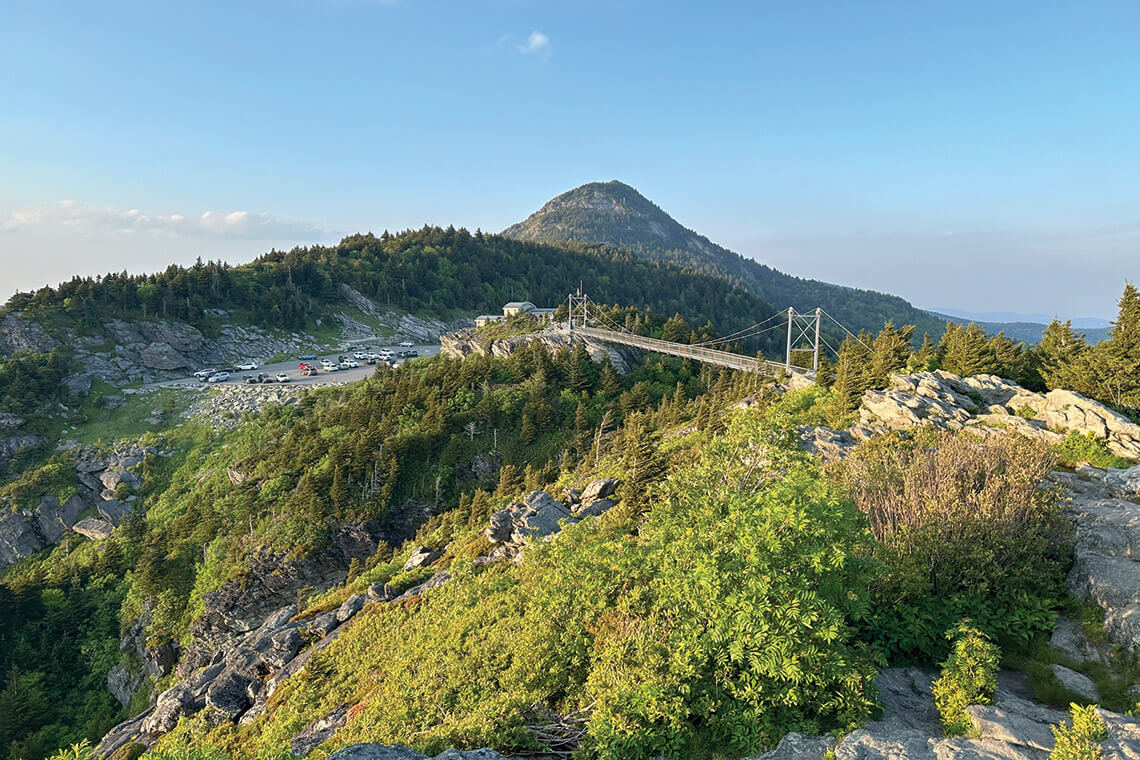
Listen to the wind blow …<br><span class="photographer">photograph by SP Murray</span>
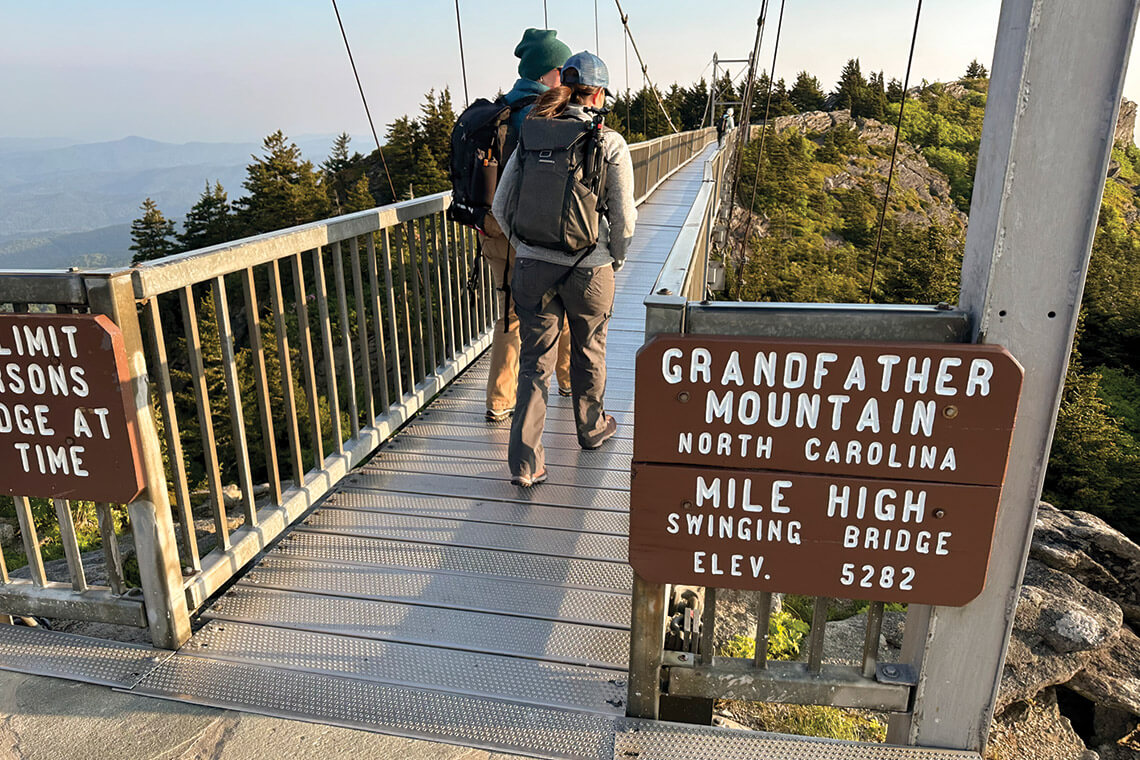
… on Grandfather Mountain’s Mile-High Swinging Bridge, …<br><span class="photographer">photograph by SP Murray</span>
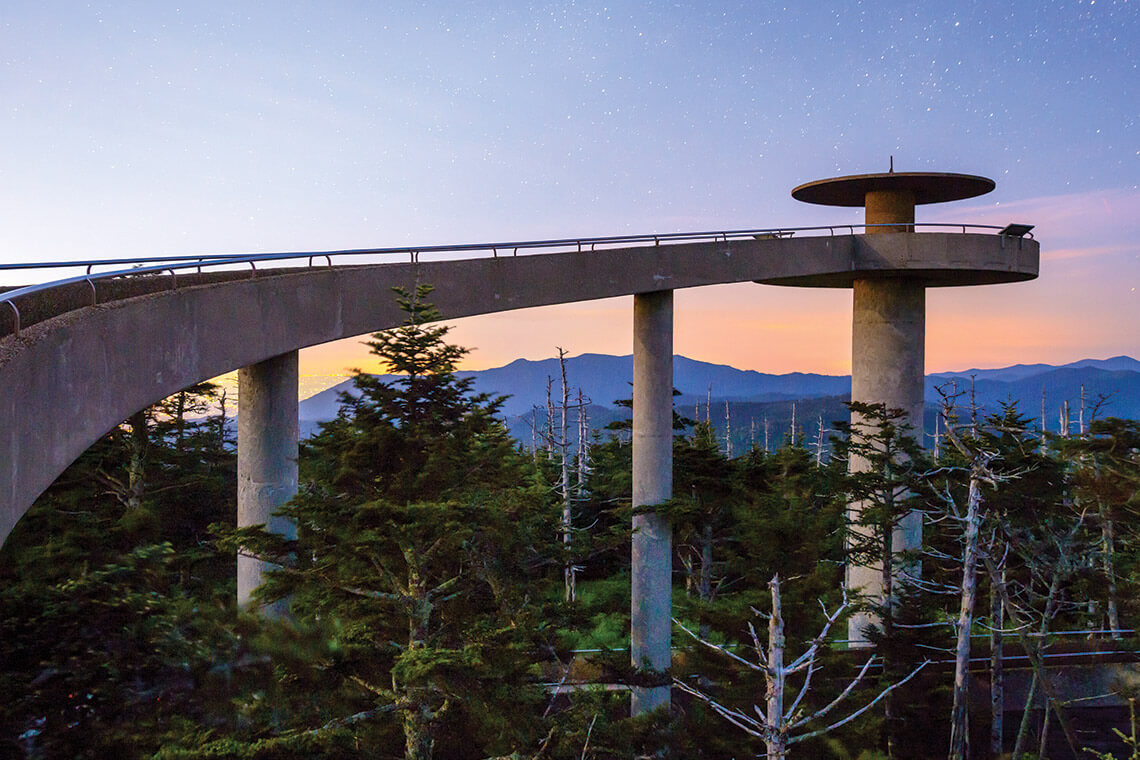
… and at the observation tower on the summit of Kuwohi, formerly known as Clingmans Dome, in Great Smoky Mountains National Park.<br><span class="photographer">photograph by SeanPavonePhoto/iStock/Getty Images Plus</span>
Summit Song
The high-hills wind has no home, and it will do what it must, whether that is a shushing breeze easing over the Cherokee’s Kuwohi, or the banshee shrieking of Helene’s 106-mile-per-hour hurricane force against Mount Mitchell last fall.
Folks say that when the hard winds blow over Grandfather Mountain, they hit the steel planks of its swinging bridge and sing loudly through them as if they were the reeds of a grand, mile-high harmonica.
Over the centuries, many were the witnesses who thought that whistling, whining winds coming over the narrow ridgetops of Roan Mountain were songs of faeries or ghosts or even of the land itself, communing with them. Writer Thomas Wolfe heard his version of this, too, and listened as “the wind howled through the rocking trees with insane laughter, the broken clouds scudded across the heavens like ghosts in flight.”
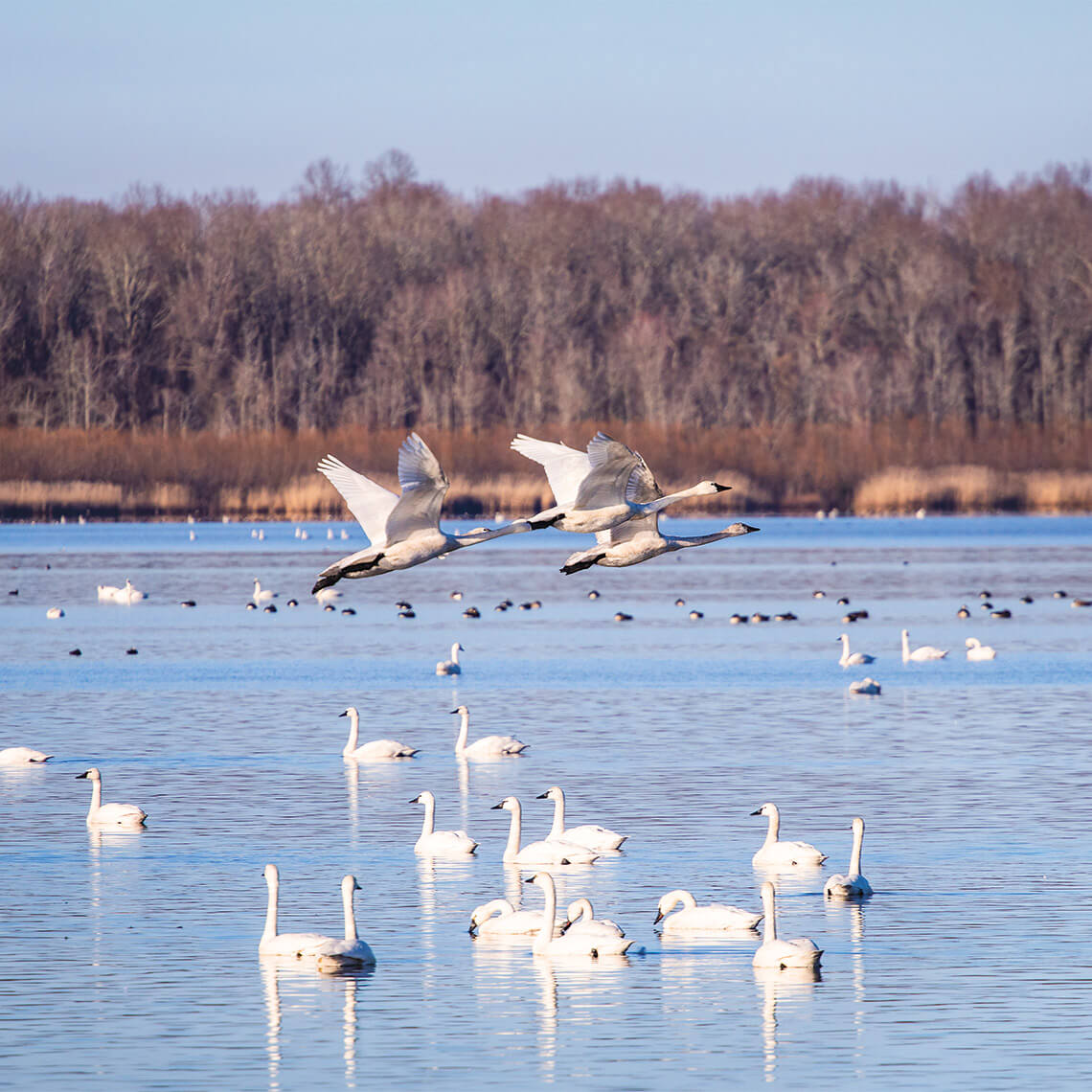
Every winter, birders flock to Pocosin Lakes National Wildlife Refuge to see thousands of tundra swans dotting the surface of Pungo Lake — and to hear their whistling cacophony. photograph by Chris Hannant
Wild Music
Several years ago, I joined a small group of birders intent on giving the swans and snow geese in a cornfield and slough near Pungo Lake a look and a listen. Easily 3,000 or 4,000 bridal-white birds, though golden just then in the early morning sun, were cackling and laughing at each other, cheering, jeering, every one a town crier in a village overflowing with avian joy.
Pioneering environmentalist Rachel Carson, who worked much around Lake Mattamuskeet, celebrated the geese and their “wild music, rising at times to a great, tumultuous crescendo, and dying away again to a throbbing undercurrent … a steady babble of goose voices.”
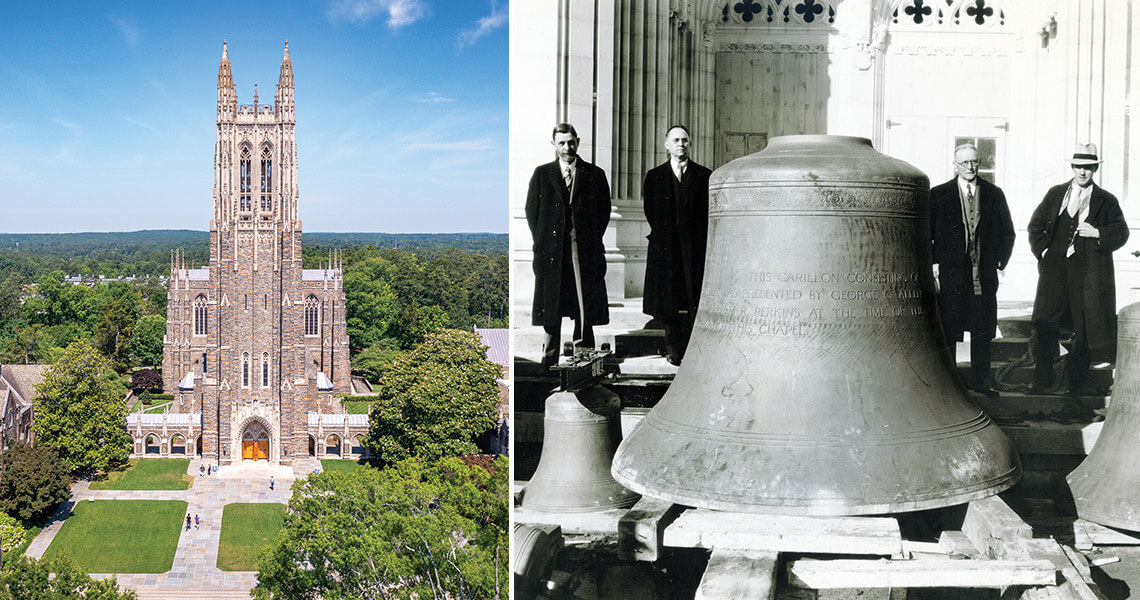
The 50 bells of Duke Chapel’s grand carillon — including the largest, weighing more than 11,000 pounds (right) — have rung out over the university for 90-plus years. More than 10,000 people came to the inaugural concert in 1932. photograph by Bill Snead for Duke University; historical Photo from the university archives photograph collection, David M. Rubenstein Rare Book & Manuscript Library, Duke University
With Bells On
The music of our bells rings out, pealing and deeply chiming or lightly jingling and purling. At churches from Murphy to Elizabeth City, from West Jefferson to Wilmington, bells toll on Sunday mornings in calls-to-worship. On campuses at UNC Chapel Hill and Wake Forest, at Duke and NC State, carillons flood the air victoriously with song.
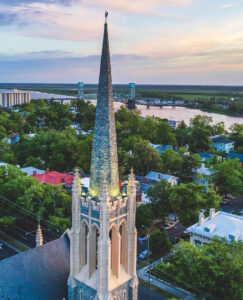
Across the state, parishioners answer the call of church bells, like the ones housed in the 1928 stone tower of First Presbyterian Church in downtown Wilmington. photograph by Jonathan Mcrae
One-note train bells both announce and warn of their approach into our small towns and cities. Other practical one-note wonders — cow bells and goat bells — worn by livestock grazing across the Old North State, have allowed us to follow, or find, domesticated creatures given to wandering.
In my home, in our old family hutch, is a large 19th-century handbell that my great-grandmother Spruill used to call everyone in to midday dinner from all across their Little Alligator riverside farm. As there is meaning in every sound we hear, sometimes I take it out and ring it for myself, just to hear the clang that, for hardworking men and women a century and a half ago, meant moments of rest, conviviality, sustenance — and, in the shade, calm and peace.
Get our most popular weekly newsletter: This is NC
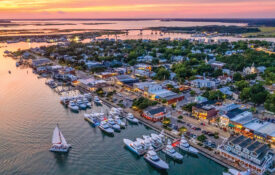
At both the turn of the century and today, Beaufort’s waterfront has attracted a hum of commerce and community. At its heart, a historic avenue tells that history, from the stately double-porched homes to the sound of ships announcing their arrival at port.