Put ramekins on a baking sheet. Bake for 25-35 minutes, until puffed and golden. Remove from oven, and let stand for 5 minutes. With a flexible spatula, remove strata to
Join The New York Times best-selling author and North Carolina native Wiley Cash as he highlights great writers across the state and their work each month. Listen in on conversations
Join The New York Times best-selling author and North Carolina native Wiley Cash as he highlights great writers across the state and their work each month. Listen in on conversations
Join The New York Times best-selling author and North Carolina native Wiley Cash as he highlights great writers across the state and their work each month. Listen in on conversations between Cash and his author friends as they discuss how North Carolina inspires them on the Our State Book Club podcast.
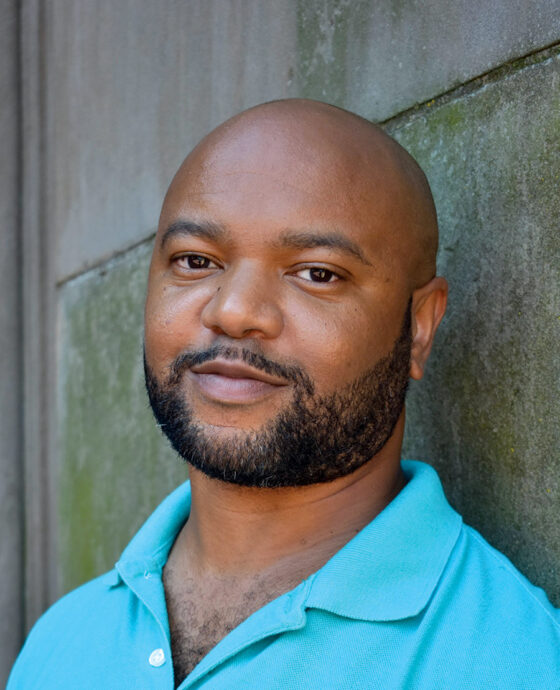
Even while growing up in Elizabeth City, De’Shawn Charles Winslow always knew he would leave home. His time in Durham at North Carolina Central University solidified his desire for big-city life. This dream and its accompanying guilt haunted him for years, especially when he first left his home state. In 2003, at the age of 23, he set his sights on New York City.
“I knew I had to leave,” he says. “There was nothing in Elizabeth City that was done to sustain me as a queer person, and there’s not a lot of work here. No one was really angry with me about leaving, but I still felt guilty for not making my life work at home.”
Winslow harbored some fear regarding the move, too. Growing up, he’d often heard stories of Black Southerners who moved north in pursuit of economic opportunity, equality, or simply to begin life anew. These journeys often didn’t work out, and they returned to North Carolina.
“As a kid, I always listened to the conversations of older people,” he says. “There were a lot of stories about people from the community who moved north, and the fast pace was too much for them. I heard a lot of disparaging tales about people from the North.”
But Winslow easily adapted to life in New York, eventually enrolling at Brooklyn College to finish the business degree he’d begun back in Durham. Then, tragedy pulled his heart back toward North Carolina.
“My father passed suddenly,” he says. “At the time, I was taking a creative writing class, and I started writing about him. It started as nonfiction, but I began writing fiction to fill in the gaps of what I didn’t know.”
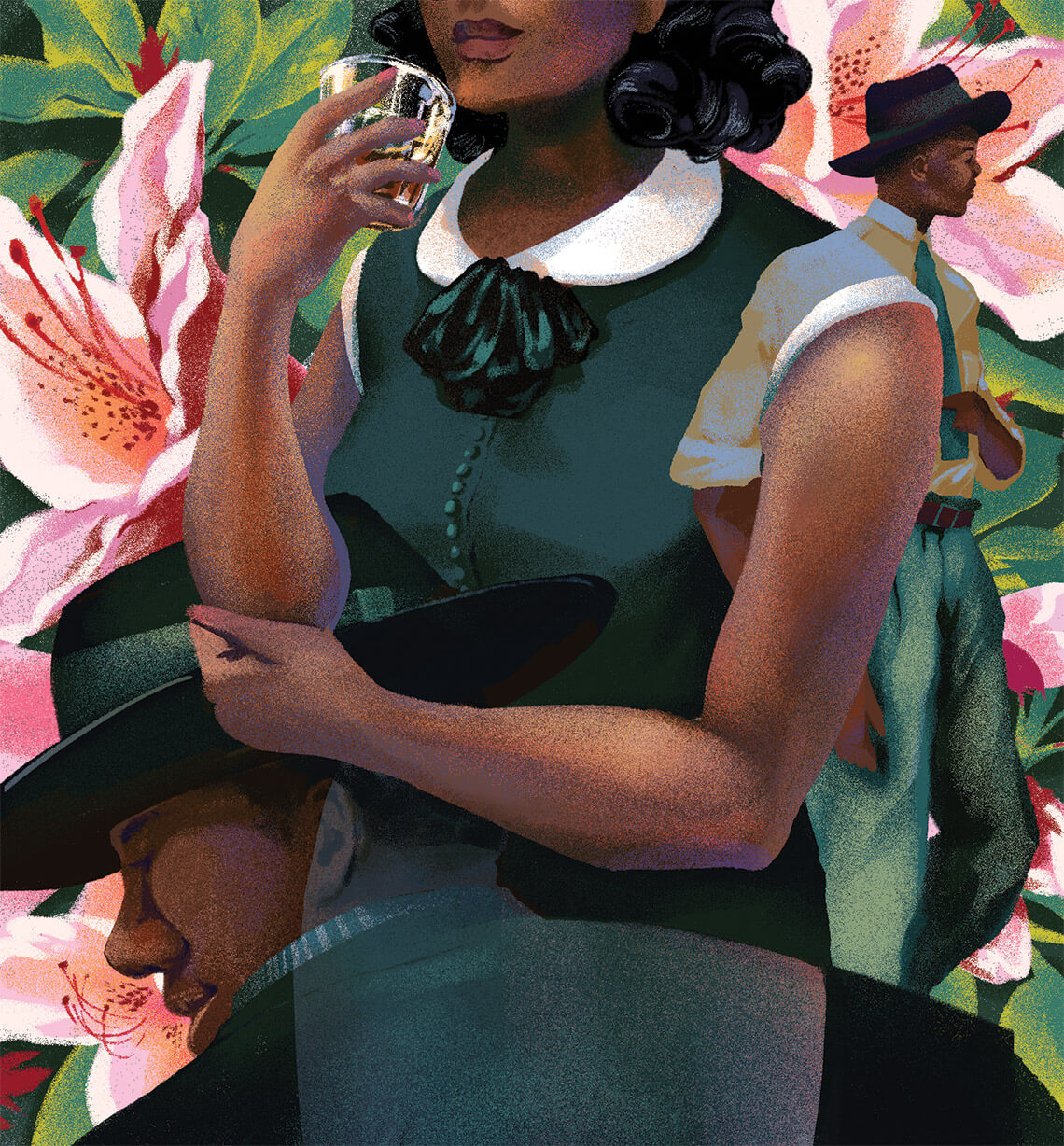
illustration by Andrea Cheung
By then, Winslow was 32 years old, a recent college graduate, and unsure of what to do next. One of his professors suggested that he pursue a master’s degree in fiction writing.
“I didn’t grow up thinking about being a writer,” he says. “I wasn’t much of a reader when I was younger. It was my father’s passing that threw me into it.”
Another of Winslow’s professors encouraged him to apply to the famed Iowa Writers’ Workshop, a program that produced fiction writers like Flannery O’Connor, Allan Gurganus, and Ann Patchett. He was accepted.
As Winslow developed his skills, he knew two things for certain: First, he wanted his writing to defy stereotypes by portraying Black male characters as sensitive and accountable to the people in their lives, like his father always was. Second, he wanted his fiction to be structured in brief segments, something he later realized was a direct result of watching television with older folks while growing up.
“The women I was raised around watched soap operas,” he says. “The Young and the Restless, The Bold and the Beautiful. I loved it.”
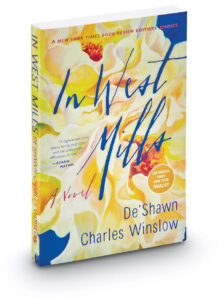
In Winslow’s 2019 debut novel, In West Mills, he borrows from soaps in both the brevity of his scenes and in his focus on a small community where everyone’s lives are intertwined. The town of West Mills is based on his mother’s hometown of South Mills, near Elizabeth City. The novel won the Center for Fiction’s First Novel Prize, was an American Book Award recipient, and went on to win or be shortlisted for a slew of other national awards. His sophomore novel, Decent People, was also set in West Mills, and it was roundly praised by critics from The New York Times, The Washington Post, and other publications.
It was only in the past few years that Winslow was finally able to shrug off the guilt of leaving home. In basing West Mills and its citizens on the places and people he knew growing up, perhaps he never really left.
A message from our sponsor:
The Power of Purpose
The 2025-26 Elon University Speaker Series brings purposeful voices to the forefront. Hear from Olympic gold medalist Katie Ledecky, techno-sociologist Zeynep Tufekci and Army intelligence officer Lt. Gen. (Ret.) Robert P. Ashley, Jr., as they explore what drives leaders to make a difference.
De’Shawn Charles Winslow’s novel In West Mills opens with a tight-knit Black community in 1941 and follows a woman named Azalea “Knot” Centre who loves three things above all others: whiskey, Victorian literature, and the company of men. As her life unfolds, she pays for her proclivities in one way or another. Knot often relies on her friend Otis Lee, who’s dealing with troubles of his own as long-buried family secrets begin to resurface. In West Mills is a story about complex characters who share a past and heartbreaking hopes for their futures.
More to Explore: Hear from De’Shawn Charles Winslow in new episodes out September 2 and 16. Listen at ourstate.com/podcasts.
From the expanses of needlerush at Cedar Island to the lush spartina feathering the shores of Bodie and Roanoke islands, our salt marshes are the threshold to a watery world — the heartbeat of our coastal ecosystem.