 In the wake of Hurricane Helene, people across the mountains did what they could: planting, building, repairing, creating. These are stories not of grand gestures but of small acts that became the scaffolding of recovery. Read about those who came together to support each other.
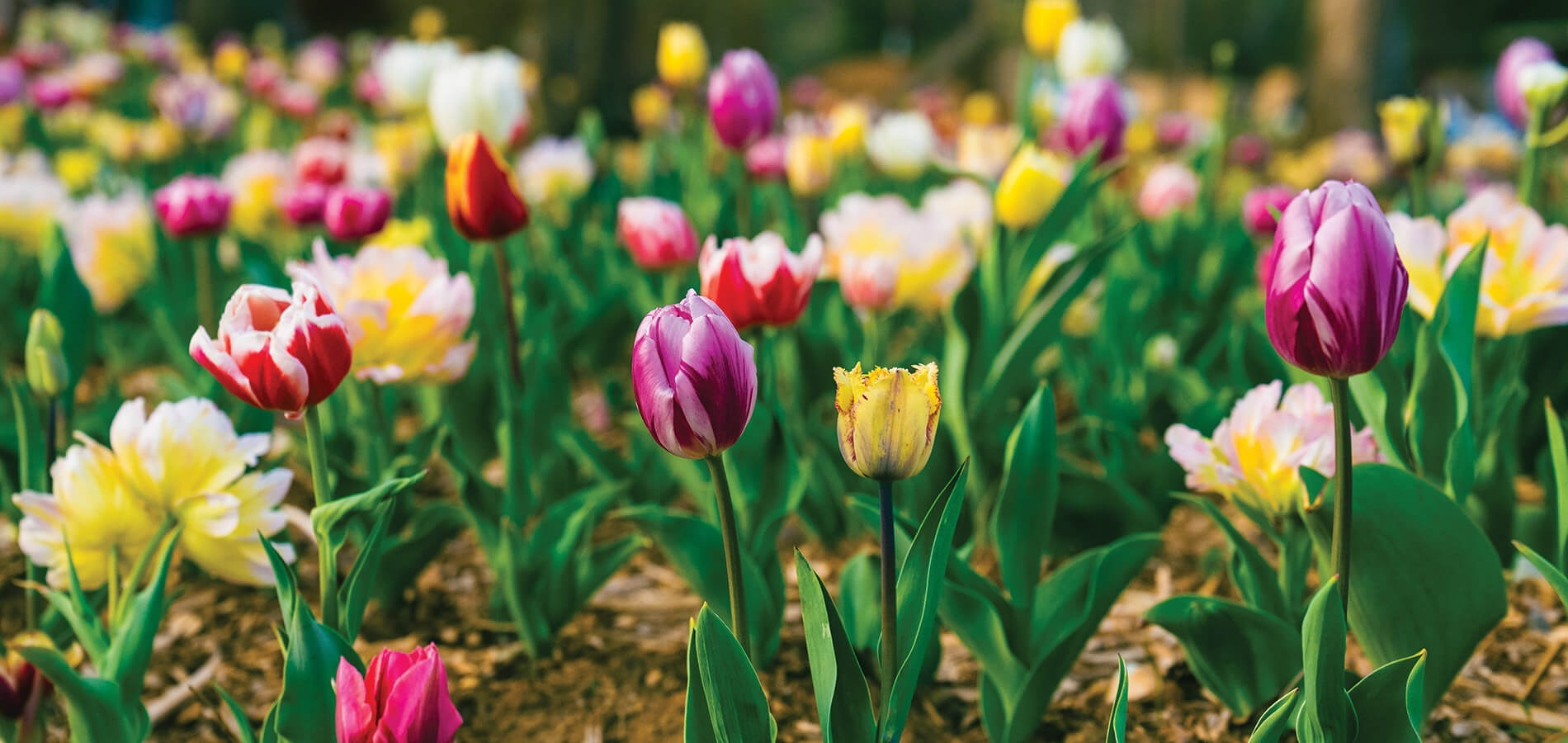
Beneath the soil in Grovemont Park — less than a mile from the Swannanoa River, which, a year ago, reared its monstrous head and ravaged entire communities in the Swannanoa Valley — 10,000 bulbs lie sleeping, waiting for spring. Tulips. Daffodils. Peonies. Red. Yellow. Pink. Purple. And come April, they’ll all be blooming, a sign of rebirth in a community that has seen so much devastation.
Last December, Marco Rozenbroek and a small team of other Swannanoa locals planted the bulbs to bring a sign of hope back to the community following Helene. But the seed of hope was planted much earlier, in the days and weeks following the storm, when the community would gather together in the park to offer aid, share resources, and provide comfort to one another.
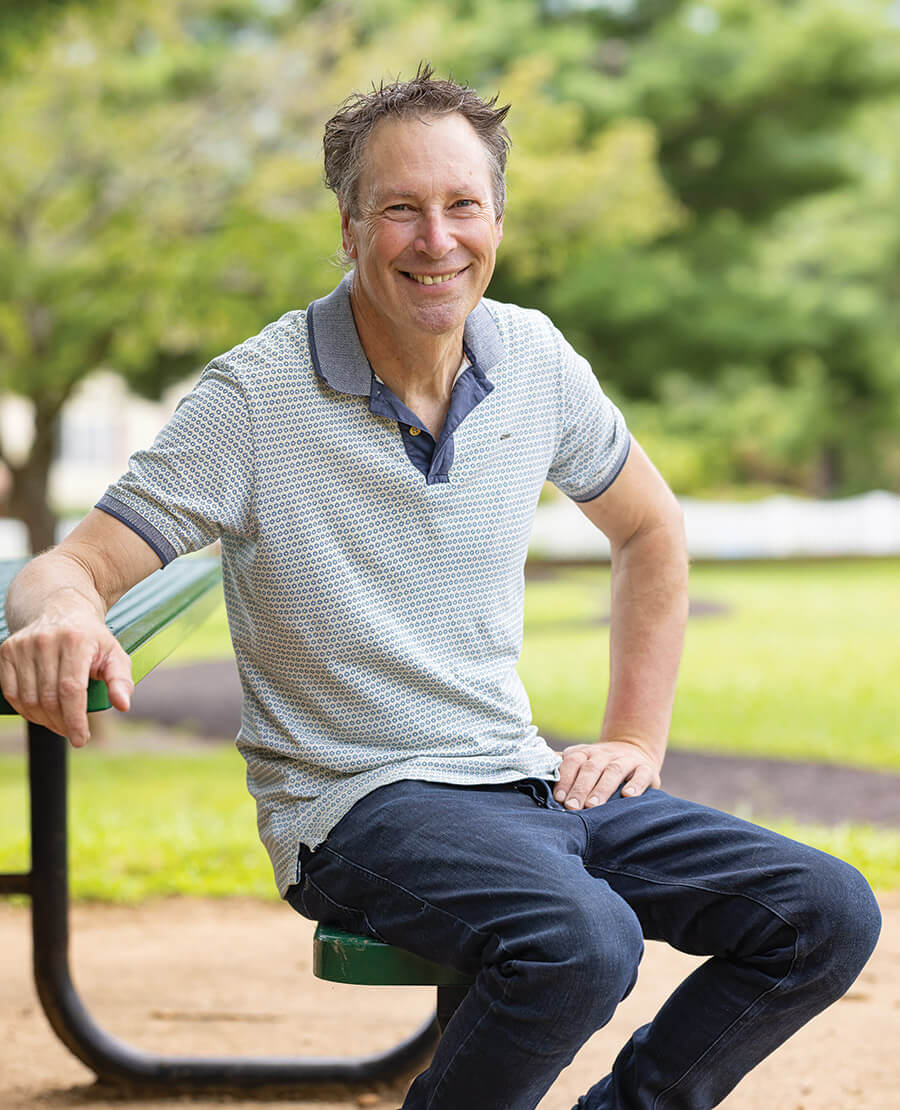
Marco Rozenbroek was delighted to see the first green shoots peek out above the dirt as the spring sun warmed the earth. photograph by Tim Robison
Because Swannanoa is an unincorporated community, residents didn’t have a government to turn to for help after the storm. Instead, they turned to each other. Neighbors in the Grovemont Community began showing up at the park every day, offering anything they could share. “[Grovemont] was designed to be an intentional community, so this park area and the adjacent Swannanoa Community Center are a natural hub,” says Marianne Rogers, a Swannanoa Community Council member, as she sits in the park’s pavilion. “So when the storm came, it was just a natural place for neighbors to come to. And we had a lot of different people with a lot of different resources and talents that created a care center.”
Without phones or Internet, the park became a place for residents to share what they needed and what they had to offer, like water, generators, and power strips. People kept in touch with their loved ones through a satellite Internet connection someone set up. Chefs who lived in the neighborhood grilled all the meat that folks brought them before it spoiled in their homes without power. Volunteers distributed food and clothing to local residents, musicians and jugglers performed for entertainment, and a doctor and a nurse helped anyone with a medical need.
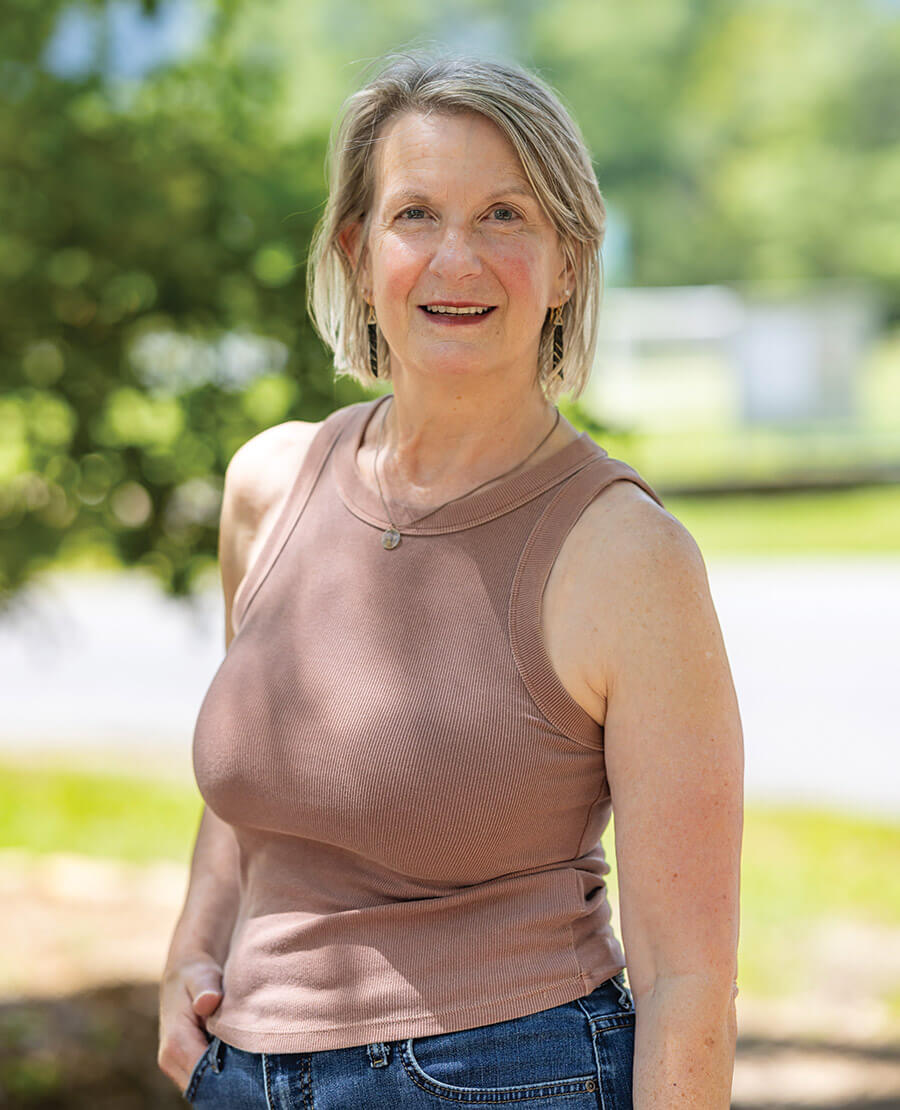
Marianne Rogers witnessed her neighbors becoming more connected to Swannanoa and one another as they worked together in the wake of Helene. photograph by Tim Robison
Rozenbroek and Rogers chipped in, too. Rozenbroek joined a team of neighbors with chainsaws who cleared trees from roads and properties, and when he and Rogers’s husband, Justice, found goats wandering around the neighborhood, they located the owners through Facebook. Rogers used her experience in social work and community engagement to help organize altruistic efforts. When other social workers showed up who had experience working with children, Rogers instructed them to set up a kids’ area with games, activities, and coloring books. A friend of hers, an equine therapist, brought horses to help people deal with the trauma from the storm.
The park offered more than just necessities. One woman showed up and wanted to know how she could help. Rogers told her to set up a chair and just listen to the stories people shared about the storm. Rogers shared her own stories as well. When she left to visit friends in other communities or fetch water from Black Mountain’s Pisgah Brewing Company, she’d pass the Swannanoa River full of cars, trash, and even buildings. “I would come back and sit in that grove with kids who were drawing, making puppets, and just making things,” she says. “There might be somebody playing guitar, and it was really grounding and really settling to have come from seeing the immense destruction to then being with people who are just in that moment.”
• • •
As weeks turned to months after the storm, residents returned to their homes, and the park became a place to swing, walk, and enjoy nature once again. But there was at least one lasting change for the better: Neighbors who formerly had never known each other were now dear friends. And Rozenbroek, who’d moved to the community seven years ago, felt more a part of Swannanoa than ever before.
“For me, one of the foundations of life is connection, unity, but that’s how I grew up,” he says. “I came from a very small village where you knew almost everybody. And over here, initially we didn’t know that many people. It’s very essential for happiness in life, at least for me.”
Rozenbroek wanted to bring beauty back to his adopted home. So he turned to what he knows best: tulips.
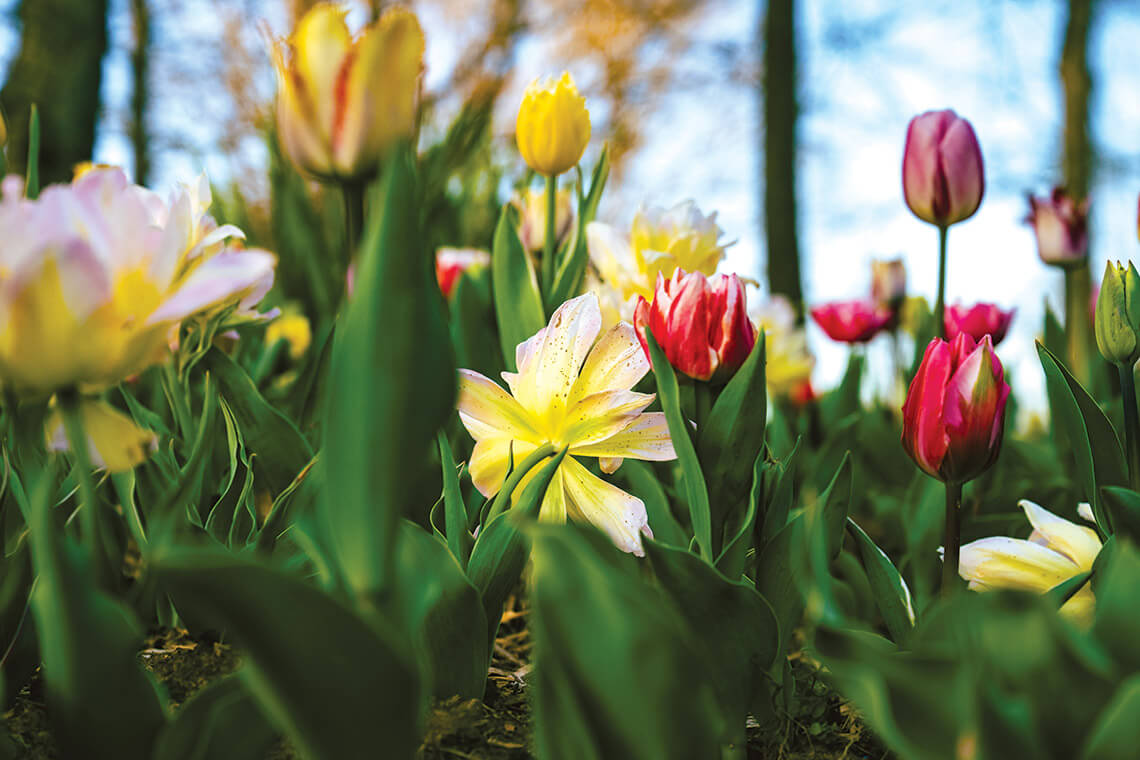
After the tulips bloomed last spring at Grovemont Park, neighbors held a celebration full of food and music and began to gather once again. Photography courtesy of ExploreAsheville.com
Rozenbroek grew up in the town of Anna Paulowna in North Holland, a province in the Netherlands known for growing tulips and other bulbs. His father grew tulips and created many new varieties that are popular today, like Green Wave Parrot and Parrot King. “I see myself as a young 4- or 5-year-old boy, walking through the tulips at that moment, not realizing what it really meant to me,” he says. “[Tulips are] in my heart.”
After working on his father’s tulip farm, Rozenbroek became a flower trader, selling flowers to supermarkets all over Europe and the United States. His wife, Martine Van Velden, also from the Netherlands, moved to the United States in 1996 for her job as a floral designer before they were married. In 2009, Rozenbroek moved to the U.S. to start a floral company with her.
While living in Miami, they visited western North Carolina in September 2017. They fell in love with the beauty and the climate, and they were reminded of home. They moved to Swannanoa shortly thereafter. Several years ago, Rozenbroek planted a small tulip farm, and he and his wife began focusing on bulb production.
Following Helene, Rozenbroek reached out to DutchGrown, a flower bulb grower and exporter from the Netherlands, to ask if the company could donate a few boxes of bulbs to plant in the park. He was shocked when 10,000 tulip, daffodil, grape hyacinth, peony, and allium bulbs showed up at his house in December. The boxes took up about a fourth of the couple’s two-car garage — but not for long.
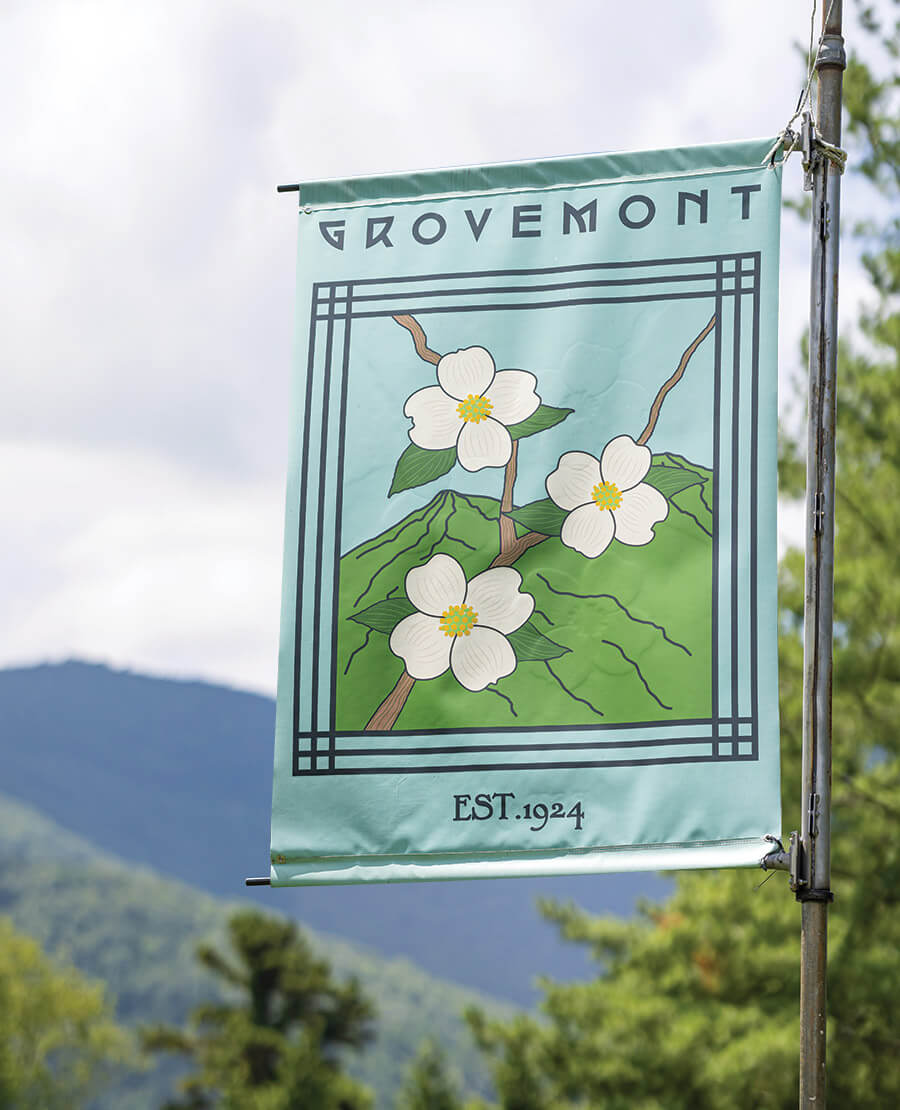
Grovemont Park became a meeting ground for the community to gather in the aftermath of the storm and, eventually, plant seeds of hope. photograph by Tim Robison
He organized a small group of locals to plant the bulbs before the frost. Other than turning the soil with a tiller, the group planted all of the bulbs by hand, using nutrient-rich soil the floodwaters had deposited in the ditches around the park and lining the flower beds with rocks pitched from the river during the storm. By the second week of April, the flowers were in full bloom.
Rozenbroek’s efforts with Grovemont Park’s new flowers inspired Rogers to start a garden club, and the members plan to plant more bulbs and some native flowers around the park. Their work has already started along the Swannanoa River. Like Rogers, Rozenbroek is inspired as well, and he’ll continue to be involved. “Swannanoa is now known for the storm,” he says, “but we want to be known, hopefully one day, for the flowers.”
To contribute to the continued beautification of Grovemont Park, visit grovemontpark.org/donate.