Put ramekins on a baking sheet. Bake for 25-35 minutes, until puffed and golden. Remove from oven, and let stand for 5 minutes. With a flexible spatula, remove strata to
They protect so much of what makes us. They provide a safety net to secure us against the dangers we never foresee and provide the helping hand we need for
They protect so much of what makes us. They provide a safety net to secure us against the dangers we never foresee and provide the helping hand we need for
They provide a safety net to secure us against the dangers we never foresee and provide the helping hand we need for us to cope with what shakes us to our core. They keep intact the beauty of what makes North Carolina and provide support to the most vulnerable among us, especially those who have no voice and feel invisible.
They are our protectors, driven by what may seem inconsequential — except to them.
Patrick Falvey, a registered nurse with Duke Life Flight, wallpapers his kitchen with sticky notes with inspirational sayings. Like this one he discovered on the headstone of baseball legend Jackie Robinson: “A life is not important except in the impact it has on other lives.”
The Rev. Martha Brown keeps in her office a track baton that reminds her of her past, her present, and her future. Brown ran the first leg of the 400-meter relay team for New Bern High School. Across the baton is written “Hebrews 12:1-3.” Those three verses contain the line, “Let us run with perseverance the race marked out for us.”
Lt. David Davis with the Raleigh Police Department remembers a conversation he had more than 20 years while stationed in Iraq. Davis was 19; Charles Bush was 43; Davis was two weeks from leaving Iraq. As specialists with the U.S. Army Reserve, both were tasked with transporting soldiers to and from an airfield. With Davis flying home soon, Bush offered to take his place.
Bush never returned. He died when his Humvee hit a homemade bomb. Davis is now married with two children, and Bush’s fateful offer still sticks with him, especially with what he told him once: “Davis, you’re going to do big things.”
In the stories and photos that follow, these protectors of North Carolina share stories of what binds us all: a love for North Carolina, for the place we call home. What reminds them of their responsibility are those everyday items, those passing conversations they see as sacred.
So they read; they see; they remember. And they keep going.
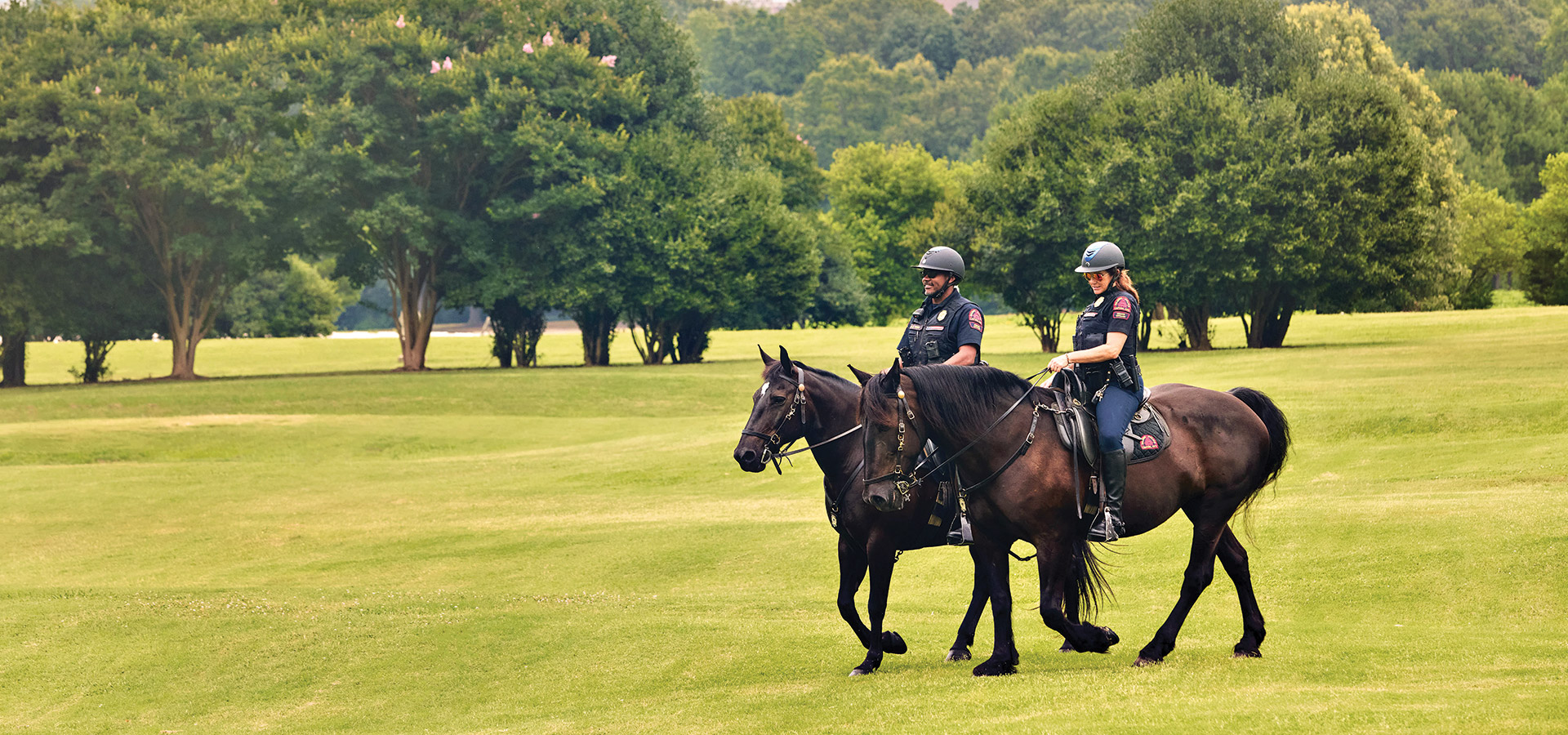
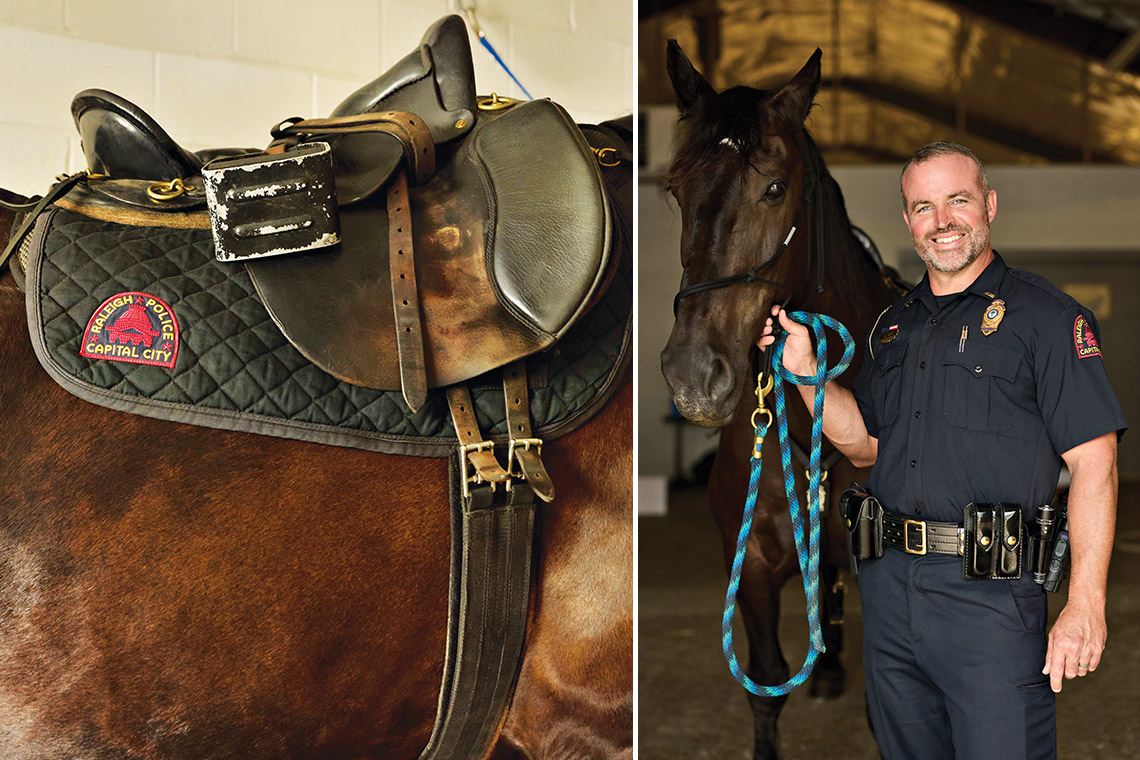
The Raleigh Police Department has the largest mounted unit in the state. Officers like Lt. David Davis (right) apply because they love horses — they take responsibility for the care and grooming of their equine partners, like Willow. photograph by Alex Boerner
Raleigh Police Department Mounted Unit Lt. David Davis
For years, Lt. David Davis would get smiles wherever he went because of his four-legged partners, Zeb and Major. From 2013 to 2018, as a member of the Mounted Unit of the Raleigh Police Department, Davis patrolled Raleigh from the back of a horse.
His perch at least 10 feet above the ground gave him another perspective on what he’s felt called to do since he was a teenager. As a specialist in the U.S. Army Reserve stationed in Iraq, he helped protect people on the other side of the world. As a 19-year veteran with the Raleigh Police Department, now chief public information officer, he’s helped protect people closer to home.
He started in a police cruiser. He continued with Zeb and Major. Zeb, muscular and red, looked like a Clydesdale. Major, with his piebald coat of black, brown, and white, looked like a cowboy’s best friend. Before they retired, Zeb and Major helped Davis keep people safe, reminding him of what he learned long ago on his family’s 500-acre dairy farm in upstate New York: Take care of your animals. And they will take care of you.
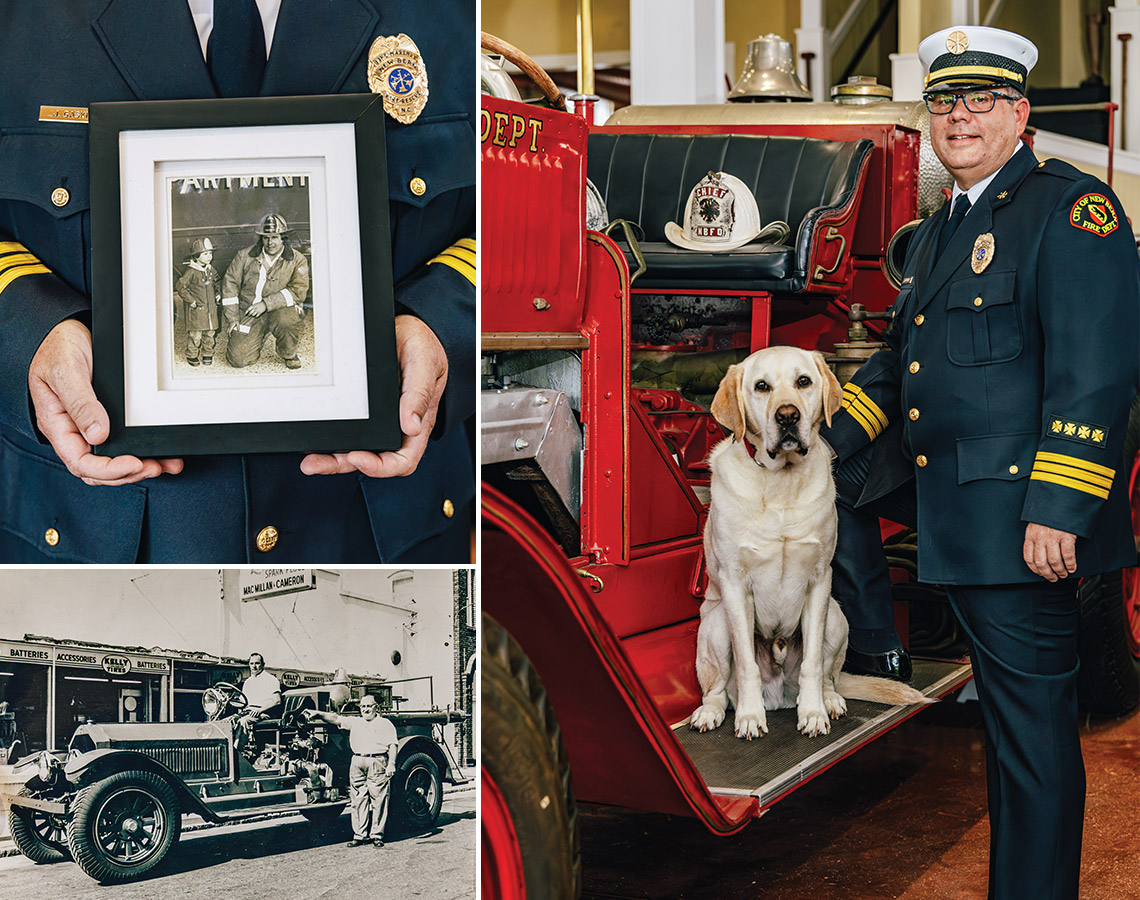
Third-generation firefighter Johnathon Gaskins (right) grew up visiting his dad, Ralph (top left), at the 1928 fire station in New Bern. That station is now the New Bern Firemen’s Museum. photograph by Baxter Miller
New Bern Fire-Rescue Johnathon Gaskins
In the New Bern Firemen’s Museum, housed in the city’s former fire department, Johnathon Gaskins can feel the aura of history — and family.
His grandfather worked in that fire department. His dad, too. Both were volunteer firefighters. As a kid, Gaskins climbed onto the fire trucks. Today, as the city’s fire marshal, he can climb the stairs and see a collection of photos of past fire chiefs. And there’s his dad: Ralph Gaskins, 30-year veteran of New Bern Fire-Rescue, fire chief in 1987.
Ask the younger Gaskins about that photo and the place that’s now a museum, and his voice drops to a whisper. “It’s just the times we got to spend together,” he says haltingly. “He was my hero.”
Gaskins has spent 24 years with New Bern Fire-Rescue, one of North Carolina’s oldest fire departments, and he’s walked into danger and emergency situations to help his neighbors in the most vulnerable moments of their lives. His work embodies the words inscribed on the side of the city’s fire engines: “Proudly serving since 1845.”
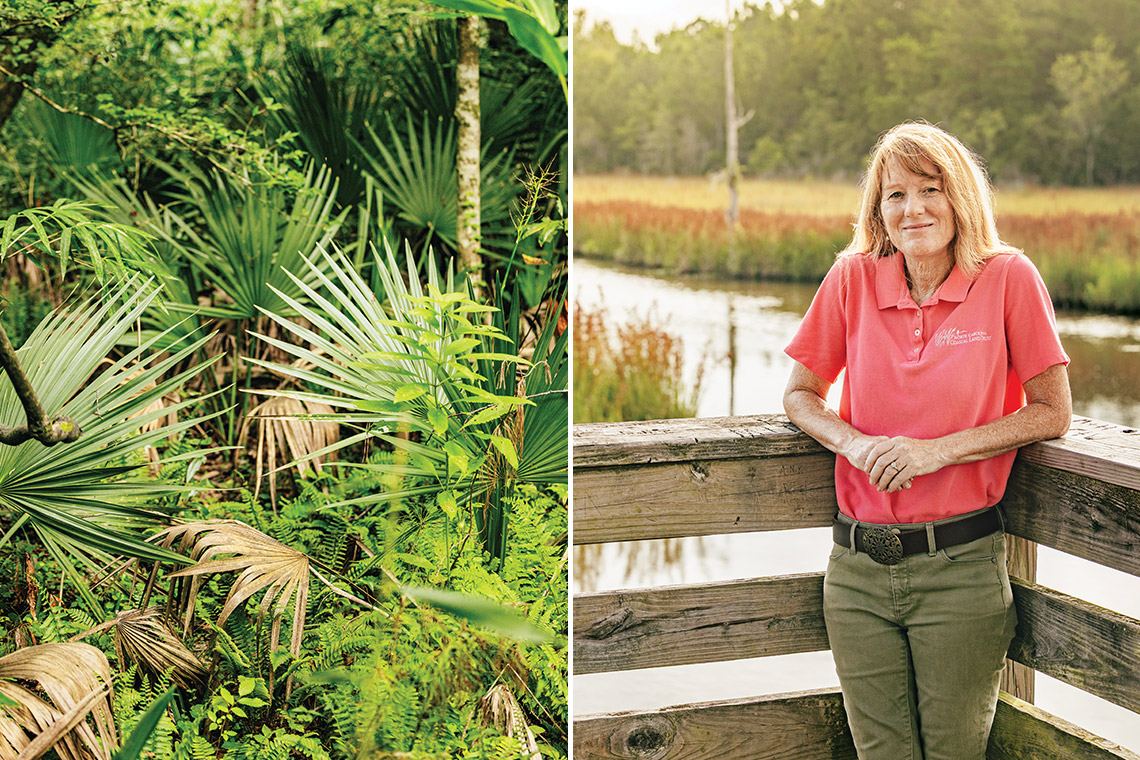
The NC Coastal Land Trust created the Janice L. Allen Land Management Fund to honor Allen’s work in protecting wild spaces in 31 eastern North Carolina counties. photograph by Baxter Miller
NC Coastal Land Trust Janice Allen • Wilmington
Two numbers tell you everything.
In 1997, when Janice Allen became the director of land protection for the NC Coastal Land Trust, the organization had saved 3,952 acres. By the time she retired in December 2024, that number had grown to 91,101 acres.
Allen played a huge role. During her 27 years at the nonprofit, she helped raise $150 million to acquire and keep intact the beauty of the land and wildlife habitats in 31 counties in the Coastal Plain of North Carolina.
She worked closely with attorney Lee Leidy, and they complemented each other on land conservation projects like, as Allen says, “peanut butter and jelly.” And from those acres protected came spellbinding sights and sounds. Like the cackling symphony of tundra swans echoing across Salters Creek. Those discoveries kept Allen going.
“Marjorie Kinnan Rawlings once wrote, ‘I do not understand how anyone can live without some small place of enchantment to turn to,’” Allen says. “And that is what the land trust strives to do: protect places of enchantment for people to enjoy.”
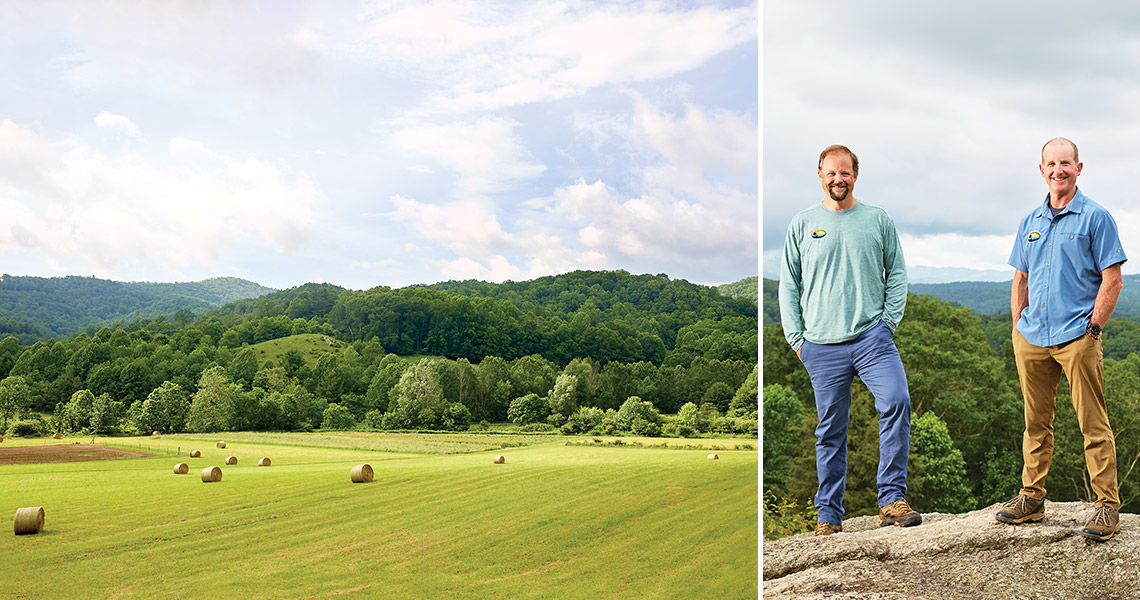
Among the properties that Ben Lucas (left), Eric Hiegl, and their Blue Ridge Conservancy colleagues help protect are the agricultural fields of the Valle Crucis Conference Center and Holy Cross Church. photograph by Stacey Van Berkel
Blue Ridge Conservancy Eric Hiegl & Ben Lucas • Blowing Rock
Eric Hiegl and Ben Lucas see themselves as a team. Hiegl anchors the front end; Lucas works the back end.
Hiegl helps families find ways to protect their land with conversation easements to keep it pristine and untouched. When Hiegl finishes, Lucas begins. He shoulders a pack full of supplies, and in his sturdy pair of boots, he navigates the rugged terrain from Alleghany to Yancey counties.
Using a smartphone loaded with mapping software, Lucas monitors more than 200 protected properties in seven counties in northwestern North Carolina. He and Hiegl talk face-to-face with landowners, some of whom steer clear of email. They want Hiegl and Lucas to know that the land they hope to protect has fed families and their spirits for generations.
The stories Hiegl and Lucas hear fuel their work. Together with their Blue Ridge Conservancy colleagues, they preserve the beauty of North Carolina’s mountains, protect them against unfettered development, and ensure that generations of hikers will continue to find Appalachian wonders like the bell-shaped bloom of a Gray’s lily on Three Top Mountain.
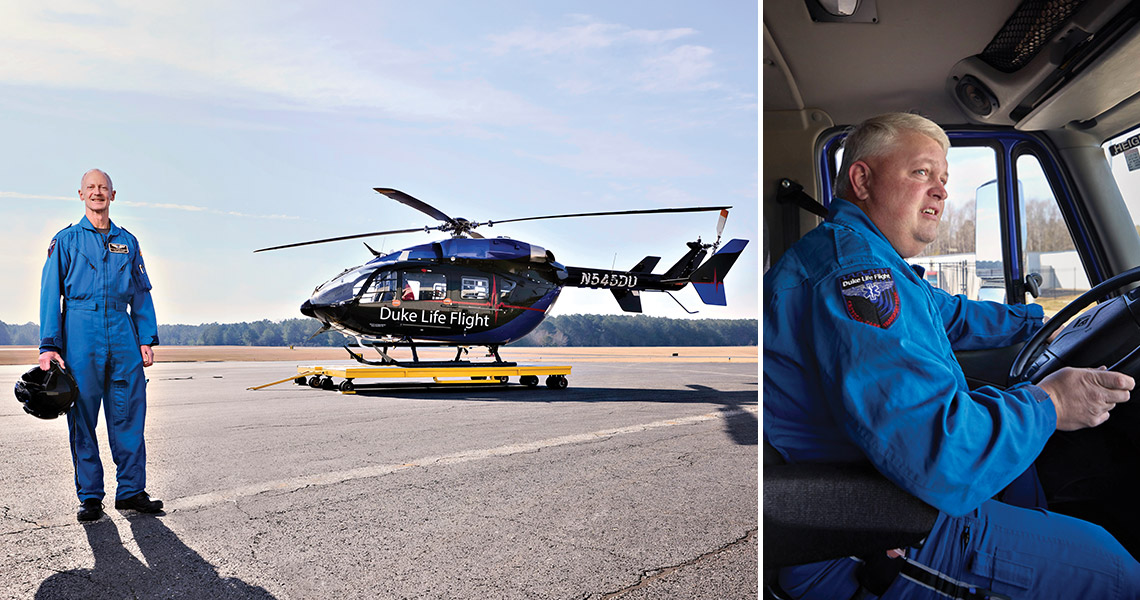
EMT and rescue specialist Cory Alderman (right) and Registered Nurse Patrick Falvey (left) rely on Duke Life Flight ambulances and helicopters to help them provide swift care to patients. photograph by Alex Boerner
Duke Life Flight Cory Alderman & Patrick Falvey • Durham
When they step from a Duke Life Flight ambulance or helicopter, Cory Alderman and Patrick Falvey find people at their most vulnerable, their most scared. They read the emotions in their faces, their body language, and what they say — or don’t say. They work to build trust and ease fears.
Alderman is an advanced emergency medical technician and a certified rescue technician, and he keeps close his grandmother’s advice: “When things don’t work, try harder. Put it in God’s hands and keep trying!”
Falvey is a registered nurse, and he keeps close the memory of a little girl.
She was not even 1 when Falvey met her. Her heart had failed, and Falvey helped resuscitate her before flying her back to Duke Medical Center. Today, that little girl is 9, and after many surgeries, she’s active and relatively healthy. In a photo her family sent to Falvey, she’s at the beach, laughing and building sandcastles.
When Alderman and Falvey answer a call, a life so often hangs in the balance. They lean in, remember, and begin.
“We’re going to take good care of you,” Falvey tells patients, holding their hands.
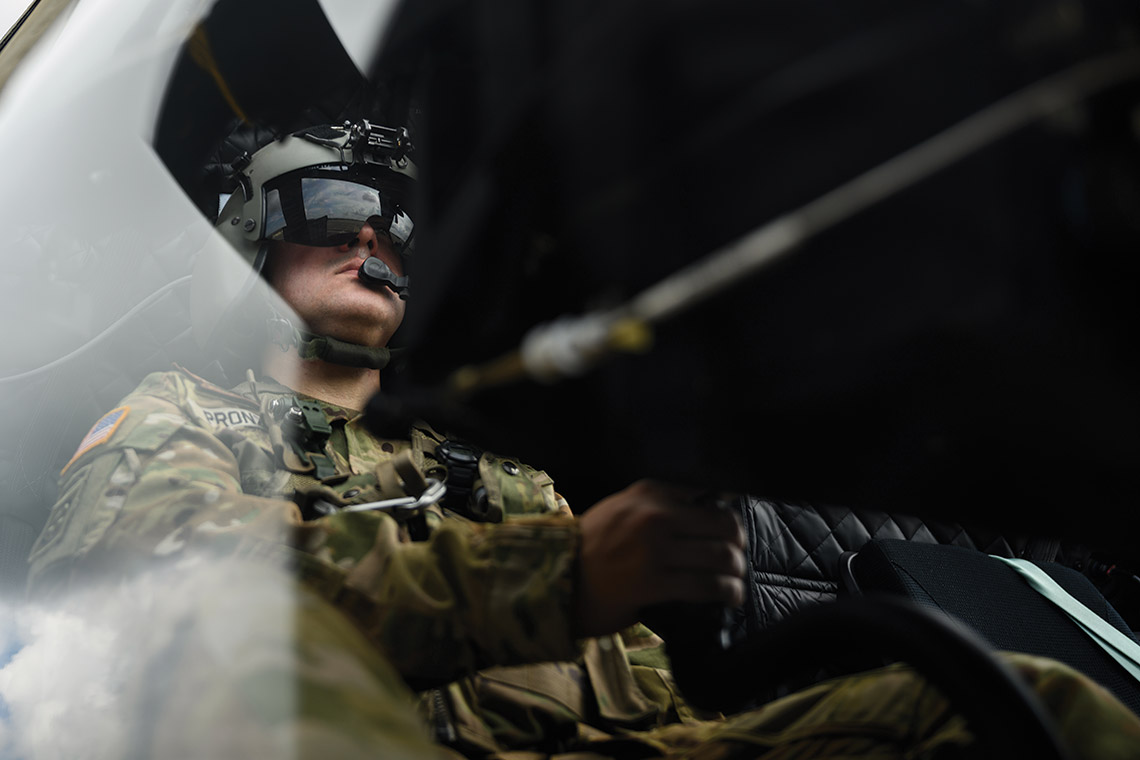
CW3 Evan Pronzati has spent nearly 18 years in the U.S. Army, rising to a rank that distinguishes him as an experienced aviator with the leadership and organizational skills imperative to lead a mission. photograph by Andrew Craft
82nd Combat Aviation Brigade CW3 Evan Pronzati • Fort Bragg
Chief Warrant Officer 3 Evan Pronzati flies the most powerful transport helicopter the Army has ever built: a 12-ton, tandem-rotor workhorse known as the CH-47 Chinook.
It’s as ominous as a thunderstorm when its blades chop the air. But the chest-rattling thump of its twin rotors was a most welcome sound last fall. In the aftermath of Helene, the storm that pummeled western North Carolina, Pronzati came to the rescue.
Over an 11-day period, he and his fellow soldiers from the 82nd Combat Aviation Brigade at Fort Bragg delivered 810,000 pounds of supplies — food, water, blankets, generators, and fuel — into some of the most isolated pockets of North Carolina.
Pronzati was awed by the destruction he saw. When he landed, he was inspired by what he found — residents thanking soldiers, helping them offload supplies as kids walked up to the beast of a machine he flew and just stared.
Immediately, Pronzati thought of his own kids — his son, 6, and daughter, 11 — and began viewing his work as not just a job, but a calling. His mission: to help the people who need it most.
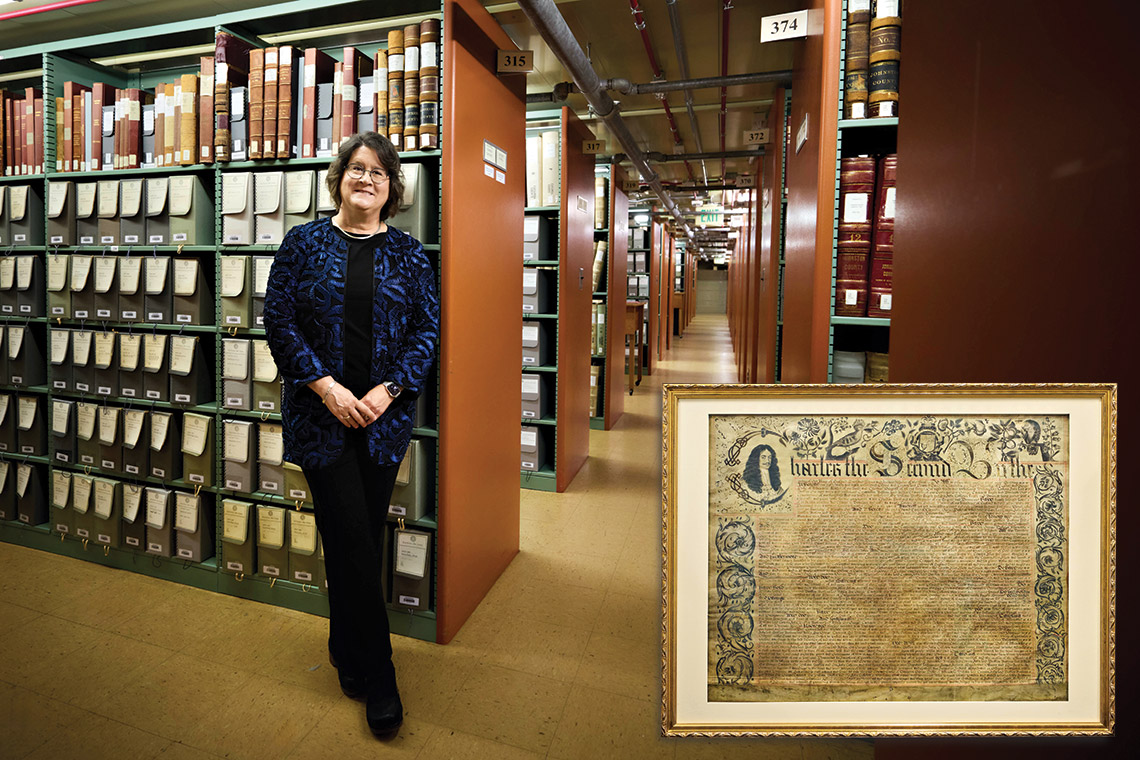
Sarah Koonts recently retired as the state archivist of North Carolina. For 13 years, she oversaw the preservation and storage of 100 million items, among them the Carolina Charter (left), in Raleigh (pictured), Asheville, and Manteo. photograph by Alex Boerner
State Archives of North Carolina Sarah Koonts • Raleigh
In the basement of the State Archives of North Carolina, Sarah Koonts walks into a big airtight vault that controls temperature and humidity, protecting items that tell the stories of North Carolina.
These stories come from books, documents, and even scraps of paper, many of which are encapsulated in clear polyester film, stored in an acid-free folder, or kept in a frame behind UV-protective glass in an acid-free, velvet-lined box.
Koonts knows these stories well. Before retiring last spring after serving 13 years as North Carolina’s state archivist, she could pull a folder from the shelves and share a story that feels as sacred as a family Bible full of names and scribbled notes.
Like this one, known as the Carolina Charter.
It’s kept in a box as big as a kitchen table. The whole package is at least 30 pounds and contains, under ultraviolet Plexiglas, a framed legal document from 1663. Written on animal skin, it’s as beautiful as a museum painting. In it, King Charles II granted land to the eight Lords Proprietors, designating the territory of Carolina. Koonts calls it “North Carolina’s birth certificate.”
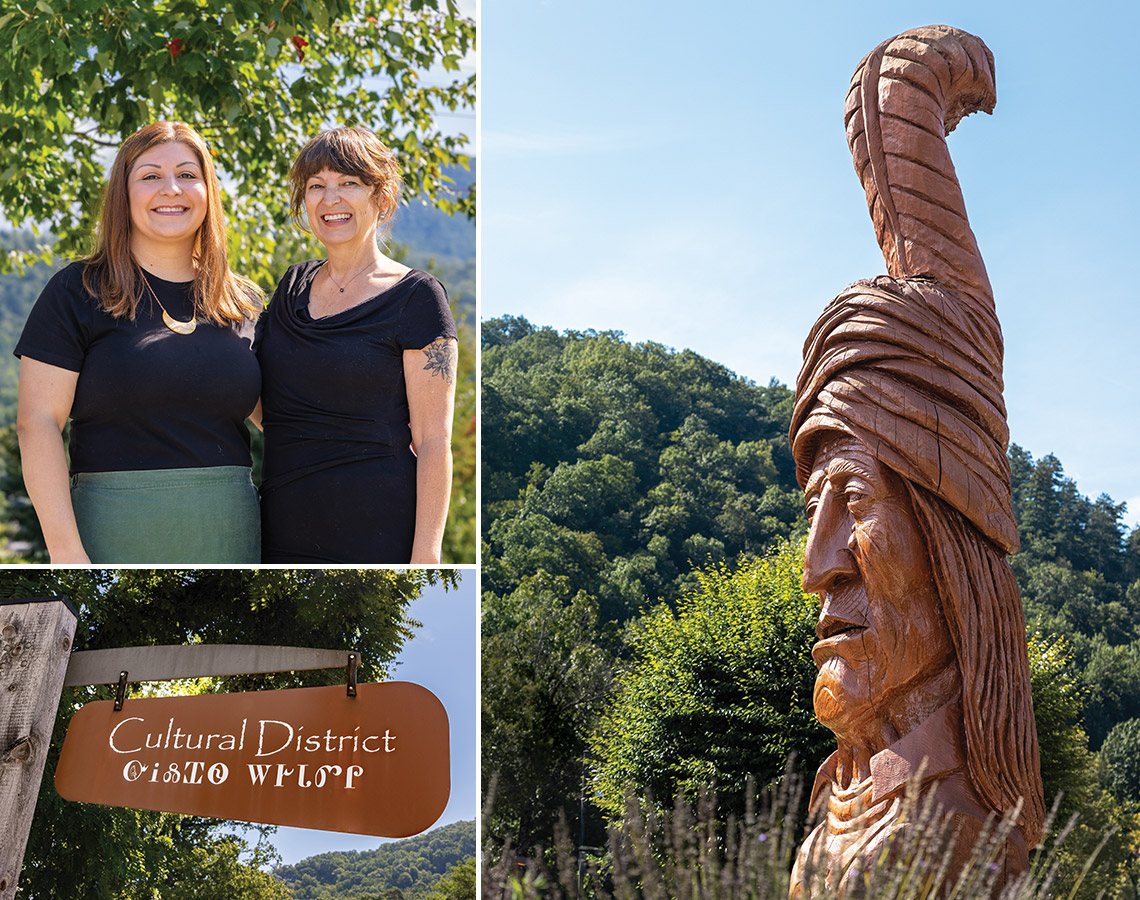
Tinker Jenks (top, right) has helped Tonya Carroll, department manager of the Ray Kinsland Leadership Institute, with grants to support its programs. photograph by Tim Robison
Cherokee Preservation Foundation Tinker Jenks • Cherokee
In her office, Tinker Jenks keeps a calming reminder of her roots and her mission. It’s a gift from her mother: a needlepoint portrait of a Native American woman. Jenks is the senior program director for the Cherokee Preservation Foundation. Every year, she and others at CPF award nearly 30 grants to local organizations enhancing the lives of Cherokee people in western North Carolina.
Take the Ray Kinsland Leadership Institute. Since 2007, by supporting three of the institute’s programs, CPF has helped prepare more than 300 members of the Eastern Band of Cherokee Indians for a lifetime of cultural leadership. Or the Kituwah Preservation and Education Program. In 2019, by contributing to the school’s new initiative, CPF has seen 25 adults — so far — learn how to speak Cherokee and keep relevant a language that’s important to so many.
Jenks sees her role as small. Yet by funding organizations with big dreams in seven counties, she and CPF have created opportunities for Cherokee people on land their ancestors have called home for centuries. “It’s like watching your little hatchlings leave the nest,” she says. “It’s a proud moment.”
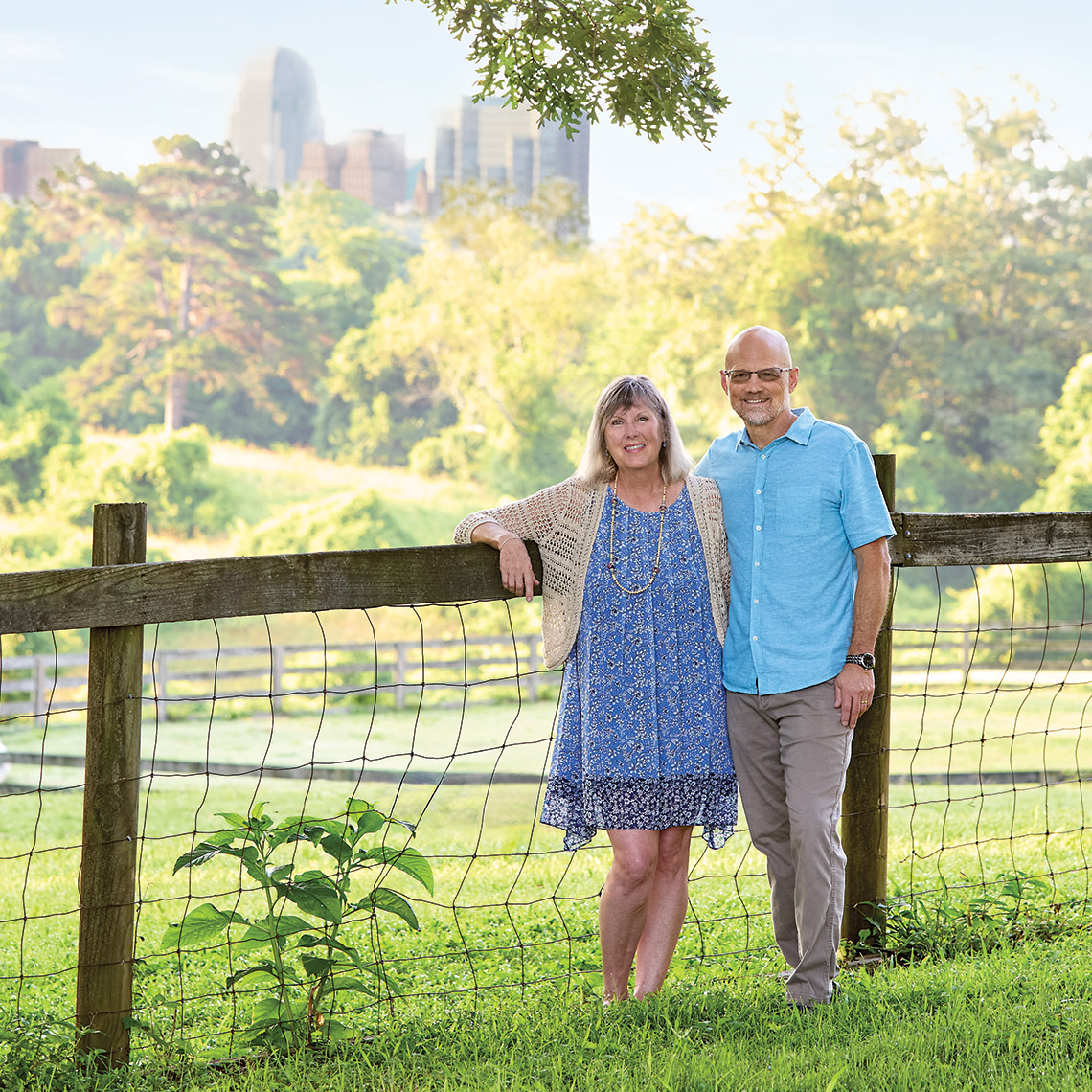
DeAnna and Jerry Olson were drawn to Crossnore in 2018 to help nurture children in need. “You can’t change the trauma of their past,” DeAnna says, “but you can protect their future.” photograph by Stacey Van Berkel
Crossnore Communities for Children Jerry & DeAnna Olson • Winston-Salem
They’re sisters and brothers from families dealing with hardship. Jerry and DeAnna Olson help them — and their families — pick up the pieces.
The siblings stay with Jerry and DeAnna for months at a time. They share stories, eat dinner together, and dote on the Olsons’ Labrador-pointer mix, Rafi. Slowly, the families see life through a different lens on a former farm in Winston-Salem, where cows once grazed and a red barn still stands.
This land is now part of Crossnore Communities for Children, and the Olsons are part of the nonprofit’s Bridging Families program. The couple works with a team of professionals to help siblings reunite with their families or find a forever home.
Jerry, an ordained minister, and DeAnna did mission work in Uruguay, Bolivia, and Puerto Rico as they raised two daughters. Today, they work at a place that United Methodists opened in 1909 as a school, farm, and home to educate and nurture children.
The Olsons continue that caring tradition. They help families understand that hope and healing, safety and security aren’t abstract concepts. They’re real.
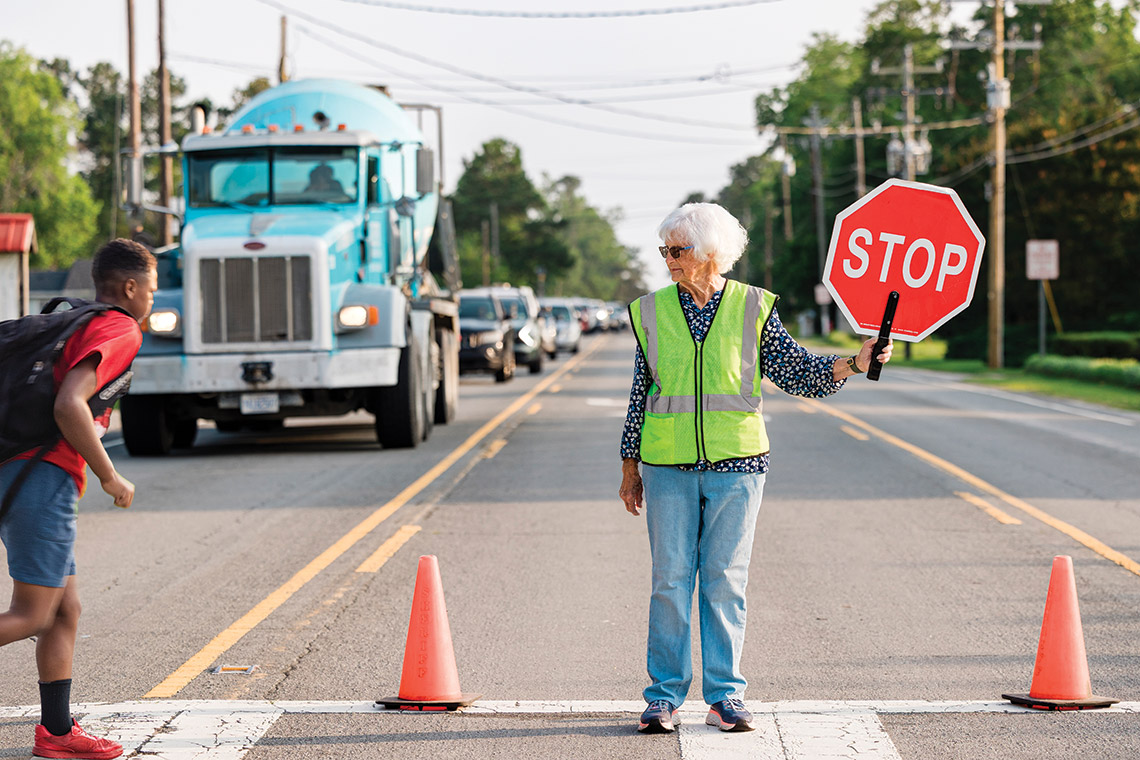
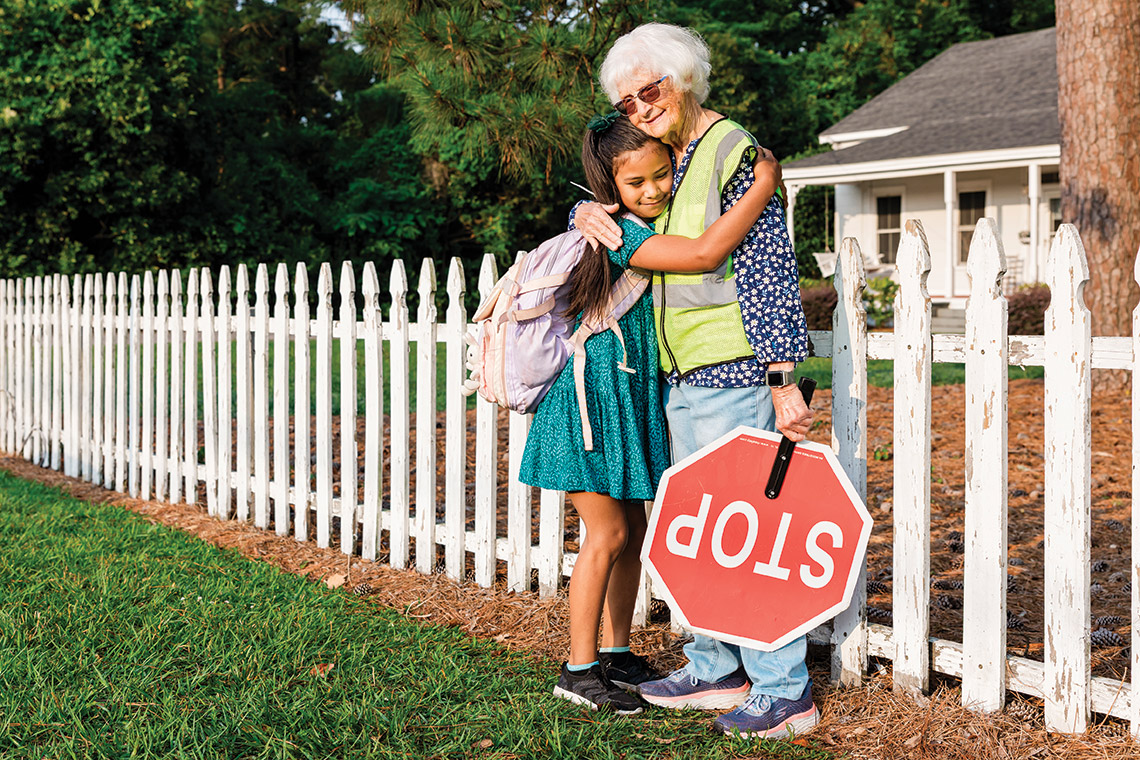
After 35 years of helping protect schoolchildren crossing a busy state highway, … <br><span class="photographer">photograph by Matt Ray Photography</span>
… Vada Keller has had her share of former students come up to her and say, “You’re crossing my child now.”<br><span class="photographer">photograph by Matt Ray Photography</span>
New Hanover County Schools Crossing Guard Vada Keller • Wilmington
Miss Vada doesn’t keep count. But it’s been at least 35 years since she started standing in front of Wrightsboro Elementary, acting as a human shield and helping students stay safe as they cross busy Castle Hayne Road on the way to and from school.
She’s there in all kinds of weather — a slender woman, five feet tall in size 7 tennis shoes, wearing a bright yellow vest and holding a big red stop sign.
She’s known by two names: Miss Vada or Grandma. She knows many of the students by their first names. They hug her, she hugs them, and on holidays, she’ll give them candy or small gifts.
But it’s not the family familiarity that grabs everyone’s attention. Nope. It’s Miss Vada herself. Vada Keller is 92, born in November 1933, and she never even thinks about stepping away from helping children stay safe.
Before her 90th birthday, her boss told her, “Miss Vada, I know you can do it.”
Her response?
“I know I can do it, too.”
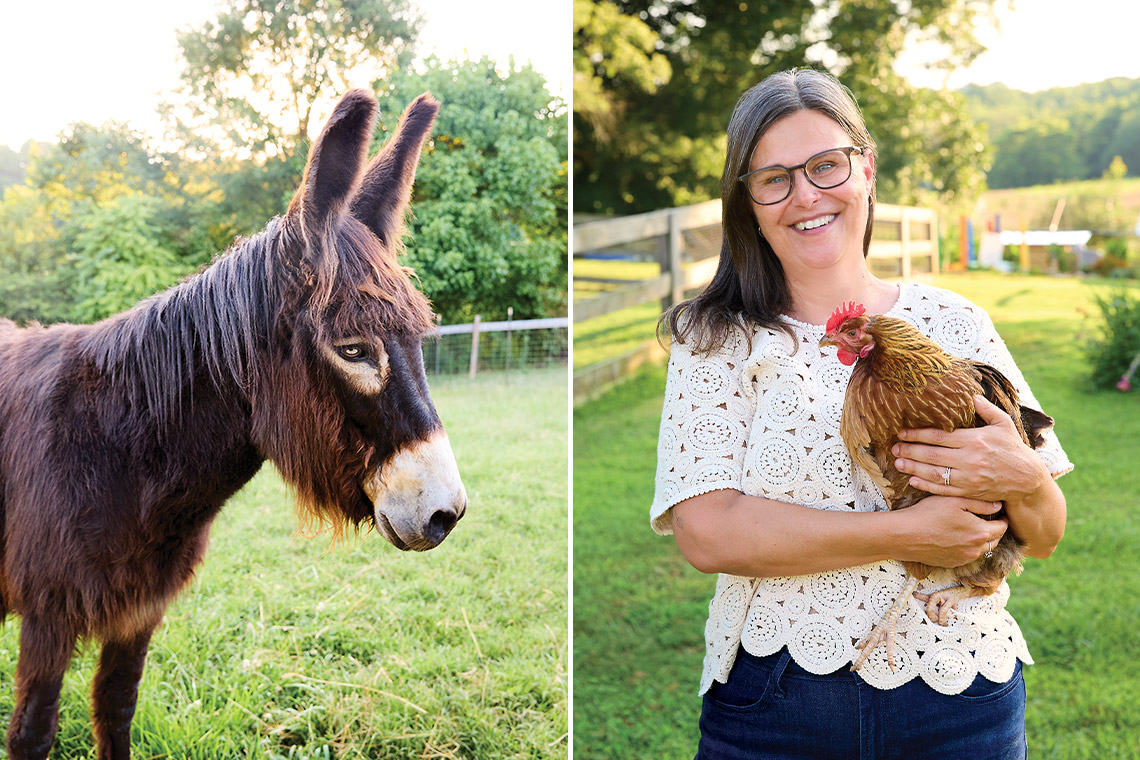
Naughty Donkey gives rescued farm animals like Helen (right) and Waylon (left) the care and love they need to thrive. “It’s been the hardest and best decision I’ve ever made,” Jodi Helmer says. photograph by Stacey Van Berkel
Jodi Helmer has given all her farm animals names. There’s Helen, the blind Ameraucana chicken; Ozzie, the humming alpaca; and Gaspar, the goose with the incessant honk you can hear from 50 yards away. And then there’s Waylon. He’s the donkey, and he’s famous. Thank a 3-year-old girl, who was upset by his bossy ways and shouted, “No, naughty donkey, no!”
Naughty Donkey Farm Sanctuary captures the curious. Dozens of volunteers help, and hundreds of visitors come during the nonprofit’s two annual open-house events — the only times the farm is open to the public. When they do, they grasp the gravity of what Helmer has undertaken.
Since turning her hobby farm into a nonprofit in November 2021, Helmer and her volunteers have helped give more than 100 rescued farm animals a second chance on a three-acre refuge under the wide-open skies of Stanly County. They feed them, care for them, and love on them until the creatures’ last breath.
At the very end, Helmer is right there beside the animals, honoring them for who they are.
“These are our friends, not food,” Helmer says. “Their lives matter.”
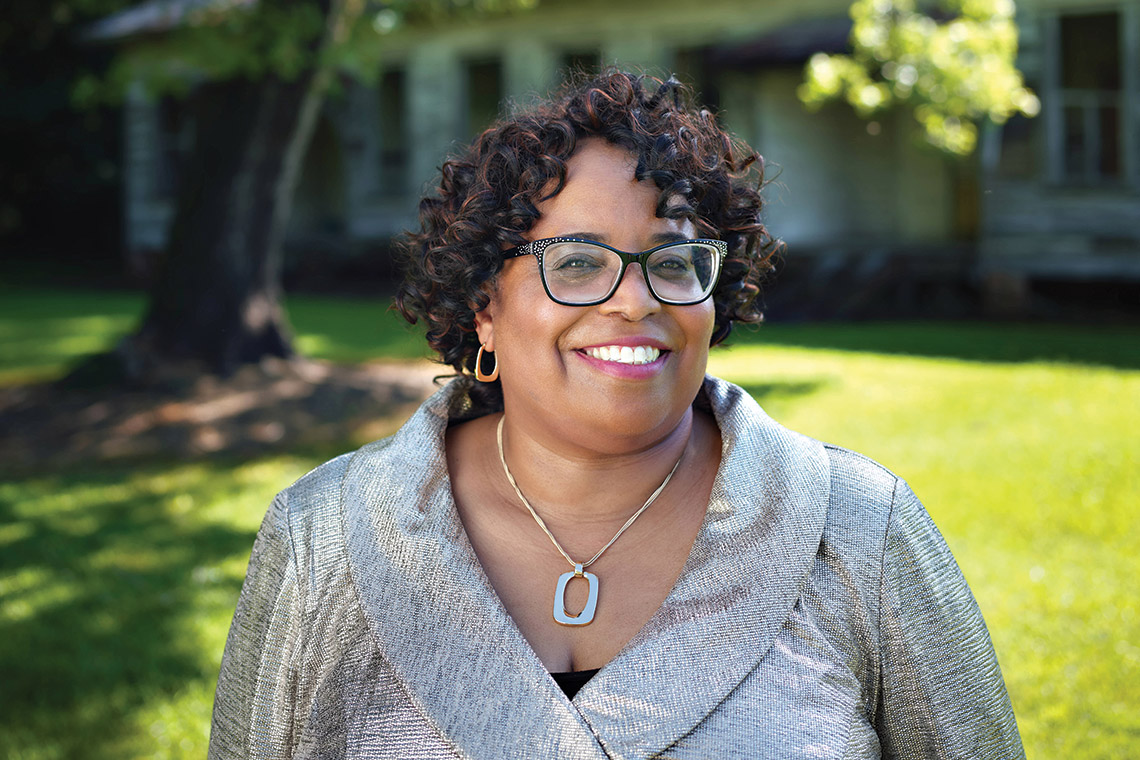
The Rev. Martha Brown, president of the North Carolina Chaplains’ Association, says her career reaffirms what she first felt at 16: Serve, as Jesus says in the Book of Matthew, “the least of these.” photograph by Alex Boerner
Chaplain at Cherry Hospital The Rev. Martha Brown • Goldsboro
Behind a stand of pines in west Goldsboro is the oldest of three psychiatric hospitals currently operated by the State of North Carolina. The patients who come feel unmoored by mental illness. When they arrive, they meet the Rev. Martha Brown.
For the past decade, Brown has been a chaplain at Cherry Hospital. She’s helped staff overcome their own personal and professional anxieties and used her creativity and open-armed approach to help patients feel comfortable and safe.
She’s offered patients classes in meditation and brought in local musicians to perform. She’s also rounded up any Bible they need and connected them to religious community volunteers to ensure they feel seen, heard, and understood.
Her work has earned her the nickname “Chaplain Extra.” In 2019, it also earned her the Governor’s Award for Excellence, the highest accolade a state employee can receive.
For 21 years, as a hospital chaplain in North Carolina, Brown has met patients and their families at their darkest hours and helped them emerge into the light. “I’m like overdraft protection,” she tells them. “I’m your extra level of support.”
This story was published on Oct 24, 1933
Get our most popular weekly newsletter: This is NC
From the expanses of needlerush at Cedar Island to the lush spartina feathering the shores of Bodie and Roanoke islands, our salt marshes are the threshold to a watery world — the heartbeat of our coastal ecosystem.