Put ramekins on a baking sheet. Bake for 25-35 minutes, until puffed and golden. Remove from oven, and let stand for 5 minutes. With a flexible spatula, remove strata to
In the wake of Hurricane Helene, people across the mountains did what they could: planting, building, repairing, creating. These are stories not of grand gestures but of small acts that
In the wake of Hurricane Helene, people across the mountains did what they could: planting, building, repairing, creating. These are stories not of grand gestures but of small acts that
In the wake of Hurricane Helene, people across the mountains did what they could: planting, building, repairing, creating. These are stories not of grand gestures but of small acts that became the scaffolding of recovery. Read about those who came together to support each other.
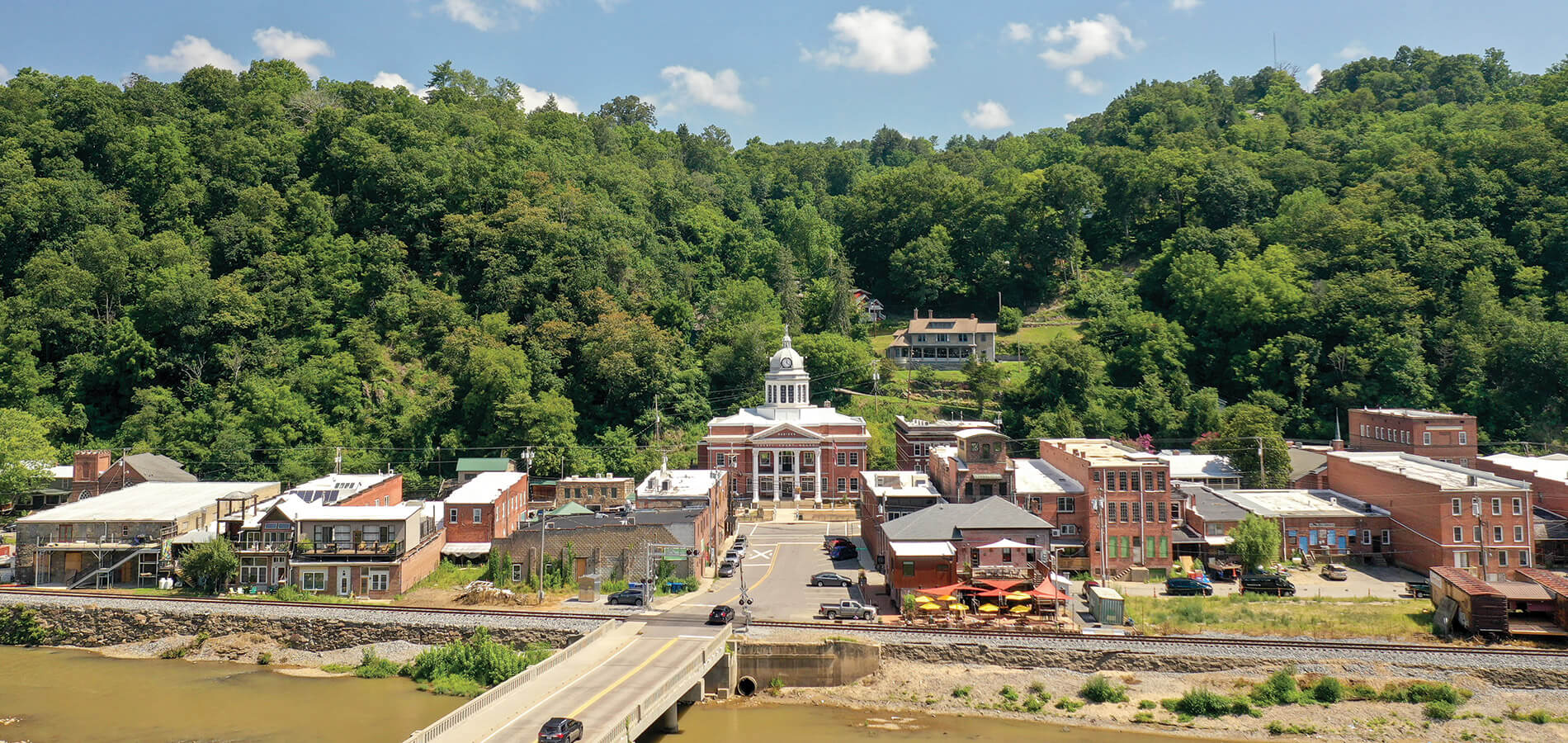
Josh Copus waded into the old jailhouse by the river and railroad, murky water up to his knees, and figured there was no escaping it: The whole town of Marshall would have to be condemned. “It almost broke me,” says the self-styled optimist who, in that moment, could see no silver lining in the havoc unleashed on his mountain home.
A day before, the swollen French Broad River swept over the town’s only bridge and surged onto Baileys Branch Road, onto Main Street, unstoppable beneath the town’s two traffic lights. It poured into the coffee shops, the brewhouse, the bike shop, the hardware store, the post office. It tore through town hall, breaking windows and crumbling bricks. And it flooded the 119-year-old Madison County jail that Copus had transformed into a boutique hotel, engulfing its ground floor and wiping out the restaurant. “There was nowhere to escape. Everywhere you went in this town, you were faced with the completeness of the destruction,” Copus says. “And that’s a lot to process.”
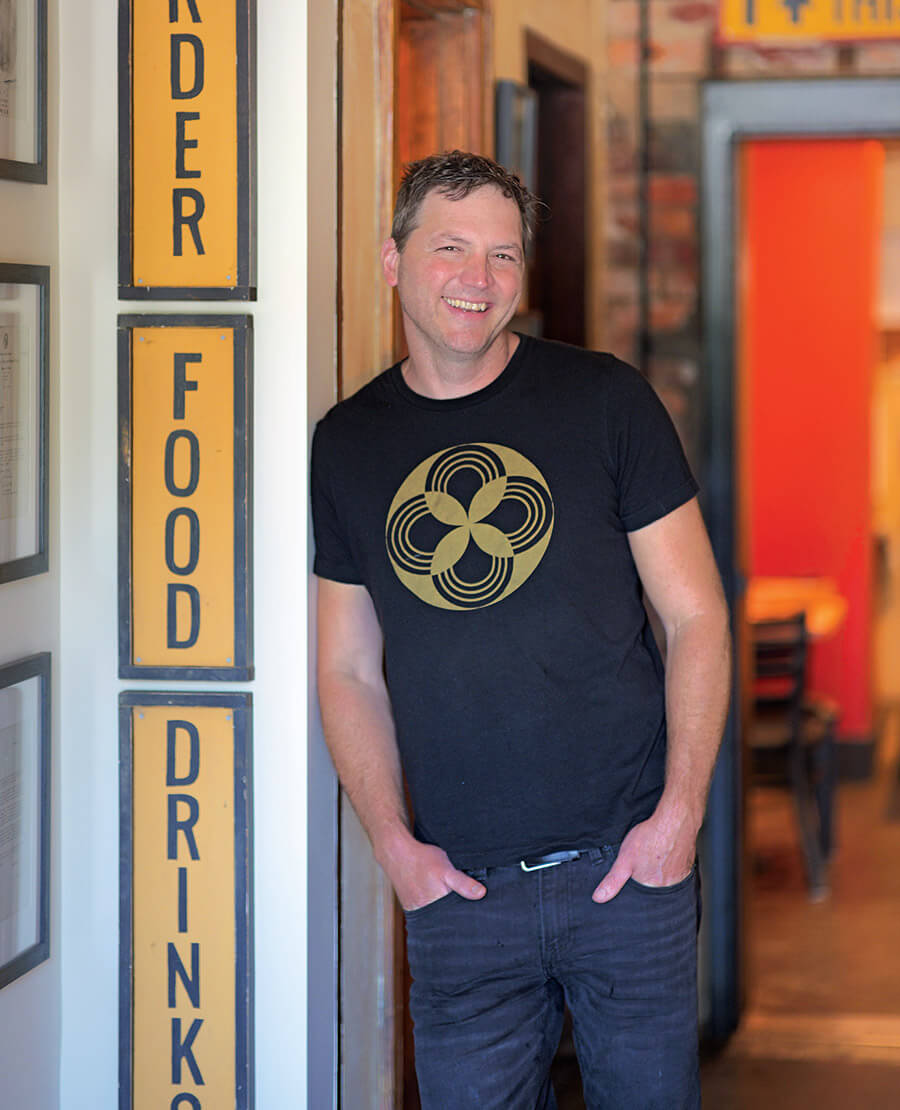
Josh Copus is glad to be back in business: In the wake of Helene, it took six months to clean up and reopen the historic Old Marshall Jail Hotel this spring. photograph by John DuPre
Just a week earlier, he was brimming with pride and told a friend: “This is the coolest Marshall has ever been in my lifetime.” Thirty minutes north of Asheville, this town of cozy hangouts, snug in a river valley, had become a destination. People were coming for locally brewed beer; coffee and quiche at Zuma Coffee; bluegrass jam sessions; or a night at the Old Marshall Jail Hotel, which Copus opened in 2021.
With a two-day growth of beard, uncombed hair, untucked T-shirt, and well-worn jeans, Copus is a tireless and engaging talker. But he’s quick to pause the conversation to greet a friend who happens by — and he has many — with a hearty handshake, hug, or “What’s up?” He’s sitting at a table in a back room of Zadie’s, his restaurant and bar that reopened in May after a GoFundMe campaign brought a deluge of donations. Copus thinks back to those dark hours immediately after the storm. Marshall — home to 800-plus people — appeared lifeless, assaulted by the river with which it had long coexisted.
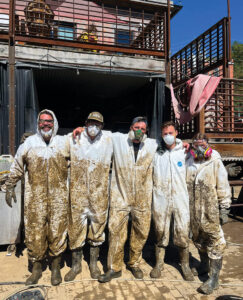
Neighbors and volunteers turned out to help clear tons of mud from basements and businesses. Photography courtesy of Josh Copus
“And then an amazing thing happened,” Copus says. As the floodwater retreated, neighbors treaded onto the muck-slathered streets with wheelbarrows, shovels, skid steers, pickup trucks, and a sense of resolve. One woman, he says, showed up with only a mop, eager to do her small part in the daunting task of cleaning up. “What I saw was that the town is not the stuff; the town is the people,” he says. “The people make the place. Our people didn’t go anywhere. They just kept showing up every day.”
With his easy manner and conversation skills, Copus became a natural ambassador for Marshall in the storm’s aftermath. He was a popular interview for television reporters, appearing on CNN and newscasts from Charlotte to Chicago. When Copus was interviewed by Good Morning America, he extolled his town’s shatterproof spirit. “There’s an incredible human story of community coming together,” he told the hosts.
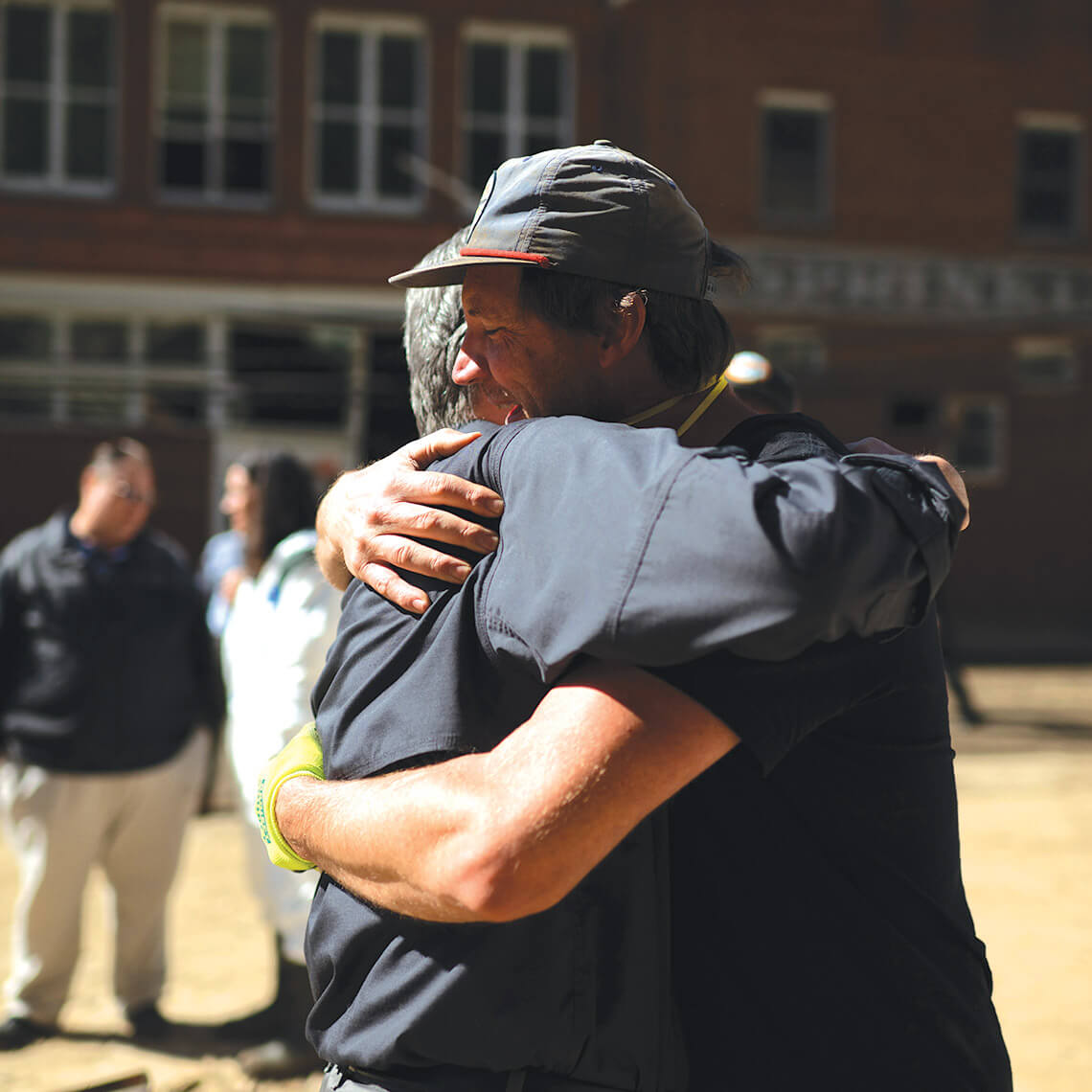
Then-Governor Roy Cooper offered his support and hugs to Madison County flood victims like Copus. photograph by Jack Sorokin
He provided video tours and commentary on YouTube and TikTok. When then-Governor Roy Cooper and then-Attorney General Josh Stein visited Marshall in Helene’s wake, he was sure to greet them and tell Marshall’s story, assuring everyone within earshot that it’s a town undaunted. “There’s no sense in sitting around feeling sorry for yourself, so that’s what strengthened my commitment to this town,” he says. “People came up to me and said, ‘You matter. Zadie’s matters. The Old Marshall Jail matters. And we need you.’ ”
• • •
Copus is not a native son of Marshall, but he is a child of Appalachia, having grown up in Floyd County, Virginia. He moved to Asheville in 1998 to attend Warren Wilson College, then enrolled at the University of North Carolina at Asheville to earn a bachelor’s degree. He’s a potter by trade and keeps wood-fired kilns on his patch of land outside town, where he digs into the hillsides for his own clay.
In 2016, with the help of three partners, he bought the old Marshall jail at auction for less than $100,000. Built in 1905 and decommissioned in 2012, it was the oldest operating jail in North Carolina. After the county replaced it with a new jail, the old jail sat vacant for four years and fell further into disrepair. Some locals assumed it would be demolished. But the consensus around town was that it should be preserved and possibly made into a museum.
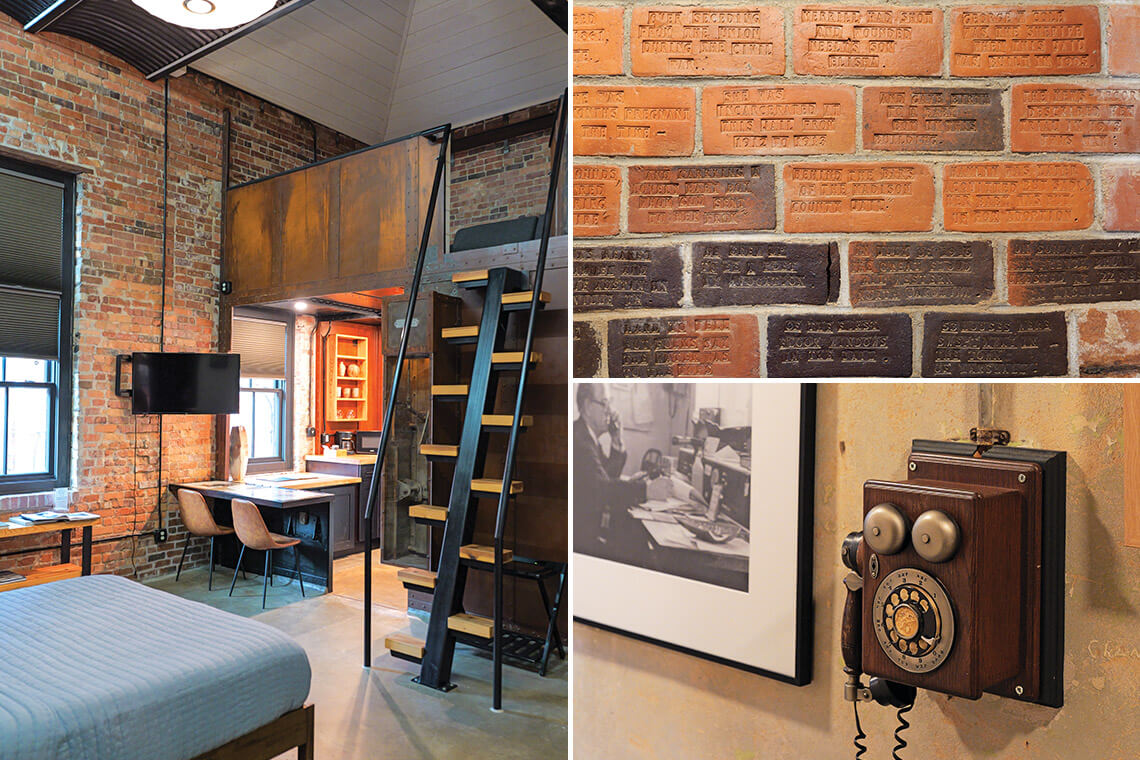
Bricks embossed with tidbits of history, as well as artifacts from the former Madison County Sheriff E.Y. Ponder are used to create hotel rooms that preserve the building’s past while conveying a modern, industrial aesthetic. photograph by John DuPre
Copus, ever the artist, saw this darkened, cobwebbed brick shell as a blank canvas, a lump of clay, awaiting his vision and touch. The building, in essence, became his medium. “I always thought about it as art and not real estate,” he says.
He had his skeptics. How could a musty lockup ever become a place of style and charm? He even thought he was crazy. “And I think that’s one of the reasons why we pulled this off,” he says. “You have to be a little crazy.”
Over the next five years, he molded the jail into a six-room hotel, restaurant, and bar. And it did become something of a museum, too. Letters from inmates and steno notebooks from the longtime and legendary Sheriff E.Y. Ponder — the “last old-time mountain lawman,” as Copus says — are framed on the walls.
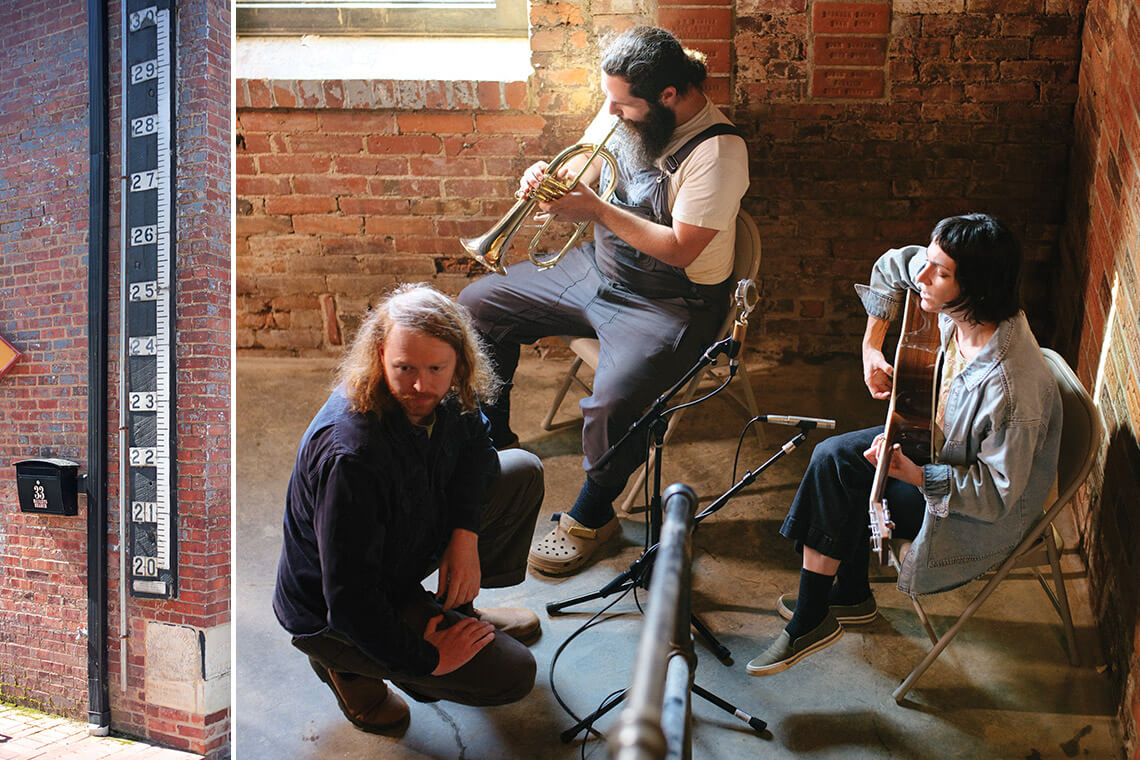
Water reached the 27-foot mark on the gauge outside the Old Marshall Jail Hotel. Once it receded, inspired musicians recorded The Resonance Sessions in the building’s stairwell. photograph by John DuPre
Then came Helene, swelling the French Broad to levels unseen by anyone alive today, reaching 27 feet on the hotel’s flood gauge. Devastating as it was, Helene inspired a powerful rush of creativity and artistic expression. Over the course of four days, 35 regional musicians came together in the stairwell of the old jail to record The Resonance Sessions, a 35-song labor of love released as a triple vinyl album. Sales of the album support Madison County’s music and arts community.
There’s a rawness, an intimacy, in the songs as they capture the building’s natural acoustics and the sounds of a town at work. “In the album, you can hear dump trucks and generators, and there’s this ambient noise of everything that was happening in the town,” Copus says. “It was good for the town, good for the building. It was kind of a processing opportunity for a lot of the musicians.”
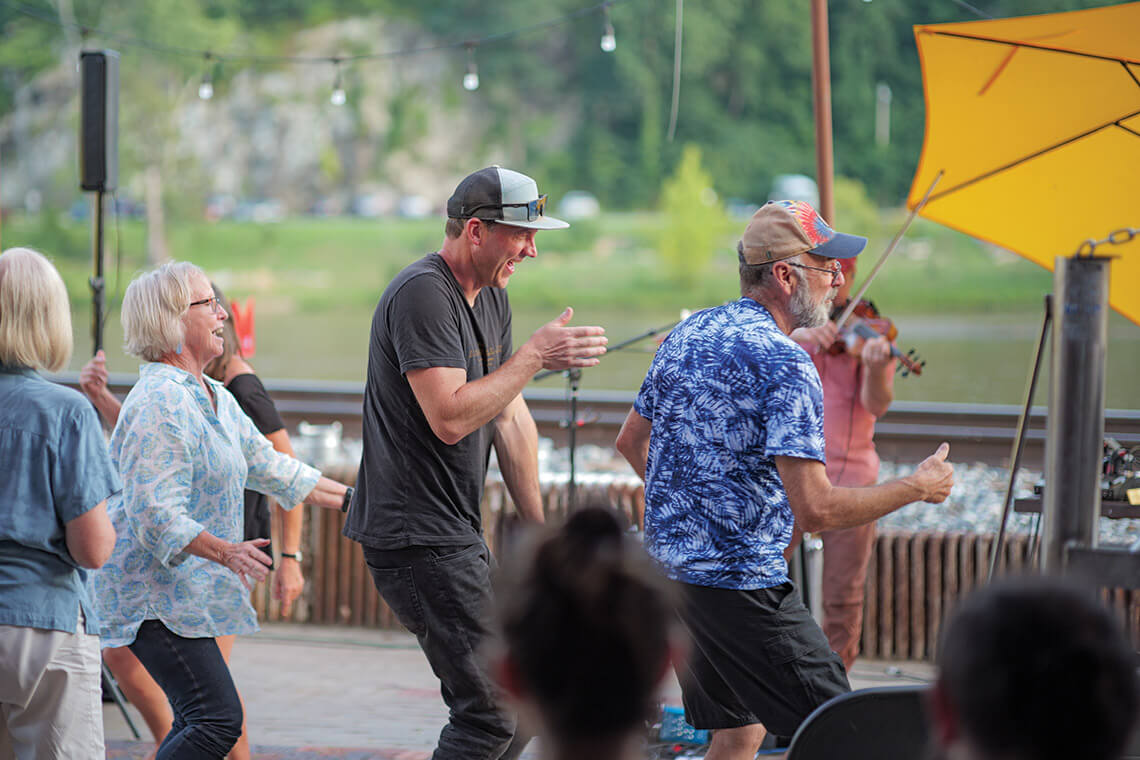
Some return to the riverside patio at Zadie’s for dancing, …<br><span class="photographer">photograph by John DuPre</span>
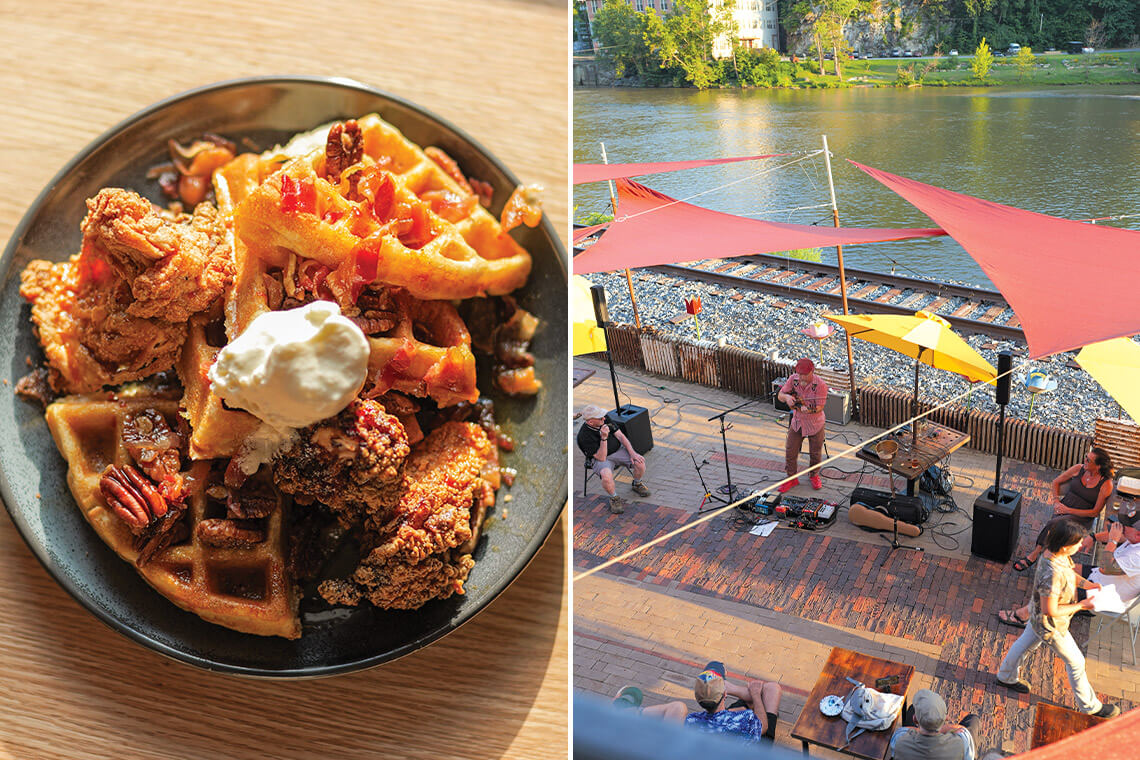
… concerts, and chicken and waffles — and a taste of normalcy and joy returning to Marshall.<br><span class="photographer">photograph by John DuPre</span>
The hotel and restaurant are going strong again, with guests polishing off shrimp and grits and chicken and waffles, swigging beer and wine and sweet tea, drinking up the expansive view of the again-tranquil French Broad River. The mud is gone and the concrete floor has its sheen again. The lattes swirl at Zuma Coffee and the beer foams at Mad Co. Brew House. “It’s important for us to tell the world that we’re back,” Copus says.
He and his town have come a long way since that moment after the storm, when Copus was brought to his knees in deep water, when all seemed insurmountable. But Copus is nothing if not an eternal optimist, and he’ll find the most elusive of silver linings. After watching his town’s can-do character shine like a sunburst, Marshall may well be the coolest — and strongest — it’s been in anybody’s lifetime.
Get our most popular weekly newsletter: This is NC



 In the wake of Hurricane Helene, people across the mountains did what they could: planting, building, repairing, creating. These are stories not of grand gestures but of small acts that became the scaffolding of recovery.