Put ramekins on a baking sheet. Bake for 25-35 minutes, until puffed and golden. Remove from oven, and let stand for 5 minutes. With a flexible spatula, remove strata to
The 1890 Cape Fear and Yadkin Valley Railroad Depot once hissed with the steam of trains arriving and departing Fayetteville. Unlike other North Carolina depots — which, up to that
The 1890 Cape Fear and Yadkin Valley Railroad Depot once hissed with the steam of trains arriving and departing Fayetteville. Unlike other North Carolina depots — which, up to that
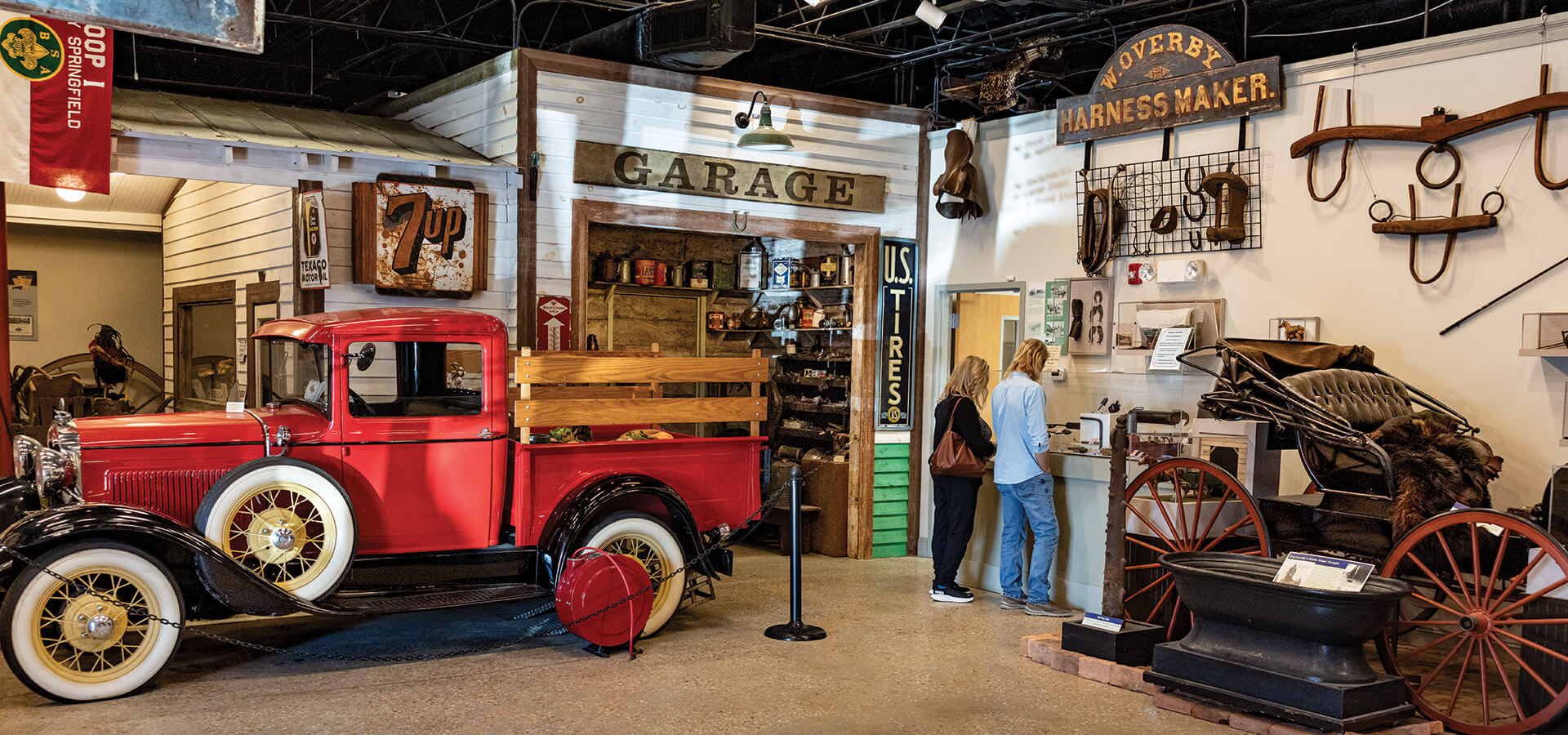
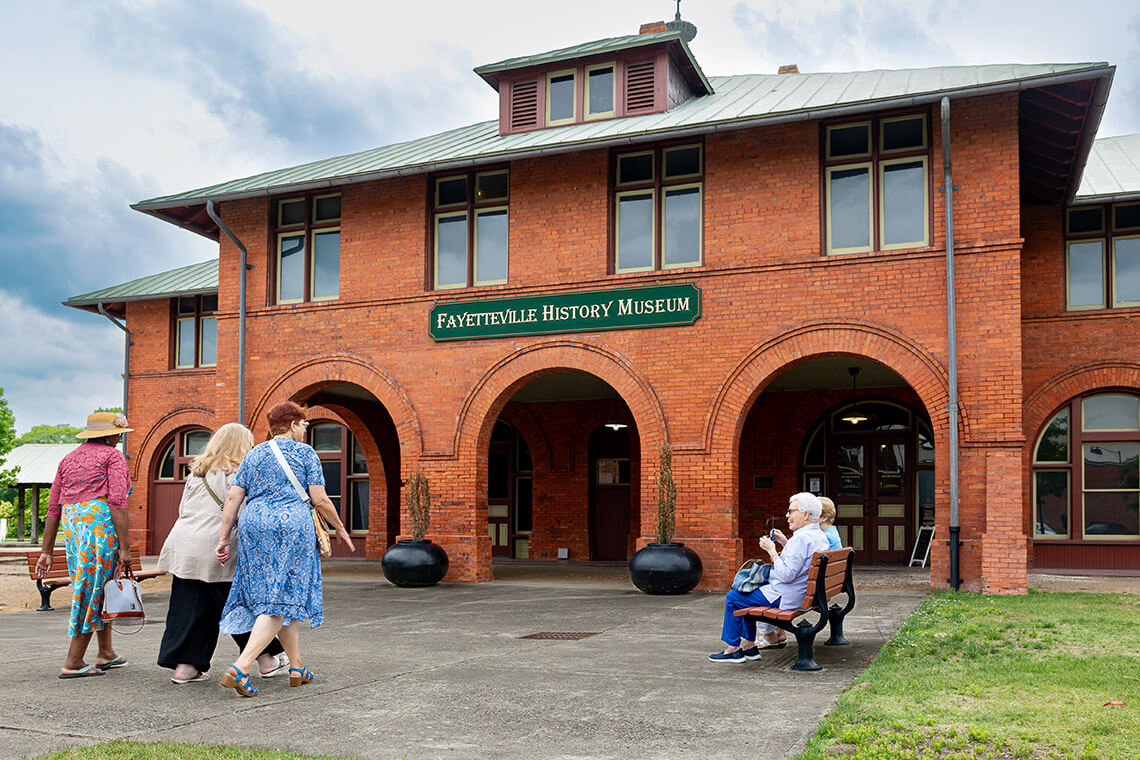
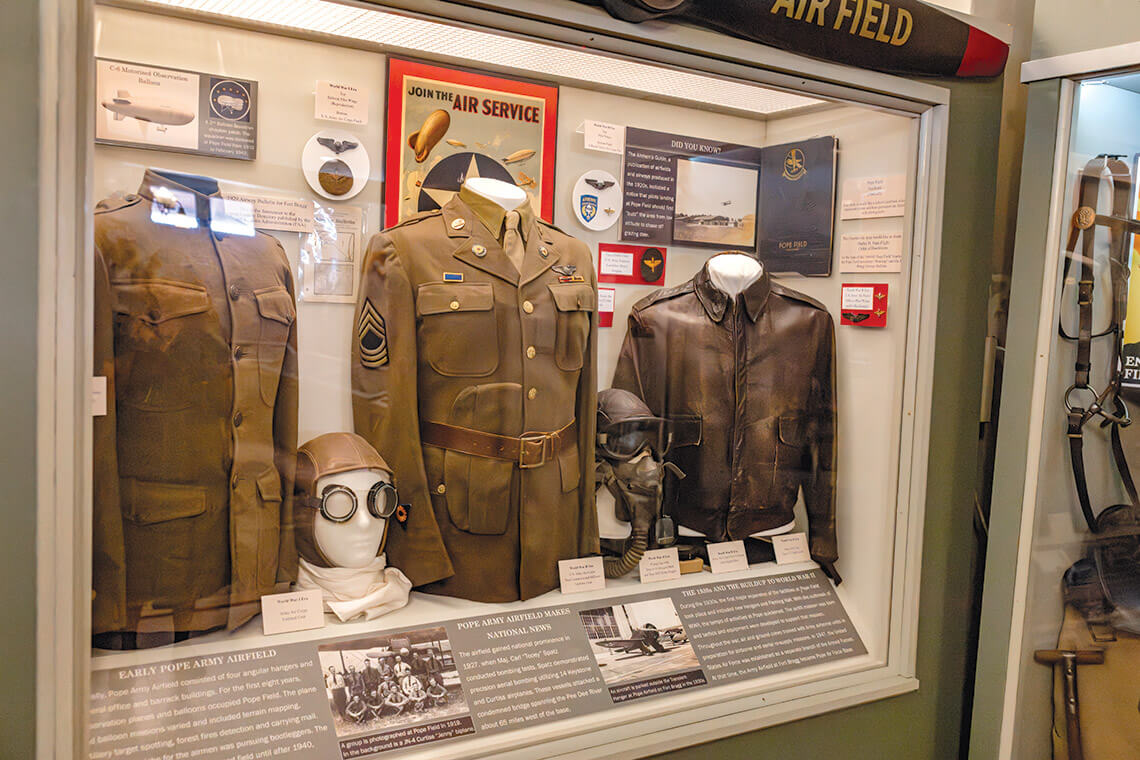
The 1890 Cape Fear and Yadkin Valley Railroad Depot once hissed with the steam of trains arriving and departing Fayetteville. Unlike other North Carolina depots — which, up to that point, had mostly been built of wood — this two-story red-brick building made quite an impression on visitors. Today, it’s home to a history museum filled with engaging exhibits. World War I uniforms whisper of distant battlefields; steamboat models recall the river trade that carried goods and people through the region; and accounts of local writers, artisans, and civic leaders reveal the imagination and determination that shaped the city. In the adjoining annex, vintage automobiles gleam, a re-created 1920s gas station beckons the curious, and Fayetteville’s 1880s Silsby Steam Pump Engine towers as a monument to the ingenuity and vision that forged this historic Army town in the Sandhills.
“Even if you visited once, you can visit again and find something different,” says Hattie Presnell, historic properties supervisor. “For even the most devoted history buff, something is bound to surprise you.”
When frost dusts the city, every street and park in Fayetteville becomes a stage for exploration. Bundle up and explore the streets where generations have walked before you. Winter in Fayetteville is a lesson in discovery.
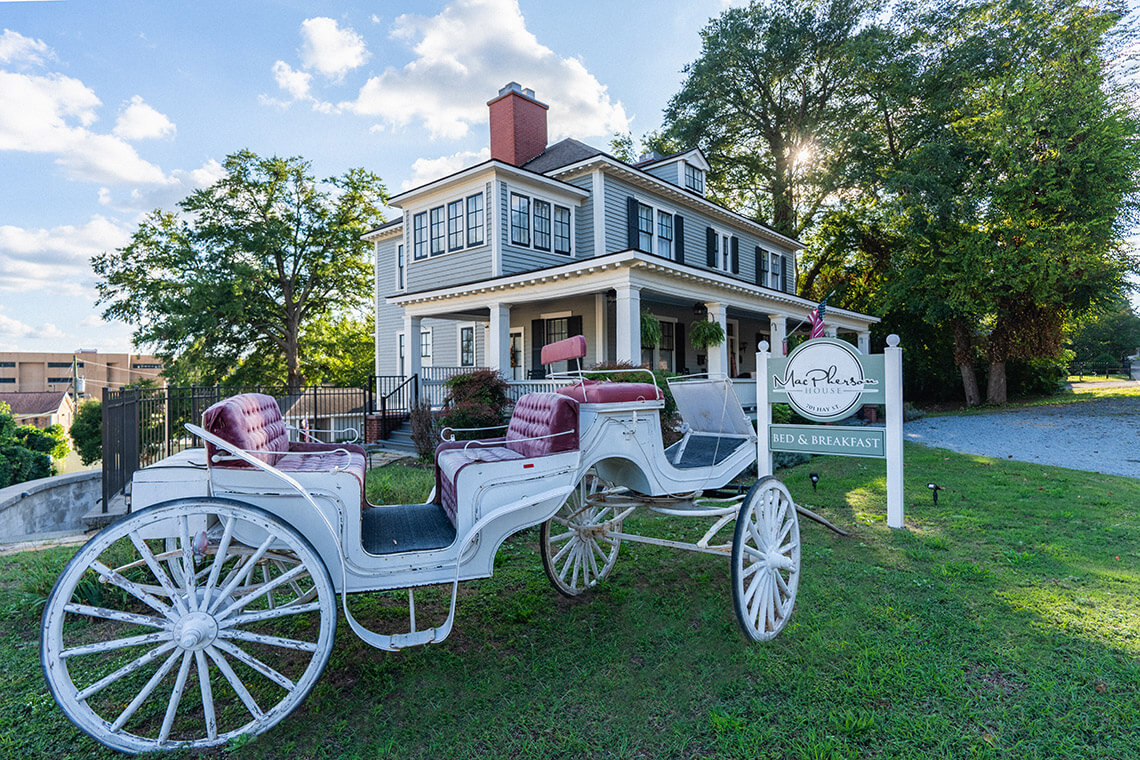
The MacPherson House Bed & Breakfast brims with antique charm, from a carriage in the lawn to clawfoot tubs in the guest bathrooms. Photography courtesy of Distinctly Fayetteville
Stay in a Restored 1920s Home
Before planning itineraries and to-dos, choose a place that feels like home base. MacPherson House Bed & Breakfast is a welcoming place to begin. Inspired by Fayetteville’s history and downtown’s revitalization, in 2020, military couple Katy and Michael Stevick purchased the 1920s home with a vision to restore it. “For years, we watched houses on Hay Street being restored and admired the care going into our town,” Katy recalls. “I always drove by that house and saw it falling into disrepair, hidden behind overgrown bushes, and even saved a picture thinking, ‘Someday, someone should really do something with that house.’”
The “someday” that Katy had imagined arrived in the fall of 2019 — and with it, a flurry of sawdust, paint, and elbow grease. Michael learned woodworking to restore original trim, Katy’s mother refinished the original 1926 claw-foot tub, and relatives pitched in to paint, repair, and nurture the house into a true home again. During the final months of renovation in 2020, Michael was deployed, and Katy shepherded the project with the help of friends and family. Today, the historic boutique inn stands as a haven for travelers, military families, and anyone seeking slow mornings, a good porch breeze, and the feeling of belonging.
Each room’s name carries a local connection. The Lafayette Room, outfitted with a gold and crystal chandelier, pays tribute to the French influence in Fayetteville and the visit Marquis de Lafayette made to his namesake city in 1825. The Chesnutt Room honors Charles Waddell Chesnutt, Fayetteville’s widely acclaimed African American author and former teacher training school principal. The Stevicks serve breakfasts tailored to their guests each morning, with dishes ranging from savory quiche to irresistible crème brûlée French toast. “January is an excellent time to visit,” Katy says. “It’s so peaceful and the house truly invites a serene experience and a chance to reconnect.”
At the turn of the 20th century, Fayetteville’s impressive railroad depot was a source of civic pride. <br><span class="photographer">Photography courtesy of Distinctly Fayetteville</span>
Today, it’s a hub of history, with exhibits on topics ranging from World War I to farm life.<br><span class="photographer">photograph by Charles Harris</span>
Investigate Life in Early Fayetteville
With your bags unpacked and your stay underway, make your next stop the Fayetteville History Museum. Through interactive exhibits, historic artifacts, and locally donated items, the museum highlights the city’s transportation, military, agricultural, and everyday life from the past to the present. In January, don’t miss the music history exhibit, showcasing the city’s musical heritage — from school bands and church choirs to the Fayetteville Symphony Orchestra and local artists. Get an up-close look at historic sheet music, photographs, and memorabilia and experience the city’s soundscape across generations.
For younger visitors or the young at heart, the Winter Wonderland Scavenger Hunt transforms the museum into an interactive adventure in January. Participants can search for local history questions and answers hidden throughout the exhibits, uncovering the stories behind the artifacts while earning prizes for their sleuthing. “It’s a great opportunity to be able to learn an additional side to Fayetteville’s history, including snow and unusual weather patterns that have happened here in the winter months,” Presnell says.
Tour Historic Neighborhoods
Get further acquainted with Fayetteville’s history by following the Historic Architecture Trail, a self-guided route that showcases Fayetteville’s most striking historic buildings and the neighborhoods that grew up around them. In the Haymount Historic District, you’ll encounter major architectural styles ranging from Federal and Greek Revival to Victorian, Colonial Revival, and classic bungalows.
For visitors seeking deeper context, the one-hour Downtown Fayetteville Historic Tour offers guided interpretation through downtown. Led by Triangle Walking Tours, the tour explores the city’s history from its 18th-century beginnings to today. “If you’re new to the area, it’s a very great way to get to know Fayetteville quickly and thoroughly,” says Andrew Nason, owner and head tour coordinator. “In January, remember to bring a coat and always wear comfortable shoes.”
Along the way, you’ll discover market houses and historic commercial buildings where trade and community still thrive and stroll past the elegant homes of Fayetteville’s influential families. Every street and building tells a story, offering a glimpse into the lives, work, and legacies of those who shaped the city. “One of the most popular stops in terms of photographs is the Sedberry-Holmes House, a 19th-century residence in downtown Fayetteville,” Nason says. “It’s a great example of Queen Anne architecture.”
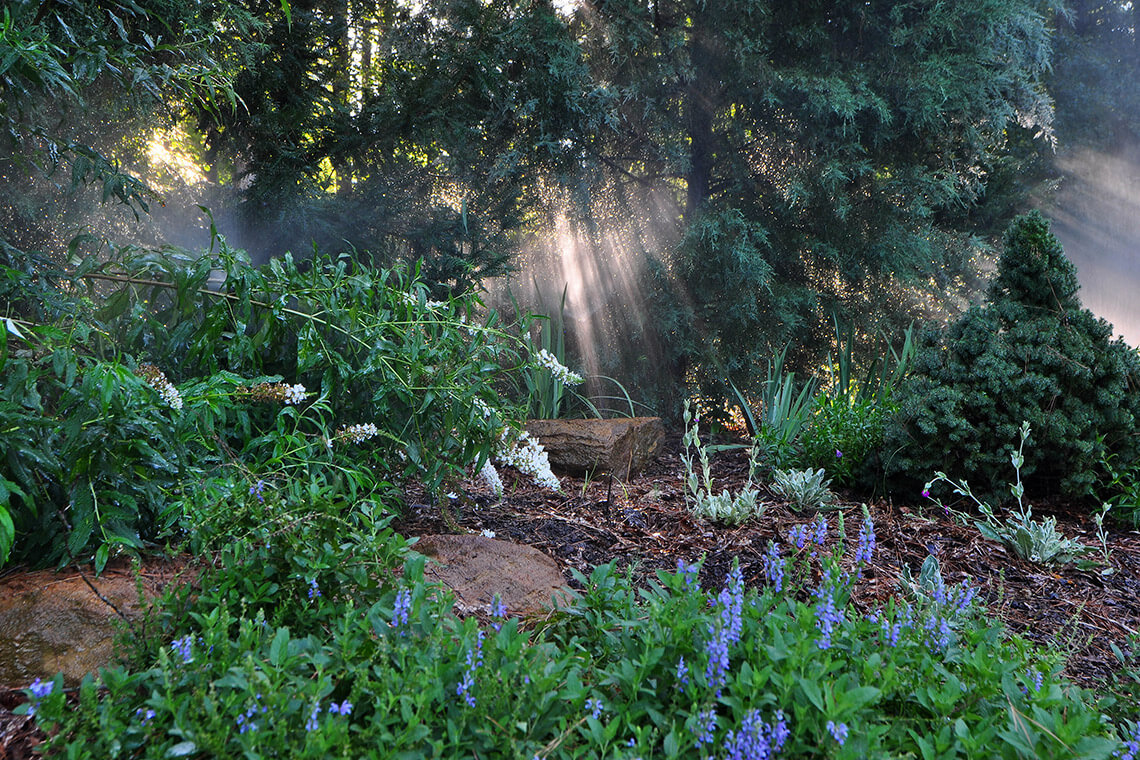
Even in the winter, the season’s first blooms bring color to the Cape Fear Botanical Garden. Photography courtesy of Distinctly Fayetteville
Stroll Through Heritage-Filled Gardens
After tracing the city’s past through its architecture, let nature take the lead with a quiet escape to the gardens. Situated between the Cape Fear River and Cross Creek, this 80-acre botanical haven began as the vision of local gardening enthusiasts Bruce Williams, Martha Duell, and Roger Mercer, who wanted to create a world-class botanical garden that would inspire, educate and enhance the community. Their dream took root in 1989, when the Friends of the Botanical Garden established the nonprofit. Today, Cape Fear Botanical Garden welcomes visitors to winding trails and scenic paths that weave through distinct areas such as the Mary McLaurin Camellia Garden, Daylily Garden, Hazel McCauley Heritage Garden, Eleanor and Raymond Manning Children’s Garden, and more.
As you explore the grounds, bursts of color appear even in the colder months: More than 250 camellia shrubs flourish here, thanks to careful cultivation and thoughtful stewardship. “The camellias are really the highlight of the show in January,” says Adam Premo, director of horticulture and education.
For a taste of history, the Hazel McCauley Heritage Garden preserves the rich agricultural traditions of North Carolina. Staffed by volunteers, this area features historic structures from the 1800s, heirloom crops, and traditional gardening techniques — offering visitors a window into the daily lives of early farmers and the practices that sustained families across generations.
Honor Heroes at North Carolina Veterans Park
Along Bragg Boulevard, North Carolina Veterans Park was established in 2011 as the state’s first park dedicated to military veterans from all branches of the Armed Services. In winter, the site’s quiet paths, fountains, and landscaped gardens create a peaceful setting for reflection. One highlight is the “Oath of Service Wall,” where bronze castings of hands commemorate the dedication of veterans. “The park is absolutely stunning,” Presnell says. Visitors leave with a greater understanding of the courage and commitment of those who have served, and an appreciation for the ongoing impact of their service on communities across North Carolina.
Fayetteville leaves its mark not just in sights, but in moments. Whether you’re wandering historic streets, tracing the city’s architecture, or pausing in a quiet garden, take your time, explore without rushing, and leave with memories that stay with you.
Get our most popular weekly newsletter: This is NC
From the expanses of needlerush at Cedar Island to the lush spartina feathering the shores of Bodie and Roanoke islands, our salt marshes are the threshold to a watery world — the heartbeat of our coastal ecosystem.