Put ramekins on a baking sheet. Bake for 25-35 minutes, until puffed and golden. Remove from oven, and let stand for 5 minutes. With a flexible spatula, remove strata to
Listen as the pages of the magazine come to life in the Storytellers podcast showcasing the voices of Our State writers. Each podcast episode features a writer reading their column
Listen as the pages of the magazine come to life in the Storytellers podcast showcasing the voices of Our State writers. Each podcast episode features a writer reading their column
Listen as the pages of the magazine come to life in the Storytellers podcast showcasing the voices of Our State writers. Each podcast episode features a writer reading their column aloud, allowing each distinct voice to shine. Click below to listen to Brad read his column aloud.
Sometimes, all it takes to open your eyes is a blindfold.
That’s what four ophthalmology residents from Wake Forest University School of Medicine are learning as participants in Sensitivity to Blindness Training, offered by IFB Solutions (formerly Industries for the Blind) in Winston-Salem.
The doctors have been given a seemingly simple task: walk 250 yards from a conference room in IFB Solutions’ manufacturing facility to a nearby Subway sandwich shop. Leading the way is Training Supervisor Kim Shoffner, who has provided the young physicians with blindfolds and walking canes.
Shoffner lost her right eye due to retinoblastoma when she was 2. She lost sight in her left eye 13 years ago. “When there was no more color or shape, I was sad for a few days,” she says. “But I realized I can’t change it, so I said to myself, ‘Let’s learn to do the things I love to do.’ I woke up the next day and kept stepping forward.”
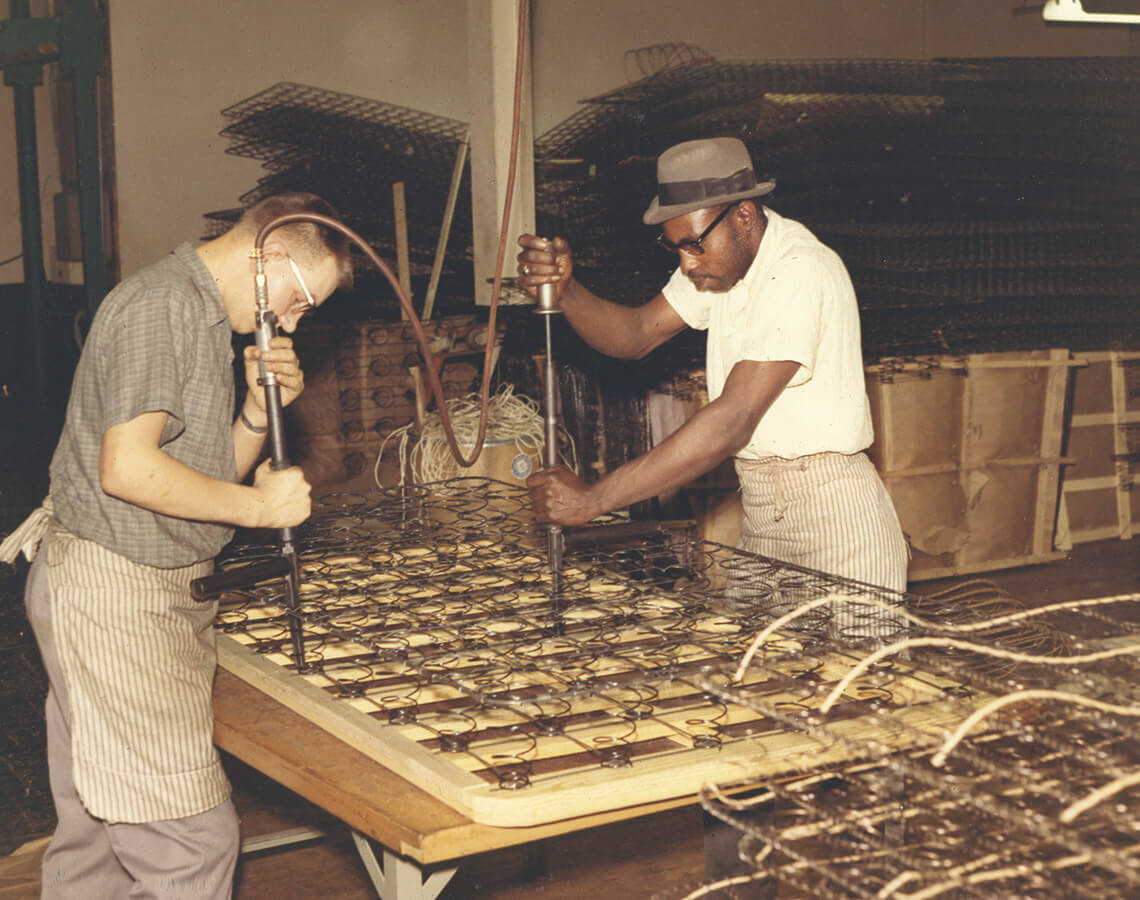
By the 1960s, Industries for the Blind had begun making mattresses for the armed forces, state agencies, and furniture stores. Photography courtesy of IFB Solutions
Shoffner’s can-do disposition shines through as she kicks off the participants’ journey with advice in the form of a couplet: Sweep your cane side to side/Keeping safe with every stride.
Well, maybe not exactly stride. The residents move forward in a cautious cluster, listening intently to Shoffner’s voice as she alerts them to impending obstacles. The canes become their eyes, identifying walls, curbs, and — “Oops, sorry!” — the shins of fellow doctors. There is laughter. Confusion. And more than a little uncertainty.
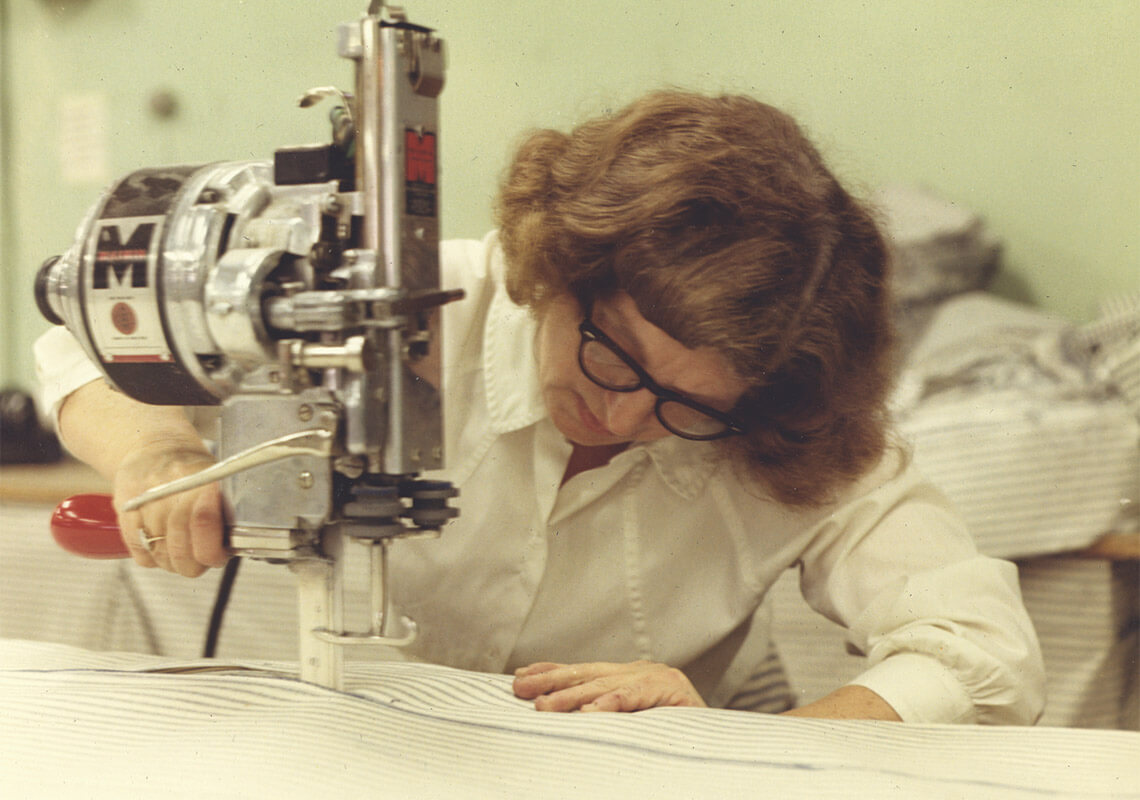
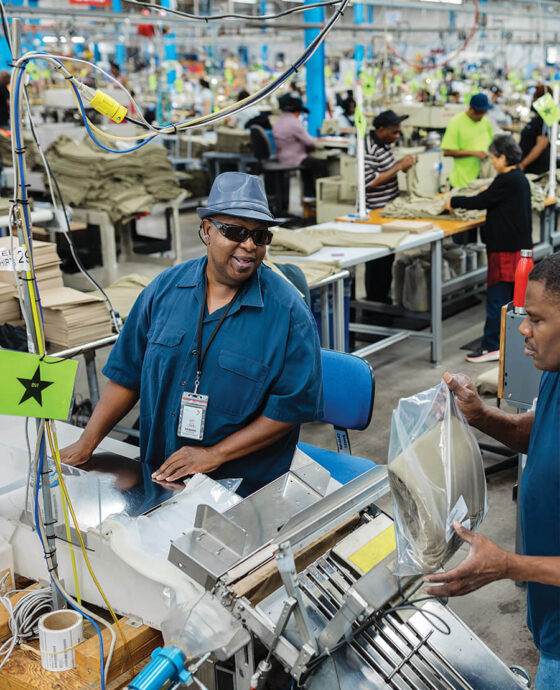
After a sightless dining experience at Subway, the participants return to IFB Solutions without blindfolds. Passing through the vast production floor, they see hundreds of blind or low-vision workers not just navigating the world but also engaging in a variety of demanding jobs amid the hum of hundreds of sewing machines — stitching, cutting, assembling, sorting, and packaging.
• • •
IFB Solutions started in 1936 in a small, one-room workshop, where six employees caned chairs and made brooms. “Those were the traditional activities in the ’30s and ’40s that sighted caretakers thought blind people were capable of,” says President and CEO Dan Kelly. “We have made a pretty remarkable transformation since then.”
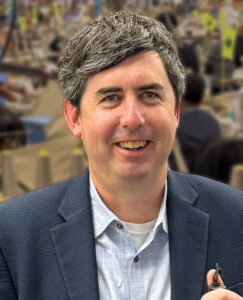
Dan Kelly Photography courtesy of IFB Solutions
How remarkable? Consider this: Today, IFB Solutions is the country’s largest employer of people who are blind or visually impaired. The employees at its manufacturing facilities — which also include locations in Asheville and Puerto Rico — craft mission-critical military uniforms and gear, office supplies, mattresses, and more. Just about everyone who works here has a story to tell — perhaps none more inspiring than Kelly’s.
Kelly lost his vision in his teens from a hereditary condition that took his father’s and grandfather’s sight, but he never let his visual limitations curb his aspirations. A few years after college, he went to work for the National Industries for the Blind in the Washington, D.C., area, where he earned his MBA. As a former member of the U.S. Paralympic Swim Team, he won multiple gold medals, and he’s also completed marathons, triathlons, and long-distance open-water swims.
Kelly says his father and grandfather gave him “that vision of independent success from a very early age: Never give up. Never stop learning. Keep pushing forward.” He’s quick to credit others for his success. “My story is not my story. It’s the story of people who uplifted and supported my career, my life, and my pursuits.”
• • •
In many ways, Kelly is paying forward the example set by the local businessman who gave him his first job — and made sure he had the tools he needed to succeed. “I want to ensure that we are able to sustain and grow jobs for people who are blind,” Kelly says. “We’re not going to let blindness stop us.”
Originally an initiative of the Winston-Salem Lions Club, Industries for the Blind (IFB) benefited from the 1938 passage of the Wagner-O’Day Act, which provided opportunities for people who are blind to manufacture and provide essential goods to federal agencies. The legislation sought to address the lack of employment opportunities for people with visual impairments, a situation made worse by the Great Depression. Updated in 1971 as the Javits-Wagner-O’Day Act, it is now known as the AbilityOne program. A merger with Goodwill Industries in 1958 furthered IFB’s viability as a dependable, high-quality manufacturer.
In 1966, a 17,500-mattress order from the Department of Defense helped the company grow. Photography courtesy of IFB Solutions
In 1979, Industries for the Blind split amicably from Goodwill Industries and embarked on the construction of a $3.7 million plant, which opened in 1983 and still houses IFB today. With 75,000 square feet of manufacturing, warehouse, and administrative space, the facility was big enough to help IFB realize its larger ambitions.
Over the next several decades, IFB won or extended a wide range of civilian and military contracts, including the management of military base supply centers. These retail outlets are staffed by IFB employees and carry many office products made or packaged by them. Most famously, the ubiquitous Skilcraft pen has been manufactured and packaged by AbilityOne organizations like IFB Solutions since 1968.
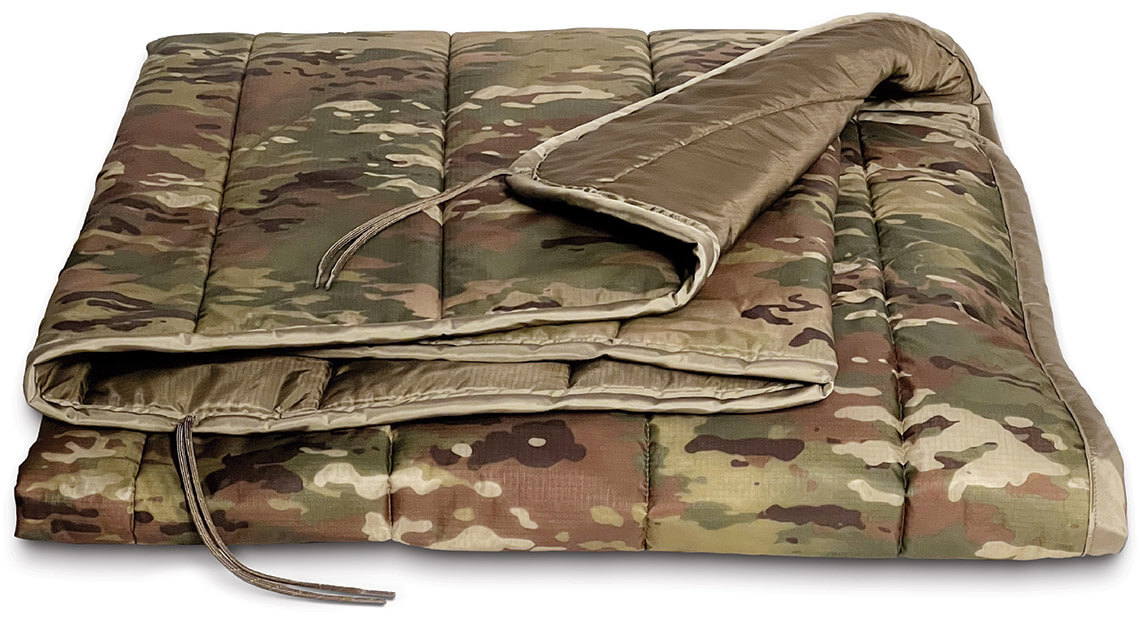
Since 1991, IFB employees have made more than three million woobies for service members deployed across the globe. Photography courtesy of IFB Solutions
One product in particular symbolizes the deep tie between IFB employees and the military: the woobie. A cherished piece of gear issued to soldiers, the woobie’s official purpose is to line a poncho. But the versatile garment has also been used as a sleeping bag, blanket, hammock, tent, and more. The bond between soldier and woobie is so strong that many are loath to give it up at the end of their service.
The connection between America’s service members and IFB runs in both directions. Just ask Lynn Drake. She never thought she’d lose her vision entirely, even though she’d had vision problems her entire life. After it happened, “I went into a deep, dark depression,” she recalls. “I gave up. I was just done. I could not see past where I was to ever have a life again.”
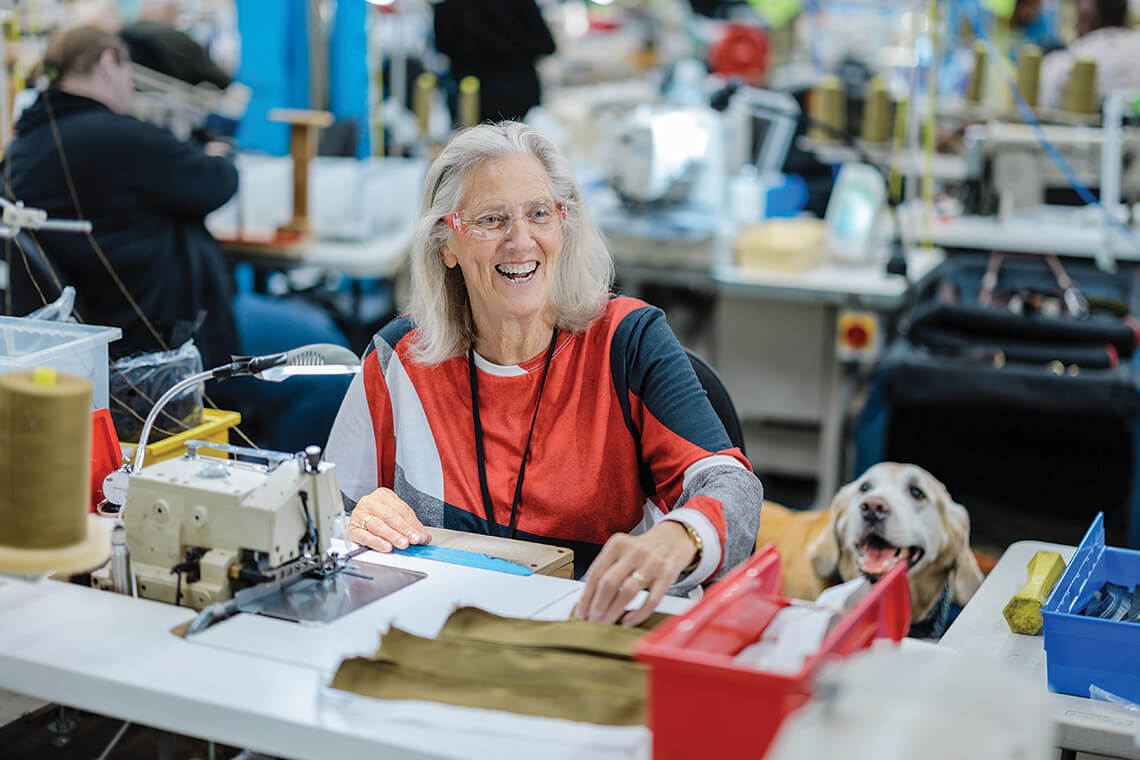
Lynn Drake makes fuel handler suits for the military alongside her guide dog, Kenny. photograph by Jerry Wolford & Scott Muthersbaugh
A beloved guide dog named David and a chance meeting with some IFB employees helped lift the veil of depression. Sixteen years later, at 74, Drake makes fuel handler suits for soldiers with her second guide dog, Kenny, at her feet. “They gave me an opportunity to make a living,” she says. “Plus, I’m making things for the military. It’s a wonderful way to give back a little bit. I’m doing something for me, but I’m doing something for my country.”
The highly technical protective gear made by Drake, which requires proprietary fabric and specially sealed seams, is a far cry from the earliest days of the organization and speaks to the sophistication of the products these skilled workers produce.
Today, a large percentage of the companies that serve the blind are also led by the blind. “We know what we are capable of,” Kelly says.
That confidence is borne out by the five AbilityOne companies that are associated with the National Industries for the Blind in North Carolina. According to Kelly, another reason for IFB’s success is visionary leadership that “has always had an entrepreneurial mindset. The board has allowed us to be out-of-the-box risk-takers.”
For example, lack of transportation has long been a significant barrier to employment for people who are blind. Yet advancements in technology have opened up a new opportunity: work-from-home call-center staffing. IFB Solutions now has more than 500 people in its recruitment pipeline ready to excel in these jobs.
By identifying the strengths of every employee and embracing technology, IFB makes it possible for them to take on new roles. “We’re thrilled to have at least one person who is blind in every department,” Kelly says. “It’s a powerful testament to how far we’ve come.”
• • •
Anastasia Powell lost her vision by the age of 21. A single, stay-at-home mom of three, she was having a hard time making ends meet. “My children were getting older and wanted to do everything under the sun — marching band, cheerleading. All those extra things I could not afford to give them.”
Then, she found IFB Solutions. She started out in the T-shirt department on the main factory floor but soon became the first employee to participate in the company’s pilot upward mobility program. Today, she’s the communications manager and has been with IFB for 20 years.
“It was a sewing machine job that turned into a career,” Powell says with a laugh. “Part of our mission statement says, ‘We believe all people who are blind or visually impaired have the right to succeed in every area of life.’ I’m the poster child for that.”
But what is most meaningful for Powell is the way her daughters began to see her. “It gave me the opportunity to lead by example for my children,” she says. “All the time, they say, ‘Well, if Mama can do it, then I can do it.’”
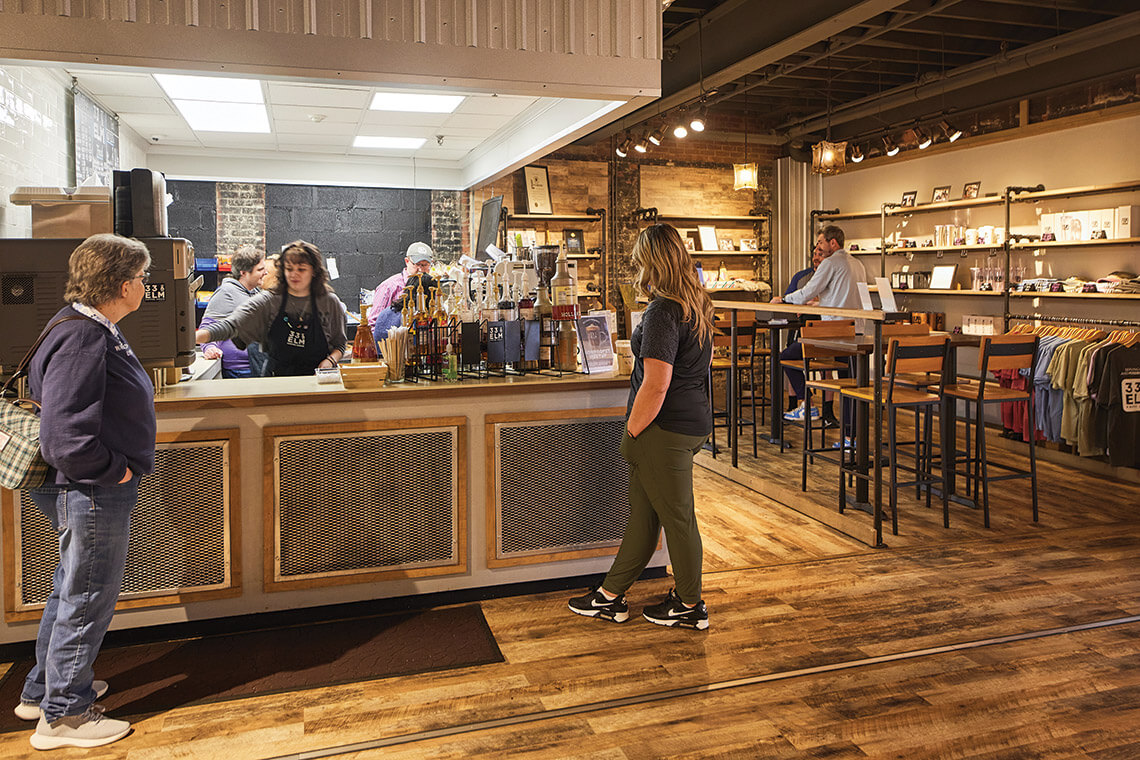
In 2021, Greensboro’s Industries of the Blind opened 33 & Elm Coffee House as a bridge between its employees and members of the public. photograph by Joey Seawell
One Cup at a Time
Another AbilityOne company, Industries of the Blind in Greensboro, employs hundreds in the manufacture of a wide range of military gear while also offering distribution and logistics solutions to businesses large and small. But it’s the company’s 33 & Elm Coffee House that produces something even more valuable: goodwill and understanding. The staff of blind and sighted workers serves employees from Industries of the Blind as well as a loyal following of nearby residents and college students.
“Industries of the Blind was founded in 1933,” says coffee shop manager George Hoyt. “We have been a community partner for a long time and part of the neighborhood for a long time. Anybody that comes in here, they realize right away we’re a unique environment, that we have a mission that’s a little bigger than just serving coffee.”
By breaking down barriers between the sighted and the blind, 33 & Elm creates an inclusive, welcoming environment — while forging a stronger community.
At both the turn of the century and today, Beaufort’s waterfront has attracted a hum of commerce and community. At its heart, a historic avenue tells that history, from the stately double-porched homes to the sound of ships announcing their arrival at port.




 Listen as the pages of the magazine come to life in the