Put ramekins on a baking sheet. Bake for 25-35 minutes, until puffed and golden. Remove from oven, and let stand for 5 minutes. With a flexible spatula, remove strata to
Listen as the pages of the magazine come to life in the Storytellers podcast showcasing the voices of six Our State writers. Each podcast episode features a writer reading their
Listen as the pages of the magazine come to life in the Storytellers podcast showcasing the voices of six Our State writers. Each podcast episode features a writer reading their
In 1944, a Jewish refugee from Berlin started a summer camp near Blowing Rock, nurturing a generation of boys in an idyllic world of nature, music, art, theater, and literature.
Listen as the pages of the magazine come to life in the Storytellers podcast showcasing the voices of six Our State writers. Each podcast episode features a writer reading their column aloud, allowing each distinct voice to shine. Click below to listen to Brad read his column aloud.
An ancient oak stands watch in a clearing, bearing witness to an extraordinary summer camp that once thrived under its spreading canopy. Today, the wind is still. But when it blows, as it often does up here in the high country of Watauga County, it rustles the shimmering leaves, summoning ghosts of summers past.
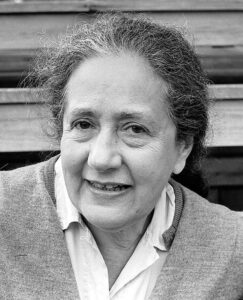
Vera Lachmann photograph by Ron Blau
According to Charles A. Miller, a former camper who wrote a historical narrative called A Catawba Assembly, the first time Vera Lachmann set eyes on the property that was to become Camp Catawba, she resolved to buy it. She had arrived in America less than five years earlier, one of the last Jews to escape Nazi Germany in 1939. She came with little more than a doctorate degree from the University of Berlin and a dream of creating a summer camp for boys. After temporary teaching jobs at Vassar College, Yale University, and Salem College, the poet and professor settled in New York to teach, leaving her summers free to turn her dream into a reality.
A short hike from the Moses Cone Manor in Blowing Rock, the 20-acre property had once been a summer camp for girls, featuring a main house with a kitchen, a larger bunkhouse that was renamed “The Citadel,” and an arts and crafts cabin. From the beginning, Camp Catawba was a kind of grand improvisation, short on resources, infrastructure, and organization — but overflowing with Lachmann’s passions and creativity.
• • •
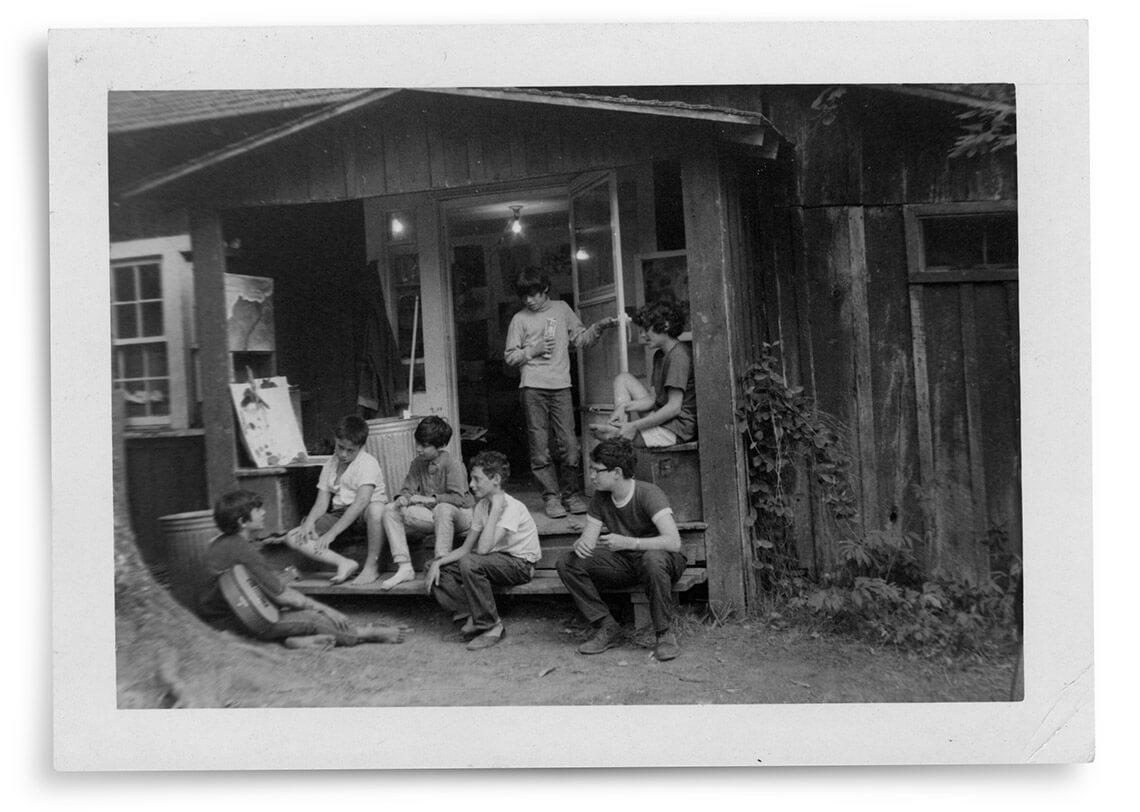
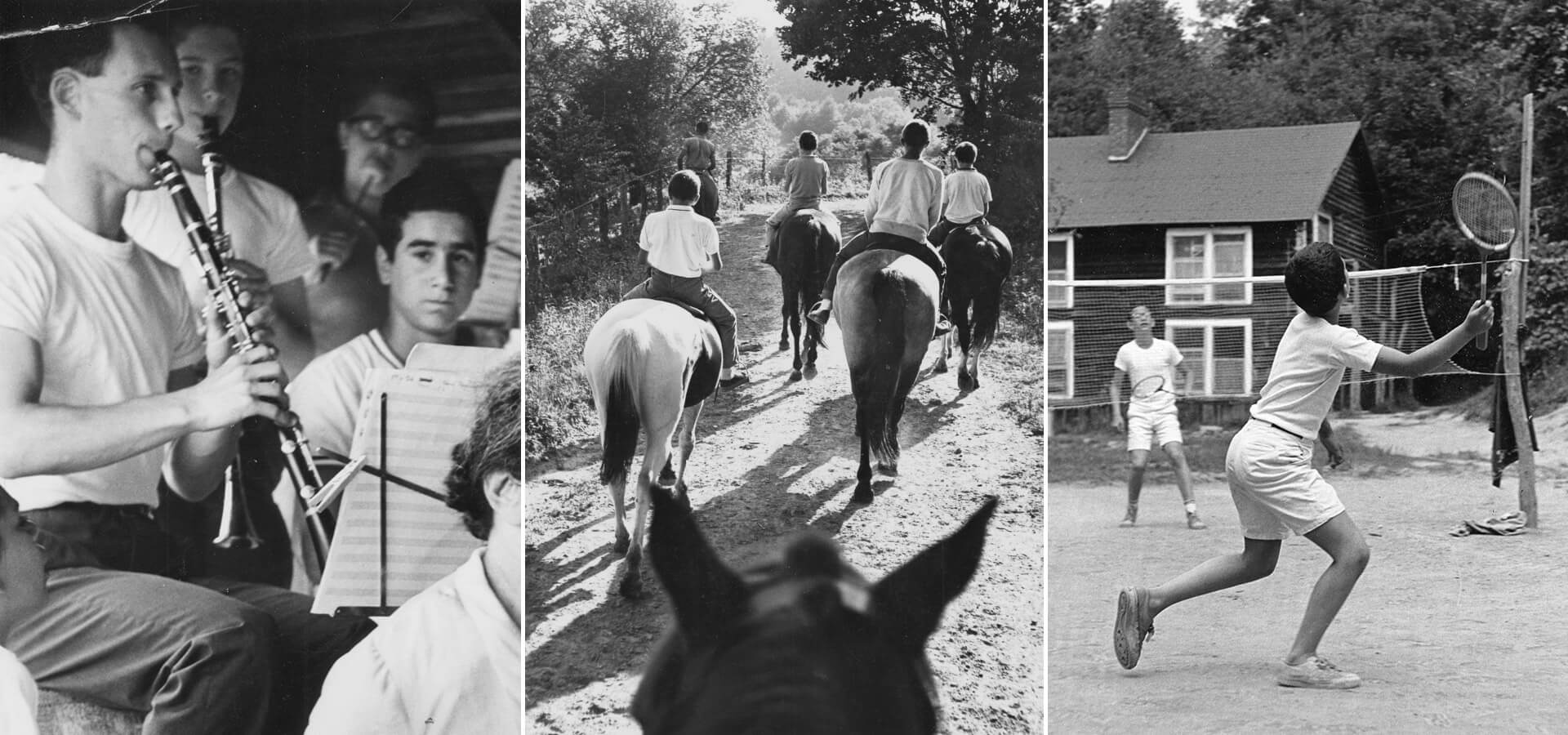
Most of the campers came from New York, Philadelphia, and Washington, D.C., and Lachmann sought to nurture their appreciation for nature. There was an abundance of typical summer camp activities: archery, badminton, baseball, swimming, hiking, and horseback riding. But alongside these familiar pursuits, campers played the music of Bach, Handel, and Mozart; rehearsed the plays of Shakespeare, Molière, and Aristophanes; and took painting classes from artists whose works hung in prestigious galleries.
Alumnus Robert Jurgrau remembers performing in August Strindberg’s A Dream Play during his second summer. Lachmann “was passionate about bringing young people along,” he says. “She could really go wild in terms of what to expose the kids to. We were never given the ‘child’ version.”
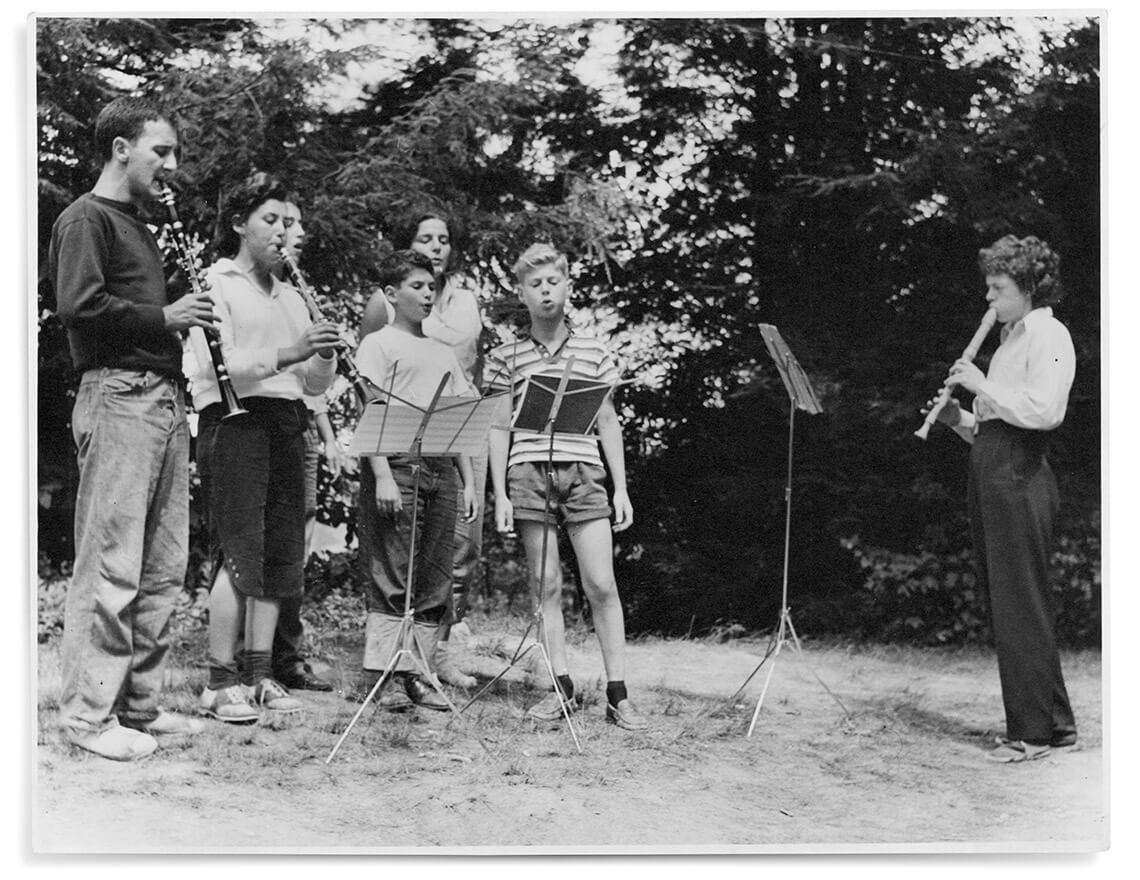
Between 1944 and 1970, more than 400 boys, ages 5 to 12, spent summers at Camp Catawba. Many of them studied under Tui St. George Tucker, who became the music director in 1946. Photography courtesy of AC. 214, Camp Catawba and Vera Lachmann Papers, W.L. Eury Appalachian Collection, Special Collections Research Center, Appalachian State University
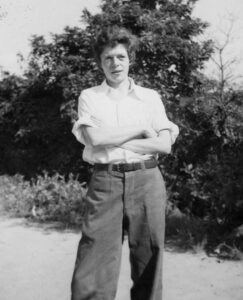
In 1945, Lachmann met the composer and recorder virtuoso Tui St. George Tucker and, in 1946, invited her to become the music director at Camp Catawba. Dr. Reeves Shulstad, a professor at the Hayes School of Music at Appalachian State University, has studied the two women, who also became life partners. “Vera was a peacemaker, and Tui liked to stir things up,” Shulstad says.
Rarely did a choir practice conducted by Tucker conclude without one or several campers being dismissed for any one of a number of musical indiscretions. But her tirades were like the thunderstorms that blew in regularly at camp: brief, intense, and quickly forgotten.
Tui St. George Tucker Photography courtesy of AC. 280, Charles “Chuck” Miller Papers, W.L. Eury Appalachian Collection, Special Collections Research Center, Appalachian State University
The two women with contrasting personalities were adored by the campers. “Both Vera and Tui were marvelous with young people,” Jurgrau recalls. To this day, he cherishes the way the women related to him: “Just to be treated like a real person. Not just as a kid.”
Every week, Lachmann wrote a letter to the parents of the campers, providing a glimpse into the special world she and her staff created. She recounted dramatic hikes, frustrations with rainy weather, and vivid descriptions of what free time at camp looked like. Yet what is most striking are her frequent and detailed mentions of the music that was constantly made throughout the campus, including at Sunday services, around campfires, and in special concerts. The choir sang Gregorian chants, choruses from works by Mendelssohn and Mozart, spirituals, folk tunes, and robust versions of “Happy Birthday” when the occasion required.
Even the cancellation of outdoor activities due to rain was announced with a musical joke: Handel’s Water Music played from the speakers in The Citadel.
Each day’s end was marked by the cry, “Story on the hill!” Campers scurried up to The Citadel and into their pajamas. Upon Lachmann’s arrival, the boys gathered around, and she presented her version of a bedtime story: either The Iliad or The Odyssey. In her telling, the epic poems were as enthralling as any Hardy Boys mystery.
Lachmann concluded each evening’s installment with a cliffhanger, then the words, “And that is all I am going to tell you tonight.” By the end of an eight-week session, the boys had a grounding in Greek literature to rival any college freshman.
• • •
Everyone agrees that Lachmann was what made the place special. In many ways, she and her campers could have been considered the ultimate outsiders in rural Appalachia during the 1940s, ’50s, and ’60s. But her personality — her warmth, kindness, and wisdom — melted any friction. When the camp integrated in 1964, it was without incident.
David Boul attended Camp Catawba for four years and later went on to have a career as a producer for The Oprah Winfrey Show. He saw how Lachmann interacted with everyone she met. “She was beloved,” he says. “She bought locally. She paid her bills on time. There was a lot of goodwill even though she was not local.”
Camp Catawba’s closest neighbors, a farming couple named Ira and Sallie Bolick, became like extended family to the boys. Ira was the ultimate good neighbor, cutting the grass using a team of horses and a mower, dispensing advice, offering up the Bolicks’ front porch to one and all, and giving at least one curious camper a plug of tobacco.
Surrounded by the Watauga County woods, children at Camp Catawba immersed themselves in both natural and man-made artistry. Photography courtesy of AC. 214, Camp Catawba and Vera Lachmann Papers, W.L. Eury Appalachian Collection, Special Collections Research Center, Appalachian State University
The art program received a boost when Boul’s father, Jack, decided to accompany his son to make sure Camp Catawba met with his approval. The Brooklyn-born artist — whose work is featured in the permanent collections of the National Gallery of Art and the National Museum of American History — fell in love with the place. The feeling was mutual. Lachmann implored him to come back, and he did just that, returning again and again as a volunteer art instructor.
Lachmann attracted plenty of luminaries, and the camp’s good fortune was revealed in other ways, too. It skirted a host of potential calamities: the polio epidemic in the ’40s and ’50s, budget shortfalls (the camp lost money every year but one), and a water moccasin that took up residence in the camp’s mud-bottomed pool one summer.
The climax of each eight-week session was a concert featuring choir and orchestra, followed by the performance of a play that the campers had rehearsed diligently since their arrival. Attended by family, friends, and local residents, it was the perfect coda to a summer of excitement and adventure.
• • •
In 1970, at the age of 65, Lachmann closed Camp Catawba, deciding she no longer had the energy the camp required. She and Tucker spent summers at Catawba and the remainder of the year in New York City, where several former campers became their students, including Jurgrau. Even after his formal education was complete, Jurgrau remained friends with his two mentors, regularly cooking dinner for them in New York.
He went on to become an executive for Time-Warner and a consultant for The Juilliard School. But he’s always happy to reminisce about the summers he spent at Camp Catawba. “I hope hearing about it inspires others to bring younger people together and give them exposure to things that will make them deeper, richer people,” he says.
After Lachmann died in 1985, Tucker remained a vibrant, memorable presence at Catawba for almost two decades. She threw parties in the main house, inviting students and faculty from nearby Appalachian State and introducing a new generation of musicians to her avant-garde recorder compositions and other orchestral works.
Today, Dr. Shulstad carries that creative flame forward. She shares the story of Tucker and Lachmann’s lives with her students to illustrate what it means “to live a deeply thought-out creative life.” She’s also making Tucker’s virtuosic recorder music more accessible and introducing students to her groundbreaking microtonal music.
After Tucker’s death in 2004 at age 79, the camp property was passed to the Blue Ridge Parkway. The buildings became ghostly ruins. In 2018, the collapsing structures were torn down and carried off. What remains are many of the same trees and plants that graced the camp back in the day: lush stands of rhododendron, maples, a rare hemlock, a hydrangea plant as tall as a giant, and the mighty oak that the boys once sat under, daydreaming about warrior heroes, Olympian gods, and glory.
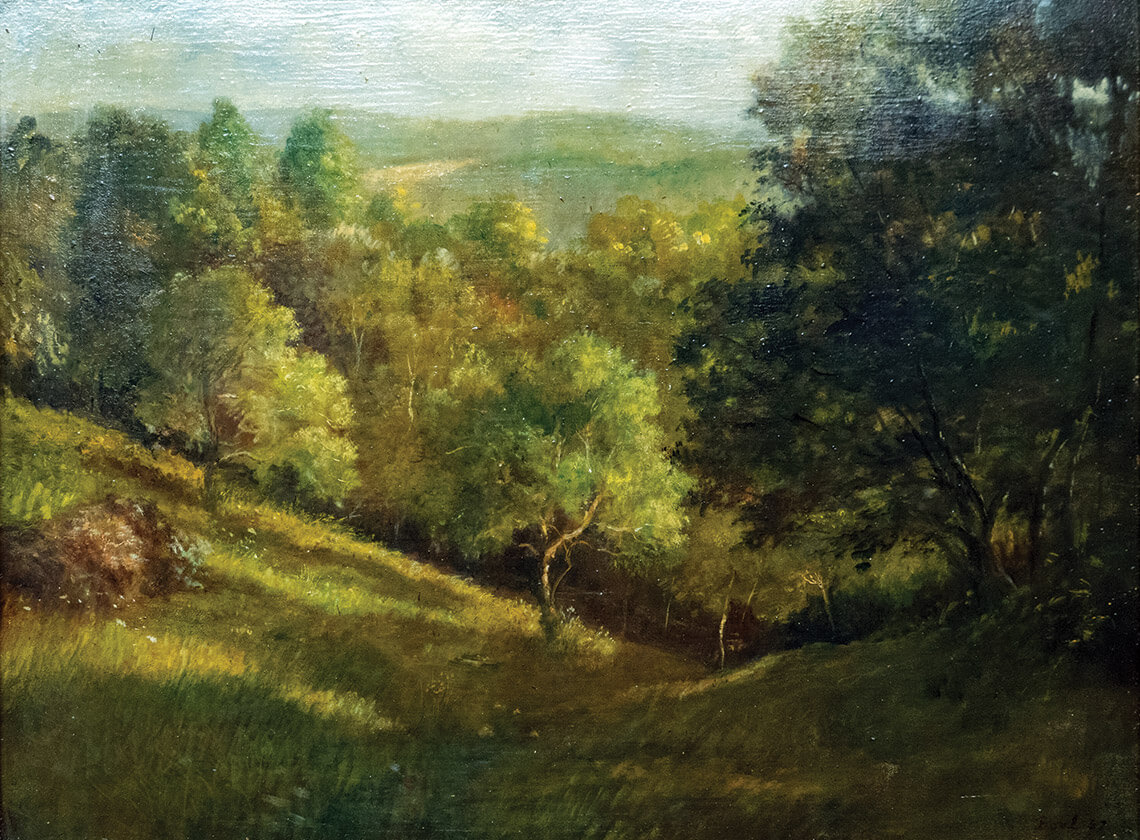
The artist Jack Boul, who died in 2024, spent much of his career in Washington, D.C. But paintings like Catawba reflect the special bond he developed with western North Carolina after bringing his son, David, to Camp Catawba. painting by Jack Boul, Photographed by Paul Blake
Sights & Sounds
More than half a century after Camp Catawba closed, its artistic legacy continues to flourish. From August 30, 2025, to March 7, 2026, the Blowing Rock Art & History Museum will host an exhibit called “Jack Boul: Land, City, Home.” More than 40 of Boul’s works will be featured, including eight paintings that inspired a musical suite by composer Roger Tréfousse, a Camp Catawba alum and former student of Tui St. George Tucker. During Boul’s time as a volunteer art instructor at the camp, he worked on his own paintings of the surrounding area, some of which will be on display, including a painting called Catawba.
At both the turn of the century and today, Beaufort’s waterfront has attracted a hum of commerce and community. At its heart, a historic avenue tells that history, from the stately double-porched homes to the sound of ships announcing their arrival at port.



 Listen as the pages of the magazine come to life in the