My name is Hannah Lee Leidy, and I’m a curd nerd.
Cheese is my version of wine. I take it to dinner parties and gift it as birthday presents to deserving recipients.
Like wine, cheese is my conduit for connection. If I like you, I’ll give you cheese. If I love you, we’ll share a board of it. Also like wine, every good cheese has a story behind it — and a person who crafted it with care.
I long thought the best cheeses came from exotic places like France and Wisconsin. But it turns out North Carolina is rolling out some damn fine wheels of its own.
Sadly, my home on the Outer Banks isn’t a cheesemaking hub. Early in my cheese journey, I would drive hours to Chapel Hill, specifically to peruse the cheese counter at Weaver Street Market. Who cared about Swiss Comté and English cheddar? I was after the butter-yellow wedges and saucer-size wheels made in Chapel Hill, Climax, Marshall, and Columbus. I wanted to try them all. And, I wanted to go to the source to see where the magic happened.
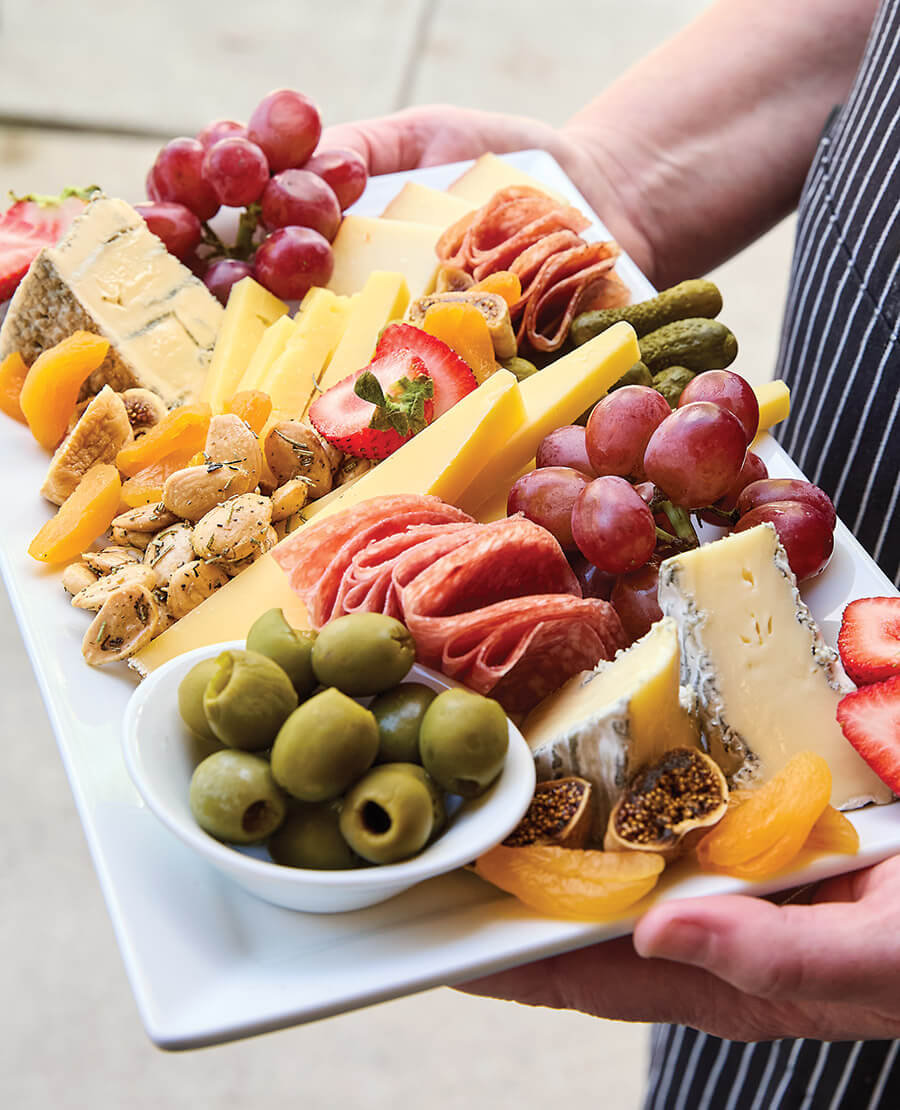
Mountain cheeses take center stage on charcuterie plates at South Slope Cheese Co. in Asheville. photograph by Stacey Van Berkel
Finally, I did. On a trip to Asheville with my mom, we set aside one afternoon for an adventure to Looking Glass Creamery in Columbus. We peeked into the rooms where cheese was being made and aging. We ordered a board laden with little wedges, named for landmarks like the Green River and Bearwallow Mountain, and ate it at a picnic table surrounded by blooming flowers and pastureland. Cows mooed in the distance. I felt like Heidi in the Alps.
Looking Glass is one of many cheesemakers crafting creamy delicacies throughout the Blue Ridge. But these products don’t travel far. Few leave the state; even fewer leave the county where they’re made. But to find them, to try them, is to glimpse the creativity of this mountain community — and get a literal taste of place.
Last spring, I set out to learn more about the North Carolina cheesemakers in our far-flung hills and hollers, following winding roads and staking out local cheese shops that put hyperlocal wheels in the spotlight. From conversations with cheesemakers and the people who sell their products, I discovered a striking reflection of grit and artistry, resourcefulness and passion that makes each piece all the more delicious.
I know it sounds cheesy … but I’m whey for it.
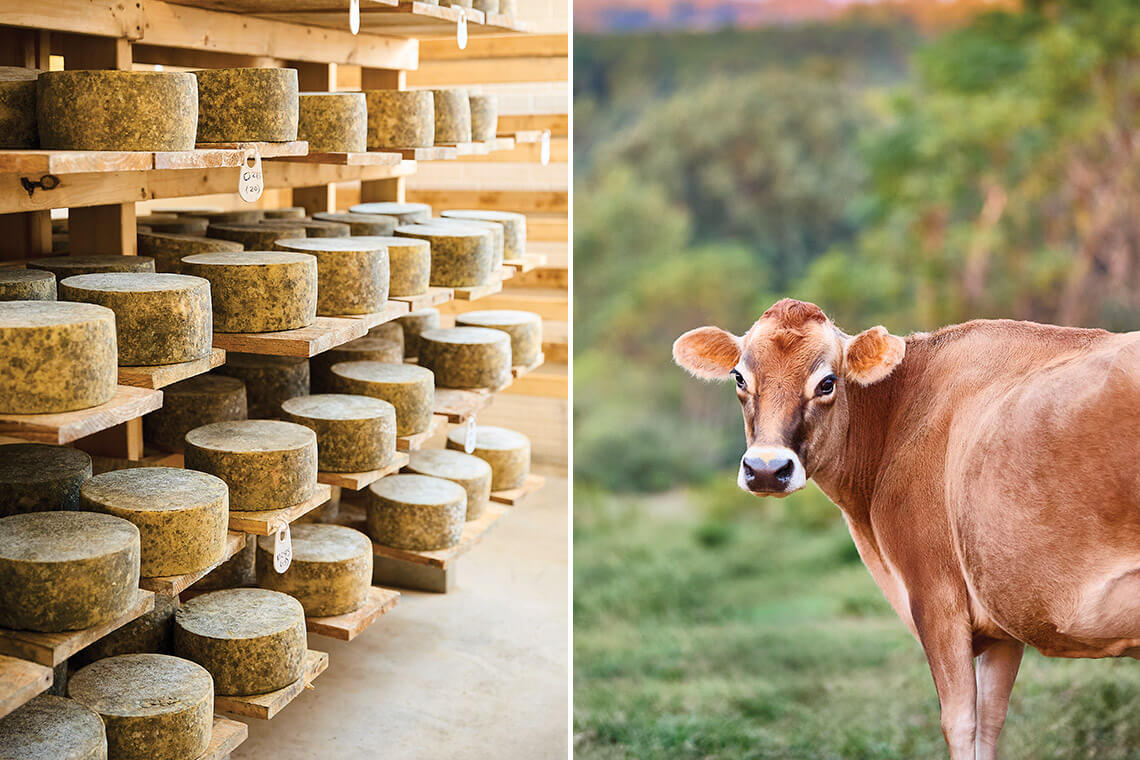
Looking Glass Creamery relies on Jersey (pictured) and Holstein cows for most of its cheeses. Looking Glass age rows of Drovers Road, an English-style sharp cheddar, in the creamery’s cellar. photograph by Stacey Van Berkel
Looking Glass Creamery
Columbus
A farmstead creamery continues a century-old tradition with cheeses that celebrate its mountain surroundings.
As I turn off Interstate 26 onto U.S. Highway 74 toward Columbus, traffic all but disappears. The road narrows, two lanes twisting through Polk County, punctuated by the occasional puddle of early-morning rain. By the time I park in front of Looking Glass Creamery’s long, narrow building — painted with faces of Holstein and Jersey cows, their eyes peering curiously at visitors — the dissipating fog reveals acres of pastureland and, beyond that, shadowy Blue Ridge peaks.
Jen Perkins steps out of the creamery, dressed in a long, white cheesemaker’s jacket, her hair pinned under a cap. I’m back to visit, and this time, she’s taking me behind the scenes to see the creamery in action.
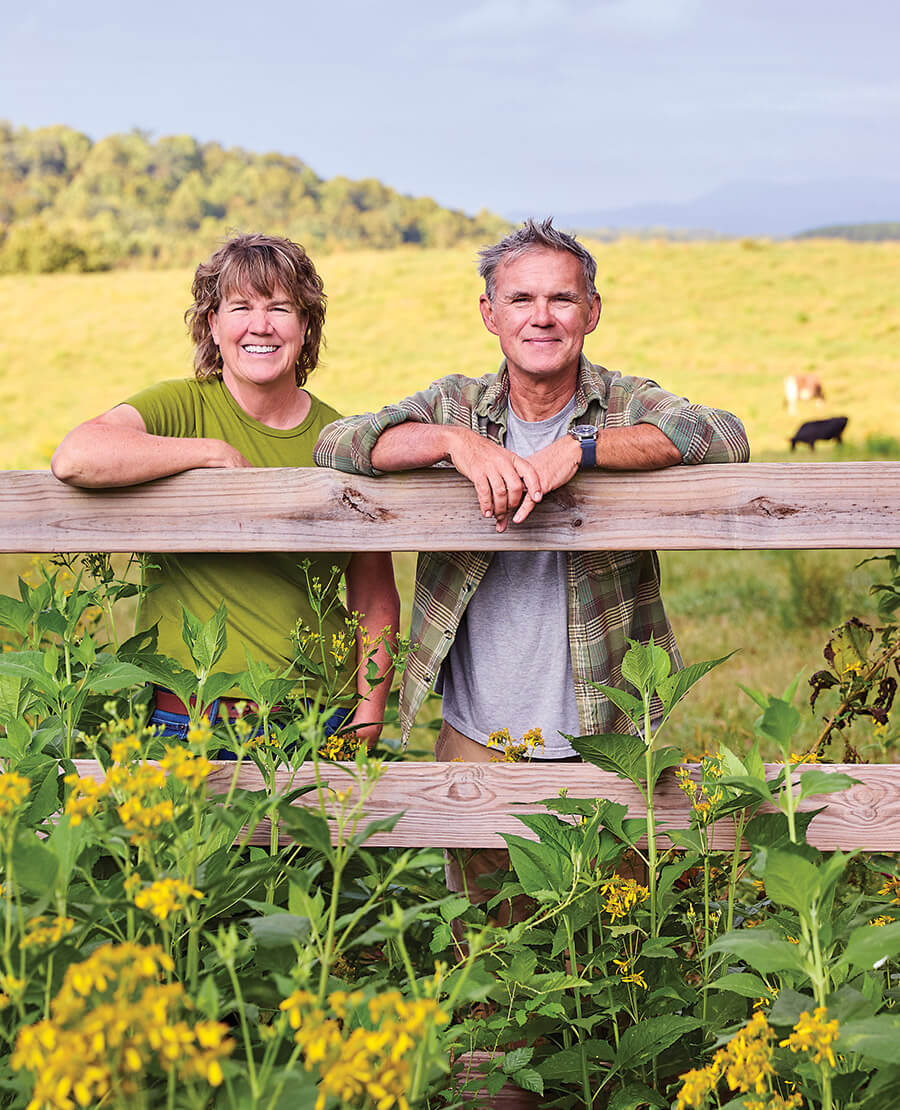
Jen and Andy Perkins photograph by Stacey Van Berkel
It’s Thursday, cheesemaking day, and Jen’s son Max has been at it since 6 a.m. The smell hits first: fresh milk, damp earth, spring grass, and a briny funkiness. The sound hits next: the hum and whir of the pasteurizing machine, where massive metal paddles churn through a tank of milk.
Looking Glass Creamery’s model is entirely farmstead, meaning the Perkinses make cheese using milk from their own cows that graze right on the property. But that wasn’t always their goal.
“We never thought of being a farmstead cheesemaker because it’s like doing three jobs in one,” Jen says. She and her husband, Andy, started Looking Glass Creamery in Fairview in 2009, sourcing milk from suppliers around Asheville. As demand for the product grew, so did the need to expand. They required more space and a consistent supply of milk, and the best way to get that was with their own herd.
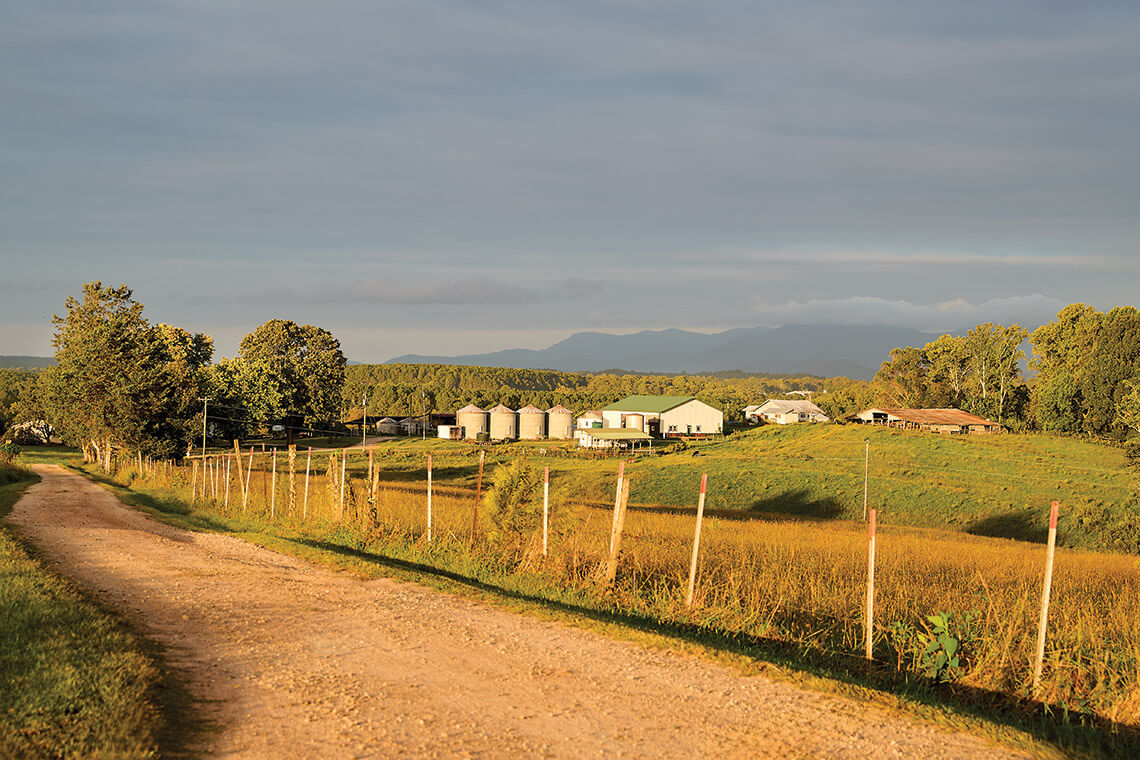
A working dairy since 1947, Looking Glass sits on 226 acres of rolling foothills in Polk County. In 2018, the farm added a creamery and hillside aging cellars for cheesemaking. photograph by Stacey Van Berkel
She reached out to brothers Al and Doug Harmon, who owned Green Hill Farm in Columbus. Doug had mentioned bringing production onto the family’s dairy farm, but, unbeknownst to Jen, the Harmons had a bigger dream for the 226-acre property: They were ready to retire and wanted to ensure that it remained a dairy farm. Without children of their own to pass it onto, the Harmons needed the right stewards to lead it into the next chapter.
The Perkinses bought the farm, plus its herd of cows, in 2017. As construction began on the production room and cheese shop, the Harmons built a house at the end of the driveway, just across the street. Now, they grow hay that feeds Looking Glass’s cows.
The larger facility allows Looking Glass to make as many as nine different kinds of cheeses throughout spring, summer, and fall. They also built an adjoining cellar into the hillside behind the production room, where different types of cheeses interact with different types of mold in individual rooms (yes, cheese needs mold).
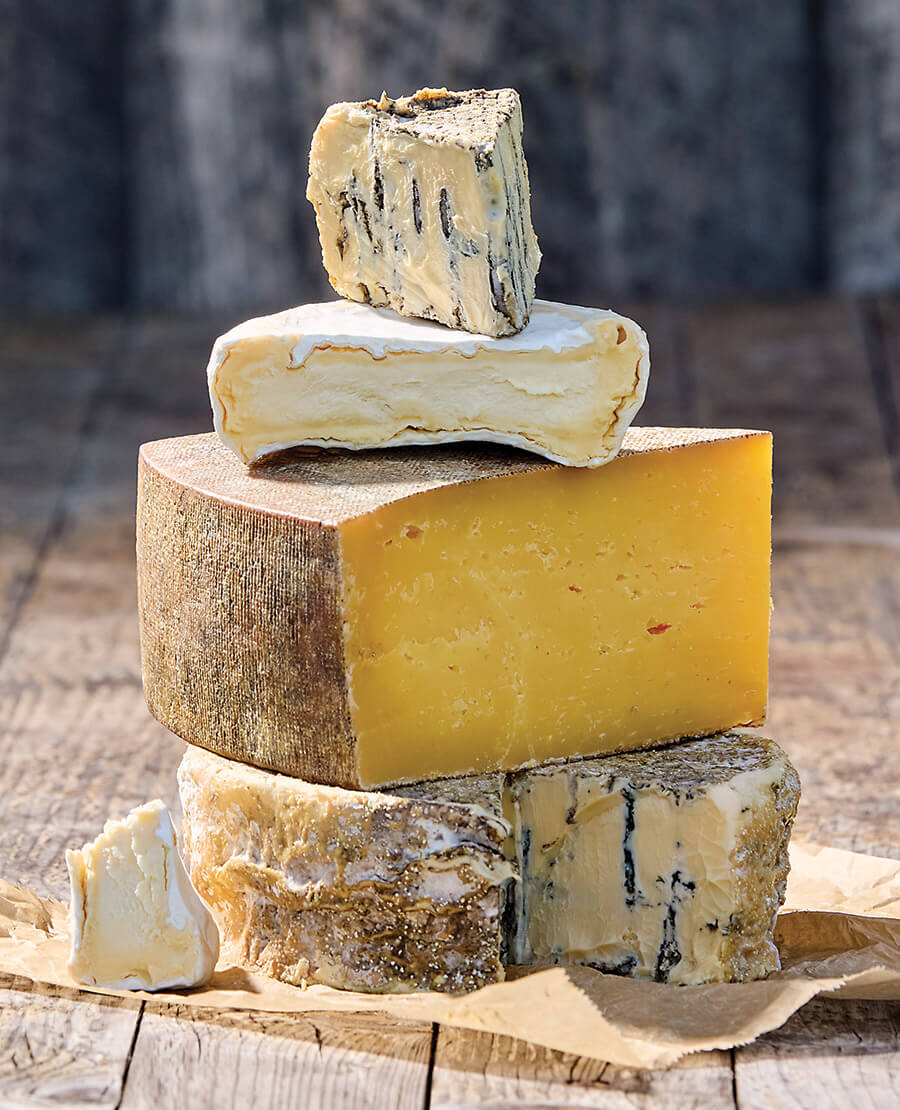
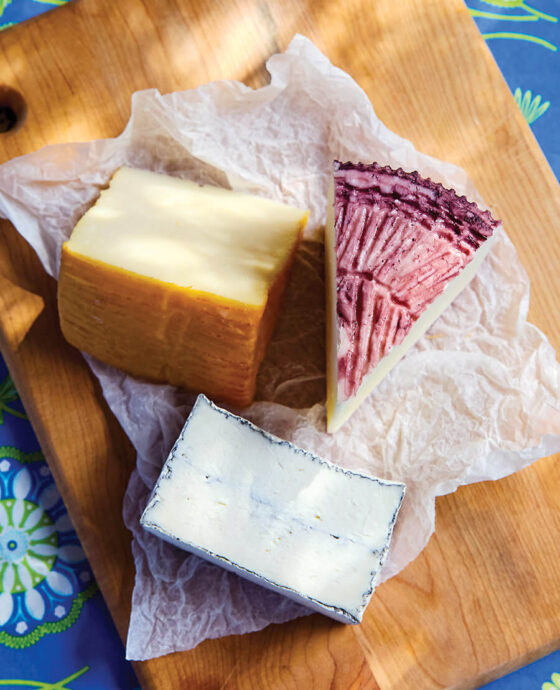
From bottom: Green River Blue, Drovers Road, Tally-Ho, and more Green River Blue. photograph by Stacey Van Berkel
I follow Jen into the Cheddar Room and resist the urge to run my hand along the textured exterior of all the wheels, their fabric-like rinds growing more pronounced with each month that passes. There’s Drovers Road, a sharp cheddar named for the people who used to drive cattle from the Foothills to Charlotte, and Howard’s Gap, which ages for up to two years. We move into the Red Cellar, named for the orange-and-red mold that grows on the walls and deepens the colors in rinds of cheeses like the cocoa-rubbed Chocolate Lab.
After I visit the caves, Andy walks with me to the farm store. It’s barely lunchtime, but I need a grilled cheese before I go. The rain is back, so I zip up my jacket and take my sandwich under the covered patio, melted Drovers Road and Bearwallow puddling beneath the bread. I chew in silence, listening to the drizzle on the sheet-metal roof and nearby moos from happy cows — the perfect soundtrack for a cheese adventure.
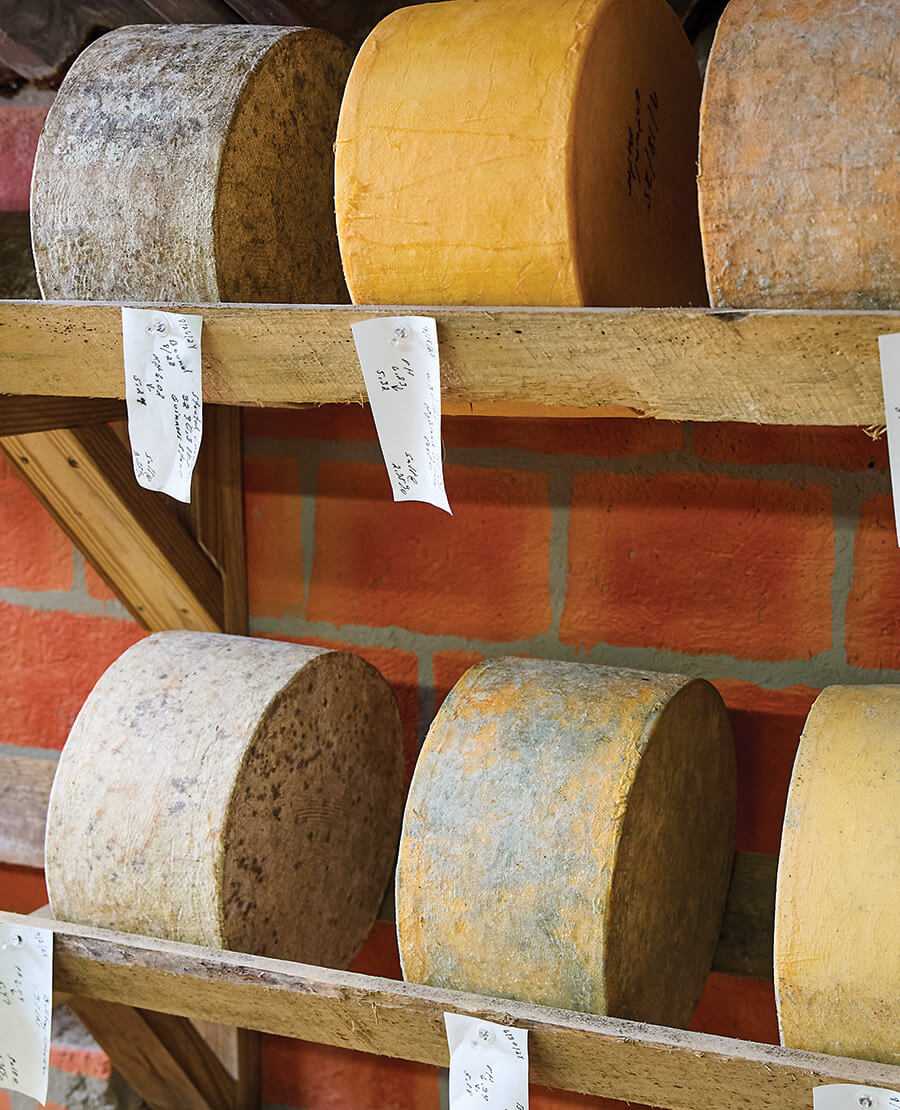
At Blue Ridge Mountain Creamery, select cheeses age in an underground cave. photograph by Stacey Van Berkel
Blue Ridge Mountain Creamery
Fairview
This mountain creamery embraces the natural landscape to create award-winning, European-style cheeses.
Victor Chiarizia supervises the scene unfolding at the edge of his property, where I am — sitting in my car, on the far side of a creek that rushes through where the driveway should be. In 2024, Hurricane Helene swept a torrent of water through the small road connecting Chiarizia’s home to his Blue Ridge Mountain Creamery, creating something of a moat at the property line.
I punch the accelerator, and my Subaru surges through the water. “I was wondering what type of car you’d bring,” Chiarizia says once I park.
Prior to Helene, Blue Ridge Mountain Creamery regularly welcomed cheese fanatics like me. People could come see the cheese cave and commune over a table set with china plates for a tasting of Chiarizia’s European-style creations. The creamery has been closed for tours since the storm — customers find Chiarizia’s cheese at the farmers markets in North Asheville and Black Mountain as he repairs his home and the studio, where the cheesemaking happens.
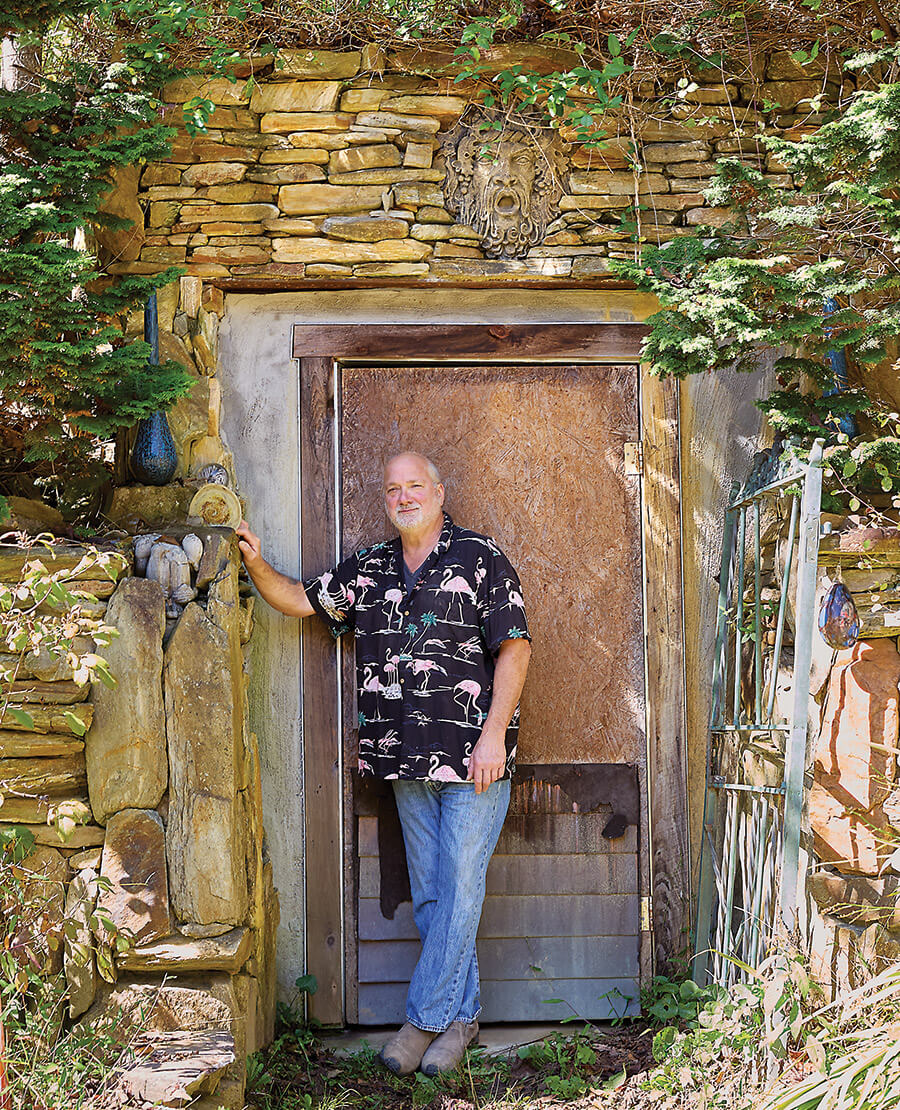
Victor Chiarizia stands outside the cheese cave he built on his property in 2010. Inside, where temperatures hover around 50 degrees, cheeses age from three to 16 months — and sometimes longer. photograph by Stacey Van Berkel
The front of Chiarizia’s studio paints a picture of his past life as a glassblower. The colorful, contoured glasswork feels emblematic of his approach to cheesemaking: It’s experimental — playful, even. His first cheese, the Tomme-style Ugly Baby, is one he joked only a mother could love (it’s a fan favorite). Another favorite is the Lexington Ave. Funk, an orange-tinged Taleggio with a savory, unctuous cream. He washes it in brines that vary from salted water to local cider.
“People expect me to play around with different things,” he says. He rotates through about 20 different cheese recipes, only occasionally tossing out a batch. “Most of the time, they’re quite edible.”
Chiarizia doesn’t have his own herd. Instead, he gets milk from Looking Glass Creamery and makes his cheeses in the studio’s back wing, a scrubbed, sanitized space that stands in stark contrast to the rest of the building. He has two aging rooms. One holds bloomy-rind cheeses, like the Lexington Ave. Funk and Common Bear, a pudgy Brie with a cottony, white exterior. The other room is for blues, specifically five-pound wheels of Ridge Blue, a chalky, butter-colored creation rippled with turquoise.
“With cheese caves, you have to partner with Mother Nature.”
The real intrigue of Blue Ridge Mountain Creamery sits outside the studio, on the other side of Chiarizia’s house. He is the only cheesemaker in North Carolina with a true cheese cave on his mountainside property, a freestanding earthen shelter more commonly seen in France and Italy. He researched. He read. One day, he grabbed a friend’s backhoe and started digging out the side of the mountain.
I follow Chiarizia through a hobbit-hole door sheltered by ferns and branches, and we enter the cave. An actual cave. Dark, quiet, and humid. Inside, shelves of Ugly Baby and 20-pound wheels of Naked Cheddar age on wooden planks around the room. Curds wrapped in cheesecloth dangle from wooden beams. Soon, they’ll become provolone.
Cave-aging cheeses embraces many elements beyond the maker’s control — humidity, seasonal changes, wild bacteria. It’s risky, but that’s part of the fun for Chiarizia. “With cheese caves, you have to partner with Mother Nature,” he says.
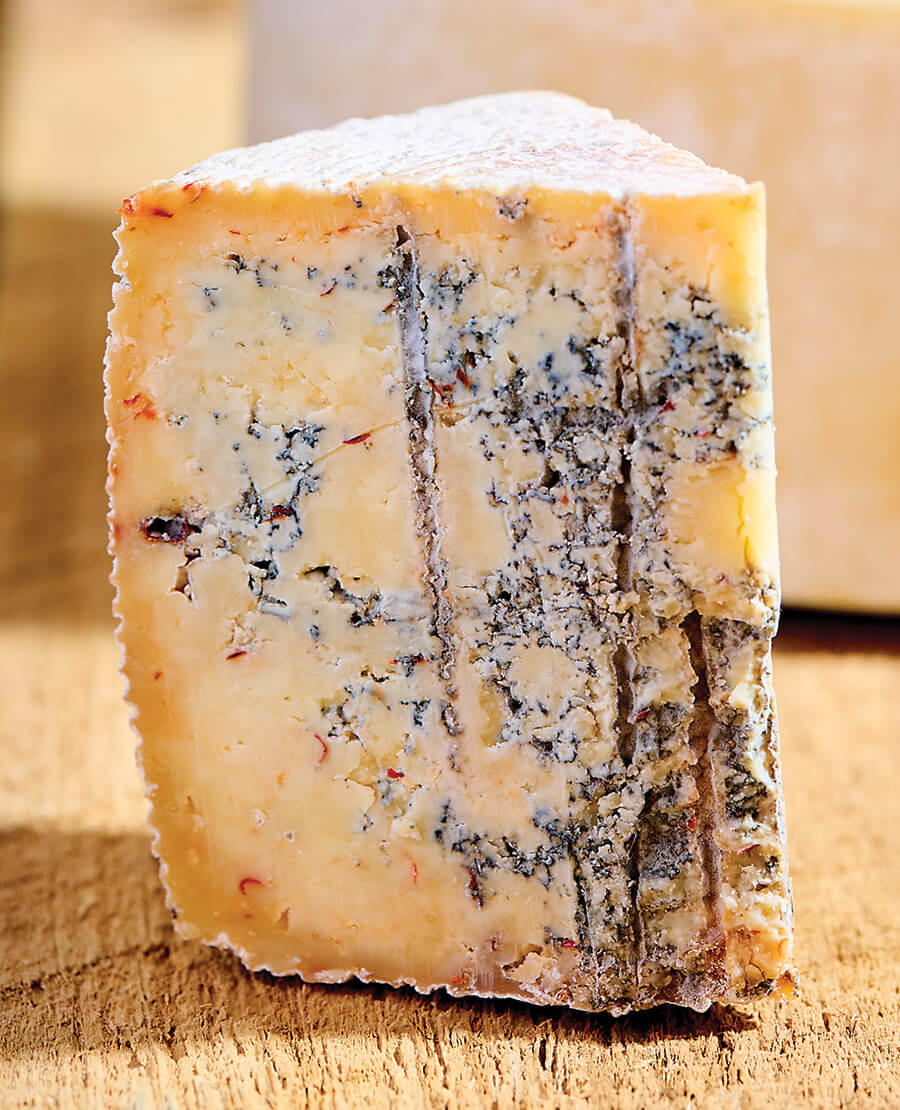
Earthy and robust, Blue Ridge Mountain Creamery’s Sassy Blue gets a flavorful kick from Thai chilis. photograph by Stacey Van Berkel
During Hurricane Helene, this partnership became his insurance. When the floodwaters rose throughout Fairview, mud and debris filled his home, studio, and the aging rooms, destroying his inventory ahead of fall and winter markets. After the waters subsided, Chiarizia went to the cave, expecting the worst. But inside, nearly 1,000 pounds of cheese sat undisturbed.
It was a thin silver lining amid the devastation. But for Chiarizia’s business, this small benevolence allowed Blue Ridge Mountain Creamery to survive while he rebuilt everything else.
He’s not quite returned to wholesale, and I ask how I can buy his cheese. For now, local farmers markets — Black Mountain and North Asheville — are as far as they’ll go. I don’t mind; a delicious destination is enough justification for one more journey.
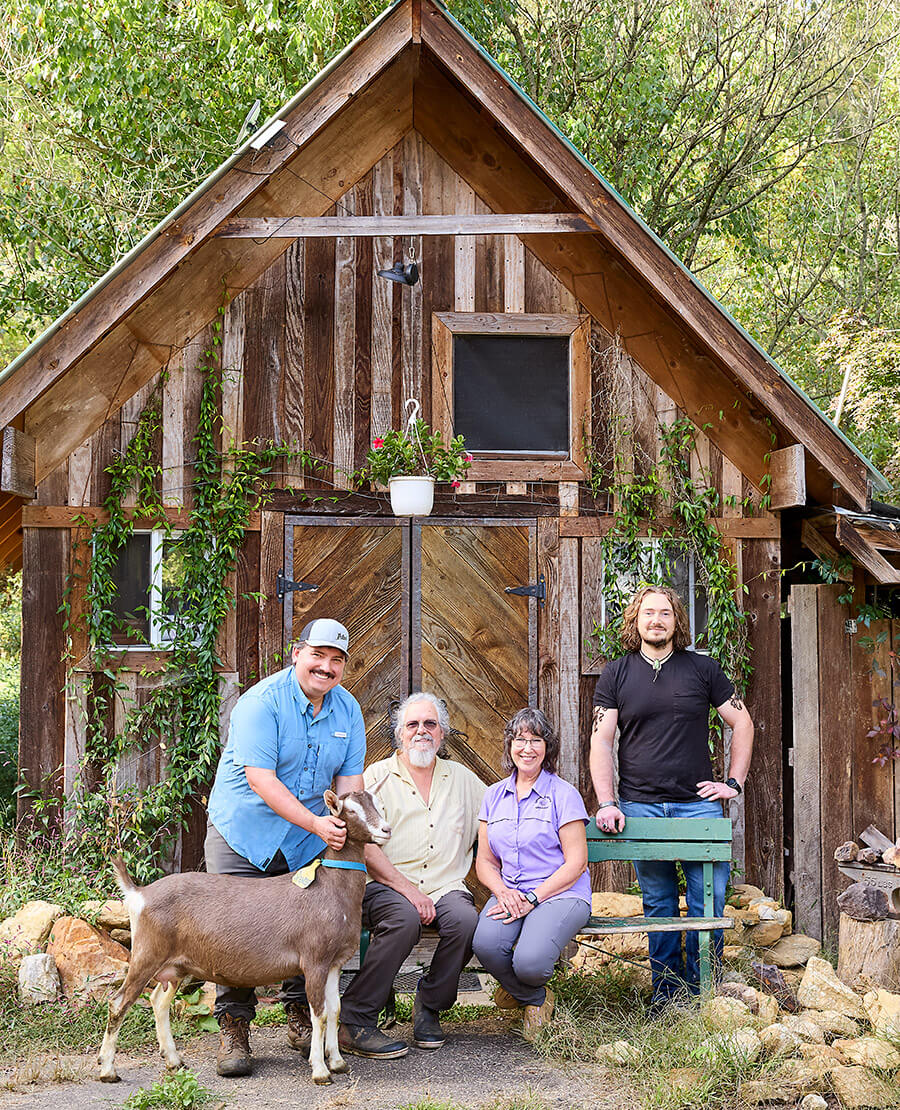
From left: Cullen, Jeff, Chris, and Morgan Owen of Spinning Spider Creamery with their goat Lady Spencer outside the family creamery in Marshall. photograph by Stacey Van Berkel
Spinning Spider Creamery
Marshall
One creamery’s locally loved cheeses start with the owner’s devotion to her herd.
The brown wax paper crackles as I unwrap five different cheeses and arrange them on a plate. I’m back home in my kitchen, and I couldn’t leave the mountains without stopping at South Slope Cheese Co. in Asheville. The shop sells cheeses from makers throughout North Carolina and Appalachia — esoteric products I haven’t seen elsewhere in the state.
I shave off slivers and sample each in slow succession, guessing which might be cow’s milk, goat, or a blend. I keep coming back to the milky white cheese with the deep brown rind. It’s firm and nutty, almost like Gruyère without the characteristic hay-yellow color. The rind has been rubbed with cocoa and spices. I flip the wax paper: Liesel, an Alpine-style goat cheese from Spinning Spider Creamery.
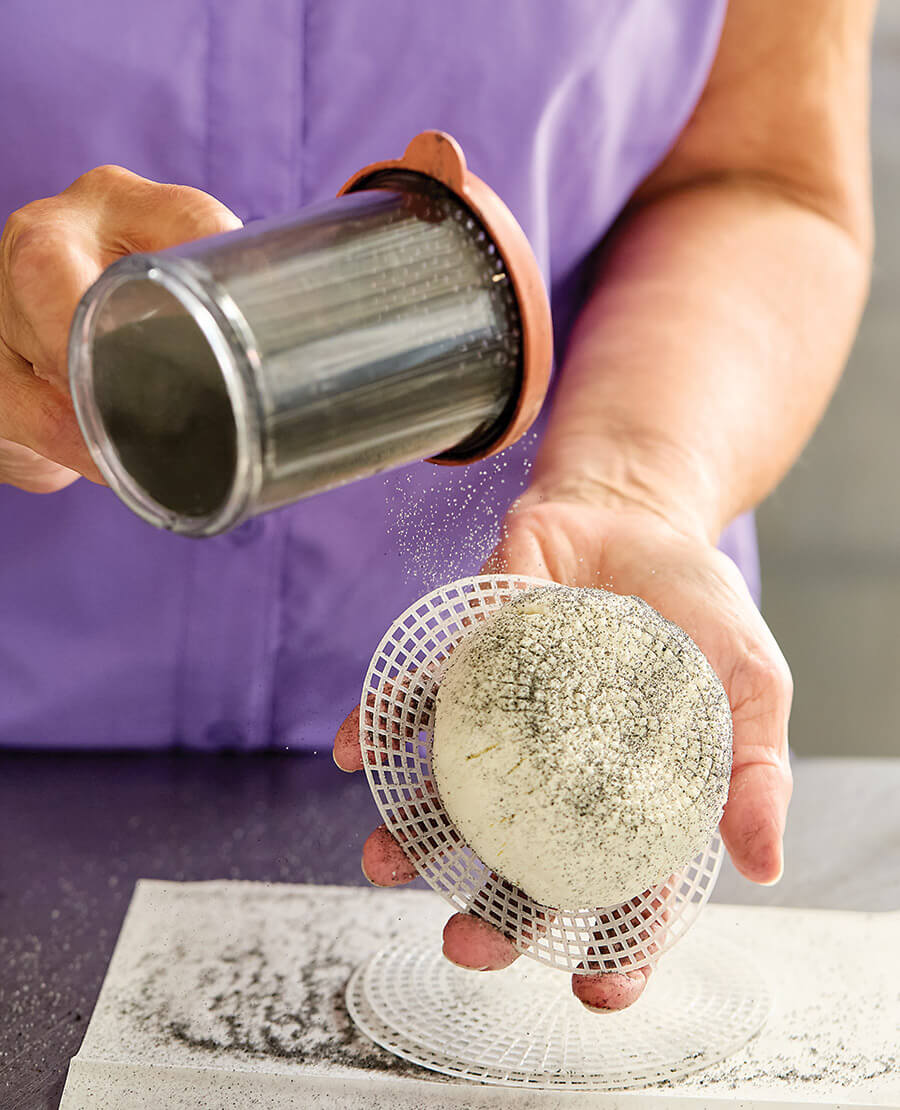
Spinning Spider Creamery in Marshall remains a family-run business. Chris Owen salts and dusts Midnight Sun with ash, beginning the process that helps its surface rind develop. photograph by Stacey Van Berkel
I was unfamiliar with the creamery prior to visiting South Slope Cheese Co. “We have a customer who comes in each week and gets the largest chunk of Spinning Spider cheese, no matter what it is,” the owners tell me. No more convincing needed. I promptly add Spinning Spider feta, garlic-dill chèvre, and Liesel to my basket.
Turns out, the creamery was one of the first established cheesemakers in western North Carolina. The story starts with a goat named BlueBelle. Owner Chris Owen’s son, Cullen, received the kid through the local 4-H program. He raised her, and she birthed kids that went to other 4-H participants. “She lived a grand, long life,” Owen tells me over the phone. “Cullen would come outside talking, and she would hear him and start bleating back.”
BlueBelle changed the family’s trajectory. Owen started making cheese with the goat’s milk, soft chèvres her children would eat. She learned from cookbooks and experimented on her kitchen stove. Owen took her cheese to the Marshall farmers market and realized her home hobby had business potential. Their goat herd grew, and Owen scaled recipes, expanding into bloomy-rind and hard cheeses, like the buttery Camembert-style Camille and nutty Liesel.
Like Looking Glass Creamery, Spinning Spider’s model is farmstead, and they sell goat’s milk to other cheesemakers. The Owens produce enough for wholesale, with their cheeses sprinkled throughout Asheville restaurants, markets, and shops. Yet the creamery remains exclusively family-owned and -operated.
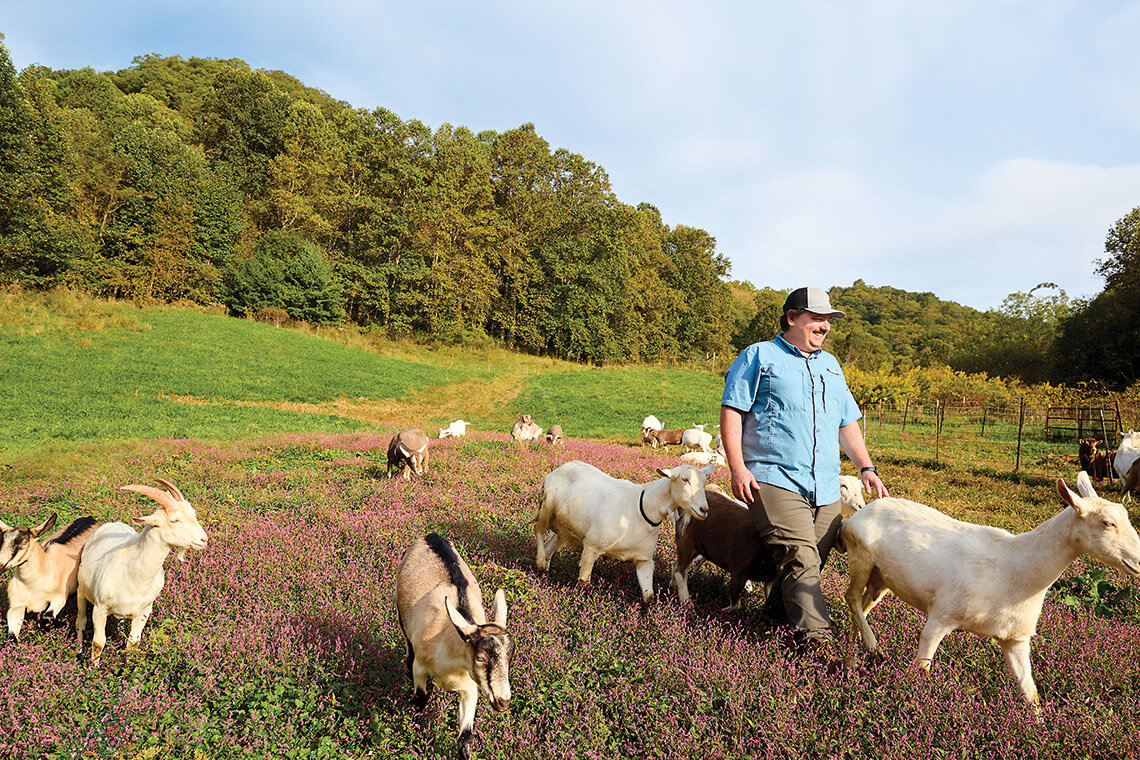
Cullen manages the goat herd at Spinning Spider Creamery. photograph by Stacey Van Berkel
I remember Jen Perkins’s comment about farmstead cheesemaking being like three jobs in one and ask Owen about this.
“Kidding season is crazy,” she says. For a few weeks each spring, she and her family deliver about 15 baby goats a day. This is on top of milking the herd, bottle-feeding newborns, making cheese, and getting orders out the door. “There are times when I have four does in labor and three sets of triplets in the house by the woodstove to keep warm.”
“When do you sleep?” I ask.
“We don’t!”
It’s true that Spinning Spider’s cheeses are a hot commodity around Asheville, but Owen’s real investment is her herd. She refers to the does by name — Poker Face, Revival, “Hairy” Aire. The animals give her 16 pounds of milk a day. In return, she gives them the best life she can.
“I love the science of cheesemaking and the nuance of it, but the hands-on animal husbandry is so important to me,” she says. “It’s tremendously gratifying to know that the animals you’re so connected with turn out well. They’re more than livestock to us.”
After we hang up the phone, I retrieve a log of Spinning Spider garlic-dill chèvre from my refrigerator. I smear it on toast and take a bite, bracing myself for goat cheese’s characteristic acidity. This, however, is rich and satiny, like a newborn goat’s baby-soft fuzz. It’s unlike any goat cheese I’ve ever had — and I give a quiet thanks to Owen, Poker Face, and their shared reminder that there’s still so much cheese left to try.
Where to Buy Mountain Cheeses
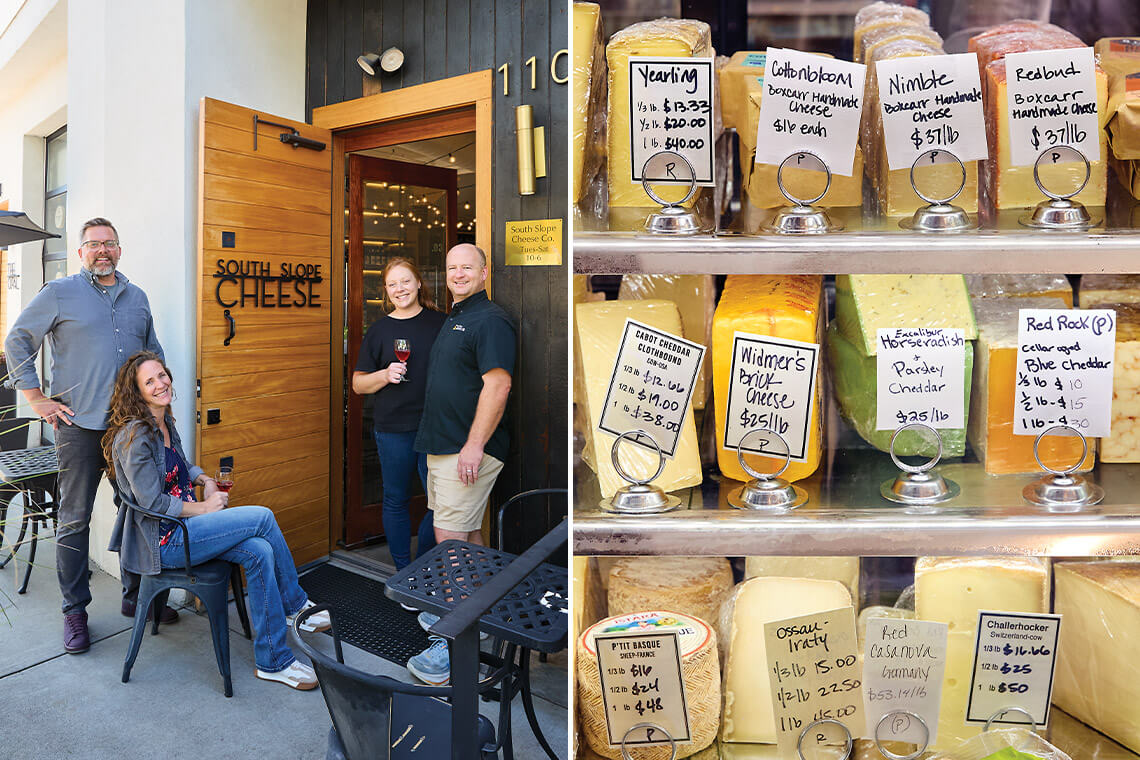
From left: Maria and Jeremiah Smith and Nate and Abby Day of South Slope Cheese Co. help connect customers with cheeses made throughout western North Carolina. photograph by Stacey Van Berkel
South Slope Cheese Co.
Asheville
Scouring rural North Carolina in search of cheese is no small task. I would know. That’s where places like South Slope Cheese Co. come in. The shop’s team of cheese-slingers — more professionally known as cheesemongers — handle the important and time-consuming task of bridging the gap between maker and muncher.
Two couples — Abby and Nate Day and Maria and Jeremiah Smith — bought the shop in 2023. Together, they travel around western North Carolina, hunting for new products and learning about the makers so that cheese lovers can buy Gouda from Fairview right alongside Emmentaler from Switzerland. They’re the cheesemakers’ marketing arm, their publicists who dazzle visitors with stories behind the makers, the cheeses, and pairing notes for how to best enjoy them.
Returning customers always ask, “What’s exciting right now?” pushing the Days and Smiths to seek out and try new cheeses. In their search, they find wedges and stories to bring back to the counter, where they translate the mechanics — and magic — behind the fromage.
11 Southside Avenue, No. 110
Asheville, NC 28801
(828) 575-2109
southslopecheeseco.com
print it