The sun has only been up for an hour or two, but James and Sarah Doss, co-owners of Wilmington’s Rx Chicken & Oysters, are already 35 miles east of Wrightsville Beach. They have no time to waste. Scuba tanks strapped to their backs, spearfishing gear in hand, they take their places on the boat’s side gunwales. On the count of three, they fall backward, splashing as the weight of their tanks pulls them underwater.
As the two descend more than 100 feet below the surface, they pass layers of North Carolina’s marine ecosystem: sharks, jellyfish, barracudas, red snappers, African pompano, and what the Dosses call “puppy dogs,” amberjacks that swim so close Sarah and James can touch them.
“On a clear day, you have almost top-to-bottom visibility. The entire bottom opens up to reveal this beautiful, expansive rocky structure with a whole new world that you get to be part of for a few minutes,” Sarah says. “You’re right next to these giant sea turtles, and we saw this goliath grouper that was as big as a car.”
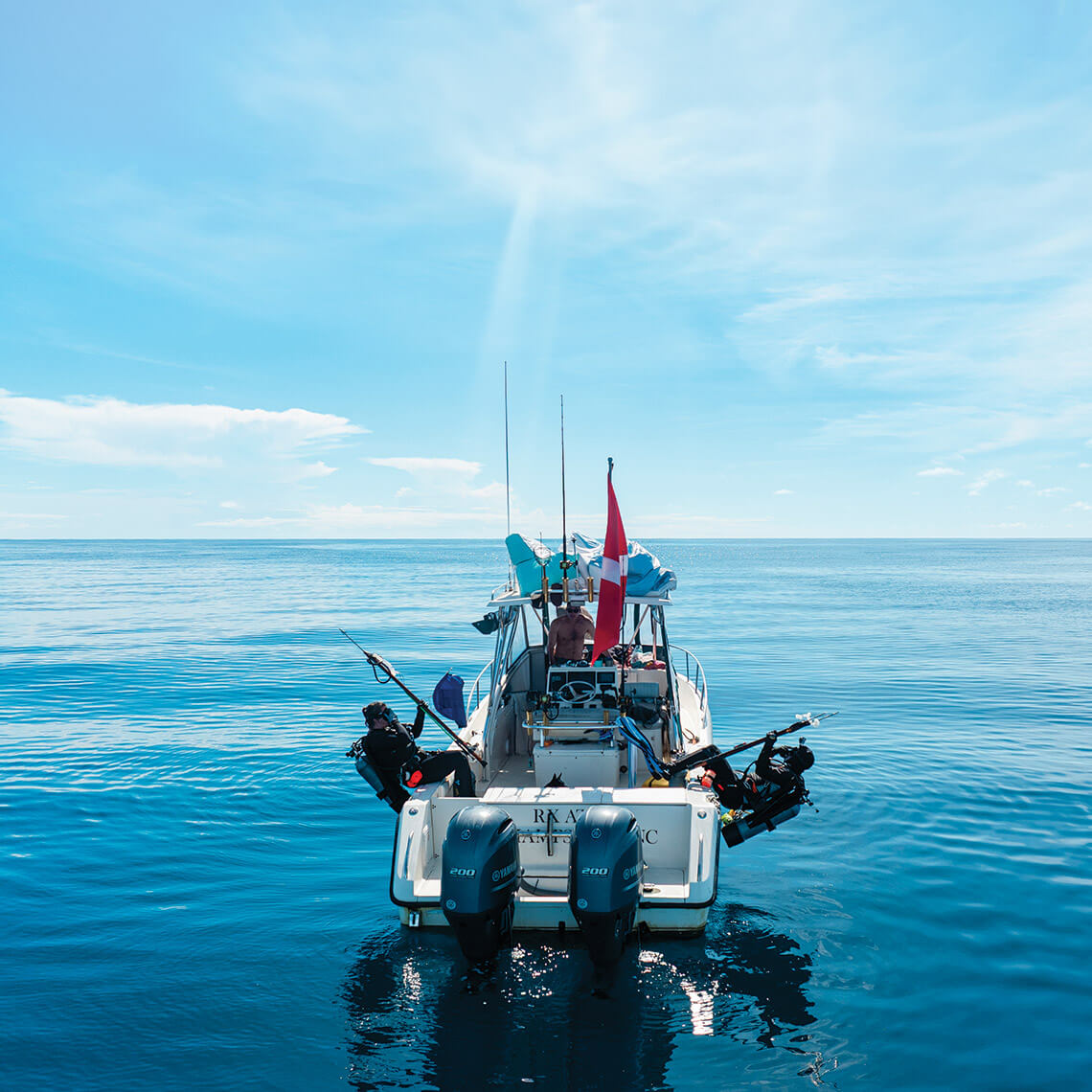
More than 30 miles off North Carolina’s coast, Sarah and James Doss slip over the side of RX at Sea, beginning another dive in search of lionfish. photograph by Matt Ray Photography
As the divers reach the natural ledge system off North Carolina’s coastline, they prepare for a game of hide-and-seek.
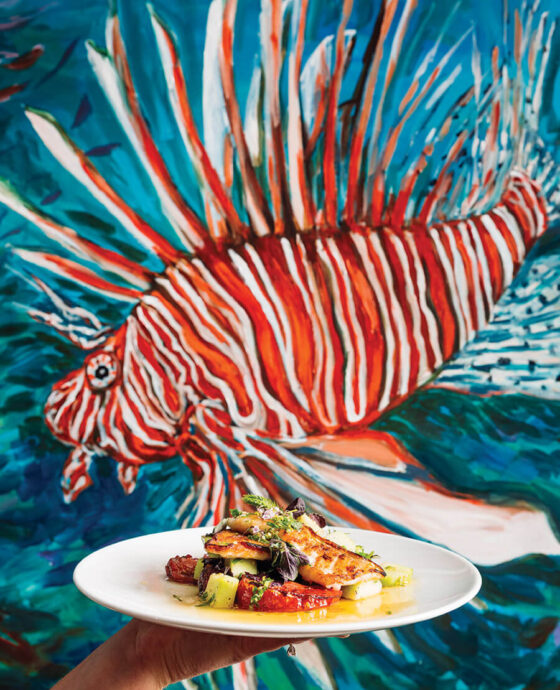
What they seek, lionfish, look hand-painted, with bodies banded in ivory and rust. Long, feathery fins unfurl from striped sides; delicate spines filled with venom radiate outward. This morning, the largely nocturnal fish hide between rock ledges.
It’s go time. “Depending on the depth, we’ll have maybe 10 to 15 minutes,” Sarah says. “You gotta be quick.”
• • •
In the Indo-Pacific, natural predators like cornetfish keep lionfish populations in check. Likely released by misguided pet owners into the Atlantic, these fanciful intruders grow and reproduce with reckless abandon.
“The lionfish in our waters have no known natural predators,” Sarah says. She and James can attest to their voracious appetites. “We’ve found lobsters in their stomachs. They eat grouper, snapper, flounder, everything we like to eat. Some lionfish we catch are 19 inches — that’s world-record size. They’re completely out of control.”
Plus, James adds, “lionfish eat our native juvenile fish before they have a chance to reproduce, so they’re decimating our fisheries.”
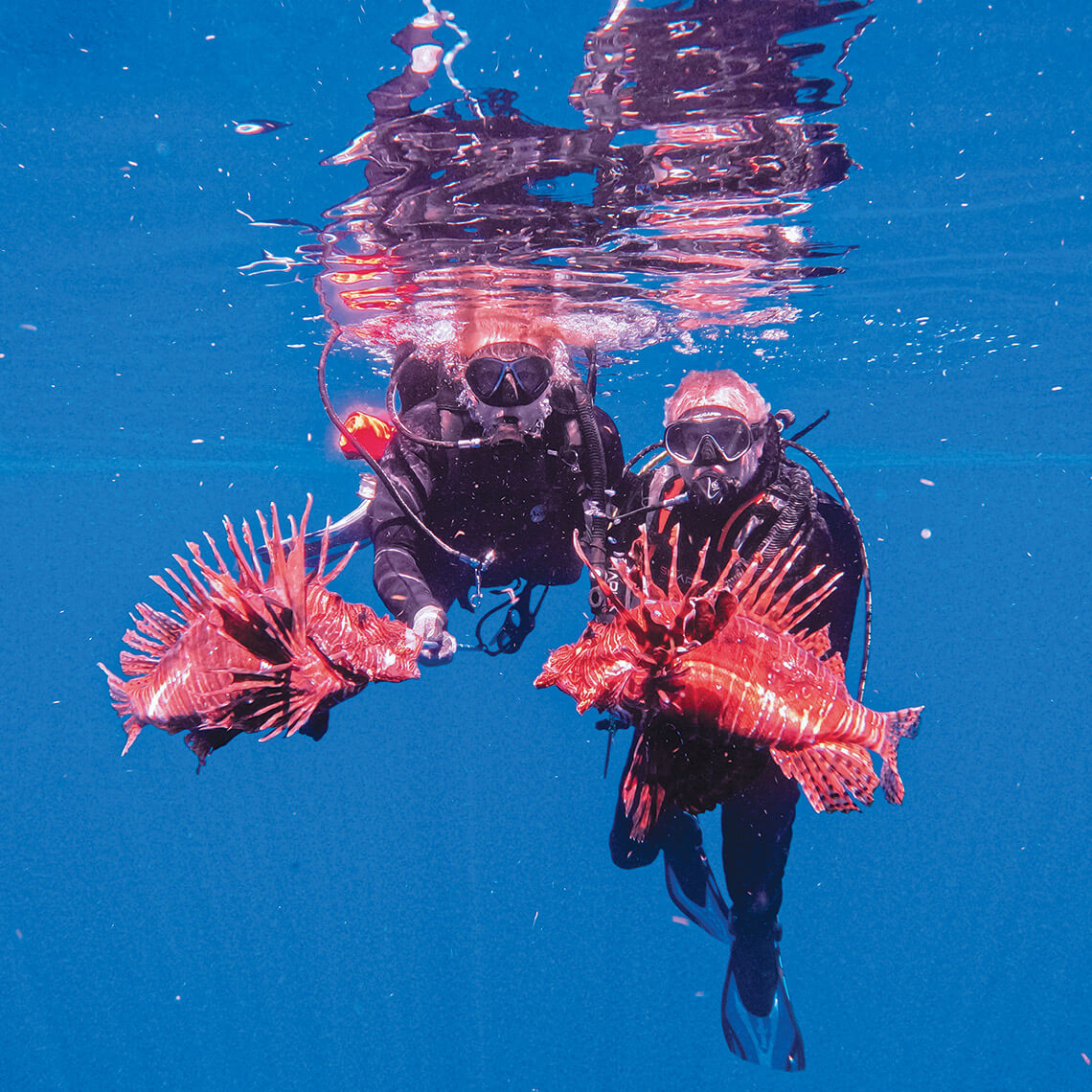
The Dosses target lionfish off North Carolina’s coast, removing a prolific predator from reef waters. photograph by Matt Ray Photography
Because lionfish lounge around North Carolina’s underwater reefs with the confidence and swagger of schoolyard bullies, they’re easy targets for spearfishers — and a natural addition to Rx’s menu. “They’re not moving,” James says. “They don’t even know we’re a threat.”
According to Sarah, North Carolina’s natural ledge system and artificial reef network provide plenty of fishing haunts for lionfish and other Rx menu items like grouper and red snapper. When the couple are on their boat, they look for steep drop-offs with rocks. “Generally, you know the fish and lobster will be there,” she says.
One day, they discovered a wreck that hadn’t been fished. After three dives down and back, the Dosses caught 75 lionfish. “The challenging part is finding them. You won’t always see them out swimming around,” Sarah says. “That’s why they won’t bite a line. But if you look under a rock, you might find seven of them hiding out.”
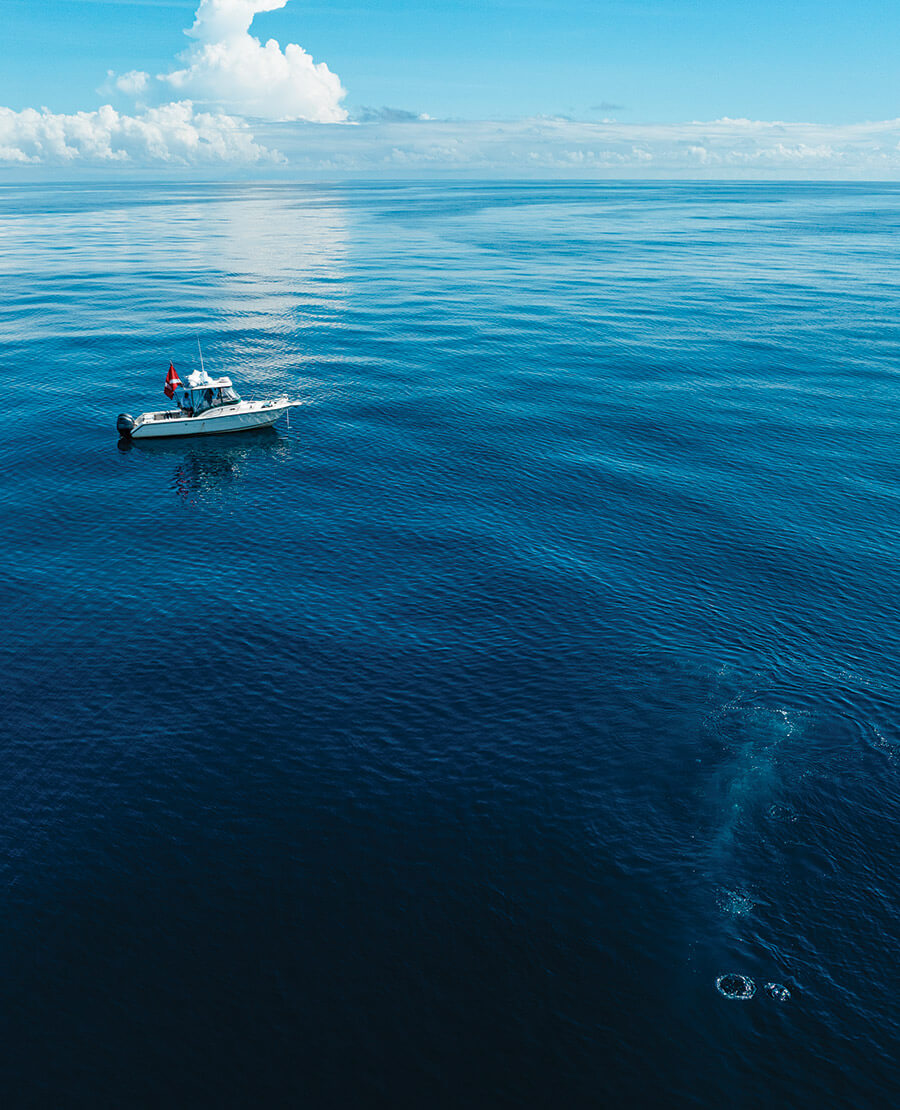
Offshore, Sarah and James Doss dive for lionfish — the bubbles at lower right mark their descent — that they’ll serve at their Wilmington restaurant, Rx Chicken & Oysters. photograph by Matt Ray Photography
When James spots a lionfish, he aims his spear — a five-foot aluminum pole with three barbed tines — and pulls the thick rubber sling attached to the back. As the spear propels forward, it pins the lionfish to a rock.
Still underwater, and with Sarah’s help, James stows the fish in their “lion tamer,” a canister that can hold up to 15 fish. “You have to be careful with the sharp spines,” he says. The canister’s top flap keeps the fish and their venomous spines contained, which protects James from what he describes as “a really intense jellyfish sting, except it also feels like someone’s hitting you with a hammer while your hand is on fire.”
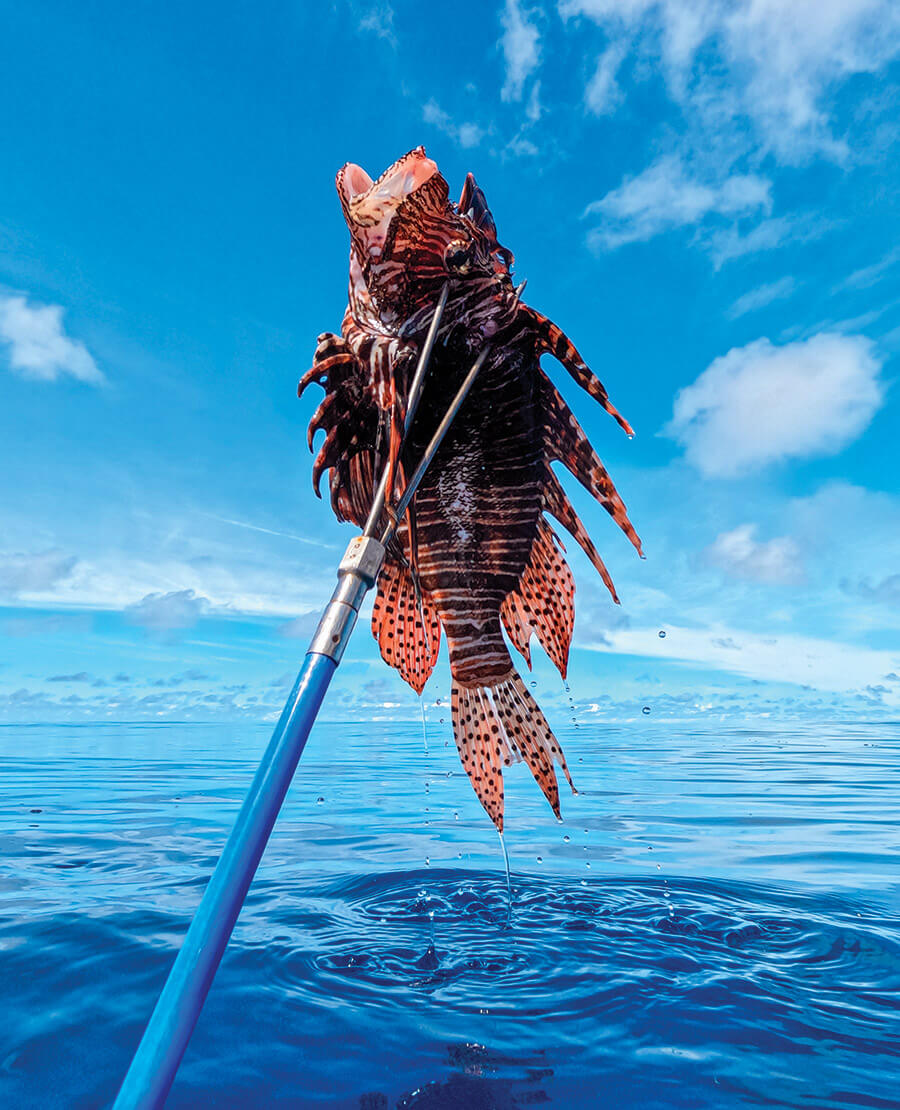
lionfish photograph by Matt Ray Photography
In three years, James has been stung twice — once when he was unloading a lionfish and a spine pricked his finger, and another time while he was fishing. “The pain was a lot worse when I was underwater because it was still alive. After they’re dead, the venom dissipates,” James says.
Because lionfish have toxic spines, misconceptions about their edibility abound, James says. “People think that because they’re venomous, you can’t eat them.”
In a historic pharmacy building on the corner of Wilmington’s Castle Street District, the Dosses are setting the record straight.
• • •
Rx Chicken & Oysters feels bright and sunny in the daytime, cozy and romantic at night. Vibrant paintings and sculptures by local artists, including Sarah, fill the walls in a colorful celebration of North Carolina wildlife.
Since James opened Rx in 2012, he’s built a reputation in North Carolina’s culinary scene for pairing fresh-caught seafood with locally grown vegetables. Sarah has worked at Rx since 2012 and joined him as co-owner when they married in 2018. During the pandemic, the two started their own oyster farm. Today, their signature Lucy Bea is a staple on the Rx menu.
Increasingly, so are lionfish.
“Even people who don’t necessarily love fish love lionfish,” James says.
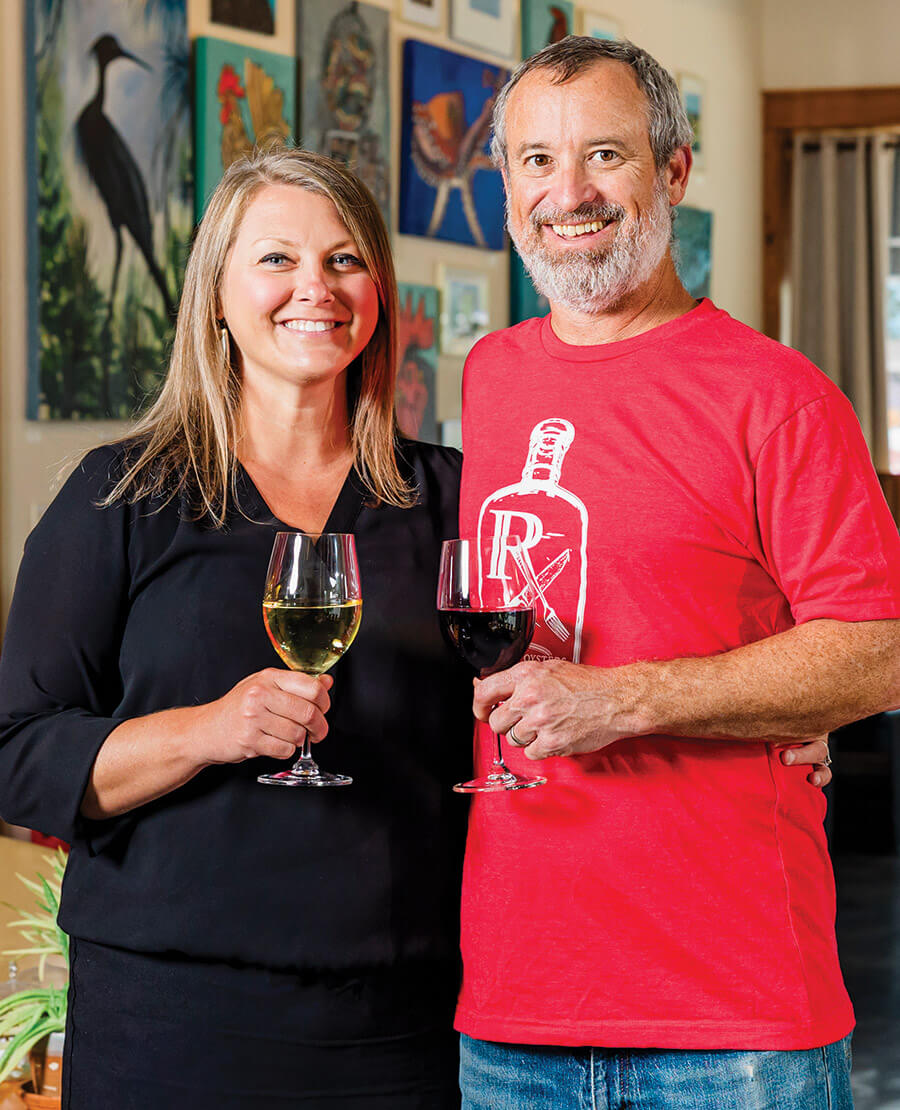
Sarah and James bring lionfish from the Atlantic to the plate, turning an invasive species into a sought-after special. photograph by Matt Ray Photography
When Sarah and James come back from a diving trip with a lionfish haul, Sarah has a lot of calls to make. Rx regulars love the fish so much that she has a list of people she contacts whenever it’s on the menu.
Since the Dosses have been diving for lionfish, they can tell they’re making an impact. Their underwater game of hide-and-seek often gets more challenging. “There are so many ledges out there we haven’t hit, but for the ones we’ve targeted, if we go back the following the year, the numbers are dramatically lower,” Sarah says.
She appreciates the ripple effect of their efforts. “Every single lionfish we capture helps other fish to live.”
By the time the sun descends, the day’s hunt has traveled from ledge to skillet to table. What began as a quiet dive becomes a restorative act of balance.
Rx Chicken & Oysters
421 Castle Street
Wilmington, NC 28401
(910) 399-3080
rxwilmington.com
print it