From Poplar Branch to Owl Creek, from Lockwoods Folly to Brasstown, I hear North Carolina sounding.
As some of our state’s sounds become almost tunes, or even songs, the gift to us all is, in a sense, a choral library of wide-ranging, never-stopping sonic wonders — music from both the nature around us and the efforts of our humanity: A Carolina Chorale.
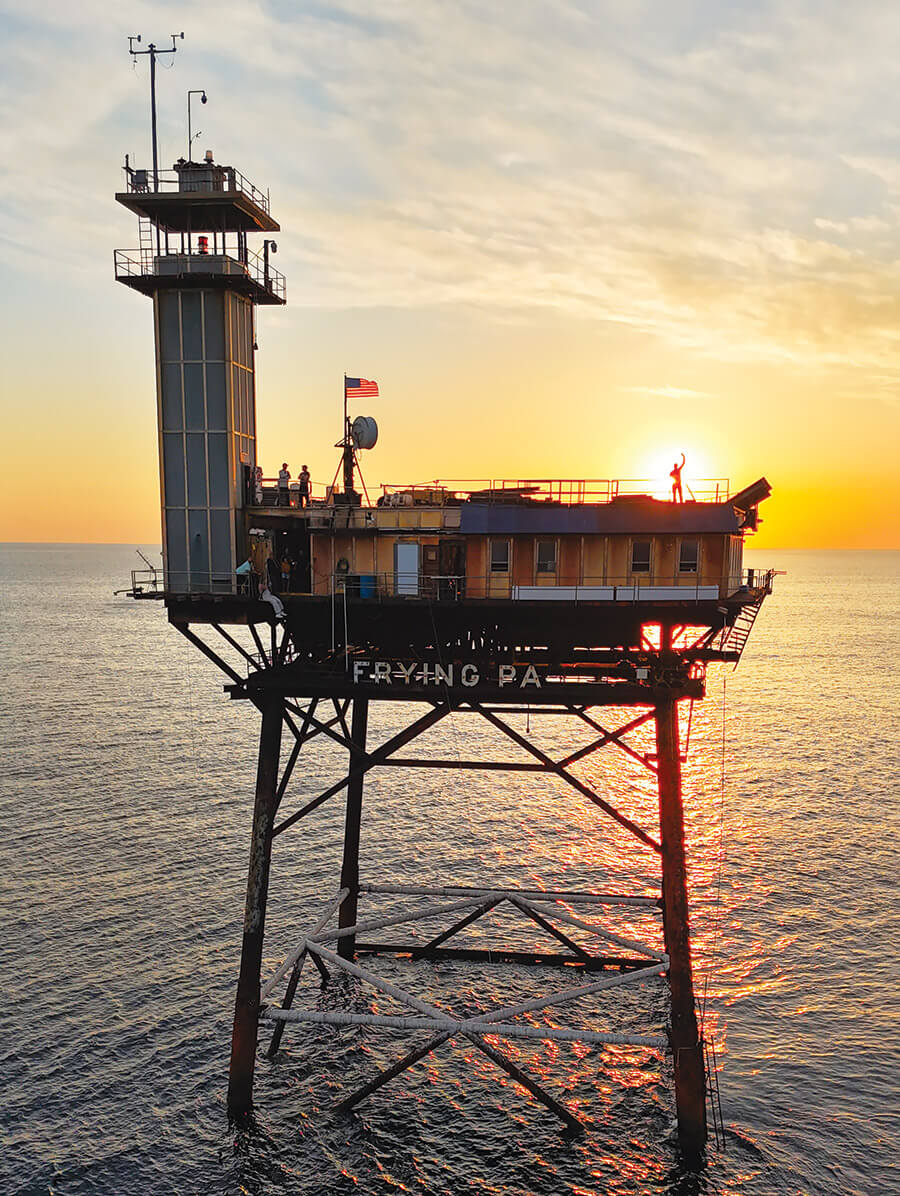
Listen for the snap of the flag above Frying Pan Tower … photograph by Josh Schieffer
From sea to mountain, one hears unmatched sonic bookends. Ocean breezes may make the flag flying high over Frying Pan Tower, 32 miles off Cape Fear, rumble and flap, no less than that flag briskly snapping in the strong winds coursing over Mount Mitchell, well over a mile higher and some 300 miles west. The screeches and heavy knocks in the train yards from coastal Morehead City or Sandhills Hamlet may later be echoed back by the metal-on-metal squealing of a western Carolina engine slowly dragging its boxcars up the long, looping grade just west of Old Fort, climbing the high side of the Blue Ridge to go up and over and finally through the Swannanoa Tunnel at Ridgecrest, of which Bascom Lamar Lunsford once sang.
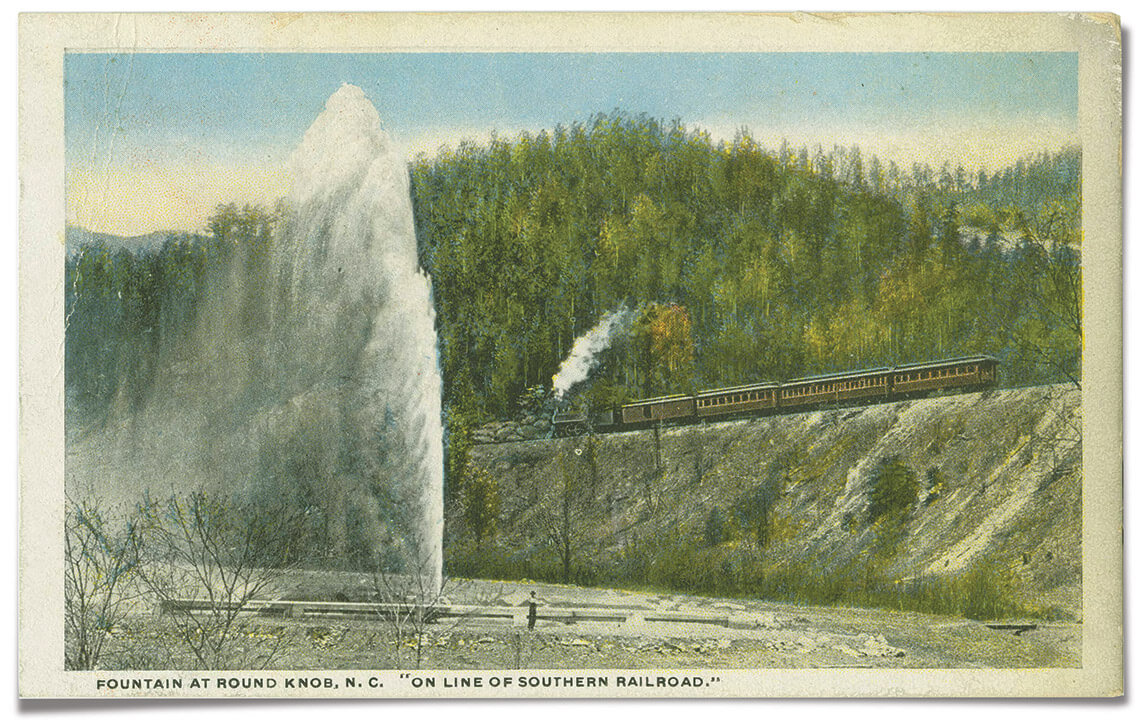
… or the screech of a mountain train climbing toward the Swannanoa Tunnel. Photography courtesy of North Carolina Postcard Collection (P052), North Carolina Collection Photographic Archives, Wilson Library, UNC Chapel Hill
Thomas Wolfe, who rode those loops to greater glory and who revered and remembered their sounds as their engines and boxcars and club cars went rolling on, wrote memorably of them: how they rattle, how they howl, how they roar and roar on, and how they wail back their ghostly cries.
A fiddler in Ocracoke and another in Brasstown may both light out on the old tune “Over the Waterfall,” their rosined bows cutting and squalling over their respective strings, distant but both ringing out in the key of D. Why, one evening 30 years ago, I heard two elementary school choirs, one in a Cherokee classroom and one at First Flight Elementary School in Kill Devil Hills, singing together in the same virtual moment in both English and Cherokee, led by a conductor standing in the NC Museum of History in Raleigh, and their song: “Amazing grace/How sweet the sound!”
• • •
On a bright June day, afloat in good, tight-lines company miles out in the Atlantic off Bogue and Shackleford banks, waiting for the amberjack to strike, a deep, bluesy moan put a spell on me. Nothing in those moments could have surprised me more, yet what was it, sending that low, flatted-third melody my way in a mimic of the slow lowing of a lone calf, such blue notes every few seconds way out there on the briny deep?
Those notes were words of warning, emanating from the watery tube of a tall red-and-white whistle buoy, floating and bobbing several miles out from Beaufort Inlet, suspended at the far end of the shipping channel, held in place by a long anchor chain, forever there to moan and, in moaning, to warn sailors and fishermen of dangers they might face when they go out to the sea. What could be more touching — and meaningful — than this?
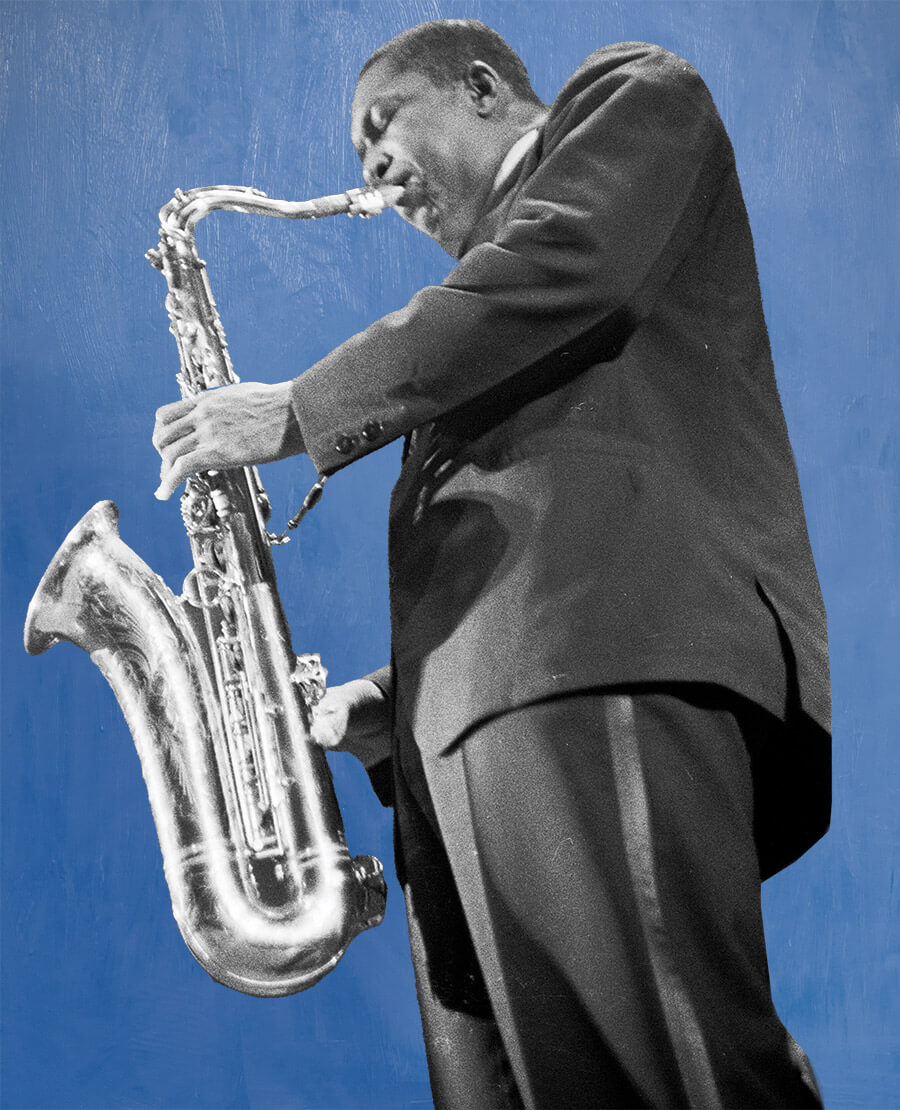
Sometimes the sound of North Carolina is actual music, especially when played by masters like John Coltrane (above) and Tommy Jarrell (below). photograph by Gijsbert Hanekroot/Alamy
A machine only, the buoy was, though its sound surely had a musical soul.
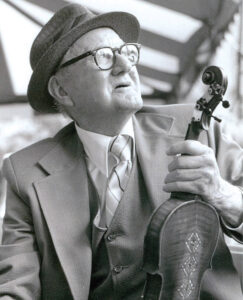
A saxophone is a built chamber, and a fiddle is a designed box, though the former wants a John Coltrane to make it laugh or cry like a human voice, and the latter needs a Tommy Jarrell to help it penetrate the heart with its slender insistent notes. This whistle buoy could bring to the ears, and to the heart, a cry like that of someone deeply seeking mercy in a desert place in the darkest hour of night, or the hurt of pure loneliness itself without any answer at all, and yet the sea and only the sea played those sounds and made them known.
• • •
Not every jackhammer, pile driver, and grating noise is a musical sound — though we value highly the bridges and byways and fishing piers that those rhythm-makers build for us. But many of the motions and waves that we and vast Nature itself set loose moving in the Carolina air come to our ears both as individual sounds and, sometimes, as surprising aural collaborations.
Had you been driving, or walking with me, on an early autumn evening along Morrow Mill Road in the central Piedmont community of Clover Garden not all that many years ago, you would have heard this special triple helix of Carolina agrarian sounds:
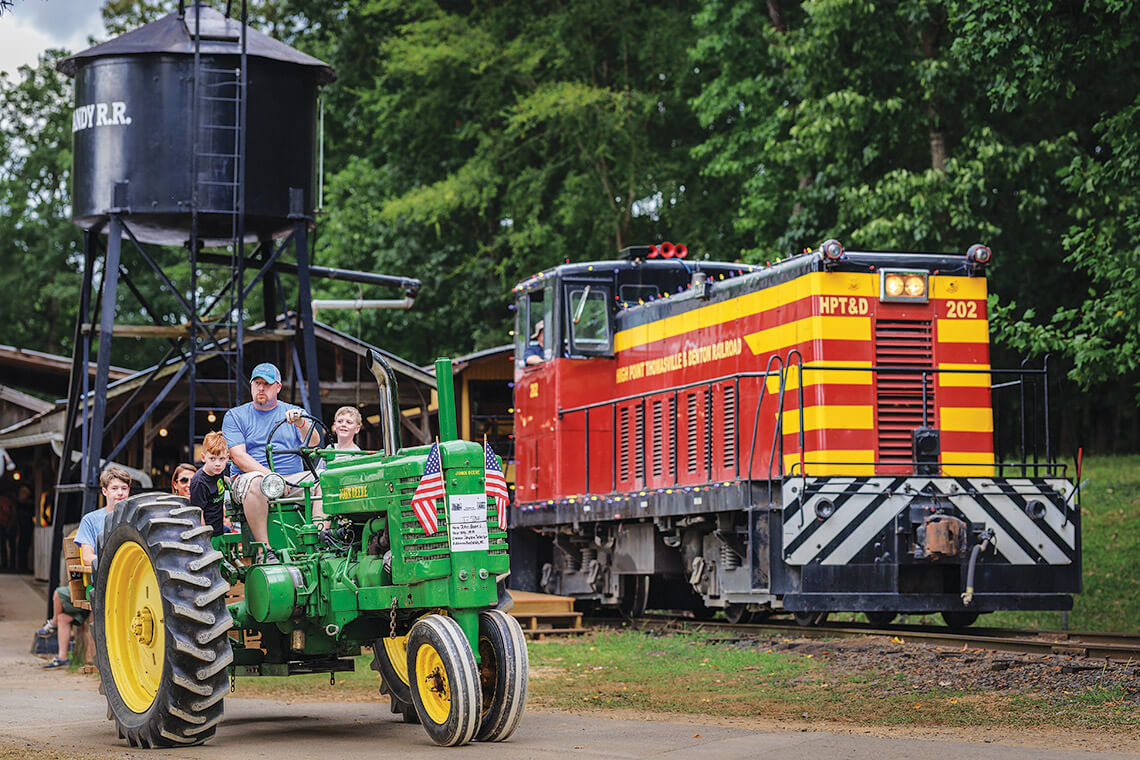
At the annual Southeast Old Threshers Reunion at Denton FarmPark, farmers and tractor collectors create mechanical music atop their John Deeres — and their Farmalls, Cases, and Massey Fergusons. photograph by Jerry Wolford & Scott Muthersbaugh
A soybean combine racketaciously cutting beans, pulled by an old yet vigorously huffing John Deere tractor, and neighbor-farmer Clayton Rogers, standing up at the wheel, his heavens-bound tenor singing hymns over it all.
This agrarian marriage of machinery and music made for a duo of metallic rhythms backing up the melodic power of Clayton’s “Amazing Grace” and “How Great Thou Art,” as he ran his tractor and sang in praise.
• • •
And glory be, too, for the hit-and-miss engines one hears at the old-time gatherings in Waynesville and Carthage and Denton, or Horne Creek Farm near the Yadkin River, the breathy hunh and the light, clicking pops of the small threshing machines. And, too, the furious, high-r.p.m. whining of the speedboats at the International Cup Regatta on the Pasquotank River long ago, their rooster tail wakes going 50 feet or more into the air and raining down on the water with a hard spattering that children could hear, and cheer, from the riverside.
And for the sounds Earl Scruggs’s three fingers made, like no one before him ever had, crawling on his banjo strings and knocking out “Foggy Mountain Breakdown”: Deron dincka-deron-deron, deron-ti, deron-deron, deron-IN! Deron-deron derannnnnnnnnn! — while a trucker hears him on the all-night radio as his tractor-trailer lays out an anxious, gear-grinding melody as it slowly screeches down the misty grade of the Blue Ridge from Fancy Gap to Mount Airy. Maybe stock-car king Junior Johnson hears Ol’ Earl, too, while he guns the engine of his yellow Ford and lets it sing along in its own original voice, as Tom Wolfe heard it 60 years ago, “Ggghhzzzzzzzhhhhhhggggggzzzzzzzeeeeeong!”
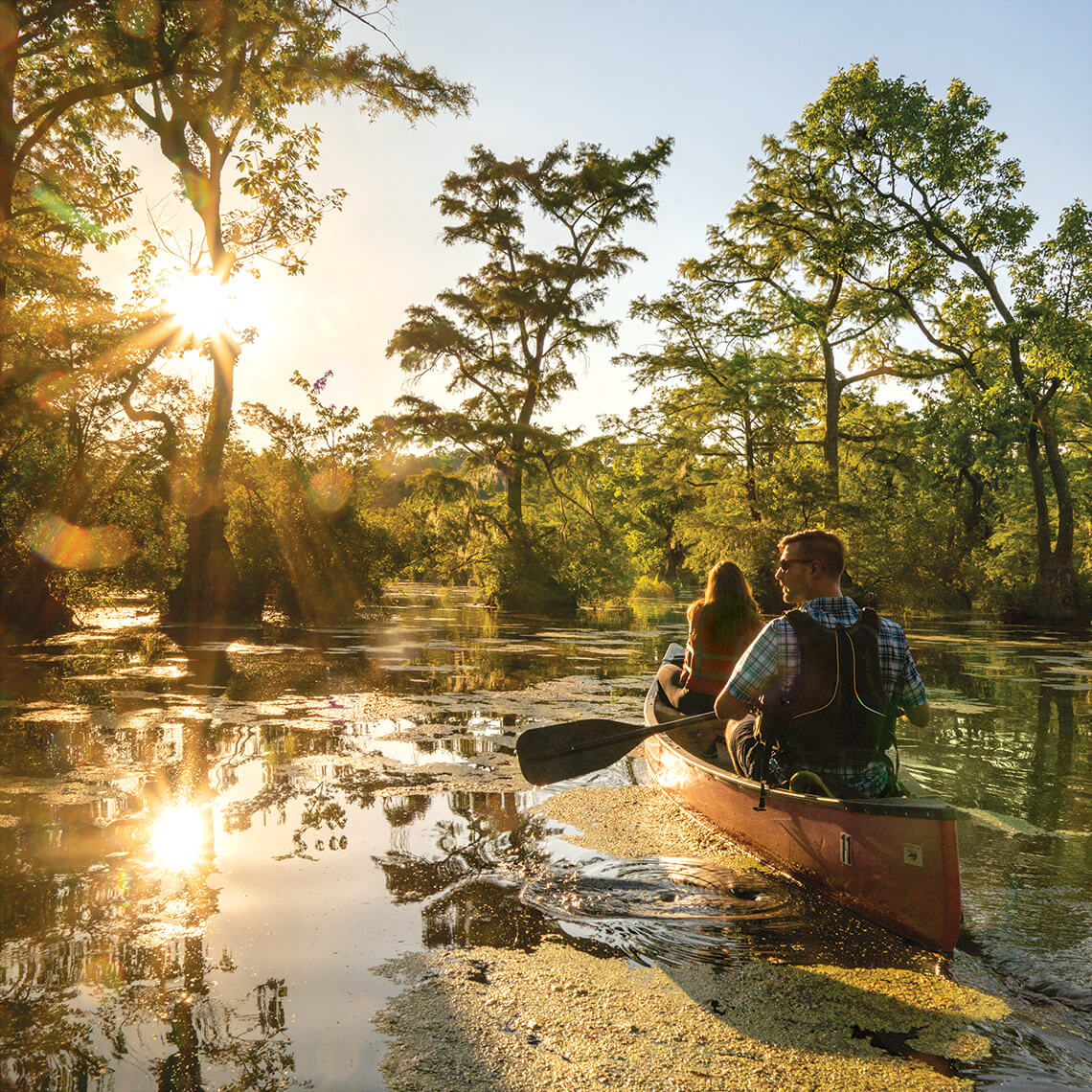
The cacophony of bugs, birds, and bullfrogs at Merchants Millpond State Park photograph by VisitNC.com
And, in the western Piedmont, for the gas burners firing and breathing, their heated exhalations filling big multicolored balloons with enough hot air to put them in great company high in the air and move them around like the wispy seeds of a dandelion. And for more flight in the mountains, the sharp, quick-singing zing of zip-lines slicing through the forests or down the mountainsides, as at Lake Eden at the old Black Mountain College, delighting and delivering youngsters into the spring and summertime waters of the lake.
And for a man at first light on a spring morning, singing a melodic cooing to lure his dairy cattle from a stream-woods bottom up into his milking parlor. And for hickory coals falling and settling from stovewood in fire barrels at an all-night barbecue pit, at the dawn of which, after all that holy-smoke cooking, the Bowie and butcher knives alike and their bright chopping rhythms, thwacking cutting boards, worked the pork down to size, very much like the chop, slice, and crack of the maul when we’re splitting wood in the fall. And the vivid whooshing in a woodstove as a fire catches and gets going, the hissing of a backlog, the crackling of others built around it.
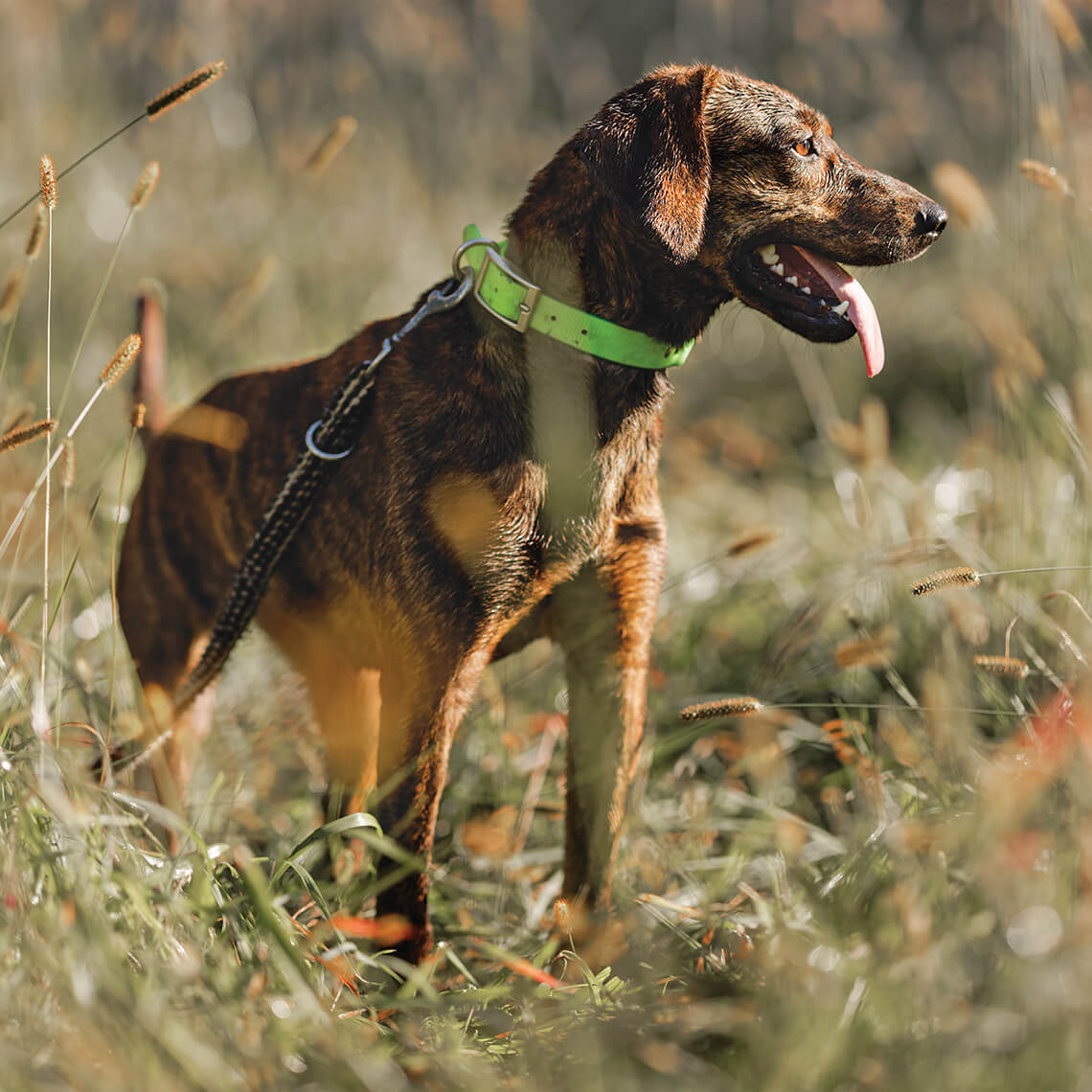
Listen for the proud, persistent bark of a Plott hound — our state dog — on the job. photograph by Jerry Wolford & Scott Muthersbaugh
And for the sweet soughing of wind in the pines, later the ticking and clicking of sleet and hail and freezing rain against our roofs and windows; for the ice falling from high oaks on a warming winter’s day down onto hollies below and hitting those hard green leaves with a sound like shot; and for the cooing of doves, and for the shriek of the raven high above the New River in Alleghany County; and for the barred owls hooting at each other on the night of April’s Full Pink Moon over a beech-tree ridge above Merchants Millpond; and for the hound dog’s howl and the bobcat’s cry; and for that old Alamance lady who swore she could not get a proper sleep until she got out to the family’s cabin at Stony Creek and heard the flying squirrels smack the steep tin roof and slide down, the nails on their little paws scratching that tin, trying to get a hold.

As its habitat — meadows and open fields — shrinks, the northern bobwhite quail’s distinctive call grows fainter. But come breeding season, they can still be heard on quiet mornings, calling out for love. photograph by Kimberly Brookbank
And for the coveys of quail, when we are lucky enough to hear them announce themselves as bob-WHITE, and the nightjars, whippoorwill, and chuck-will’s-widow, their big whistles at dusky dark as they cry out spring’s beginnings and beyond; and for a few relic mill whistles that yet abide, like the one in Beaufort, a replica of a one-time lumber mill shift-changer, now adopted by Mill Whistle Brewery, its deep breathy thrust precisely at 4:47 p.m. casting itself all across town, and another, the one in Canton, formerly of the paper mill, set up on the Pisgah Memorial Stadium scoreboard in 2023 and ready to sound off for the high-school homecoming game before Hurricane Helene struck in the waning days of last September; and for the deep East Lake mythic steam whistle down in Dare County, too, that was said to have once called lumber folk turned illegal distillers to work at a factory still near Buffalo City a hundred years ago, the law being bought and paid for and giving the enterprise no mind.
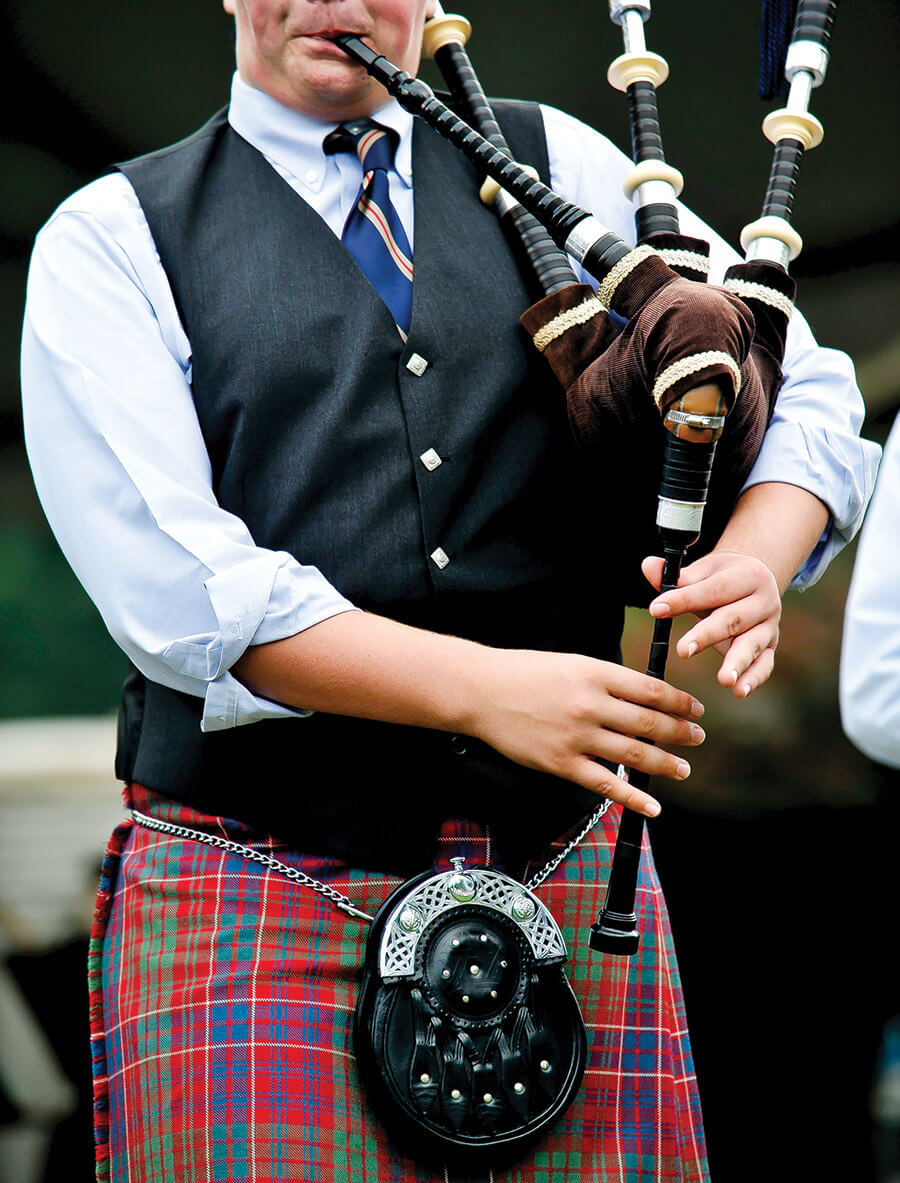
An Appalachian breeze rustling leaves at daybreak and a bagpiper’s haunting strains combine to form sound that is all our own. photograph by Brian Gomsak
And for one of the most original, and promising events I know of from recent times: On a foggy afternoon this past January, Beaufort photographer and musician Scott Taylor suited up in his Highland kilt and regalia and strode the short distance from his home to a Taylor’s Creek dock, tuned up, and began playing his bagpipes in the clouds of fog. In such moments, one may think he is playing only for himself, as Scott thought, and so thought his wife, musician and artist Lenore Meadows, watching and listening a hundred feet away.
Yet Lenore spied a pod of dolphins swimming east down Taylor’s Creek, toward the wide mouth of the North River and the feeding grounds of Back Sound and Middle Marshes. She saw the dolphins, when just past Scott, slow down and dive — and she caught the moment when one of them surfaced at Scott’s feet to check him out and to hear his fiercely Scottish version of “Amazing Grace” — a phenomenal moment of transcendent sonic cross-currency that may have never occurred before, pure magic in our Carolina province, if magic exists at all.
Glory be for all these soundings, each and every last Carolina one of them!