Put ramekins on a baking sheet. Bake for 25-35 minutes, until puffed and golden. Remove from oven, and let stand for 5 minutes. With a flexible spatula, remove strata to
If you go to Sandra Gutierrez’s brick house in a Cary suburb surrounding a golf course, you’ll definitely get fed. At lunch on a summer day, she’s made a thick
If you go to Sandra Gutierrez’s brick house in a Cary suburb surrounding a golf course, you’ll definitely get fed. At lunch on a summer day, she’s made a thick
Born in the U.S. and raised in Guatemala, a food historian and cookbook author found her calling in North Carolina, where Southern and Latino dishes happily share a table.
If you go to Sandra Gutierrez’s brick house in a Cary suburb surrounding a golf course, you’ll definitely get fed.
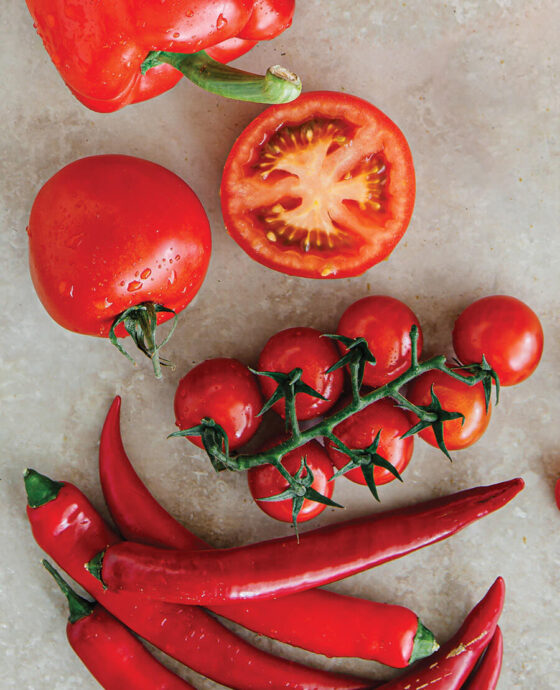
At lunch on a summer day, she’s made a thick orange gazpacho from tomatoes and peppers grown in the garden that completely fills her backyard. There’s pimento cheese, one of her Southern favorites, to spread on a fluffy focaccia made with her 12-year-old sourdough starter. Then she pours a glass of lightly sweetened chocolate iced tea.
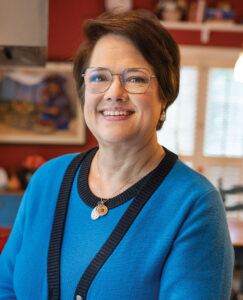
Sandra Gutierrez photograph by Charles Harris
Yes, chocolate — brewed with both tea and the husks of roasted cocoa beans she brings back from visits to Latin America, giving the beverage a smoky undertone of dark chocolate. While it’s usually served hot in South America, she pours it over ice as a nod to her Southern/Latin American life.
“It breaks the stereotype [of Southern iced tea] and brings it together,” she says.
And that’s Gutierrez herself: born in Philadelphia, raised in her parents’ native Guatemala, and steeped in a Southern life she and her husband, Luis, have lived in North Carolina for 30 years. Finding her place at the intersection of those worlds has shaped her career and guided her through the ups and downs of an extraordinary life.
“I feel like a bona fide Southerner,” she says in a Spanish-tinged lilt that she jokes is her version of a Philly accent. “So are my daughters, and so are my granddaughters. The one thing we want as human beings is to belong. That was the hardest thing, to belong.”
• • •
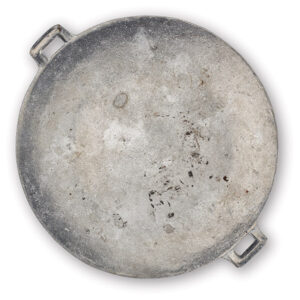
Gutierrez, 60, can’t cook tortillas on her favorite comal, the round griddle that’s usually the center of a Mesoamerican kitchen. It’s in the Smithsonian Institution’s National Museum of American History, not far from the re-creation of Julia Child’s kitchen, along with Gutierrez’s biscuit cutters, Jell-O mold, and several pieces of Guatemalan ceramics.
She donated her comal (below), or griddle, to the National Museum of American History. Photography courtesy of National Museum of American History, Smithsonian Institution
Having her kitchen tools in that most American institution is fitting: Smithsonian research associate Ashley Rose Young says she “has that joie de vivre, like the Latina Julia Child.”
Pretty impressive, considering that Gutierrez’s food-writing career started by accident.
Raised in Guatemala from the age of 5, she and Luis were sweethearts in high school before he went off to college in Michigan, then to Canada to start a career in business, and she went to Smith College to major in English. Her parents were both university faculty members who believed in education. Her father always taught her that knowing people with a variety of views was “the best way to learn. So I became a researcher.”
What she really loved, though, was cooking. Her grandmother was a twice-widowed socialite in Guatemala who was famous for entertaining: People from Che Guevara to Julio Iglesias came to her house. Gutierrez was a shy child, so after greeting the guests as her grandmother required, she’d sneak to the kitchen, where the servants would put her to work shaping empanadas, making tortillas and sauces, and cleaning beans.
Sandra Gutierrez discovered her love of cooking as a child growing up in Guatemala, where she spent time in her grandmother’s kitchen. “My food was established in my heart,” she says. photograph by Charles Harris
After getting married, the Gutierrezes came to Duke University in 1985 while Luis got his MBA. They returned to Toronto, but they had fallen in love with North Carolina. So they came back in 1994, this time with their two young daughters, Alessandra and Niccolle.
“North Carolina won our hearts,” Gutierrez says. “The people, the weather, the university world. We have always craved to be around people who like to learn, in every walk of life.”
Luis was starting his own business, and, at the time, it was a little cheaper to live in Cary than Durham. So they searched until they found a house with a kitchen big enough for Gutierrez’s long wooden table.
• • •
One day in 1996, Luis came home with a copy of The Cary News. The paper was looking for an editor to write a column on Southern food, and he suggested that Gutierrez submit something. So she dashed off a piece on olive oil.
The next night, she got a call from the paper: She had the job. Luis had 48 hours to teach her how to use Microsoft Word. “I was green,” she says. “I didn’t know anything.”
The editor of The Cary News later told Gutierrez she’d gotten a call from a woman who was incensed that the paper had hired “a Mexican” to write a Southern food column. The editor told the caller, “Give her a chance — the South is growing. We need a wider net.”
Gutierrez’s skills as a researcher were her salvation. She knew almost nothing about Southern cooking. So she turned to the paper’s readers, getting people to teach her how to make biscuits, going to church suppers and potlucks, and judging food contests.
“I was so open to comments from readers,” she says. “Cooks, we’re gregarious people.”
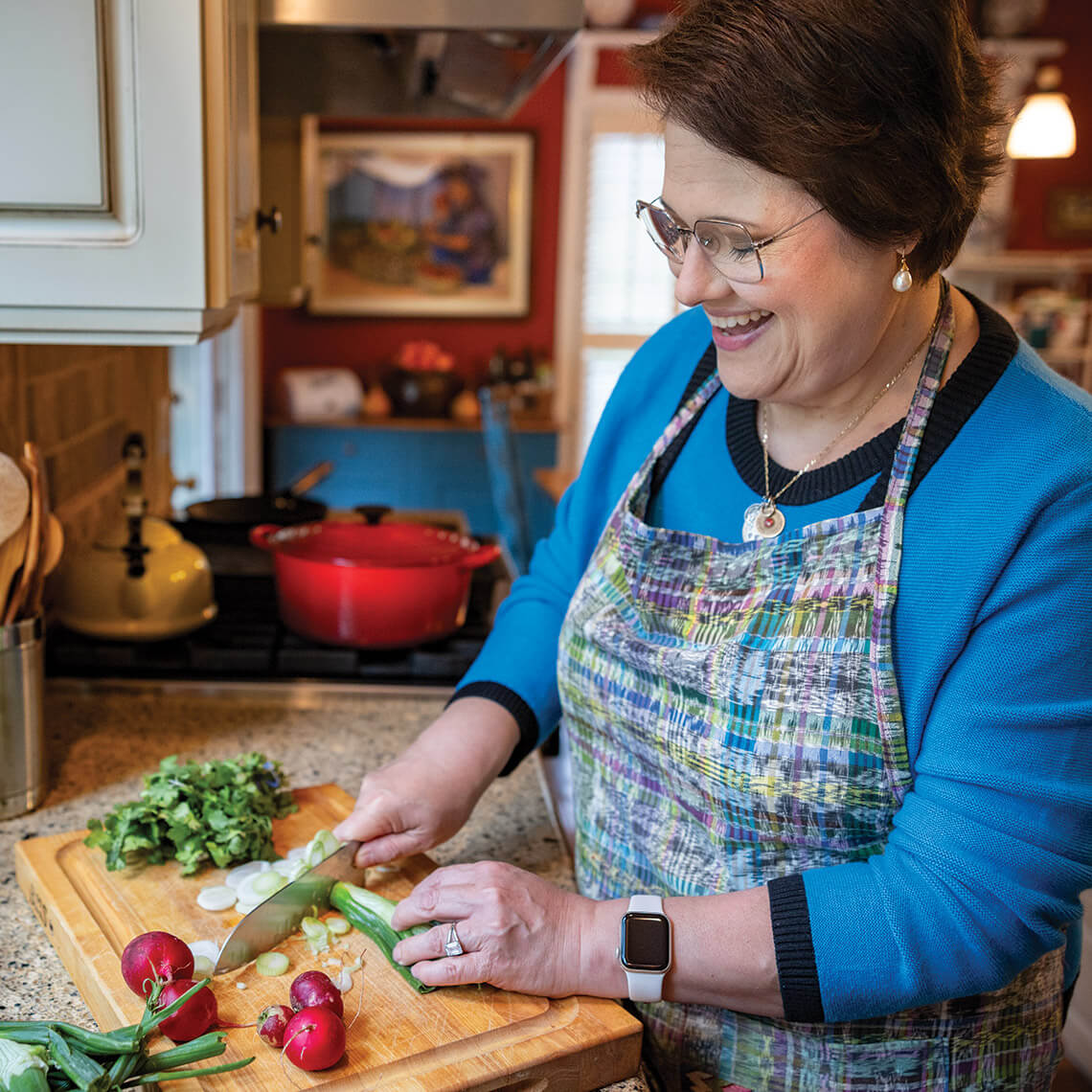
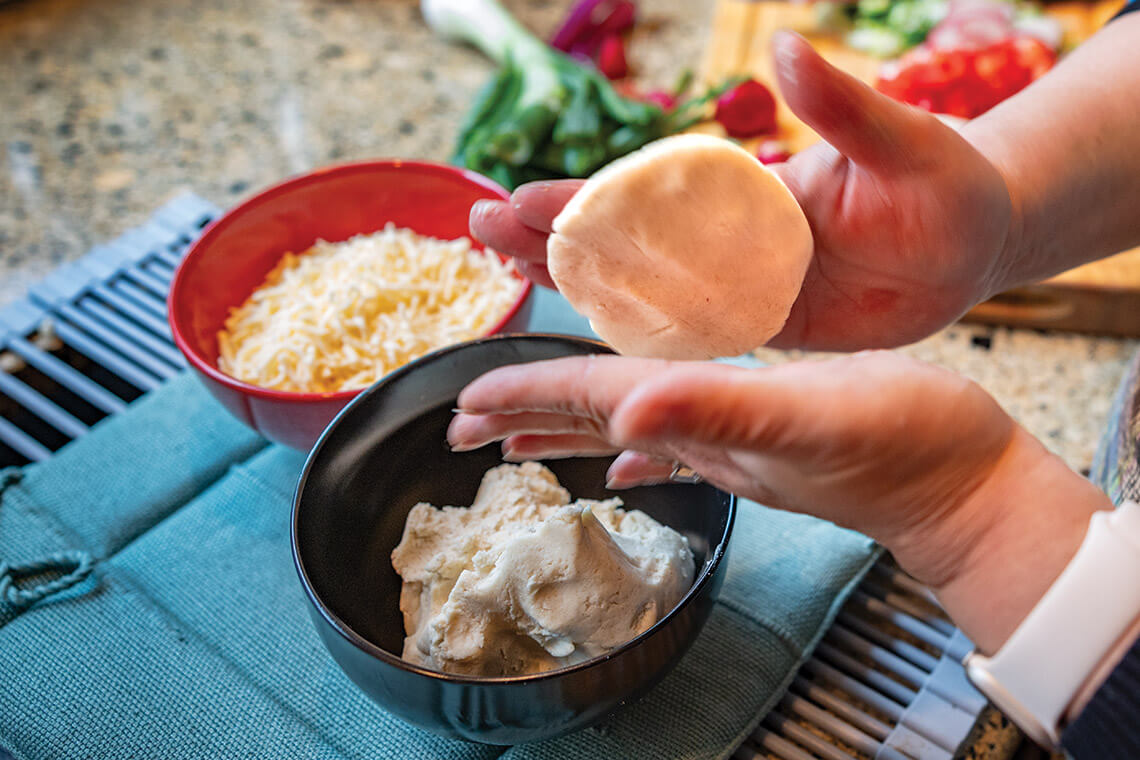
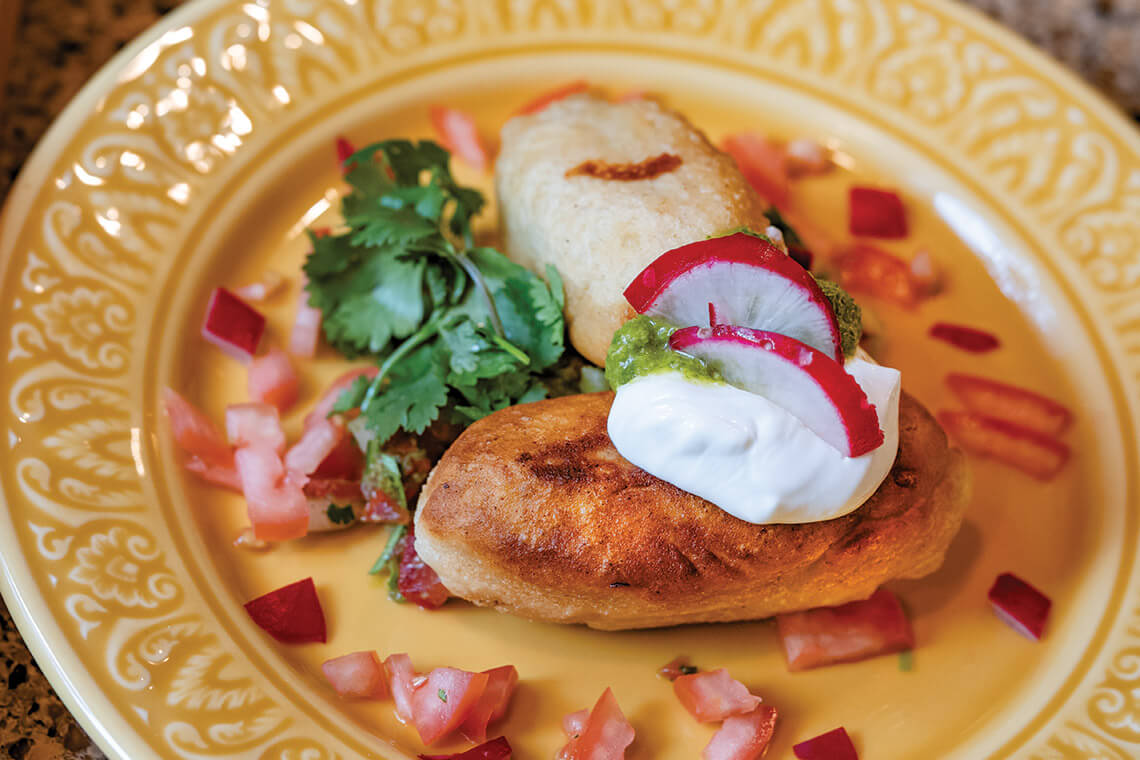
In her Cary kitchen, Gutierrez makes dishes like molotes (above), Mexican pastries stuffed with cheese. <br><span class="photographer">photograph by Charles Harris</span>
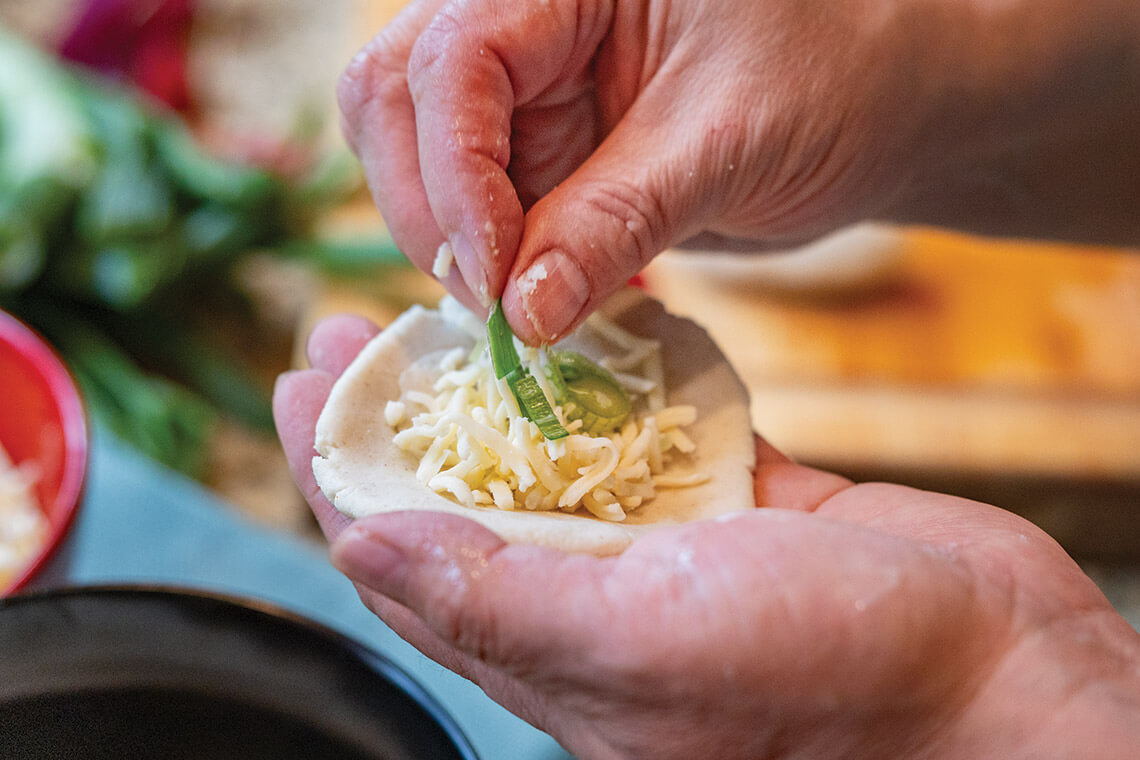
She fills them with cheese and aromatics …<br><span class="photographer">photograph by Charles Harris</span>
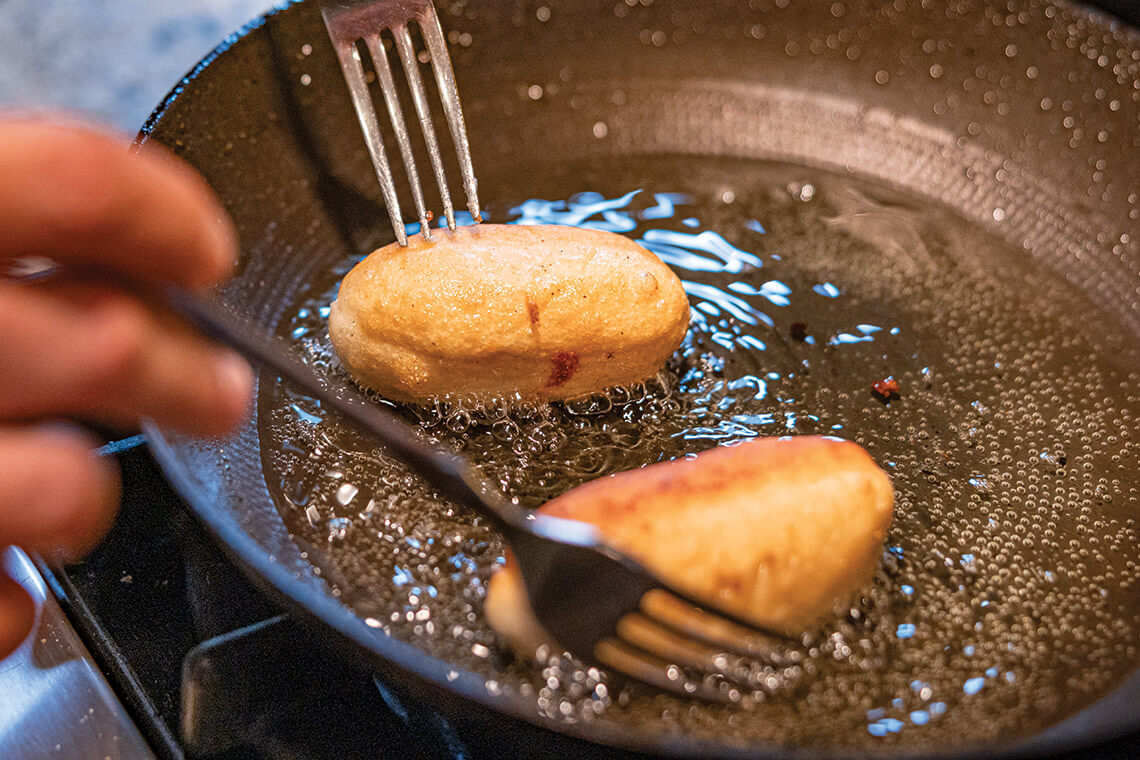
… then pan-fries them in oil.<br><span class="photographer">photograph by Charles Harris</span>
To serve, she garnishes them with sour cream and cilantro.<br><span class="photographer">photograph by Charles Harris</span>
She also started to notice something: Southern and Latin American foods overlapped. Grits and masa, the corn flour used in tortillas, are almost the same. Pork turns up in every form imaginable. And Latino ingredients were creeping into Southern recipes: smoky chipotle peppers in barbecue sauce, cilantro in corn and tomato salads, jalapeños in hush puppies.
At a party, she noticed that the barbecue was goat, not hog, and the potato salad was next to a platter of tostones, or fried green plantains.
“I realized I was seeing something,” she says now. “I named it New Southern Latino. It’s not that I invented it. I was just the right person to see the convergence. I think my Smith [College] education came out.”
At the time, Chapel Hill was filled with food-writing luminaries like Nancie McDermott and the late Jean Anderson. They encouraged her to write a proposal for a book on what she was seeing.
“I felt adopted. Without losing my [Guatemalan] heritage, I had become a Southerner.”
Elaine Maisner, the now-retired editor at UNC Press who handled both food books and Latin American studies, saw the proposal and told Gutierrez, “I want a whole book on this — this isn’t a fad. This is a movement.”
“But I’m not a Southerner,” Gutierrez recalls protesting. “She said, ‘Yes, you are.’ I felt adopted. Without losing my [Guatemalan] heritage, I had become a Southerner.”
The New Southern-Latino Table was published in 2011, and Gutierrez won the M.F.K. Fisher Award for Excellence in Culinary Writing from Les Dames d’Escoffier International.
“This wasn’t chef-driven,” she says about the book’s appeal. “This was from cooks. A Southerner and a Latino at the table will see a dish, and they’ll both recognize it.”
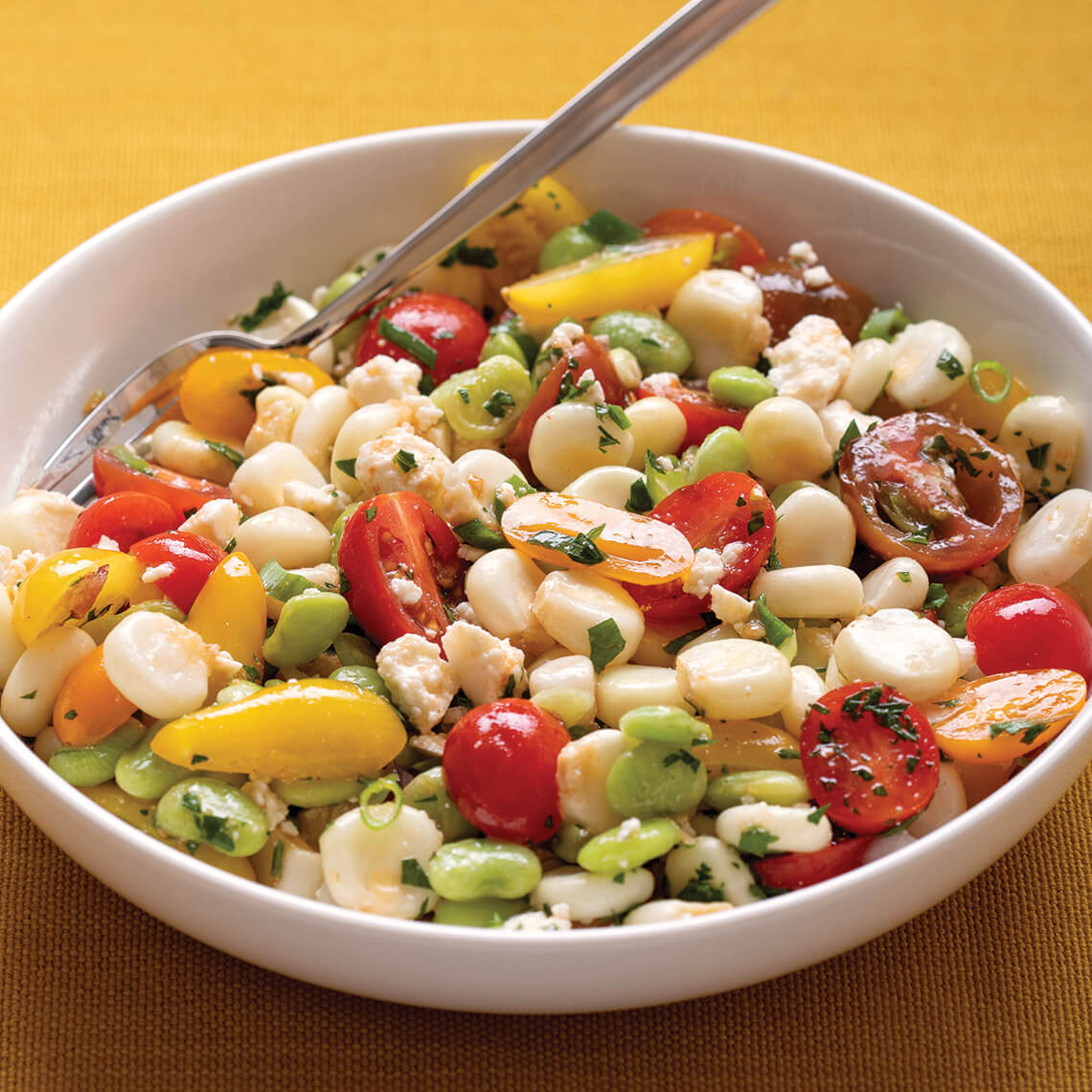
Solterito, a Peruvian lima bean, corn, and tomato salad — continues to thrive. photograph by Kevin J. Miyazaki
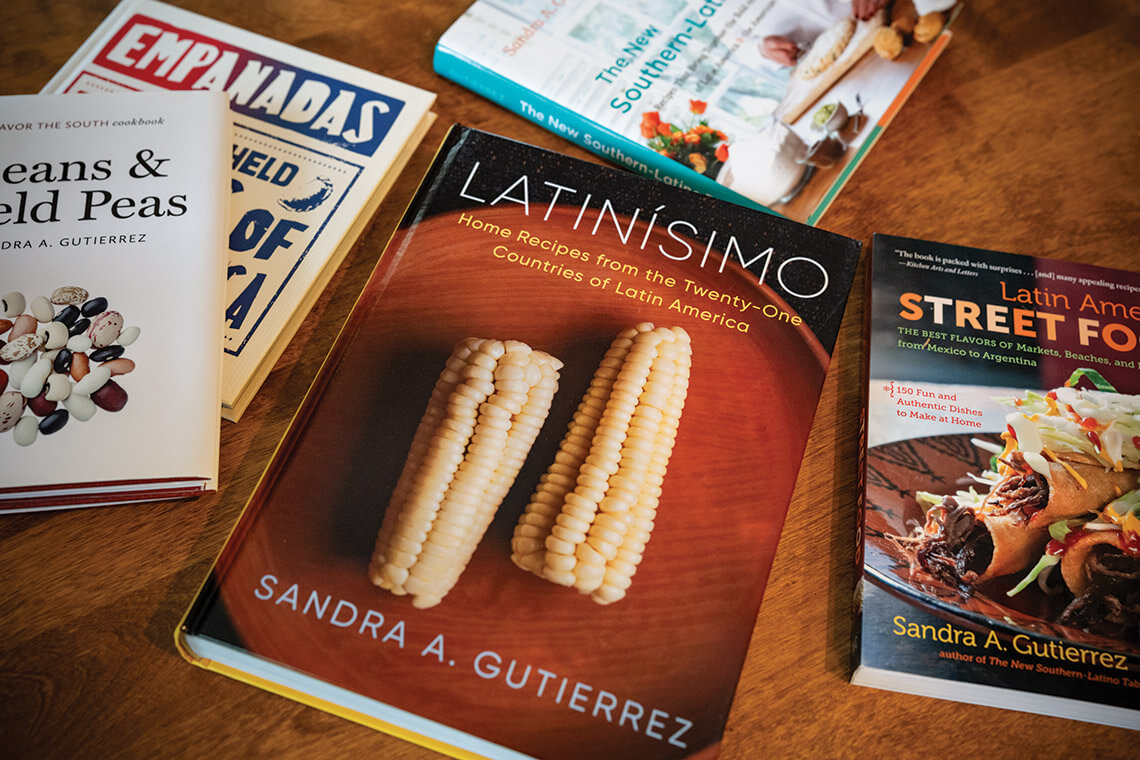
After eight years, Gutierrez wrapped her job at The Cary News. She had a thriving career as a cooking teacher and author who eventually wrote two more books for UNC Press: Latin American Street Food and Beans & Field Peas for the Savor the South series.
Right after leaving the paper, she was fixing dinner one night when her phone rang and a woman asked, “Is this Sandra Gutierrez?”
The caller wouldn’t give her name, but she admitted she was the one who had complained to the paper about “a Mexican” getting the food editor’s job.
“I’m really going to miss your columns,” the woman said.
• • •
By 2020, with the world shut down during the Covid pandemic, Gutierrez had hit her stride. Her daughters were grown and established — Alessandra as a dentist in Charlotte, and Niccolle as an attorney, living with her husband five minutes from the family home.
Gutierrez was ready to tackle her biggest project yet, an encyclopedic cookbook on the home cooking of all 21 countries of Latin America. She has always been passionate about the need to understand that not all Latino food is the same — and it definitely isn’t all Mexican.
“Latinísimo was the book I always intended to write,” she says. In 2007, she’d pitched the idea to her agent at the time, Lisa Ekus, who told her to wait: “People aren’t ready for a comprehensive tome like that yet.”
Now, Gutierrez was in the Smithsonian Institution, part of the exhibit “Food: Transforming the American Table.” She was known all over the food-writing world. It was time, and in the midst of pandemic lockdowns, she had the time.
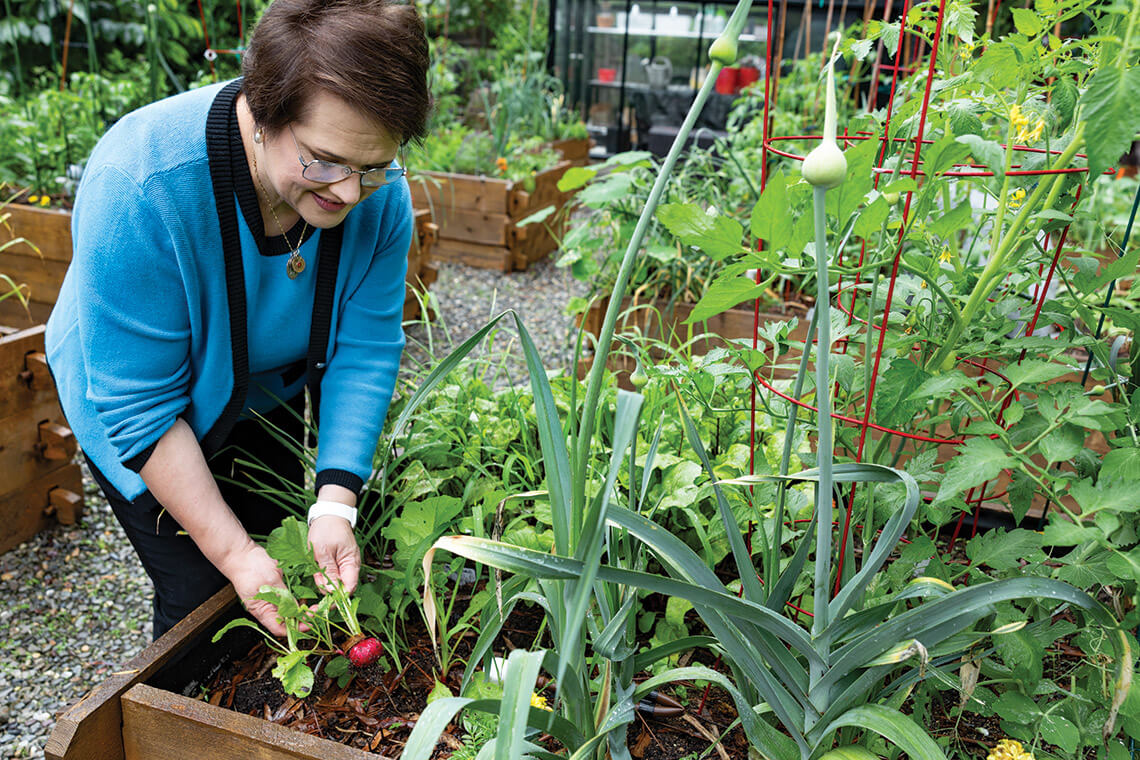
The backyard garden that Gutierrez planted to supply ingredients for the recipes in Latinísimo. photograph by Charles Harris
First, she and Luis put in a sprawling garden — eight raised beds, a greenhouse, 60 kinds of tomatoes, eggplants, beans, pimentos, poblanos, tomatillos, pear trees, apple trees. With a massive recipe project ahead of her, she needed the ingredients.
By 2021, she had finished the manuscript, which her current agent, Sally Ekus — Lisa’s daughter — sold to Alfred A. Knopf, the same publisher that handled Julia Child’s Mastering the Art of French Cooking. Gutierrez scheduled a two-week photo shoot in her kitchen, using a dozen volunteers to cook for hundreds of pictures.
When it was all finished, she noticed a pain in her neck. She went for an X-ray and was told she had a tumor in her lung. A biopsy showed Stage 4 lung cancer. Gutierrez, who is a devout Catholic — and a nonsmoker — remembers standing in her garden and saying, “Really, God? I’m not even going to see one season?”
She kept herself going through her faith and her determination to finish Latinísimo.
A second doctor questioned the diagnosis, though, and sent her biopsy for a long-term study. It wasn’t lung cancer — it was a rare condition that produces tumor-like growths that aren’t malignant. But an MRI showed something else: a broken neck. To this day, she doesn’t know how it happened.
The doctor called her and said, “Sit down and don’t even pick up a pencil.” She was sent to Duke Medical Center for immediate surgery. Before she was wheeled in, Luis was advised to say goodbye.
When she woke up, she couldn’t feel anything from the neck down. The doctors told her, “We saved your life, but you may never swallow again.”
Gutierrez spent 12 weeks in intensive care, unable to move. But slowly, movement and feeling crept back. She had to relearn how to walk, on a treadmill with a harness holding her up. In physical therapy, she learned to hold her newborn granddaughter, and in a rehabilitation center, she relearned motor skills by cooking a Cuban meal for 12. She kept herself going through her faith and her determination to finish Latinísimo.
Gutierrez’s latest book, Latinísimo, explores the various cuisines found throughout Latin America. She’s now working on a book about Latin American baking. photograph by Charles Harris
“I could cut, I could chop, I could stand. God had another plan,” she says. “I find blessings in every day, no matter how mundane. I learned to walk at the same time as my granddaughter.”
And in 2023, Latinísimo came out, to wide acclaim and coverage in The New York Times.
Today, she has three granddaughters. She and Luis have turned their den into a daycare where they take care of the kids. The girls are learning their colors through her crop of tomatoes, and one is already obsessed with grits.
In the backyard, she’s cut back on the types of tomatoes, from 60 to 18, and she makes her way around easily, with no trace of a limp. She’s gotten to see a lot more seasons of growth after all.
“I still don’t know why I’m here,” she says. “I’m still waiting to find out.”
At both the turn of the century and today, Beaufort’s waterfront has attracted a hum of commerce and community. At its heart, a historic avenue tells that history, from the stately double-porched homes to the sound of ships announcing their arrival at port.