Put ramekins on a baking sheet. Bake for 25-35 minutes, until puffed and golden. Remove from oven, and let stand for 5 minutes. With a flexible spatula, remove strata to
Listen as the pages of the magazine come to life in the Storytellers podcast showcasing the voices of Our State writers. Each podcast episode features a writer reading their column
Listen as the pages of the magazine come to life in the Storytellers podcast showcasing the voices of Our State writers. Each podcast episode features a writer reading their column
Listen as the pages of the magazine come to life in the Storytellers podcast showcasing the voices of Our State writers. Each podcast episode features a writer reading their column aloud, allowing each distinct voice to shine. Click below to listen to Eleanor read her column aloud.
What does it take, exactly, for something seemingly passive and unassuming to become a killer? For plants, it takes a whole lot. Some plants don’t want to be eaten. Others grow in unforgiving land, in infertile soils that would starve many others trying to grow there. The former kill by poison. Poison hemlock, for example, offers sickening starbursts of flowers by the water and along roadsides; pokeweed’s toxic berries purple in the late summer sun shining across the state; and the ghostly greenish-white fruits of poison sumac, known to suffocate humans, rattle the leaves in our Coastal Plain.
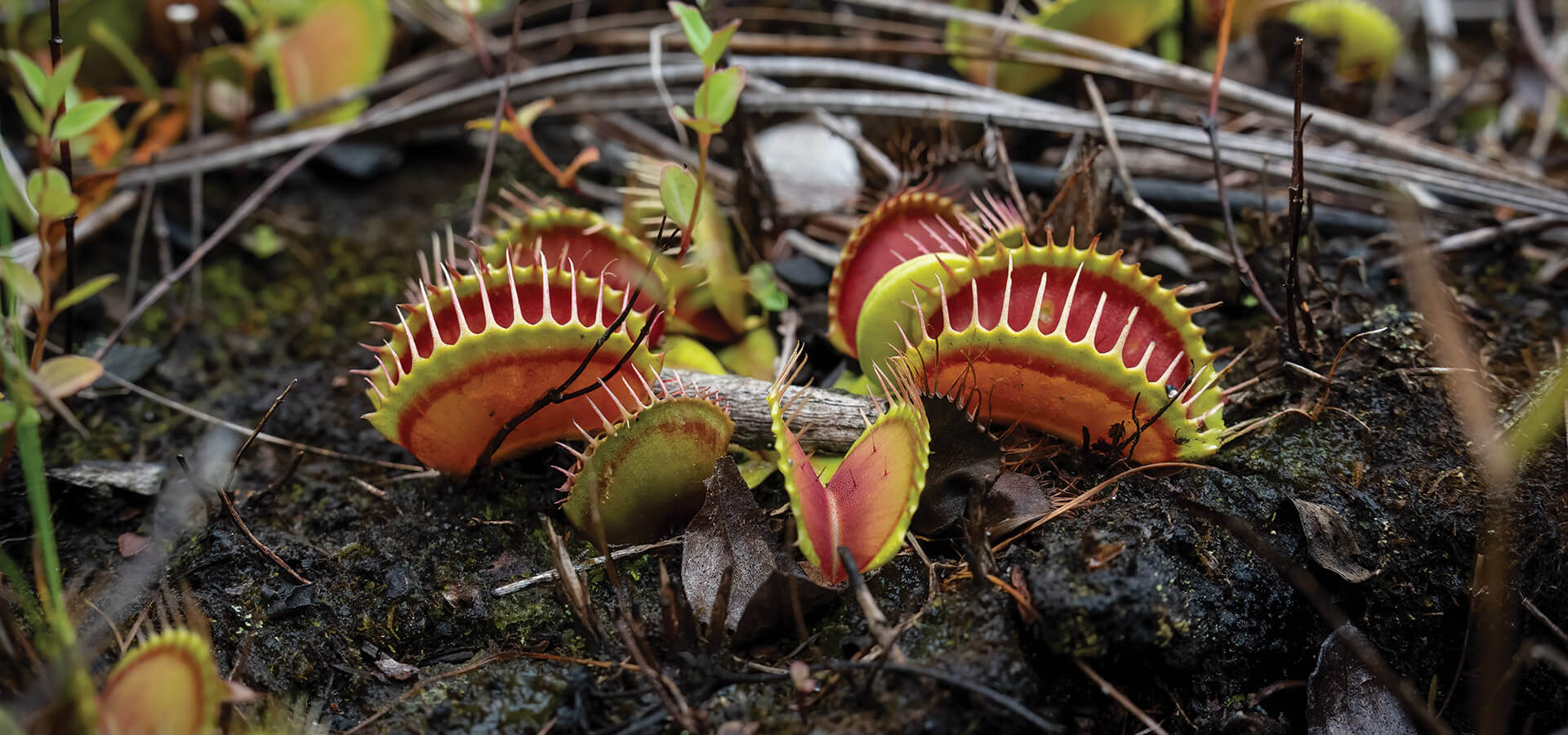
The latter plants, those that grow in inhospitable lands, kill by force. These are our carnivorous plants. Though we know the flytraps’ toothy grins best, North Carolina has the greatest diversity of carnivorous plants in the U.S., behind Florida. More than half of the nation’s 66 species of meat-hungry plants prosper here, in bogs and swamps from the mountains to the coast.
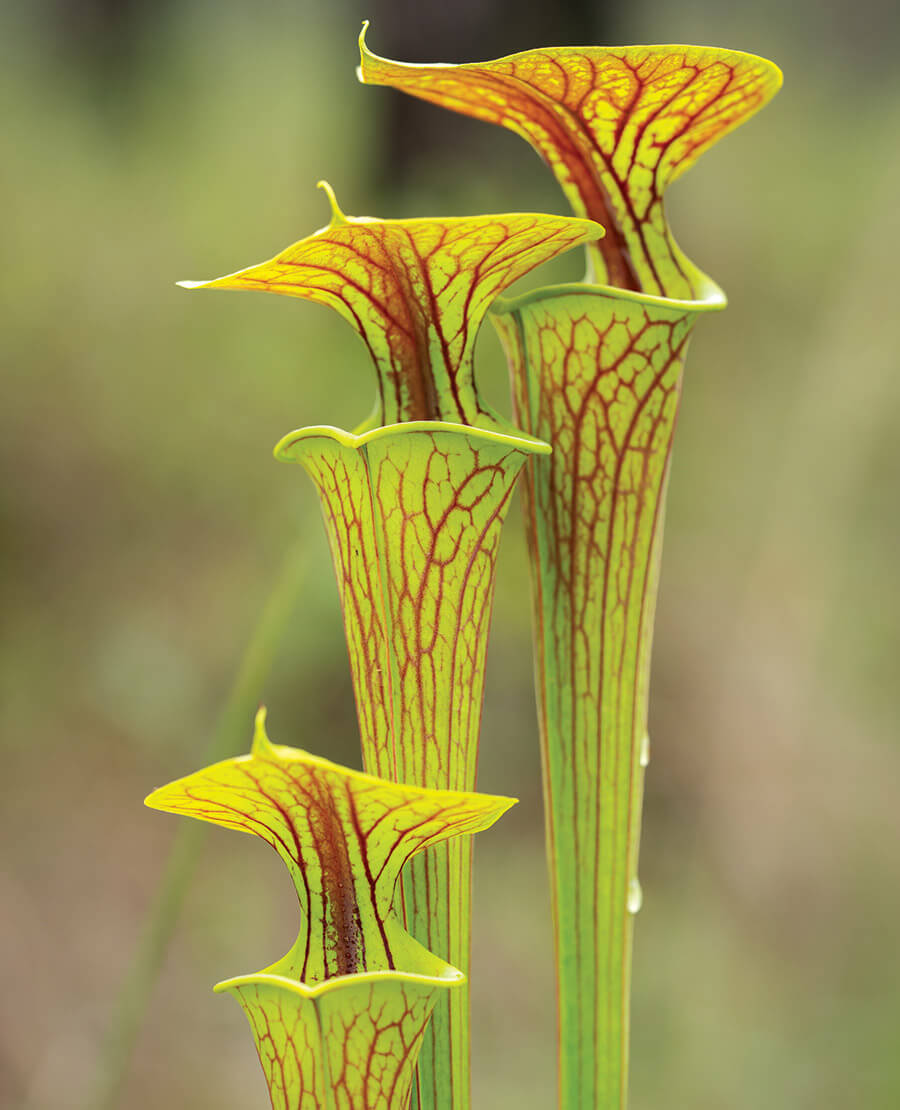
A yellow pitcher plant rises from a coastal bog. photograph by John Mauser
Carnivorous plants grow like the stuff of fairy tales, the Brothers Grimm kind, the ones with chilling warnings for children. They reveal a panoply of murderous techniques. At least one species of butterworts, with leaves that look like thick, sticky green flowers close to the ground, ensnare hapless insects in goo as they trundle across. Once stuck, the plants curl those wicked leaves slightly, release digestive enzymes, and gobble the poor bug right on the spot.
More than six species of pitcher plants prod their eerie totems — greens, yellows, coppers, purples, reds — from the earth, each filled with sweet-smelling fluid, waiting for insectile meals to come investigate. As the creature tips its head over the pitcher’s rim, it slips down the plant’s waxy surface and drowns in its gullet.
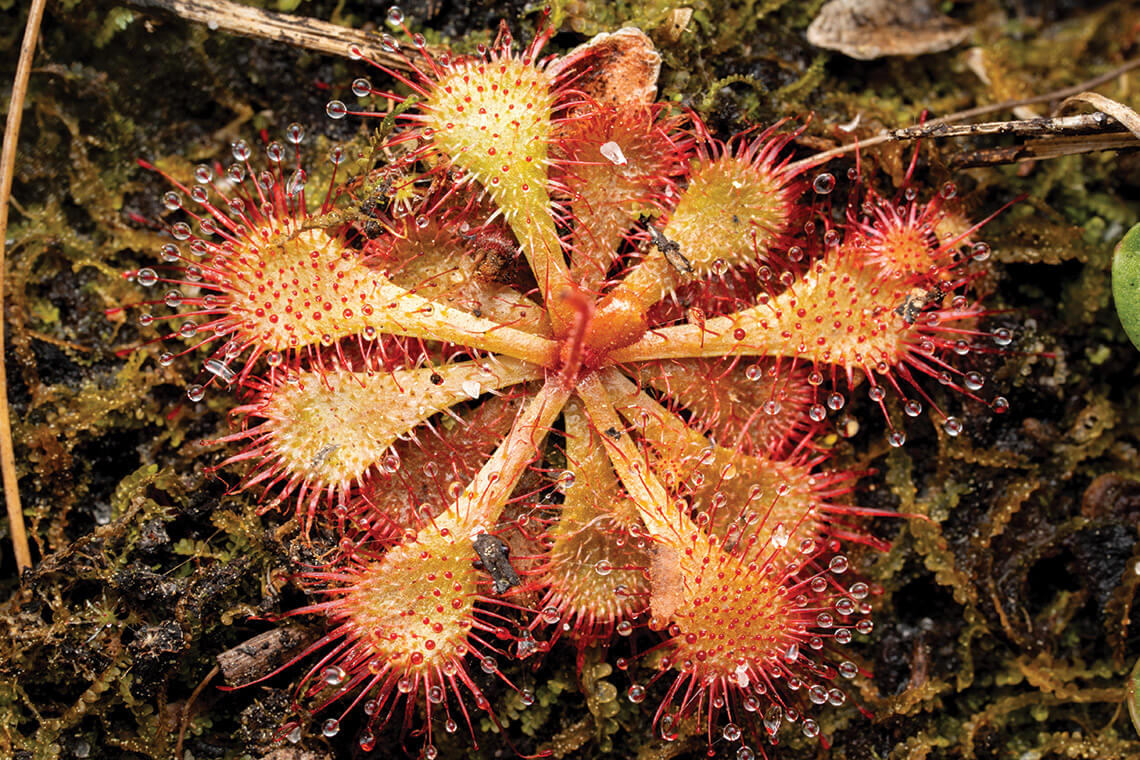
More than five species of sundews unfurl tentacles like tenacious Medusa heads, green and pricked with red tips oozing clear glue, ensnaring flies and beetles. When an unlucky bug becomes stuck, sinister arms wrap around it, squeezing digestive juices onto the plant’s living meal.
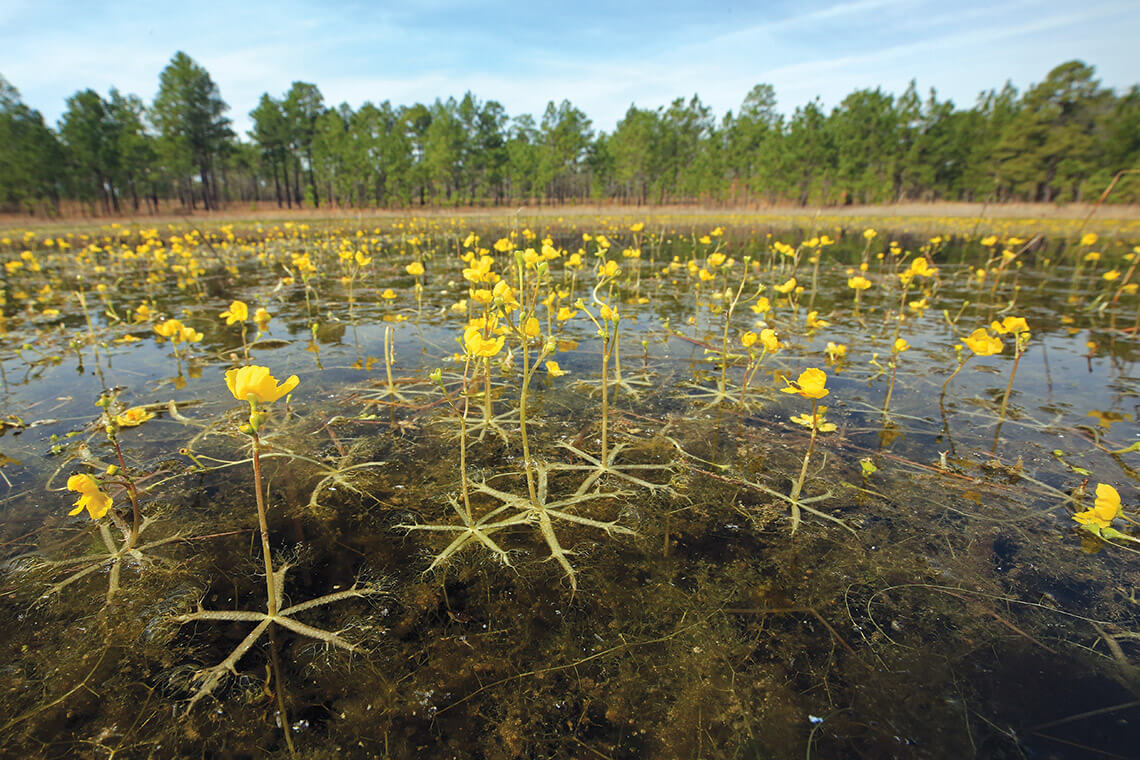
And more than 15 species of unassuming bladderworts — with a name like the final ingredient in a witch’s potion — capture tiny pond dwellers in deadly miniature balloons floating from their stems. Less than a half inch around, the tiny bulbs are covered in trigger hairs. If an unlucky animal brushes against these, bladderwort balloons quickly open horrifying trapdoors and suck the aquatic beings into their death zeppelins, turning them into soup.
Then, there’s our Venus flytrap, her jaws held open in our coastal bogs like a gruesome baby bird. Flytraps live only in a pocket of swamp around Wilmington and a tiny part of South Carolina, and no place else.
Yellow bladderworts carpet a Sandhills vernal pool.<br><span class="photographer">photograph by Todd Pusser</span>
A sundew spreads its tentacles, ready to ensnare passing insects.<br><span class="photographer">photograph by John Mauser</span>
North Carolina has a knack for making room for innovation in this way. Life here has always found a way to thrive in impossible conditions, from fires or starvation, from hard times and strange homes. Carnivorous plants show us that from even the most incomprehensible of circumstances, flowers can grow.
Once a year, they send hopeful threads skyward. From them flowers unfold. While their leaves destroy insects, carnivorous plants’ flowers embrace them. For a time, they may flatten their pitchers, close their hungry jaws. They hold their blossoms high above the danger, making a soft, safe place for pollinators to land, to be wrapped in petals. Even killers need tenderness from time to time.
Get our most popular weekly newsletter: This is NC
At both the turn of the century and today, Beaufort’s waterfront has attracted a hum of commerce and community. At its heart, a historic avenue tells that history, from the stately double-porched homes to the sound of ships announcing their arrival at port.



 Listen as the pages of the magazine come to life in the