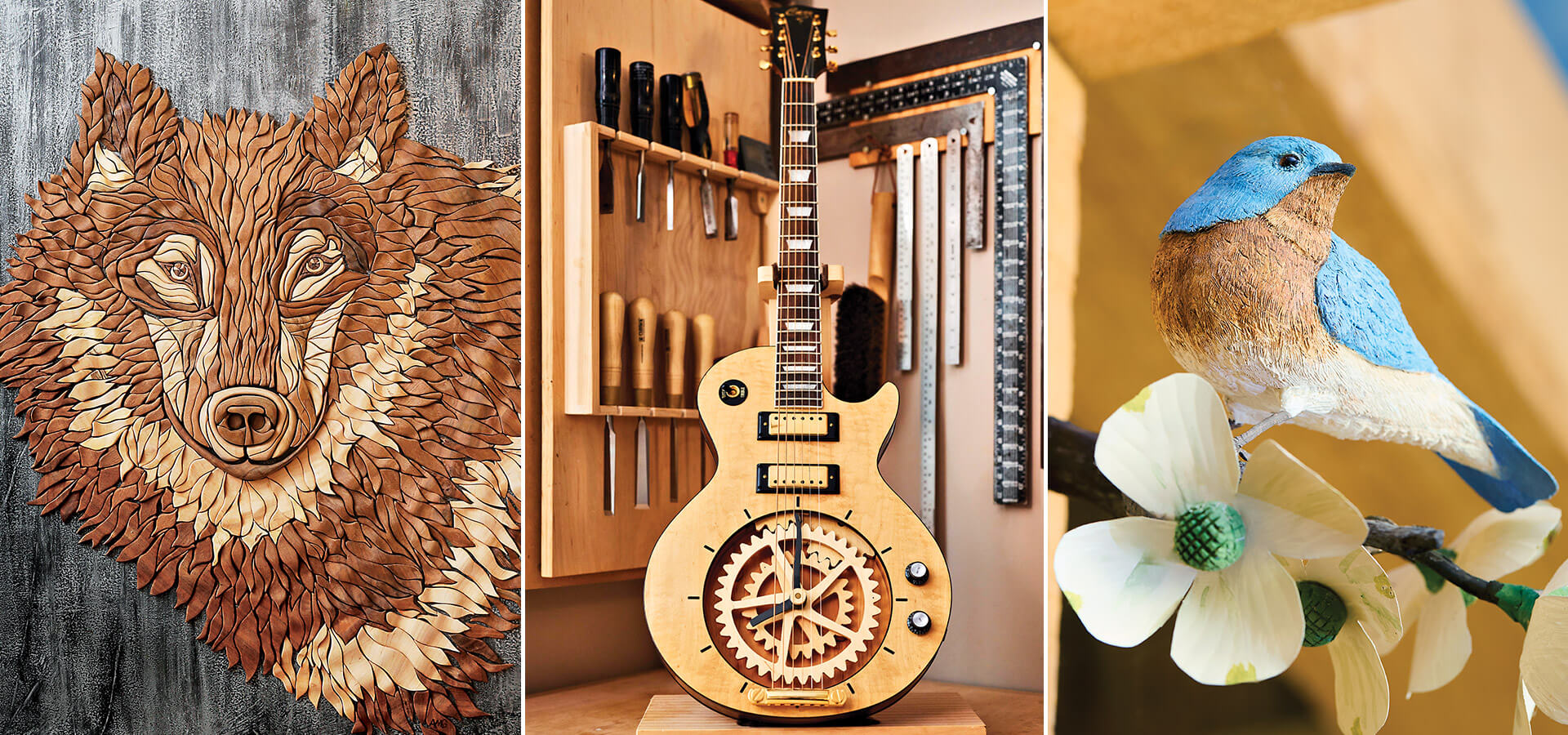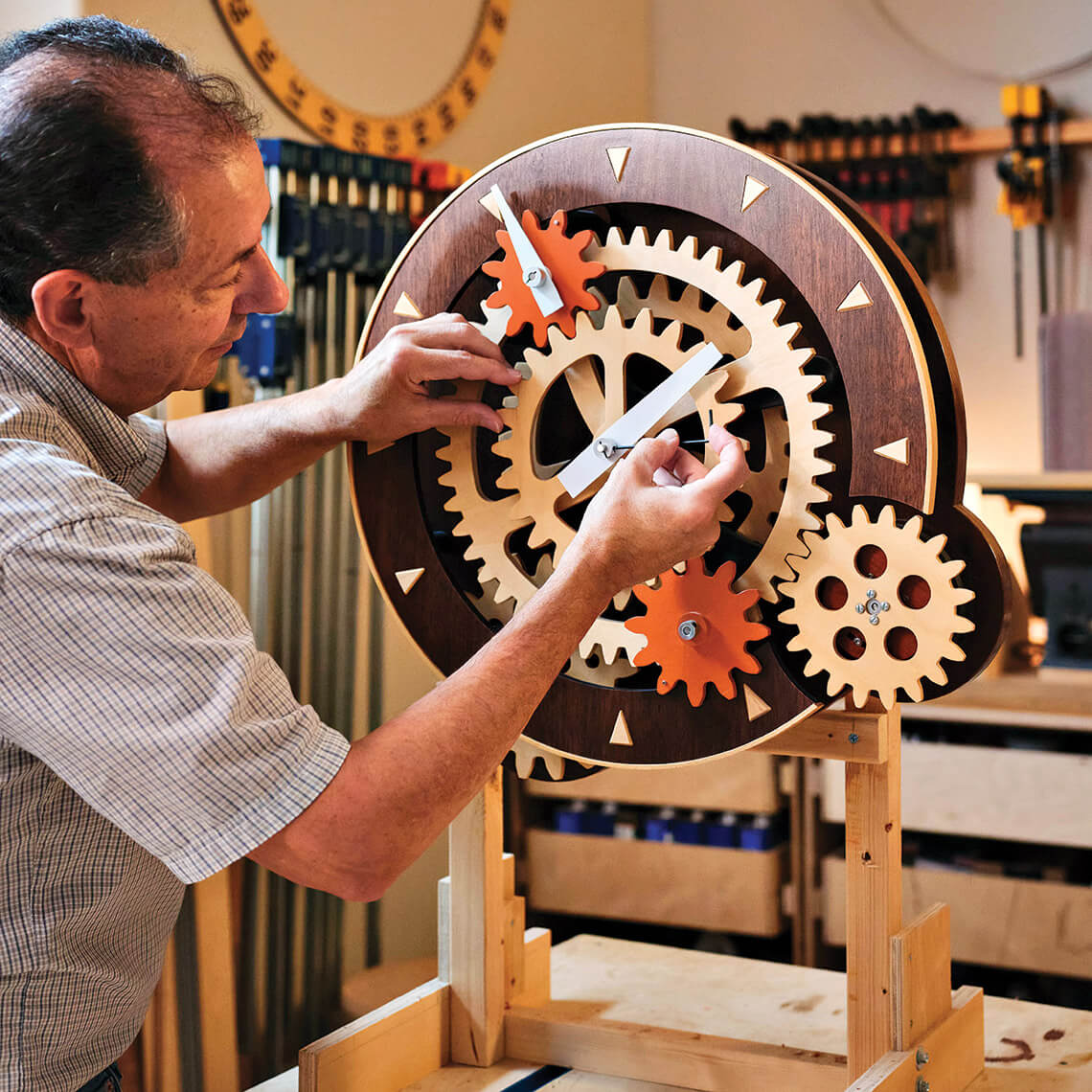
Woodworker and clockmaker Joe Carr crafts one-of-a-kind creations. Once, he even cut out a relief of the North Carolina seal for a timepiece for state Senator Timothy Moffitt. photograph by Alex Boerner
Joe Carr
Durham
Joe Carr photograph by Alex Boerner
Composition books are scattered around the Durham home of woodworker and clockmaker Joe Carr. When he gets an idea for a clock — or a piece of furniture — he picks up the nearest one and sketches it. Carr has been a woodworker and furniture maker for about 45 years, but he began making wooden timepieces about a decade ago after picking up a magazine on perpetual calendars and skeleton clocks — those with exposed gears — in an airport lounge. An electrical engineer by trade, he started thinking about how to design one right away. After he built one, he realized he wanted to see the gears move more, so he designed a counterrotating movement in which the hands rotate opposite to the numbers, a design he has since patented.
Carr works with clients to get a feel for their space and their preferred style and colors. He then programs a computer-controlled router, or CNC machine, to cut the gears and designs out of a range of hardwoods.
Carr retired from engineering about five years ago, which allows him to focus on building ever more creative furniture and clocks through his business J.N. Carr Woodworks. Now, he’s got nothing but time. — Rebecca Woltz
jncarr.com
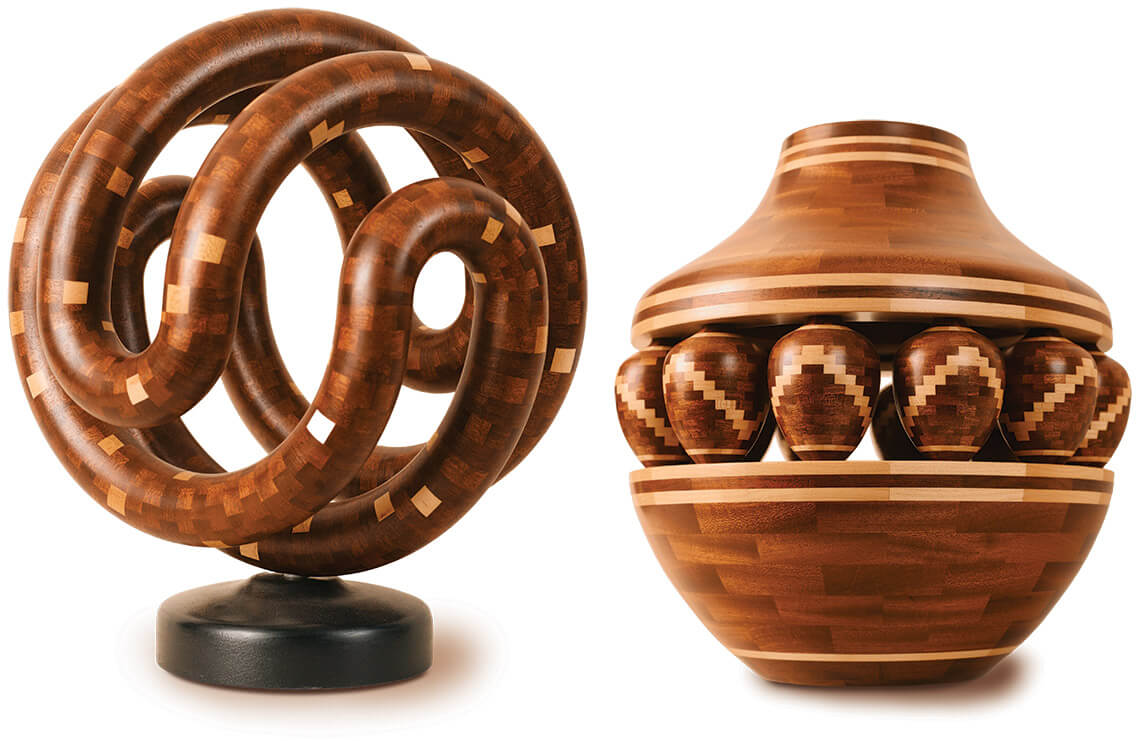
Charlie Stickney uses a variety of woods in his pieces, including cherry, hard maple, and his favorite, sapele. “To me, sapele is about the prettiest wood you can get,” he says. “It’s almost metallic. It shimmers.” photograph by Joshua Steadman
Charlie Stickney
Raleigh
Charlie Stickney photograph by Joshua Steadman
Charlie Stickney claims to be an impatient man. But when it comes to making segmented turnings, he spends hundreds of hours in his Raleigh-area woodshop cutting and gluing thousands of pieces of wood together, then turns them on a lathe to shave off the excess wood. The end result can be anything he wants it to be — he makes a lot of vases, but he also loves experimenting with interesting shapes.
As a child, on cold winter days in upstate New York, Stickney enjoyed putting puzzles together. He later grew up to be a mechanical engineer and spent his career traveling the world and solving bigger puzzles.
Stickney was 6 or 7 years old when he started learning woodworking. “Back then, whatever you wanted, you had to do yourself,” he says. “You couldn’t afford to buy it or hire somebody to do it.” He made furniture, lamps, and cabinets all his life. But, as he got older, lifting heavy plywood to build cabinets became more difficult. So, in 2009, he started doing segmented turnings. He enjoys them because they’re like puzzles — you have to figure out how to put the pieces together to create the shape and design that you want.
Stickney’s unique designs include knots, concentric circles that spin, and abstract shapes. “The only limit on segmented turning,” he says, “is your imagination.” — R.W.
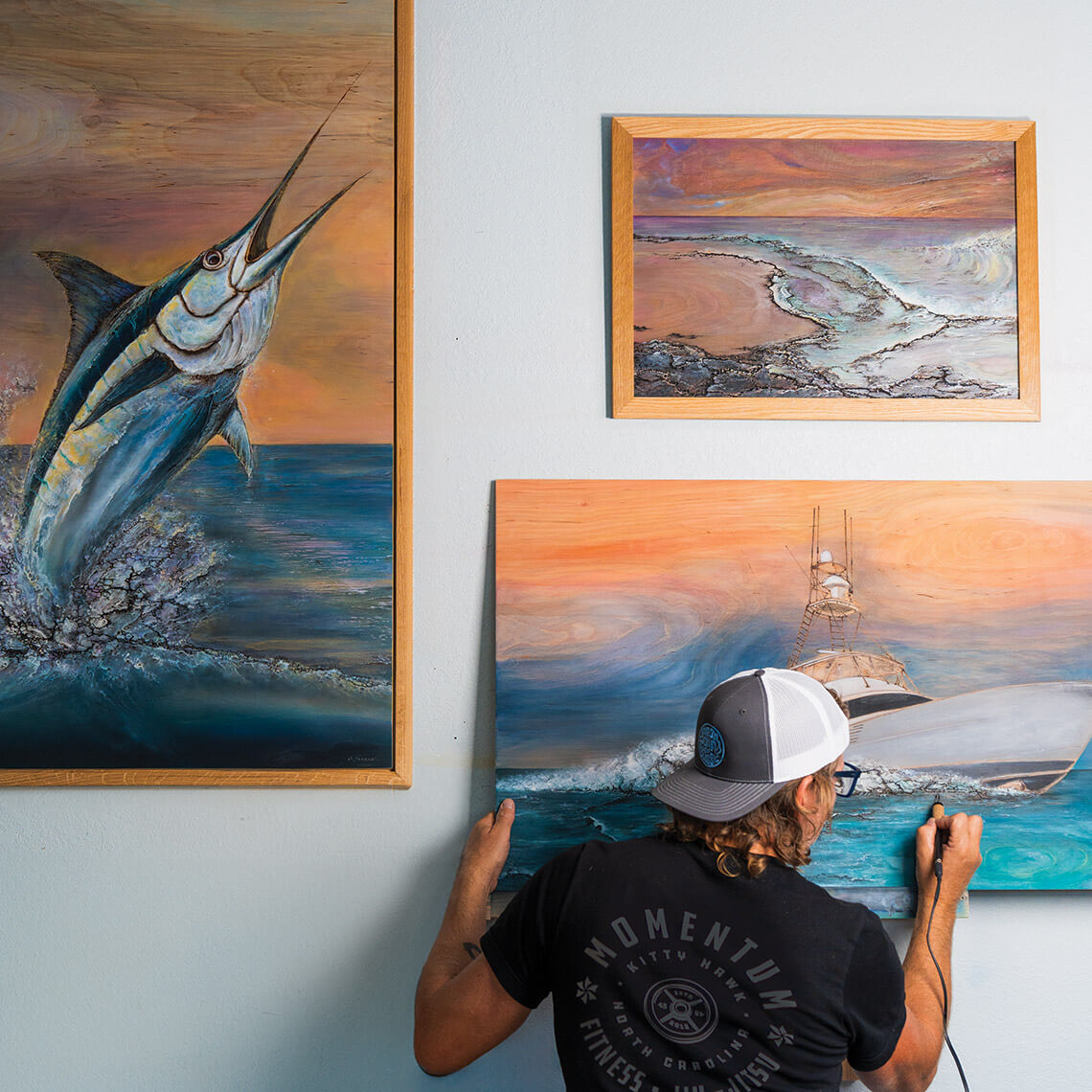
Noah Snyder was inducted into the East Coast Surfing Hall of Fame last year. Like the ocean, he says, wood is alive. “It’s constantly moving and bending. You have to learn how to work with it and not against it.” photograph by Chris Hannant
Noah Snyder
Kitty Hawk
Noah Snyder photograph by Chris Hannant
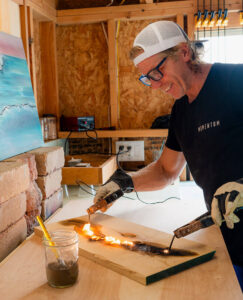
Using a microwave transformer that runs an electric current through a piece of birch, Noah Snyder burns the wood along the grain lines. Just like surfers must go with the flow of the waves, Snyder says, in fractal wood burning, you must follow the grains of the wood. After he burns the piece, he will use acrylics and airbrushing to paint a lifelike wave.
Snyder grew up in Kill Devil Hills and began surfing at age 13. As an adult, he traveled the world surfing professionally for 15 years. After retiring in 2016, he returned home to Kitty Hawk, where he began building and refinishing wood furniture. He burned designs into the furniture, and his wife, Corissa, mentioned that the pieces looked artistic, so why didn’t he try making some art? When he first made a sea turtle, he showed it to Corissa with tears in his eyes.
“This is an unexpected gift that came back full circle,” he says. “My dad was an artist, and his dad was an artist.” Most of his pieces feature nautical themes: ocean waves, boats, piers, sea creatures. He’s got saltwater — and creativity — running through his veins. — R.W.
noahsnyderart.com
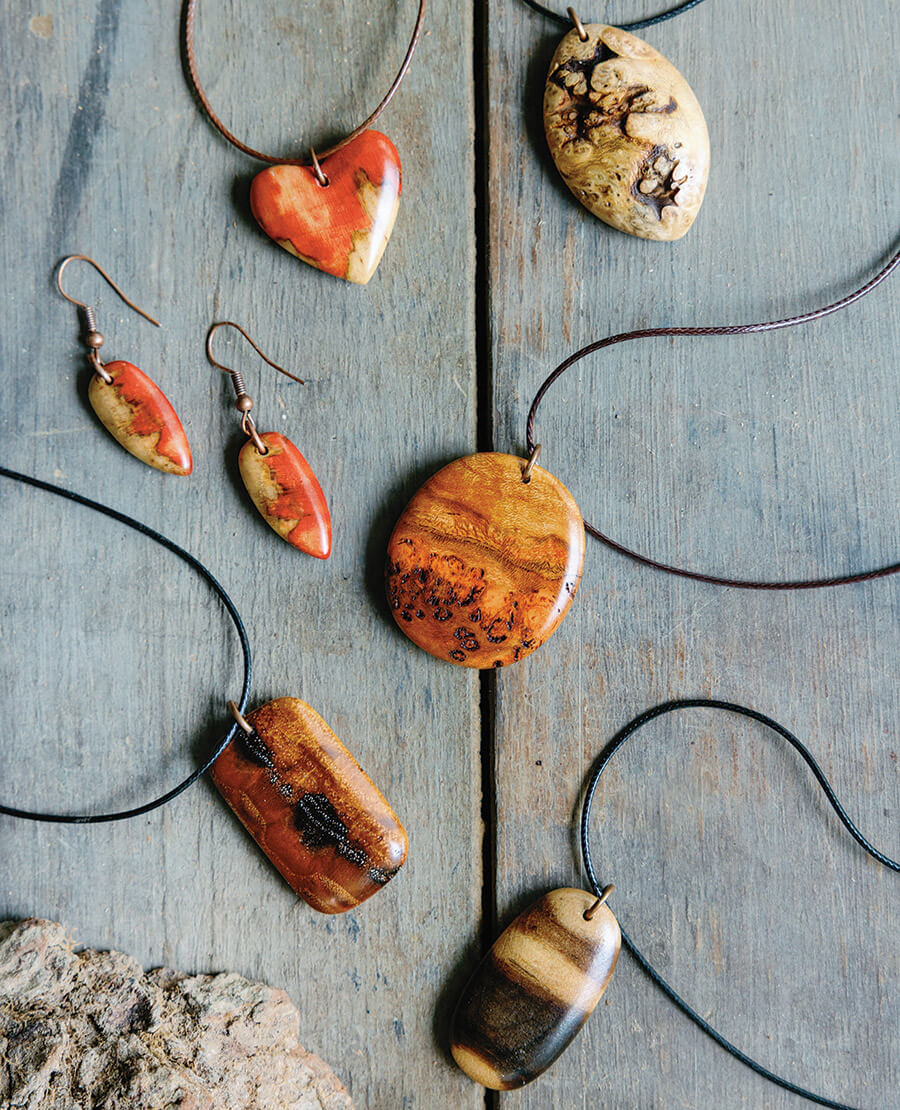
The Millers only use fallen trees in their pieces, which often highlight a wood’s unique grain — burls, spalting caused by fungus making its home on dead wood, and patterns left by insects. photograph by Tim Robison
Johnny & Lynn Miller
Brevard
Johnny and Lynn Miller photograph by Tim Robison
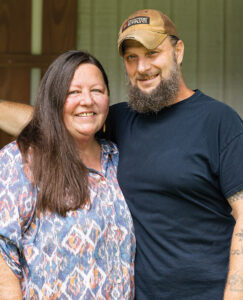
It started with a beam of light. Johnny and Lynn Miller were sipping coffee on their front porch near Brevard when a ray of autumn sunshine struck the flecking in a piece of maple kindling. Lynn remarked that the wood would make a beautiful earring, so Johnny, who worked at a sawmill and made live-edge tables, jumped up and crafted a pair for her. That was 10 years ago. Now, they make jewelry full-time.
“I had feelings for trees in my heart since I was a kid,” Johnny says.
The Millers find the wood they use in nearby forests or in their own yard. After Helene, a woman brought them logs from an oak that had fallen on her house. Folks have even brought them heirloom tools with wooden handles. The couple turns it all into stunning necklaces, earrings, and the occasional bolo tie.
Johnny cuts large chunks of wood with a chainsaw, then Lynn uses a smaller electric chainsaw and table saw to select the most interesting pieces. Johnny shapes them and Lynn finishes them and adds hardware.
Through their business, Mountain Tree Treasure, the Millers sell their jewelry in local shops and at the Transylvania Farmers Market. When a shopper selects a piece, the couple shares the story of the wood. “Trees provide a lot of beauty for our mountains,” Johnny says. “People like taking a little piece of that home with them.” Much like the Millers, people have feelings for trees in their hearts. — R.W.
facebook.com/mountaintreetreasure
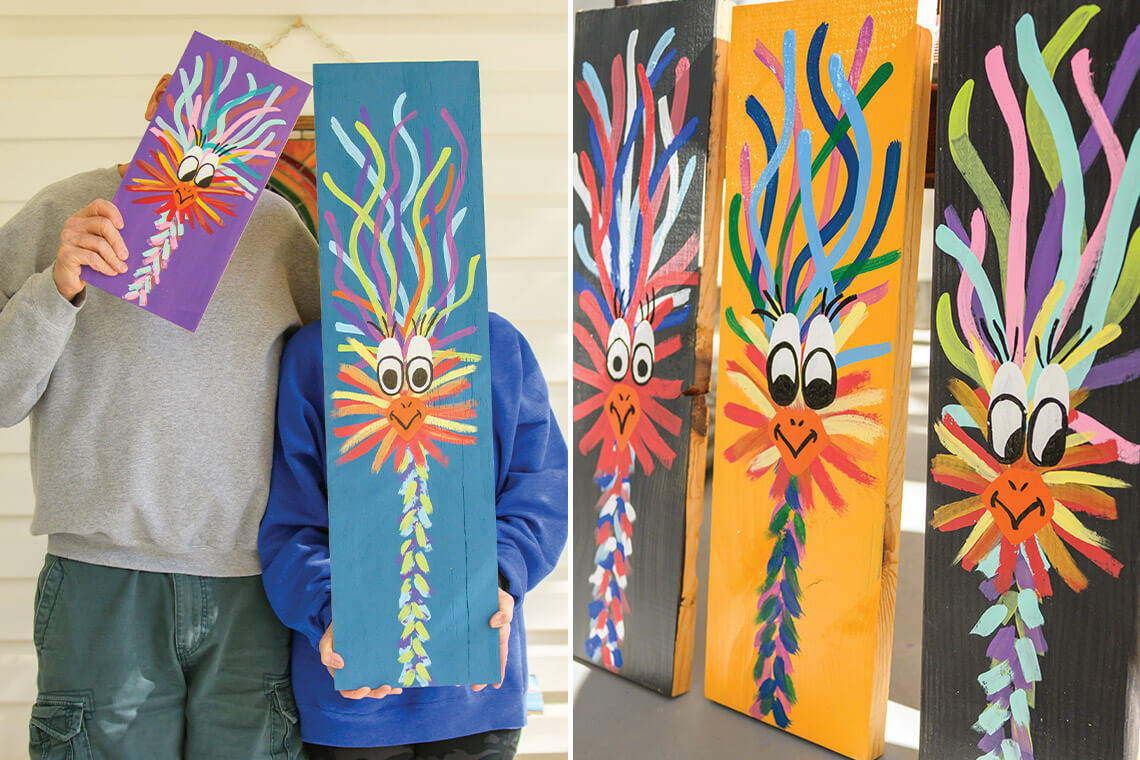
A secret Southport artist, her husband, and her helpers have distributed more than 600 Gooney Birds, which may vary in size and color but always bring a smile to the finder. photograph by Katie Dorsett-Dye w Katie D Photography
Gooney Bird Artist
Southport
If you’re walking the streets of Southport, you might be lucky enough to stumble upon a Gooney Bird. If you find one in a public place, it’s yours to keep.
An anonymous artist paints these goofy, long-necked, crazy-feathered birds on scraps of donated or scavenged wood, signs them with a thoughtful message, and, along with friends, places them at homes and businesses around town. Found Gooney Birds can be seen at the police and fire stations, Loco Jo’s Bar & Grill, The Mullet Bar, Blue Cow Grille, and other local businesses.
The artist paints the birds for free, and though her friends collect tips for her, she donates all the money she receives to several charities. Her motivation? The joy that comes from a simple random act of kindness.
If you’re fortunate enough to find a Gooney Bird, cherish it. It was made with love. — R.W.
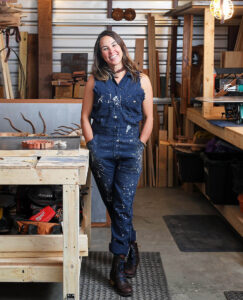
“I have a deep connection with wood,” Meleah Gabhart says. “It feels like a living material, like it’s the tissue of a tree, and I get to shape it. It has grains that tell me about its life.” photograph by Stacey Van Berkel
Meleah Gabhart
Carrboro
Meleah Gabhart photograph by Stacey Van Berkel
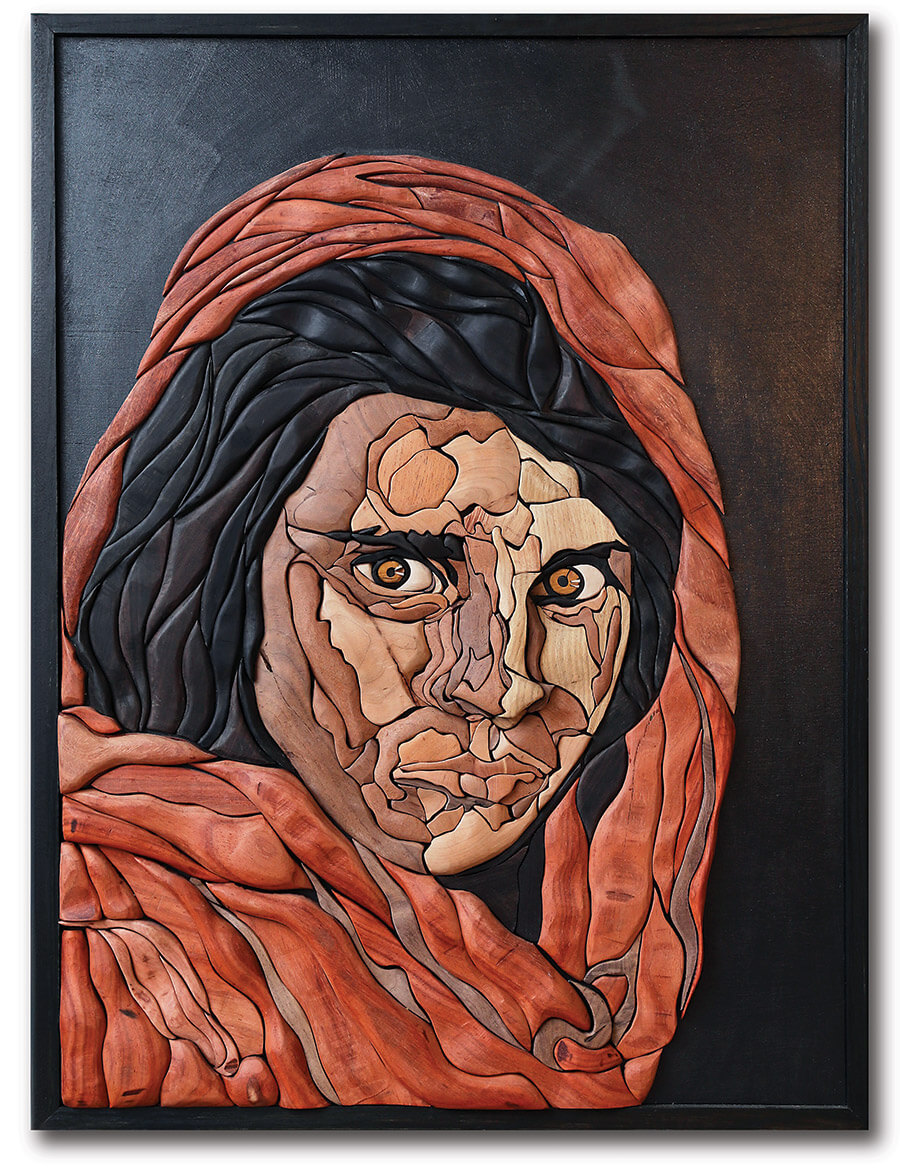
The eyes are arresting. Piercing. You can’t look away. They’re the eyes of Afghan Girl, a sculptural mosaic made by Carrboro-based artist Meleah Gabhart as a three-dimensional representation of Steve McCurry’s iconic photograph by the same name, featured on the cover of National Geographic in 1985. The piece is Gabhart’s favorite of the many she has made, which include animals, trees, ocean waves, and people.
Gabhart grew up making mosaics, but, feeling overwhelmed by the talent in her family of artists, she put her art aside and pursued science instead, becoming a biochemistry professor at Vincennes University in Indiana. When she and her first husband built a house, she began working with wood and made a butcher block in the shape of a tree. She liked that she could shape the wood how she wanted. She eventually left her career — “I’m just not built for a nine to five or having a boss,” she says — and worked a series of odd jobs while making wood mosaics on the side before finally transitioning into making art full-time.
Gabhart gets scraps from woodworkers, shapes them with a band saw or scroll saw, and sands them smooth. Sometimes she leaves them rough to imitate natural shapes, like the individual barbs on a bird’s feather. She likes the little imperfections created when the pieces don’t fit together perfectly, and she doesn’t stain or paint the wood, preferring to let its natural color shine.
Gabhart used ebony for the hair of Afghan Girl; walnut, cherry, and cedar for the face; padauk for the shawl. For the eyes, she used Osage orange. Gabhart chose to leave the edges of the face pieces angular, “because she’s coming from a really harsh environment,” she says. “I could have made them flowy, smooth, more like a feminine quality, but they’re not. I kept them sharp, and I think it really translated well to that kind of wild part of her — that wild, desperate look in her eye.” — R.W.
meleahgabhart.com
Williams’s grove of poplar trees sits at the bottom of a hill on his Old Fort property. He plants the trees close together to create a canopy that keeps the trees growing tall and skinny with minimal branches. photograph by Tim Robison
Joseph Williams
Old Fort
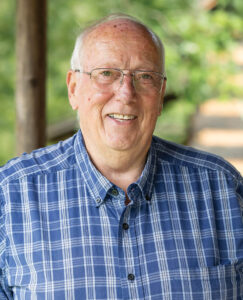
Joseph Williams photograph by Tim Robison
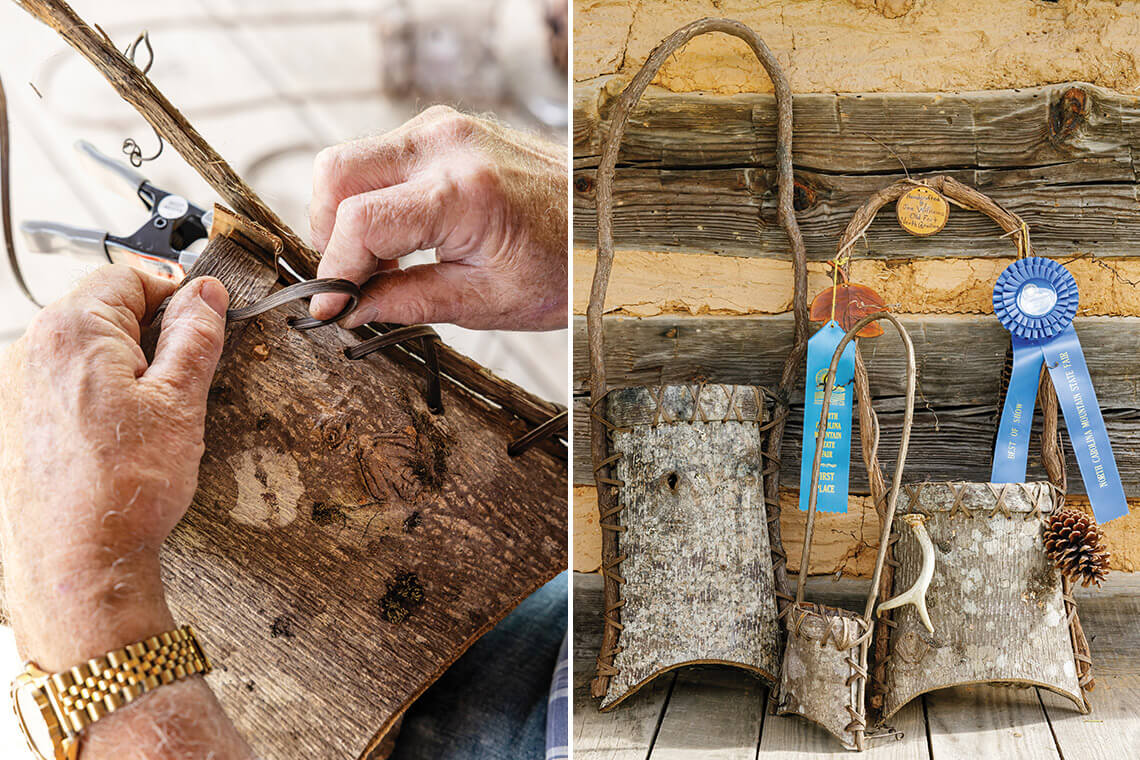
Joseph Williams runs his hand over the surface of one of his berry-picking baskets that’s made entirely from a single poplar. The bucket — a sheet of bark — has varying colors of brown, grey, and green, stained by sunlight, moss, and lichens over the years. “[All of my baskets] are made exactly the same way, but you’ll never see two of them that look alike,” Williams says.
Appalachian trinkets adorn the container: a short deer antler, a fallen longleaf pinecone, a found wild turkey feather, and a blue ribbon from the North Carolina Mountain State Fair. The handle is grapevine that Williams wove into the sides of the bucket. Grapevine grows all over his 20 acres in Old Fort by Crooked Creek, the property where Williams was raised and learned this mountain tradition.
As a child, Williams spent many Saturdays with his grandfather identifying trees and plants in the forest. When Williams was 10, his grandfather taught him how to make a berry basket using only a pocketknife. “When I was young, that man could walk on water,” Williams says. “I still miss him.”
It’s these memories that fuel the passion behind Williams’s basketmaking and the classes he teaches at Dogwood Crafters in Dillsboro. Williams is preserving a legacy of self-sufficiency and resourcefulness that’s been a part of Appalachia for centuries, though he’s the first to say, “I’m just an old country boy that has a little bit of talent once in a while.” — Katie Kane Reynolds
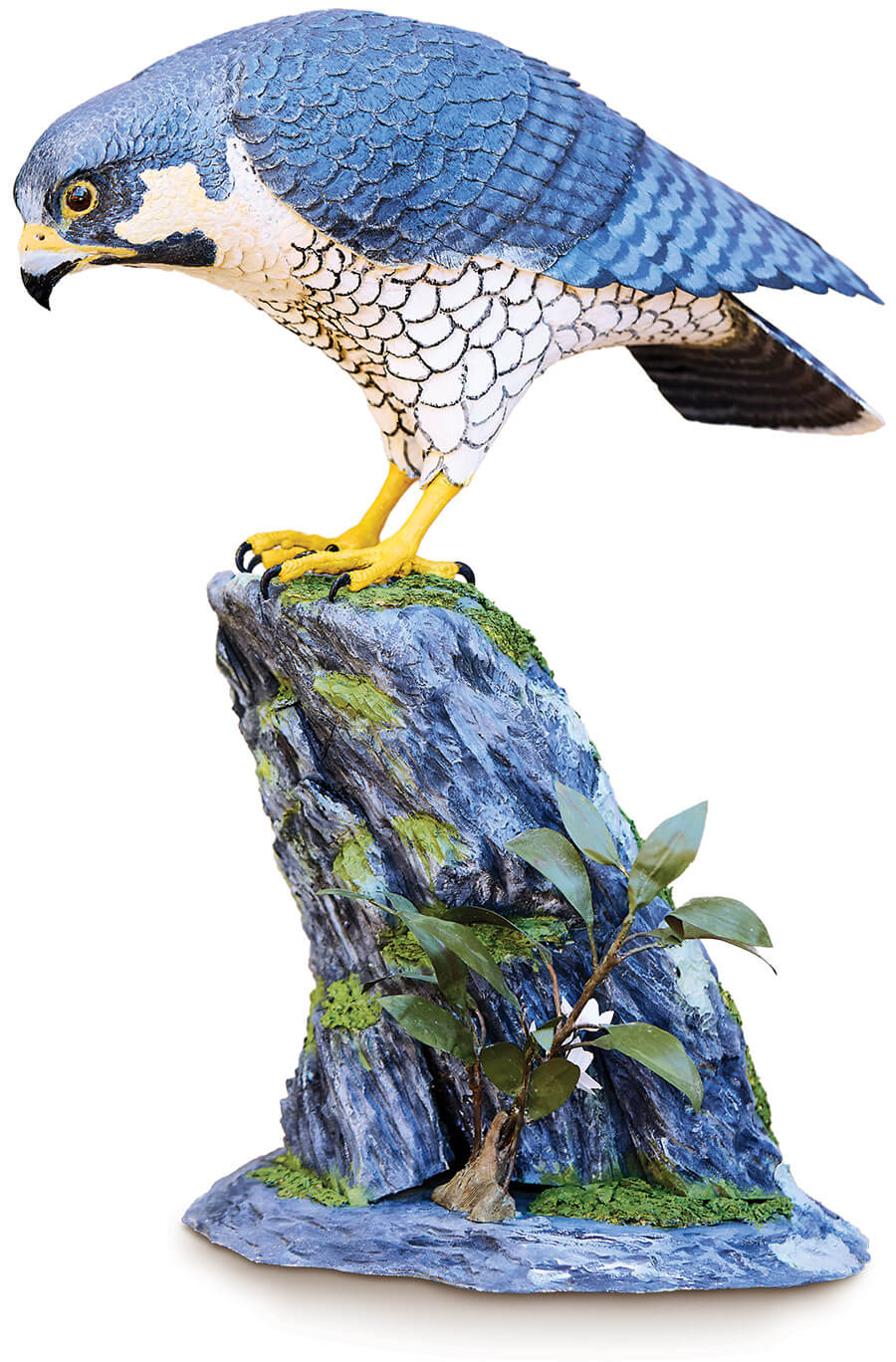
In Nick Wehrmann’s hands, tupelo wood might become a red-tailed hawk, wood duck, falcon (pictured), or bluebird. photograph by Stacey Van Berkel
Nick Wehrmann
Wilkes County
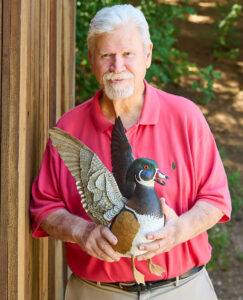
Nick Wehrmann photograph by Stacey Van Berkel
Of the many realistic birds and other animals Nick Wehrmann has carved, the one of which he is most proud is the red-tailed hawk in flight, grasping a copperhead snake in its talons. The piece, along with many of his other works, hangs in the YMCA Camp Harrison at Herring Ridge Nature Center in Wilkes County, where Wehrmann lives.
When Wehrmann’s mother bought a carved bird 40 years ago, he thought, I can do that. He bought some tools and made a couple, but his manufacturing job kept him too busy to continue. During the pandemic, he pulled out his tools and began carving again.
Wehrmann carves his birds from tupelo wood using a band saw, then uses rotary tools to refine them. He defines the feathers with wood burning tools, then paints the pieces with acrylics. For perching birds, he creates habitats — like a dogwood branch — from wood, brass, and wires.
Wehrmann strives to make his birds as true-to-life as possible and does extensive research to learn details such as wingspans and number of feathers. That accuracy is one of the reasons the YMCA commissioned him to make birds for their nature center.
At 76, Wehrmann likes that he’ll leave something behind to be remembered by. And the birds allow his artistry to take flight. — R.W.
wehrmannart.com
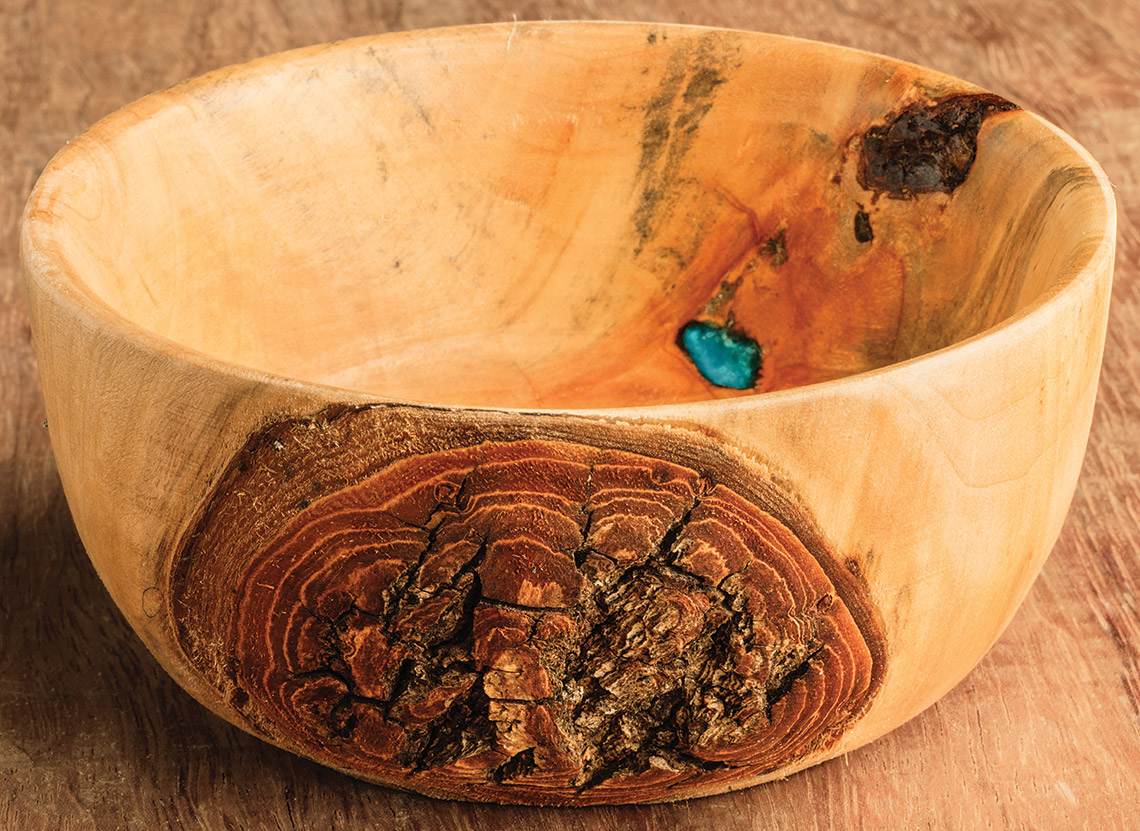
Butler’s works include pens and bowls, like this one crafted from maple, with natural bark and a turquoise-blue resin in the gaps. photograph by Jerry Wolford & Scott Muthersbaugh
Louise Butler
Reidsville
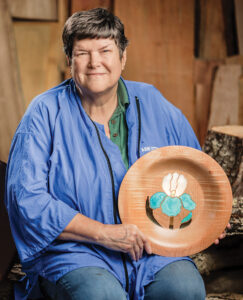
Louise Butler photograph by Jerry Wolford & Scott Muthersbaugh
Louise Butler leans into the whirring lathe, coaxing a bowl from a jagged piece of wood whose future only she can see. Curled shavings of maple cling to her cotton polo shirt like the memories in her mind.
The things she crafts are born of skills handed down over four generations. Butler learned to work wood by watching her parents and grandfather. Now 65, with her two brothers gone and no children, she feels the weight of being the last of her family to practice the craft: The quiet ability to find the tune in a piece of maple or walnut may fade with her unless she passes it on.
Determined not to let that happen, she’s carving out a place to teach near downtown Reidsville — in a shop just across the railroad tracks from the building supply company where her father, grandfather, and great-grandfather worked. In 2021, she bought a former garage with three bay doors where, occasionally, someone still pulls up looking for an oil change. For more than a decade, she’s collected tools and machinery, and she hopes to open for classes in early 2026.
“Teaching is in my soul. It’s the thing that keeps me going,” Butler says, perched on a chair in the cluttered office of her shop. “I like for somebody to bring me a piece of wood that they want something done to. But I’d rather take it and say, ‘Why don’t you come help me with it?’”
[Click here to read the full story on Butler.]
— Cate Doty